China on Thursday evening successfully launched the country’s first Sun-probing science and technology experiment satellite into designated orbit, which will enable the world’s first imaging spectrometer observation of the H-alpha band of the Sun, marking the country’s advancement into the solar exploration era.
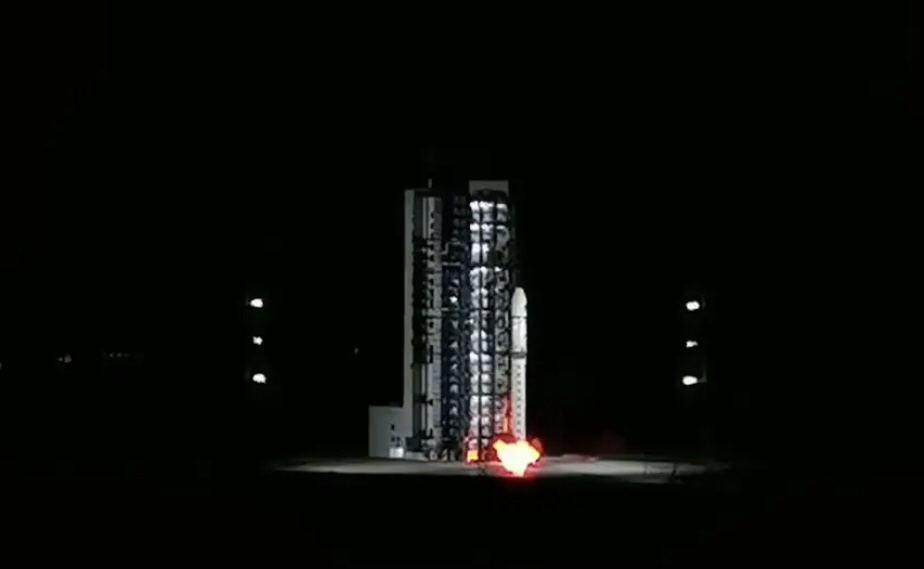
The satellite was launched into space with other 10 satellites in a single launch performed by the liquid-fueled Long March-2D carrier rocket from Taiyuan Satellite Launch Center in North China’s Shanxi Province at around 7 pm on Thursday.
Shanghai Academy of Spaceflight Technology (SAST), the designer and manufacturer of the satellite, told the Global Times in a statement that the satellite weighs 510 kilograms, and will operate at an altitude of 517 kilometers in the dusk-dawn sun-synchronous orbit.
It’s equipped with an imaging spectrometer, which will be the first in the world to conduct spectral imaging observations of the H-alpha band of the Sun.
The H-alpha band is one of the best spectral lines to study solar activity. By analyzing the data of this line, we can obtain changes of physical quantities such as atmospheric temperature and velocity during a solar eruption, and study the dynamical process and physical mechanism of the solar eruption.
Also marking a first, the satellite will apply magnetic levitation technology in orbit to increase accuracy and stability during operation.
The “gold-medal rocket,” scoring its perfect performances that delivered all of its 54 launch missions in success in the past 30 years, has a liftoff thrust of 300 tons that is capable of carrying 1.2 tons of loads to the 700-kilometer sun-synchronous circular orbit, and is able to launch multiple satellites with different orbital requirements in one go.
Over the past 30 years, Long March-2D has sent a variety of heavyweights in China’s satellite history, including the Quantum Experiments at Space Scale nicknamed Mozi, Dark Matter Particle Explorer “Wukong” or “Monkey King,” and carbon dioxide monitoring satellite TanSat.
The rocket will also test the first attempt to use waffle-like grid fins to accurately guide fallen rocket pieces to Earth. It will control the attitude of the first stage of the rocket while it returns to Earth. It’s capable of reducing the landing area by more than 80 percent, making the vehicle’s landing point more accurate and controllable, greatly improving the safety of the surrounding environment.
Another highlight of the mission is that the satellite uses laser and microwave communication methods to set up a 5G high-speed communication channel, which further enhances the efficiency and reliability of inter-satellite communication.
Video call between Xi and Merkel highlights deep friendship, ‘paves good way’ for further China-EU talks by Cao Siqi Oct 13 2021
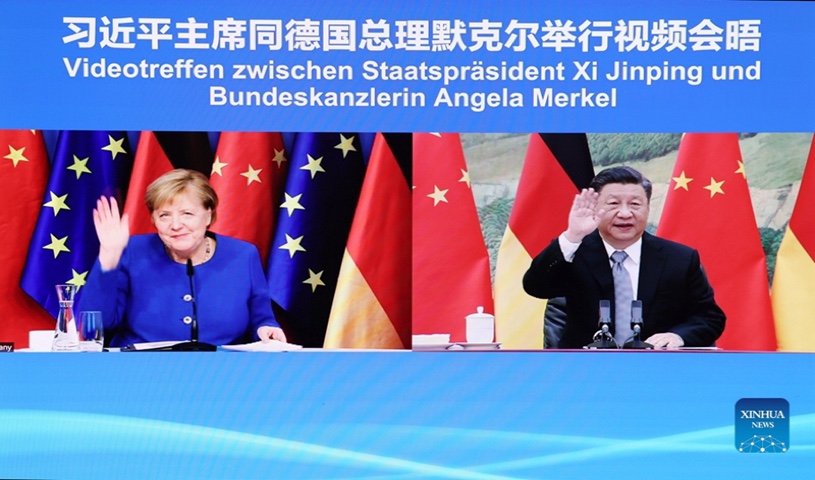
Chinese President Xi Jinping meets with German Chancellor Angela Merkel via video link in Beijing, capital of China, Oct. 13, 2021.
Chinese President Xi Jinping spoke highly of German Chancellor Angela Merkel’s contributions to promoting China-Germany and China-EU relations during her tenure when Xi met Merkel via video link on Wednesday. Xi said China’s doors are always open to Merkel as the Chinese people always value friendship and will never forget old friends.
“Since I met you during my visit to Germany in 2009, we have had in-depth exchanges on bilateral relations, major international and regional issues and governance experience. Together, we have pushed forward bilateral relations and promoted China-Germany cooperation in addressing global challenges. You have a deep understanding of China-Germany relations, China-Germany cooperation and China. I can feel your interest in China and your interest in different places, including Malatang [a hot and spicy soupy dish of meat and vegetables] in Sichuan Province. Next year marks the 50th anniversary of the establishment of diplomatic ties between China and Germany. We really hope this could continue,” Xi said.
In the spirit of mutually beneficial cooperation, China and Germany have made full use of their economic complementarities and achieved win-win results. This proves that countries can avoid zero-sum games, and this should be the main tone of China-Germany relations, Xi stressed.
As Germans’ “Mutti (mother)” and Europe’s “crisis manager,” Merkel is about to leave from the post she has held for 16 years, making her the country’s second-longest-serving chancellor and the first chancellor to leave power by choice.
Her leaving the post comes at a critical moment for Europe, which has plunged into a dilemma of refugees, an aging population, rampant far-right forces and being hit head-on by the US’ constant betrayal. The world is curious about whether there will be another Merkel that can lead Europe to fend off risks.
Cui Hongjian, director of the Department of European Studies at China Institute of International Studies, said it is rare to see the Chinese president speak so highly of a Western leader in recent years, and such evaluation was based on the steady and sound development of China-Germany relations over the past 16 years.
It shows that China hopes Merkel’s successor could follow in her footsteps and make continuous contributions to the stability of bilateral relations. The video call, an important stop of Merkel’s farewell tour, could set a good example to the leaders of other European countries, Cui told the Global Times on Wednesday.
“After stepping down from the post, Merkel is also widely expected to continue to make a difference in bilateral relations and China-EU relations in new positions,” Cui noted.
President Xi pointed out that China and Germany could expand cooperation in the fields of green energy and digital economy, and the two sides should view China-EU relations from a broad, objective and comprehensive perspective, and handle differences in a rational, peaceful and constructive manner.
“We hope that the EU will uphold its independence, truly safeguard its own interests and the solidarity of the international community, and work with China and other countries to resolve the ‘challenge of the century’ – peace and development,” Xi said.
Merkel said she always believes that the EU should develop its relations with China independently and the two sides can strengthen dialogue and exchanges on issues on which they have differences. “I believe that EU-China relations will continue to grow despite various complicated factors,” she said.
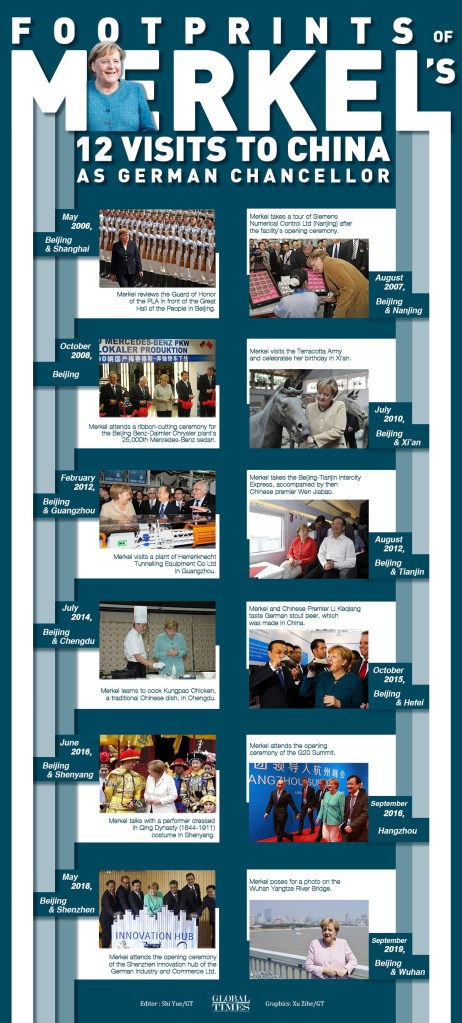
Footprints of Merkel’s 12 visits to China as German Chancellor
Chinese experts believe that China will continue to take an independent diplomatic policy free from other countries’ interference. But the contact this time will surely bear some fruits.
China-EU relations have witnessed a downward spiral in recent months. On March 22, the European Union joined the US, the UK and Canada in announcing sanctions against Chinese officials for alleged human rights abuses in Xinjiang. China immediately announced countermeasures against 10 individuals and four entities, including several members of the European Parliament.
The European Parliament later formally froze the China-EU Comprehensive Agreement on Investment, citing Beijing’s counter-sanctions. Chinese State Councilor and Foreign Minister Wang Yi criticized the EU for politicizing economic and trade issues but still sent a friendly message to the EU after the freeze, stressing that China always views the EU as a partner, not an adversary.
“China has maintained good cooperation with member countries of the EU, but has always encountered some hurdles in dealing with the organization. It is time to face the hurdles and address the problems,” Cui said.
The EU should know that confrontation would only lead to a dead end, and shifting the focus from conflicts to cooperation is a smarter move, Cui said, noting that the video call on Wednesday will pave a good way for further China-EU talks.
On September 28, Wang Yi and Josep Borrell, the EU’s High Representative for Foreign Affairs and Security Policy, decided to strengthen coordination on the new round of high-level economic, trade and digital dialogue and continue to advance cooperation in science and technology innovation, finance and energy during the 11th round of high-level strategic dialogue between China and the EU via video link.
One day earlier, Chinese Vice Premier Han Zheng stressed that China and the EU should make full use of the high-level dialogue platform on climate to further deepen green cooperation between the two sides and enhance mutual understanding and trust when he met with executive vice president of the European Commission for the European Green Deal via video link.
The South China Morning Post reported on Monday that the Chinese president will conduct a telephone call with European Council President Charles Michel on Friday, citing an EU official familiar with the plan.
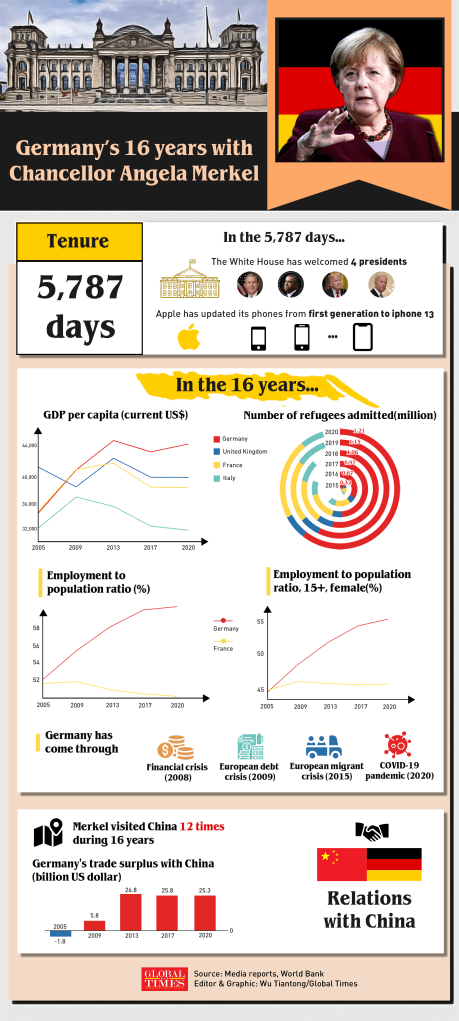
Germany’s 16 years with Chancellor Angela Merkel. Graphic: Wu Tiantong/GT
The US’ so-called China hand Gordon Chang, who has been advocating the “collapse of China” for over 20 years, has continued bad-mouthing China. Gordon Chang’s idea to address empty shelves would see a ‘collapse’ in the US, not in China by Lu Xue Oct 13 2021
When talking about the empty shelves in stores of the US, he once again attributed it to China.
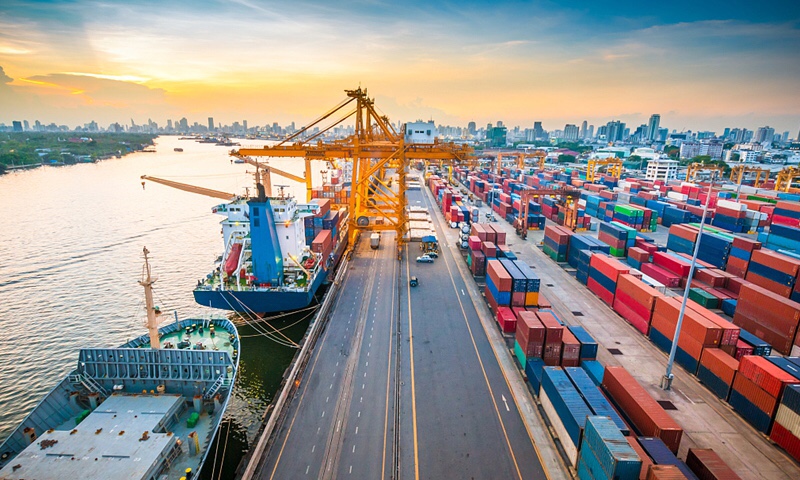
“Americans, for the first time in their lives, are seeing empty shelves in stores. This isn’t right. We need to cut China out of our supply chains by producing locally,” Chang tweeted on Tuesday.
If the US follows what he said, Chang would surely see a “collapse” in the near future, but it would take place in the US, instead of in China. If doing it would help the US and hurt China, former US president Donald Trump would have done so. Even Trump would not resort to such ill-advised practices. One can imagine how crazy this idea is, which is without any logic or common sense.
Chang is hyping the anxiety toward China to cater to some so-called US elites to earn a living. This is all his remaining value and role in the US. When he predicted “the collapse of China” in 2001 in his sensational book The Coming Collapse of China, he drew worldwide attention. Yet for two decades, this prediction has constantly turned out to be wrong. Rather than “collapsing,” China is booming at a rapid pace. Long gone are Chang’s “golden days,” and even many Americans sniff at his predictions of the “collapse of China.” Now, he is on stage for a “clown performance.”
His bad-mouthing of China, or his demand to “cut China out of our supply chains,” is not out of the national interests of the US, but out of his own ill intention to get public attention, and to serve his own interests.
He notices the “empty shelves” and is clearly aware of the US dependence on China on supply chains. But his solutions and interpretations are illogic and far-fetched.
“There is no inevitable causal relationship between ’empty shelves’ and the US’ dependence on China in terms of supply chains. ‘Empty shelves’ is the result of the US’ problems with the purchase, supply channels and distribution. But Chang cannot interpret the ’empty shelves’ according to this logic. Instead, he tends to direct at China any problems the US is confronted with.” Shen Yi, a professor at the School of International Relations and Public Affairs of Fudan University, told the Global Times.
Shen continued, “Chang is just like the Roman senator Cato the Elder, who ended every one of his speeches with the catchphrase that, ‘Carthage must be destroyed!’ regardless of whether he had been speaking about the city of Carthage. Chang has become obsessed and paranoid.”
It is not surprising to see some Americans still agreeing with Chang about cutting China out of the US supply chains when we reviewed the responses to this tweet. Chang is extremely self-centered, as he believes he is correct about everything. If it turns out that he is wrong, it must be someone else’s fault. Shen said that “these characteristics are the inevitable outcome of the radicalization of the individual-centered liberalism in the US. Against this backdrop, his rhetoric will resonate with some Americans.”
But he will have egg on his face once again, just as he did when his “collapse of China” prediction turned out to be totally wrong. It will be proven that under the current international environment, China-US economic ties will only grow increasingly close. This can explain why US Trade Representative Katherine Tai used the term “recoupling” instead of “decoupling” when delivering remarks on China-US bilateral trade relations on October 4.
Russian govt reps voice support for China’s Xinjiang policy, slam Western lies by Fan Anqi Oct 13 2021
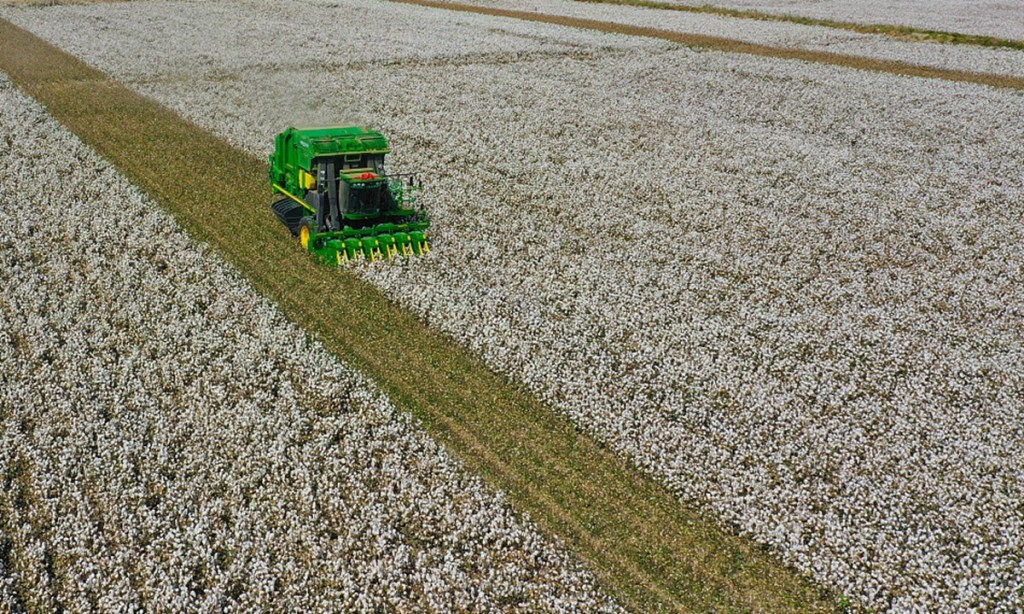
“However white the cotton, however red the tomatoes, to them they are all black,” said Chinese Ambassador to Russia Zhang Hanhui about the malicious fabrications and sanctions imposed by some Western countries over China’s Xinjiang policy on Wednesday. Zhang was speaking at a virtual promotional event for Xinjiang, winning wide support from Russian officials, media and organizations.
Themed “Xinjiang is a beautiful place,” the event was hosted by the Chinese Embassy in Russia on Wednesday.
Ambassador Zhang started off by introducing some of the historic feats that Xinjiang has achieved over the years. In 2020, Xinjiang shook off absolute poverty as all of the province’s 32 poverty-stricken counties and more than 3.08 million registered impoverished residents have been lifted out of poverty, the Global Times learned at the meeting.
Zhang noted that under the continuous efforts of local security departments, Xinjiang has not seen one single terrorist attack in more than four years, after years of turbulence that had badly haunted local people’s normal work and lives.
“However, some anti-China forces have been blatantly distorting and smearing China’s Xinjiang policy, making up fake stories about so-called forced labor and genocide. They do not really care about human rights, but only use it as an excuse to obstruct China’s development,” Zhang said.
“The vitriol has dismayed and enraged every Chinese citizen,” he said, expressing absolute opposition to the West’s double standards and interference.
At the event, a number of Xinjiang residents shared their stories, and refuted Western accusations about “concentration camps,” “forced sterilization” and “religion blockade.”
The owner of a car-selling company in Yecheng county named Aihebaiti spoke about how he managed to get rid of extremist thoughts and realized the horrible deeds of extremists by studying in a local training and education center.
“Not only was I able to shake off extremism through learning on anti-terrorism courses, but I learned many skills such as car repair that prompted me to open up this company,” Aihebaiti said at the event. “I am very grateful that the center helped me back on the right track, and gave me such a promising and happy life.”
Zeligulmayr, the owner of a beauty and skincare center in Kashi told attendees stories of her three children. Zeligulmayr said that the local government paid most of the fees when she gave birth at hospitals, and sent her nutrition bags regularly. School tuition fees are also paid by the government, the Global Times learned.
“I am leading a satisfied, happy life thanks to the support of the government, and claims of so-called genocide are a complete insult to our Xinjiang people. Stop talking nonsense and don’t disturb our lives,” she said.
Deputy of the Russian State Duma Sergei Gavrilov acknowledged Xinjiang’s rapid socioeconomic development over the years, as well as the strong and effective measures in safeguarding the region against terrorism.
He appreciated the extended cooperation on the border between the two countries in Xinjiang, and called for a deepened relationship in fighting against foreign interference in each other’s internal affairs.
In late September, 65 countries delivered a joint statement against interference in China’s internal affairs under the pretext of human rights at the 48th session of the Human Rights Council, stressing non-interference in China’s internal affairs including Hong Kong, Xinjiang and Tibet-related issues.
In addition, six member states of the Gulf Cooperation Council (GCC) issued a joint letter supporting China’s position. More than 20 countries expressed their support for China in their national statements. All together, nearly 100 countries expressed their understanding and support for China’s position.
CNN’s Wuhan blood sample story ‘over-interprets’ old information by GT staff reporters Oct 13 2021
Several sources said on Wednesday that an “exclusive” report by CNN claiming that China is preparing to test “tens of thousands” of blood bank samples from Wuhan is hyping of old news and an over-interpretation, as a collaborative study with the Wuhan Blood Center for the presence of COVID-19 antibodies was recommended by a WHO-China joint experts team in a March report.
Sources told the Global Times that preparations for the testing of blood samples has not started yet, and they said that the report exposed the US media’s vicious conjecture and bias by suggesting that testing conducted by China cannot be transparent.
CNN said in a story on Wednesday that China is preparing to test tens of thousands of blood samples from Wuhan, as part of “a probe” into the origins of COVID-19, citing an unidentified Chinese official. Those samples kept in the Wuhan Blood Center, which are thought to span 2019, have been retained for two years, and preparations for testing are in progress, as the two-year validity period will soon expire, the report said.
A source close to China’s National Health Commission told the Global Times on Wednesday that preparations for the testing of blood samples has not started yet, and the CNN report is an overinterpretation.
The source said it is also a vicious conjecture to connect the move with increasing calls for transparency over the emergence of the virus.
The WHO-China joint expert team already recommended a collaborative study with the Wuhan Blood Center for the presence of SARS-CoV-2-specific antibodies in blood samples from adult blood donors in Wuhan collected during the months of September to December 2019, and further back in time, until there are two successive months without any evidence of SARS-CoV-2-specific antibodies among the tested samples, according to a joint report issued in March.
This could be expanded to include other blood centers in China and other locations worldwide, focusing on the six months (or at least three to four months) before the first cases in each location were identified and ideally using a common laboratory testing approach, the report said.
Liang Wannian, a member of the WHO-China joint study team, speaks at the WHO-China joint study press conference in Wuhan, central China’s Hubei Province, Feb. 9, 2021.
When asked about whether China would further test the blood samples, Liang Wannian, the Chinese leader of the WHO-China joint expert team, said at a press conference in July that experts had already made a request for sample testing and invited some experts from the Wuhan Blood Center for full discussions.
Blood samples are kept as evidence in lawsuits related to blood donations, and they have to be retained for two years in accordance with Chinese regulations, Liang explained. As to the next-phase study, whether those samples could be used for relevant studies, “the Chinese authorities are currently organizing experts and institutions to get prepared,” he said.
Another expert from the WHO-China joint expert team, who spoke on condition of anonymity, told the Global Times on Wednesday that he had not been aware of any plan to soon launch blood testing, as reported by the US media.
Also, an employee from the Wuhan Blood Center told the Global Times on Wednesday that the center had no clue about the information reported by CNN.
Marion Koopmans, head of the viroscience department at the Erasmus MC Rotterdam in the Netherlands and a member of the WHO-China joint study on the virus origins, told the Global Times in an earlier interview that WHO scientists talked to Hubei’s blood banks during their stay and experts agreed to keep the samples, but “we also recommended similar studies in other regions inside and outside of China with early evidence for cases using the same methods, and that has not been arranged and may become impossible.”
While the CNN story hyped the kick-off of blood sample testing in Wuhan by citing as background that the Biden administration has blamed China for not being open and transparent on the matter of origins tracing, experts said that testing early samples is common practice for scientific studies.
Liu Jun, a researcher from the China CDC who is also a member of the WHO-China joint expert team, told the Global Times on Wednesday that testing blood samples taken in Wuhan in 2019 as a possible method for tracing the virus origins was discussed during their visit to Wuhan with international experts earlier this year, and the suggestion was written into the WHO-China joint report. Such tests are a normal way to conduct further studies, said Liu.
For the next phase of origins tracing work, some Chinese experts called previously for a plan to investigate early samples, especially in countries that reported early cases like the US.
For instance, a study of more than 24,000 samples taken for a National Institutes of Health (NIH) research program in the US between January 2 and March 18, 2020 suggested that seven people in five states – Illinois, Massachusetts, Mississippi, Pennsylvania and Wisconsin – may have been infected well before the country’s first confirmed cases were reported in January 21 in 2020.
China’s wisdom in minimizing environmental harm when building the world’s longest sea crossing bridge, which runs across water that is the primary habitat for Chinese white dolphins, has served as a science-oriented inspiration for averting risks to marine life.
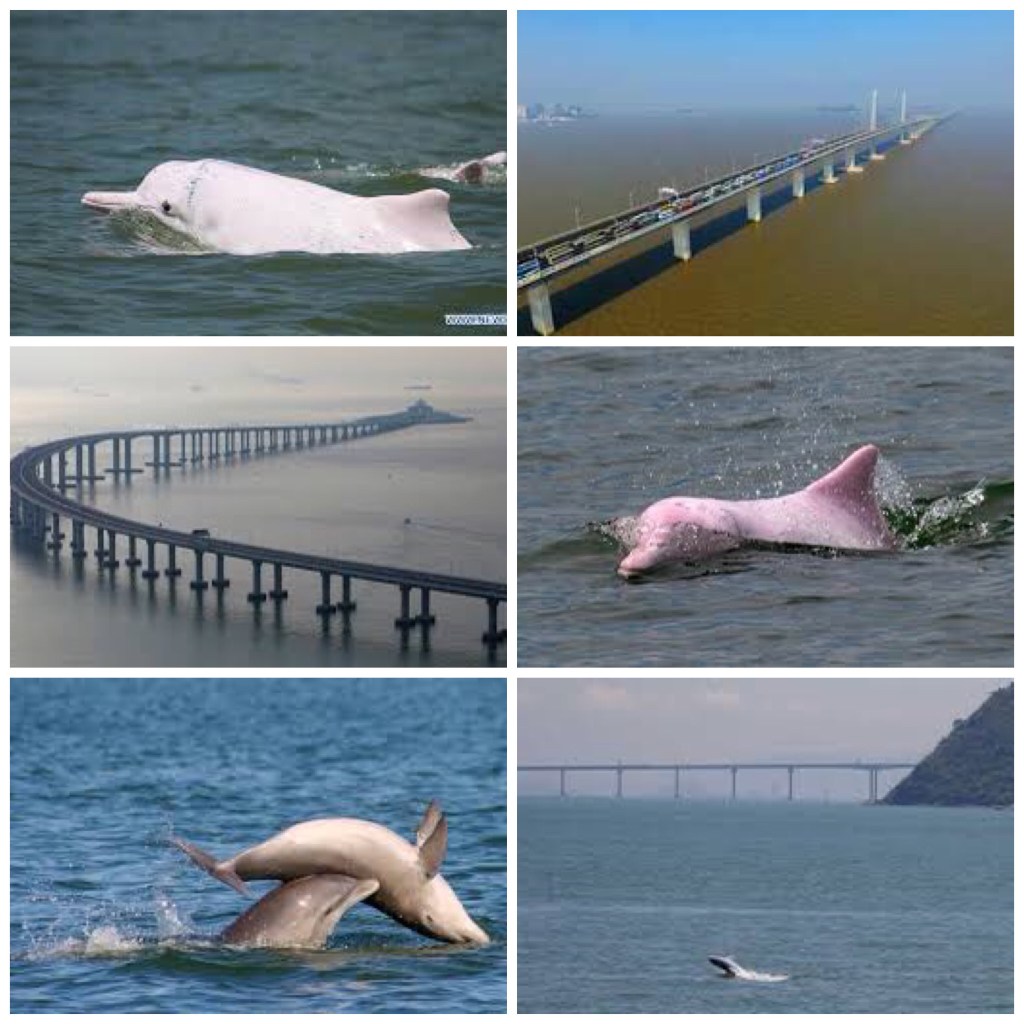
When the Hong Kong-Zhuhai-Macao Bridge (HZMB) was unveiled in October 2018, a nearby pod of playful and adorable Chinese dolphins – nicknamed the “giant panda of the sea” – showed how their reserve was fully protected.
There have been many efforts by the design team to control the ecological impact of the bridge, under the guidance of national-level biodiversity programs.
To meet the Chinese government’s priority to preserve the natural habitat for white dolphins, the construction of the HZMB that started in 2009 devoted funds of 340 million yuan ($52.76m) for the protection efforts.
The rare Chinese white dolphin is under first class state protection, and primarily lives in the Pearl River Estuary in southeastern China.
Meng Fanchao, chief designer of the bridge, said in a recent exclusive interview with the Global Times that the team constantly revised design schemes to minimize disturbance to the dolphins, such as shortening the construction period and cutting the number of piers that dolphins could collide with.
Researchers have identified more than 2,000 Chinese white dolphins in the Pearl River Estuary since 2011.
For a long period, water traffic in the busy shipping channel has been a problem as over 40,000 vessels pass through each year, and pollution in the estuary is also a potential threat.
Environmentalists were concerned the construction of the 55-kilometer bridge could cause further damage as it crosses the core area of the dolphin’s natural reserve.
But what surprised the public is that more white dolphins seem to have appeared since the bridge was built.
The latest official data suggests that about 2,500 dolphins had been seen by June 2020, an increase since the opening of the bridge.
This is largely thanks to innovative and optimized construction plans, close research and monitoring of dolphins, and the joint efforts of the governments of Hong Kong, Macao and Zhuhai.
Meng told the Global Times that the construction team set a goal from the very beginning to “keep the dolphins from decreasing and moving.” In order to protect the “panda of the sea,” the HZMB team has been constantly optimizing its design, shifting most construction work to land processing to minimize the time spent at sea.
“We built artificial reefs to achieve this, and we found that the artificial reefs allowed shrimp and small fish to thrive, providing a richer food source for the dolphins,” Meng said.
Reducing the number of people working offshore also decreased the marine debris contaminating the marine environment for dolphins, said Meng.
The construction team was not allowed to conduct large-scale excavation work that could cause floating rubbish during the peak breeding season for white dolphins from April to August.
The number of piers were strictly curtailed from an initial 318 to 224, Meng also noted.
“Construction vessels must have the awareness to avoid dolphins. When dolphins block our way, we prefer to take a detour rather than disturbing them. The construction team took care of these little creatures like little kids,” said Meng.
Workers’ vigilance was important during the construction, and was helped by training and education.
Media reports said that during the construction period, researchers tracked the species more than 300 times, took over 300,000 photos, identified more than 1,000 Chinese white dolphins, and organized 29 training sessions for a total of 2,544 participants to learn more about the protection efforts.
Also, a white dolphin conservation alliance initiated by authorities in Guangdong Province, Hong Kong and Macao is intended to boost cooperation among conservation groups in the three regions, according to the administration of the Pearl River Estuary Chinese White Dolphin Reserve, Xinhua News Agency reported.
Routine rescue and joint emergency rescue are typical missions for the alliance. It also conducts research on the dolphins’ population, lifestyle, migration routes and physiology.
How to balance efficiency and economic benefits with environmental protection in major infrastructure projects has been a test of China’s wisdom, said Meng. The HZMB Bridge became a project with complex technology and the highest environmental protection requirements and strictest construction standards in the history of Chinese bridges.
Monitoring and surveys of the dolphins in Lingding Bay and in their other habitats are still going on, Meng said. “We are now confident to say that the HZMB Bridge takes the lead in environmental protection among world-class super-large bridges.”
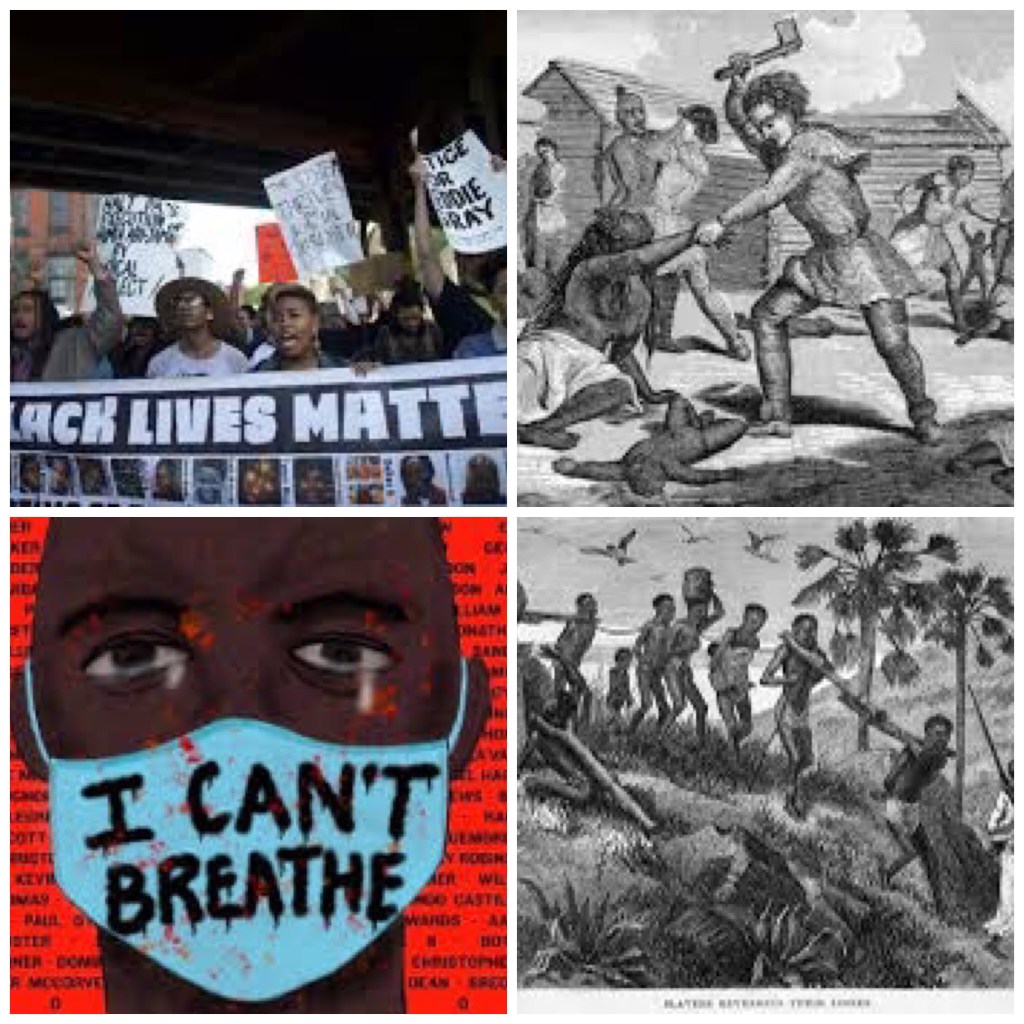
Video: The human race should gift a huge mirror to US to have her entire nation looks at her shameful human rights records since before 1776. A nation committed crime against humanity for 245+ years. US even celebrate Columbus Day every year to remind Native American through ethnic cleansing 90% were murdered in cold blood. This is the American way of fake democracy human rights and rules of law 人類應該給美國一面巨大的鏡子,讓她的整個國家人民審視她自 1776 年以來的可恥人權記錄。一個國家犯下了245多年的反人類罪。美國甚至每年都慶祝哥倫布日,以提醒通過種族清洗美洲原住民,90%美國原住民被冷血殺害. 這就是美國所謂的(假)民主人權和法治.
translated by Hicks Ping: 🗨 that type of government, those kind of people; do they really think they have the right to question about human rights in China? 🗨 have they been to China? Seen with their own eyes the safety/security in our streets? Witnessed the happiness of our citizens? 🗨 have they been to Xinjiang? 🗨 the US needs to look itself properly into a mirror firsts before spreading hatred propaganda slurs at 🇨🇳China “ . 🛑 .
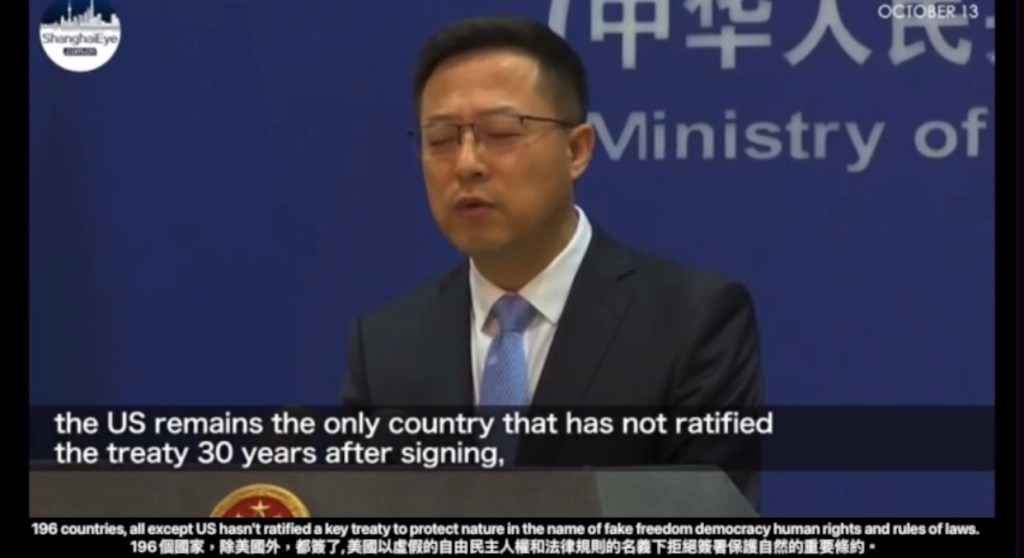
Zhao Lijian: The Convention on Biological Diversity (CBD) was opened for signature at the United Nations Conference on Environment and Development in Rio de Janeiro in 1992. For years, the convention has provided outstanding guidance for the protection of global biodiversity and is signed by more countries than any other international conventions on environment.
Among the 196 parties to the CBD, the US remains the only country that has not ratified the treaty 30 years after signing, and has not announced plans to ratify it. Some people commented that environmental protection is in conflict with the interests of big capitalists, and the US is reluctant to make concessions and sacrifices for global public interests. As the largest country in the world, the absence of the US has undermined global efforts in protecting biodiversity and preventing the extinction of species.
For quite some time, the US has called on countries on many international occasions to address challenges with unity and through joint actions. The US side should stop seeking instant benefits when participating in international affairs at an early date, shoulder its due international responsibilities and obligations, bear in mind the wellbeing of the world’s people and take concrete actions to win the trust of the international community.

 Johnson Choi Biz