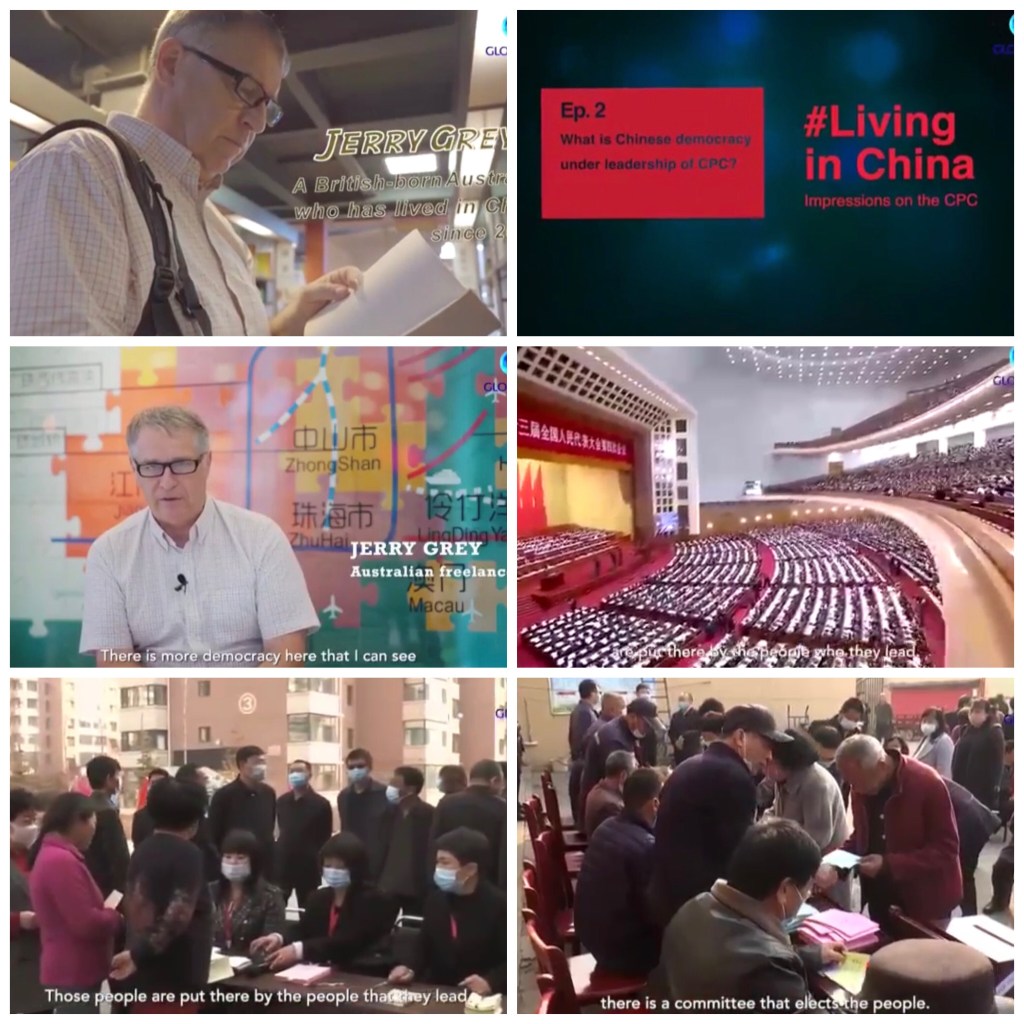
Video: Is China a Democratic Country? 中國是民主國家嗎?
https://vimeo.com/638157379
https://youtu.be/vj4Ok_44jbk
https://www.facebook.com/100036400039778/posts/590689282154401/?d=n
Video: Is China a Democratic Country? 中國是民主國家嗎?
https://vimeo.com/638157379
https://youtu.be/vj4Ok_44jbk
https://www.facebook.com/100036400039778/posts/590689282154401/?d=n

China, Russia launch joint naval patrols in West Pacific, cementing strategic partnership by Global Times Oct 23 2021
Chinese and Russian naval forces have carried out their first joint sea patrol in waters in the West Pacific between October17 to 23, Chinese Ministry of Defense said on Saturday. The patrol was held right after China and Russia wrapped up a joint naval exercise in the Sea of Japan from October 14 to 17.
A China-Russia joint naval ships formation which included a total of 10 warships and six carrier-based helicopters carried out the joint maritime patrol in the Sea of Japan, the West Pacific and the East China Sea, during which they organized exercises over joint sailing and joint maneuvers and conducted live-fire drills.
A statement from Russian Ministry of Defense said on Saturday during the practical actions, the battle ships sailed more than 1,700 nautical miles in total.
During the mission, the joint formation has strictly abided by international law and did not enter territorial waters of other countries, the Chinese Ministry of Defense said.
Previously, Japanese media had hyped up the joint formation’s passage through of the Tsugaru Strait, but Chinese military experts noted that the Tsugaru Strait is no territorial water, and warships from any country have the right to transit, which means the transit of the Chinese and Russian vessels were in line with the international law and well within the bounds of standard naval practices.
The joint maritime patrol is aimed at further developing the China-Russia comprehensive strategic partnership of coordination for the new era, elevating the joint action capabilities of both nations and jointly maintaining international and regional strategic stability. It’s a part of the annual cooperation plan between the two nations and is not targeted at any third parties, the Chinese Ministry of Defense stated.
Since 2019, air forces from China and Russia have conducted annual joint strategic air patrols over the East China Sea and Sea of Japan. The joint sea patrol for the first time has built on enhanced military cooperation between the two strategic partners, Chinese military experts said.
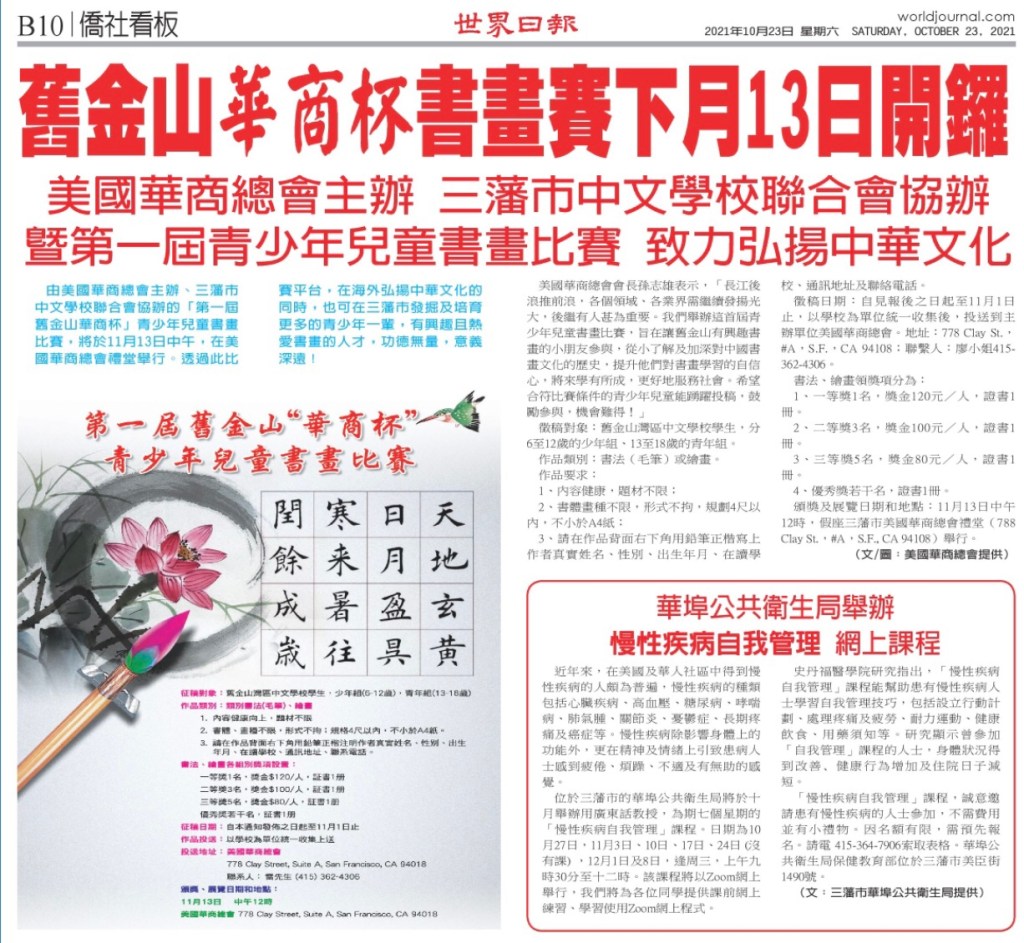
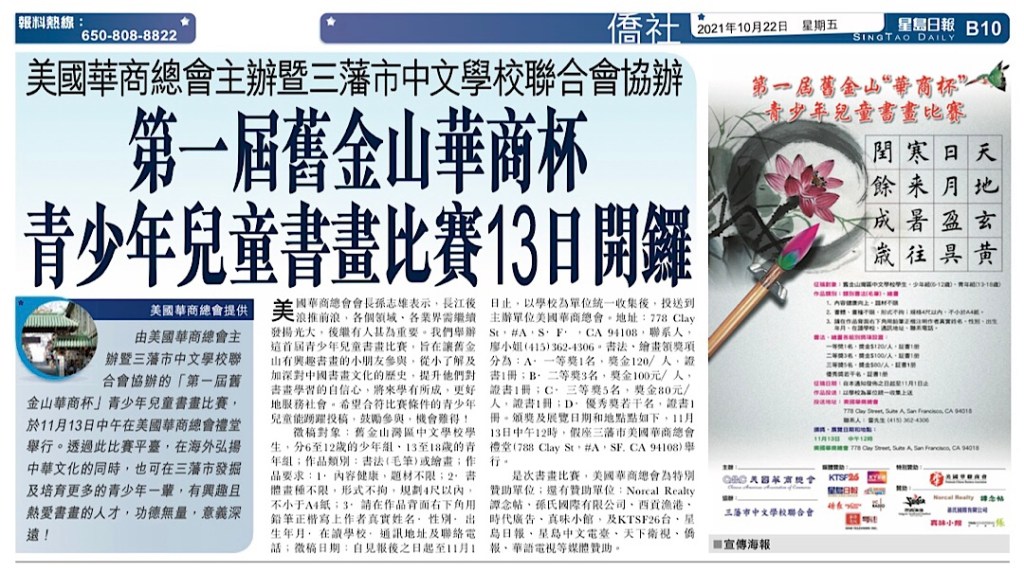
CAAC in San Francisco sponsored the SF Chinese School Association and the First Children’s Painting and Calligraphy Competition to promote Chinese culture.
美國華商總會主辦 三藩市中文學校聯合會恊辨暨第一屆少年兒童書畫比賽 致力弘揚中華文化.
美國華商總會 CAAC President 会长:
孙志雄 Baron Suen
VPs 副会长:
孙志中 Zhi Zhong Suen
林志强 Norman LIN
萧昆锡 Ken Siu
谭念帖 Lingtie Tan
Secretary 秘书:
谭文华 Sherman Tam
Treasurer 财政:
蔡永强 Johnson Choi
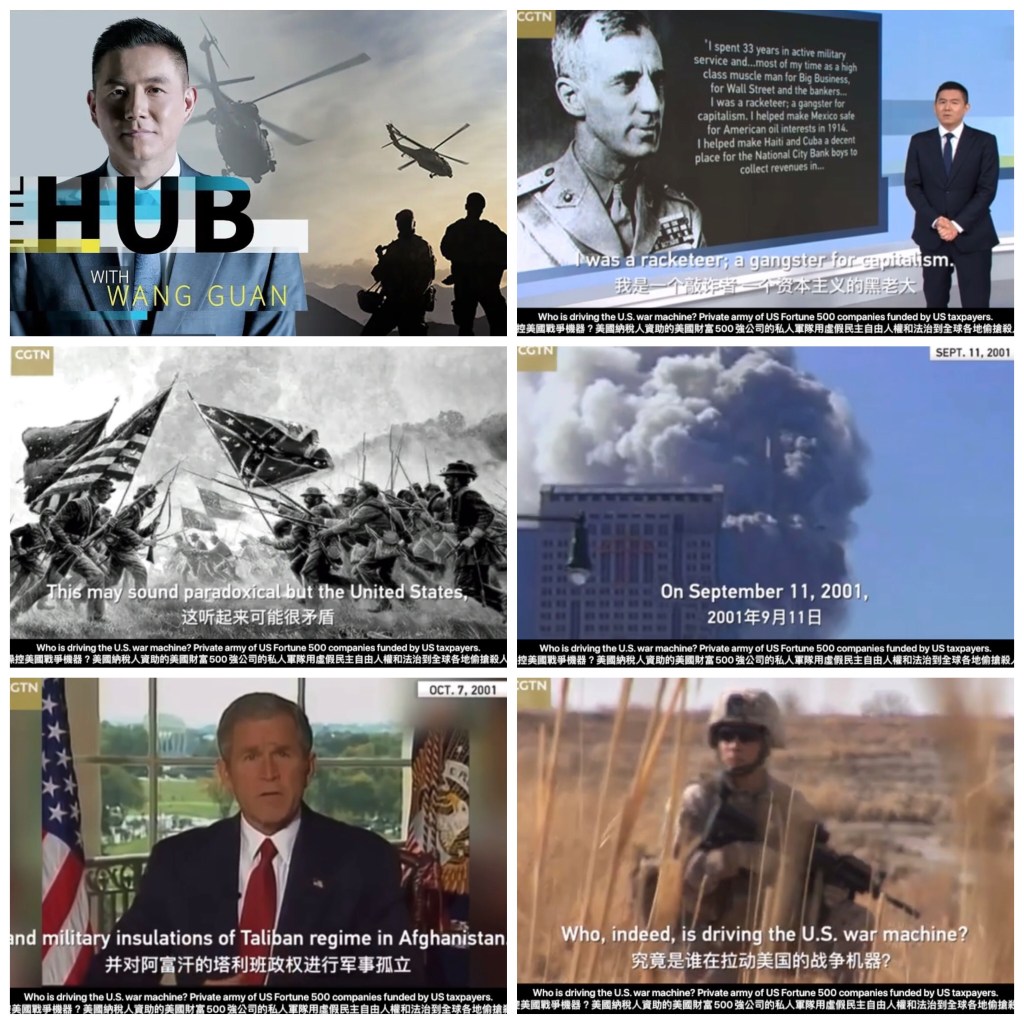
Video: Who is driving the U.S. war machine? Private army of US Fortune 500 companies funded by US taxpayers. 誰在操控美國戰爭機器?美國納稅人資助的美國財富500強公司的私人軍隊用虛假民主自由人權和法治到全球各地偷搶殺人無數.
https://vimeo.com/638089542
https://youtu.be/hCBxmB6ItJ8
https://www.facebook.com/100036400039778/posts/590481815508481/?d=n
The United States, born in the ashes of wars of battles, has been one of the world’s most belligerent countries. Studies show that it’s Washington who has been at war for more than 220 out of its 245-year history. What’s fueling U.S. military actions? Many observers say with America’s military-congressional-industrial complex, peace will never be given a chance. Agree or disagree? 美國出生在戰爭的廢墟中,一直是世界上最好戰的國家之一。 研究表明,在其 245 年的歷史中,華盛頓已經參戰了 220 多年。 是什麼推動了美國的軍事行動? 許多觀察家說,在美國的軍事-國會-工業綜合體中,和平永遠不會有機會。 同意還是不同意?
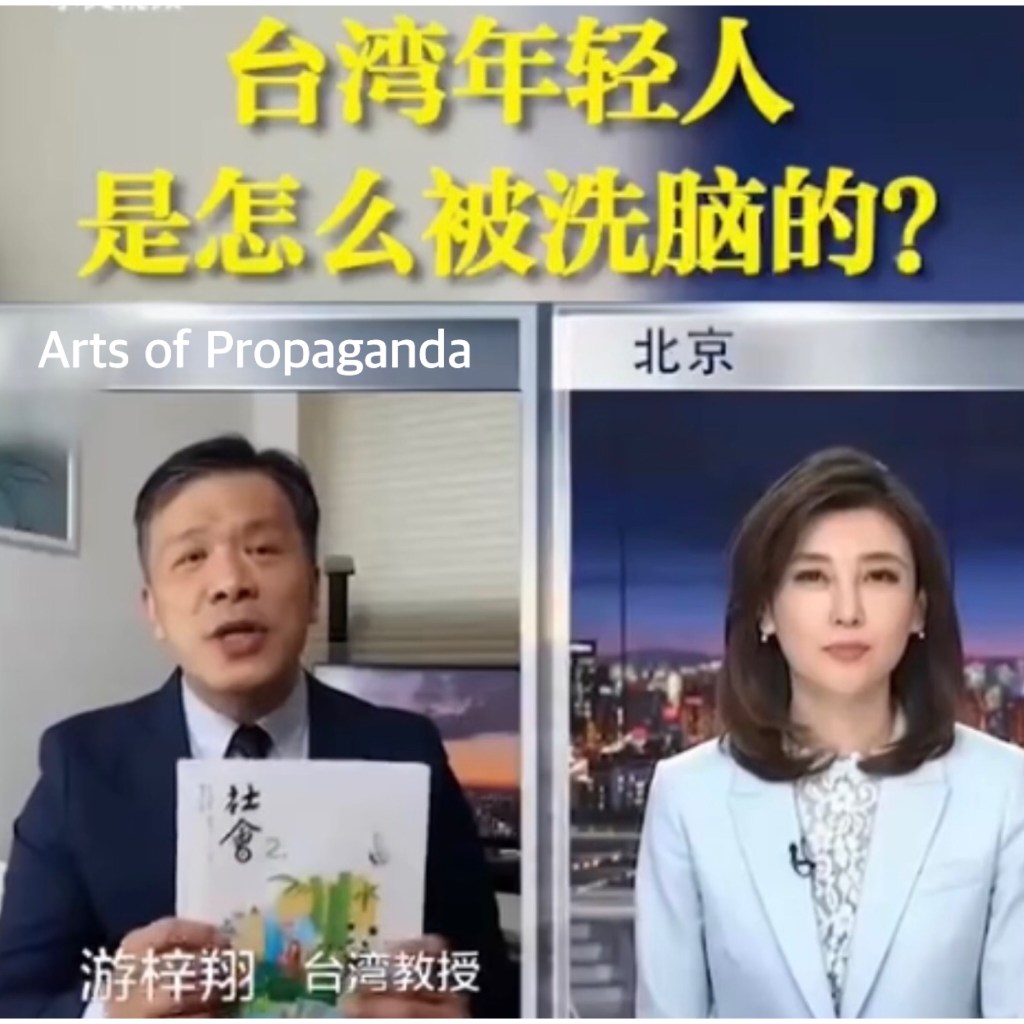
The arts of Propaganda. 宣傳藝術.
https://vimeo.com/638067923
https://youtu.be/yGCvVnPAhUc
https://www.facebook.com/100036400039778/posts/590383662184963/?d=n
Why Americans hated China when China did nothing bad to US? 中國沒有對美國做壞事,美國人為什麼恨中國?
Why Young Hongkongers worship the former colonialists UK and hated China? 為什麼香港青年崇拜英國前殖民主義者,憎恨中國?
Why young Taiwanese worship US and Japan and hated their motherland? 為什麼台灣年輕人崇拜美國和日本,恨他們的祖國?
They all share one thing in common, they are students of Nazi propaganda chief Joseph Goebbels “If you tell a lie big enough and keep repeating it, people will eventually come to believe it. The lie can be maintained only for such time as the State can shield the people from the political, economic and/or military consequences of the lie. It thus becomes vitally important for the State to use all of its powers to repress dissent, for the truth is the mortal enemy of the lie, and thus by extension, the truth is the greatest enemy of the State.” 他們都有一個共同點,他們都是納粹宣傳部長約瑟夫·戈培爾的學生,“如果你說一個足夠大的謊言並不斷重複,人們最終會相信它。 謊言只能維持到國家可以保護人民免受謊言的政治、經濟和/或軍事後果的時間。 因此,國家使用其所有權力壓制異議變得至關重要,因為真相是謊言的死敵,因此推而廣之,真相是國家最大的敵人。”
Look at the score cards by US, Hong Kong and Taiwan: 看看美國、香港和台灣的記分卡:
In 5 years, 75% Americans hold a negative views against China. 短短的5年, 75% 美國人對中國持負面看法。
In 20 years, 75% of Hongkongers age 40 and below hold a negative view against China. 在短短的20年, 40歲及以下的香港人中有75%對中國持負面看法。
In 20 years, 75% of Taiwanese age 40 and below hold a negative view against China. 在短短的20年, 台灣40歲及以下75%的人對中國持負面看法.
Some suggest Taiwan will peacefully reunite with China by giving her more time. If we wait for 10 more years, expect 75% of Taiwanese age 50 and below will hold a negative view against China. 一些人建議,給台灣省更多時間,台灣省將與中國和平統一。 如果再等 10 年,預計 75% 的 50 歲及以下台灣人將對中國持負面看法。
Video: How Taiwan Government brainwashed their people? By removing Chinese history last 20 years to disconnect Taiwan Province with her motherland! 台灣政府是如何給人民去中國化洗腦的? 過去20年, 從小學開始通過刪除中國歷史來斷絕台灣省與她的祖國關係.
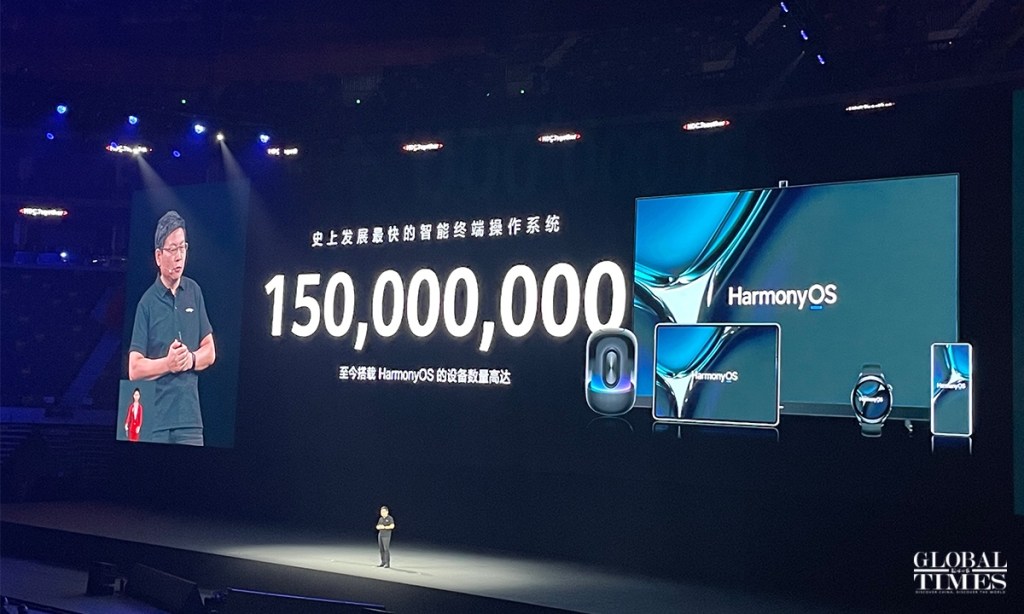
中國與美國多方面尢其是高科技全方位脫鉤是必須且不可逆轉的。 華為發布更新的鴻蒙操作系統 3.0 有望快速擺脫美國禁令 Decoupling with US a must and irreversible. Huawei launches updated HarmonyOS 3.0, on fast track to shake off US ban by Shen Weiduo and Zhao Juecheng in Dongguan Oct 22 2021
Richard Yu, Huawei’s rotating chairman at the 2021 Huawei Developer Conference on Friday.
Chinese telecommunications giant Huawei launched an updated version of its self-developed operating system (OS), the HarmonyOS 3.0 for developers on Friday, putting the firm on the fast track to shake off reliance on Google’s Android, while also paving the way of recovering from a hobbled handset business amid US sanctions.
The 3.0 version is an update from the 2.0 version, which was launched in June this year. Since then, Huawei started rolling out HarmonyOS on selected smartphone models, offering users the chance to switch from the current operating system based on Google’s Android platform.
The HarmonyOS 3.0 developer preview version allows developers to use more powerful tools to innovate across more types of terminal devices, bringing consumers a new experience of intelligent connection of all things, Tim Gong, the president of software at the Huawei Consumer Business Group, said at the annual Huawei Developer Conference (HDC) in Dongguan, South China’s Guangdong Province on Friday.
Gong said the HarmonyOS 3.0 beta version will be officially launched in the first quarter of 2022.
HarmonyOS was unveiled in 2019 as a “back-up” for Google’s Android when the Chinese company was barred from using Google’s services under a US government export ban. Research on the OS actually began in 2012.
While rather than being a “replacement,” the company stressed the OS can also be deployed across multiple devices, including smartphones, computers, and other electronic devices, which could also help it gain an early foothold in the era of “Internet-of-Things.”
Huawei has also unveiled several new products using HarmonyOS, including a tablet and smart watch over recent years.
So far, devices updated to Huawei’s HarmonyOS, including its smartphones, watches and tablets, have already surpassed 150 million, making it the fastest-growing intelligent terminal OS ever, Huawei’s rotating chairman Richard Yu Chengdong said during a keynote speech at the HDC on Friday. Yu added that the number could surpass 200 million by the end of the year.
Huawei previously estimated that HarmonyOS could be installed on about 300 million devices by the end of 2021, with about 200 million being on Huawei’s own devices.
Global developers of Huawei Mobile Services (HMS), its own solution based on HarmonyOS after being banned from using Google Mobile Services, have reached 5.1 million. The revenue of HMS ecological developers in the first three quarters of 2021 increased by 62 percent year-on-year.
“Looking at the numbers, HarmonyOS and its own ecology is developing in a very rapid way,” Jiang Junmu, an industry insider and a close follower of Huawei, told the Global Times on Friday.
“It’s now standing firm in the industry,” Jiang said.
The hard-won progress has come after four rounds of US sanctions over the past few years, which have gradually forced the company to become a software producer rather than hardware manufacturer.
“The greatest company of the last century is not only a company that makes products, but also a company that has the strength to speak with standards and patents. Entering the 21st century, the greatest company should be a company that has its own ecology,” Yu said on Friday.
Huawei’s founder and CEO Ren Zhengfei also reportedly said in an internal memo that the company was focusing on software because future development in the field was fundamentally “outside of US control and we will have greater independence and autonomy.” Ren called on the company’s staff to “dare to lead the world” in software.
The biggest challenge for Huawei to develop its HarmonyOS is still the lack of new devices due to the US chip ban, Jiang said. “Huawei can only rely on the current mobile phone stock in the market to develop its own OS, but after one or two years, when its phone stock is running out, it will be a problem then.”
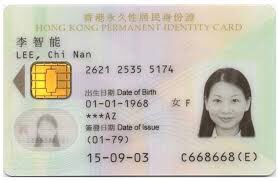
Video: HKID card has bountiful of advantages in China. 香港身份證在中國有很多優勢.
https://vimeo.com/638016928
https://youtube.com/shorts/F_ztqYD-O40
https://www.facebook.com/100036400039778/posts/590238525532810/?d=n
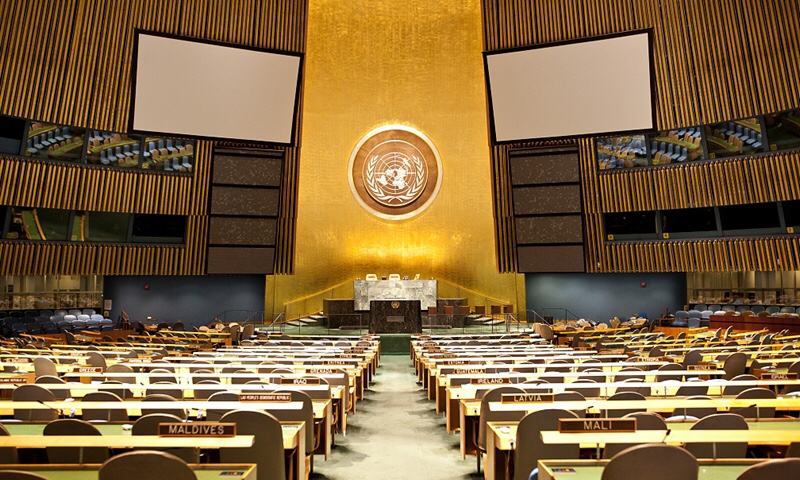
100 countries support China on human rights amid US-led smears and lies at UN session, 不理睬以美國為首的誹謗和謊言, 100個國家在聯合國會議上支持中國的人權記錄. by GT staff reporters Oct 22 2021
Nearly 100 countries voiced their support to China for developing its own pattern for human rights development and opposed politicizing human rights issues to suppress other countries at the 76th session of UN General Assembly on Thursday, while the US and a few Western countries started a new round of attacks on China over Xinjiang, Hong Kong and Xizang (Tibet) regions.
On behalf of 62 countries, Cuba made a joint statement on Thursday at the UN General Assembly to support China for developing its own pattern on human rights that fits its conditions and oppose other countries’ interference in China’s internal affairs under the banner of human rights.
The joint statement was made at the 76th session of the UN General Assembly as the Third Committee reviewed human rights issues after a few countries, including the US and France, made groundless accusations targeting China’s human rights record.
The joint statement said that respecting each country’s sovereignty, integrity and independence and no interference in other countries’ domestic affairs should be the basic international code. Issues on China’s Xinjiang, Hong Kong and Xizang regions are China’s internal affairs, and no country has the right to interfere.
The joint statement called on countries to respect people of different countries to choose their own pattern for human rights development and opposed politicizing human rights issues or double standards, or making groundless accusations at China out of political purposes and based on disinformation.
Kuwait, on behalf of three Gulf countries, also made a joint statement to support China and said that to deal with human rights issues, countries should abide by principles of objectiveness without politicization, the UN Charter and the Universal Declaration of Human Rights. They should also respect each country’s sovereignty and not interfere in other countries’ internal affairs.
More than 30 countries also voiced their support for China at the meeting, which marked more fair and just voices at the UN platform after the 48th session of the UN Human Rights Council, Wang Wenbin, Chinese FM spokesperson, told a press conference on Friday.
On Thursday, Ambassador Zhang Jun, China’s permanent representative to the UN, refuted the untenable accusations and reiterated China’s stance on human rights issues, saying that China firmly opposes and refuses untenable accusations made by some countries.
It is so difficult for the US and a few countries to change their old bad habits – misusing the UN platform to make untenable accusations at China, spreading political viruses and disinformation, and poisoning the atmosphere for cooperation.
China has actively participated in all the topics of the Third Committee and offered China’s approach. On behalf of 31 countries, China made a joint statement to oppose unilateral sanctions; on behalf of 76 countries, it made a joint statement on promoting the fair distribution of vaccines; together with African countries, China also released a joint statement opposing racial discrimination, winning support from 78 countries. All these show that China and the majority of developing countries insist that communication is the right direction for promoting human rights, and cooperation is the right pattern, Zhang noted.
I also want to tell US followers that you think you can be superior to others by obeying the superpower and playing the jackal to the tiger. But as a country that has no independence, you lost dignity and earned no respect from others, Zhang said.
The Chinese ambassador pointed out that China has introduced the true situation in its Xinjiang region many times. Before the opening of the Third Committee, China’s Permanent Mission to the UN held a joint video conference with the Xinjiang regional government and invited representatives of local residents and foreigners who had visited Xinjiang or lived there to share their stories about the region.
The experiences and stories of more than 1,000 foreign diplomats, journalists, religious people from more than 100 countries who had visited Xinjiang shattered the lies made by some Western countries. Zhang noted that the happy life and smiles of Chinese people are the best and most true proof of China’s human rights achievements. The lies made by the West can only fool themselves, not the whole world.
Zhang also noted that China welcomes all good and kind advice but refuses lectures based on lies and political oppression, or from those who think of themselves as superior to others. China’s resolve to safeguard its sovereignty, security and interests of developments is firm and unshakable. It will carry out making contributions to promote human rights work around the world.

The ending of the US dominance 美國霸權的終結 by Johnson Choi on 10-22-2021 SF California
Most Chinese companies will withdraw from the U.S. stock market before the end of 2022, and the biggest beneficiary will be Hong Kong.
In the future, most China’s companies will not be listed in the U.S. stock exchange unless there are major changes in Sino-U.S. relations, I am not optimistic about this.
The United States knows that it cannot beat China, but is not willing to give up.
I believe in the next 5-7 years, China can replace the United States in manufacturing its own key technologies including advanced computer chips and aircraft engines, coupled with further global de-dollarization with China leading the way.
If the United States can no longer control advanced technology and do not have the hegemony of the dollar, then US controlling the global payment and weaponizing the US dollar will be a thing of the past.
Within 20 years United States will definitely be at a point of no returns like the former Roman Empires.
No wonder I have seen more family members, clients and their relatives gave up their green cards returning to China, Hong Kong and Taiwan. This kind of thing has rarely happened before, but it is so common today.
中資公司在2022年底前將大部分退出美國股市, 最大得益者將是香港. 將來中國大的實力股也不會在美國上市. 除非中美關係有大的改變, 我個人對此並不樂觀.
美國自知打不贏中國, 但又不服氣. 不服氣又能怎樣!
我相信未來5-7年中國可以替代美國制做自己的關鍵技術包括芯片和飛機引擎. 出品平美正, 到時再加上全球進一步去美元化. 美國如果再不能控制高級技術和沒有美元霸權地位, 那麼印銀紙全球埋單將成為過去. 美國二十年內一定玩完.
怪不得我越來越多的客人家人和朋友拿了美國綠卡也放棄返回中港台, 這種事情以前極少聴過, 現在已經是家常便飯了.
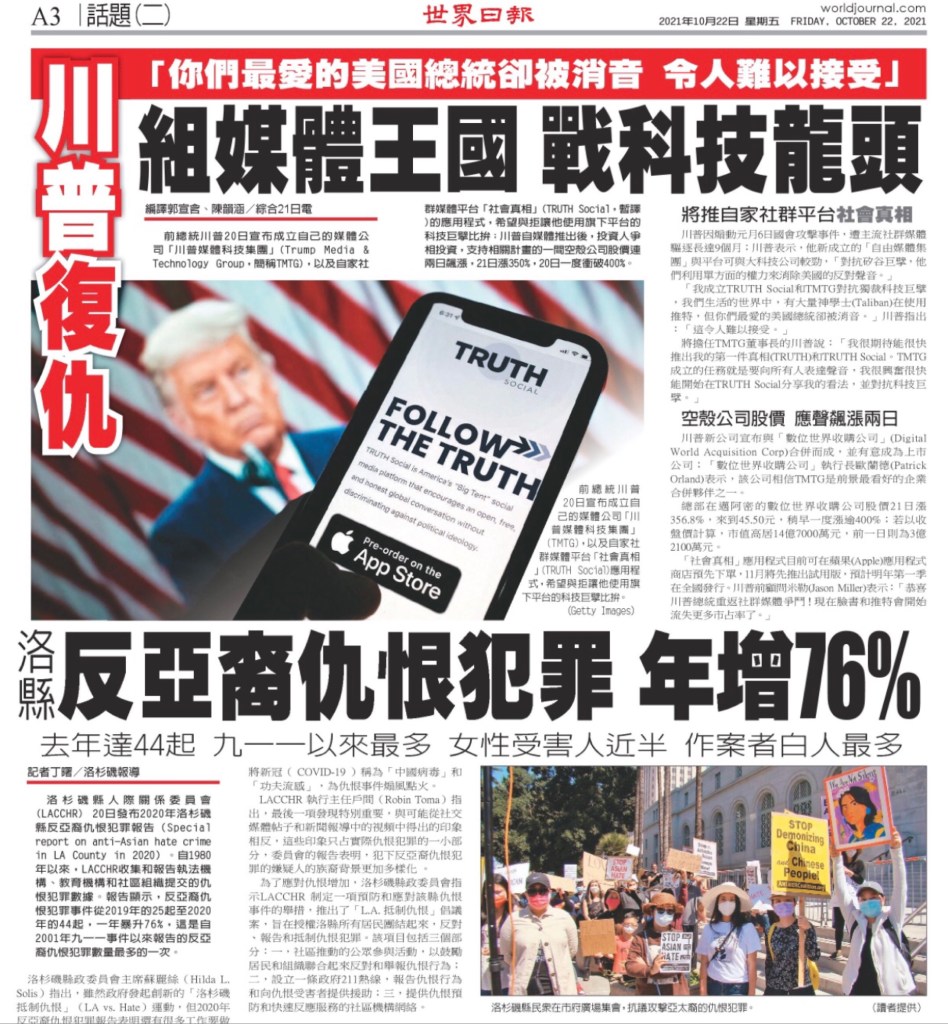
Hated has become a religion like Falun Cult targeting People of Color especially Chinese and Asian in US. Hate Crimes in LA has shot up by 76%, Trump gets most of the credit. Trump’s news media company will further escalate it. 仇恨已經成為一種像法輪功一樣的宗教針對有色人種尤其是在美國的華人和亞裔。 洛杉磯的仇恨犯罪率飆升了 76%,特朗普獲得了大部分功勞。 特朗普的新聞媒體公司將進一步升級美國西人和仇中華人對有色人種的仇恨.

 Johnson Choi Biz