Western Empires in the name of fake freedom democracy human rights and rules of laws supported by their news media mouthpiece. 西方帝國以虛假的自由民主人權和法律規則的名義,得到他們的新聞媒體喉舌的支持.
The BBC repeats lies about Xinjiang, China – telling a story of a woman who left her homeland and struggles to keep Uyghur culture alive in the UK. The BBC mentions UNESCO recognition and protection of Uyghur culture – but fails to mention China was the nation who nominated it to be recognized and protected in the first place! BBC 重複關於中國新疆的謊言——講述了一個女人離開家鄉並努力在英國保持維吾爾文化的故事。 BBC 提到了聯合國教科文組織對維吾爾文化的承認和保護——但沒有提到中國是首先提名維吾爾文化得到承認和保護的國家!
Adopted at the Sixth Plenary Session of the 19th Central Committee of the Communist Party of China on November 11, 2021
Preamble
Since its founding in 1921, the Communist Party of China (CPC) has remained true to its original aspiration and mission of seeking happiness for the Chinese people and rejuvenation for the Chinese nation. Staying committed to communist ideals and socialist convictions, it has united and led Chinese people of all ethnic groups in working tirelessly to achieve national independence and liberation, and then to make our country prosperous and strong and pursue a better life. The past century has been a glorious journey. Over the past hundred years, the Party has led the people to a number of important milestones: achieving great success in the new-democratic revolution through bloody battles and unyielding struggles; achieving great success in socialist revolution and construction through a spirit of self-reliance and a desire to build a stronger China; achieving great success in reform, opening up, and socialist modernization by freeing minds and forging ahead; and achieving great success for socialism with Chinese characteristics in the new era through a spirit of self-confidence, self-reliance, and innovating on the basis of what has worked in the past. The endeavors of the Party and the people over the past century represent the most magnificent chapter in the millennia-long history of the Chinese nation. A review of the Party’s major achievements and historical experience over the past century is necessary for the following purposes:
starting a new journey to build China into a modern socialist country in all respects in the historical context of the Party’s centenary;
upholding and developing socialism with Chinese characteristics in the new era;
strengthening our consciousness of the need to maintain political integrity, think in big-picture terms, follow the leadership core, and keep in alignment with the central Party leadership;
enhancing our confidence in the path, theory, system, and culture of socialism with Chinese characteristics;
resolutely upholding Comrade Xi Jinping’s core position on the Party Central Committee and in the Party as a whole and upholding the Central Committee’s authority and its centralized, unified leadership to ensure that all Party members act in unison;
advancing the Party’s self-reform, building all Party members’ fighting capacity, strengthening their ability to respond to risks and challenges, and maintaining the Party’s vigor and vitality; and
uniting and leading all Chinese people in making continued efforts to realize the Chinese Dream of national rejuvenation.
All Party members should uphold historical materialism and adopt a rational outlook on the Party’s history. Looking back on the Party’s endeavors over the past century, we can see why we were successful in the past and how we can continue to succeed in the future. This will ensure that we act with greater resolve and a stronger sense of purpose in staying true to our Party’s founding mission, and that we more effectively uphold and develop socialism with Chinese characteristics in the new era. The Party adopted the Resolution on Certain Questions in the History of Our Party at the seventh plenary session of its Sixth Central Committee in 1945 and the Resolution on Certain Questions in the History of Our Party since the Founding of the People’s Republic of China at the sixth plenary session of its 11th Central Committee in 1981. These two resolutions embody a facts-based review of major events in the Party’s history, as well as important experience gained and lessons learned. These documents unified the whole Party in thinking and action at key historical junctures and played a vital guiding role in advancing the cause of the Party and the people. Their basic points and conclusions remain valid to this day.
I. A Great Victory in the New-Democratic Revolution
In the period of the new-democratic revolution, the main tasks of the Party were to oppose imperialism, feudalism, and bureaucrat-capitalism, seek national independence and the people’s liberation, and create the fundamental social conditions necessary for realizing national rejuvenation. With a history stretching back more than 5,000 years, the Chinese nation is a great and ancient nation that has fostered a splendid civilization and made indelible contributions to the progress of human civilization. After the Opium War of 1840, however, China was gradually reduced to a semi-colonial, semi-feudal society due to the aggression of Western powers and the corruption of feudal rulers. The country endured intense humiliation, the people were subjected to untold misery, and the Chinese civilization was plunged into darkness. The Chinese nation suffered greater ravages than ever before To save the nation from peril, the Chinese people rose to fight back, and patriots of high ideals sought to pull the nation together, putting up a heroic and moving struggle. The Taiping Heavenly Kingdom Movement, the Westernization Movement, the Reform Movement of 1898, and the Yihetuan Movement rose one after the other, and a variety of plans were devised to ensure national survival, but all of these ended in failure. The Revolution of 1911 led by Dr. Sun Yat-sen brought down the absolute monarchy that had reigned over China for thousands of years, but it failed to change the semi-colonial and semi-feudal nature of Chinese society and to alter the bitter fate of the Chinese people. China was in urgent need of new ideas to lead the movement to save the nation and a new organization to rally forces of revolution. With the salvoes of Russia’s October Revolution in 1917, Marxism-Leninism was brought to China. The May 4th Movement of 1919 spurred the spread of Marxism throughout the country. Then in July 1921, as the Chinese people and the Chinese nation were undergoing a great awakening and Marxism-Leninism was becoming closely integrated with the Chinese workers’ movement, the Communist Party of China was born. The founding of a communist party in China was an epoch-making event, and from then on the Chinese revolution took on an entirely new look. The Party was keenly aware that the conflicts between imperialism and the Chinese nation, and those between feudalism and the people constituted the principal contradiction in modern Chinese society. To realize national rejuvenation, it would be essential to initiate an anti-imperialist and anti-feudal struggle. In the early days of the Party and during the Great Revolution, the Party formulated the program of the democratic revolution, launched movements of workers, youths, peasants, and women, promoted and supported the reorganization of the Chinese Kuomintang (KMT) and the founding of the National Revolutionary Army, and led the great anti-imperialist and anti-feudal struggle across the country, bringing about a surge in the Great Revolution. In 1927, the reactionary clique within the KMT betrayed the revolution, brutally massacring communists and other revolutionaries. Meanwhile, the Right deviationist ideas within the Party represented by Chen Duxiu grew into Right opportunist errors and came to dominate the Party’s leadership. The Party and the people were unable to mount an effective resistance, resulting in a disastrous defeat for the Great Revolution under the surprise attack of a powerful enemy. During the Agrarian Revolutionary War, the Party realized in light of harsh realities that without revolutionary armed forces, it would be impossible to defeat armed counter-revolutionaries, win the Chinese revolution, and thus change the fate of the Chinese people and the Chinese nation. The Party would need to fight armed counter-revolution with armed revolution. The Nanchang Uprising of 1927 fired the opening shot of armed resistance against KMT reactionaries. This marked the start of the Communist Party of China’s journey to lead the revolutionary struggle independently, build the people’s armed forces, and seize state power by force. Soon afterwards, the policy of carrying out agrarian revolution and organizing armed uprisings was established at the August 7thMeeting. The Party led the Autumn Harvest Uprising, the Guangzhou Uprising, and uprisings in many other areas. Due to the great disparity in strength between the enemy forces and our own, most of these uprisings ended in failure. The fact of the matter was that in view of objective conditions at the time, the Chinese communists could not follow the example of Russia’s October Revolution and win nationwide revolutionary victory by taking key cities first. The Party urgently needed to find a revolutionary path compatible with China’s actual conditions. The shift from attacking big cities to advancing into rural areas was a new starting point of decisive importance in the Chinese revolution. Led by Comrade Mao Zedong, soldiers and civilians established the first rural revolutionary base in the Jinggang Mountains, where the Party led the people in overthrowing local despots and redistributing the land. The Gutian Meeting of 1929 established the principles of strengthening the Party ideologically and the military politically. As progress was made in the struggle, the Party established the Central Revolutionary Base as well as the Western Hunan-Hubei, Haifeng-Lufeng, Hubei-Henan-Anhui, Qiongya, Fujian-Zhejiang-Jiangxi, Hunan-Hubei-Jiangxi, Hunan-Jiangxi, Zuojiang-Youjiang, Sichuan-Shaanxi, Shaanxi-Gansu, and Hunan-Hubei-Sichuan-Guizhou bases. In addition, the Party also set up Party organizations and other revolutionary organizations in KMT-controlled areas and launched revolutionary mass struggles. However, the fifth counter-encirclement and suppression campaign in the Central Revolutionary Base ended in failure as a result of the misguided leadership of Wang Ming’s “Left” dogmatism within the Party. The Red Army was forced to make a strategic shift, and arrived in northern Shaanxi Province after enduring the extraordinarily bitter and arduous journey of the Long March. The errors of the “Left” line caused enormous losses to revolutionary bases as well as revolutionary forces in KMT-controlled areas. In January 1935, the Political Bureau of the Central Committee convened a meeting in Zunyi on the Long March, at which Comrade Mao Zedong was confirmed as the de facto leader of the Central Committee and the Red Army. The meeting laid the groundwork for establishing the leading position within the Central Committee of the correct Marxist line chiefly represented by Comrade Mao Zedong, as well as for the formation of the first generation of the central collective leadership with Comrade Mao Zedong at its core. The meeting opened a new stage in which the Party would act on its own initiative to address practical problems concerning the Chinese revolution, and saved the Party, the Red Army, and the Chinese revolution at a moment of greatest peril. It also subsequently enabled the Party to defeat Zhang Guotao’s separatism, bring the Long March to a triumphant conclusion, and open up new horizons for the Chinese revolution. The Zunyi Meeting is therefore considered a pivotal turning point in the Party’s history. After the September 18th Incident in 1931 during the War of Resistance against Japanese Aggression, the conflict between China and Japan gradually overtook domestic class conflict as the issue of primary importance. As Japanese imperialists intensified their aggression against China, the country was plunged into an unprecedented national crisis. The Party was the first to propose that China should fight Japanese aggression with armed resistance, and launched extensive resistance movements. It also facilitated a peaceful settlement of the Xi’an Incident, thus playing a historic role in promoting a second period of cooperation between the KMT and the CPC and the united resistance against Japanese aggression. Following the July 7th Incident in 1937, the Party implemented the right policy on the Chinese united front against Japanese aggression, and adhered to the line of all-out resistance. It devised and executed the strategic guidelines for a protracted war as well as a whole set of strategies and tactics for a people’s war, opened up vast battlefronts behind enemy lines, and developed bases for the resistance. The Party led the Eighth Route Army, the New Fourth Army, the Northeast United Resistance Army, and other forces of the people’s armed resistance in brave fighting, and they were the pillar of the entire nation’s resistance until the Chinese people finally prevailed. This marked the first time in modern history that the Chinese people had won a complete victory against foreign aggressors in the war of national liberation, and was an important part of the global war against fascism. During the War of Liberation, as the KMT reactionaries flagrantly launched an all-out civil war, the Party led soldiers and civilians in gradually shifting from active defense to strategic offensive. It secured victories in the Liaoxi-Shenyang, Huai-Hai, and Beiping-Tianjin campaigns as well as the Crossing-the-Yangtze Campaign, advanced triumphantly into the central-south, northwest, and southwest, and wiped out eight million KMT troops, thus overthrowing the reactionary KMT government and the three mountains of imperialism, feudalism, and bureaucrat-capitalism. With the support of the people, the Party-led people’s army demonstrated heroic mettle and unyielding resolve as they fought to the last against these fierce enemies, making a historic contribution to the victory of the new-democratic revolution. In the course of the revolutionary struggle, Chinese communists, with Comrade Mao Zedong as their chief representative, adapted the basic tenets of Marxism-Leninism to China’s specific realities and developed a theoretical synthesis of China’s unique experience which came from painstaking trials and great sacrifices. They blazed the right revolutionary path of encircling cities from the countryside and seizing state power with military force. They established Mao Zedong Thought, which charted the correct course for securing victory in the new-democratic revolution. In the course of the revolutionary struggle, the Party carried forward its great founding spirit comprised of the following principles: upholding truth and ideals, staying true to its original aspiration and founding mission, fighting bravely without fear of sacrifice, and remaining loyal to the Party and faithful to the people. The Party initiated and advanced the great project of Party building, introduced the principle of focusing on strengthening the Party in ideological terms, and upheld democratic centralism. It stuck to the three fine styles of conduct, namely combining theory with practice, maintaining close ties with the people, and conducting criticism and self-criticism; it developed the three important tools of the united front, armed struggle, and Party building, as it strived to build a national Marxist party of the people, which was fully consolidated in ideological, political, and organizational terms. The rectification movement—a Party-wide Marxist ideological education movement—was launched in 1942 and yielded tremendous results. The Party formulated the Resolution on Certain Questions in the History of Our Party, which helped the entire Party reach a common understanding of the basic questions regarding the Chinese revolution. At the Seventh National Congress, the correct line, principles, and policies were formulated for building a new-democratic China, and as a result the Party became united as never before in ideological, political, and organizational terms. On October 1, 1949, the founding of the People’s Republic of China was proclaimed after 28 years of bitter and courageous struggle carried out by the people under the leadership of the Party and with the active support of other political parties and democrats without party affiliation, thus realizing the independence of the Chinese nation and the liberation of the Chinese people. This put an end to China’s history as a semi-colonial, semi-feudal society, to the rule of a handful of exploiters over the working people, to the state of total disunity that plagued the old China, and to all the unequal treaties imposed on our country by foreign powers and all the privileges that imperialist powers enjoyed on our land, marking the country’s great transformation from a millennia-old feudal autocracy to a people’s democracy. This also reshaped the world political landscape and offered enormous inspiration for oppressed nations and peoples struggling for liberation around the world. It has been proven through practice that history and the people have chosen the Communist Party of China, and that without its leadership, it would not have been possible to realize national independence and the people’s liberation. Through tenacious struggle, the Party and the people showed the world that the Chinese people had stood up and the time in which the Chinese nation could be bullied and abused was gone and would never return. This marked the beginning of a new epoch in China’s development.
II. Socialist Revolution and Construction
In the period of socialist revolution and construction, the main tasks of the Party were to realize the transformation from new democracy to socialism, carry out socialist revolution, promote socialist construction, and lay down the fundamental political conditions and the institutional foundations necessary for national rejuvenation. After the founding of the People’s Republic, the Party led the people in surmounting a multitude of political, economic, and military challenges. It cleared out bandits and remnant KMT reactionary forces, peacefully liberated Tibet, and unified the entire mainland. It stabilized prices, unified standards for finances and the economy, completed the agrarian reform, and launched democratic reforms in all sectors of society. It introduced the policy of equal rights for men and women, suppressed counter-revolutionaries, and launched movements against the “three evils” of corruption, waste, and bureaucracy and against the “five evils” of bribery, tax evasion, theft of state property, cheating on government contracts, and stealing of economic information. As the stains of the old society were wiped out, China took on a completely new look. Meanwhile, the Chinese People’s Volunteers marched valiantly across the Yalu River to fight alongside the Korean people and troops. They ultimately defeated a powerful enemy that was armed to the teeth, demonstrating the gallantry of our army and our country, and the unyielding spirit of our people. China’s resounding victory in the War to Resist US Aggression and Aid Korea safeguarded the security of the nascent People’s Republic, and testified to its status as a major country. The new China thus gained a firm foothold amid complex domestic and international environments. Under the Party’s leadership, a government of people’s democratic dictatorship was established and consolidated, which was led by the working class and based on an alliance of workers and peasants. This created the conditions necessary for the country’s rapid development. In 1949, the Common Program of the Chinese People’s Political Consultative Conference (CPPCC) was passed at the CPPCC’s first plenary session. In 1953, the Party officially set forth the general line for the transition period, namely gradually realizing the country’s socialist industrialization and socialist transformation of agriculture, handicrafts, and capitalist industry and commerce over a fairly long period of time. In 1954, the Constitution of the People’s Republic of China was adopted at the first session of the First National People’s Congress. In 1956, China basically completed the socialist transformation of private ownership of the means of production, and put into practice public ownership of the means of production and distribution according to work, thus marking the establishment of the socialist economic system. Under the Party’s leadership, China established the system of people’s congresses, the system of CPC-led multiparty cooperation and political consultation, and the system of regional ethnic autonomy, providing institutional guarantees for ensuring that it is the people who run the country. Under the Party’s leadership, China also forged and strengthened unity among people of all ethnic groups, established and developed socialist ethnic relations based on equality and mutual assistance, and achieved and cemented unity between workers, peasants, intellectuals, and people from other social strata across the country. As a result, a broad united front was consolidated and expanded. The establishment of the socialist system laid the foundation for all of China’s subsequent progress and development. In light of the domestic situation following socialist transformation, the Party propounded at its Eighth National Congress that the main contradiction in China was no longer the contradiction between the working class and the bourgeoisie, but rather that between the demand of the people for rapid economic and cultural development and the reality that the country’s economy and culture fell short of the needs of the people. Therefore, the major task facing the nation was to concentrate on developing the productive forces and realize industrialization in order to gradually meet the people’s growing material and cultural needs. The Party called on the people to redouble their efforts to build China step by step into a strong socialist country with modern agriculture, industry, national defense, and science and technology, and it led them in carrying out large-scale socialist construction across the board. Through the execution of several five-year plans, an independent and relatively complete industrial system and national economic framework were established, the conditions of agricultural production were markedly improved, and impressive progress was made in social programs such as education, science, culture, health, and sports. With continuous breakthroughs in cutting-edge technologies, including nuclear weapons, missiles, and satellites, China’s defense industries underwent steady growth after starting from scratch. The People’s Liberation Army continued to grow in strength, expanding from ground forces alone into a composite military force comprised of the navy, air force, and other specialized units. This provided firm support for the People’s Republic to consolidate the newborn people’s government, establish China’s position as a major country, and defend the nation’s dignity. The Party adhered to an independent foreign policy of peace, championed and upheld the Five Principles of Peaceful Coexistence, and firmly defended China’s independence, sovereignty, and dignity. It provided support and assistance for other oppressed nations in seeking liberation, for newly independent countries in their pursuit of development, and for various peoples as they put up just struggles, and stood opposed to imperialism, hegemonism, colonialism, and racism. The humiliating diplomacy of the old China was put to an end. The Party adjusted its diplomatic strategies in light of evolving circumstances, worked to restore all lawful rights of the People’s Republic of China in the United Nations, opened up new horizons for China’s diplomacy, and fostered commitment to the one-China principle among the international community. The Party put forward the theory of the differentiation of the three worlds and made the promise that China would never seek hegemony, earning respect and acclaim from the international community and developing countries in particular. The Party fully foresaw the new challenges it would face after assuming power over the whole country. As early as at the second plenary session of its Seventh Central Committee which was held shortly before nationwide victory was attained in the War of Liberation, the Party called on all members to remain modest, prudent, and free from arrogance and rashness in their work, and to preserve the style of plain living and hard struggle. After the founding of the People’s Republic, the Party focused on the major issue of Party building in the context of governing, and worked to strengthen the Party and consolidate Party leadership ideologically, organizationally, and in terms of conduct. The Party bolstered efforts to encourage officials to study theory and increase their knowledge, improved its capacity for exercising leadership, and demanded that all members, especially high-ranking officials, act with a greater sense of purpose to safeguard Party unity and solidarity. Rectification campaigns were carried out throughout the Party to strengthen education within the Party, consolidate primary-level organizations, raise membership requirements, and oppose bureaucratism, commandism, graft, and waste. The Party was on high alert against corruption, worked hard to prevent degeneracy among officials, and responded to corruption with firm punishment. These important measures strengthened the integrity of the Party and the solidarity of all Party members, built closer ties between the Party and the people, and accumulated essential starting experience for building a governing party. During this period, Comrade Mao Zedong proposed a second round of efforts to integrate the basic tenets of Marxism-Leninism with China’s realities. Chinese communists, with Comrade Mao Zedong as their chief representative, enriched and developed Mao Zedong Thought by taking stock of new realities, and put forward a series of important theories for socialist construction. These included recognizing that socialist society was a long historical period; strictly differentiating between two types of contradictions, namely those between the people and the enemy and those among the people, and properly dealing with these contradictions; handling the ten major relationships in China’s socialist construction appropriately; finding a path to industrialization suited to China’s realities; respecting the law of value; implementing the principle of long-term coexistence and mutual oversight between the Communist Party and other political parties; and applying the principle of letting a hundred flowers blossom and a hundred schools of thought contend to scientific and cultural work. These creative theoretical achievements maintain important guiding significance to this day. Mao Zedong Thought represents a creative application and advancement of Marxism-Leninism in China. It is a summation of theories, principles, and experience on China’s revolution and construction that has been proven correct through practice, and its establishment marked the first historic step in adapting Marxism to the Chinese context. The living soul of Mao Zedong Thought is the positions, viewpoints, and methods embodied in its constituent parts, which are reflected in three basic points—seeking truth from facts, following the mass line, and staying independent. These have provided sound guidance for developing the cause of the Party and the people. Regrettably, the correct line adopted at the Party’s Eighth National Congress was not fully upheld. Mistakes were made such as the Great Leap Forward and the people’s commune movement, and the scope of the struggle against Rightists was also made far too broad. Confronted with a grave and complex external environment at the time, the Party was extremely concerned about consolidating China’s socialist state power, and made a wide range of efforts in this regard. However, Comrade Mao Zedong’s theoretical and practical errors concerning class struggle in a socialist society became increasingly serious, and the Central Committee failed to rectify these mistakes in good time. Under a completely erroneous appraisal of the prevailing class relations and the political situation in the Party and the country, Comrade Mao Zedong launched and led the Cultural Revolution. The counter-revolutionary cliques of Lin Biao and Jiang Qing took advantage of Comrade Mao Zedong’s mistakes, and committed many crimes that brought disaster to the country and the people, resulting in ten years of domestic turmoil which caused the Party, the country, and the people to suffer the most serious losses and setbacks since the founding of the People’s Republic. This was an extremely bitter lesson. Acting on the will of the Party and the people, the Political Bureau of the Central Committee resolutely smashed the Gang of Four in October 1976, putting an end to the catastrophic Cultural Revolution. From the founding of the People’s Republic to the eve of reform and opening up, the Party led the people in completing the socialist revolution, eliminating all systems of exploitation, and bringing about the most extensive and profound social change in the history of the Chinese nation and a great transformation from a poor and backward Eastern country with a large population to a socialist country. Despite the serious setbacks it encountered in the process of exploration, the Party made creative theoretical achievements and great progress in socialist revolution and construction, which provided valuable experience, theoretical preparation, and material foundations for launching socialism with Chinese characteristics into a new historical period. Through tenacious struggle, the Party and the people showed the world that the Chinese people were not only capable of dismantling the old world, but also of building a new one, that only socialism could save China, and that only socialism could develop China.
III. Reform, Opening Up, and Socialist Modernization
In the new period of reform, opening up, and socialist modernization, the main tasks facing the Party were to continue exploring a right path for building socialism in China, unleash and develop the productive forces, lift the people out of poverty and help them become prosperous in the shortest time possible, and fuel the push toward national rejuvenation by providing new, dynamic institutional guarantees as well as the material conditions for rapid development. After the end of the Cultural Revolution, the Party stood at a crucial historical juncture in which it was confronted with the question of which course the Party and the country should take. The Party came to recognize that the only way forward was to launch a program of reform and opening up; otherwise, our endeavors in pursuing modernization and building socialism would be doomed to failure. In December 1978, the 11th Central Committee held its third plenary session. At the session the Party decisively abandoned the policy of taking class struggle as the key link, and initiated a strategic shift in the focus of the Party and country’s work, thereby ushering in a new period of reform, opening up, and socialist modernization. This marked a great turning point of far-reaching significance in the Party’s history since the founding of the People’s Republic of China. The Party also made the momentous decision to completely renounce the Cultural Revolution. Over the more than 40 years that have passed since then, the Party has never wavered in following the line, principles, and policies adopted at this session. After the third plenary session of the 11th Central Committee, Chinese communists, with Comrade Deng Xiaoping as their chief representative, united and led the whole Party and the entire nation in conducting a thorough review of the experience gained and lessons learned since the founding of the People’s Republic. On this basis, and by focusing on the fundamental questions of what socialism is and how to build it and drawing lessons from the history of world socialism, they established Deng Xiaoping Theory, and devoted their efforts to freeing minds and seeking truth from facts. The historic decision was made to shift the focus of the Party and the country’s work onto economic development and to launch the reform and opening up drive. Chinese communists brought the essence of socialism to light, set the basic line for the primary stage of socialism, and made it clear that China would follow its own path and build socialism with Chinese characteristics. They provided sensible answers to a series of basic questions on building socialism with Chinese characteristics, and formulated a development strategy for basically achieving socialist modernization by the middle of the 21st century through a three-step approach. They thus succeeded in founding socialism with Chinese characteristics. After the fourth plenary session of the 13th Central Committee, Chinese communists, with Comrade Jiang Zemin as their chief representative, united and led the whole Party and the entire nation in upholding the Party’s basic theory and line, deepening their understanding of what socialism is and how to build it, and what kind of party to build and how to build it. On this basis, they formed the Theory of Three Represents. In the face of complex domestic and international situations and serious setbacks confronting world socialism, they safeguarded socialism with Chinese characteristics, defined building a socialist market economy as an objective of reform and set a basic framework in this regard, and established a basic economic system for the primary stage of socialism under which public ownership is the mainstay and diverse forms of ownership develop together, as well as an income distribution system under which distribution according to work is the mainstay while multiple forms of distribution exist alongside it. They opened up new horizons for reform and opening up across all fronts and advanced the great new project of Party building. All these efforts helped to successfully launch socialism with Chinese characteristics into the 21st century. After the 16th National Congress, Chinese communists, with Comrade Hu Jintao as their chief representative, united and led the whole Party and the entire nation in advancing practical, theoretical, and institutional innovation during the process of building a moderately prosperous society in all respects. They gained a deep understanding of major questions such as what kind of development to pursue and how to pursue it under new circumstances, and provided clear answers to these questions, thus forming the Scientific Outlook on Development. Taking advantage of an important period of strategic opportunity, they focused their energy on development, with emphasis on pursuing comprehensive, balanced, and sustainable development that put the people first. They worked hard to ensure and improve people’s wellbeing, promote social fairness and justice, bolster the Party’s governance capacity, and maintain its advanced nature. In doing so, they succeeded in upholding and developing socialism with Chinese characteristics under new circumstances. In order to promote reform and opening up, the Party re-established the Marxist ideological, political, and organizational lines, thoroughly refuted the erroneous “two whatevers” policy, and correctly appraised the historical position of Comrade Mao Zedong and the value of Mao Zedong Thought as a scientific system. The Party made it clear that the principal contradiction in Chinese society was that China’s underdeveloped social production was unable to meet the ever-growing material and cultural needs of the people, and hence the central task of the Party was to resolve this contradiction. On this basis, the Party put forward the goal of building China into a moderately prosperous society. The Party restored and formulated a series of correct policies in all fields of work, and began the process of readjusting the national economy. Under the leadership of the Party, comprehensive steps were taken to set things right ideologically, politically, and organizationally, and extensive efforts were made to redress wrongs suffered by those who were unjustly, falsely, and wrongly accused and to regulate social relations. The adoption of the Resolution on Certain Questions in the History of Our Party since the Founding of the People’s Republic of China marked the successful conclusion of the Party’s efforts to rectify its guiding principles. The Party came to recognize that to open up new prospects for reform, opening up, and socialist modernization, it needed to steer the advancement of its endeavors with theoretical innovation. Comrade Deng Xiaoping once said, “When everything has to be done by the book, when thinking turns rigid and blind faith is the fashion, it is impossible for a party or a nation to make progress. Its life will cease and that party or nation will perish.” With this understanding, the Party led and supported extensive discussions on the criterion for testing truth, upheld and developed Marxism in light of new practices and the features of the times, and effectively answered a series of basic questions regarding socialism with Chinese characteristics, including development path, stage of development, fundamental tasks, development drivers, development strategies, political guarantee, national reunification, diplomacy and international strategy, leadership, and forces to rely on, thereby forming the theory of socialism with Chinese characteristics and achieving a new breakthrough in adapting Marxism to the Chinese context. At its 12th through 17th national congresses, the Party made consistent overall plans for advancing reform, opening up, and socialist modernization in view of evolving circumstances at home and abroad and new requirements for the country’s development. The Central Committee convened several plenary sessions dedicated to planning major initiatives for promoting reform, development, and stability. The introduction of the household contract responsibility system in rural areas marked the initial breakthrough in China’s reform, further steps were gradually taken to reform the economic structure in the cities, and reform initiatives were then carried out across the board. Oriented toward the development of a socialist market economy, this reform gave greater and broader play to the basic role of market in allocating resources, while upholding and improving China’s basic economic and income distribution systems. While resolutely advancing economic structural reform, the Party simultaneously carried out political, cultural, and social structural reforms as well as institutional reforms related to Party building, which led to the formation and development of vigorous institutions and mechanisms that suited the conditions of contemporary China. The Party designated opening up as a fundamental national policy. Under this policy, China progressed from establishing special economic zones in Shenzhen and a few other areas to opening up more parts of the country–Pudong in Shanghai, key inland cities as well as areas along the coastline, borders, the Yangtze River, and major transportation routes. It also acceded to the World Trade Organization, and went from “bringing in” to “going global.” In this process, we fully utilized both domestic and international markets and resources. With continuous progress in reform and opening up, China achieved the historic transformations from a highly centralized planned economy into a socialist market economy brimming with vitality, and from a country that was largely isolated into one that is open to the outside world across the board. In an effort to accelerate socialist modernization, the Party led the people in promoting economic, political, cultural, and social development and made immense achievements. The Party continued to take economic development as the central task, stood by the conviction that development is of paramount importance, and put forward the notion that science and technology constitute the primary productive force. It implemented major strategies such as invigorating China through science and education, pursuing sustainable development, and developing a quality workforce. It advanced large-scale development of the western region, revitalized old industrial bases in the northeast and other regions, promoted the rise of the central region, and supported the trailblazing development of the eastern region in an effort to promote the coordinated development of urban and rural areas and different regions. The Party promoted the reform and development of state-owned enterprises, encouraged and supported the development of the non-public sector, and accelerated the transformation of the economic growth model. It stepped up environmental protection and promoted sustained and rapid economic development. All of this enabled China’s composite national strength to increase by a large margin. Upholding the unity between the Party’s leadership, the running of the country by the people, and law-based governance, the Party worked to develop socialist democracy and promote socialist political progress and advanced reform of the political system in a proactive and prudent manner. With a commitment to integrating the rule of law with the rule of virtue, a new Constitution of the People’s Republic of China was formulated, China built itself into a socialist country under the rule of law, and a socialist system of laws with Chinese characteristics took shape. The Party made earnest efforts to respect and protect human rights and consolidated and developed the broadest possible patriotic united front. The Party stepped up education on ideals and convictions, advanced the development of the core socialist values, promoted cultural-ethical progress, and fostered an advanced socialist culture, thus pushing socialist culture to flourish. The Party accelerated social development with a focus on improving public wellbeing. It worked to improve people’s living standards and rescinded taxes on agriculture. It devoted constant effort to ensuring access to education, employment, medical services, elderly care, and housing and to promoting social harmony and stability. The Party put forward the overall goal of building a strong, modern, and standardized revolutionary military, and it made winning local wars in the information age the focal point in preparation for military struggle. It advanced military transformation with Chinese characteristics by following an approach of having fewer but better troops. Facing a rapidly changing international landscape, the Party upheld the Four Cardinal Principles, eliminated all kinds of interference, and calmly responded to a series of risks and trials related to China’s overall reform, development, and stability. The late 1980s and early 1990s witnessed the demise of the Soviet Union and the drastic changes in Eastern European countries. In the late spring and early summer of 1989, a severe political disturbance took place in China as a result of the international and domestic climates at the time, and was egged on by hostile anti-communist and anti-socialist forces abroad. With the people’s backing, the Party and the government took a clear stand against the turmoil, defending China’s socialist state power and safeguarding the fundamental interests of the people. The Party led the people in successfully responding to the Asian financial crisis, the global financial crisis, and other economic risks. We successfully held the 2008 Olympic and Paralympic Games in Beijing. We overcame natural disasters, such as severe flooding on the Yangtze, Nenjiang, and Songhua rivers, the devastating earthquake in Wenchuan, and the SARS epidemic. All these victories demonstrated the Party’s ability to withstand risks and cope with complicated situations. Defining national reunification as a major historical task, the Party worked tirelessly to complete it. Comrade Deng Xiaoping introduced the creative and well-conceived concept of One Country, Two Systems, paving a new path for achieving reunification through peaceful means. Through arduous work and struggle, the Chinese government successively resumed its exercise of sovereignty over Hong Kong and Macao, thus ending a century-long history of humiliation. Since Hong Kong and Macao’s return to the motherland, the central government acted in strict compliance with China’s Constitution and the basic laws of the special administrative regions and maintained lasting prosperity and stability in the two regions. Keeping in mind the big picture with regard to resolving the Taiwan question, the Party set forth the basic principles of peaceful reunification and One Country, Two Systems and facilitated agreement across the Taiwan Strait on the 1992 Consensus, which embodies the one-China principle. It advanced cross-Strait consultations and negotiations, established comprehensive and direct two-way mail, transport, and trade links across the Strait, and launched dialogues between political parties of the two sides. The Party pushed for the enactment of the Anti-Secession Law, resolutely deterred separatist forces seeking “Taiwan independence,” promoted national reunification, and thwarted attempts to create “two Chinas,” “one China, one Taiwan,” or “Taiwan independence.” Based on a judicious assessment of global trends and the features of the era, the Party put forward the concept that peace and development are the themes of our times. In line with this concept, China upheld its fundamental foreign policy goal of preserving world peace and promoting shared development. It adjusted its relations with other major countries, developed friendly relations with neighboring countries, and deepened friendly cooperation with other developing countries. It actively participated in international and regional affairs and created a new comprehensive and multi-layered framework for foreign relations. The Party promoted the development of a multipolar world and the democratization of international relations and pushed economic globalization in a direction toward common prosperity. China took an unequivocal stand against hegemonism and power politics, endeavored to safeguard the interests of developing countries, worked for a new international political and economic order that would be fair and equitable, and promoted lasting peace and common prosperity in the world. The Party has always stressed that to do a good job of governing the country, we must first do a good job of governing the Party, and that means governing it strictly. With this in mind, it focused its efforts on strengthening the Party and launched the great new project of Party building. The Party formulated the Code of Conduct for Intraparty Political Life, strengthened democratic centralism, promoted democracy within the Party, and normalized intraparty political activities. It launched a party-wide rectification campaign through a well-planned, step-by-step approach in order to address the problems of defects in terms of thinking, conduct, and organization within the Party. The Party also worked to fortify its ranks with the aim of cultivating younger, more revolutionary, better educated, and more specialized officials, and it made a strong point of promoting young and middle-aged officials and advancing the process of succession. With a view to addressing the two historical challenges of improving the Party’s leadership and governance and bolstering its ability to resist corruption, prevent moral decline, and withstand risks, and with its focus on enhancing its governance capacity and advanced nature, the Party made a series of decisions on major issues including strengthening its ties with the people, its style of work, and its governance capacity. It also carried out education campaigns on the importance of study, political integrity, and rectitude, on the Theory of Three Represents, on preserving the advanced nature of Party members, and on studying and applying the Scientific Outlook on Development. The Party defined efforts to improve Party conduct, uphold integrity, and combat corruption as issues concerning the very survival of the Party and the country, and pushed forward the development of systems for preventing and punishing corruption. On the 40th anniversary of the launch of reform and opening up, the Party held a grand ceremony to mark this important event. In his address at the ceremony, Comrade Xi Jinping reviewed the great achievements made and valuable experience accumulated over those four decades. He stressed that reform and opening up represented a great awakening for the Party and a great revolution in the history of the Chinese nation’s development, and he called for continued efforts to see this process through. Our country’s impressive achievements in reform, opening up, and modernization attracted the whole world’s attention. China achieved the historic transformation from a country with relatively backward productive forces to the world’s second largest economy, and made the historic strides of raising the living standards of its people from bare subsistence to moderate prosperity in general and then toward moderate prosperity in all respects. All these achievements marked the tremendous advance of the Chinese nation from standing up to growing prosperous. Through tenacious struggle, the Party and the people showed the world that reform and opening up was a crucial move in making China what it is today, that socialism with Chinese characteristics is the correct road that has led the country toward development and prosperity, and that China has caught up with the times in great strides.
IV. A New Era of Socialism with Chinese Characteristics
Following the Party’s 18th National Congress, socialism with Chinese characteristics entered a new era. The main tasks facing the Party in this period are to fulfill the First Centenary Goal, embark on the new journey to accomplish the Second Centenary Goal, and continue striving toward the great goal of national rejuvenation. The Party Central Committee with Comrade Xi Jinping at its core has implemented the national rejuvenation strategy within the wider context of once-in-a-century changes taking place in the world. It has stressed that the new era of socialism with Chinese characteristics is an era in which we will build on past successes to further advance our cause and continue to strive for the success of socialism with Chinese characteristics under new historical conditions; an era in which we will use the momentum of our decisive victory in building a moderately prosperous society in all respects to fuel all-out efforts to build a great modern socialist country; an era in which Chinese people of all ethnic groups will work together to create a better life for themselves and gradually realize the goal of common prosperity; an era in which all the sons and daughters of the Chinese nation will strive with one heart to realize the Chinese Dream of national rejuvenation; and an era in which China will make even greater contributions to humanity. This new era is a new historic juncture in China’s development. Chinese communists, with Comrade Xi Jinping as their chief representative, have established Xi Jinping Thought on Socialism with Chinese Characteristics for a New Era on the basis of adapting the basic tenets of Marxism to China’s specific realities and its fine traditional culture, upholding Mao Zedong Thought, Deng Xiaoping Theory, the Theory of Three Represents, and the Scientific Outlook on Development, thoroughly reviewing and fully applying the historical experience gained since the founding of the Party, and proceeding from new realities. Xi Jinping Thought on Socialism with Chinese Characteristics for a New Era makes the following clear: —The leadership of the Communist Party of China is the defining feature of socialism with Chinese characteristics and the greatest strength of the system of socialism with Chinese characteristics, and that the Party is the highest force for political leadership. Therefore, all Party members must strengthen their consciousness of the need to maintain political integrity, think in big-picture terms, follow the leadership core, and keep in alignment with the central Party leadership; stay confident in the path, theory, system, and culture of socialism with Chinese characteristics; and uphold Comrade Xi Jinping’s core position on the Party Central Committee and in the Party as a whole, and uphold the Central Committee’s authority and its centralized, unified leadership. —The overarching task of upholding and developing socialism with Chinese characteristics is to realize socialist modernization and national rejuvenation, and that on the basis of completing the goal of building a moderately prosperous society in all respects, a two-step approach should be taken to build China into a great modern socialist country that is prosperous, strong, democratic, culturally advanced, harmonious, and beautiful by the middle of the 21st century, and to promote national rejuvenation through a Chinese path to modernization. —The principal contradiction facing Chinese society in the new era is that between unbalanced and inadequate development and the people’s ever-growing needs for a better life, and the Party must therefore remain committed to a people-centered philosophy of development, develop whole-process people’s democracy, and make more notable and substantive progress toward achieving well-rounded human development and common prosperity for all. —The integrated plan for building socialism with Chinese characteristics covers five spheres, namely economic, political, cultural, social, and ecological advancement, and that the comprehensive strategy in this regard includes four prongs, namely building a modern socialist country, deepening reform, advancing law-based governance, and strengthening Party self-governance. —The overall objectives of comprehensively deepening reform are to develop and improve the system of socialism with Chinese characteristics and to modernize China’s system and capacity for governance. —The overall goal of comprehensively advancing law-based governance is to establish a system of socialist rule of law with Chinese characteristics and to build a socialist rule of law country. —China must uphold and improve its basic socialist economic system, see that the market plays the decisive role in resource allocation and the government plays its role better, have an accurate understanding of this new stage of development, apply a new philosophy of innovative, coordinated, green, open, and shared development, accelerate efforts to foster a new pattern of development that is focused on the domestic economy but features positive interplay between domestic and international economic flows, promote high-quality development, and balance development and security imperatives. —The Party’s goal for military development in the new era is to build the people’s armed forces into world-class forces that obey the Party’s command, that are able to fight and to win, and that maintain excellent conduct. —Major-country diplomacy with Chinese characteristics aims to serve national rejuvenation, promote human progress, and facilitate efforts to foster a new type of international relations and build a human community with a shared future. —Full and rigorous self-governance is a policy of strategic importance for the Party, and the general requirements for Party building in the new era include making all-around efforts to strengthen the Party in political, ideological, and organizational terms and in terms of conduct and discipline, with institution building incorporated into every aspect of this process, continuing the fight against corruption, and ensuring that the political responsibility for governance over the Party is fulfilled. By engaging in great self-transformation, the Party can steer great social transformation. These strategic concepts and innovative ideas are the important outcomes of the Party’s theoretical development based on a deeper understanding of the underlying laws of socialism with Chinese characteristics. Comrade Xi Jinping, through meticulous assessment and deep reflection on a number of major theoretical and practical questions regarding the cause of the Party and the country in the new era, has set forth a series of original new ideas, thoughts, and strategies on national governance revolving around the major questions of our times: what kind of socialism with Chinese characteristics we should uphold and develop in this new era, what kind of great modern socialist country we should build, and what kind of Marxist party exercising long-term governance we should develop, as well as how we should go about achieving these tasks. He is thus the principal founder of Xi Jinping Thought on Socialism with Chinese Characteristics for a New Era. This is the Marxism of contemporary China and of the 21st century. It embodies the best of the Chinese culture and ethos in our times and represents a new breakthrough in adapting Marxism to the Chinese context. The Party has established Comrade Xi Jinping’s core position on the Party Central Committee and in the Party as a whole, and defined the guiding role of Xi Jinping Thought on Socialism with Chinese Characteristics for a New Era. This reflects the common will of the Party, the armed forces, and Chinese people of all ethnic groups, and is of decisive significance for advancing the cause of the Party and the country in the new era and for driving forward the historic process of national rejuvenation. The significant achievements attained in the cause of the Party and the country since the launch of reform and opening up have laid a solid foundation and created favorable conditions for developing socialism with Chinese characteristics in the new era. At the same time, however, the Party has remained soberly aware that changes in the international environment have brought about many new risks and challenges and China faces no small number of long unresolved, deep-seated problems as well as newly emerging problems regarding reform, development, and stability. Moreover, previously lax and weak governance has enabled inaction and corruption to spread within the Party and led to serious problems in its political environment, which has harmed relations between the Party and the people and between officials and the public, weakened the Party’s creativity, cohesiveness, and ability, and posed a serious test to its exercise of national governance. The Central Committee with Comrade Xi Jinping at its core has demonstrated great historical initiative, tremendous political courage, and a powerful sense of mission. Keeping in mind both domestic and international imperatives, the Central Committee has implemented the Party’s basic theory, line, and policy and provided unified leadership for advancing our great struggle, great project, great cause, and great dream. Acting on the general principle of pursuing progress while ensuring stability, it has introduced a raft of major principles and policies, launched a host of major initiatives, pushed ahead with many major tasks, and overcome a number of major risks and challenges. It has solved many tough problems that were long on the agenda but never resolved and accomplished many things that were wanted but never got done. With this, it has prompted historic achievements and historic shifts in the cause of the Party and the country. 1. Upholding the Party’s overall leadership Since the launch of reform and opening up, the Party has made continued efforts to strengthen and improve its leadership, providing fundamental political guarantees for the cause of the Party and the country. However, there have remained many problems within the Party with respect to upholding its leadership such as a lack of clear awareness and vigorous action as well as weak, ineffective, diluted, and marginalized efforts in implementation. In particular, the Central Committee’s major decisions and plans were not properly executed as some officials selectively implemented the Party’s policies or even feigned agreement or compliance and did things their own way. The Central Committee with Comrade Xi Jinping at its core has made it clear that the leadership of the Party is the foundation and lifeblood of the Party and the country, and the pillar upon which the interests and wellbeing of all Chinese people depend. All Party members must maintain a high degree of unity with the Central Committee ideologically, politically, and in action. We need to enhance our capacity to conduct sound, democratic, and law-based governance, and ability to chart our course, craft overall plans, design policy, and promote reform. We must ensure that the Party fully exerts its core role in providing overall leadership and coordinating the efforts of all sides. The Party has clearly stated that it exercises overall, systemic, and integrated leadership, and that its lifeblood lies in maintaining its solidarity and unity. The centralized, unified leadership of the Central Committee is the highest principle of the Party’s leadership, and upholding and strengthening this is the common political responsibility of each and every Party member. In upholding Party leadership, all Party members must, first and foremost, take a clear stance in maintaining political integrity to ensure that the whole Party obeys the Central Committee. The Code of Conduct for Intraparty Political Life under New Circumstances was approved at the sixth plenary session of the 18th Central Committee. The regulations of the Political Bureau on upholding and strengthening the centralized, unified leadership of the Central Committee were also issued. These documents were designed to strictly enforce the Party’s political rules and discipline, to counteract and prevent self-centered behavior, decentralism, liberalism, departmentalism, and the “nice-guy” mentality, to cultivate a positive and healthy intraparty political culture, and to foster a sound political ecosystem featuring honesty and integrity within the Party. The Central Committee has required leading officials to improve their capacity for political judgment, thinking, and implementation; to remain mindful of the country’s most fundamental interests; and to be loyal to the Party, obey its command, and fulfill their duties to it. The Party has strengthened its leadership systems. It has improved the institutions for Party leadership over the people’s congresses, the government, the CPPCC, the supervisory, judicial, and procuratorial organs of the state, the armed forces, people’s organizations, enterprises and public institutions, primary-level people’s organizations for self-governance, and social organizations, thereby ensuring that the Party plays its role of providing leadership in all these organizations. The Party has practiced democratic centralism. It has put in place sound systems for ensuring its leadership over major work of the state. The functions and roles of the Central Committee’s decision-making, deliberative, and coordinating institutions have been strengthened, and the mechanisms for ensuring implementation of the Central Committee’s major policies have been improved. The Party has strictly implemented the system for requesting instructions from and submitting reports to the Central Committee; tightened political oversight and inspection; investigated and handled cases of deviation from the Party’s line, principles, and policies as well as instances in which the Party’s centralized, unified leadership has been undermined; and rid the Party of members who acted duplicitously. All these measures have helped ensure that the whole Party maintains a high degree of unity with the Central Committee in terms of political stance, political orientation, political principles, and political path. Since the 18th National Congress, the Party Central Committee’s authority and its centralized, unified leadership have remained robust, the Party’s leadership systems have improved, and the way in which the Party exercises its leadership has become more refined. There is greater unity among all Party members in terms of thinking, political resolve, and action, and the Party has significantly boosted its capacity to provide political leadership, give guidance through theory, organize the people, and inspire society. 2. Exercising full and rigorous self-governance Since the launch of reform and opening up, the Party has upheld the principle of the Party exercising effective self-supervision and practicing strict self-governance, making notable progress in Party building. However, there was a certain period in which we failed to supervise Party organizations effectively or govern them with the necessary stringency. This resulted in a serious lack of political conviction among some Party members and officials, misconduct in the selection and appointment of personnel in some localities and government departments, a blatant culture of pointless formalities, bureaucratism, hedonism, and extravagance, and a prevalence of privilege-seeking attitudes and behavior. To be more specific, some officials engaged in cronyism and ostracized those outside of their circle; some formed self-serving cliques; some anonymously lodged false accusations and fabricated rumors; some sought to buy popular support and rig elections in their favor; some promised official posts and lavished praise on each other for their promotions; some did things their own way and feigned compliance with policies while acting counter to them; and some got too big for their boots and made presumptuous comments on the decisions of the Central Committee. Such misconduct interwoven with political and economic issues led to a startling level of corruption that damaged the Party’s image and prestige and severely undermined relations between the Party and the people and between officials and the people, arousing the discontent and indignation of many Party members, officials, and members of the public. Comrade Xi Jinping emphasized that it takes a good blacksmith to make good steel and that China’s success hinges on the Party, especially on the Party’s efforts to exercise effective self-supervision and full and rigorous self-governance. With this understanding, we must make strengthening the Party’s long-term governance capacity and its advanced nature and integrity the main tasks, make enhancing the Party politically the guiding principle, make firm commitment to the Party’s ideals, convictions, and purpose the foundation, and make harnessing the whole Party’s enthusiasm, initiative, and creativity the focus of our efforts. We must keep improving the efficacy of Party building and build the Party into a vibrant Marxist governing party that stays at the forefront of the times, enjoys the wholehearted support of the people, has the courage to reform itself, and is able to withstand all tests. With the attitude and resolve to make Party building an unceasing endeavor, the Party has practiced rigorous self-governance and put the spotlight on leading officials, the “key few.” It has worked to ensure that responsibilities for taking charge and exercising supervision over self-governance are properly fulfilled, bolstered the enforcement of oversight, discipline, and accountability, and integrated the requirement for full and strict self-governance into all aspects of Party building. The Central Committee has convened meetings on Party building in various sectors and made effective plans in this regard, thus promoting all-around progress in Party building. The Central Committee has consistently stressed that our Party comes from the people, has its roots among the people, and is dedicated to serving the people. Once the Party becomes disengaged from the people, it will lose its vitality. To exercise strict self-governance in all respects, we must first address issues concerning Party conduct that the people are strongly concerned about. For this purpose, the Central Committee started with formulating and enforcing an eight-point decision on improving Party and government conduct and worked to improve the Party’s style of work through a top-down approach, with members of the Political Bureau and leading officials taking the lead. The Political Bureau holds meetings every year to hear reports on implementation of the eight-point decision and to engage in criticism and self-criticism on this subject. With the persistence to keep hammering away, the Central Committee has made consistent efforts to tackle pointless formalities, bureaucratism, hedonism, and extravagance. It has opposed privilege-seeking attitudes and behavior, shut down extravagant and wasteful spending and use of public funds for non-work-related gifts, dining, or travel, and worked to solve prominent problems that invite a strong public response or harm the public’s interests. The Central Committee has reduced burdens at the primary level, and encouraged frugality while opposing wasteful spending. Thanks to these efforts, certain unhealthy tendencies that were once considered impossible to control have been reined in, and certain problems that had long plagued us have been remedied, while Party, government, and social conduct have significantly improved. The Party has always stressed that the whole Party must maintain firm ideals and convictions, well-constructed organizational systems, and strict rules and discipline. Our faith in Marxism, the great ideal of communism, and the common ideal of socialism with Chinese characteristics are our source of strength and the anchor of our political soul as Chinese communists, and they constitute the ideological foundation for maintaining the Party’s unity. The Central Committee has stressed that ideals and convictions are like essential nutrients; without them, we would become frail and susceptible to corruption, greed, degeneracy, and decadence. The Party has remained committed to integrating efforts to strengthen the Party ideologically with those to bolster self-governance through institutional building. In recent years, it has launched campaigns for advancing study and implementation of the mass line; for pushing Party members to be strict with themselves in practicing self-cultivation, exercising power, and maintaining self-discipline and to be earnest in their thinking, work, and behavior; for requiring Party members to study the Party Constitution, Party regulations, and General Secretary Xi Jinping’s major policy addresses and to meet Party standards; for raising awareness of the need to stay true to the Party’s founding mission; and for encouraging study of the Party’s history. Through these efforts, the Party aims to equip its members with its new theories and to turn itself into a learning party. It has worked to educate and guide Party members and officials, especially leading officials, so that they can keep the roots of their convictions healthy and strong and absorb the mental nutrients they need to maintain the right line in their thinking, and ultimately preserve their political character and the backbone of their identity as communists. The Party has introduced and implemented an organizational line for the new era. It has specified a set of criteria for good officials, which include firm convictions, devotion to serving the people, a strong and pragmatic work ethic, a willingness to take responsibility, and a commitment to being clean and honest. In appointing officials, the Party has adopted a rational approach with a greater emphasis on political integrity. It has adhered to the principle of selecting officials on the basis of both integrity and ability, with greater weight given to the former, and on the basis of merit regardless of background, and it is intent on appointing those who are dedicated, impartial, and upright. The Party has opposed the selection of officials solely on the basis of votes, assessment scores, GDP growth rates, or age, or through open popularity contests. It has strengthened the role of Party organizations in exercising leadership and final oversight in order to rectify misconduct in the selection and appointment of officials. The Party has mandated that leading officials at all levels cultivate a proper worldview, outlook on life, and sense of values, all of which serve as the “master switch” for their conduct, and that they appreciate the power entrusted to them, manage it well, and use it prudently. They must willingly submit to the oversight from all sides, share the Party’s concerns at all times, make contributions to the country, and work for the people’s wellbeing. The Party has adhered to the principle of the Party supervising personnel, pursued a more proactive, open, and effective personnel policy, implemented the strategy of invigorating China by developing a quality workforce in the new era, and moved faster to build world-class hubs for talent and innovation, thus bringing together the brightest minds from all corners. The Party has constantly strengthened its organizational system with a focus on improving the organizational capacity of Party organizations and enhancing their political and organizational functions. By attaching greater attention to the primary level, the Party has promoted full coverage for its organizational framework and initiatives. The Party has upheld the principles that Party discipline should be even more stringent than the law and that discipline and law enforcement efforts should go hand in hand. It has conducted four forms of oversight over discipline compliance, strengthened political and organizational discipline, and promoted stricter observance of discipline on all fronts. The Party has remained committed to exercising rule-based governance over the Party, strictly abided by the Party Constitution, and developed a sound system of intraparty regulations. It has worked to ensure strict compliance with all Party institutions, and to make Party building efforts more rationally-conceived, institutionalized, and procedure-based. The Central Committee has stressed that corruption is the greatest threat to the Party’s long-term governance. The fight against corruption is a major political struggle that the Party cannot and must not lose. If we let a few hundred corrupt officials slip through the cracks, we would let down all 1.4 billion Chinese people. We must confine power to an institutional cage and ensure that powers are properly defined, standardized, constrained, and subject to oversight in accordance with discipline and the law. The Party has made integrated efforts to see that officials do not have the opportunity, desire, or audacity to engage in corruption. It has used punishment as a deterrent, strengthened institutional constraints, and promoted heightened consciousness, so as to ensure that the powers conferred by the Party and the people are always used for the people’s benefit. The Party insists that no place is out of bounds, no ground is left unturned, and no tolerance is shown in the fight against corruption. It has imposed tight constraints, maintained a firm stance, and strengthened long-term deterrents against corruption. It has punished both those who take bribes and those who offer them and ensured that every case is investigated and all perpetrators of corruption are punished. The Party has shown the determination to adopt powerful remedies and the courage to take painful measures for the sake of the bigger picture, and taken firm action to “take out tigers,” “swat flies,” and “hunt down foxes.” The Party has intensified efforts to address corruption that occurs on the people’s doorsteps, hunt down corrupt officials who fled overseas and recover state assets they had stolen, and root out all corrupt officials. The Party has focused on dealing with cases involving both political and economic corruption, prevented interest groups from arising within the Party, and investigated and punished corrupt officials such as Zhou Yongkang, Bo Xilai, Sun Zhengcai, and Ling Jihua for their serious violations of Party discipline and the law. The Party has taken the lead in improving Party and state oversight systems, promoted the establishment of the National Commission of Supervision and local supervisory commissions at all levels, and developed an oversight network that facilitates coordination in disciplinary inspections conducted at different levels and mechanisms for promoting coordination between various types of oversight with intraparty oversight playing the main role. Through these efforts, we have strengthened checks and oversight on the exercise of power. By taking resolute action since the 18th National Congress, we have given full play to the role of full and strict Party self-governance in providing political guidance and guarantees, significantly strengthened the Party’s ability to improve and reform itself and maintain its integrity, and addressed the problem of lax and weak governance over Party organizations at the fundamental level. An overwhelming victory has been achieved in the fight against corruption, and this momentum has been consolidated across the board. As serious potential dangers in the Party, the country, and the military have been rooted out, our Party has grown stronger through revolutionary tempering. 3. Pursuing economic development Since the launch of reform and opening up, the Party has concentrated on economic development as the central task, and led the people in working diligently to bring about a miracle of rapid growth. China’s economic strength has thus risen by a significant margin. However, there existed problems such as undue emphasis on the rate and scale of growth in some localities and sectors and an extensive growth model. They, combined with the impact from sluggish world economy in the aftermath of the global financial crisis, led to a stack-up of institutional and structural problems in China’s economy. Imbalanced, uncoordinated, and unsustainable development hence became a glaring issue. The Central Committee determined that China’s economy had reached a new normal of development, and was transitioning from a stage of high-speed growth to a stage of high-quality development. Our traditional growth model could no longer be sustained in the face of a complex situation in which we must deal with a slowdown in economic growth, make painful structural adjustments, and absorb the effects of previous economic stimulus policies all at once. The Central Committee noted that applying a new development philosophy represented a profound shift affecting China’s overall development. The GDP growth rate could not serve as the sole yardstick of success for development. Rather, it was imperative to achieve high-quality development in which innovation is the primary driver, coordination is an endogenous trait, eco-friendly growth prevails, openness to the world is the only way, and shared growth is the ultimate goal, with a view to propelling transformative changes in the quality, efficiency, and impetus of economic development. The Party stepped up strategic planning and unified leadership over economic work, and improved its institutions and mechanisms for leading economic development. Through the fifth plenary session of the 18th Central Committee, the 19th National Congress, the fifth plenary session of the 19th Central Committee, and a series of central economic work conferences, it rolled out new plans and made major decisions in this regard. They were as follows: focusing on the main theme of high-quality development and the main task of supply-side structural reform; building a modern economic system; expanding domestic demand as a strategic priority; and fighting effectively in the three critical battles against potential risk, poverty, and pollution. The Party has worked with unswerving commitment to consolidate and develop the public sector and to encourage, support, and guide the development of the non-public sector. It has prompted state capital and state-owned enterprises to grow stronger, better, and larger, established a modern enterprise system with Chinese characteristics, and worked to make the public sector more competitive, innovative, risk-resilient, and capable of exerting a greater level of influence and control over the economy. A cordial and clean relationship has been cultivated between government and business, and steps have been taken to facilitate the healthy growth of the non-public sector and encourage those working in this sector to achieve success. The Party has been committed to the innovation-driven development strategy. It has made self-reliance in science and technology the strategic pillar for the country’s development and developed a new system for mobilizing the resources nationwide for this purpose. It has strengthened China’s capabilities in strategic science and technology, intensified basic research, and spurred breakthroughs and original innovation on core technologies in key fields. The Party has bolstered the creation, protection, and application of intellectual property rights, and moved faster to build China into a country of innovators and a global leader in science and technology. The Party has carried out supply-side structural reform on all fronts. It has worked to cut overcapacity, reduce excess inventory, deleverage, lower costs, and shore up weaknesses, and implemented the principles of consolidating gains made in this regard, strengthening the dynamism of micro entities, upgrading industrial chains, and ensuring unimpeded flows in the economy. It has increased efforts to build China into a manufacturer of quality, build a modern industrial system, expand the real economy, and develop the digital economy. The Party has improved its macroeconomic governance, adopted innovative ideas and approaches in macroeconomic regulation, shown greater initiative in macro policymaking, and implemented a proactive fiscal policy and a prudent monetary policy. The Party has pressed forward with efforts to streamline administration, delegate power, improve regulation, and upgrade services. Steps have been taken to ensure food, energy, and resource security as well as the security of industrial and supply chains. The Party has worked to ensure that the financial sector better serves the real economy, strengthened financial regulation across the board, taken measures to prevent and defuse economic and financial risks, and stepped up market supervision and anti-monopoly regulation. The Party has also taken measures to prevent runaway expansion of capital, maintain order in the market, galvanize market entities of all types, especially micro, small, and medium enterprises, and protect the rights and interests of workers and consumers. The Party has introduced a coordinated regional development strategy. It has promoted coordinated development of the Beijing-Tianjin-Hebei region, the development of the Yangtze Economic Belt and the Guangdong-Hong Kong-Macao Greater Bay Area, integrated development in the Yangtze River Delta, ecological protection and high-quality development in the Yellow River basin, and high-quality construction of Xiongan New Area to a high standard. The Party has prompted a new phase in the large-scale development of the western region, new breakthroughs in the revitalization of the northeast, and high-quality development of the central region, and encouraged the eastern region to accelerate its pace of modernization. The Party has provided assistance for improving working and living conditions in old revolutionary base areas, areas with large ethnic minority populations, border areas, and impoverished areas. It has promoted a new, people-centered type of urbanization and improved urban planning, development, and management. The Party has always made issues relating to agriculture, rural areas, and rural residents a top priority. It has introduced a rural revitalization strategy and accelerated the modernization of agriculture and rural areas. It has adopted a food crop production strategy based on farmland management and the application of technology, implemented the strictest possible system for the protection of farmland, and worked to increase self-reliance in seed technology and ensure that China’s seed resources are self-supporting and under better control. With all these efforts, the Chinese people’s food supply has remained firmly in their own hands. Since the 18th National Congress, our economic development has become much more balanced, coordinated, and sustainable. China’s GDP has exceeded 100 trillion yuan, while per capita GDP has topped US$10,000. China’s economic strength, scientific and technological capabilities, and composite national strength have reached new heights, and our economy is now on a path of higher-quality development that is more efficient, equitable, sustainable, and secure. 4. Deepening reform and opening up After the third plenary session of the 11th Central Committee, China’s reform and opening up embarked on a remarkable course and scored achievements that captured the attention of the world. Nevertheless, as practice changed, certain deep-seated institutional problems and impediments from vested interests became increasingly evident. China’s reform thus entered a critical phase fraught with tough challenges. The Central Committee is keenly aware that evolving in practice, freeing minds, and reform and opening up are processes without end. Reform is always ongoing and can never be completed, and halting or reversing course would get us nowhere. Therefore, it is imperative to deepen reform in all areas through greater political courage and wisdom, to be well prepared to tackle tough issues and brave risky areas, to make institutional development a priority, to increase interconnectivity and synergy between reforms in different sectors, and to clear a path forward for reform by cutting away institutional barriers on all sides. At its third plenary session, the 18th Central Committee made arrangements for reforms of economic, political, cultural, and social systems and those pertaining to ecological conservation, national defense and the armed forces, and Party building. It defined the overall objectives, key strategic targets, ranking of priorities, focal points, working mechanisms, methods of implementation, timetable, and roadmap for the endeavor of comprehensively deepening reform. The third plenary session of the 11th Central Committee was an epoch-making event that ushered in the new period of reform, opening up, and socialist modernization. In the same way, the third plenary session of the 18th Central Committee was also of epoch-making significance. It enabled the transformation of reform from trials and breakthroughs limited to certain areas into an integrated drive being advanced across the board, and thus marked the beginning of a new stage in China’s reform and opening up. The Party has worked to ensure that reform stays on the right path, that it is inspired and guided by the objectives of promoting social fairness and justice and improving people’s wellbeing, that it follows a problem-oriented approach, and that it focuses on further freeing minds, unleashing and developing the productive forces, and unlocking and boosting social dynamism. The Party has strengthened top-level design and overall planning, pursued reform in a more systemic, holistic, and coordinated manner, stimulated people’s creativity, and deepened and consolidated reforms in key areas. The Party has taken swift yet steady steps to promote and deepen reform in all areas, scoring multiple breakthroughs in the process. As we have gone from laying foundations and defining initial structures, to making overall progress and building momentum, to achieving systematic integration and efficient coordination, we have seen basic institutional frameworks put in place in various areas, and witnessed historic, systemic, and holistic transformation in multiple fields. The Central Committee is keenly aware that opening the door brings progress, while closing it leaves one behind. For China’s development to gain the upper hand, seize the initiative, and have a good future, it is essential that we follow the tide of economic globalization, leverage the strengths of China’s massive market, and pursue a more proactive opening up strategy. Adhering to the principle of achieving shared growth through consultation and collaboration, China has promoted high-quality development of the Belt and Road Initiative (BRI). We have advanced a large number of cooperation projects with significant implications for fueling economic development and improving people’s lives in countries along the BRI routes, and worked to build the BRI into an initiative of peace, prosperity, openness, green development, and innovation that brings different civilizations closer, and a widely welcomed public good and platform for international cooperation in today’s world. While ensuring that its efforts to open up internally and externally reinforce each other and better integrating the “bringing in” and “going global” strategies, China has worked to promote trade and investment liberalization and facilitation, build a globally oriented network of high-standard free trade zones, including pilot free trade zones and the Hainan Free Trade Port, and expand opening up on the institutional level in terms of rules, regulations, management, and standards. Through these efforts, we are advancing opening up on a larger scale, across more areas, and in greater depth, and establishing an open economy that is diverse, balanced, secure, and efficient and brings benefit to all. In this way, China is consistently building new and greater strengths in international economic cooperation and competition. Since its 18th National Congress, the Party has consistently promoted broader and deeper reform across the board. The system of socialism with Chinese characteristics is now more mature and well-defined, and the modernization of China’s system and capacity for governance has reached a higher level. The cause of the Party and the country now radiates with fresh vitality. 5. Advancing political work Since the launch of reform and opening up, the Party has led the people in keeping to the path of socialist political advancement with Chinese characteristics and developing socialist democracy, and has achieved substantial progress in this regard. Learning lessons from successes and failures in political development both at home and abroad, the Party has become deeply aware of the following: to have full confidence in the system of socialism with Chinese characteristics, we must first and foremost foster strong confidence in the political system of socialism with Chinese characteristics; to promote socialist democracy and socialist political advancement, we must ensure that the political system of socialism with Chinese characteristics is deeply rooted in China; and mechanical copying of the political systems of other countries will get us nowhere, and could potentially lead our country to ruin. We must uphold the unity between the Party’s leadership, the running of the country by the people, and law-based governance. Efforts must be made to actively develop whole-process people’s democracy, and advance comprehensive, extensive, and coordinated development of the systems and institutions through which the people run the country. We must establish diverse, unimpeded, and well-organized democratic channels, diversify forms of democracy, and expand the people’s orderly political participation at all levels and in various fields, so as to ensure that China’s governance and institutions in all sectors give full expression to the will of the people, protect their rights and interests, and spark their creativity. We must remain on guard against the erosive influence of Western trends of political thought, including the so-called constitutionalism, alternation of power between political parties, and separation of powers. With a view to maintaining the long-term governance of the Party and the long-term stability of the country, the 19th Central Committee at its fourth plenary session outlined an overall plan for upholding and improving the system of socialism with Chinese characteristics and modernizing China’s system and capacity for governance, and also laid out major plans for upholding and improving the fundamental, basic, and important systems that underpin socialism with Chinese characteristics. The Central Committee has stressed the importance of upholding the principal position of the people and ensuring their law-based participation in democratic elections, consultations, decision-making, management, and oversight. The Party has worked to uphold and improve the system of people’s congresses. We have supported and safeguarded the right of the people to exercise state power through people’s congresses, supported people’s congresses in exercising their statutory powers of enacting laws, conducting oversight, making decisions, and appointing and removing officials, and conducted decisive investigations of vote rigging and election bribery cases. Through these efforts, we have upheld the authority and dignity of the system of people’s congresses, and given full play to its role as China’s fundamental political system. The Party has worked to uphold and improve the system of CPC-led multiparty cooperation and political consultation, and to improve systems through which the central committees of other political parties conduct special oversight over the implementation of major decisions and plans and make suggestions directly to the CPC Central Committee. We have stepped up institutional development in promoting the CPPCC’s role as a specialized consultative body, advanced extensive, multilevel, and institutionalized development of socialist consultative democracy, and put in place a system of consultative democracy with Chinese characteristics. The Party has worked to consolidate government and improve democracy at the primary level, and to increase transparency in administration in order to protect the people’s rights to be informed, to participate, to be heard, and to exercise oversight. We have further reformed Party and government institutions to achieve thorough and systematic restructuring of their functions. In this process, we have followed the principles of upholding the Party’s overall leadership, committing to a people-centered approach, promoting greater optimization, coordination, and efficiency, and ensuring law-based governance in all dimensions. The Party has worked to uphold and improve the system of regional ethnic autonomy, followed a correct and uniquely Chinese path to dealing with ethnic affairs, and made fostering a strong sense of community for the Chinese nation the main task in its work related to ethnic affairs. The Party has established policies for the governance of Tibet and Xinjiang in the new era, consolidated and developed socialist ethnic relations characterized by equality, solidarity, mutual assistance, and harmony, and pushed for all ethnic groups to work together in pursuit of common development and prosperity. In line with the Party’s basic policy on religious affairs, we have upheld the principle that religions in China must be Chinese in orientation, and provided active guidance for the adaptation of religions to socialist society. The Party has worked to build a broad united front with the goal of expanding common ground and the convergence of interests and creating a mighty force to drive our push toward national rejuvenation. The Party has promoted reform and innovation within trade unions, Chinese Communist Youth League organizations, women’s federations, and other people’s organizations with the objectives of strengthening their political consciousness, their advanced nature, and their ability to represent the people, so that these organizations can play their role more effectively. We have worked to promote human rights in all areas, with top priority given to safeguarding the people’s rights to subsistence and development. Since the 18th National Congress, we have made sweeping progress in improving the institutions, standards, and procedures of China’s socialist democracy, and given better play to the strengths of the Chinese socialist political system. As a result, our political stability, unity, and dynamism have been reinforced and grown stronger. 6. Comprehensively advancing law-based governance Since the launch of reform and opening up, the Party has upheld law-based governance and kept advancing socialist rule of law. However, we have also faced serious problems such as laws being ignored or not being strictly enforced, lack of judicial impartiality, and violations of the law going unpunished, while judicial corruption occurring from time to time. Some judicial and law-enforcement personnel have bent the law for personal gain, or even provided shelter for criminals. These phenomena have seriously undermined the authority of the law, and had a negative impact on social fairness and justice. The Party is deeply aware that power is a double-edged sword. If it is wielded in accordance with the law and rules, it can bring benefit to the people, but if it is abused, it will invariably bring disaster to the country and the people. The Central Committee has stressed that when the rule of law prevails, the country will prosper, but should it weaken, the country will descend into chaos. Comprehensively advancing law-based governance is an essential requirement and important guarantee for socialism with Chinese characteristics; it is also a profound revolution in China’s governance. Law-based governance and law-based exercise of state power begin with compliance with the Constitution. We must remain committed to the path of socialist rule of law with Chinese characteristics; implement Chinese socialist rule of law theory; pursue coordinated progress in law-based governance, law-based exercise of state power, and law-based government administration; promote integrated development of the country, the government, and society based on the rule of law; and comprehensively enhance people’s awareness of the need to respect, study, and abide by the law and their ability to apply the law. At the fourth plenary session of the 18th Central Committee and the central conference on the rule of law, dedicated efforts were made to analyze the issue of advancing law-based governance in all respects. Top-level designs and major plans were put forward on ensuring sound legislation, strict law enforcement, impartial administration of justice, and observance of law by all. Coordinated progress was made in advancing the development of the system of laws and regulations, the system for enforcing the rule of law, the system for overseeing the rule of law, the system for guaranteeing the rule of law, and the system of Party rules and regulations. The Party has emphasized that since the people make up the broadest and deepest foundation for comprehensively advancing law-based governance, we must ensure that their interests and wishes are reflected, their rights are protected, and their wellbeing is enhanced in every aspect throughout the entire process of law-based governance. We must protect and promote social fairness and justice, and work to ensure that the people feel fairness and justice prevails in every law, every law enforcement decision, and every judicial case. The Party has led efforts to improve systems and mechanisms for ensuring full enforcement of the Constitution. We have established the system of pledging allegiance to the Constitution, and promoted the spirit of socialist rule of law. We have enhanced the ability of state institutions to perform their duties in accordance with the law, boosted the ability of officials at all levels to think and act under the guidance of the rule of law as they work to solve problems and promote development, and raised awareness about the rule of law throughout society. Amendments to the Constitution have been adopted; laws including the Civil Code, the Foreign Investment Law, the National Security Law, and the Supervision Law have been formulated; revisions have been made to the Legislation Law, the National Defense Law, and the Environmental Protection Law; and legislation has been stepped up in key, emerging, and foreign-related fields. All these efforts have accelerated the improvement of the socialist system of laws with Chinese characteristics, at the heart of which is the Constitution. The Party has led efforts to deepen reform of the judicial system, with the focus on enforcement of judicial accountability, and to advance all-around reform in the judicial, procuratorial, and public security domains. Checks and oversight on law enforcement and judicial activities have been strengthened; action has been taken to educate and consolidate judicial, procuratorial, and public security personnel; unjust and erroneous rulings have been redressed in accordance with the law; and vigorous measures have been taken to punish corruption in law enforcement and judicial work. All these efforts have contributed to ensuring the justice, integrity, efficiency, and authority of law enforcement and judicial work. Since the 18th National Congress, the system of socialist rule of law with Chinese characteristics has constantly been improved, solid progress has been made in advancing the rule of law in China, the rule of law has played a greater role in consolidating foundations, ensuring stable expectations, and delivering long-term benefits, and the Party’s ability to lead and govern the country through law-based methods has been notably enhanced. 7. Driving cultural advancement Since the launch of reform and opening up, the Party has attached equal emphasis to material progress and cultural-ethical progress. As a result, socialist culture has thrived, the national spirit has been lifted, and national solidarity has grown stronger. At the same time, however, misguided ideas have often cropped up, such as money worship, hedonism, ultra-individualism, and historical nihilism, online discourse has been rife with disorder, and certain leading officials have demonstrated ambiguity in their political stance and a lack of fighting spirit. These phenomena all have a serious impact on people’s thinking and the environment for public discourse. The Party has maintained an accurate perspective on the trends of collisions taking place worldwide between different ideas and cultures, as well as of the profound changes in Chinese people’s ways of thinking. It has stressed that ideological work shapes the collective mind of a country and forges the soul of a nation, and that confidence in one’s culture, which is a broader, deeper, and more fundamental form of self-confidence, is the most essential, profound, and enduring source of strength for the development of a country and a nation. Without a thriving culture and firm confidence in it, the Chinese nation cannot achieve rejuvenation. We must adhere to a people-centered approach in ideological work, uphold socialism with Chinese characteristics, rally public support, foster a new generation with sound values and ethics, develop Chinese culture, and build a better national image. We must have a firm hold on leadership in ideological work, develop socialist ideology that has the power to unite and inspire the people, and build China into a country with a strong socialist culture. We must ignite the cultural creativity of the whole nation, and bolster the Chinese spirit, Chinese values, and Chinese strength in order to consolidate the common ideological foundation for the concerted efforts of all Party members and all Chinese people. With a focus on addressing the issue of lax Party leadership in the ideological sphere, the Party has replaced faulty practices with effective ones in an effort to clear up muddy waters. It has made arrangements on a number of strategic issues of guiding significance in the ideological sphere, and established and upheld a fundamental system for ensuring the guiding role of Marxism in the ideological domain. By strengthening the responsibility system for ideological work, the Party has engaged all members in improving communication and outreach. Under this system, every Party member is charged to do their best to fulfill their duties, to be proactive in their work, and to take a clear stand against erroneous views. In intensifying its efforts to improve communication and outreach, the Party has started with the most fundamental issues. It convened a national conference on communication and outreach, as well as forums on literature and art, the Party’s press and public communications work, cybersecurity and IT application, philosophy and social sciences, and ideological and political work at institutions of higher learning. Through these events, it has clarified its principles and stance on a number of fundamental issues, distinguished right from wrong regarding theories, and kept its work on the right track. As a result, a healthy trend is gathering steam in the sphere of ideology and culture. The Party endeavors to use its new theories to equip its members, educate the people, and guide practice. It has worked harder to study and develop Marxist theory, and made advances in constructing disciplinary, academic, and discourse systems for philosophy and social sciences with Chinese features. The Party puts heavy emphasis on developing and creating new means of communication. It has promoted integrated development of media, and worked to strengthen the penetration and credibility of the media and its ability to guide and influence. The Central Committee has made it clear that failure in the cyberspace domain will spell disaster for the Party’s long-term governance. The Party therefore attaches great importance to the Internet as the main arena, battleground, and frontline of the ideological struggle. It has improved the leadership and management systems for the Internet, regulated the cyberspace according to the law, and strived to foster a clean online environment. The Party has guided cultural development with the core socialist values, and paid close attention to nourishing the roots and forging the soul of our nation with advanced socialist culture, revolutionary culture, and China’s fine traditional culture. It has carried out extensive public awareness activities on socialism with Chinese characteristics and the Chinese Dream, promoted regular and institutionalized education on ideals and convictions, and improved the system of ideological and political work. We have established sound systems of Party and state awards and honors, instituted Martyrs’ Day, carried out initiatives to raise the public’s cultural-ethical standards, built centers for promoting cultural and ethical advancement in the new era, and nurtured a love of learning among our people. The Party has encouraged the people to study the history of the Party, the People’s Republic of China, reform and opening up, and the development of socialism, and built the Museum of the Communist Party of China. It has also organized events to celebrate the centenary of the Party, the 70th anniversary of the founding of the People’s Republic, the 90th anniversary of the founding of the People’s Liberation Army, and the 40th anniversary of the launch of reform and opening up; to commemorate the 70th anniversary of victory in the Chinese People’s War of Resistance against Japanese Aggression and the global war against fascism; and to mark the 70th anniversary of the Chinese People’s Volunteers’ departure for Korea to resist US aggression and aid Korea. These events vividly illustrated the solidarity of our Party and our people and the strength of our country and our military while championing China’s underlying values and spreading positive energy throughout society. Putting social benefits first while also stressing economic returns, the Party has advanced all-around development of cultural programs and industries. Art and literature are flourishing, and public cultural services have improved, providing people with richer cultural nourishment. The Central Committee has stressed that China’s fine traditional culture is a prominent strength of our nation that enables us to gain a firm footing amidst global cultural interaction. We must adapt to new conditions so that we can carry on our traditional culture in the new era. For this purpose, we have launched projects to pass on and develop our fine cultural traditions, promoted their creative transformation and development, raised public awareness of the importance of preserving our cultural heritage, and stepped up preservation efforts. We have accelerated work to strengthen our international communication capacity, with the goal of telling well China’s stories and the Party’s stories, making China’s voice heard, and promoting exchanges and mutual learning between civilizations. Our cultural soft power and the appeal of Chinese culture have increased significantly. Since the 18th National Congress, we have seen a sweeping and fundamental shift in the ideological domain, a notable boost in confidence in our culture among all Party members and all Chinese people, and a major increase in cohesiveness throughout society. All of this has provided solid ideological guarantees and powerful inspiration for opening up new horizons for the cause of the Party and the country in the new era. 8. Promoting social advancement Since the launch of reform and opening up, the Chinese people have witnessed notable improvements in their living standards and in social governance. Meanwhile, in pace with the changing times and social progress, they have developed an increasingly strong desire for a better life and growing demands for democracy, rule of law, fairness, justice, security, and a better environment. The Central Committee has stressed that satisfying the people’s aspirations for a better life is the goal of all the Party’s work; that improving the people’s wellbeing is an essential requirement in the Party’s commitment to serving the public good and governing for the people; that ensuring a better life for the people is the immutable aim of all the Party’s endeavors; and that addressing inadequacies in support for people’s basic needs and solving the most pressing difficulties of great concern to the people are urgent tasks in advancing social development. We must, therefore, strengthen social development by laying stress on ensuring and improving people’s wellbeing. We must do everything within our capacity and keep working year by year to tackle one issue after another. In particular, we need to make steady progress in ensuring people’s access to childcare, education, employment, medical services, elderly care, housing, and social assistance, and we need to strengthen social governance by developing new practices, so that the people will have a more robust, solid, and sustainable sense of fulfillment, happiness, and security. In the push to moderate prosperity, the Party was deeply aware that raising the living standards of rural residents was critical. Only by securing a victory in the fight against poverty, which is a fundamental task in building a moderately prosperous society in all respects, could China fulfill its First Centenary Goal. Therefore, extraordinary moves were needed to advance the fight against poverty with greater resolve, more targeted approaches, and more powerful measures. To this end, the Party introduced a strategy of targeted poverty alleviation and set the objectives of guaranteeing food and clothing needs and ensuring access to compulsory education, basic medical services, and safe housing for the impoverished rural population. It applied a responsibility system whereby heads of Party and government bodies pledged themselves to win the fight against poverty in their localities. The whole Party, the entire nation, and all sectors of society were mobilized in the most extensive and aggressive anti-poverty campaign in human history. As they tackled the most daunting challenges and surmounted the most difficult obstacles, the Chinese people forged a great spirit in the fight against poverty. Since the 18th National Congress, 832 counties, 128,000 villages, and nearly 100 million rural residents that fell below the current poverty line have been lifted out of poverty. China has thus achieved the poverty reduction target laid out in the UN 2030 Agenda for Sustainable Development ten years ahead of schedule, brought about a historic resolution to the problem of absolute poverty in China, and created a miracle in the human history of poverty reduction. In 2020, facing the sudden outbreak of the novel coronavirus epidemic, the Central Committee responded calmly and decisively, and set out the general requirements to stay confident, stand united, and adopt a science-based approach and targeted measures. With the commitment to putting the people and human life above all else, the Central Committee led the whole nation in an all-out people’s war to curb the spread of the virus. It made well-conceived plans for the battles to defend Hubei Province and its capital city Wuhan and pooled nationwide resources to save lives on an unprecedented scale. It worked to ensure constant vigilance against imported cases and domestic resurgences, coordinated the Covid-19 response with economic and social development, and thus protected the health and safety of the people to the greatest extent possible. These efforts enabled China to lead the world in getting the epidemic under control, restarting work and production, and resuming economic and social development. With this major strategic success through our response, we have forged a great spirit in the fight against Covid-19. To ensure and improve people’s wellbeing, the Party has introduced a range of major measures concerning income distribution, employment, education, social security, healthcare, and housing support in accordance with the principles of meeting basic needs, prioritizing key areas, improving institutions, and guiding expectations. Efforts have been focused on providing inclusive public services, meeting essential needs, and ensuring basic living standards, with progress made in providing equal access to basic public services. We have worked to develop an income distribution system that emphasizes efficiency while promoting fairness. By adjusting excessive income, prohibiting illicit income, increasing the income of low-income groups, and steadily expanding the size of the middle-income group, we have promoted the formation of an olive-shaped pattern of distribution and ensured that personal incomes generally grow in step with economic growth and that rural income grows faster than urban income. We have implemented an employment-first policy and worked to achieve fuller and higher-quality employment. We have worked to implement the Party’s education policy in full and given priority to educational development. We have made it clear that the fundamental task of education is to foster virtue and nurture a new generation of capable young people with the moral grounding, intellectual ability, physical vigor, aesthetic sensibility, and work skills needed to join and carry on the socialist cause. We have bolstered reform and innovation in education and teaching in order to promote fair and higher-quality education. We have worked to promote balanced development and urban-rural integration in compulsory education, make education and instruction in the standard spoken and written Chinese language available across the country, and keep off-campus tutoring well-regulated. We have taken active steps to develop vocational education and worked to bring out the full potential of higher education. Through these efforts, we have strived to develop a strong education system that the people are satisfied with. China has established the world’s largest social security system, with 1.02 billion people covered by basic old-age insurance and 1.36 billion people by basic medical insurance. We have advanced the Healthy China Initiative across the board. Following the principle of putting prevention first, we have deepened reform of the medical and healthcare systems and shifted the focus of medical and health care down to the community level, channeling resources accordingly. We have taken prompt action to improve major epidemic prevention and control systems and mechanisms as well as the national public health emergency management system. We have worked to promote the preservation, innovation, and development of traditional Chinese medicine and strengthened the public health service system covering both urban and rural areas. As we have stepped up our efforts to build China into a sporting nation, we have launched extensive public fitness activities and vigorously promoted China’s sporting spirit. We have intensified research on our population development strategy. In response to population aging, we have accelerated the development of elderly care services, and we have adjusted and improved the family planning policy so as to promote balanced development of the population over the long term. We have given greater weight to strengthening family ties, values, and traditions, and worked to better protect the rights and interests of women and children. We have acted more quickly to develop programs for people with disabilities. Adhering to the principle that housing is for living in and not for speculation, we have moved faster to build a housing system with multiple types of suppliers and support channels that encourages both renting and buying, and increased investment in the construction of government-subsidized housing. All this has led to significant improvements in urban and rural housing conditions. To ensure the lasting stability of the country and a happy and comfortable life for the people, the Party has strived to advance the Peaceful China Initiative to a higher level and improve the social governance system. It has enhanced the Party organization-led urban and rural community governance system featuring a combination of self-governance, the rule of law, and the rule of virtue, and it has shifted the focus of social governance down to the community level. This has helped develop a social governance system based on collaboration, participation, and benefit sharing and fostered communities of social governance in which everyone fulfills their responsibilities and shares in the benefits. We have bolstered disaster prevention, mitigation, and relief efforts, improved workplace safety, and strengthened our national emergency management system and capacity. We have carried on and developed the Fengqiao model in promoting social harmony in the new era. By continuing to address issues at the source through systematic, law-based, and holistic approaches, and by refining the system for handling public complaints, we have improved integrated mechanisms for preventing, mediating, and defusing social problems. We have adopted a full range of measures to maintain law and order, launching campaigns to combat and root out organized crime, cracking down on Party officials who condoned, covered up, or even provided protection for organized crime, and taking steps to prevent and combat violence and terrorism, new types of cybercrime, and transnational crime. Since the Party’s 18th National Congress, we have promoted social advancement across the board. The people’s lives have improved in all areas, public participation in social governance is growing, and social governance is becoming smarter, more law-based, and more specialized. We have continued to develop a sound atmosphere in which people are able to live and work in peace and contentment and social stability and order prevail. As a result, China’s miracle of long-term social stability has continued. 9. Spurring ecological advancement Since the launch of reform and opening up, the Party has paid increasingly greater attention to ecological conservation and environmental protection, a major area in which we are still falling short. China faces increasingly grave problems in the form of tightening environmental and resource constraints and ecological degradation. In particular, environmental pollution and ecological damage of various kinds are becoming increasingly commonplace, impairing our country’s development and people’s wellbeing. We will pay an extremely heavy price unless we reverse the trend of ecological and environmental deterioration as soon as possible. The Central Committee has emphasized that ecological conservation is of vital importance for the sustainable development of the Chinese nation. To protect the environment is to protect the productive forces, and to improve the environment is to boost the productive forces. We must never sacrifice the environment in exchange for transient economic growth. We must stay true to the principle that lucid waters and lush mountains are invaluable assets, continue our holistic approach to the conservation of mountain, river, forest, farmland, lake, grassland, and desert ecosystems, and protect and cherish our natural environment as we do our own lives. We must act with greater resolve to promote green, circular, and low-carbon development, and adhere to a model of sustainable development featuring increased production, higher living standards, and healthy ecosystems. Through all-out efforts in the areas of theory, law, institutions, organization, and conduct, the Party has strengthened ecological conservation and environment protection in all dimensions and regions and at all times. We have promoted the enforcement of red lines for ecological conservation, set benchmarks for environmental quality, imposed caps on resource utilization, and launched a whole raft of pioneering initiatives that will have fundamental and far-reaching significance. We have worked to implement the functional zoning strategy and set up sound systems in the following areas: property rights for natural resource assets, territorial space development and protection, performance evaluation and accountability for ecological conservation, compensation for ecological conservation, designation of river, lake, and forest chiefs, assignment of equal responsibilities for environmental protection to Party committees and governments, and charging officials with environmental protection responsibilities in addition to their prescribed duties. Corresponding laws and regulations have been formulated and/or revised. We have optimized planning for development and protection of territorial space, built a national park-based system of nature reserves, moved forward with large-scale afforestation, and better protected and improved the ecosystems of major rivers, lakes, and wetlands, and coastlines. We have redoubled efforts to preserve and restore ecosystems and protect biodiversity, and developed spatial layouts, industrial structures, and ways of production and living that help conserve resources and protect the environment. Under the Party’s leadership, China has achieved initial success in the critical battle against pollution. Three major action plans on addressing air, water, and soil pollution have been fully implemented. We have continued working to keep our skies blue, our waters clear, and our lands pollution-free, improved rural living environments, and completely banned the importation of solid waste. We have carried out central government environmental inspections, strictly investigated and prosecuted a number of major representative cases of ecological damage, and addressed a number of environmental problems that have aroused strong public concern. China has played an active role in global environmental and climate governance, and pledged to reach peak carbon emissions before 2030 and achieve carbon neutrality before 2060, demonstrating its commitment to act as a responsible major country. Since the Party’s 18th National Congress, the Central Committee has devoted greater efforts than ever before to ecological conservation. The whole Party and the entire nation have become more conscious and active in pursuing green development, and made significant progress in building a Beautiful China. Our environmental protection endeavors have seen sweeping, historic, and transformative changes. 10. Strengthening national defense and the armed forces Since the launch of reform and opening up, China has made constant progress in building a more revolutionary, modernized, and standardized military and enhancing its national defense capabilities. This has provided reliable security guarantees for China’s reform, development, and stability. The Central Committee has stressed that a country needs a strong military before it can truly be strong and secure. China must build fortified national defense and a strong people’s military commensurate with its international standing and its security and development interests. The Party has set objectives for strengthening the military and defined China’s military strategy for the new era. It has formulated the following three-step development strategy for modernizing national defense and the armed forces:
achieving the centenary objectives of the People’s Liberation Army by 2027;
basically completing the modernization of national defense and the armed forces by 2035; and
fully transforming the armed forces into world-class forces by the mid-21st century.
The Party has worked to enhance the political loyalty of the armed forces, strengthen them through reform, science and technology, and training of competent personnel, and run them in accordance with the law. It has accelerated efforts to modernize military theory, organization, personnel, and weaponry and equipment and to integrate mechanization with the application of information and smart technologies within the military. Troop training and battle preparedness have been bolstered across the board. Through these efforts, China has adhered to its own path in building a strong military. To build strong people’s armed forces, it is of paramount importance to uphold the fundamental principle and system of absolute Party leadership over the military, to ensure that supreme leadership and command authority rest with the Party Central Committee and the Central Military Commission (CMC), and to fully enforce the system of the CMC chairman assuming overall responsibility. For a period of time, the Party’s leadership over the military was obviously lacking. If this problem had not been completely solved, it would not only have diminished the military’s combat capacity, but also undermined the key political principle that the Party commands the gun. Setting their sights on this problem, the Central Committee and the CMC have worked vigorously to govern the military with strict discipline in every respect and made resolute decisions to enforce political discipline within the military. At the conference on military political work in 2014 in Gutian, Fujian Province, a plan was unveiled for enhancing the political loyalty of the armed forces in the new era, restoring and carrying on the proud traditions and fine conduct of the Party and the military, and improving political work through rectification. An all-around push was made to strengthen the Party’s leadership and Party building, improve Party conduct, build integrity, and fight corruption in the military. Grave violations of Party discipline and state laws including those involving Guo Boxiong, Xu Caihou, Fang Fenghui, and Zhang Yang were thoroughly investigated and punished, and their negative influence was completely eliminated. With this, the political environment in the people’s armed forces has made a fundamental turn for the better. The Party has set forth the strategy of strengthening the armed forces through reform, and led efforts to conduct the most extensive and profound reform of national defense and the armed forces since the founding of the People’s Republic. It has reshaped the leadership and command system of the military, its system of modern military forces, and its system of military policies. The number of active service personnel has been cut by 300,000. A new military structure has been established with the CMC exercising overall leadership, the theater commands responsible for military operations, and the services focusing on developing capabilities. In response to the new global military revolution, we have implemented the strategy of strengthening the armed forces through science and technology. We have made our people’s military more innovative, established a robust modern logistics system, and achieved major progress in developing weapons and equipment and national defense-related science and technology. We have implemented the strategy of strengthening the armed forces by training competent personnel, established military education policies for the new era, and specified a set of criteria for good military officers. We have worked to develop a new type of military personnel training system consisting of military academies, military training, and military vocational education to train revolutionary officers and soldiers in the new era with faith, ability, courage, and integrity, and to build highly capable forces with ironclad convictions, beliefs, discipline, and sense of duty. We have implemented the strategy of running the armed forces in accordance with the law, built a Chinese system for law-based administration of military affairs, and expedited fundamental transformations in the way our military is run. We have advanced the development of the military honors system. The Party has set the missions and tasks for the armed forces in the new era. It has created new methods for providing military strategic guidance, improved the military strategic layout, and strengthened the armed forces’ strategic functions in shaping our military posture, managing crises, and deterring and winning wars. Devoting intense focus to combat effectiveness as the sole criterion that matters most and to their fundamental purpose of being able to fight and win, the people’s armed forces have strengthened their strategic forces and new-domain forces with new combat capabilities, and they have improved command systems and capacity for joint operations. They have worked hard to address “peacetime ills,” vigorously strengthened training under combat conditions, and built strong, well-structured, and modern border defense, coastal defense, and air defense systems. The armed forces have remained committed to carrying out military struggles in a flexible manner to counter military provocations by external forces, and they have created a strong deterrent against separatist activities seeking “Taiwan independence.” They have conducted major operations related to border defense, protecting China’s maritime rights, countering terrorism and maintaining stability, disaster rescue and relief, fighting Covid-19, peacekeeping and escort services, humanitarian assistance, and international military cooperation. Since the Party’s 18th National Congress, the people’s military has been through an all-around revolutionary restructuring under the firm leadership of the Party in preparation for the next stage, while our defense capabilities have grown in step with our economic strength. Integration of national strategic systems and capabilities has accelerated, sound administrative and support systems for ex-service members have been established, defense mobilization has become more efficient, and greater unity has been cultivated between the military and the government and between the military and civilians. Firmly carrying out the missions of the new era, the people’s military has taken concrete actions to safeguard our national sovereignty, security, and development interests with an indomitable fighting spirit. 11. Safeguarding national security Since the launch of reform and opening up, the Party has attached great importance to properly handling the relationship between reform, development, and stability. With this in mind, it has defined safeguarding national security and social stability as a fundamental task for the Party and the country in order to cultivate a sound security environment for reform, opening up, and socialist modernization. In the new era, China is faced with more acute national security challenges, as evidenced by unprecedented external pressure, intertwined traditional and non-traditional security threats, and frequent “black swan” and “grey rhino” events. China’s ability to safeguard national security falls short of what is required of us by the current circumstances and tasks. We need to strengthen our capacity for responding to various major risks, and improve mechanisms for coordinating efforts to safeguard national security. The Central Committee has stressed that the most fundamental and universal desire of our people is to live in a safe and peaceful nation. We must always be prepared for worst-case scenarios and mindful of potential dangers. We must uphold the primacy of our national interests and take the people’s security as our ultimate goal, political security as our fundamental task, economic security as our foundation, military, technological, cultural, and social security as means of guarantee, and international security as the support. We must find a balance between development and security, between opening up and security, between traditional and non-traditional security, between China’s domestic security and the common security of the world, and between safeguarding national security and creating conditions conducive to it. Comrade Xi Jinping has stressed that our Party should make national security its top priority. He has put forward a holistic approach to national security, which covers political, military, homeland security, economic, cultural, social, technological, cyberspace, ecological, resource, nuclear, overseas interests, outer space, deep sea, polar, and biological security issues, among others. He has urged all Party members to enhance their fighting spirit and fighting capacity and to fulfill their responsibilities for guarding against and defusing various risks as they exercise leadership and carry out their work. The Central Committee is acutely aware that, confronted with various types of external encirclement, suppression, disruption, and subversion, we must not be misguided or intimidated, and we must fight to the end with any forces that would attempt to subvert the leadership of the Communist Party of China and China’s socialist system, or to hinder or obstruct China’s advance toward national rejuvenation. Constant concessions will only invite more bullying and humiliation. The Party has redoubled its efforts to strengthen the national security system and capacity building in this regard. It established a national security commission under the Central Committee, and it has improved the centralized, high-performing, and authoritative leadership system and the legal, strategy, and policy systems for national security. It has also put in place coordination and emergency management mechanisms for national security. The Party has incorporated security imperatives into all areas throughout the process of national development, placed emphasis on guarding against and defusing major risks that may affect China’s modernization process, and resolutely safeguarded political, institutional, and ideological security. The Party has enhanced efforts to raise public awareness about the importance of national security and national defense and consolidated the public line of defense for national security. Solid steps have been taken to boost development, raise living standards, and ensure stability in border areas and to strictly prevent and crack down on infiltration, sabotage, subversion, and separatist activities by hostile forces. The Party has withstood and pushed back against extreme external pressure, stood up on issues such as those related to Hong Kong, Taiwan, Xinjiang, Tibet, and territorial waters, and moved faster to build a strong maritime country. Through all these efforts, we have effectively safeguarded national security. Since the 18th National Congress, we have enhanced national security on all fronts and overcome many political, economic, ideological, and natural risks, challenges, and trials. This has helped ensure that the Party and the country thrive and enjoy lasting stability. 12. Upholding the One Country, Two Systems policy and promoting national reunification After their return to the motherland, Hong Kong and Macao were reincorporated into the national governance system and embarked on a broad path of complementarity and common development with other parts of the country. The practice of One Country, Two Systems has been a resounding success. However, due to a variety of complicated factors both at home and abroad, anti-China activities aimed at destabilizing Hong Kong ran rampant for a period of time, posing serious challenges to Hong Kong. The Central Committee has underscored the need to fully, firmly, and accurately implement the One Country, Two Systems policy and to uphold and improve the systems of the policy. It has taken steps to ensure law-based governance, maintain constitutional order as outlined in the Constitution and the basic laws, and enforce the central government’s overall jurisdiction in the Hong Kong and Macao special administrative regions. It has also ensured resolute implementation of the principle of patriots governing Hong Kong and Macao. Based on its assessment of the situation, the Central Committee made the important decision to enhance the central government’s exercise of overall jurisdiction over the special administrative regions in accordance with the Constitution and the basic laws of the two regions, and to improve relevant systems and mechanisms for enforcing the Constitution and the basic laws. The Central Committee has pushed for the establishment and improvement of the special administrative regions’ legal systems and enforcement mechanisms for safeguarding national security, the enactment of the Law of the People’s Republic of China on Safeguarding National Security in the Hong Kong Special Administrative Region (HKSAR), the refinement of the electoral system of the HKSAR, and the implementation of the principle of patriots governing Hong Kong. The Central Committee supported the special administrative regions in improving the oath-taking system for holders of public office. In accordance with the law, the Central People’s Government established the Office for Safeguarding National Security in the Hong Kong Special Administrative Region, and the HKSAR established the Committee for Safeguarding National Security. The central authorities have firmly supported the law-based efforts of the HKSAR to end violence and chaos and restore order, supported the chief executives and governments of Hong Kong and Macao in exercising law-based governance, taken resolute steps to stop and prevent interference in the affairs of the two special administrative regions by external forces, and cracked down on acts of separatism, subversion, infiltration, and sabotage. The central authorities have fully supported better integration of Hong Kong and Macao into the country’s overall development as well as high-quality development of the Guangdong-Hong Kong-Macao Greater Bay Area. They have supported Hong Kong and Macao in pursuing economic development and improving people’s lives, and worked to foster greater patriotism and a stronger sense of national identity among the people in Hong Kong and Macao. activities. ng various risks.
Chinese President Xi Jinping said “drastic action” could result if Taiwanese independence forces continued to provoke. 中國國家主席習近平表示,如果台獨勢力繼續挑釁,可能會導致“嚴厲行動”。
He said China was “patient” and sought peaceful reunification with sincerity, but “if Taiwanese independence separatist forces provoke or even break through the ‘red line’, we will have no alternative but to take drastic measures”. 他說,中國“有耐心”,真誠地尋求和平統一,但“如果台獨分裂勢力挑起甚至衝破‘紅線’,我們將不得不採取強硬措施”。
Xi said Taiwanese authorities had repeatedly sought to use the United States to seek independence and some people in the United States intended to use Taiwan to contain China. 習近平表示,台灣當局多次企圖利用美國謀求獨立,美國一些人企圖利用台灣遏制中國。
“Such trends are extremely dangerous. It is just like playing with fire, and whoever plays with fire will get burned,” state news agency Xinhua quoted Xi as saying. “這種趨勢極其危險。 這就像玩火,誰玩火就會被燒死。”新華社援引習近平的話說。
President Xi Jinping Had a Virtual Meeting with US President Joe Biden
On the morning of 16 November, President Xi Jinping had a virtual meeting with US President Joe Biden. The two sides had thorough and in-depth communication and exchanges on issues of strategic, overarching and fundamental importance shaping the development of China-US relations and on important issues of mutual interest.
President Xi pointed out that both China and the US are at critical stages of development, and the “global village” of humanity faces multiple challenges. As the world’s two largest economies and permanent members of the UN Security Council, China and the US need to increase communication and cooperation, each run their domestic affairs well and, at the same time, shoulder their share of international responsibilities, and work together to advance the noble cause of world peace and development. This is the shared desire of the people of the two countries and around the world, and the joint mission of Chinese and American leaders.
President Xi stressed that a sound and stable China-US relationship is required for advancing the two countries’ respective development and for safeguarding a peaceful and stable international environment, including finding effective responses to global challenges such as climate change and the COVID-19 pandemic. China and the US should respect each other, coexist in peace, and pursue win-win cooperation. President Xi expressed his readiness to work with President Biden to build consensus and take active steps to move China-US relations forward in a positive direction. Doing so will advance the interests of the two peoples and meet the expectation of the international community.
President Xi pointed out that the most important event in international relations over the past 50 years was the reopening and development of China-US relations, which has benefited the two countries and the whole world. The most important event in international relations in the coming 50 years will be for China and the US to find the right way to get along. History is a fair judge. What a statesman does, be it right or wrong, be it an accomplishment or a failure, will all be recorded by history. It is hoped that President Biden will demonstrate political leadership and steer America’s China policy back on the track of reason and pragmatism.
President Xi highlighted that a review of the experience and lessons learned in growing China-US relations shows that for the two countries to get along in the new era, three principles must be followed. First, mutual respect. The two countries need to respect each other’s social systems and development paths, respect each other’s core interests and major concerns, and respect each other’s right to development. They need to treat each other as equals, keep differences under control, and seek common ground while reserving differences. Second, peaceful coexistence. No conflict and no confrontation is a line that both sides must hold. The US side has suggested coexistence between China and the US. One more word can be added to make it peaceful coexistence. Third, win-win cooperation. With their interests deeply intertwined, China and the US stand to gain from cooperation and lose from confrontation. The world is big enough for the two countries to develop individually and collectively. The right thing to do is to choose mutual benefit over zero-sum game or the I-win-you-lose approach.
President Xi identified four priority areas where China and the US should focus their efforts on.
First, shouldering responsibilities of major countries and leading global response to outstanding challenges. China-US cooperation may not solve all problems, but few problems can be solved without China-US cooperation. The global initiatives China has proposed are all open to the US. We hope the reverse is also true. Second, acting in the spirit of equality and mutual benefit to move forward exchanges at all levels and in all areas and generate more positive energy for China-US relations. President Xi expressed his readiness to stay in touch with President Biden through multiple means to set the direction and inject more momentum into bilateral relations. The two countries, with broad common interests in a wide range of areas including economy, energy, mil-to-mil, law-enforcement, education, science and technology, cyber, environmental protection and sub-national interactions, should complement each other to make the cake bigger for China-US cooperation. The two sides could fully harness the dialogue channels and mechanisms between their diplomatic and security, economic and financial, and climate change teams, in an effort to advance practical cooperation and resolve specific issues. Third, managing differences and sensitive issues in a constructive way to prevent China-US relations from getting derailed or out of control. It is only natural for the two countries to have differences. The key is to manage them constructively so that they don’t magnify or exacerbate. China will certainly defend its sovereignty, security and development interests. It is important that the US properly handle the relevant issues with prudence. Fourth, strengthening coordination and cooperation on major international and regional hotspot issues to provide more public goods to the world. The world is not tranquil. China and the US need to work together with the rest of the international community to defend world peace, promote global development, and safeguard a fair and equitable international order.
President Xi compared China and the US to two giant ships sailing in the ocean. It is important for the two sides to keep a steady hand on the tiller, so that the two giant ships will break waves and forge ahead together, without losing direction or speed, still less colliding with each other.
President Xi explained China’s development path and strategic intentions. The just concluded sixth Plenary Session of the 19th CPC Central Committee took stock of the major achievements and historical experience of the CPC in the past 100 years. Over the past century, the CPC has kept to its founding aspiration and mission of striving for the happiness of the Chinese people and rejuvenation of the Chinese nation. A lot has been accomplished in this direction, but that is far from enough. More needs to be done. President Xi said that when he took office, he said publicly that the Chinese people’s aspiration for a better life is the goal to strive for. The Chinese people’s aspiration for a better life is the biggest internal driver for China’s development and an inevitable trend of history. Any attempt to stop this historical trend will be rejected by the Chinese people, and will by no means succeed. President Xi said that as China’s leader, serving the 1.4 billion Chinese people and working with them for a better life is a great challenge and a great responsibility. “I shall put aside my own well-being and live up to people’s expectations,” President Xi said.
President Xi pointed out that the Chinese people have always loved and valued peace. Aggression or hegemony is not in the blood of the Chinese nation. Since the founding of the People’s Republic, China has never started a single war or conflict, and has never taken one inch of land from other countries. China has no intention to sell its own development path around the world. On the contrary, China encourages all countries to find development paths tailored to their respective national conditions.
President Xi stressed that opening-up is a fundamental state policy and a hallmark of China. China will not change its determination to open up at a higher level. China will not change its determination to share development opportunities with the rest of the world. And China will not change its determination to make economic globalization more open, inclusive, balanced and beneficial to all. The new development paradigm that China is working to establish is aimed at expanding domestic market, fostering both domestic and international circulations with greater scope and scale, and building a business environment that is more market-oriented, law-based and up to international standards. All this will provide a bigger market and more opportunities to other countries.
President Xi highlighted China’s commitment to peace, development, equity, justice, democracy and freedom, which are common values of humanity. Drawing ideological lines or dividing the world into different camps or rival groups will only make the world suffer. The bitter lessons of the Cold War are still fresh in memory. We hope that the US side can meet its word of not seeking a “new Cold War” with concrete actions.
President Xi stated China’s principled position on the Taiwan question. He noted the new wave of tensions across the Taiwan Strait, and ascribed the tensions to the repeated attempts by the Taiwan authorities to look for US support for their independence agenda as well as the intention of some Americans to use Taiwan to contain China. Such moves are extremely dangerous, just like playing with fire. Whoever plays with fire will get burnt. The one-China principle and the three China-US Joint Communiqués are the political foundation of China-US relations. Previous US administrations have all made clear commitments on this question. The true status quo of the Taiwan question and what lies at the heart of one China are as follows: there is but one China in the world and Taiwan is part of China, and the Government of the People’s Republic of China is the sole legal government representing China. Achieving China’s complete reunification is an aspiration shared by all sons and daughters of the Chinese nation. We have patience and will strive for the prospect of peaceful reunification with utmost sincerity and efforts. That said, should the separatist forces for Taiwan independence provoke us, force our hands or even cross the red line, we will be compelled to take resolute measures.
President Xi highlighted that civilizations are rich and diverse, and so is democracy. Democracy is not mass produced with a uniform model or configuration for countries around the world. Whether a country is democratic or not should be left to its own people to decide. Dismissing forms of democracy that are different from one’s own is in itself undemocratic. China is ready to have dialogues on human rights on the basis of mutual respect, but we oppose using human rights to meddle in other countries’ internal affairs.
President Xi pointed out that China and the US need to uphold the international system with the UN at its core, the international order underpinned by international law, and the basic norms governing international relations based on the purposes and principles of the UN Charter. Multilateralism without China-US cooperation is incomplete.
On trade ties, President Xi described the China-US economic and trade relations as mutually beneficial in nature. Business is business. Economic and trade issues between the two countries should not be politicized. The two sides need to make the cake bigger for cooperation. China takes seriously the wishes of US business community to travel to China more easily, and has agreed to upgrade fast-track arrangement, which will further enhance economic and trade exchanges between China and the US and boost the recovery of the two economies. The US should stop abusing or overstretching the concept of national security to suppress Chinese businesses. It is imperative for China and the US to maintain communication on macroeconomic policies, support world economic recovery and guard against economic and financial risks. The US should be mindful of the spillover effects of its domestic macro policies, and adopt responsible macroeconomic policies.
On energy security, President Xi noted the need for China and the US to call on the international community to jointly protect global energy security, strengthen cooperation on natural gas and new energy, and work with other countries to keep global industrial and supply chains safe and stable.
On climate change, President Xi recalled China-US cooperation that helped bring about the Paris Agreement. He pointed out that, as both countries are transitioning to green and low-carbon economy, climate change can well become a new highlight of cooperation. President Xi reiterated his belief that clear water and green mountains are as valuable as gold and silver, and that we must protect the environment the way we protect our own eyes, and treat the environment the way we treat our own lives. Today, ecological conservation has become a household concept and social consensus in China. China will make the world’s biggest cut in carbon emission intensity in the shortest time frame in history, a task that will require extraordinary efforts. China means what it says. It only commits to what it can deliver, and never makes a promise it cannot keep. China is still the largest developing country in the world. The issue of unbalanced and inadequate development still stands out. All countries need to uphold the principle of common but differentiated responsibilities, and strike a balance between addressing climate change and protecting livelihoods. What the world needs is less finger-pointing or blame game, but more solidarity and cooperation. Words matter, but actions matter even more. Developed countries need to earnestly fulfill their historical responsibilities and due obligations, and maintain policy consistency.
On public health, President Xi pointed out that the pandemic once again proves that humanity lives in a community with a shared future. There is no higher priority than people’s lives. Solidarity and cooperation is the most powerful weapon for the international community to defeat COVID-19. Response to any major disease must be based on science. Politicizing diseases does no good but only harm. The pressing priority in the global COVID response is to address the vaccine deficits and close the vaccination gap. President Xi said that he suggested making COVID vaccines a global public good at the early stage of the pandemic last year, and put forth a Global Vaccine Cooperation Initiative just recently. China is among the first to offer vaccines to developing countries in need, delivering over 1.7 billion doses of finished and bulk vaccines to the world. We will consider making additional donations in light of the needs of developing countries. COVID-19 will not be the last public health crisis facing humanity. China and the US need to call for the establishment of a cooperation mechanism for global public health and communicable disease prevention and control, and promote further international exchanges and cooperation.
President Biden said that the US-China relationship is the most important bilateral relations in the world. As two major countries, the US and China have a responsibility to the world as well as to our people. The two sides need to have open and candid dialogues to enhance understanding of each other’s intentions, and make sure that competition between the two countries is fair and healthy and does not veer into conflict. President Biden echoed President Xi’s comment that history is a fair judge, and that they should make the relationship work and not mess it up. China has been a major power since 5,000 years ago. Biden reiterated that the US does not seek to change China’s system, the revitalization of its alliances is not anti-China, and the US has no intention to have a conflict with China. Biden reaffirmed the US government’s long-standing one-China policy, stated that the US does not support “Taiwan independence”, and expressed the hope for peace and stability to be maintained in the Taiwan Strait. The US is willing to work with China on the basis of mutual respect and peaceful coexistence, increase communication, reduce misperception, and handle differences constructively. Biden emphasized the need for the US and China to work more closely in areas where their interests align, respond to global challenges such as the COVID pandemic and climate change, and deliver better lives to the two peoples. We should encourage the younger generation to interact more and be more exposed to each other’s culture, which will help make the world a better place.
The two sides also exchanged views on Afghanistan, the Iranian nuclear issue, the situation on the Korean Peninsula, and other international and regional issues of mutual interest.
The two Presidents agreed that their meeting is candid, constructive, substantive and productive. It helps increase mutual understanding, adds to the positive expectation of the international community for this relationship, and sends a powerful message to the two countries and the world. The two sides agreed to maintain close communication in different forms and steer China-US relations back on the right track of sound and steady development, for the good of the people in both countries and around the world.
Ding Xuexiang, Liu He, Yang Jiechi and Wang Yi were present at the meeting.
China-U.S. Presidential Meeting:Setting Direction and Providing Impetus for Bilateral Relations
— Transcript of Vice Foreign Minister Xie Feng’s Interview with the Press
2021/11/16
Q1:This is the first ever virtual meeting between the Chinese and U.S. Presidents, and the two leaders had quite a long discussion. Did the meeting achieve its objective?
A: On the morning of 16 November, Chinese President Xi Jinping had a virtual meeting with U.S. President Joe Biden. This is the first ever virtual meeting between the two heads of state in the history of China-U.S. relations. It has great significance for both China-U.S. bilateral ties and international relations. The meeting lasted for three and a half hours, from 8:45 a.m. to around 12:25 p.m. Beijing time, longer than scheduled. The two sides had an extensive exchange of views on the strategic, overarching and fundamental issues in China-U.S. relations, on their respective development agenda and domestic and foreign policies, and on international and regional issues of mutual interest. It was a candid, in-depth, constructive and fruitful meeting. Under the current circumstances, it is crucial that the two Presidents take the helm for the China-U.S. relationship. The meeting has chartered the course and provided impetus for China-U.S. relations to develop going forward.
Q2:The meeting has covered major strategic issues about the future of China-U.S. relations and important issues of shared interest and concern. Could you tell us more details about what has been discussed? Any consensus reached?
A: The meeting can be recapped by a set of figures-3, 4, 2 and 1. To be specific, President Xi put forward three principles and four priority areas for growing China-U.S. relations; the two Presidents reached two principled common understandings; President Xi Jinping worked on the U.S. side on one important question.
On the three principles. At the meeting, President Xi pointed out the right way for China and the United States to get along in the new era: First, mutual respect. The two sides need to respect each other’s social systems and development paths, respect each other’s core interests and major concerns, and respect each other’s right to development. They need to treat each other as equals, keep differences under control, and seek common ground while reserving differences. Second, peaceful coexistence. No conflict and no confrontation is a line that both sides must hold. Third, win-win cooperation. The interests of China and the United States are deeply intertwined. The world is big enough for our two countries to develop individually and collectively. The right thing to do is to choose mutual benefit over zero-sum game or the I-win-you-lose approach.
On the four priority areas. President Xi identified at the meeting four areas where China and the United States should focus their efforts on:
First, shouldering responsibilities of major countries and leading global response to outstanding challenges. China-U.S. cooperation may not solve all problems, but few problems can be solved without it. The global initiatives China has proposed are open to the United States, and we hope the same is true for initiatives from the United States.
Second, acting in the spirit of equality and mutual benefit to move forward exchanges at all levels and in all areas and generate more positive energy for China-U.S. relations. The two Presidents have stayed in close contact through meetings, letters and phone calls, chartering the course for bilateral relations. The two countries, with broad common interests in a wide range of areas including economy, energy, mil-to-mil, law-enforcement, education, science and technology, cyber, environmental protection and sub-national cooperation, may draw on what each other has to offer and make the cake bigger for China-U.S. cooperation. Our two sides could fully harness the channels and mechanisms of dialogue between our diplomatic and security, economy, trade and finance, and climate change teams, in an effort to advance practical cooperation and resolve specific issues.
Third, managing differences and sensitive issues in a constructive way to prevent China-U.S. relations from getting derailed or out of control. It is only natural for our two countries to have differences. What matters is to manage differences in a constructive manner and prevent them from getting magnified or escalated. China stands firm in defending its sovereignty, security and development interests. It is important that the United States handle the relevant issues with prudence.
Fourth, strengthening coordination and cooperation on major international and regional hotspot issues to provide more public goods to the world. In a world that is still not peaceful, China and the United States need to work together with the rest of the international community to defend world peace, promote global development, and safeguard a fair and equitable international order.
On the two principled common understandings. Both Presidents underscored the importance of China-U.S. relations. President Xi noted the importance of the China-U.S. relationship to the two countries and, beyond the bilateral scope, to the whole world. We have no alternative but to get it right, and we cannot mess it up. A sound and steady China-U.S. relationship is required for advancing our two countries’ respective development and for safeguarding a peaceful and stable international environment. Our two sides need to increase communication and cooperation, each manage our domestic affairs well and, at the same time, shoulder our share of international responsibilities, take China-U.S. relations forward in a positive direction, and work together to advance the noble cause of world peace and development. Doing so will advance the interests of our two peoples and meet the expectation of the international community.
President Biden said that how U.S.-China relations evolve has a profound impact not only on the two countries, but also on the rest of the world. The two countries have a responsibility to the world as well as to the two peoples. The two sides must not mess up the relationship, and the United States has no objective to change China’s system. He noted the need for the two sides to respect each other, have peaceful coexistence, enhance communication, reduce misunderstandings and handle differences in a constructive way.
Both Presidents expressed that their opposition to a “new Cold War” and that China and the United States should not have conflict or confrontation. China rejects a “new Cold War” in whatever forms. And President Biden has also made it clear at the UN General Assembly that the United States would not seek a “new Cold War”. All countries, including U.S. allies, are unwilling to return to the old path of Cold War or to choose sides between China and the United States. At the meeting, President Xi said that drawing ideological lines or dividing the world into different camps or rival groups will only make the world suffer. The U.S. side needs to meet its word of not seeking a “new Cold War” with concrete actions, and play a constructive and uniting role in the Asia-Pacific. President Biden noted that the U.S. revitalization of its alliances is not anti-China, and that the United States’ objective is not to have a conflict with China. The immediate priority is for the two sides to have candid, extensive and substantive dialogues in this relationship, and make sure that competition between the two countries is healthy and does not veer into conflict.
Q3: Could I assume that the “one important question” you mentioned in the end must be the Taiwan question? Tensions are rising again in the cross-Straits relations. This is a matter of concern for every Chinese. On the Taiwan question, the United States has repeatedly interfered in China’s internal affairs and stepped on China’s red lines, much to the dislike of the Chinese people.
A: Promoting national reunification and safeguarding territorial integrity is the shared will and firm resolve of all Chinese people. The Taiwan question has always been the most important and sensitive issue in China-U.S. relations, and a fixed topic for every discussion between our Presidents. At this meeting, President Xi Jinping pointed out that the one-China principle and the three China-U.S. Joint Communiqués are the political foundation of China-U.S. relationship. Successive U.S. administrations have made clear commitments on this question. In the UN General Assembly Resolution 2758 and the three joint communiqués, the true status quo of the Taiwan question and what lies at the heart of one China have been articulated in clear-cut terms, i.e. there is but one China in the world and Taiwan is part of China, and the Government of the People’s Republic of China is the sole legal government representing China.
Achieving China’s complete reunification is an aspiration shared by all sons and daughters of the Chinese nation. We will strive for the prospect of peaceful reunification with the utmost sincerity and efforts. That said, should the separatist forces for Taiwan independence make provocations, force our hands or even cross the red line, we will be compelled to take resolute measures. On this question of China’s sovereignty and territorial integrity, there is no room for China to back down.
President Biden reiterated at the meeting that the United States abides by the one-China policy and does not support “Taiwan independence”.
On the question of Taiwan, I have a few more words to say. As you said, the Chinese people are very unhappy about the recent wrongful words and actions by the U.S. side, which were attempts to misrepresent and obscure the one-China policy. The Chinese government has made serious representations to the U.S. side for multiple times. The meaning and connotations of one China are clear, legally and politically. They are reflected in the three joint communiqués and the UN General Assembly Resolution 2758, which are official international agreements and documents with legal effect. They should not be altered, distorted or negated. The UN General Assembly Resolution 2758 has made it clear that “the representatives of the Government of the People’s Republic of China are the only lawful representatives of China to the UN”. The Office of Legal Affairs of the UN Secretariat, in a number of legal opinions following the resolution, has also confirmed that “the United Nations considers ‘Taiwan’ as a province of China with no separate status”, and the “‘authorities’ in ‘Taipei’ are not considered to enjoy any form of government status”. The three Sino-U.S. Joint Communiqués say in black and white that “The United States of America recognizes the Government of the People’s Republic of China as the sole legal Government of China, and acknowledges the Chinese position that there is but one China and Taiwan is part of China”. The United States should adhere to the official bilateral agreements reached with China and resolutions adopted with overwhelming majority at the UN General Assembly, respect the fact that most countries uphold and stand for the one-China principle. The U.S. side is expected to change its course and take steps to win the trust of the Chinese people as well as the international community.
Q4: The rest of the world is very concerned about risk management in China-U.S. relations. The United States has talked about risk management many times, stressing the need for making the rules of the road or “guardrails” in the bilateral relationship. What is China’s view? The United States is frequently talking about competition with China. What is China’s response?
A: President Xi Jinping said that China is willing to discuss with the U.S. side effective risk management on the basis of mutual respect. The high levels of the two sides, and the departments of foreign affairs and national defense, among others, need to keep and increase communication. That said, it is important to have the resolve to prevent and avert crises, and remove their root causes. That would bring fundamental solutions.
As for competition, President Xi Jinping pointed out that cooperation should be priortized. Cooperation may invovle areas of competition, such as the economic field, but competition must be fair and healthy, conducive to respective and common development.
Let me draw an analogy: putting out fire is certainly important, but fire prevention is equally important. So, inflammables and explosives shall be removed whenever they are spotted.
Importantly, whether it is making rules for competition or installing guardrails for a relationship, it should be done through consultation on equal footing, agreed and adhered to by both sides, rather than one side imposing conditions or demands on the other.
Q5: Since the start of this year, values have often been made an issue by the U.S. side, and a “Leaders’ Summit for Democracy” will be held before the end of this year. Did the two sides talk about this summit during the meeting?
A: President Xi Jinping said at the meeting that democracy is not a one-size-fits-all product that has only one model or configuration for the whole world. Whether a country is democratic or not should be judged by its own people. Dismissing forms of democracy that are different from one’s own is in itself undemocratic. We are willing to have dialogues on human rights on the basis of mutual respect, but we oppose using human rights to interfere in other countries’ internal affairs. Hong Kong, Xinjiang, Tibet and maritime issues concern China’s sovereignty, territorial integrity and core interests, and are close to the hearts of the Chinese people. On these questions, China has no room to back down. The United States should respect China’s interests and concerns, and handle the relevant issues in a prudent and proper way.
Let me also say that China advocates peace, development, equity, justice, democracy and freedom, which are common values of humanity. Democracy is not a slogan to be chanted, but requires concrete actions. The key criteria is whether it benefits the people and has people’s support.
Q6: We know that both Chinese and U.S. Presidents care a lot about climate change. Was this issue covered at this virtual meeting?
A: Climate change is a common concern of the international community, and an important area of China-U.S. cooperation. At the meeting, President Xi Jinping recalled China-U.S. cooperation that brought about the Paris Agreement on climate change. A few days ago, the two sides issued their second joint declaration about climate change. As both countries are transitioning to green and low carbon economy, climate change can well become a new highlight of cooperation.
Needless to say, cooperation on climate change is inseparable from the broader climate of China-U.S. relations, and thus requires efforts from both sides to foster an enabling atmosphere. Since last year, China has announced its goals of carbon peak and carbon neutrality, and then its decision of not building new coal-fired power projects abroad. This means that China will use the shortest time in history to realize the world’s biggest cut in carbon emission intensity, a task that will take extraordinary efforts. China is still the biggest developing country in the world. All countries need to uphold the principle of common but differentiated responsibilities, and strike a balance between climate change response and livelihood protection. What the world needs is less finger-pointing or blame game, but more solidarity and cooperation. Promises matter, but actions matter even more. Developed countries need to earnestly fulfill their historical responsibilities and obligations, and maintain consistency in their policies.
Q7: COVID-19 is still ravaging the world and the world economy is struggling to recover. Mankind faces multiple crises. Did the two Presidents talk about possibilities of cooperation to address the crises?
A: Emerging from the shadow of the pandemic, achieving recovery and stability, and overcoming the various risks and challenges are shared aspirations of the international community. President Xi Jinping has stressed on many occasions China’s readiness to work with all sides in the spirit of solidarity at trying times.
At the meeting, President Xi pointed out that the pandemic once again proves that humanity lives in a community wih a shared future. There is no higher priority than putting people’s lives first. Solidarity and cooperation are the most powerful weapons for the international community to defeat COVID-19. Response to epidemics must be based on science. Politicizing health issues does no good but great harm. The pressing priority in the global COVID response is to address the vaccine deficits and close the vaccination gap.
At the early stage of the pandemic, China suggested making COVID vaccines a global public good. Recently we have raised a Global Vaccine Cooperation Action Initiative. China is among the first to offer vaccines to developing countries in need, delivering over 1.7 billion doses of finished and bulk vaccines to the world. In the course of this year, the vaccines we will provide to the international community may exceed two billion doses. On top of its US$100 million donation to COVAX, China has announced a donation of another 100 million doses of COVID vaccines to developing countries within this year. And we will consider making additional donations in light of the needs of developing countries, the least developed ones in particular.
To get better prepared in the future, China and the United States should advocate the establishment of a cooperation mechanism for global public health and communicable disease prevention and control, and step up prevention against communicable diseases such as influenza. The two countries may also conduct exchanges and cooperation in areas such as the monitoring of COVID pandemic, research on scientific bottlenecks, disease prevention and treatment, and vaccination.
Q8: Did the two Presidents discuss regional and international hot spot issues at the meeting?
A: The two Presidents exchanged views on the Korean Peninsula nuclear issue, the Iranian nuclear issue and Afghanistan, among other regional and international issues of mutual interest. President Xi pointed out that China and the United States need to uphold the international system with the United Nations at its center, the international order based on international law, and the basic norms governing international relations underpinned by the purposes and principles of the UN Charter. A multilateralism without China-U.S. cooperation or the participation of either would be incomplete and unrealistic.
I wish to stress here that China is willing to enhance cooperation on the relevant issues on the basis of mutual respect, equality and mutual benefit. China will continue to play a positive role on the relevant issues and make its own efforts. At the same time, we call upon the U.S. side to play a constructive role, actively respond to, take seriously and address reasonable concerns of parties concerned, and shoulder its due responsibilities and obligations.
Q9: You said that the two Presidents also exchanged views on the domestic development agenda. In China, we have just had the sixth Plenary Session of the 19th CPC Central Committee, a big event that has drawn a lot of attention. Did the two Presidents talk about this?
A: At the meeting, President Xi shared with President Biden, in the context of the sixth Plenum, the major accomplishments and historical experience of the CPC in the past 100 years. President Xi said that over the past centenary, the CPC has kept to its founding aspiration and mission, namely to strive for the happiness of the Chinese people and rejuvenation of the Chinese nation. We have accomplished a lot in that direction, and we will continue to do more. Our people’s aspiration for a better life is what the Party strives for. “Serving the 1.4 billion Chinese people and working with them for a better life is my great honor and a great responsibility, and I shall put aside my own well-being and live up to people’s expectations,” said President Xi. Our people’s aspiration for a better life is the biggest internal driver for China’s development and an inevitable trend of history. Any attempt to stop this historical trend will be rejected by the Chinese people, and will by no means succeed.
President Xi also reiterated China’s unwavering determination to open wider at a high standard, to share development opportunities with the rest of the world, and to make economic globalization more open, inclusive, balanced and beneficial for all. China is talking about a new development paradigm for the purpose of expanding domestic market, fostering a combination of domestic and international circulations with greater scope and scale, and building a business environment that is more market-oriented, law-based and up to international standard. All this will provide a bigger market and greater opportunities to the United States and other countries.
Q10: How will this meeting shape the future of China-U.S. relations? Do both sides have any arrangement for the two Presidents to meet in person sometime in future?
A: This meeting, held at a crucial moment, is an occasion for the two Presidents to once again set the direction for this relationship and will have significant and far-reaching impact for China-U.S. relations. President Xi and President Biden agreed to keep in touch by multiple means. We are open to all forms of communication between the two Presidents, including an in-person meeting. We will let things take their natural course. What matters is to move in the same direction and foster a favorable atmosphere for the meeting to generate good outcomes.
If the China-U.S. relationship can not go back to what it was in the past, then it must move toward the future. China has no illusion. But we have confidence, and will continue to stay the course. We are open to all options that can take this relationship forward. That said, we also have our principles, in short, the three principles put forward by President Xi Jinping today: mutual respect, peaceful coexistence and win-win cooperation.
The China-U.S.relationship stands at a crossroads. We hope that the United States will work with China, follow the spirit of the two Presidents’ meeting with concrete actions, maintain dialogue and communication, strengthen exchanges and cooperation and manage differences in a responsible way, so as to promote sound and stable development of China-U.S. relationship.
NYT BREAKING NEWS – President Biden signed the bipartisan infrastructure bill, the largest investment in a generation in roads, rails, pipes, power lines and more. Monday, Nov 15, 2021
The bill does not address the entirety of the nation’s backlog of needed infrastructure investments, and it falls short of Mr. Biden’s initial $2.3 trillion proposal.
But economists largely agree that it could soon begin to pay dividends for a wide range of businesses and people, from electric vehicle manufacturers to rural web surfers.
After watching “Changjin Lake”, a patriotic old man in Hong Kong could not hide his excitement. He wrote angrily, “Rather than be an ice sculpture to guard Changjin, and not to insult China for deserters.” This book expresses his admiration for the martyrs. , The touching feelings of sincere love for the motherland.
Fortunately, Hong Kong has you. Your patriotic sentiment is our immortal spiritual food. It will inspire us not to forget our original intention and keep our mission in mind. You will always be loyal to your motherland, and your family and country feelings will be passed on from generation to generation.
How many Chinese bought a Foreign Passport and denouncing their Chinese Roots and Heritage. They have forgotten their Chinese Roots and Heritage that set us apart from the Western AngloSaxon Barbarians.
Video: Busy Xinjiang Urumqi Discovery In-Depth Inspection Trip Sunday: In-depth visit to Xinjiang Uygur Autonomous Region Museum, detailed study of Xinjiang’s human geography, history and current situation, what is national unity, and shot a lot of material.
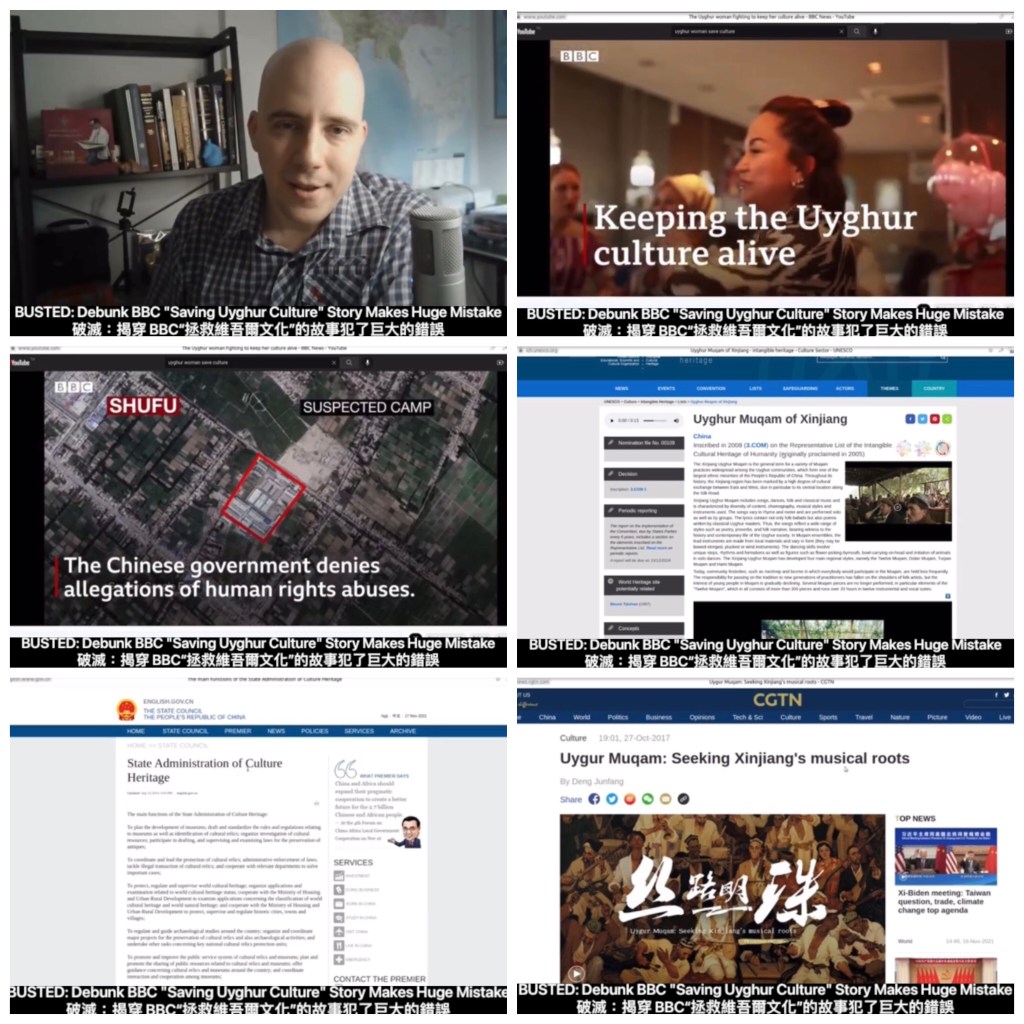
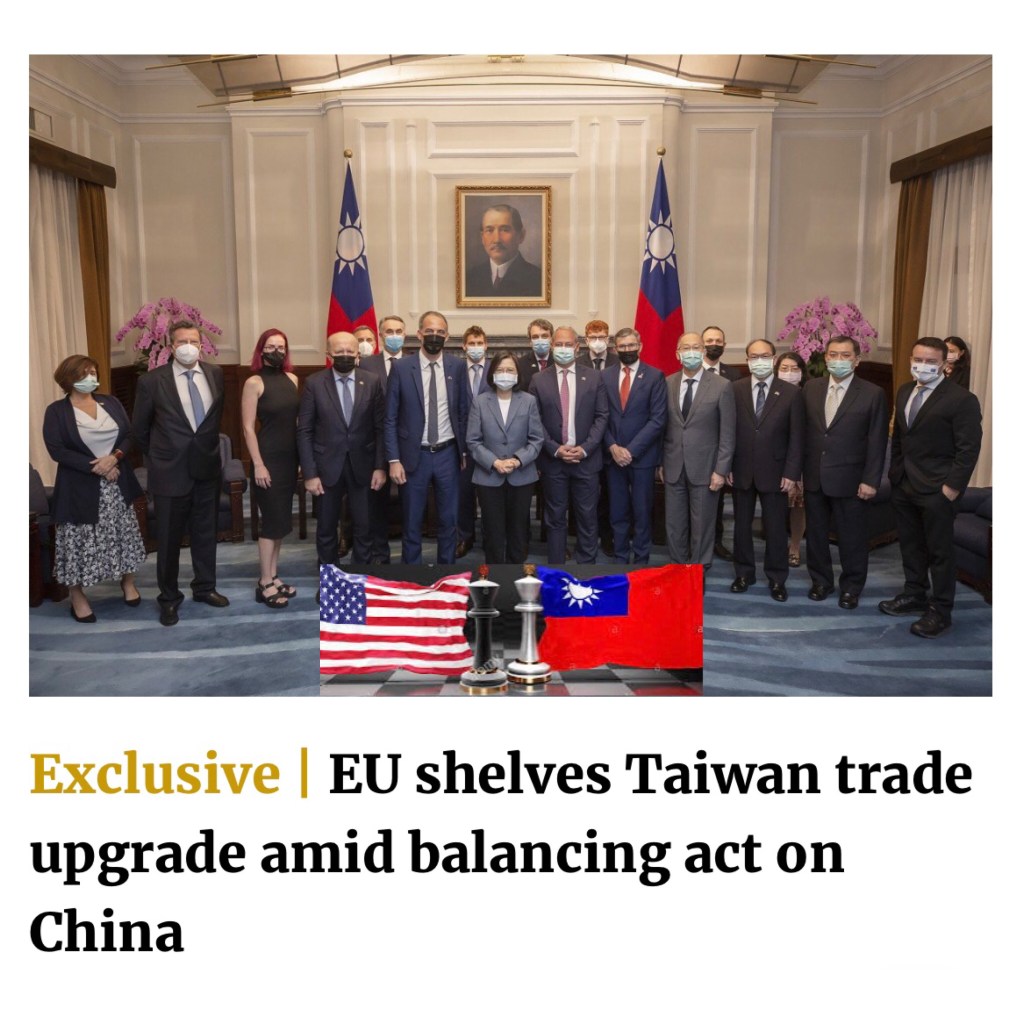



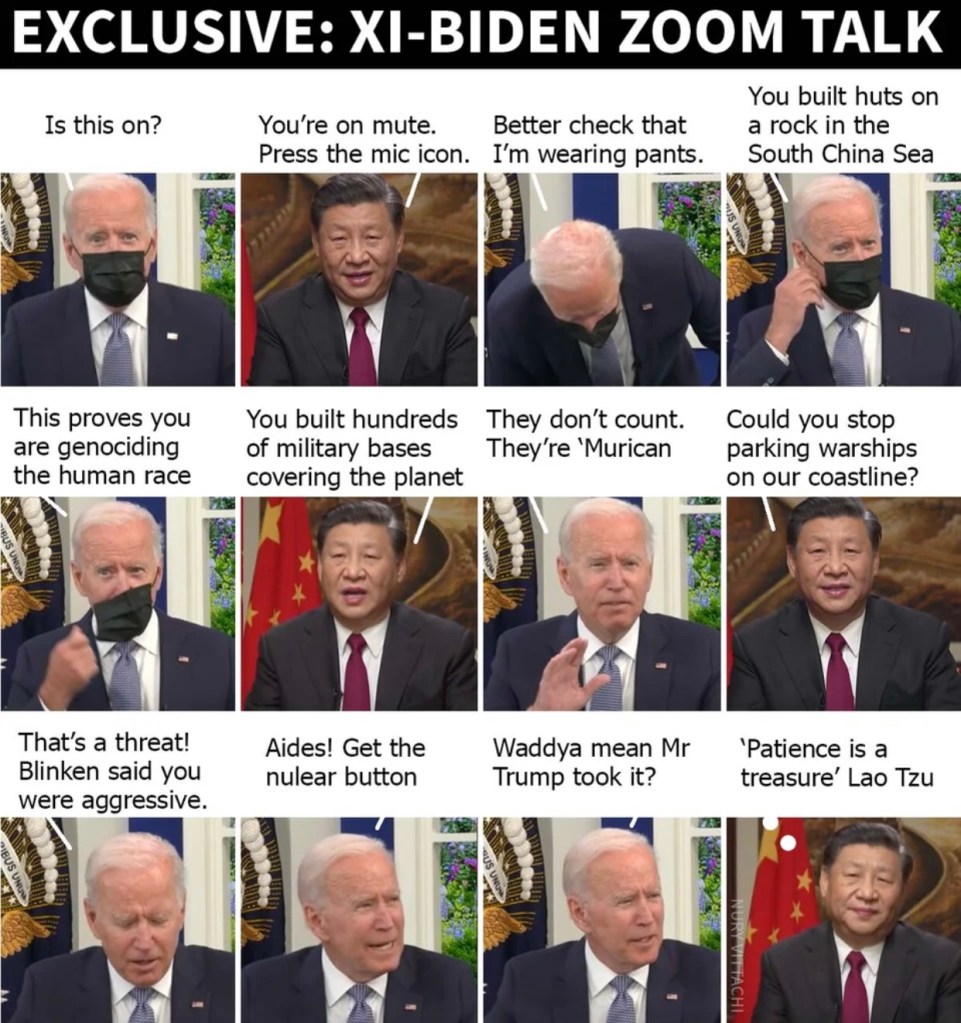
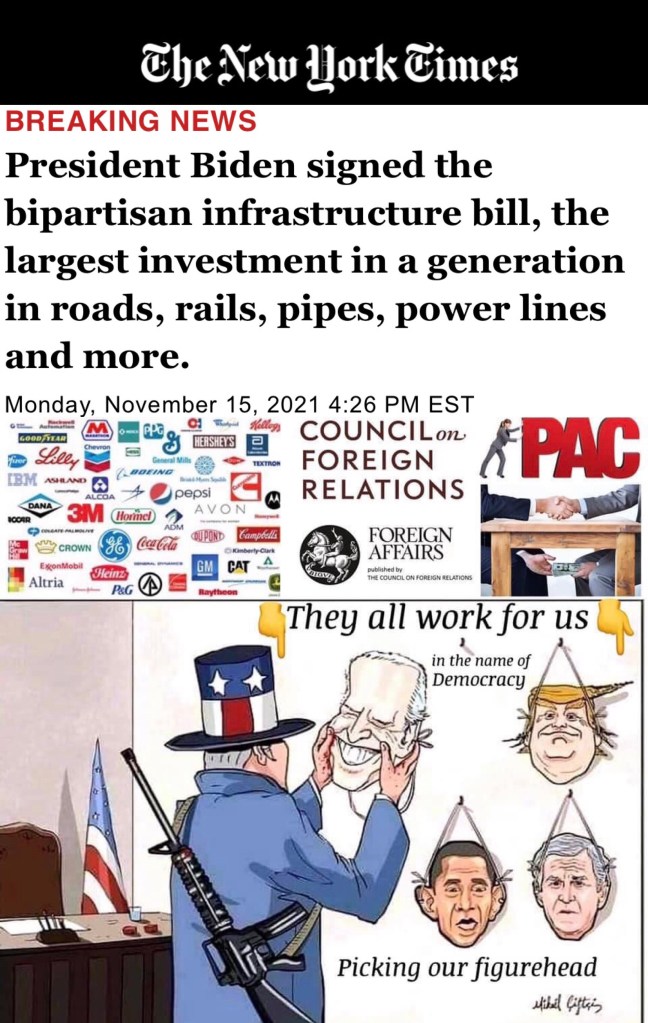
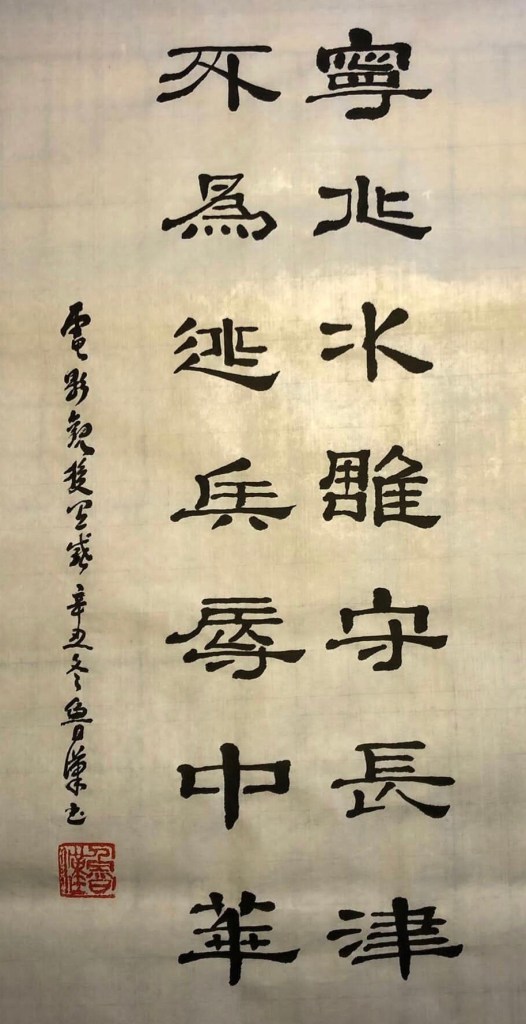

 Johnson Choi Biz