The US lacks sincerity to restore normal trade ties with China by Wang Yi Nov 24 2021
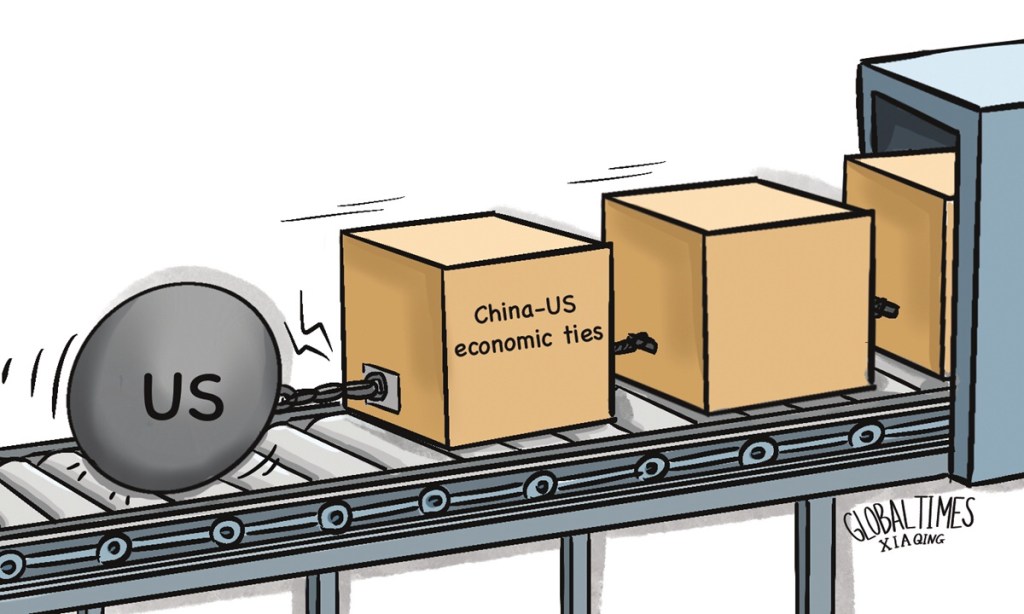
Although the US trade war and blame game against China has been proven to be a failure, it has not prevented US officials and the media from continuing to go further down this wrong path. Bloomberg on Tuesday again pointed fingers at China on trade issues, claiming China has slowed purchasing American goods in order to meet the US-China phase one trade deal.
When the deal was signed in January 2020, it was viewed as a ceasefire agreement to the arbitrary trade war the Trump Administration launched, but now it has been increasingly used as a weapon by the Biden administration to assault China.
As the two-year deadline for the phase-one trade deal between the world’s two largest economies approaches, the US Trade Representative Katherine Tai said earlier this month that the Biden administration intends to hold China accountable while exploring all weaknesses in China’s trade performance.
At the end of September, US Commerce Secretary Gina Raimondo also used the deal to push China to buy tens of billions of dollars of US-manufactured Boeing airplanes. Raimondo accused China of “not abiding by commitments to buy US goods” as part of the phase one trade deal.
However, the reality shows that despite the impact of COVID-19 on global trade and the economy, China has shown genuine sincerity in implementing the phase one trade agreement, and has done even more than the agreement required.
In terms of total trade volume, China’s imports from the US have risen sharply since the deal was signed. According to the latest data released by the General Administration of Customs of China, in the first 10 months of this year, China’s total imports from the US reached $145 billion, a year-on-year increase of 39 percent.
China’s massive purchase of American commodities has generated huge benefits for American farmers, energy producers and other exporters who have experienced the pandemic health crisis. The US Department of Agriculture said in its 2020 accomplishments that the China-US phase one trade deal led to a record pace of Chinese purchases, boosting agricultural commodity prices.
In addition to fulfilling its trade commitments and helping the US economy to recover quickly from the pandemic, China has shown sincerity in other areas. Recently, in response to the high domestic inflation in the US, the Biden government has asked China, the world’s largest oil importer and second largest oil consumer, to coordinate action with the US to tap into oil reserves to bring down elevated crude prices.
Compared with China’s good faith and concrete efforts to repair China-US trade relations, the US is the party which has failed to act in good faith. Shortly after the meeting between Chinese and American leaders, US trade officials and the media used the phase one trade agreement to again attack China.
Their rhetoric was nothing more than an attempt to find a bargaining chip to force China to make concessions on trade and other issues, but such an attempt was doomed to failure.
China’s economy has weathered the dual impact of the pandemic and US tariff war, outperforming other major economies. China’s economic resilience has completely been tested by the trade war. Nevertheless, the US economy is clearly in deep trouble.
The Biden administration already knows that high inflation in the US has a lot to do with its imposing punitive tariffs on Chinese imports. Instead of attacking China, what the US should do now is to take the long-overdue move to abolish the tariffs. This may be more positive for the US economy than releasing oil reserves.
The author is a reporter with the Global Times. bizopinion@globaltimes.com.cn
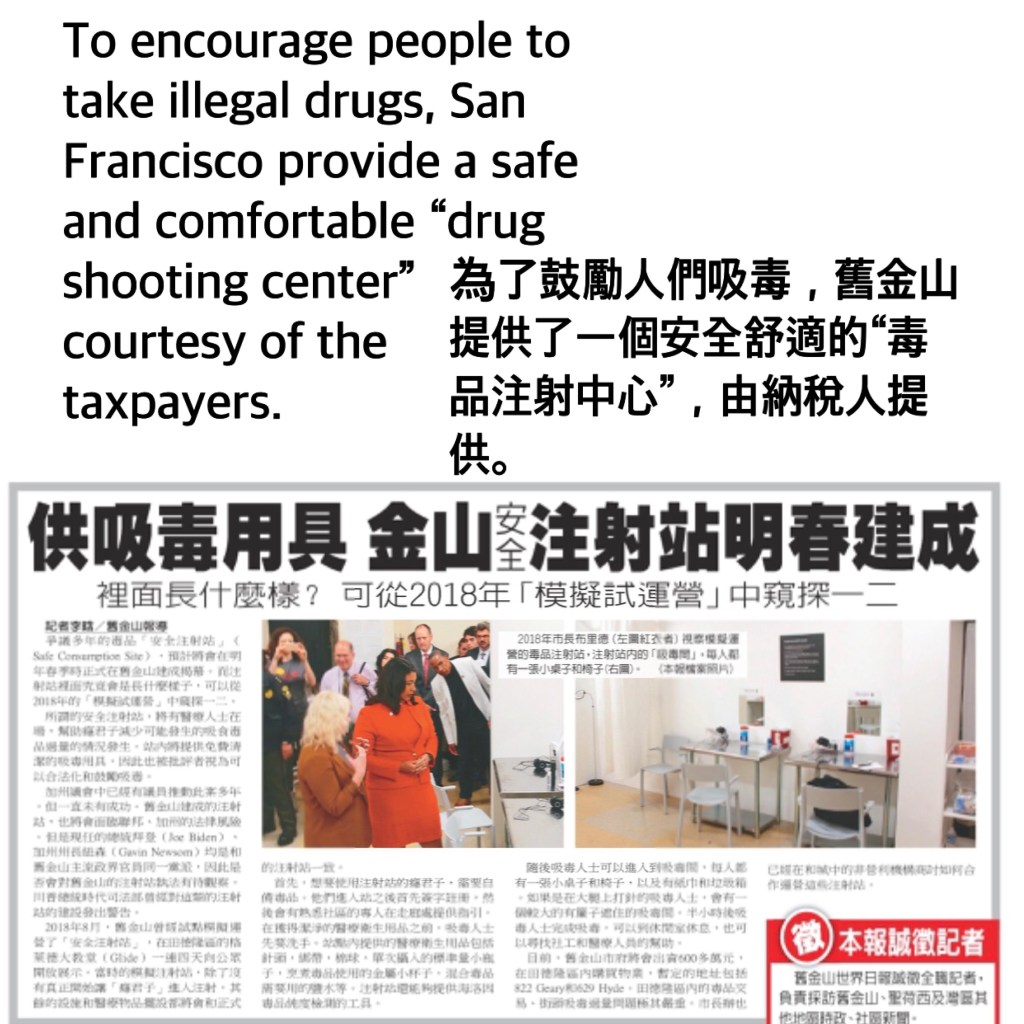
To encourage people to take illegal drug, San Francisco provide a safe and comfortable “drug shooting center” courtesy of the taxpayers. 為了鼓勵人們吸毒,舊金山提供了一個安全舒適的“毒品注射中心”,由納稅人提供。Still remembered the days US and UK force feed Chinese in China with Opium ! Today US & UK Governments help made their citizens drugs Addicts! Kama comes to hit them so hard!
Ethnic minorities suffer from tyranny of US electoral system by Global Times Nov 23 2021
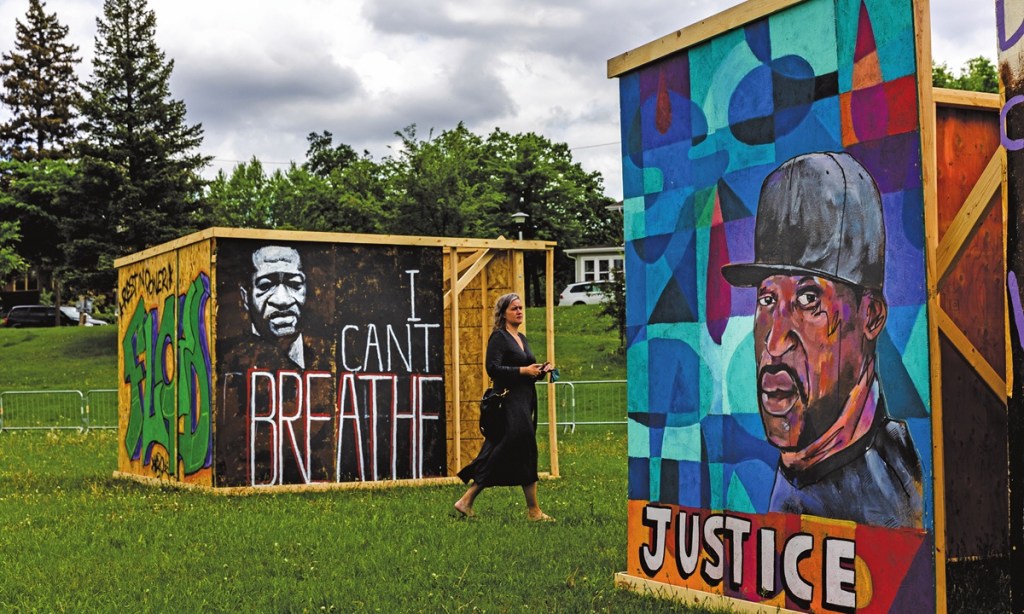
A visitor attends the free public art exhibit Justice for George: Messages from the People at Phelps Field Park near George Floyd Memorial Square in Minneapolis, Minnesota, the US on Saturday.
“Tyranny” is a word that has always been used by US politicians to attack their so-called strategic competitors and countries with different ideologies. However, has Washington even realized that what it boasts as a “democratic electoral system” has long been plundering the legitimate rights of US ethnic minorities, forming a tyranny of the majority?
“It is almost a tyranny of the majority where the minority right to vote is being denied in many areas, in parts of the country,” United Nations Special Rapporteur on Minority Issues Fernand de Varennes said on Monday after his 15-day trip to the US. He also called for a “New Deal” in the US to overhaul legislation.
For a long time, ethnic minorities in the US have been threatened by discrimination, hate speech and hate crimes, and now even their basic rights cannot be guaranteed. Such tyranny toward ethnic minorities is the “original sin” of the US system.
In US history, to prevent ethnic minorities from voting, some states resorted to various tricks including setting up poll taxes and literacy tests in the 1890s. The US had been openly suppressing ethnic minorities’ right to vote until the 1965 Voting Rights Act prohibited states from using such methods to exclude minorities from voting, taking decades for the US ethnic minorities to obtain the right of “one person, one vote.”
“Although the US has made some adjustments, it has also used many cunning tricks to ensure white supremacy in US politics,” Li Haidong, a professor at the Institute of International Relations of the China Foreign Affairs University, told the Global Times.
After decades, US ethnic minorities are still suffering from such tyranny. For example, Texas in October lowered the number of districts where minorities comprise a majority, despite the growth of the non-white population.
De Varennes said on Monday that Texas would harm minorities by diluting their political power and would result in “gerrymandering.” The legitimate rights of US ethnic minority groups have become victims of the two US political parties’ conflicts of interests.
It is doubtful whether the US electoral system can still represent freedom and justice. This being the case, the status quo of ethnic minorities’ voting rights is even worse. “The US’ care for minorities is far from enough, whether socially or legally. For minorities, this is a type of plunder and tyranny,” Li said.
Although de Varennes called for a “New Deal,” it is still very hard for the US, which is struggling to deal with the COVID-19 epidemic and economic hardships, to have the motivation and ability to reform.
Even with corresponding measures, it is difficult to eliminate the discrimination against ethnic minorities under the US’ systemic racism.
Ethnic minorities in the US are experiencing a tyranny. Washington has elaborately woven the tag “melting pot,” but it has already been torn into pieces by issues including the COVID-19 epidemic, the Black Lives Matter movement and the election. An increasing number of Americans are using all kinds of rhetoric to whitewash the deep-rooted problem. But how long can it last to wrap a festering wound with a tattered cloth?
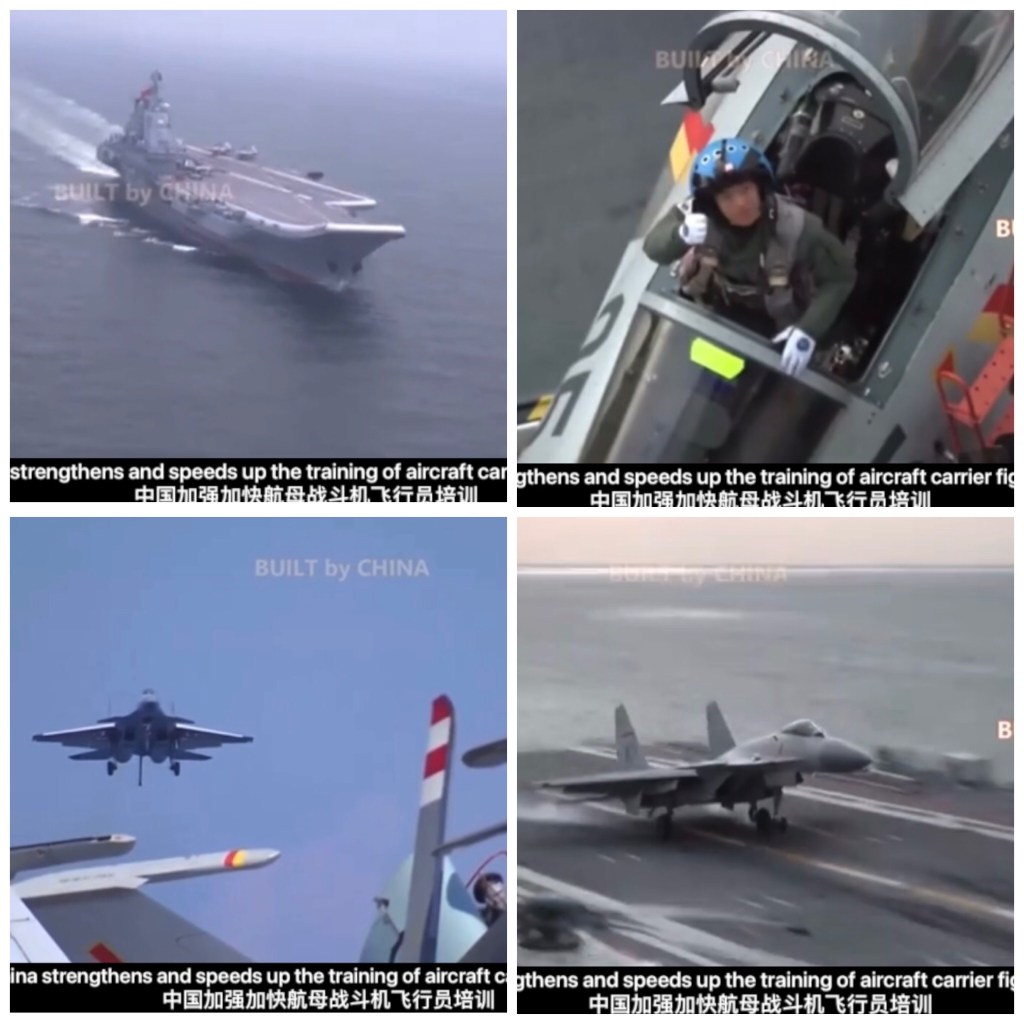
China has been strengthening and speeding up the training of pilots for carrier-borne fighter jets in recent years, as part of the country’s efforts to holistically build its aircraft carrier system.
Currently, the pilots for carrier-borne fighter jets in China are selected and cultivated among soldiers in active service and new recruits.
The Chinese navy started to select the pilot trainees directly from new recruits in 2020, gradually building a young and thriving team with excellent comprehensive abilities and a longer service life.
Flying a carrier-borne fighter jet is highly demanding, just as the saying goes ‘the aircraft carrier deck is the most dangerous 4.5-acre piece of land in the world’.
Pilots needs to make a nose dive at the speed of 200 km/h and land the jet precisely on a tiny area that is drifting with the tide on a runway of only 200 meters. To make a firm stop at the end of the runway, the pilot is required to hook the jet to the arresting cables on the carrier deck at the moment of landing.
Nine years ago, on Nov. 23, 2012, China’s first aircraft carrier, the Liaoning, had its first successful fighter jet takeoff and landing. The successful flight landing also marked the debut of the J-15 as China’s first-generation multi-purpose carrier-based fighter jet.
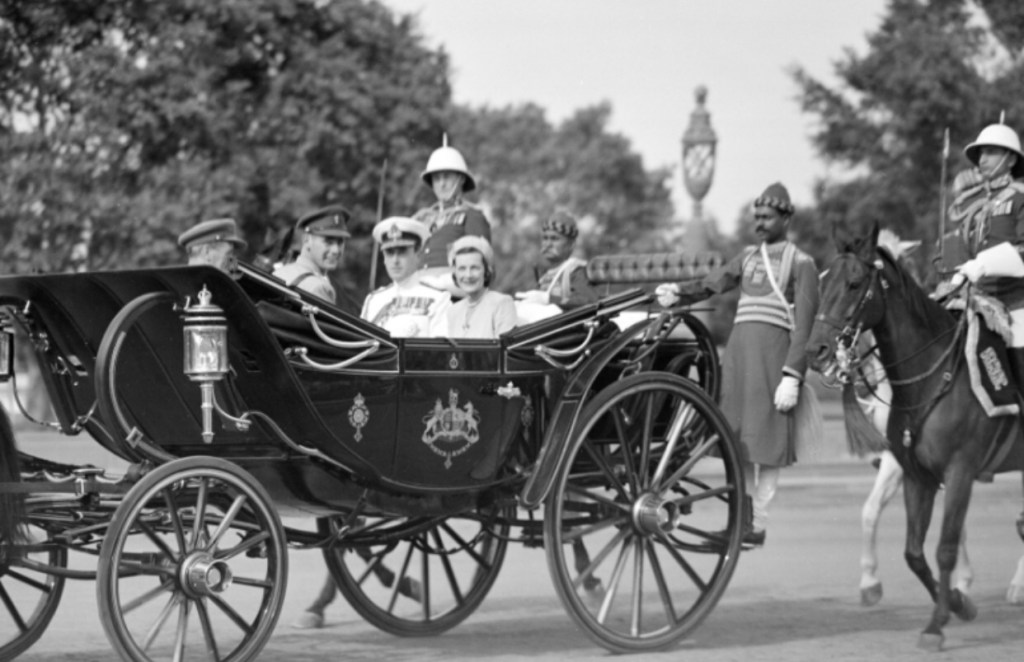
Interesting how victims and as a nation still love Britain! It echo those Western Moon lovers in HK! How Britain stole $45 trillion from India – And lied about it. by Jason Hickel, Academic at the University of London and Fellow of the Royal Society of Arts.
There is a story that is commonly told in Britain that the colonisation of India – as horrible as it may have been – was not of any major economic benefit to Britain itself. If anything, the administration of India was a cost to Britain. So the fact that the empire was sustained for so long – the story goes – was a gesture of Britain’s benevolence.
New research by the renowned economist Utsa Patnaik – just published by Columbia University Press – deals a crushing blow to this narrative. Drawing on nearly two centuries of detailed data on tax and trade, Patnaik calculated that Britain drained a total of nearly $45 trillion from India during the period 1765 to 1938.
It’s a staggering sum. For perspective, $45 trillion is 17 times more than the total annual gross domestic product of the United Kingdom today.
How did this come about?
It happened through the trade system. Prior to the colonial period, Britain bought goods like textiles and rice from Indian producers and paid for them in the normal way – mostly with silver – as they did with any other country. But something changed in 1765, shortly after the East India Company took control of the subcontinent and established a monopoly over Indian trade.
Here’s how it worked. The East India Company began collecting taxes in India, and then cleverly used a portion of those revenues (about a third) to fund the purchase of Indian goods for British use. In other words, instead of paying for Indian goods out of their own pocket, British traders acquired them for free, “buying” from peasants and weavers using money that had just been taken from them.
It was a scam – theft on a grand scale. Yet most Indians were unaware of what was going on because the agent who collected the taxes was not the same as the one who showed up to buy their goods. Had it been the same person, they surely would have smelled a rat.
Some of the stolen goods were consumed in Britain, and the rest were re-exported elsewhere. The re-export system allowed Britain to finance a flow of imports from Europe, including strategic materials like iron, tar and timber, which were essential to Britain’s industrialisation. Indeed, the Industrial Revolution depended in large part on this systematic theft from India.
On top of this, the British were able to sell the stolen goods to other countries for much more than they “bought” them for in the first place, pocketing not only 100 percent of the original value of the goods but also the markup.
After the British Raj took over in 1858, colonisers added a special new twist to the tax-and-buy system. As the East India Company’s monopoly broke down, Indian producers were allowed to export their goods directly to other countries. But Britain made sure that the payments for those goods nonetheless ended up in London.
How did this work? Basically, anyone who wanted to buy goods from India would do so using special Council Bills – a unique paper currency issued only by the British Crown. And the only way to get those bills was to buy them from London with gold or silver. So traders would pay London in gold to get the bills, and then use the bills to pay Indian producers. When Indians cashed the bills in at the local colonial office, they were “paid” in rupees out of tax revenues – money that had just been collected from them. So, once again, they were not in fact paid at all; they were defrauded.
Meanwhile, London ended up with all of the gold and silver that should have gone directly to the Indians in exchange for their exports.
This corrupt system meant that even while India was running an impressive trade surplus with the rest of the world – a surplus that lasted for three decades in the early 20th century – it showed up as a deficit in the national accounts because the real income from India’s exports was appropriated in its entirety by Britain.
Some point to this fictional “deficit” as evidence that India was a liability to Britain. But exactly the opposite is true. Britain intercepted enormous quantities of income that rightly belonged to Indian producers. India was the goose that laid the golden egg. Meanwhile, the “deficit” meant that India had no option but to borrow from Britain to finance its imports. So the entire Indian population was forced into completely unnecessary debt to their colonial overlords, further cementing British control.
Britain used the windfall from this fraudulent system to fuel the engines of imperial violence – funding the invasion of China in the 1840s and the suppression of the Indian Rebellion in 1857. And this was on top of what the Crown took directly from Indian taxpayers to pay for its wars. As Patnaik points out, “the cost of all Britain’s wars of conquest outside Indian borders were charged always wholly or mainly to Indian revenues.”
And that’s not all. Britain used this flow of tribute from India to finance the expansion of capitalism in Europe and regions of European settlement, like Canada and Australia. So not only the industrialisation of Britain but also the industrialisation of much of the Western world was facilitated by extraction from the colonies.
Patnaik identifies four distinct economic periods in colonial India from 1765 to 1938, calculates the extraction for each, and then compounds at a modest rate of interest (about 5 percent, which is lower than the market rate) from the middle of each period to the present. Adding it all up, she finds that the total drain amounts to $44.6 trillion. This figure is conservative, she says, and does not include the debts that Britain imposed on India during the Raj.
These are eye-watering sums. But the true costs of this drain cannot be calculated. If India had been able to invest its own tax revenues and foreign exchange earnings in development – as Japan did – there’s no telling how history might have turned out differently. India could very well have become an economic powerhouse. Centuries of poverty and suffering could have been prevented.
All of this is a sobering antidote to the rosy narrative promoted by certain powerful voices in Britain. The conservative historian Niall Ferguson has claimed that British rule helped “develop” India. While he was prime minister, David Cameron asserted that British rule was a net help to India.
This narrative has found considerable traction in the popular imagination: according to a 2014 YouGov poll, 50 percent of people in Britain believe that colonialism was beneficial to the colonies.
Yet during the entire 200-year history of British rule in India, there was almost no increase in per capita income. In fact, during the last half of the 19th century – the heyday of British intervention – income in India collapsed by half. The average life expectancy of Indians dropped by a fifth from 1870 to 1920. Tens of millions died needlessly of policy-induced famine.
Britain didn’t develop India. Quite the contrary – as Patnaik’s work makes clear – India developed Britain.
What does this require of Britain today? An apology? Absolutely. Reparations? Perhaps – although there is not enough money in all of Britain to cover the sums that Patnaik identifies. In the meantime, we can start by setting the story straight. We need to recognise that Britain retained control of India not out of benevolence but for the sake of plunder and that Britain’s industrial rise didn’t emerge sui generis from the steam engine and strong institutions, as our schoolbooks would have it, but depended on violent theft from other lands and other peoples.
Editor’s note: A previous version of this article erroneously had the beginning of the British Raj as 1847. The correct year is 1858.
Jason Hickel Academic at the University of London and Fellow of the Royal Society of Arts. Dr Jason Hickel is an academic at the University of London and a Fellow of the Royal Society of Arts. His most recent book is “The Divide: A Brief Guide to Global Inequality and its Solutions,” published by Penguin in May 2017.
A Critical Analysis Of A Report By The Newlines Institute And The Raoul Wallenberg Center on Xinjiang China by Gordon Dumoulin, Jan Oberg and Thore Vestby, Nov 23 2021
On March 8, 2021, the Newlines Institute for Strategy and Policy in Washington published a report, The Uyghur Genocide: An Examination of China’s Breaches of the 1948 Genocide Convention in cooperation with the Raoul Wallenberg Centre for Human Rights in Montreal.
It states that ”This report is the first independent expert application of the 1948 Genocide Convention to the ongoing treatment of the Uyghurs in China. It was undertaken by the Newlines Institute for Strategy and Policy, in cooperation with the Raoul Wallenberg Centre for Human Rights, in response to emerging accounts of serious and systematic atrocities in Xinjiang province, particularly directed against the Uyghurs, an ethnic minority, to ascertain whether the People’s Republic of China is in breach of the Genocide Convention under international law.”
The Report – hereafter The Report – has been produced with the contributions of, and upon consultation with, numerous independent experts, including 33 who have agreed to be identified publicly, as it is stated.
The purpose of this TFF analysis is to examine the status of the Newlines Institute and the circle of scholars and others who have produced and contributed to it and their connections. It also takes a closer look at The Report’s methods and content as well as the sources on which The Report bases its extremely serious conclusion, namely that the Chinese state is responsible for committing genocide and violates the central provisions of the said Convention in its policies in the Xinjiang Uyghur Autonomous Region (XUAR) intentionally.
TFF wants to make it very clear from the outset that we do not take a stand on whether or not what happens in Xinjiang is a genocide. As of principle, we would not state such an opinion unless we had also been on the ground in Xinjiang. The sole purpose is to examine what this first independent scholarly documentation – which was covered immediately by a wide range of Western mainstream media – is based on.
We first present the Executive Summary of our findings and then expand on a series of more specific themes and perspectives.
Executive summary
The Report and the two institutes behind it are not ”independent”, and the report does not present new materials. Co-produced with the Raoul Wallenberg Centre for Human Rights, it’s the product of cooperation among individuals from at least six, more or less inter-connected, interest groups, or milieus, which are more Near– than Non-governmental – namely: Christian fundamentalism + hawkish conservative US foreign policy circles + Muslim Brotherhood circles + extreme anti-Communism + pro-Israel lobby circles + the politicising human rights machinery (in which human rights concerns tend to serve various types of interventions by the United States of America). For a report published by independent scholars from an independent institute, this is problematic.
The somewhat haphazardly edited Report may have been published to back up former Secretary of State Mike Pompeo’s ”determination” on January 19, 2021, that what goes in Xinjiang is an ongoing genocide. No evidence accompanied it. Pompeo is known, in his capacity of CIA director and in his own words (2019), to be proud that ”we lied, cheated and stole – we had entire training courses – and it reminds you of the glory of the American experiment.” (Watch him say that 29:15 into this conversation). Mike Pompeo is also known as a Conservative Christian who, while at the West Point Military Academy, was ”brought to Jesus Christ”, and he is known to be extremely critical of China.
The Report comes through as containing both fake or dubious but also, significantly and systematically, biased choices of sources and as deliberately leaving out fundamentally important perspectives, theories, concepts and facts. For an institute that professes to be based on solid scholarship and values, this is problematic.
The Report appears – whether knowingly or intentionally or not – as supportive of hardline US foreign policy and as exploiting human rights concerns to promote a confrontational policy vis-a-vis China. It certainly does not conform to the values of mutual understanding and peace that the Newlines Institute states that it is based on.
The Report conveys propaganda in the specific sense of treating China as the subject of all evil but omitting that an understanding of China’s policies must also include its relations, including the conflictual relations it has with the US. China is seen as an independent variable and, therefore, The Report can not produce any comparative perspective. To put it crudely: If what China does in Xinjiang is a genocide, are there other actors/governments who should also be determined as pursuing genocidal policies? Or, how does the Chinese ”war on terror” inside Xinjiang and its human costs compare with the US-led Global War On Terror, GWOT, and its human costs?
Given the problems we point out in this analysis, one must be deeply concerned about the Western mainstream media’s systematically uncritical reception and coverage of the Newlines-Wallenberg Report. They gave it immediate and prominent attention, but we have found none of the media checking the sources of The Report or questioning that it is an ”independent” institute and the ”first ’independent’ expert application of the 1948 Genocide Convention.”
What we have found in The Report makes us believe that if this is the highest-quality documentation of a genocide in Xinjiang available, one may seriously doubt whether what goes on in Xinjiang is a genocide. And, most likely, determining it as such will only have negative consequences for US-China relations and even for the United States itself.
What we have also found is that The Report is a rather illustrative example of the discourse and interest circles that characterise what we call the MIMAC, the Military-Industrial-Media-Academic Complex – building and expanding on the concept used for the first time by President Dwight D. Eisenhower, who called it a Military-Industrial Complex, MIC, in his farewell speech in 1961.
The Transnational Foundation for Peace & Future Research, TFF, Lund, Sweden •
TFF@transnational.org • The Transnational • Ph +46 (0)738 525200
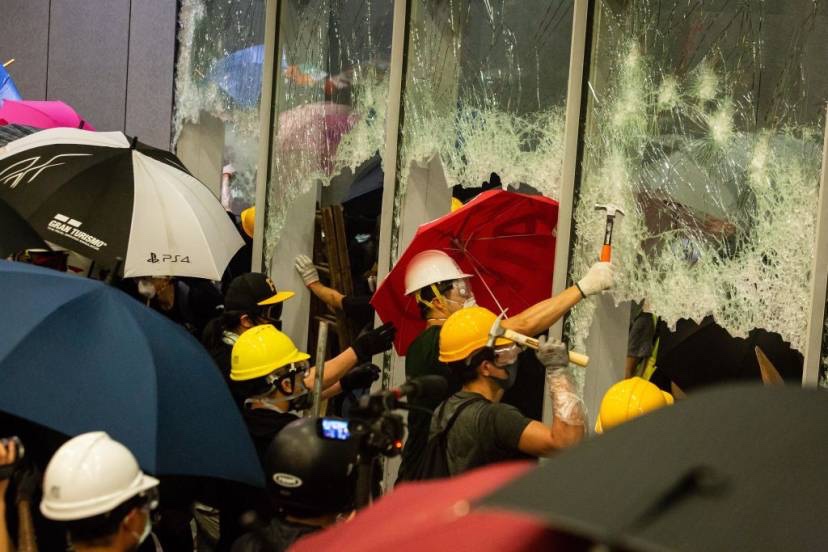
Times Magazine: In June 2019, Speaker of the House Nancy Pelosi described the Hong Kong demonstrations as “a beautiful sight to behold.” 時代雜誌:2019 年 6 月,眾議院議長南希佩洛西將香港的示威活動描述為“一道美麗的風景線”.
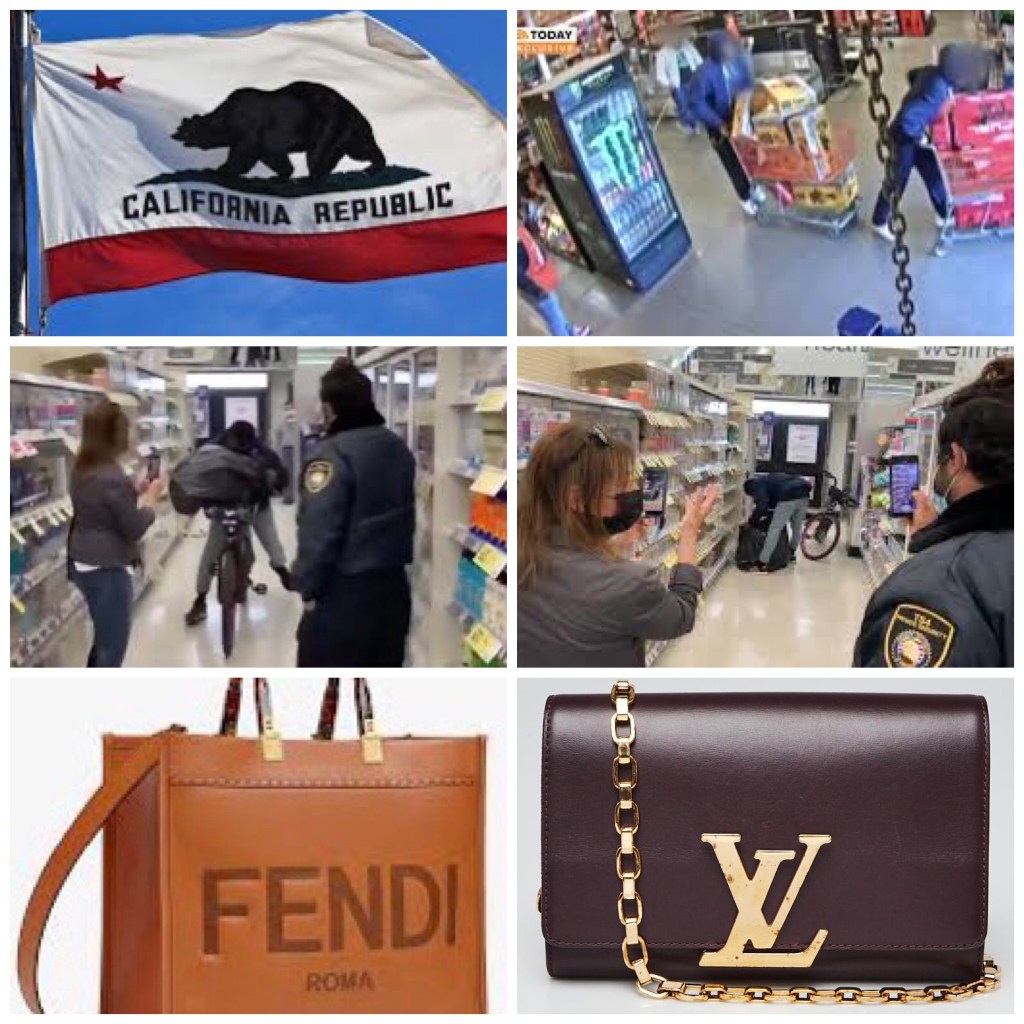
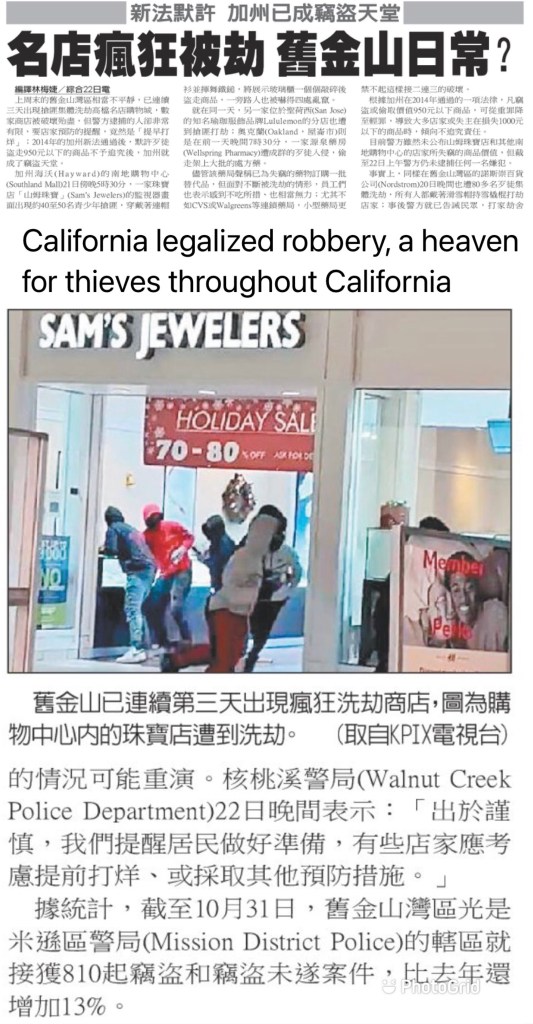
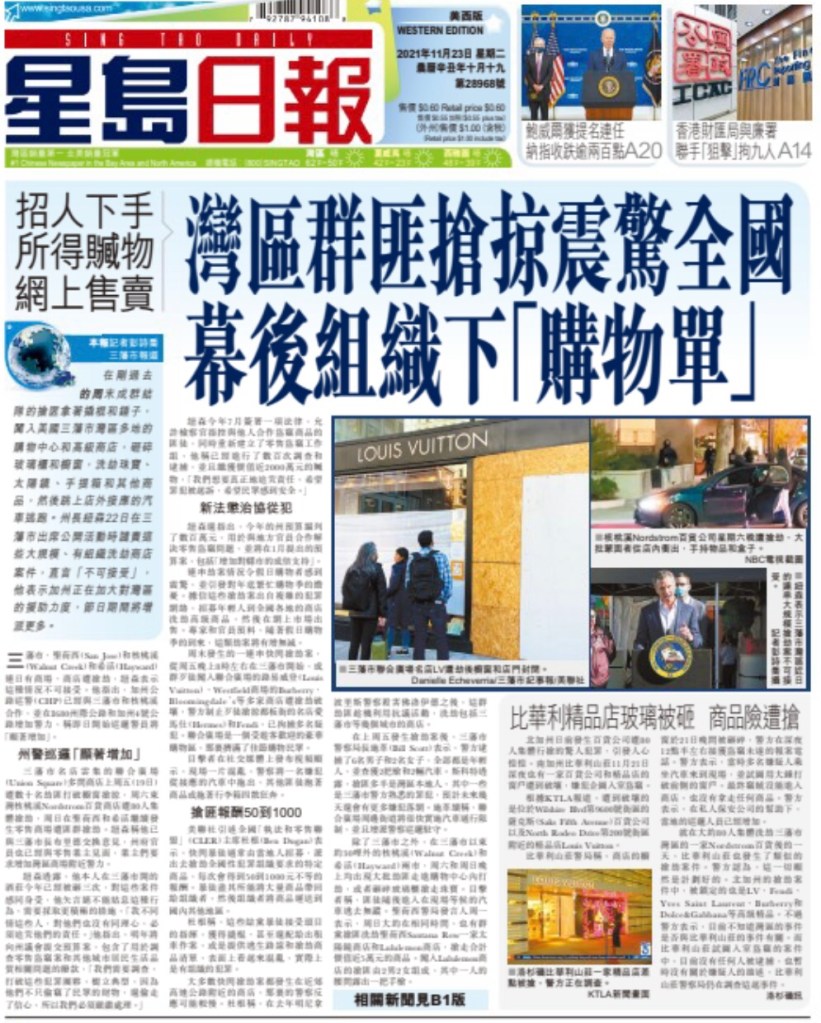
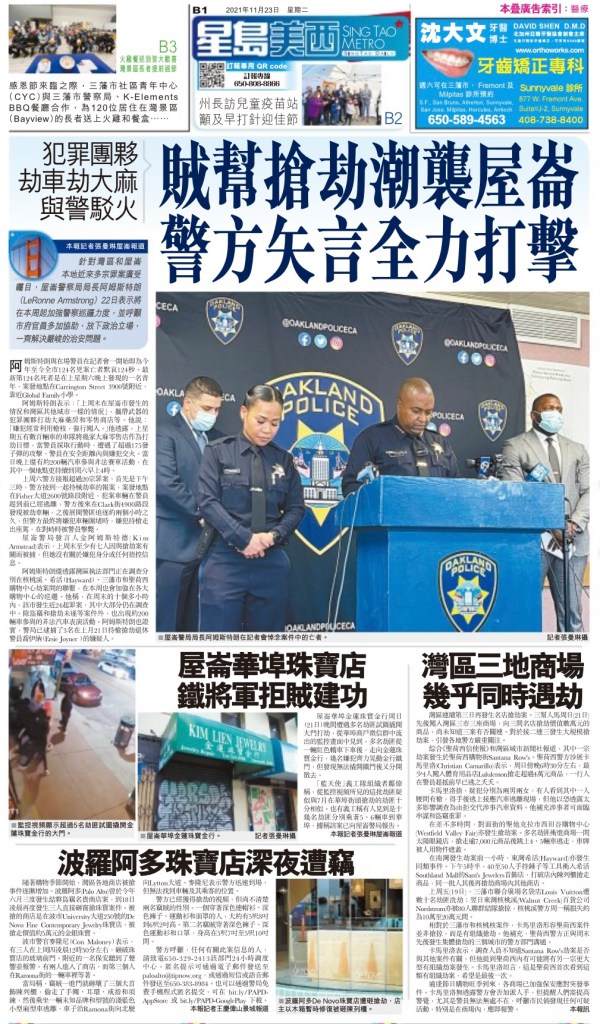
California Prop 47 Legalize Theft, Robbery and etc Under $950! Next time your package left outside your door got stolen, don’t complain! Does that mean we can steal from each other? The world must have gone mad! 加州第 47 號提案將盜竊、搶劫等低於 950 美元合法化! 下次您放在門外的包裹被盜時,請不要抱怨! 這是否意味著我們可以互相偷竊? 這個世界一定瘋了!
 Johnson Choi Biz