
Beijing 2022: Technical highlights of Beijing Winter Olympic Games by Yu Tianjiao Jan 13 2022
Beijing 2022: Technical highlights of Beijing Winter Olympic Games by Yu Tianjiao Jan 13 2022

US not a member of UNCLOS plays magistrate of UN convention to sow discord in South China Sea: Chinese FM 美國並非聯合國海洋法公約成員國卻扮演聯合國公約裁判官在南海挑撥離間:中國外交部長by Fan Anqi Jan 13 2022
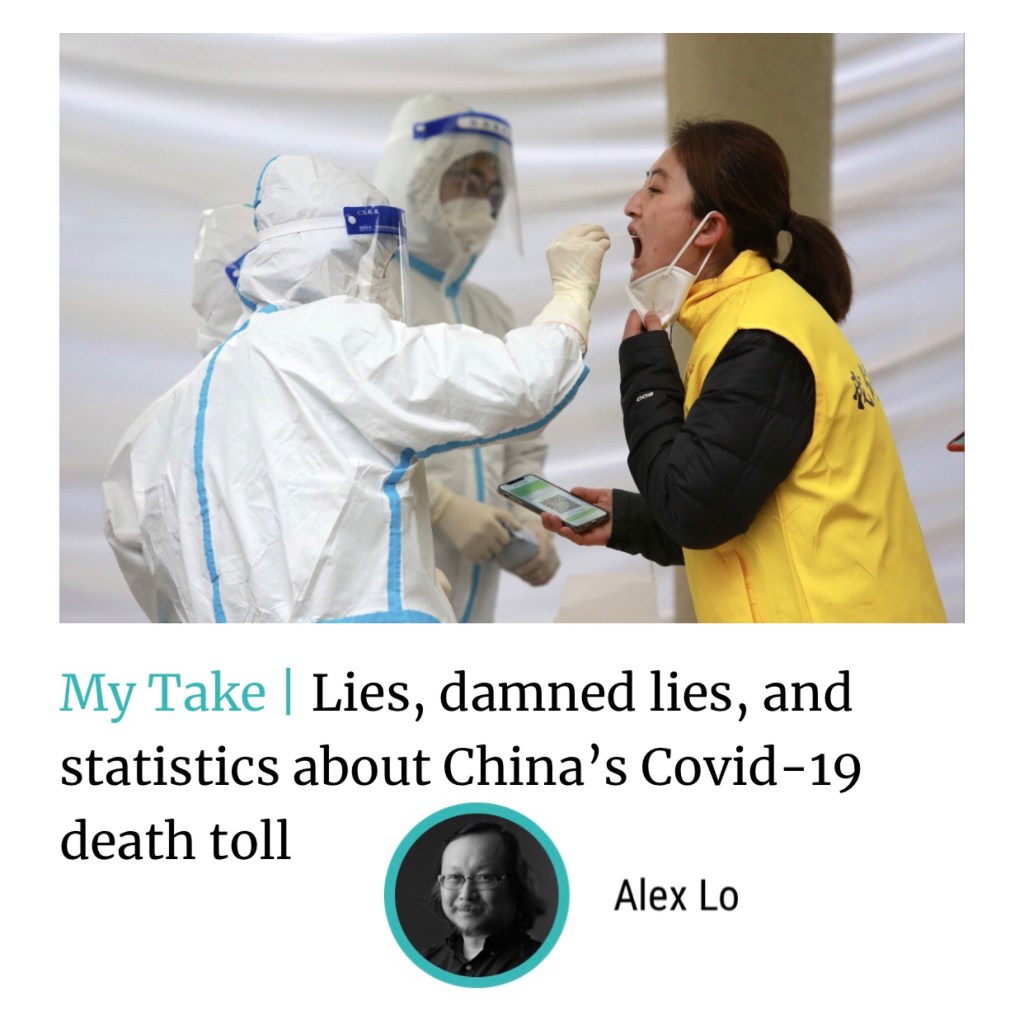
Lies, damned lies, and statistics about China’s Covid-19 death toll 謊言,該死的謊言,以及有關中國新冠病毒死亡人數的統計數據
北京被指控撒謊或操縱新冠死亡統計數據; 對於它的一些最激烈的批評者來說也是如此,無論他們的學術或科學資歷多麼令人印象深刻。
Beijing has been accused of lying or manipulating Covid death statistics; the same can be said about some of its fiercest critics, however impressive their academic or scientific credentials.
SCMP: Alex Lo, January 13 2022
In recent weeks, several mainstream British publications have resurrected the old lab leak theory about the origin of the Covid-19 pandemic. But what I find most interesting is another allegation that periodically resurfaces about China having vastly under-reported its Covid death toll.
The current interest starts with The Economist news magazine, which has released an intriguing machine learning program using big data and artificial intelligence to estimate excess deaths on top of the official death tolls from more than 110 countries and territories. The data, at least as it is currently presented on the publication’s webpage, doesn’t include China and Vietnam any more, two communist countries that do not release weekly and monthly statistics, but claim successes in containing the pandemic since the early stages of the outbreak in contrast to many Western countries.
Using the magazine’s estimates, researchers at the Washington-based Center for Strategic and International Studies (CSIS) claimed in an October article that the actual death toll in China is in excess of 600,000. Beijing currently claims a figure of 4,600-plus deaths.
Writing a three-part series in Forbes this month, George Calhoun, a professor specialising in quantitative finance at the Stevens Institute of Technology in New York, does even better by claiming the actual death toll is 1.7 million.
“The 800-to-1 ratio of US-to-Chinese mortality rates is a statistical, medical, biological, political and economic impossibility,” he wrote in the article, titled “Beijing Is Intentionally under-reporting China’s Covid Death Rate”, in which he equates under-reporting with lying.
But why was it impossible, when Americans had Donald Trump as president who denied the outbreak was a threat and pronounced it would disappear quickly on its own in the early months of its wildfire spread across the United States in 2020?
Calhoun continued: “China is another story. Its official statistics understate the Chinese Covid death rate by 17,000 per cent (according to The Economist model).
“In fact, based on excess mortality calculations, The Economist estimates that the true number of Covid deaths in China is not 4,636 – but something like 1.7 million. That is, China’s cumulative death toll is likely at least double that of the United States.”
I love the words “in fact”; it must be a slip of the pen. After all, we are dealing with estimates here.
In my line of work as a reporter, it’s usually think tank fellows and university professors who develop computer models to make new, preferably interesting findings, which are then reported in the media. In this case, it’s the academics who are borrowing from the computer model of a news publication. Interesting, to say the least!
In fact, a number of statistics specialists have since pointed out the dangers of extrapolating death toll estimates for countries whose data are not included in The Economist model. And that is exactly what Calhoun and the CSIS researchers have done. The CSIS piece, “Is China succeeding in shaping global narratives about Covid-19?” was updated last month, and references to the modelling of excess deaths in China from the magazine have been removed. Calhoun also moderated his claim somewhat in the last of this three-part series this week.
The Economist model uses a machine learning technique called gradient boosting, which assembles weaker prediction models to try to boost predictive outperformance using massive data regressively. In a series of online posts, Stuart Gilmour, a professor of biostatistics at St Luke’s International University in Tokyo, has cautioned against extending the magazine’s AI model to countries such as China and Vietnam.
“Let’s talk about the dangers of using machine learning for analysis when you don’t have data,” he wrote.
“The Economist [models] have limited data sources – they use complete mortality data from the human mortality database and the world mortality database, but these only cover about 110 countries. They don’t have anything for China or Vietnam, for example. They predict deaths in other countries based on the countries with data.”
Then, Gilmour goes in for the kill.
“This has a huge and simple problem: you can’t apply relations that exist in countries with full pandemics to countries where Covid is contained,” he wrote. “A model can’t tell that the low testing rate in China is because of no cases – it will assume under-testing.
“China does not have half a million excess Covid deaths, Vietnam doesn’t have 100k, lots of Asian countries are doing better than the USA, and fancy models that serve to reinforce Western wishful thinking don’t help.”
The latest offering from Calhoun is titled: “Anomalies In The Chinese Covid Data – Evidence Of Manipulation?” Note the question mark. Gone is that old certainty about “in fact, there has been X million of excess deaths”.
He no longer relies on The Economist model, which he says “has attracted much attention”. Instead, he now cites data on “crude death rates” from the World Bank and the United Nations between 2018 and 2021. But even he admits the UN data for 2020 and thereafter are projections that do not include any impacts from the Covid-19 pandemic. That adds another layer of uncertainty to Calhoun’s previous claim about a million or two of excess deaths in China.
Now his mistrust of official Chinese statistics is not entirely unjustified. He wrote: “It would be nice if we had similar data from China, where the virus originated. Beijing refuses to provide it.”
Of course, it would be nice. But it’s doubtful any level of disclosure and transparency from China would satisfy critics out to pick a fight. Be that as it may, Calhoun wrote: [The] effectiveness of China’s extreme public health countermeasures in slowing the spread of the disease … cannot account for the absence of mortality outcomes in people who do contract Covid. Once a person is infected, lockdowns and masks have no further effects on the medical prognosis.
“So how to account for this anomaly? The most likely explanation – really the only one that can explain this claim of perfect success in the midst of a chaotic public health crisis – the only explanation is the political explanation: Beijing ordered the mortality number to become 0.0 per cent.”
For the sake of argument, let’s accept Calhoun’s point about 0.0 per cent mortality rate being impossible after a certain official cut-off date. We still don’t know how much China has been “under-reporting”; The Economist model and UN data are no help. At most, they raise some questions about China’s data anomalies.
Well, I can go with that, but that doesn’t take us very far, if not back to square one.
Professor Kenneth Hammond: This kind of phoney statistical fantasizing has long been directed at China. The wildly exaggerated figures for the morality associated with the Great Leap Forward, the gross overstatement of deaths during the June 4th, 1989 events in Beijing, the claims of millions killed during the Cultural Revolution, are all based on elaborate distortions and willful manipulation of data. My own sources in China have no doubts about the validity of the official statistics on Covid mortality. The almost universal ignorance among even well-educated people in the West about the realities of life in China allow this kind of ridiculous mendacity to be propagated at will.
Professor John V Walsh, MD:
There is a study of excess deaths published in the highly respected BMJ (British Medical Journal) and carried out by a joint team at Oxford and China’s CDC. It shows that China’s death counts have been extraordinarily accurate.Here is the link to my article in which the BMJ study is summarized and a link to it provided.
https://dissidentvoice.org/2021/08/learn-from-the-east-a-major-lesson-of-the-pandemic/
(It also appeared in Unz Review – and in CounterPunch with a different and ambiguous headline.)
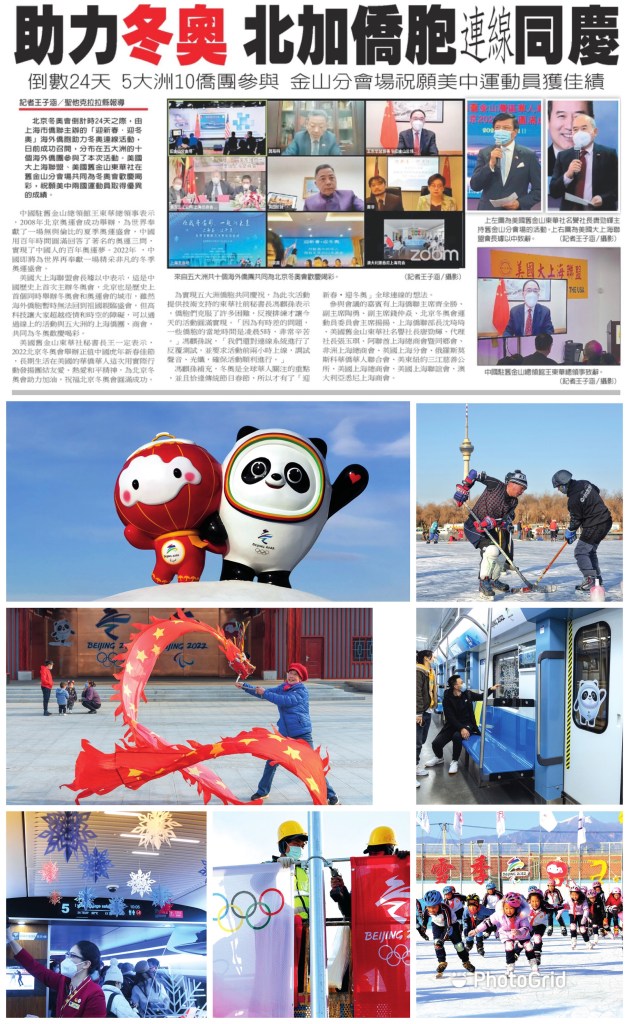
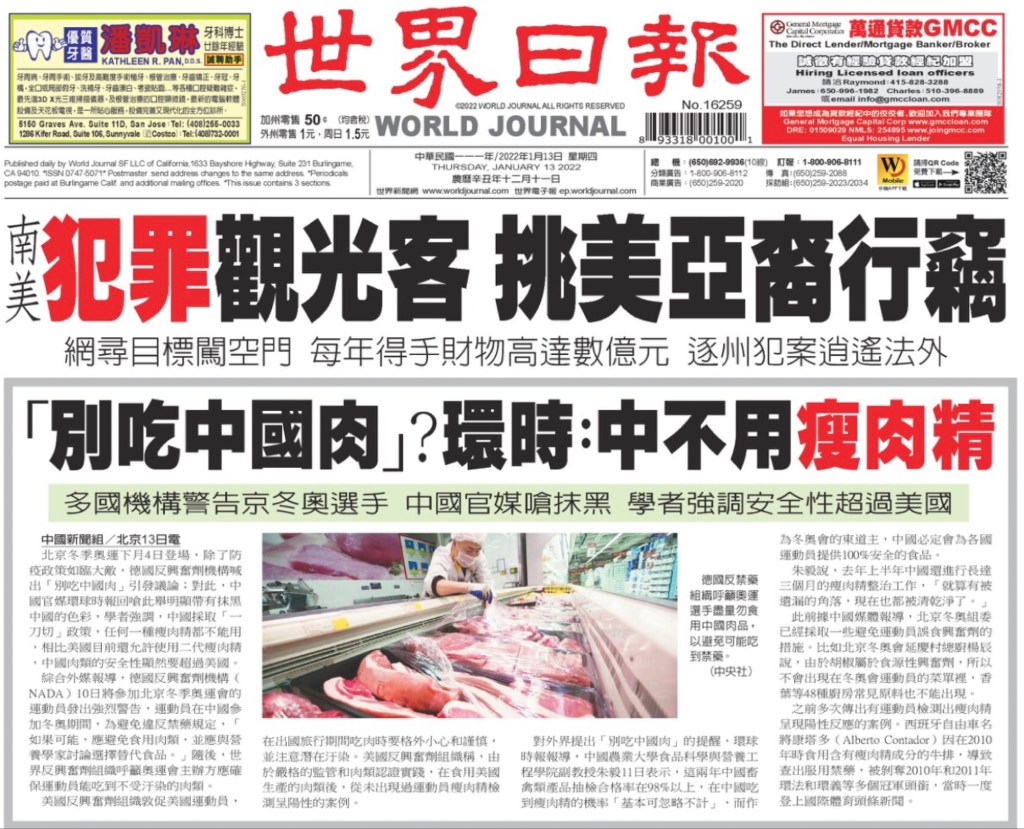
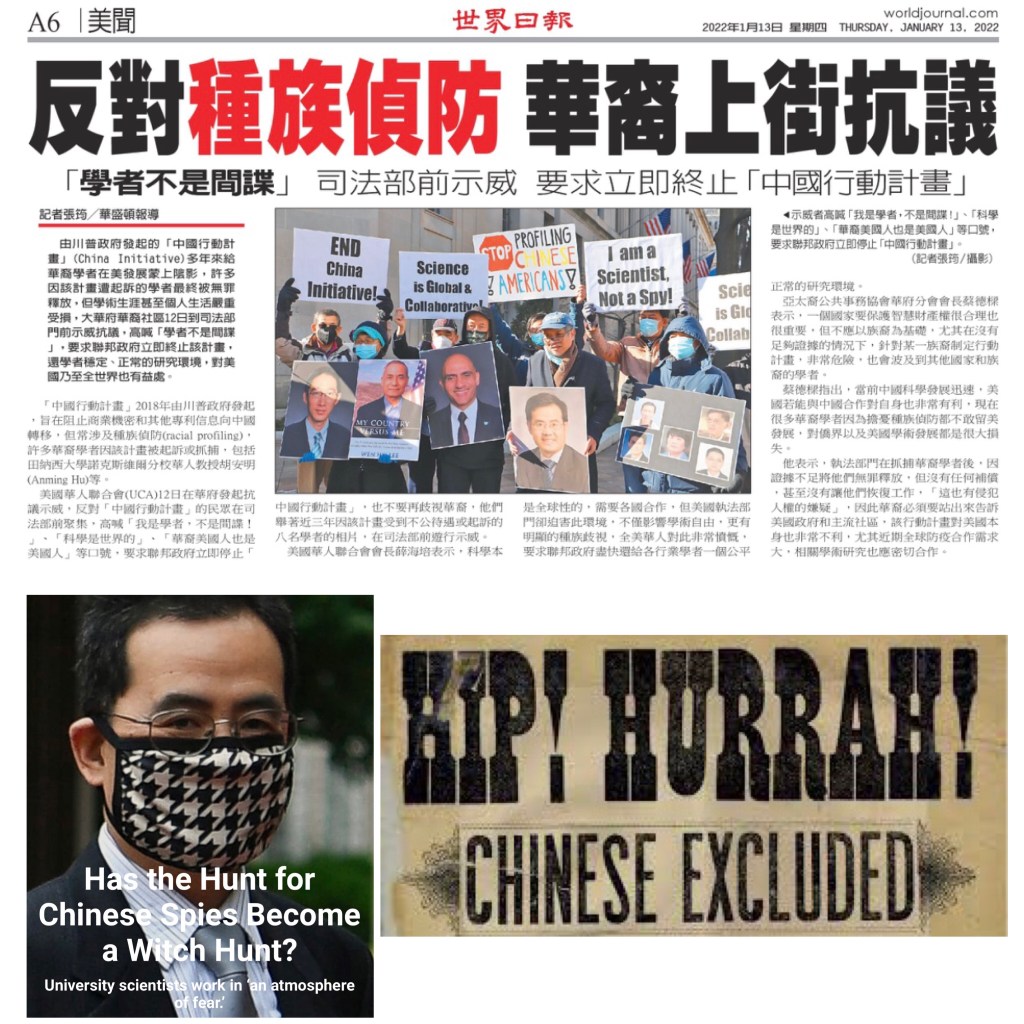
Headlines News from San Francisco Bay Areas on January 13 2022 美國北加州頭條新聞.
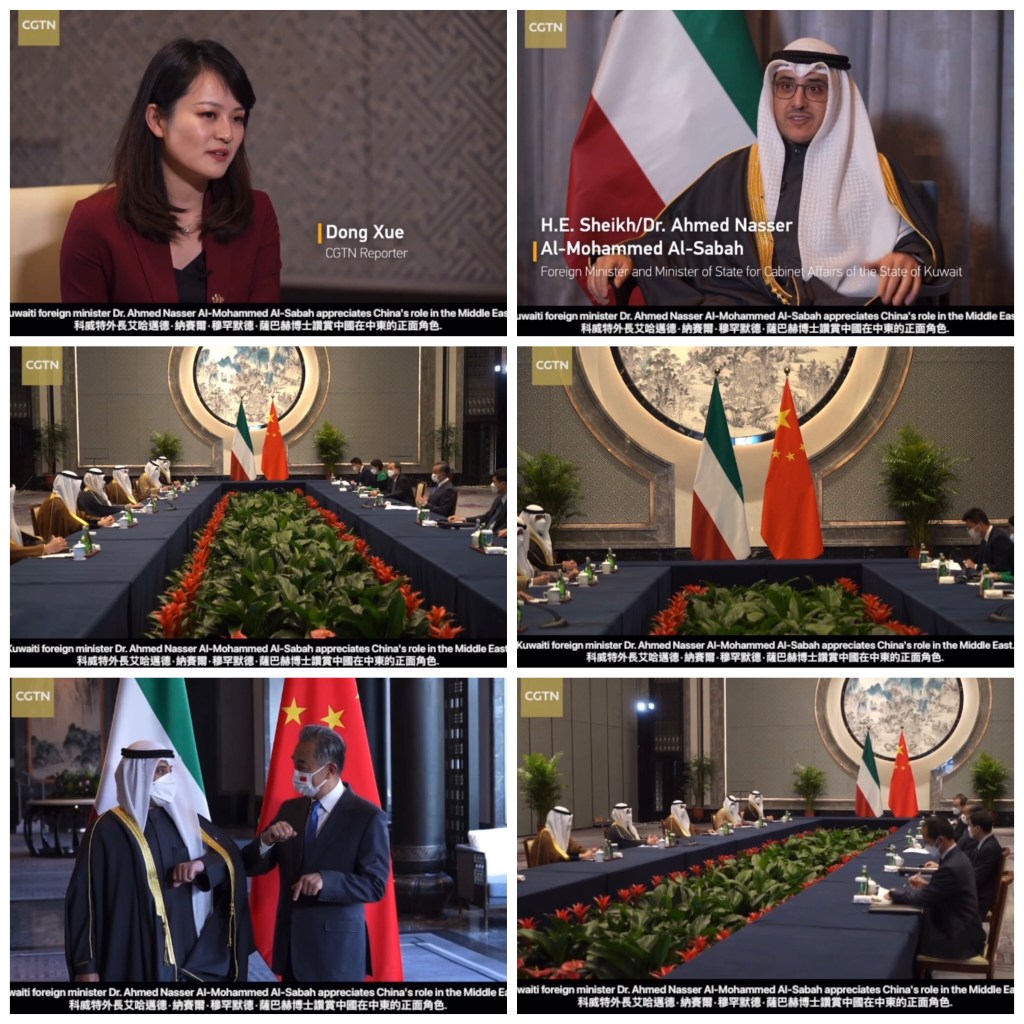
Video: Kuwaiti foreign minister Dr. Ahmed Nasser Al-Mohammed Al-Sabah appreciates China’s role in the Middle East. 科威特外長艾哈邁德·納賽爾·穆罕默德·薩巴赫博士讚賞中國在中東的正面角色.
https://vimeo.com/665468173
https://youtu.be/4kmu_LM6HEA
https://www.facebook.com/100036400039778/posts/638172770739385/?d=n
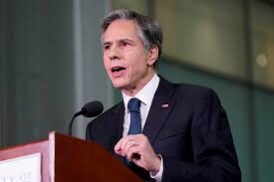
Antony Blinken and a Gun at Your Head 安東尼·布林肯和你頭上的槍. 當拜登選擇布林肯擔任國務卿時,舊金山大學政治學教授斯蒂芬·祖內斯擔心,這一選擇代表的不是糾正,而是過去干預主義和無能的延續 by Ted Snider Jan 12, 2022
When Joe Biden selected Antony Blinken to be his Secretary of State, Stephen Zunes, professor of politics at the University of San Francisco, worried that the selection represented, not a correction, but a continuation of past interventionism and incompetence.
As evidence, Zunes cites Blinken’s integral and irresponsible role in clearing the way for the disastrous war in Iraq, his confident support of the disastrous invasion of Libya, his push for a larger and longer US war in Syria and his long support for arming Ukraine.
Recently, Melvin Goodman, senior fellow at the Center for International Policy and a former CIA analyst, mourned that the worries expressed by Zunes had been realized. And he added that “Antony Blinken, a life-long Democratic staffer, does not appear to be up to the task of conceptualizing and implementing foreign policy.” Goodman explained, in a personal correspondence, that “As a staffer, Blinken merely went along with the agreed positions, including the misuse of force in Libya in 2011 and the extensions of force throughout the tragedy of Afghanistan.” As for his performance so far as Secretary of State, Goodman says, “He didn’t handle himself well in Alaska in the first meeting with the Chinese counterparts, and he doesn’t appear up to the task of dealing with a real pro like Russia’s [foreign minister] Lavrov. Apparently, he didn’t warn the White House about the obvious French reaction to AUKUS, which is surprising in view of Blinken’s knowledge of the French. His public appearances have certainly not provided clues to his ability to conceptualize the strategic challenges that we face.”
In support of Goodman’s evaluation are a host of statements by Blinken that manifest either an underdeveloped sense of history or an overdeveloped sense of irony and hypocrisy: statements that would be comical if they were not dangerous.
In December 2021, Blinken warned Africa away from investment partnerships with China, accusing China of partnering with African nations on “international infrastructure deals [that] are opaque, coercive” and that “burden countries with unmanageable debt. . . .”
Hypocrisy or comedy? The deliberate creation of debt has been a major feature of American foreign policy since at least 1955. The US provides major loans to a country, then drives up interest rates, forcing the debt shackled nation to turn to the IMF for loans that come with conditions featuring structural adjustments that open their economy up to American markets and ensure their loyalty whether the US demands access to resources, the hosting of military bases, political fealty or cooperative voting at the United Nations. As for Africa, Naomi Klein cites an IMF senior economist who designed structural adjustment programs in Latin America and Africa and who later confessed that “everything we did from 1983 onward was based on our new sense of mission to have the south ‘privatize’ or die; towards this end we ignominiously created economic bedlam in Latin America and Africa. . . .” So, be careful of China!
Blinken has also repeatedly accused Iran of not being serious at the reincarnation of the JCPOA nuclear talks: “What we’ve seen in the last couple of days is that Iran right now does not seem to be serious.” Iran’s not being serious? That’s pretty funny, since Blinken readily admits that Iran wouldn’t even have to be at these talks if the US hadn’t illegally pulled out of the agreement. It’s even funnier to accuse Iran of not negotiating seriously when you represent the party that refuses to guarantee that it will honor the agreement and its commitments as binding even for the duration of the term of the president who will put his signature on it. It’s funnier still when the US has entered the talks with the admission that it “doesn’t see any evidence that Iran’s Supreme Leader [Ali Khamenei] has made a decision to move to weaponize.”
Similarly, Blinken has threatened Russia with “massive consequences and severe costs” for an invasion of Ukraine when the CIA has shyly admitted that “U.S. intelligence agencies haven’t concluded that Russian President Vladimir Putin will invade Ukraine.”
But Blinken has recently come back out with an encore that may feature his best one liner yet. On the eve of the most important security talks between US and Russian officials, America’s top diplomat says that “It’s very hard to make actual progress in any of these areas in an atmosphere of escalation and threat with a gun pointed to Ukraine’s head.”
That is blinding hypocrisy from a man who said in an article he coauthored with Robert Kagan just two years ago that the only way to negotiate with Russia and China is with a gun to their heads. In that article, Blinken argued that “As geopolitical competition intensifies, we must supplement diplomacy with deterrence. Words alone will not dissuade the Vladimir Putins and Xi Jinpings of this world.” If his point wasn’t blatant enough, Blinken adds, “force can be a necessary adjunct to effective diplomacy.” That’s not ignorance of history: that’s bold hypocrisy.
It also can’t be ignorance of history that Blinken misses the point that Russia is demanding talks precisely because the US has a gun pointed to Russia’s head. US and NATO troops have marched to Russia’s very borders and surrounded Russia with guns by land, sea and air. As for Ukraine and who’s pointing a gun at whom, the US provided Ukraine with $400 million in security assistance in 2021 alone. That “security assistance” is to be topped off with a new $60 million package that includes lethal weapons.
Blinken’s blinding hypocrisy may be supplemented with a large dose of historical amnesia. The complaint that it is impossible to negotiate with a weapon pointing at you has been made before: against America, not by it.
Cuban negotiators frequently complained that it was impossible for them to negotiate while being strangled by the embargo. In Back Channel to Cuba, William LeoGrande and Peter Kornbluh quote one Cuban negotiator who complained that “We cannot negotiate under the blockade.” Anticipating Blinken’s formulation, Castro would often remind the US that Cuba cannot be expected to negotiate with “a dagger at our throats.”
Decades later, Iranian negotiators would later make the same point in the same words. The Iranian ambassador to the UN, Majid Takht Ravanchi, would complain that “You cannot negotiate with somebody who has a knife in his hand putting the knife under your throat.”
Like Cuba and Iran, it is NATO encroachment that has put a knife to Russia’s throat. It is the crossing of the final red line into Ukraine that has finally put a gun to Russia’s head. Hypocrisy or historical ignorance, Blinken’s performance would be comical if it weren’t so deadly serious.
Ted Snider has a graduate degree in philosophy and writes on analyzing patterns in US foreign policy and history.

Video: China’s Rise in Olympic Snowboarding | Beijing 2022 Olympics | Liu Jiayu 中國在奧運會單板滑雪中的崛起| 北京2022年奧運會: 劉佳宇
https://vimeo.com/665446216
https://youtu.be/LP3oo9oAt5o
https://www.facebook.com/100036400039778/posts/638121814077814/?d=n
China won its first snowboarding olympics medal in 2018 when Liu Jiayu captured the Silver Medal in the 2018 Winter Olympics. The 2022 Beijing Winter Olympics will be her 4th and most likely final Olympics, can she win the gold medal on home snow? 2018 年,劉佳宇在 2018 年冬奧會上奪得銀牌,中國在 2018 年獲得了第一枚單板滑雪奧運會獎牌。 2022年北京冬奧會是她的第四次也是最有可能的最後一屆奧運會,她能否在主場贏得金牌?
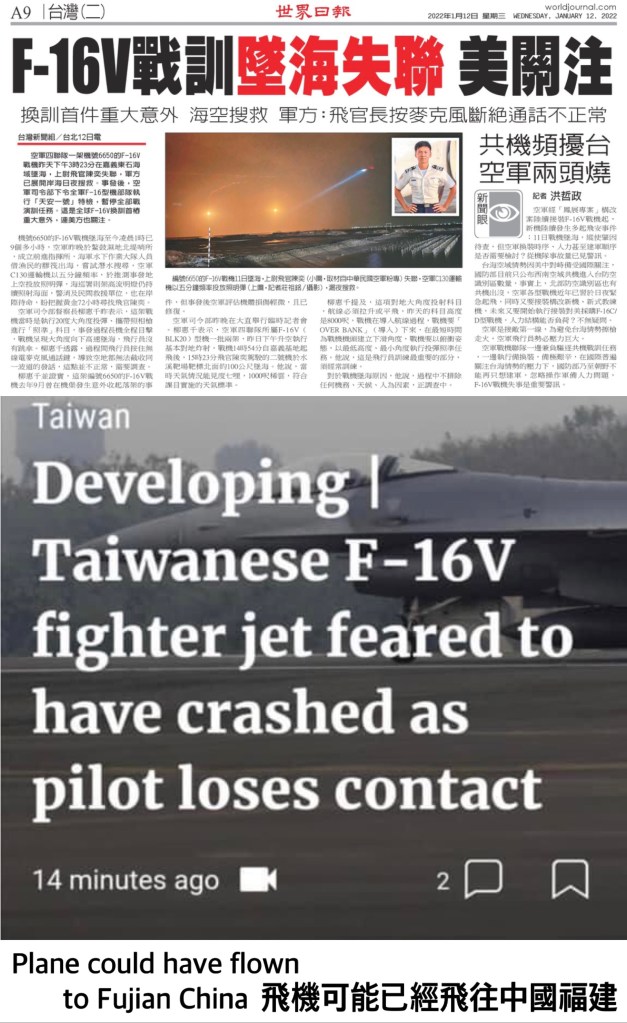
Taiwan’s Province F-16V could have flown to Fujian China 台灣省 F-16V戰機可能已經飛往中國福建
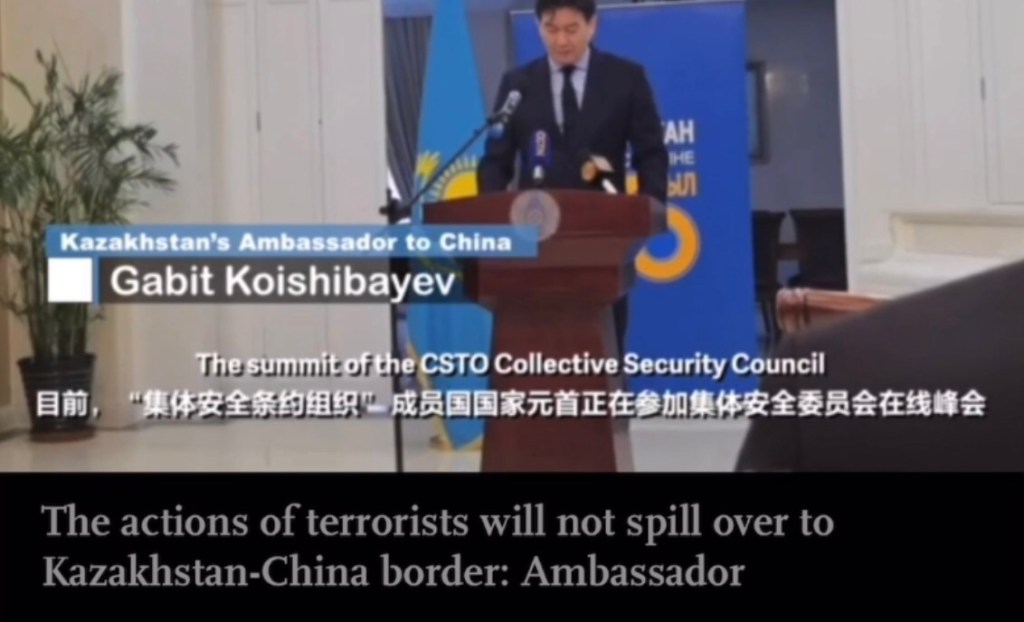
Video: The actions of (USA NED funded) terrorists will not spill over to Kazakhstan-China border: Kazakhstan Ambassador to China (美國民主基金會資助) 恐怖分子的行動不會蔓延到哈中邊境:哈薩克斯坦駐華大使
https://vimeo.com/665381127
https://youtu.be/IQcTeB8Q27A
https://www.facebook.com/100036400039778/posts/638006860755976/?d=n
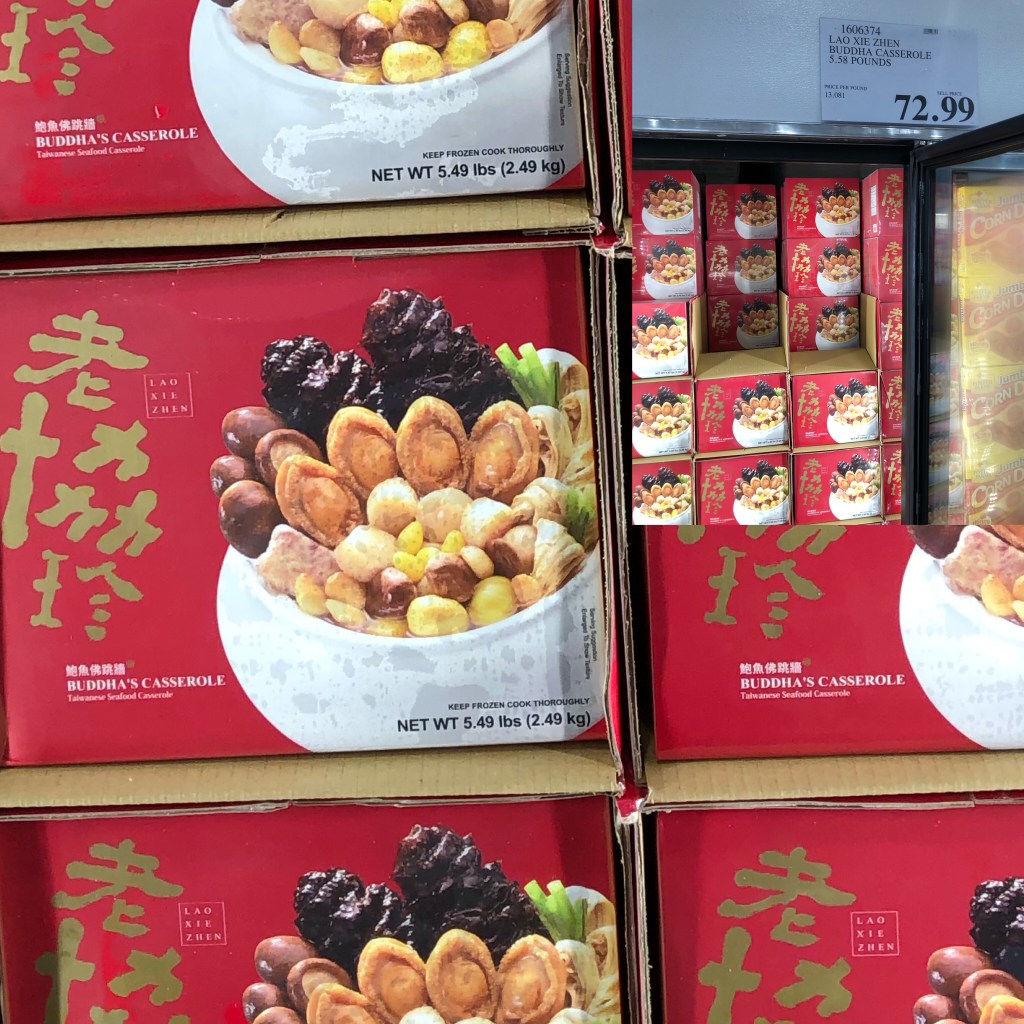
Buddha’s Casserole at Costco Northern California for Chinese New Year Celebration on Feb 1st 鮑魚佛跳牆在北加州好市多入貨過二月一日唐歷新年.

 Johnson Choi Biz