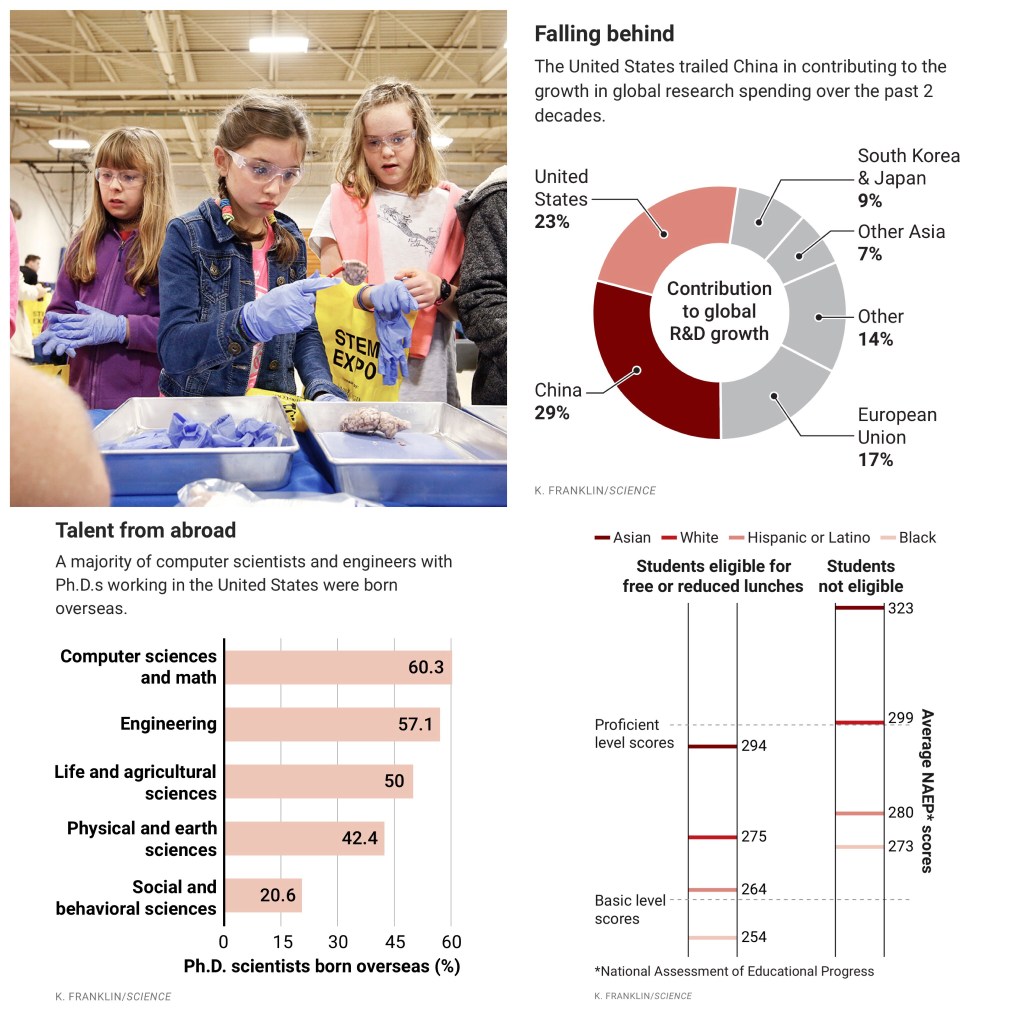
US will have to chose where to regain strength. However, Biden-Trump China initiative is an obstacle..Also, 60% of PhD’s in Engineering, CS, and math are non-US born Americans 美國將不得不選擇在哪裡恢復實力。 然而,拜登-特朗普的中國倡議是一個障礙。此外,60% 的工程、計算機和數學博士是非美國出生的美國人
A new data-rich report by the National Science Foundation (NSF) confirms China has overtaken the United States as the world’s leader in several key scientific metrics, including the overall number of papers published and patents awarded. U.S. scientists also have serious competition from foreign researchers in certain fields, it finds.
That loss of hegemony raises an important question for U.S. policymakers and the country’s research community, according to NSF’s oversight body, the National Science Board (NSB). “Since across-the-board leadership in [science and engineering] is no longer a possibility, what then should our goals be?”
The US, left to its own devices, is unlikely to be world-class scientific or intellectual power.
To begin with, not only does it not invest in education, it doesn’t even teach basic thinking.
For example, this writer for a major newspaper says that “Wordle is not a game, but the creative process in a nutshell”.
Wordle is a simple 5 variable guessing game that is easily cracked through heuristic* and algorithmic search. The search is radically constrained by certain clusters of letters, the restricted number of vowels, and letter frequency. All thinking uses elements of both algorithmic and heuristic search at certain phases, but the creative component is when you go outside the search tree to discover something truly original. (Juxtaposition and lateral thinking stimulate this creative “leap”).
*Starting heuristics: If you start with a vowel-rich word with no letter repetitions (like bayou, audio, adieu, ouija, miaou), or a vowel-rich word using the most common consonants (roate, raise, stear, stare) you are halfway finished.
Harvard University Ash Center research team unveils findings from long-term public opinion survey – 95.5% of respondents were either “relatively satisfied” or “highly satisfied” with Beijing Gov’t by Dan Harsha July 9, 2020
Understanding what Chinese citizens think about their own government has proven elusive to scholars, policymakers, and businesspeople alike outside of the country. Opinion polling in China is heavily scrutinized by the government, with foreign polling firms prohibited from directly conducting surveys.
Given China’s global rise in the economic, military, and diplomatic spheres, understanding public opinion there has arguably never been more important.
A new study from the Ash Center fills in this gap for the first time, providing a long-term view of how Chinese citizens view their government at the national, as well as the regional and local levels. What started as an exercise in building a set of teaching tools for an executive education class eventually transformed into the longest academic survey of Chinese public opinion conducted by a research institution outside of China.
“Gathering reliable, long-term opinion survey data from across the country is a real obstacle,” said Ash Center China Programs Director Edward Cunningham. “Rigorous and objective opinion polling is something that we take for granted in the U.S.”
While important work in this area has been accomplished by previous scholars — and their work shaped the analysis of the survey data collected — those other surveys were often short-term or infrequent.
For Tony Saich, Daewoo Professor of International Affairs and director of the Ash Center, the quest to build a firmer understanding of Chinese public opinion has taken the better part of 15 years. It began with an attempt to develop a suite of curricular materials to inform a course on local government in China.
“We thought it would be helpful to know how satisfied citizens were with different levels of government, and in particular how satisfied they were with different kinds of government services,” said Saich.
The work began in 2003, and together with a leading private research and polling company in China, the team developed a series of questionnaires for in-person interviews. The surveys were conducted in eight waves from 2003 through 2016, and captured opinion data from 32,000 individual respondents.
“There’s nothing comparable done on this scale, over such a long period of time, and over a large geographic area,” said Jesse Turiel, a China public policy postdoctoral fellow and co-author who worked closely with Saich and Cunningham on the project’s analysis and subsequent publications.
The survey team set out to assess overall satisfaction levels with government among respondents from across the socioeconomic and geographic strata of China. “It is always a challenge to obtain a representative sample of the Chinese population, particularly from interior provinces,” said Turiel. “Our survey does not include migrant laborers, for example. But given the fact that the survey conducted in-person interviews with over 3,000 respondents per year in a purposive stratified sample, we are happy that the results include not just the coastal elites or large urban areas, but also poorer and less developed inland provinces.”
Levels of government and public opinion
The survey team found that compared to public opinion patterns in the U.S., in China there was very high satisfaction with the central government. In 2016, the last year the survey was conducted, 95.5 percent of respondents were either “relatively satisfied” or “highly satisfied” with Beijing. In contrast to these findings, Gallup reported in January of this year that their latest polling on U.S. citizen satisfaction with the American federal government revealed only 38 percent of respondents were satisfied with the federal government.
For the survey team, there are a number of possible explanations for why Chinese respondents view the central government in Beijing so favorably. According to Saich, a few factors include the proximity of central government from rural citizens, as well as highly positive news proliferated throughout the country.
This result supports the findings of more recent shorter-term surveys in China, and reinforces long-held patterns of citizens reporting local grievances to Beijing in hopes of central government action. “I think citizens often hear that the central government has introduced a raft of new policies, then get frustrated when they don’t always see the results of such policy proclamations, but they think it must be because of malfeasance or foot-dragging by the local government,” said Saich.
Tony Saich, Daewoo Professor of International Affairs and director of the Ash Center.
Compared to the relatively high satisfaction rates with Beijing, respondents held considerably less favorable views toward local government. At the township level, the lowest level of government surveyed, only 11.3 percent of respondents reported that they were “very satisfied.”
Again, the U.S. reveals quite a different story. “American trust surveys over time show a clear distinction between low levels of trust towards the federal government, but a strong belief and faith in the power of local government — at the most local level, those positions may be filled by part-time volunteers who are a part of your everyday life,” said Cunningham. This dichotomy is highlighted by a 2017 Gallup poll, where 70 percent of U.S. respondents had a “great” or “fair” amount of trust in local government.
Saich contends that the lack of trust in local governments in China is due to the fact that they provide the vast majority of services to the Chinese people. This trust deficit was compounded by the 1994 tax reforms, which garnered a substantially larger share of total national tax revenues for the central government. Local governments, despite being faced with declining revenues, were still on the hook for providing the bulk of public services throughout China.
“Local governments were caught between dropping tax revenue and rising expenditures,” Cunningham said. “Many local governments then had to turn to ad-hoc extra budgetary fees to close the budget gap. I think that has consistently undermined trust at the local level.”
Regional disparities
The research team was also keen to examine disparities in the responses of wealthy, predominantly urban and coastal areas of China and those of less developed interior provinces. “It didn’t surprise us that the wealthy coastal citizens who were the winners of globalization in many ways, and the winners of China’s domestic reform program, had a very high favorability rate of government overall, regardless of level of government examined,” said Cunningham.
The responses from survey participants in rural areas, however, surprised the researchers, particularly over time. “We did not anticipate how quickly both low-income citizens and people from less-developed regions in China closed the satisfaction gap with high-income citizens and people from the coastal areas,” Cunningham added.
The surveys found that rural residents, generally poorer than those in cities, had more optimistic attitudes about inequality than their wealthier urban counterparts. The team’s analysis ties the closing of this satisfaction gap between rich and poor, as well as coastal and hinterland populations, to several policies including local budget spent on healthcare, welfare and education, and paved roads per capita.
“We tend to forget that for many in China, and in their lived experience of the past four decades, each day was better than the next.” — Tony Saich, Daewoo Professor of International Affairs and director of the Ash Center
Saich added that the findings “run counter to the general idea that these people are marginalized and disfavored by policies,” and therefore undermine the persistent notion that rising inequality, and dissatisfaction with corruption and local government, have created the potential for widespread unrest in China.
Observers have long predicted that China’s slowing economic growth coupled with a complacent, ineffective government bureaucracy could ultimately lead to the crumbling of Beijing’s political authority. While frustration with corruption and the quality of public services at the local level clearly exists, the Ash research team’s work has shown that the current political system in China appears remarkably resilient.
Inequality remains a key concern for policymakers and citizens alike in China, but the survey project found little to support the argument that those concerns among ordinary Chinese are translating into broader dissatisfaction with government. The final round of the survey in 2016 revealed that about one-third of respondents were much more likely to lodge complaints with the government or protest if they felt that air pollution had negatively impacted their own health or the health of their immediate family members.
Professor John V Walsh, MD in San Francisco: People Trust government :
China increase from 82% to 91% US decrease from 42% to 39%
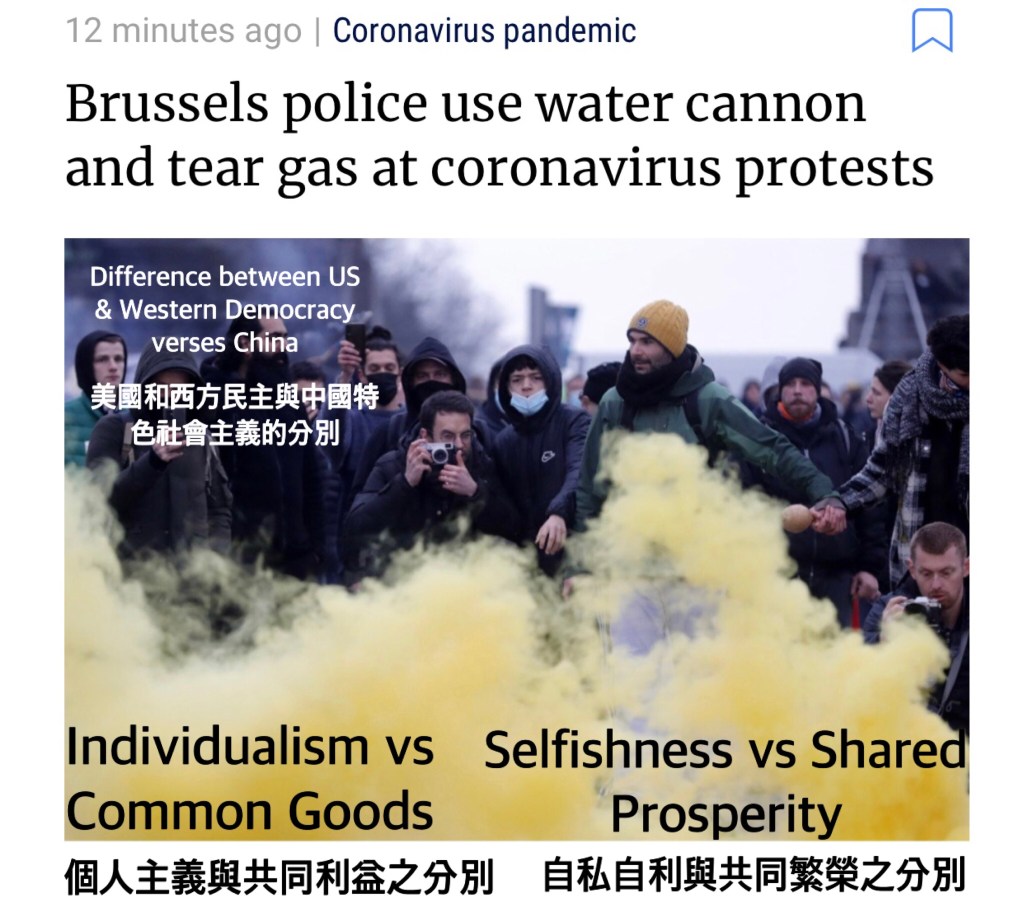
From the country’s starting point, Difference between US & Western Democracy verses China’s Socialism with Chinese Characteristics: Individualism verses Common Goods, Selfishness verses Shared Prosperity. 從國家的出發點, 美國和西方民主與中國特色社會主義的分別: 個人主義與共同利益之分別; 自私自利與共同繁榮之分別.
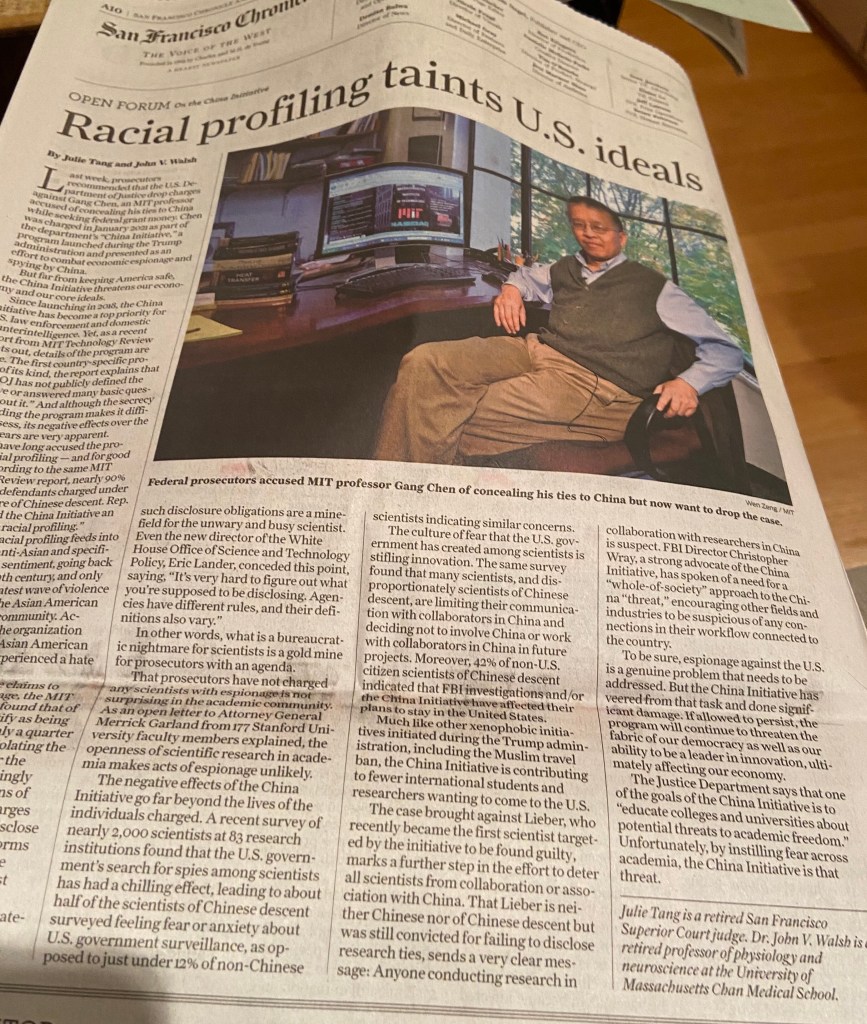
The DOJ’s China Initiative is a xenophobic threat to America’s economy and our core ideals 美國司法部的中國倡議是對美國經濟和我們的核心理想的仇外威脅. by Judge Julie Tang in SF and John V. Walsh, MD in SF Jan. 22, 2022
Federal prosecutors accused MIT Professor Gang Chen of concealing his ties to China but now want to drop the charges against him.
Federal prosecutors accused MIT Professor Gang Chen of concealing his ties to China but now want to drop the charges against him.
Last week, prosecutors recommended that the U.S. Department of Justice drop charges against Gang Chen, an MIT professor accused of concealing his ties to China while seeking federal grant money. Chen was charged in January 2021 as part of the department’s “China Initiative,” a program launched during the Trump administration and presented as an effort to combat economic espionage and spying by China.
But far from keeping America safe, the China Initiative threatens our economy and our core ideals.
Since launching in 2018, the China Initiative has become a top priority for U.S. law enforcement and domestic counterintelligence. Yet, as a recent report from MIT Technology Review points out, details of the program are vague. The first country-specific program of its kind, the report explains that “the DOJ has not publicly defined the initiative or answered many basic questions about it.” And although the secrecy surrounding the program makes it difficult to assess, its negative effects over the past few years are very apparent.
Critics have long accused the program of racial profiling — and for good reason. According to the same MIT Technology Review report, nearly 90% of the known defendants charged under the initiative are of Chinese descent. Rep. Judy Chu called the China Initiative an “instrument for racial profiling.”
This kind of racial profiling feeds into a long history of anti-Asian and specifically anti-Chinese sentiment, going back to at least the late 19th century, and only serves to stoke the latest wave of violence and hatred against the Asian American and Pacific Islander community. According to survey by the organization Stop AAPI Hate, 1 in 5 Asian American and Pacific Islanders experienced a hate incident last year.
Although the initiative claims to focus on economic espionage, the MIT Technology Review report found that of the 77 cases they could identify as being under the China Initiative, only a quarter of them included charges of violating the Economic Espionage Act. Over the years, prosecutors have increasingly moved their attention to questions of “research integrity,” bringing charges against academics for failing to disclose all ties to China on grant-related forms rather than any intent to spy. As the prosecutor in the recent case against Harvard professor Charles Lieber explained, “The case is about false statements, false tax returns, and an unreported bank account in China.” But such disclosure obligations are a minefield for the unwary and busy scientist. Even the new director of the White House Office of Science and Technology Policy, Eric Lander, conceded this point, saying, “It’s very hard to figure out what you’re supposed to be disclosing. Agencies have different rules, and their definitions also vary.”
In other words, what is a bureaucratic nightmare for scientists is a gold mine for prosecutors with an agenda.
That prosecutors have not charged any scientists with espionage is not surprising in the academic community. As an open letter to Attorney General Merrick Garland from 177 Stanford University faculty members explained, the openness of scientific research in academia makes acts of espionage unlikely.
The negative effects of the China Initiative go far beyond the lives of the individuals charged. A recent survey of nearly 2,000 scientists at 83 research institutions found that the U.S. government’s search for spies among scientists has had a chilling effect, leading to about half of the scientists of Chinese descent surveyed feeling fear or anxiety about U.S. government surveillance, as opposed to just under 12% of non-Chinese scientists indicating similar concerns.
The culture of fear that the U.S. government has created among scientists is stifling innovation. The same survey found that many scientists, and disproportionately scientists of Chinese descent, are limiting their communication with collaborators in China and deciding not to involve China or work with collaborators in China in future projects. Moreover, 42% of non-U.S. citizen scientists of Chinese descent indicated that FBI investigations and/or the China Initiative have affected their plans to stay in the United States.
Much like other xenophobic initiatives initiated during the Trump administration, including the Muslim travel ban, the China Initiative is contributing to fewer international students and researchers wanting to come to the U.S.
The case brought against Lieber, who recently became the first scientist targeted by the initiative to be found guilty, marks a further step in the effort to deter all scientists from collaboration or association with China. That Lieber is neither Chinese nor of Chinese descent but was still convicted for failing to disclose research ties, sends a very clear message: Anyone conducting research in collaboration with researchers in China is suspect. FBI Director Christopher Wray, a strong advocate of the China Initiative, has spoken of a need for a “whole-of-society” approach to the China “threat,” encouraging other fields and industries to be suspicious of any connections in their workflow connected to the country.
To be sure, espionage against the U.S. is a genuine problem that needs to be addressed. But the China Initiative has veered from that task and done significant damage. If allowed to persist, the program will continue to threaten the fabric of our democracy as well as our ability to be a leader in innovation, ultimately affecting our economy.
The Justice Department says that one of the goals of the China Initiative is to “educate colleges and universities about potential threats to academic freedom.” Unfortunately, by instilling fear across academia, the China Initiative is that threat.
Julie Tang is a retired San Francisco Superior Court judge. Dr. John V. Walsh is a retired professor of physiology and neuroscience at the University of Massachusetts Chan Medical School. About Opinion . Guest opinions in Open Forum and Insight are produced by writers with expertise, personal experience or original insights on a subject of interest to our readers. Their views do not necessarily reflect the opinion of The Chronicle editorial board, which is committed to providing a diversity of ideas to our readership.
AngloSaxon’s Native Americans land grabs with aggressive population reduction program from 10 millions to 300,000 by 1900. With that kind of record still want to talk about human rights and Xinjiang? 歐洲白人對美洲原住民通過激進的人口減少計劃從1000萬減少到30萬, 美國有這樣的記錄還想談論新疆嗎?
In the Jan. 19 OPEN FORUM, Mr. Beydoun condemned American firms for conducting business in Xinjiang despite China’s “genocide” against the Uyghurs. This “genocide” is a fabrication.
Mr. Beydoun cited reports of up to 2 million Muslims in China’s detention camps. Typically such eye popping numbers are arrived at by extrapolating from a small number of incidences provided by unreliable witnesses, or based on misleading interpretations of coarse satellite images.
If captured with today’s advanced satellite imaging technology, it should be easy to capture in fine detail the Xinjiang detention camps for housing 2 million detainees, which is about three times San Francisco’s population. Yet such satellite images are nowhere to be found.
Xinjiang has loose, open borders with 8 countries, 5 of which are Muslim Majority. If there were mass oppression of Muslims, why is there no evidence of mass flight/exodus or refugees?
More than 158 million tourists visited Xinjiang in 2020 and no one reported any sign of genocide or mass internment camps. Uyghur population has grown from 3.61 million in 1953 to 11.62 million in 2020. This shows a rapidly growing Uyghur community, not a genocide.
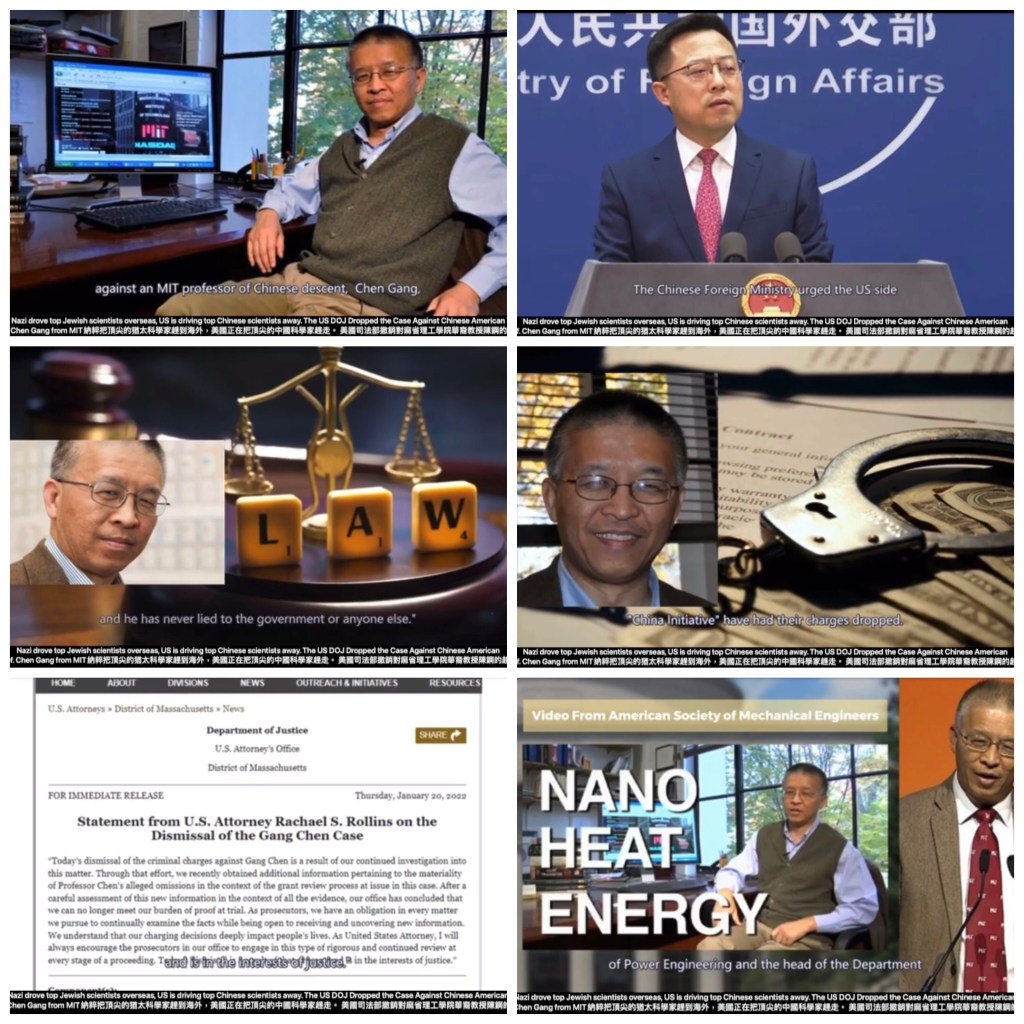
Video: Nazi drove top Jewish scientists overseas, US is driving top Chinese scientists away. The US DOJ Dropped the Case Against Chinese American Prof. Chen Gang from MIT 納粹把頂尖的猶太科學家趕到海外,美國正在要把頂尖的中國科學家趕走。 美國司法部撤銷對麻省理工學院華裔教授陳鋼的起訴.
Chen Gang is neither the first nor the last to be wrong by the racially motivated witch hunting “China Initiative”, and behind each Chinese student and Scholar, there are a pair of eyes watching. 陳鋼不是第一個,也不會是最後一個被種族主義獵巫的“中國倡議”搞錯的,每個中國學生和學者的背後,都有一雙眼睛在註視著, 找機會弄到你雞毛鴨血.
Debunk NYT fake news to demonize China / ACTION ALERT: NYT’s China Covid Coverage Needs to Acknowledge Reality 揭穿《紐約時報》假新聞以妖魔化中國/行動警報:《紐約時報》的中國新冠病毒報導需要承認現實 by ARI PAUL 1-20-22
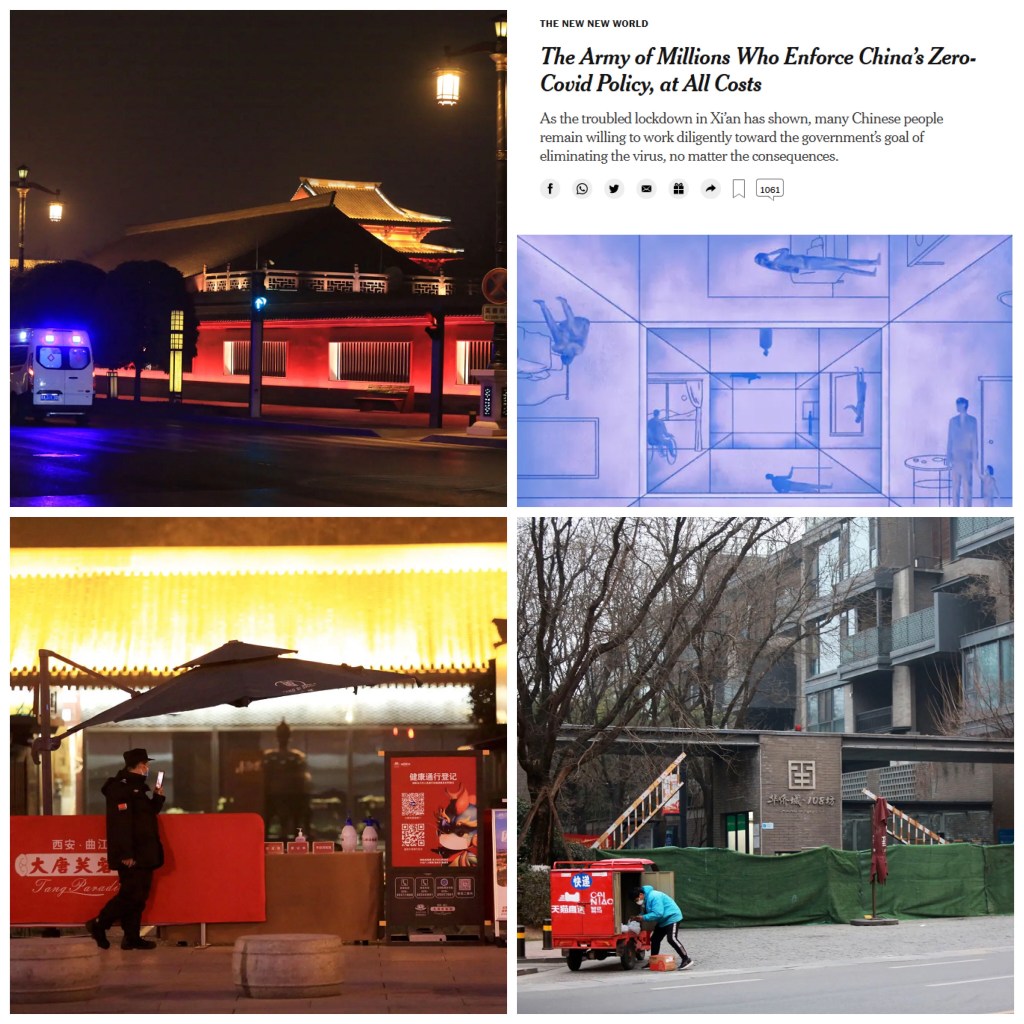
NYT: The Army of Millions Who Enforce China’s Zero-Covid Policy, at All Costs A New York Times article (1/12/22) assailed China for following a zero Covid policy, “no matter the human costs”–without ever mentioning the human costs of not containing the coronavirus.
The New York Times report (1/12/22) on the response to an outbreak of Covid-19 in the Chinese city of Xi’an featured over-the-top hand-wringing about “authoritarianism” and a complete erasure of the dangers of the coronavirus. Had this article been about Covid-19 response in Europe or the United States, one could swear it was from InfoWars or some other far-right, Covid-denying fringe outlet.
China’s “zero Covid” policy is indeed a major outlier in the world’s approach to the pandemic. The country, the most populous in the world, took pride in this fact when it announced that it had less than 200 reported positive cases for January 8, a slight increase from days before (Reuters, 1/9/22). This hasn’t come without its hardships; noncitizens of China should be advised not to plan a vacation to a country with closed borders (CNN, 11/15/21; Time, 12/1/21). And outbreaks are met with lockdowns that can upend daily life for millions, as the city of Xi’an is learning (Xinhua, 1/10/22).
‘Iron-fist, authoritarian policies’ The Times article by Li Yuan started off with some undeniable hardships, reflecting chaotic coordination of services. But it leaped from this to calling the Chinese Covid response a set of “iron-fist, authoritarian policies [that] emboldened its officials, seemingly giving them license to act with conviction and righteousness.” Chinese officials are striving to “ensure zero Covid infections”—not because it is the right thing to do, but because “it is the will of their top leader, Xi Jinping.”
With language like “conviction and righteousness” and “the will of their top leader,” you can hear the Times attempting to parody the propagandistic style of CCP outlets for its own anti-China purposes. But by applying tems like “iron fist” and “authoritarian” to successful public health measures, the Times unironically echoed the framing of right-wing partisans (Breitbart, 8/3/21, Federalist, 9/9/21; Fox News, 9/29/21; Newsmax, 9/13/21; Telegraph, 11/22/21; Miami Herald, 12/20/21) when they attack less effective Western containment policies.
New York TImes depiction of a security guard in Xi’an
The New York Times compared officials who enforced public health measures in Xi’an to Holocaust engineer Adolf Eichmann; like him, they are “willing to be the enablers of authoritarian policies.”
It gets worse. When reporting on how low-level officials in the city comply with lockdown measures, Yuan quoted Chinese social media commentary to invoke philosopher Hannah Arendt’s “banality of evil,” a concept Arendt applied (as Yuan noted) to high-ranking Nazi official Adolf Eichmann. Again, this is the same trope the far right (CNN, 7/7/21; Reuters, 12/15/21; NBC, 1/12/22) uses when they insist that vaccine cards and mandates are just a step away from the cattle cars, which is not just absurd but an offensive trivialization of Nazi terror.
This invocation of Arendt sets up the rest of the piece: While there are some who don’t like the Xi’an lockdown, those that are going along with it aren’t an opposing viewpoint, but rather the brainwashed drones of a devious plot against humanity. “Chinese intellectuals,” Yuan wrote, are baffled that workers and civilians who enforce zero Covid policies are “driven by professional ambition or obedience…to be the enablers of authoritarian policies.” Such prose could have been lifted from Josh Mandel, the Republican senate candidate in Ohio who, in response to the idea of vaccine mandates, “compared [President Joe] Biden to the Gestapo, the Nazi secret police force” (Jewish Telegraphic Agency, 9/10/21).
Them, not us New York Times depiction of Xi’an ambulance
The New York Times complained that lockdown rules in Xi’an hospitals “deprived…loved ones of a last chance to say goodbye.” The more than 30,000 people who would have been lost by their loved ones if Xi’an had the same Covid death rate as the US were not brought up.
The Times spoke of social media censorship in China in relation to lockdowns. Such an issue isn’t nothing, but again, this is also true of the major US social media networks, like Facebook and Twitter (Bloomberg, 6/7/21).
The Times wrote of “the hospitals that denied patients access to medical care and deprived their loved ones of the chance to say goodbye.” It noted that because of the lockdown, a man was denied care and died of a heart attack, and a pregnant woman who was turned away had a miscarriage.
The part about dying alone suggests that in a normal country, it is standard procedure to allow visitors in to see patients who are dying from contagious diseases. This is of course not the case, as the Times (3/29/20) acknowledges in its non-China reporting.
As for the denial of care, keep in mind that these were two tragedies in a city of 13 million. People being unable to access emergency rooms because they are overflowing with Covid patients is an enormous problem in the United States—sometimes with fatal results—but the Times story gives no inkling that access to care could be a problem outside an “authoritarian” state.
And Xi’an’s health system under lockdown does have some semblance of accountability, as the AP (1/6/22) reported: “Hospital officials in the northern Chinese city of Xi’an have been punished after a pregnant woman miscarried after being refused entry, reportedly for not having current Covid-19 test results.” The CCP-run Global Times (1/5/22) called the incident a “heartbreaking misfortune” and reported that “local authorities stressed that all hospitals must not use the excuse of epidemic prevention and control to avoid treating patients.”
There are other forms of accountability in Xi’an public health. The South China Morning Post (1/5/22) said that the city “suspended its top official in charge of big data after the system powering the local health code app, a critical tool in China’s zero-Covid strategy, crashed for a second time.”
The Times article does acknowledge that
a few low-level Xi’an officials were punished…. The general manager of a hospital was suspended. Last Friday, the city announced that no medical facility could reject patients on the basis of Covid tests.
“But that was about it,” Yuan sighs. It’s not clear what kind of retribution she was hoping for—prison sentences?
‘To surmount these trying times’ NYT depiction of food delivery in Xi’an. The New York Times, depicting food delivery during the Xi’an lockdown, said that “some people have struggled to get food” in the city.
China’s state-run news wire, Xinhua (1/4/22), doesn’t dispute that the lockdown in Xi’an comes with “strict” containment measures, but at the same time defends them as a necessary public health measure. It quoted one French expatriate who “believes that it is necessary for Xi’an to adopt strict control measures”: “Not being free now is for real freedom later. The epidemic should be brought under control as soon as possible through strict measures.” As the paper put it, Chinese “authorities have taken strict measures to curb the spread of the virus,” noting that the response’s priority is “to surmount these trying times.”
This outlook is one that many people have expressed the world over, including in the United States. While few have experienced the kind of intense lockdowns associated with China’s zero-Covid policy, a great many people from all corners of the globe have come to the conclusion that canceling events and travel, mandating remote work, restricting in-person services and requiring masks are things that must be done to tackle this pandemic.
Just compare this Times report to Xinhua’s coverage (1/13/22) of the US government’s response to the omicron surge. It is written in cold, straight journalism that pulls heavily from US officials, academics and at least one US newspaper. And while it paints a picture of a country struggling to deal with the pandemic, it does report some positive news: “The White House also promised to make lab capacity available for 5 million free polymerase chain reaction (PCR) tests.”
Xinhua could have easily mocked America’s overstrained hospitals and the breakdown of public services (New York Times, 1/7/22, 1/14/22; AP, 1/8/22; NPR, 1/13/22) as proof that Covid has exposed the United States as a failed state and an empire in decline. Instead, Chinese state media’s reporting on the pandemic in the US is, at least in this instance, fairer than the Times coverage of Xi’an. That’s quite a feat.
FAIR (1/29/21, 9/17/21) has criticized New York Times coverage of China’s Covid policy in the past, for its harsh, one-sided attacks on a strategy that has literally saved millions of lives. (If the same proportion of China’s population had died from the pandemic that has so far died in the United States, its death toll would be 3.6 million. Its actual toll: less than 5,000.) But its latest coverage of Xi’an, with the casual flinging about of Nazi analogies, reaches a level of partisan hyperbole that puts the paper of record on a par with Fox News and Breitbart.
ACTION: Please tell the New York Times to report on the successes as well as the problems of China’s Covid strategy, without resorting to the far-right’s anti–public health tropes.
Video: Ukraine on Fire: The Real Story Documentary by Oliver Stone on US let successful regime change in 2014, followed by failed regime change in Hong Kong and ongoing regime change attempts in Myanmar, Cambodia and Thailand, all in the names of fake Democracy, Human Rights and Rules of Laws.
Ukraine, the ‘borderlands’ between Russia and ‘civilized’ Europe is on fire. For centuries, it has been at the center of a tug-of-war between powers seeking to control its rich lands and Russia’s access to the Mediterranean.
The Maidan Massacre in early 2014 triggered a bloody uprising that ousted president Viktor Yanukovych, spurred Crimeans to secede and join Russia, and sparked a civil war in Eastern Ukraine.
Russia was portrayed by Western media as the perpetrator, and has been sanctioned and widely condemned as such. But was Russia responsible for what happened?
Ukraine on Fire provides a historical perspective for the deep divisions in the region which led to the 2004 Orange Revolution, the 2014 uprisings, and the violent overthrow of democratically-elected Yanukovych.
Covered by Western media as a ‘popular revolution’, it was in fact a coup d’état scripted and staged by ultra-nationalist groups and the US State Department.
Investigative journalist Robert Parry reveals how US-funded political NGOs and media companies have emerged since the 1980s, replacing the CIA in promoting America’s geopolitical agenda abroad.
Executive producer Oliver Stone gained unprecedented access to the inside story through his on-camera interviews with former President Viktor Yanukovych and Minister of Internal Affairs Vitaliy Zakharchenko, who explain how the US Ambassador and factions in Washington actively plotted for regime change.
And, in his first meeting with Russian President Vladimir Putin, Stone solicits Putin’s take on the significance of Crimea, NATO and the US’s history of interference in elections and regime change in the region.
Now, at last, the full exposé is available in the West. Though, of course, everyone is encouraged to purchase a copy to support Stone’s important work.
US achieves Hollywood-style heroism through fake propaganda, experts warn that it’s, once again, just another example of the US-orchestrated “Hollywood-style heroism through fake propaganda.” by GT Staff reporters Jan 20 2022
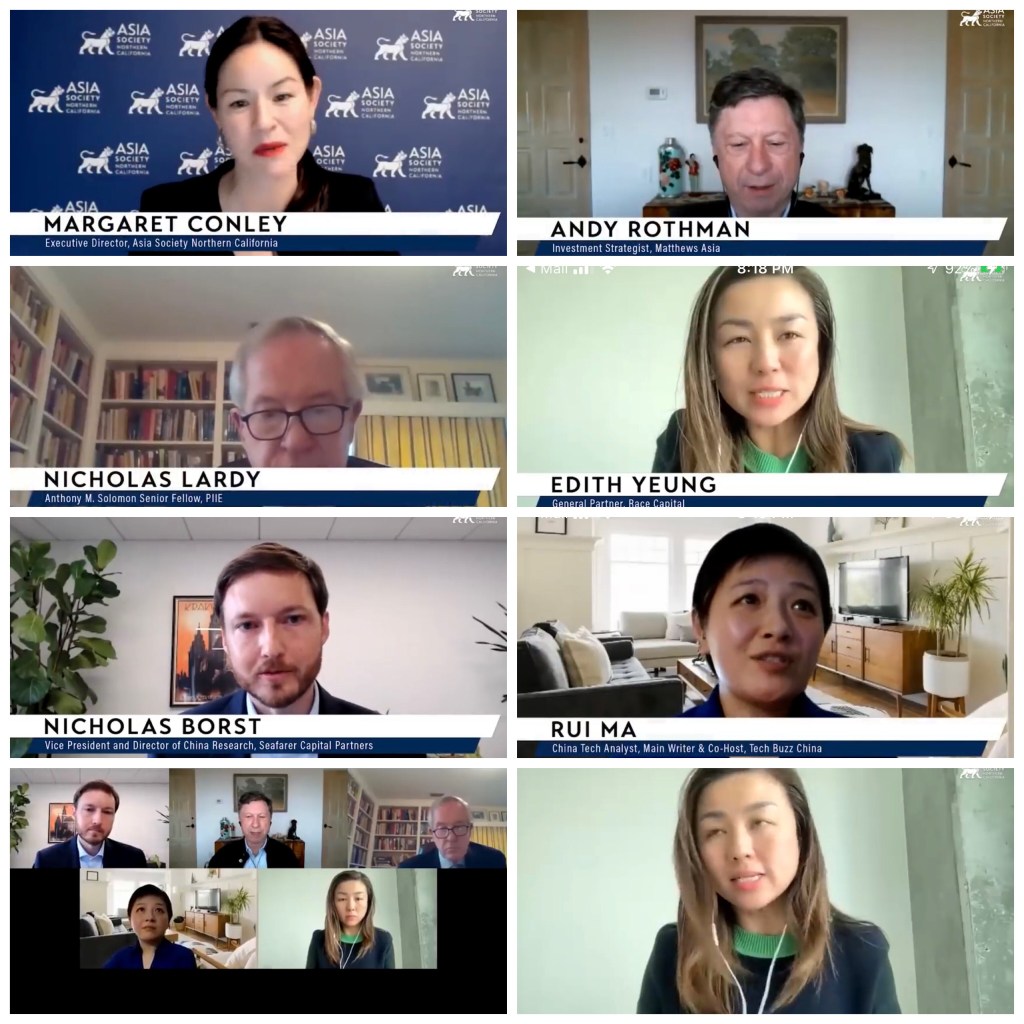
Watch “The Future of the U.S. and China Conference 2022: The Financial Relationship” on YouTube 在 YouTube 上觀看“2022 年中美會議的未來:金融關係”.
A good 1 hour session from the Asia Society Seek Truth From Facts conference held about a week ago. Salient points :
The US is shooting itself in the foot by limiting Chinese companies from tapping the US capital market. This is one of the few areas which really makes sense for the 2 countries to cooperate for a win-win solution. In the short run, US investors will lose a chance to participate in the growth of Chinese companies, and in the long run, the Chinese people will think that the US is trying to slow down or prevent China’s rise and success of Chinese companies in the international market. This will have a serious long term negative effect on the US.
The effect of this action on Chinese companies is minimal, as China has access to international investors from the EU and the middle east. They can also relist on the HK and Chinese stock markets as what they have been doing. Sophisticated US investors will find ways to invest in them anyway. The politicians in DC are gravely mistaken and overestimate the effect on Chinese companies.
The headline news of China clamping down on Chinese internet companies is misinterpreted as China clamping down on all private companies. This is not true. The companies in the internet space in China are only a fraction (11 out of 550) of the largest companies in China. Many of these large companies are ones we have never heard of in the US. China’s private sector is expanding and investing as what they have been doing before the crackdown. The Venture Capital sector is booming.
Most of China’s recent investments are in the manufacturing, auto, and health care sectors, with only 2% in the consumer internet space, whereas in the US, a large portion is in the consumer internet space.
The US turned negative against China since Xi became the head of the CPC in 2012. Before then, China was not seen as a communist country with all the negative baggage of what that implies, whereas now it is. So the antagonism towards China from the US congress and politicians is ideological and creates blinders.
US business had very little influence in the present administration. Little hope of change in the short term. In the intermediate term, hopefully US business and people can influence the US government to move in a positive direction. People outside of Washington may not be as antagonistic towards China as the US congress and politicians.




 Johnson Choi Biz