When we were young, we pined for the new year, Now we dread it. One year passes after another, And now we are in our twilight years. On looking back, 60 years passed in the twinkling of an eye, We were innocent in our childhood, Idealist in our adolescence, Hardworking in our youth, Struggling in our middle years, Formed our characters in our strongest years, Resting in our retirement years. The new year is soon upon us, Treasure every year, Nurture yourselves, We don’t ask to live for a hundred years, We ask to live in peace.
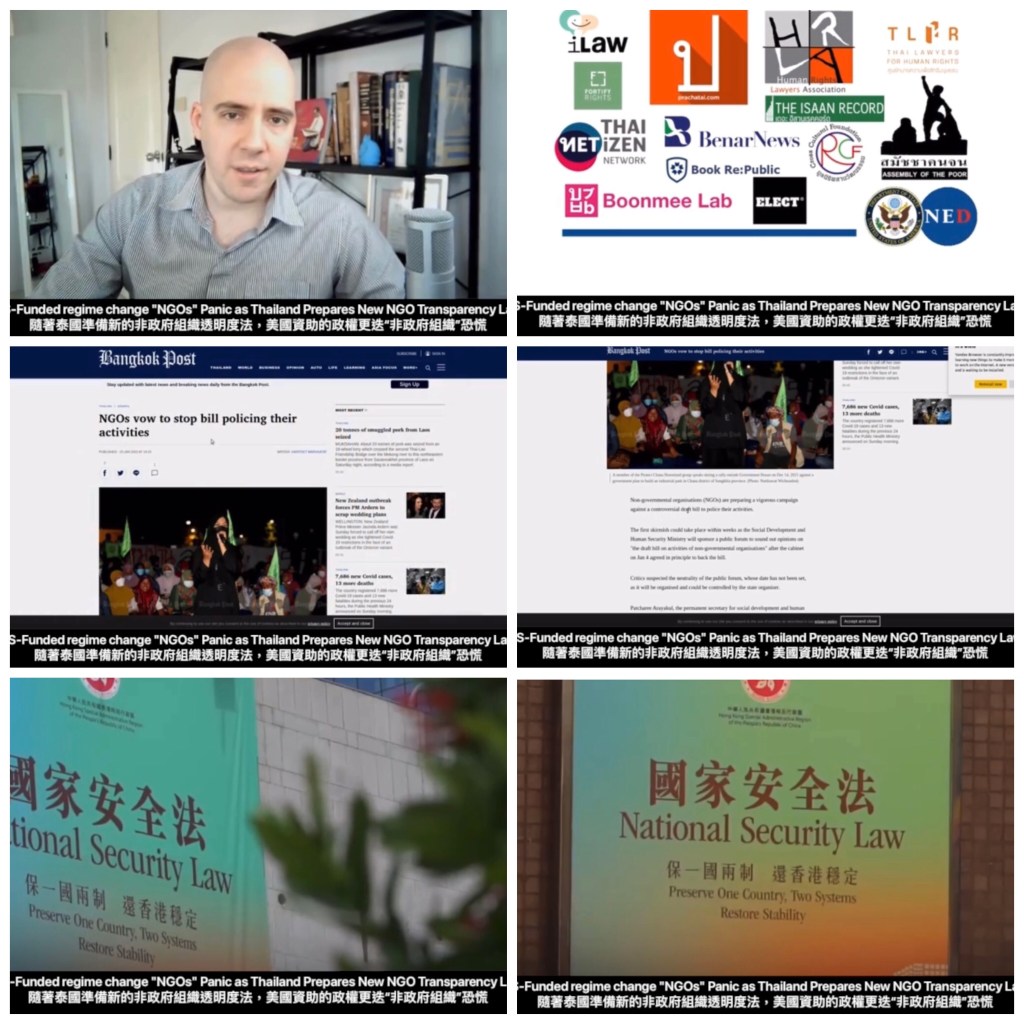
Thailand is passing a new NGO law that will require greater transparency from nongovernmental organizations. However, these organizations are resisting the bill despite wide public support for it – clearly because they have much to hide.
I discuss how many of these “NGOs” are in fact funded by foreign governments and engaged in sedition – how they have actively covered up their funding and their true agenda while posing disingenuously as “independent media” or “human rights” organizations.
New York Times: Some members of Congress have strangely good timing when it comes to stock investments. By David Leonhardt 1-24-22
Selling at the right time In an academic paper published a few years ago, an economist named Serkan Karadas highlighted a suspicious pattern: Members of Congress earned higher than average returns on their stock investments.
The findings suggested that at least some Congress members were profiting off their jobs. With inside knowledge about forthcoming policy changes or economic developments, the members could buy stocks shortly before they rose in price or sell them shortly before they fell.
There have been several high-profile examples in recent years that seem to fit that pattern. In each case, the members say they did nothing inappropriate:
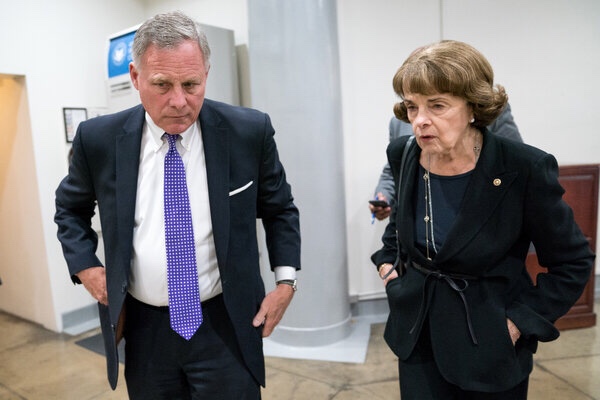
Tom Price, a former Georgia congressman (and later Donald Trump’s secretary of health and human services), repeatedly traded health care stocks, including a discounted purchase through a special offer from an Australian drug company. Representative John Yarmuth, a Kentucky Democrat, bought several cannabis stocks while promoting bills favorable to the industry, as Judd Legum of Popular Information reported. Several senators — including Dianne Feinstein, a Democrat; and Kelly Loeffler and Richard Burr, both Republicans — sold stocks after receiving a private briefing on Covid-19 weeks after the discovery of the first case in China. Similarly, Senator David Perdue, a Georgia Republican who was an active trader while in the Senate, bought shares in companies that stood to benefit from the pandemic, like Pfizer and Netflix. The wife of Senator Rand Paul, a Kentucky Republican, bought stock in Gilead Sciences, which makes a Covid antiviral drug, in the pandemic’s early weeks. In all, members of Congress and their immediate families bought more than $260 million worth of assets and sold more than $360 million last year, my colleagues at DealBook have reported. Karadas’s research found that many of the outsize stock gains in recent years flowed to high-ranking Republicans.
‘A huge conflict’ A bipartisan group of Congress members is now trying to put a stop to these trades. They have proposed bills that would require Congress members to place their holdings in a blind trust, operated by somebody else. A separate bill would bar members and senior congressional aides from buying and selling individual stocks.
The bills’ sponsors include Senators Jon Ossoff, Mark Kelly, Jeff Merkley and Representative Abigail Spanberger, all Democrats, and Senator Josh Hawley and Representative Chip Roy, both Republicans.
“It is a huge conflict of interest for someone to be trading in, say, pharmaceutical stocks at the same time as making policy for pharmaceutical companies,” Merkley, who represents Oregon, told NPR.
Spanberger told The Washington Post that she and Roy, who are sponsoring a bill together, were both “disgusted” by the current situation. “If placing limitations on how we can buy and sell stock makes it so that someone trusts us a bit more — Congress doesn’t have a great approval rating — I think that is a quote-unquote sacrifice we should make,” said Spanberger, who represents a swing district in Virginia.
For now, the bills seem unlikely to become law, partly because they lack the support of Democratic leaders. Nancy Pelosi, the House speaker, has argued that members of Congress deserve the same freedom as other Americans to buy and sell stocks. “We are a free-market economy,” Pelosi said last month. Members of Congress “should be able to participate in that.”
Critics respond that Congress members are different from everybody else, because of their access to sensitive information. The critics also argue that people who enjoy the privilege of serving in Congress have a responsibility to put the public trust above their own financial interests; if they would rather not do so, they can join the private sector.
Michelle Cottle, a Times Opinion writer, wrote that Pelosi’s position seemed “a wee bit out of touch” given many Americans’ economic frustrations. Helaine Olen of The Washington Post has written: “Neither bill demands major financial sacrifice. But it’s still asking too much for some.”
Congress did tighten the rules on itself in 2012, through a law known as the Stock Act. It prohibits members from making trades based on privileged information and requires them to disclose any trades within 45 days. But the law has failed to prevent problematic trades — much as early critics of it, like Senator Elizabeth Warren, predicted.
Why? Proving that a specific trade stemmed from a specific piece of information is so difficult that prosecutors have never brought charges based on the law. And dozens of members and their aides have ignored the disclosure requirement, according to the publication Insider. The standard first-time fine for failing to report a trade on time is only $200.
All of which suggests that members of Congress will continue to profit from their access to sensitive information, unless they eventually pass a new bill that restricts trading.
Related: Three top Federal Reserve officials have resigned in the past year after being criticized for their trades. “The conduct is beyond reprehensible,” Dennis Kelleher, the president of Better Markets, a watchdog group, told me. The Fed has since tightened its rules.
The widely reported narrative that Beijing tried to impose a law to snatch dissidents from Hong Kong in 2019 was never true
Peaceful demonstrators quickly fled the protests as they realized something dark, violent, and well-organized lay just below the surface
The media simply relayed stories and numbers they were given by one side, failing to do their jobs to investigate and report
The allegation that “police brutality” was the issue was simply false: Hong Kong is a low-crime city with good relations between citizens and law enforcement
THERE ARE TWO STORIES about what happened in Hong Kong in 2019.
One, portrayed in Western media, says Beijing broke its “one country, two systems” promise and encroached on the freedoms of Hongkongers, who bravely responded with massive pro-democracy protests that were met with police brutality.
The other says that organizers of violent riots were funded by the U.S. to pay rioters and special consultants who taught them how to make the compliant Western press write that they were pro-democracy protesters fighting against repression and police brutality.
Guess which one is true.
EYEWITNESS EVIDENCE
Unlike the multitude of offshore armchair commentators expressing their views on the violent social upheaval that began in June 2019, I lived in Hong Kong through that period, as did Nury Vittachi, whose eyewitness investigative journalism I will discuss.
We each saw, directly, what was happening.
NEW YORK TIMES FEATURE
On October 14, 2014, an op-ed was published in The New York Times titled, “Hong Kong’s Pop Culture of Protest,” by Vittachi, a Sri Lanka-born journalist living and writing in Hong Kong since 1987.
The op-ed celebrated the protest known as the “Umbrella Movement” that was under way in Hong Kong at the time. Vittachi explained that the protest was about “rejecting the influence of Beijing over Hong Kong’s next election.”
I visited the central site of that protest at that time, and I, too, felt the celebratory atmosphere. Protests in two of the busiest areas of Hong Kong, the business district known as Central, and Nathan Road, the main thoroughfare in the Mongkok district, had filled the streets and brought traffic to a standstill. The double-decker buses that traverse Nathan Road, near where I lived – as many as hundreds per hour – had found ways around the blockages and were otherwise carrying on as usual, as if they were genially accommodating the protests.
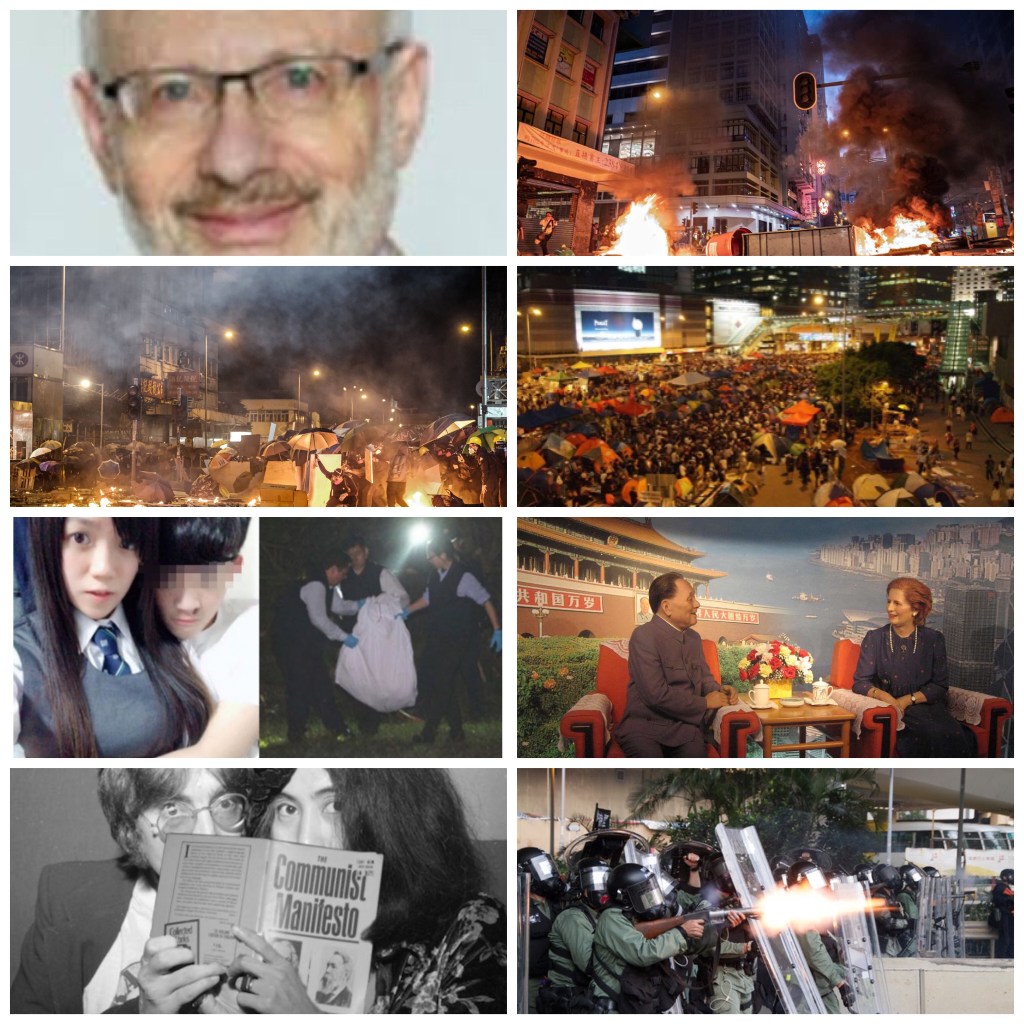
The 2014 protest was well-organized and well-led, with large numbers of expensive tents. Image by Underbar DK/ Wikimedia Commons When I visited the protest site in Central, I marvelled at its vast expanse of colourful upscale tents, of the type you find at Patagonia. They were shelters for the huge number of protesters camped out there.
My first thought was, “When this is over, perhaps the city planners will realize what a boon to the city it would be to turn this downtown area into a pedestrian mall.”
I also thought for a brief moment, “I wonder how they pay for all these tents? They aren’t cheap.” Hong Kong is a rich city, though most of its residents aren’t.
CONFUSED MESSAGE
Another thought that occurred to me was that if someone didn’t know who the leader of this movement was, they would think it was John Lennon, because his picture was everywhere and his song, “Imagine,” filled the air.
This was curious because the protests were presumably anti-Communist, but Lennon himself described the song as “virtually the Communist Manifesto,” with its dreams of ending private property and religion.
THE BACKGROUND
In 1842, Hong Kong island was seized by force during the Opium War from China by Britain. Additional territory was added to the city later, with the largest part area-wise, the New Territories, being annexed in 1898 by a 99-year gunboat-lease agreement with China. Therefore, it seemed appropriate to China to request the entire city back at the end of that lease in 1997.
A waxwork reconstruction of the 1984 meeting between Deng Xiaoping and Margaret Thatcher at a Shenzhen visitor attraction. Picture by Brücke-Osteuropa/ Wikimedia Commons An agreement was struck in the Sino-British Joint Declaration in 1984 for the territory to be handed back to China in 1997. That event was subsequently called “the handover.”
In the joint declaration, China agreed that Hong Kong would be governed by a doctrine of “one country, two systems,” in which it would keep its form of government, legal systems and policies including its free speech and press traditions for at least 50 years following the handover.
This agreement was to be elaborated in a Hong Kong mini-constitution known as the Basic Law, negotiated by a committee of Hong Kong and mainland China officials.
UNDEMOCRATIC PAST
One provision of the Basic Law was that Hong Kong’s chief executive – its top official – would be elected by universal suffrage, something that had never happened when the British were in charge. Although 92% of Hong Kong’s population are Chinese, the chief executive under the British was an unelected British official appointed by the Queen.
The actual wording of the provision is as follows:
“The method for selecting the Chief Executive shall be specified in the light of the actual situation in the Hong Kong Special Administrative Region and in accordance with the principle of gradual and orderly progress. The ultimate aim is the selection of the Chief Executive by universal suffrage upon nomination by a broadly representative nominating committee in accordance with democratic procedures.” Hongkongers had agitated after the handover for realization of that provision. In August 2014 Hong Kong’s civil service finally promulgated a process by which the chief executive would be elected. The election would be by universal suffrage, but the nominees would be screened and vetted by a 1,200-strong committee of Hongkongers, much the same committee that had been electing the chief executive since the handover. The majority of that committee were representatives of Hong Kong business communities. Since they did a lot of business with the mainland, it was believed – generally correctly – that they tended to have mainland sympathies, or to be “pro-Beijing.”
UNIVERSAL SUFFRAGE REJECTED
Many Hongkongers who had been participating in peaceful pro-democracy protests over the years – including Vittachi – interpreted this as a failure to adhere to the promise of free elections, though it was definitely not in violation of the Basic Law’s actual wording. Vittachi, a widely-read journalist in Hong Kong, gave rise to a viral meme by saying that the proposal to vet the nominees amounted to a “choose your own puppet” election.
The pan-democrats – the pro-democracy faction – rejected the offer.
The unfortunate result, from Hong Kong’s perspective – and from everybody else’s, it turns out – was that the chief executive continued to be elected by that 1,200-strong committee, not by universal suffrage.
NEED FOR EXTRADITION LAW
Hong Kong was behind other jurisdictions in the passing of an extradition law recommended by the United Nations Model Treaty on Extradition, which “urges all States to strengthen further international co-operation in criminal justice” and “urges Member States to inform the Secretary-General periodically of efforts undertaken to establish extradition arrangements.”
Most jurisdictions worldwide had extradition treaties with most other jurisdictions worldwide, but Hong Kong had few.
As Vittachi noted, “Britain had signed extradition treaties with numerous countries with utterly abysmal human rights records, such as Iraq and Zimbabwe. America had signed deals with the Congo, Myanmar and El Salvador, among others.”
MURDER MOST FOUL
When a Hong Kong man murdered his pregnant girlfriend during a joint holiday in Taiwan, and then escaped back to Hong Kong, he could not be tried for murder as Hong Kong criminal law does not apply in Taiwan.
A gruesome murder in Taiwan — Chan Tong-kai did not deny that he had killed Poon Hiu-wing (left); Police pictures Neither could he be extradited due to that lack of a legal framework. This prompted Hong Kong’s Chief Executive Carrie Lam to take care of unfinished business by proposing an extradition law for Hong Kong in February 2019.
But the Hong Kong protestor inclination was to view this as a way for Beijing to snatch political protestors and try them in the mainland. (This inclination was fuelled by the fact that there had been incidents of Hong Kong booksellers who sold books critical of high-level mainland political figures being snatched, though it was not known how this happened or who did it.)
The proposed law would allow nothing of the sort, but it was seen nonetheless as another threat to the one country, two systems model.
SCARE STORIES
As a result, after scare stories about the proposed law had circulated widely, a massive peaceful protest took place on June 9. The protest leaders told the international media that a million people had participated in the march, and the international (i.e., Western) media dutifully printed that without checking. But any systematic count would have revealed that the number of marchers was far less.
It was, nevertheless, a massive turnout. Chief Executive Carrie Lam responded by welcoming the peaceful protest. But after more such protests, she responded to popular sentiment and withdrew the bill.
UTTER CHAOS
In spite of the withdrawal of the bill – to cover the next six months very, very briefly – the protests continued, then descended into utter chaos.
A violent faction became prevalent, commandeering the streets, invading, trashing and desecrating Hong Kong’s legislature (called Legco), hurling petrol bombs and bricks pried loose from Hong Kong’s streets at police and eventually shooting arrows, some flaming, and launching the bricks and bombs using catapults.
Shockingly violent incidents began on June 9, 2019 and continued for months, with almost all of Hong Kong’s MTR stations damaged, and huge amounts of damage to people and property. Image by Studio Incendio/ Unsplash The protestors swarmed into Hong Kong’s metro stations and broke everything they could. They demolished Hong Kong’s world-class malls and stores and businesses that had any perceived relationships to mainland people or even to Mandarin speakers (Hong Kong’s spoken language is Cantonese while Mandarin is spoken on the mainland).
They killed one innocent bystander, set another on fire and beat up many who disagreed with them. They wounded many police officers, some severely.
In the end, they took over two university campuses, where they occupied bridges over heavily trafficked highways and threw large objects down on the traffic, set up weapons manufacturing stations, and battled police.
POLICE BLAMED
The rioters blamed the police, claiming “police brutality.” They spread rumors that police had killed a number of protestors, perhaps thousands.
Through all this, the Western press continued to call the riots “pro-democracy protests,” and the cause of those protests suppression by Beijing.
The much larger group of peaceful protesters drifted away from the demonstrations and no longer participated. Most of the erstwhile leaders of that group, called the pan-dems or pan-democrats, did not roundly condemn the rioters, not even when they presented their absurd “five demands, not one less!” which included the non-negotiable demands that they all be granted amnesty and that their protests not be called riots.
One of Vittachi’s readers made the Dave Barry-like comment: “They are literally rioting to protest against being defined as rioters,” he said, amazed. “You can’t make this stuff up.”
SCALES FALL FROM OUR EYES
In his book, “The Other Side of the Story: A Secret War in Hong Kong,” published in December 2020, Vittachi explained what happened.
Anyone with an interest in what has been happening in Hong Kong should read it, whether they have the least predisposition to agree with it or not.
Although nearly everybody in the United States will vehemently deny this, and say that it is propaganda from Beijing, it is obvious that it has much more than a grain of truth in it.
It is the truth.
PETROL BOMB TRAINING
Vittachi, in his role as a peripatetic journalist in Hong Kong for over 30 years, has cultivated a large number of followers and contacts, many of whom send him emails and messages and serve as his extended eyes and ears.
These people include financial executives as well as ordinary Hong Kong wives and mothers, students, and other contacts. Vittachi maintains “offices” at various coffee shops around the city where he meets with people to chat and get local opinions and observations.
He teaches courses at Hong Kong Polytechnic University, the largest university in the city and was able to visit it during the last and final and most intense battle in November 2019, when the rioters occupied the campus and were surrounded by police.
The view from inside the burned-out Polytechnic University shows seven black-clad men guarding the entrance bridge. The world was told that the students were occupying the university, but out of about 1,600-occupiers, only 46 had any connection with the university. Picture by Nury Vittachi There, he says, “I watched men train younger people how to do a long run-up and then release their missiles at ‘about 42 degrees’ so that they flew in a graceful curving arc, smashing into a pillar in the distance. In another area, masked archers were practicing the use of high-technology bow and arrow sets. Over in the swimming pool area, men were experimenting with different substances for Molotov cocktails to see which spread the furthest and burned for the longest period.”
THE REAL STORY
His network of ordinary Hongkongers and informers at high levels brought him the real story. The protestors were neither students nor at the universities but hired rioters.
When the occupiers of Hong Kong Polytechnic University finally gave up and filed out and surrendered to the police, it was found that of about 1,600 occupiers, only 46 had any relation to the university.
CASH WAS FLOWING
“Adults, youths, school children, and even domestic helpers have told me that they have been offered cash in significant amounts – sometimes thousands of Hong Kong dollars – to join the protests. Teachers tell me children from their schools, kids who were clearly under 18, were offered HK$300 each (that’s about US$40) to bulk up the numbers at protests. They just needed to turn up in black and do some shouting, throw a few bricks and that sort of thing.”
Who was paying them? “This year alone,” says Vittachi, “the U.S. has budgeted $643,000 (HK$5 million) for pro-U.S. anti-China activists in Hong Kong through the National Endowment for Democracy (NED), the CIA’s regime-change arm – but other large sums are being sent through other groups. These include the Open Technology Fund, which presents itself on its website as a non-profit independent organization but is a U.S. government-led operation to boost protester organizations’ communications capabilities.”
REVOLUTION CONSULTANTS
You don’t believe this? But it should be obvious. The United States has been funding government destabilization efforts in many countries for 70 years – and worse. Why should it be different now?
Part of the money was used to pay professional protest consultants, some of them from Serbia who were experienced from their anti-Milosevitch work, to teach protesters how to stage their activities so that journalists and photographers are led to photograph lone protesters being wrestled to the ground by police, feeding allegations of “police brutality.”
THE AFTERMATH
The stories the protesters told the Western media were almost all lies, but the Western media sopped them up.
Police brutality was not the cause of the riots. Police killed no one and harmed very few, considering the level of violence of the rioters. Vittachi noted that “The most recent Police Service Satisfaction Survey at the time was the one taken just last year, in 2018, in which 84% of respondents were either ‘quite satisfied’ or ‘very satisfied’ with the overall service performance of the police. Furthermore, 79% of respondents were either ‘quite confident’ or ‘very confident’ in the police.”
In any other city around the world, the military would have been called out to deal with that level of violence: but Hong Kong’s circumstances meant that the job was left to the local police. Image by Oscar Chan/Pexels The United States should have such a police force. Referring to the way the story was reported by the Western media, Vittachi says: “Hong Kong police had instantly and miraculously been transformed overnight from one of the best-loved police forces in the world to the most brutal police force in the world.”
RIOTERS HOPED FOR BEIJING TANKS
The Hong Kong police, overwhelmed by the rioters, mostly stood back and let things happen, to preserve order as best they could in a very crowded city with substantial fire hazard from the Molotov cocktails that the rioters were throwing – even in underground MTR stations – and to avoid causing any deaths or serious injuries. Remembering Beijing’s brutal crackdown on protesters at Tiananmen Square in 1989 – an event that was annually commemorated by Hong Kong’s protest movement – there was a fear that Beijing would have to step in to quell the riots, and such a crackdown would occur again.
In fact, that was probably what the rioters – and their U.S.-based handlers – hoped for.
BEIJING’S SURPRISING PATIENCE
But instead, Beijing took a velvet-glove approach. The Hong Kong Basic Law had specified that:
“The Hong Kong Special Administrative Region shall enact laws on its own to prohibit any act of treason, secession, sedition, subversion against the Central People’s Government, or theft of state secrets, to prohibit foreign political organizations or bodies from conducting political activities in the Region, and to prohibit political organizations or bodies of the Region from establishing ties with foreign political organizations or bodies.” This would not be much different from security laws in many other countries, including the US, Australia, and numerous others.
But the Hong Kong government had not been able to enact such a law when it tried in 2003 due to the protest movement and suspicion of Beijing. Now, Beijing simply imposed such a law, and the Hong Kong government has been enforcing it strictly, applying it to those persons in Hong Kong who provided encouragement, aid and support to the violent riots and coordinated with foreign powers, most specifically the US.
This may not have been the endgame that anybody wanted, but at least Beijing didn’t crack down violently.
REPORTER’S REGRET
Vittachi now regrets that he didn’t support accepting Beijing’s half-a-loaf offer of democratic election of Hong Kong’s chief executive in 2014. I had written in 2016 that Hong Kong’s democracy seekers needed to go slow, but the recommendation was not taken.
“That was the key moment,” Vittachi says, “when Hong Kong could have moved towards being a Western-style democracy. But we missed it.”
And this is true. With the aid of the United States, Hong Kong was shifted from the path of greater – if not perfect – democracy to the path, at least for the time being, of less democracy.
Thanks a lot for the help.
Vittachi says of his long history of marching for Hong Kong’s “one country, two systems” ideal, “We were marching not against China, but in favor of China being its best self.”
Michael Edesess is an economist and mathematician. An adjunct associate professor and visiting faculty member at the Hong Kong University of Science and Technology, he is also managing partner and special advisor at M1K LLC, and a research associate of the Edhec-Risk Institute.
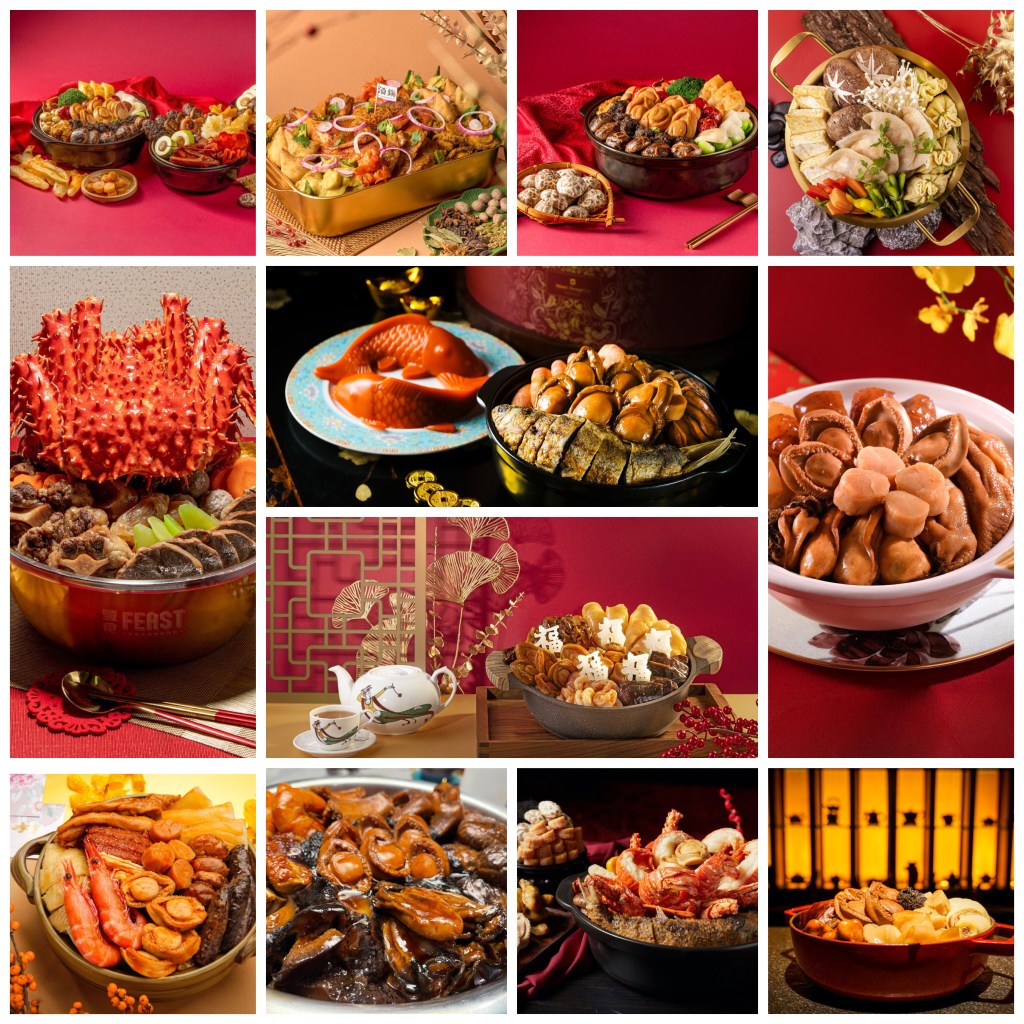
Hong Kong’s 11 best Lunar New Year poon chois – from Michelin-starred or traditional to Indian or vegetarian – as restaurants go big for the Year of the Tiger 香港 11 家最佳農曆新年盆菜 – 從米其林星級或傳統到印度或素食 – 餐廳在虎年大放異彩
Chinese Americans still seen as foreigners, says New York based Committee of 100 president 駐紐約的百人委員會主席說,華裔美國人仍然被視為外國人 by Chen Qingqing and Zhao Yusha Jan 21 2022
Even though Chinese Americans have been living in the US for more than 175 years, “we are still seen as perpetual foreigners,” said the president of an elite group promoting China-US ties, who called for the federal state, local government and communities to do more to defy long-held stereotypes.
Commenting on the death of Michelle Go, who was shoved in front of a New York subway train last weekend, Committee of 100 President Huang Zhengyu 黄征宇 told the Global Times on Friday that even though there has been a campaign against hate and violence toward the Asian community, the number of anti-Asian hatred and violence-related incidents has not decreased.
Asian American and Chinese American women have been badly affected, and “we think this is very unfortunate,” he said, adding that the federal state, local government and communities need to do more.
Go, who was attacked by a homeless man, Simon Martial, had been waiting for a train at the Times Square station when she was pushed from behind. Though the incident is not being investigated as a hate crime, it has angered the community.
Nancy Chen, one of Go’s former coworkers who has been living in New York for 10 years, told the Global Times that it’s very sad that she lost such a great colleague and a role model in life.
“I was shocked and saddened by this news. It’s so sad that Go died in such an accident,” she said, adding that her ex-colleague had inspired many others.
Since the epidemic began, there has been a growing number of incidents targeting Asian Americans, exposing safety issues in the city, Chen said.
Steve, an American who grew up in the Bronx, New York and lives in Asia now, told the Global Times that the Trump administration had put back race relations in the US by 50 years.
“It’s really sad. I grew up in NYC in the 1960s and 70s and there was little room for hate. We had a mixed neighborhood and many different races lived there. But since 2016, politicians split the country into white against black, and there’s a huge amount of hate toward the Asian community,” he said, noting that Trump had fueled such divisions.
The Biden administration is built on love and trust and the deep desire to fix what the Republicans broke, Steve said, while conceding that it’s been a slow process. “You cannot turn the Titanic fast enough to not hit that iceberg, because of it’s sheer size,” he said.
Huang also said that Biden has made certain efforts in dealing with the problem since taking office, such as signing a Hate Crime Bill. But it is far from enough so far.
For example, law enforcers need to win trust from the public. That requires them to take language training, so they can serve the victims accordingly.
Huang said lots of finance and training support is needed to make improvements, which also requires participation by the federal government. And the change will take time.
Huang said that besides the racist words of some politicians toward the Asian American community, there are long-held stereotypes against Asian Americans in the US. “If we take a look at history, we can see that a stereotype of Asian Americans and Chinese Americans being perpetual foreigners can be traced back hundreds of years,” he said.
This is despite the fact that Chinese Americans have been in the US for more than 175 years, and have contributed to all aspects of life across almost two centuries. “This is something that we believe we must be active in fighting against.”
On Friday, the organization also issued a statement regarding the US Justice Department on Thursday dropping all charges against Chen Gang, an MIT professor accused of concealing his ties to China when seeking federal grant money.
“Even when cases are dismissed, many Chinese and Asian Americans have their lives, careers and health greatly affected. Our support and sympathies go to Professor Chen and his family as they work to rebuild their lives,” said Huang in a statement.
“For too long, Chinese Americans have been seen as perpetual foreigners, strangers in our own homeland. Today, we are all Gang Chen and stand united,” he said.
Huang told the Global Times that Trump’s policy of cracking down on Chinese scientists has backfired. According to the research of the Committee of 100 on over 2,000 scientists, including Chinese scientists in the US, many elite scientists are reluctant to apply for federal funding and decided to stop cooperation with China. Some are even considering leaving the US.
The US has been a bellwether of the world’s economy because it attracted talent from all over the world, and it has the world’s leading hi-tech industry. Yet science is a global thing and needs interaction. From this perspective, the US is harming itself.
China is first and foremost a civilization-state. In contrast Western societies are nation-states. It is impossible to understand China through a Western prism. The consequences of China’s civilizational roots are far-reaching in every aspect of society, not least in governance. A Western-style political party would find governing China impossible. The skill-set is quite different. The success of the CPC has been its ability to express, reflect, and articulate Chinese civilization. 中國首先是一個文明國家。 相比之下,西方社會是民族國家。 用西方的棱鏡來了解中國是不可能的。 中國文明根源的影響在社會的各個方面都影響深遠,尤其是在治理方面。 一個西方式的政黨會發現治理中國是不可能的。 技能組合完全不同。 中國共產黨的成功在於它能夠表達、反映和闡釋中華文明.
Chinese Civilization uniting all 56 races worldwide verses Western Nation States many forcefully put together solely based on geographic boundaries.
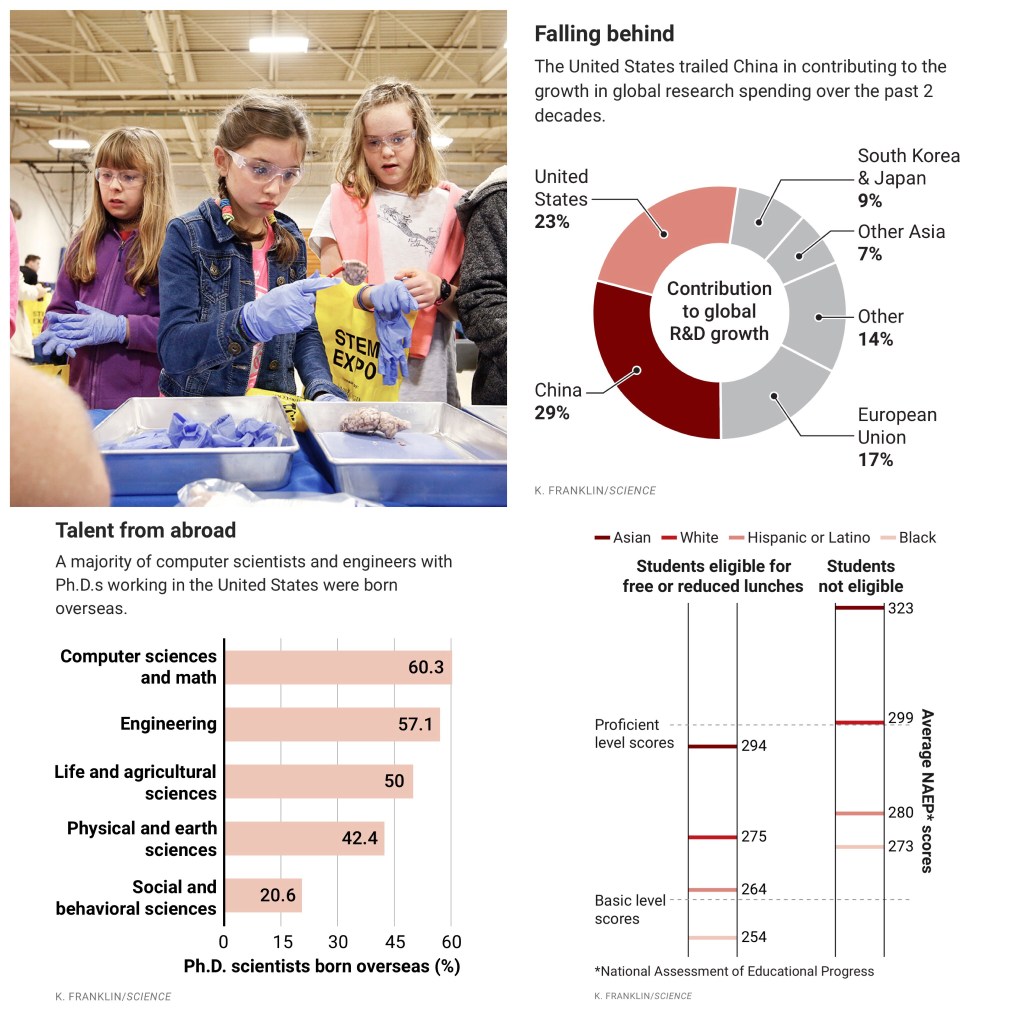
US will have to chose where to regain strength. However, Biden-Trump China initiative is an obstacle..Also, 60% of PhD’s in Engineering, CS, and math are non-US born Americans 美國將不得不選擇在哪裡恢復實力。 然而,拜登-特朗普的中國倡議是一個障礙。此外,60% 的工程、計算機和數學博士是非美國出生的美國人
A new data-rich report by the National Science Foundation (NSF) confirms China has overtaken the United States as the world’s leader in several key scientific metrics, including the overall number of papers published and patents awarded. U.S. scientists also have serious competition from foreign researchers in certain fields, it finds.
That loss of hegemony raises an important question for U.S. policymakers and the country’s research community, according to NSF’s oversight body, the National Science Board (NSB). “Since across-the-board leadership in [science and engineering] is no longer a possibility, what then should our goals be?”
The US, left to its own devices, is unlikely to be world-class scientific or intellectual power.
To begin with, not only does it not invest in education, it doesn’t even teach basic thinking.
For example, this writer for a major newspaper says that “Wordle is not a game, but the creative process in a nutshell”.
Wordle is a simple 5 variable guessing game that is easily cracked through heuristic* and algorithmic search. The search is radically constrained by certain clusters of letters, the restricted number of vowels, and letter frequency. All thinking uses elements of both algorithmic and heuristic search at certain phases, but the creative component is when you go outside the search tree to discover something truly original. (Juxtaposition and lateral thinking stimulate this creative “leap”).
*Starting heuristics: If you start with a vowel-rich word with no letter repetitions (like bayou, audio, adieu, ouija, miaou), or a vowel-rich word using the most common consonants (roate, raise, stear, stare) you are halfway finished.
Harvard University Ash Center research team unveils findings from long-term public opinion survey – 95.5% of respondents were either “relatively satisfied” or “highly satisfied” with Beijing Gov’t by Dan Harsha July 9, 2020
Understanding what Chinese citizens think about their own government has proven elusive to scholars, policymakers, and businesspeople alike outside of the country. Opinion polling in China is heavily scrutinized by the government, with foreign polling firms prohibited from directly conducting surveys.
Given China’s global rise in the economic, military, and diplomatic spheres, understanding public opinion there has arguably never been more important.
A new study from the Ash Center fills in this gap for the first time, providing a long-term view of how Chinese citizens view their government at the national, as well as the regional and local levels. What started as an exercise in building a set of teaching tools for an executive education class eventually transformed into the longest academic survey of Chinese public opinion conducted by a research institution outside of China.
“Gathering reliable, long-term opinion survey data from across the country is a real obstacle,” said Ash Center China Programs Director Edward Cunningham. “Rigorous and objective opinion polling is something that we take for granted in the U.S.”
While important work in this area has been accomplished by previous scholars — and their work shaped the analysis of the survey data collected — those other surveys were often short-term or infrequent.
For Tony Saich, Daewoo Professor of International Affairs and director of the Ash Center, the quest to build a firmer understanding of Chinese public opinion has taken the better part of 15 years. It began with an attempt to develop a suite of curricular materials to inform a course on local government in China.
“We thought it would be helpful to know how satisfied citizens were with different levels of government, and in particular how satisfied they were with different kinds of government services,” said Saich.
The work began in 2003, and together with a leading private research and polling company in China, the team developed a series of questionnaires for in-person interviews. The surveys were conducted in eight waves from 2003 through 2016, and captured opinion data from 32,000 individual respondents.
“There’s nothing comparable done on this scale, over such a long period of time, and over a large geographic area,” said Jesse Turiel, a China public policy postdoctoral fellow and co-author who worked closely with Saich and Cunningham on the project’s analysis and subsequent publications.
The survey team set out to assess overall satisfaction levels with government among respondents from across the socioeconomic and geographic strata of China. “It is always a challenge to obtain a representative sample of the Chinese population, particularly from interior provinces,” said Turiel. “Our survey does not include migrant laborers, for example. But given the fact that the survey conducted in-person interviews with over 3,000 respondents per year in a purposive stratified sample, we are happy that the results include not just the coastal elites or large urban areas, but also poorer and less developed inland provinces.”
Levels of government and public opinion
The survey team found that compared to public opinion patterns in the U.S., in China there was very high satisfaction with the central government. In 2016, the last year the survey was conducted, 95.5 percent of respondents were either “relatively satisfied” or “highly satisfied” with Beijing. In contrast to these findings, Gallup reported in January of this year that their latest polling on U.S. citizen satisfaction with the American federal government revealed only 38 percent of respondents were satisfied with the federal government.
For the survey team, there are a number of possible explanations for why Chinese respondents view the central government in Beijing so favorably. According to Saich, a few factors include the proximity of central government from rural citizens, as well as highly positive news proliferated throughout the country.
This result supports the findings of more recent shorter-term surveys in China, and reinforces long-held patterns of citizens reporting local grievances to Beijing in hopes of central government action. “I think citizens often hear that the central government has introduced a raft of new policies, then get frustrated when they don’t always see the results of such policy proclamations, but they think it must be because of malfeasance or foot-dragging by the local government,” said Saich.
Tony Saich, Daewoo Professor of International Affairs and director of the Ash Center.
Compared to the relatively high satisfaction rates with Beijing, respondents held considerably less favorable views toward local government. At the township level, the lowest level of government surveyed, only 11.3 percent of respondents reported that they were “very satisfied.”
Again, the U.S. reveals quite a different story. “American trust surveys over time show a clear distinction between low levels of trust towards the federal government, but a strong belief and faith in the power of local government — at the most local level, those positions may be filled by part-time volunteers who are a part of your everyday life,” said Cunningham. This dichotomy is highlighted by a 2017 Gallup poll, where 70 percent of U.S. respondents had a “great” or “fair” amount of trust in local government.
Saich contends that the lack of trust in local governments in China is due to the fact that they provide the vast majority of services to the Chinese people. This trust deficit was compounded by the 1994 tax reforms, which garnered a substantially larger share of total national tax revenues for the central government. Local governments, despite being faced with declining revenues, were still on the hook for providing the bulk of public services throughout China.
“Local governments were caught between dropping tax revenue and rising expenditures,” Cunningham said. “Many local governments then had to turn to ad-hoc extra budgetary fees to close the budget gap. I think that has consistently undermined trust at the local level.”
Regional disparities
The research team was also keen to examine disparities in the responses of wealthy, predominantly urban and coastal areas of China and those of less developed interior provinces. “It didn’t surprise us that the wealthy coastal citizens who were the winners of globalization in many ways, and the winners of China’s domestic reform program, had a very high favorability rate of government overall, regardless of level of government examined,” said Cunningham.
The responses from survey participants in rural areas, however, surprised the researchers, particularly over time. “We did not anticipate how quickly both low-income citizens and people from less-developed regions in China closed the satisfaction gap with high-income citizens and people from the coastal areas,” Cunningham added.
The surveys found that rural residents, generally poorer than those in cities, had more optimistic attitudes about inequality than their wealthier urban counterparts. The team’s analysis ties the closing of this satisfaction gap between rich and poor, as well as coastal and hinterland populations, to several policies including local budget spent on healthcare, welfare and education, and paved roads per capita.
“We tend to forget that for many in China, and in their lived experience of the past four decades, each day was better than the next.” — Tony Saich, Daewoo Professor of International Affairs and director of the Ash Center
Saich added that the findings “run counter to the general idea that these people are marginalized and disfavored by policies,” and therefore undermine the persistent notion that rising inequality, and dissatisfaction with corruption and local government, have created the potential for widespread unrest in China.
Observers have long predicted that China’s slowing economic growth coupled with a complacent, ineffective government bureaucracy could ultimately lead to the crumbling of Beijing’s political authority. While frustration with corruption and the quality of public services at the local level clearly exists, the Ash research team’s work has shown that the current political system in China appears remarkably resilient.
Inequality remains a key concern for policymakers and citizens alike in China, but the survey project found little to support the argument that those concerns among ordinary Chinese are translating into broader dissatisfaction with government. The final round of the survey in 2016 revealed that about one-third of respondents were much more likely to lodge complaints with the government or protest if they felt that air pollution had negatively impacted their own health or the health of their immediate family members.
Professor John V Walsh, MD in San Francisco: People Trust government :
China increase from 82% to 91% US decrease from 42% to 39%

 Johnson Choi Biz