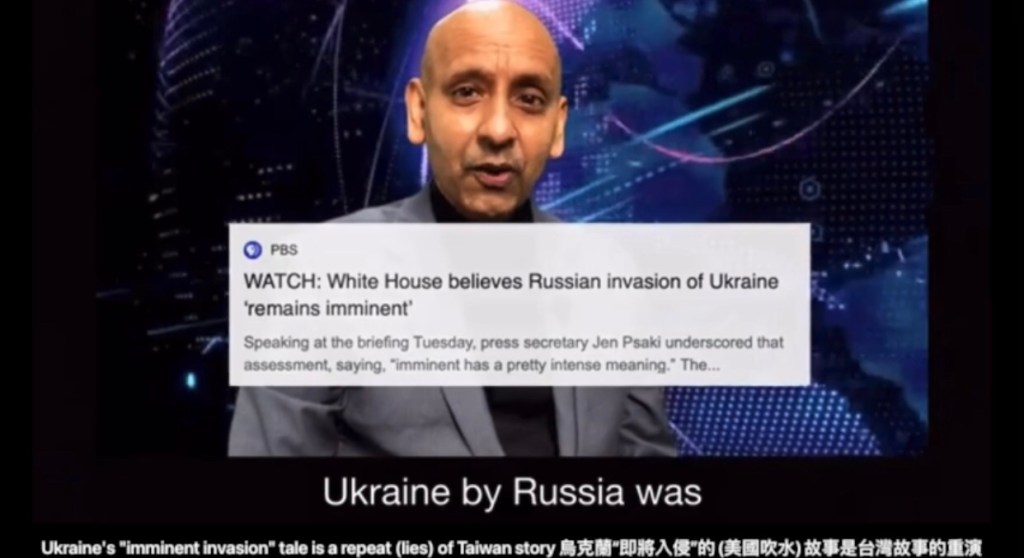
Video: Ukraine’s “imminent invasion” tale is a repeat (lies) of Taiwan story 烏克蘭“即將入侵”的(美國吹水)故事是台灣故事的重演
The collapsing “imminent invasion… just seconds away” story about Ukraine is a blow-by-blow repeat of the fake story about the imminent invasion of Taiwan last year. That invasion didn’t happen either. You can fool the media but ordinary people are wising up 關於烏克蘭的“即將入侵……就在幾秒鐘之內”的崩潰故事是對去年即將入侵台灣的虛假故事的一次又一次的重演。 那次入侵也沒有發生。 你可以愚弄媒體,但普通人正在聰明起來. https://vimeo.com/673756636 https://www.facebook.com/100036400039778/posts/651102839446378/?d=n
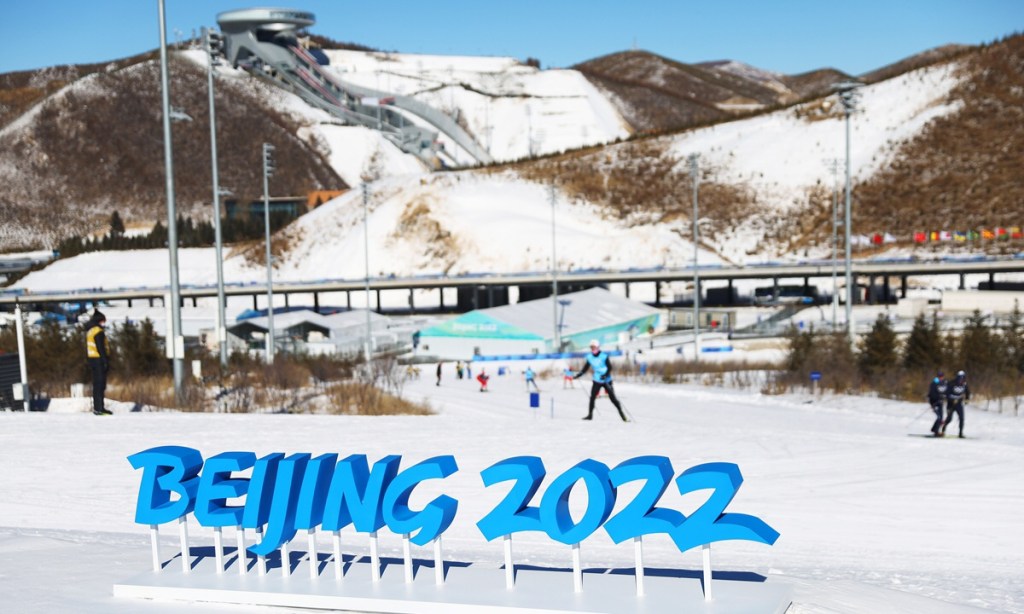
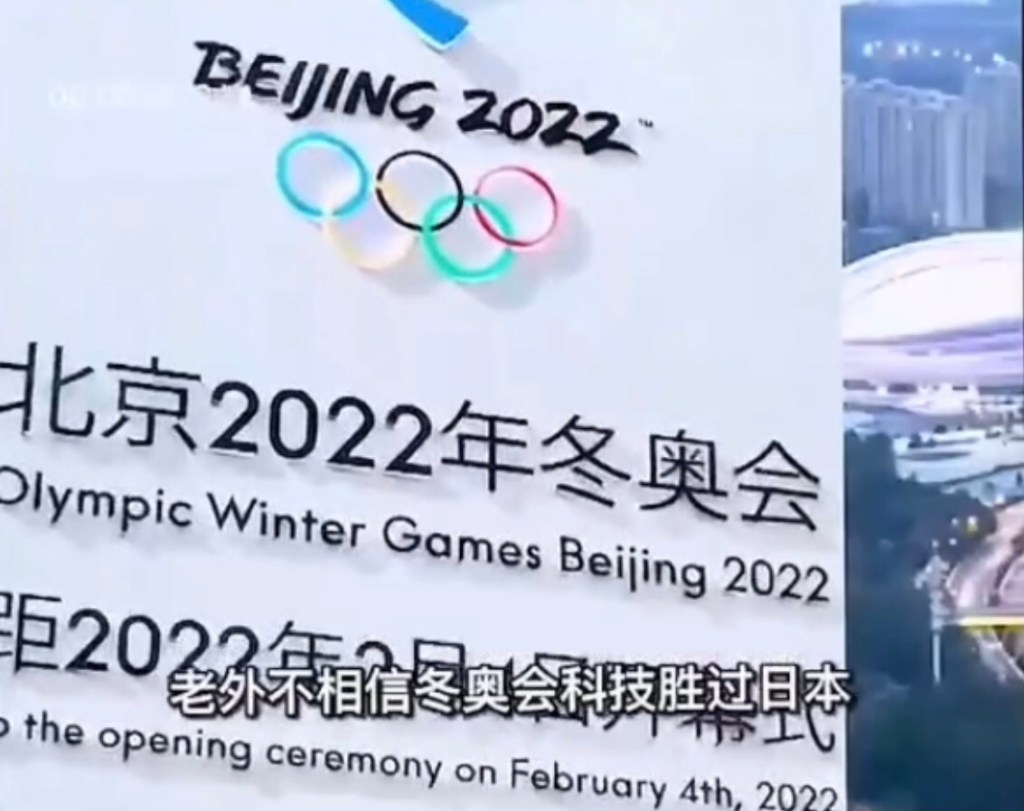
Demonizing Beijing Winter Games a sad example of US efforts to obscure China’s achievements by Ken Hammond Feb 03 2022
In the summer of 2008, I was living in Beijing, working with an American study-abroad program at Capital Normal University. The city was filled with excitement in anticipation of the Olympics, with athletes arriving from around the world and local people joining in a wide range of activities preparing for the big event. Many thousands of citizens volunteered at information booths or in other roles to assist foreigners who were coming to attend the Games and were exploring China’s capital, learning about the achievements of local people and their continuing work to build a better future for their country. Our American students shared in this excitement. There was a great feeling of energy as the opening ceremonies approached.
Anyone who witnessed those ceremonies, in person or on television, will remember the amazing impression they made. The 2008 Olympics were a moment when China took a prominent place on the world stage, showing off the rising prosperity of its people and the glories of its ancient civilization. Western media coverage of the Olympics was positive, recognizing the Games as a marker of China’s re-emergence as a major participant in international affairs, resuming the place of prominence it had long occupied before the era when Western imperialism had imposed the harsh period of exploitation and humiliation which was ended with the founding of the People’s Republic of China in 1949.
Today a new Olympic Games event is about to get underway in China: the 2022 Winter Olympics. But this time, the Western world, most especially the US mainstream media and politicians, is uniformly hostile, attacking China for the way it governs itself, portraying the country as repressive and accusing the country of all kinds of bad policies and practices. This is in fact just a particularly intense version of a campaign of demonization which has been carried on for more than a decade, as the US seeks to block China’s development and isolate it internationally. Why has the reaction to the Winter Olympics been so different from the way the world welcomed and admired China in 2008?
One way to understand the changing relationship between China and the West is to consider the changes that have taken place in both areas over the last 14 years, since the 2008 Olympics. At that time, China was pursuing its policies of reform and opening-up, seeking to develop its economy through engagement with the global economic system, growing its productive capacities and enhancing its technological capabilities. It was deferential to the leading role the US played in that global economic order, while remaining true to the needs and interests of the Chinese people. China’s leaders understood that developing its modern economy and society was a long-term project, and they were patient in its implementation.
In 2008, the global financial crisis erupted, and the effects of that in China and the West were very different. In China, while 20 million workers were laid off due to declining export demand, the country’s core socialist system allowed the crisis to be managed without great human suffering. Policy adjustments and careful interventions by the government minimized disruptions and got people back to work as quickly as possible. In the West, again especially the US, millions of people permanently lost their jobs, while many millions more lost their homes. The wealthy elites prospered, with bailouts funded by ordinary working taxpayers saving financial corporations deemed “too big to fail.” The ongoing decline of the American economy intensified, with effects still being felt today. The contrast with China was stark, making clear the rising trajectory of the People’s Republic of China and the continuing erosion of the US economy at home and around the world. The era of American global dominance was coming to an end.
American political elites reacted to all this with fear and anger. They directed this at China, which refused to be made a scapegoat. As China has become more self-assured, as its development has continued to raise the quality of life for its 1.4 billion people, as it has managed the threat of the COVID-19 pandemic and saved the lives of millions of Chinese people, America has become an ever-greater bully in international affairs. The US is trying to build an anti-China front of countries to contain and, if possible, thwart its further development and minimize its role in global affairs. This is a fool’s errand, as China’s rise is a matter of deep structural change in the global system. It is a return to a more balanced, multi-centric world order. It will not be stopped by American hostility and futile gestures.
Demonizing the Beijing Winter Olympics is a sad example of America’s desperate efforts to obscure China’s achievements and stave off its own decline. The Olympic spirit of competition and friendship would be a much better path to follow. But for American political leaders, this seems to be something they cannot understand.
The author is professor of East Asian and global history at New Mexico State University. opinion@globaltimes.com.cn
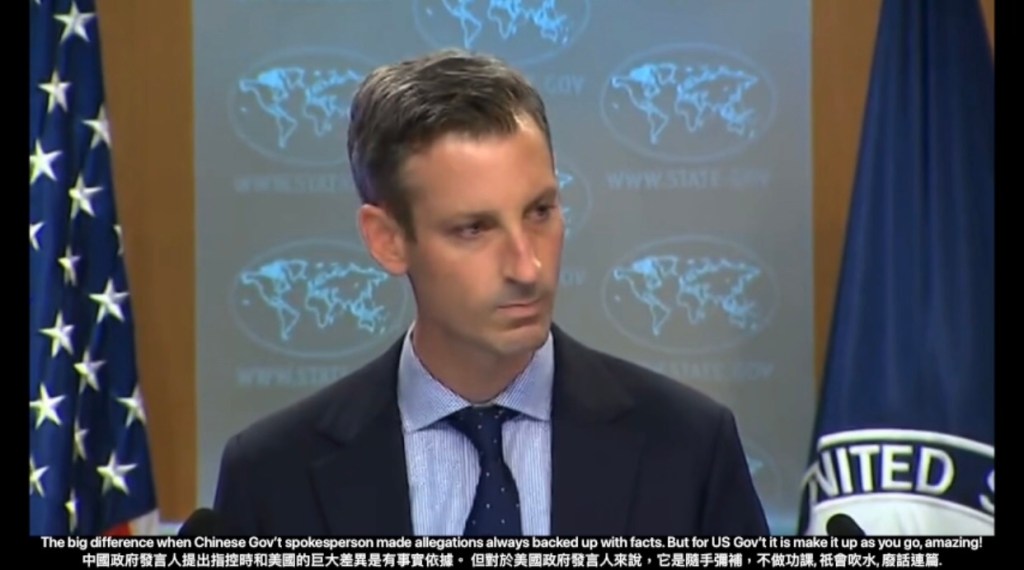
Video: The big difference between when Chinese Gov’t spokesperson made allegations always backed up with facts. But for US Gov’t spokespersons it is make it up as you go, amazing! 中國政府發言人提出指控時和美國的巨大差異是有事實依據。 但對於美國政府發言人來說,它是隨手彌補,不做功課, 祇會吹水, 廢話連篇.
Reporter: “It’s an action that you say they have taken, but you have shown no evidence to confirm that. […] This is like – crisis actors? Really? This is like Alex Jones territory you’re getting into now.” Must-watch exchange between @APDiploWriter Matt Lee and @StateDeptSpox.
Huffpost: Biden officials to reporters asking for evidence: Just believe us! U.S. government officials twice dismissed questions from reporters who asked for evidence to back up claims, suggesting that the reporters should take the government at its word. One instance was the allegation that Russia is attempting to create a pretext for its troops to invade Ukraine. The other was the lack of proof of the killing of top ISIS militant Abu Ibrahim al-Hashimi al-Qurayshi in Syria.
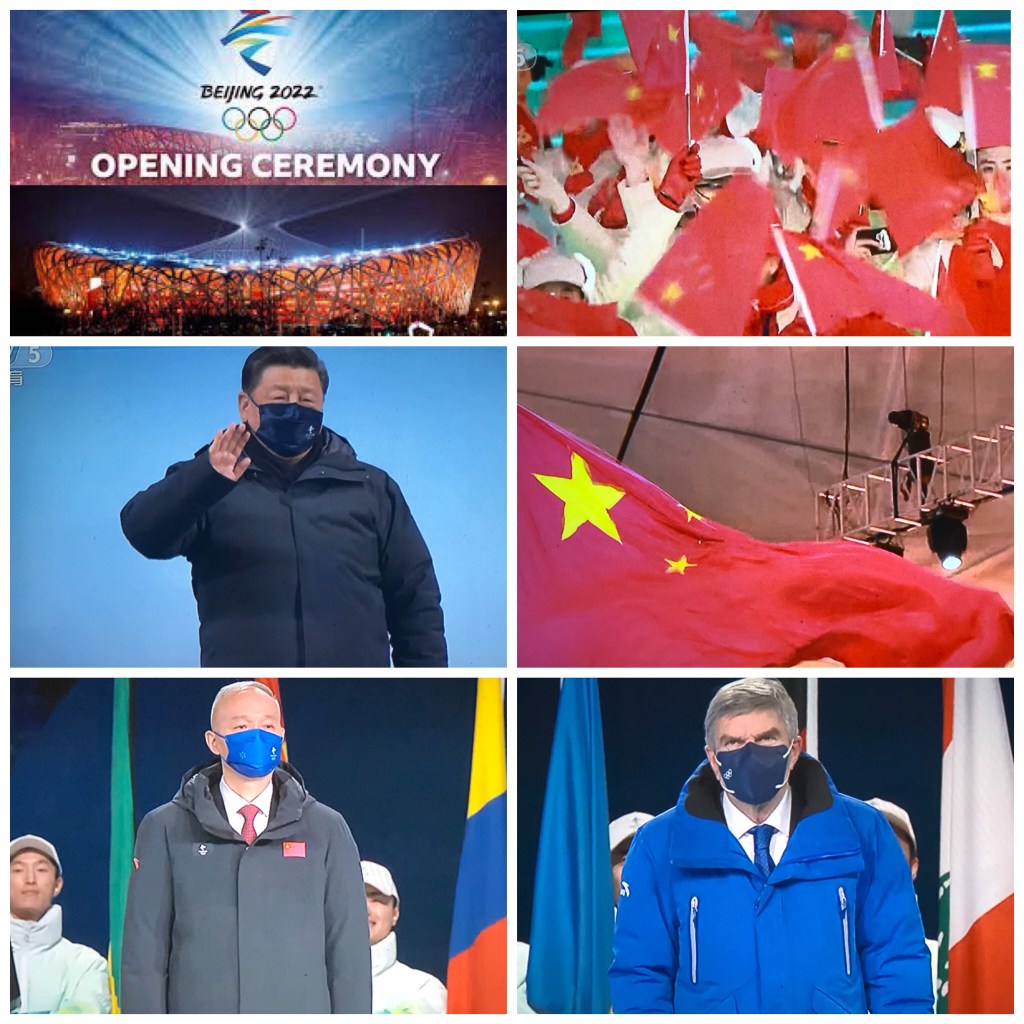
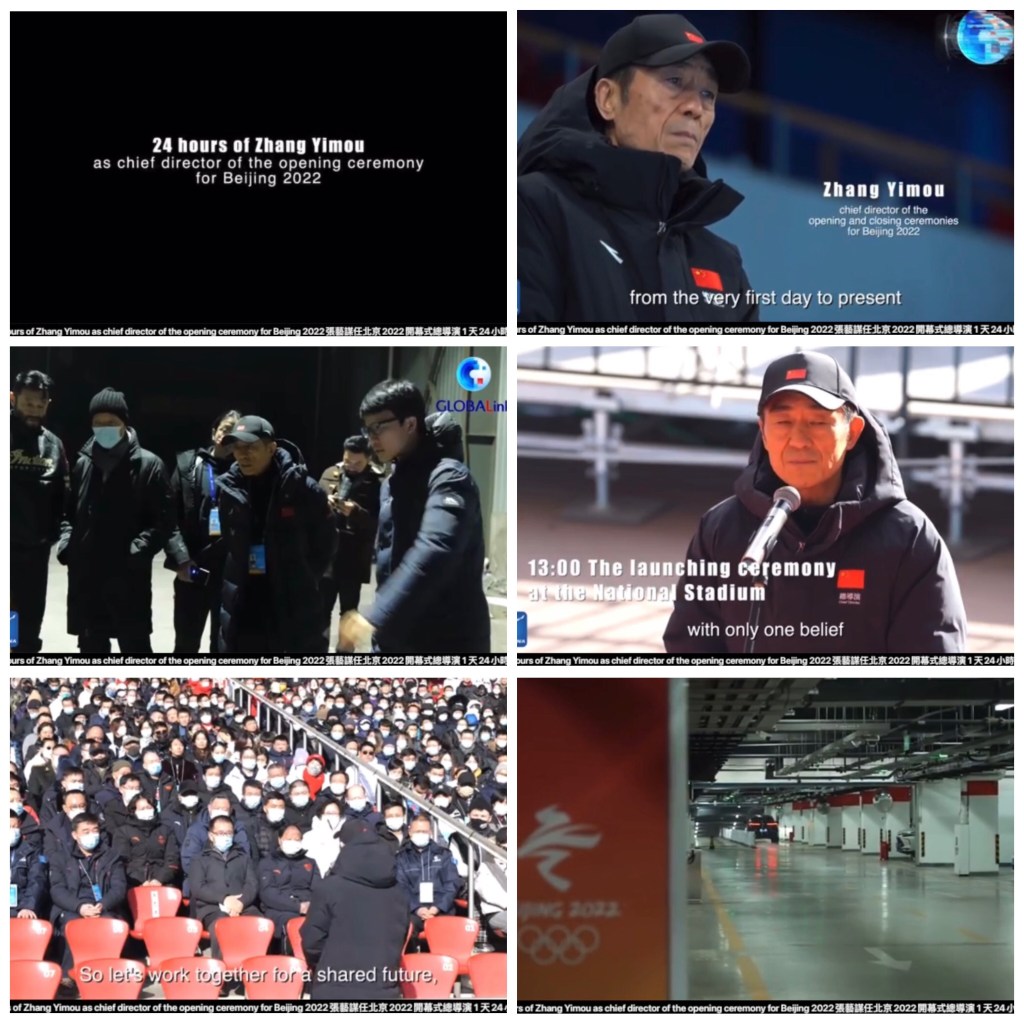
Video: 24 hours of Zhang Yimou as chief director of the opening ceremony for Beijing 2022 張藝謀任北京2022開幕式總導演 1 天24小時工作
The opening ceremony of the 2022 Beijing Winter Olympics will take place at 20:00 on Feb.4. How does Zhang Yimou, chief director of the opening and closing ceremonies for Beijing 2022 make the most of a day? This mini documentary has recorded it all. 2022年北京冬奧會開幕式將於2月4日20:00舉行。 2022北京奧運會開閉幕式總導演張藝謀是如何度過一天的? 這部迷你紀錄片記錄了這一切.
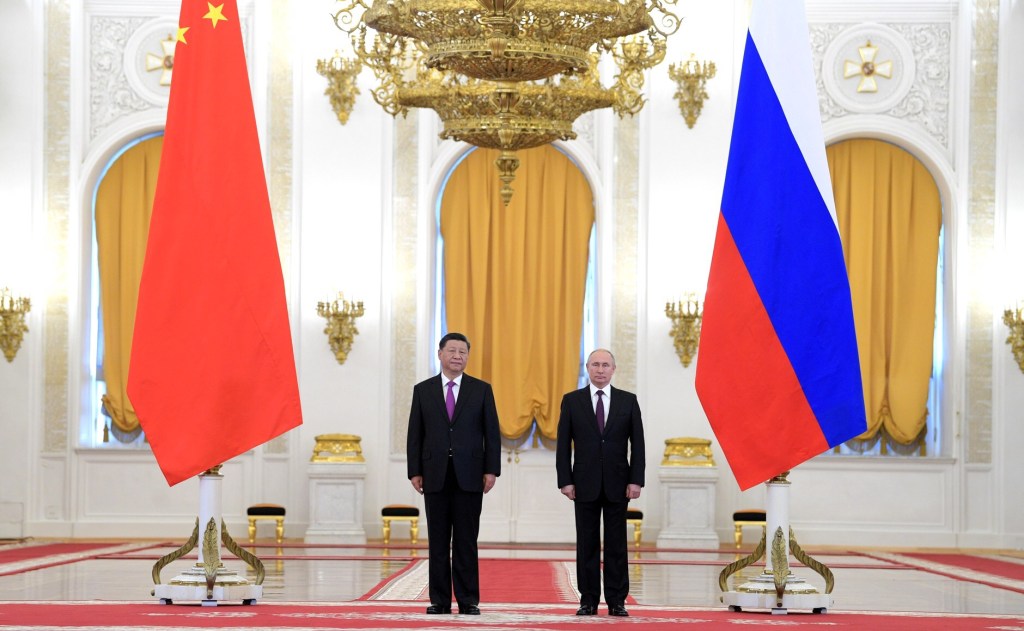
Why Russia-China partnership is effective 為什麼俄中伙伴關係是有效的 by M. K. BHADRAKUMAR Feb 1 2022
The cascading tensions between Russia and the United States brought into play the Russian-Chinese “comprehensive strategic partnership of cooperation”. The topic has been the stuff of animated discussion among strategic thinkers lately.
But opinions varied. The rubrics attached to the partnership by western analysts speak for themselves — “unholy alliance”; “alliance of autocracies”; “strategic partnership short on strategy”; “bad marriage”; and so on. Evidently, it evokes negative emotions in the western mind borne out of unease over the “known unknown”.
The illusion that mainstream western analysis propagated has been that the Russian-Chinese alliance is weak and transitory and is always available as a target for a “reverse Kissinger” (an effort to draw Russia away from China) as if the two countries were pieces in a Lego set — “fixed in shape, and easy to handle,” as an Estonian think tanker at the Brussels-based European Council for Foreign Relations wrote last December.
This illusion is also at the root of the present crisis between the US and Russia. Washington is still stuck in the groove that Madeline Albright and Strobe Talbott had cut during the 1990s. Admittedly, when it comes to China, succinctly put, given the US-China interdependency, the mode of Washington’s containment strategy was different.
It was not unilinear, as in the case with Russia. But the competition-cum-cooperation was predicated on the notion that China at the very core prioritised the relationship with the US over Russia and therefore, its partnership with Moscow was a mere marriage of convenience devoid of strategic intent.
This resulted in the delusional thinking that China will be “neutral” in the US’ current standoff with Russia. It explains the US Secretary of State Antony Blinken’s audacious call with Chinese state councilor and foreign minister Wang Yi on January 27 to solicit Beijing’s help.
The clarity and firmness of Wang’s response would have been a rude awakening for Blinken. Wang cited President Biden’s retraction from assurances given to President Xi Jinping and accused the Biden Administration of “still sticking with erroneous words and deeds related to China, which have dealt a new blow to bilateral relations.”
Wang reminded Blinken: “The burning issue is that the United States should stop interfering with the Olympic Winter Games Beijing 2022, stop playing with fire on the Taiwan issue, and stop creating various anti-China “small cliques.”
Wang then underscored that Beijing endorses the principles underlying the Russian position — the earnest implementation of the Minsk Agreement, the indivisibility of security, the futility of “strengthening or even expanding military blocs” for security, and the imperative need to address “Russia’s legitimate security concerns.”
China has since fleshed out its position in the statement made by its permanent representative to the UN Ambassador Zhang Jun at the Security Council Open Meeting on Ukraine on Monday. Beijing stood shoulder to shoulder with Moscow.
We need to revisit at this point an important remark by President Xi during his virtual meeting with Putin on December 15 (the same day, interestingly, that Moscow delivered its draft bilateral treaty on security matters to the US.) Xi said, “this relationship even exceeds an alliance in its closeness and effectiveness.” This is the crux of the matter.
An alliance in international politics is usually defined as a formal agreement between states for mutual support in case of war. Contemporary alliances provide for combined action and are generally defensive in nature, obligating allies to join forces if one of them is attacked. Even informal alliances are typically formalised by a treaty of alliance, “the most critical clauses of which are those that define the casus foederis, or the circumstances under which the treaty obligates an ally to aid a fellow member.” (Britannica)
Clearly, the Russian-Chinese partnership does not fit into the above definition. For a start, It is not about wartime contingencies. Rather, it is built on commonality of interests dating back to the early years of the post-cold war era and is far from a time-serving alliance of limited objectives. It is built on the principles of equality, mutual respect and on the complementarity between their political economies. Unsurprisingly, an exceptional “closeness” developed in course of time between the two countries.
The mutual trust and confidence grew as it was a pragmatic and flexible arrangement of good-neighbourliness where neither side prescribed norms of behaviour, and both allowed space and the freedom to manoeuvre for each side. It did not put obligations on the other side — so much so that China did not support Russia over the emergence of Abkhazia and South Ossetia as independent states (2008) or over the referendum in Crimea to become part of Russian Federation (2014).
Indeed, the congruence of interests became broad-based over time and the core concerns and aspirations of the two countries being so similar, their comprehensive partnership has come to acquire a multiplier effect on their respective national strategies and in turn have provided a support system.
Then, something radically changed in the external environment when the West staged a coup in Kiev to instal an anti-Russian regime. Since 2014, China and Russia have strengthened their relationship, increasing political, military, and economic cooperation. Arguably, the perceived threat from the Obama administration to both China and Russia hastened this process.
The two countries have since focused on eliminating the scope for Washington to create daylight between them. In the military sphere, the diffusion of military equipment and technology, additional joint planning and intensive exercises have brought the relationship to a stone’s throw from potential joint basing and/or the possibility of joint military operations.
The aggressive US intentions toward Russia and China have become a cementing factor in their partnership, although that is far from the leitmotif as such. Put differently, the partnership has acquired gravitas in multiple directions – cooperation in energy, trade, technology, etc. In fact, the two countries are just about to finalise a blueprint to establish a joint lunar base for scientific research and space exploration!
Yet, the effectiveness of their strategy can be fully understood only if we factor in that the aggregate Chinese and Russian power may have already approached US power and may even exceed it in a conceivable future. The US is encountering sophisticated weapon systems in greater numbers in the inventories of both Russia and China.
Today, the US has reason to worry that Chinese-Russian cooperation is a reasonable possibility in a security crisis on the Korean Peninsula. Foreign Minister Sergey Lavrov Lavrov emphasised recently that Russia viewed Iran as “part of a team” that supports the principles of international law, universal agreements, the UN’s central role, etc.
Beijing strong support for Russia’s efforts to quell the “colour revolution” in Kazakhstan. Although it may seem far-fetched that China and Russia may make coordinated moves on Ukraine and Taiwan, the fact remains that the Chinese Ambassador to the US Qin Gang chose the present moment to say in a rare interview with the US media that if the Taiwan island authority, emboldened by the US, keeps going down the road for independence, it would most likely involve China and the US “in a military conflict.”
No doubt, it is direct warning to the US and a clear signal to the US political elites. Indeed, there are also striking parallels with Ukraine. In both cases, Washington has brazenly dismantled the “guardrail” — the three joint communiqués in the case of Taiwan and the assurances on NATO membership in the case of Ukraine — and resorted to “salami tactic” in an attempt to get Beijing and Moscow to reconcile with new facts on the ground.
China is a stakeholder in the denouement of the US-Russia standoff. With Washington continuously increasing pressure in Europe and the Indo-Pacific, China and Russia are pushed into a “back-to-back” position in Eurasia. China is going to be an indispensable partner in Russia’s ongoing crisis with the US, while on its part, China cannot remain indifferent if Russia gets crushed by the US, lest it loses “strategic depth”.
To be sure, the meeting between Putin and Xi Jinping on Friday will be hugely consequential for world politics. The Kremlin spokesman Dmitry Peskov has said that “significant time will be spent on exchange of opinions on the international agenda this time. This will include strategic stability in Europe, guarantees of security for Russia, Russia-US and Russia-NATO dialogue, as well as regional problems.”
On December 28, Tass news agency quoted a senior Chinese politician Xia Baolong, Vice Chairman of the Chinese People’s Political Consultative Conference and Director of the Hong Kong and Macau Affairs Office, as saying that “an important political document will be approved” during Putin’s visit.
Ambassador Andrey Denisov, Russia’s veteran envoy in Beijing since 2013, has said that Putin’s visit will be “crucially important for us (Russia), is crucially important for China, and I would say, for the entire world. The leaders of two major countries that have a great impact on global politics are meeting, and they are meeting during rather contradictory times.”
Kiji Noh in San Francisco: Good analysis from Badrakumar:
The illusion that mainstream western analysis propagated has been that the Russian-Chinese alliance is weak and transitory and is always available as a target for a “reverse Kissinger” (an effort to draw Russia away from China) as if the two countries were pieces in a Lego set — “fixed in shape, and easy to handle,” as an Estonian think tanker at the Brussels-based European Council for Foreign Relations wrote last December.
This illusion is also at the root of the present crisis between the US and Russia. Washington is still stuck in the groove that Madeline Albright and Strobe Talbott had cut during the 1990s. Admittedly, when it comes to China, succinctly put, given the US-China interdependency, the mode of Washington’s containment strategy was different.
It was not unilinear, as in the case with Russia. But the competition-cum-cooperation was predicated on the notion that China at the very core prioritised the relationship with the US over Russia and therefore, its partnership with Moscow was a mere marriage of convenience devoid of strategic intent.
This resulted in the delusional thinking that China will be “neutral” in the US’ current standoff with Russia. It explains the US Secretary of State Antony Blinken’s audacious call with Chinese state councilor and foreign minister Wang Yi on January 27 to solicit Beijing’s help.
The clarity and firmness of Wang’s response would have been a rude awakening for Blinken. Wang cited President Biden’s retraction from assurances given to President Xi Jinping and accused the Biden Administration of “still sticking with erroneous words and deeds related to China, which have dealt a new blow to bilateral relations.”
Wang reminded Blinken: “The burning issue is that the United States should stop interfering with the Olympic Winter Games Beijing 2022, stop playing with fire on the Taiwan issue, and stop creating various anti-China “small cliques.”
Wang then underscored that Beijing endorses the principles underlying the Russian position — the earnest implementation of the Minsk Agreement, the indivisibility of security, the futility of “strengthening or even expanding military blocs” for security, and the imperative need to address “Russia’s legitimate security concerns.”
China has since fleshed out its position in the statement made by its permanent representative to the UN Ambassador Zhang Jun at the Security Council Open Meeting on Ukraine on Monday. Beijing stood shoulder to shoulder with Moscow.
We need to revisit at this point an important remark by President Xi during his virtual meeting with Putin on December 15 (the same day, interestingly, that Moscow delivered its draft bilateral treaty on security matters to the US.) Xi said, “this relationship even exceeds an alliance in its closeness and effectiveness.” This is the crux of the matter.

 Johnson Choi Biz