China is a reliable partner for Central Asian nations and seeks to deepen cooperation in areas ranging from energy to security, Beijing has stressed, in its latest push to step up engagement with the region. 北京強調,中國是中亞國家可靠的合作夥伴,並尋求深化從能源到安全等領域的合作,以加強與該地區的接觸。
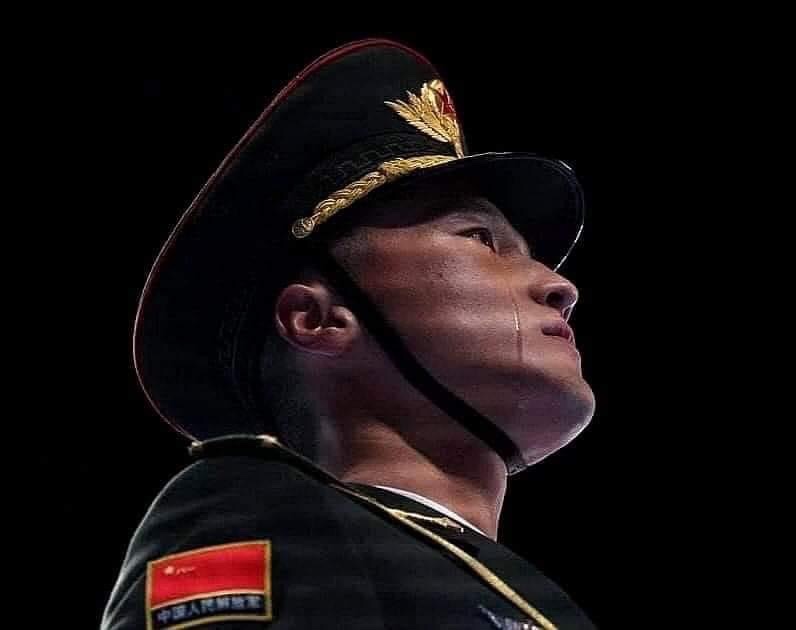
Thanks Dr. Phil Tan-Gatue for sharing this Reuters photo of a Chinese soldier with tears rolling down his eyes, when the China flag was being raised at the historic opening ceremony of the magnificent Beijing Winter Olympics on Feb. 4. This photo has since gone viral among Chinese netizens. 2 月 4 日,在壯麗的北京冬奧會歷史性開幕式上升起中國國旗時,一名中國士兵淚流滿面。這張照片在中國網民中瘋傳。
Will Lee: 开幕式Watching Beijing Winter Olympic Opening Ceremonies on USA‘s NBC was total BS, the announcers 傻逼made a lot of AntiChina political comments. They thoroughly embarrassed themselves. They ruined the entire ceremony and I turned them off.
I watched on YouTube via Taiwan Channel as well as on China Sport Channel live at 4:00am (SF) Friday morning (7:00am Toronto time) at the same time on 2 TVs trying to compare their reporting style. Taiwan had reported pretty much the same as China. But NBC who got the Broadcasting rights in US rebroadcast it prime time last night turned it into a political event by the racists commentators!
How could Chinese get Social Justice in US when Olympics supposed to be non-political and US turned it into a political Chinese bashing event. You wait and see, if US don’t get a lot of Gold Medals, US will say Chinese cheated! Followed by more Chinese bashing and more hate crimes against Asians and Chinese Americans. China has 56 races, no politicians before and after 1949 came out to pitch one race against another like we do in US! That is why unless you are White, there will never be social Justice if you are black, yellow or red in America. Chinese found out since the Chinese Exclusion Acts of 1882, kept coming back in different forms under different fancy names, never goes away!
NBC owned by GE, a major military industrial complex, aka. Arm Dealer. They controlled the US Government as their cash machine!
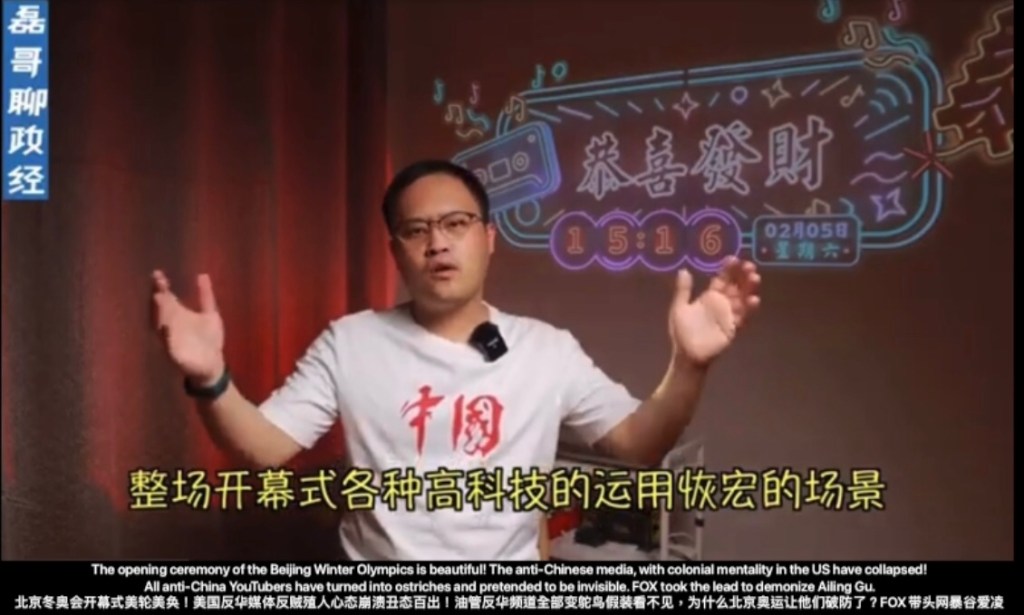
Video: Why American Eileen Gu Competes for China – Beijing 2022 Olympics 為什麼美國出生的谷爱凌要為中國而戰 – 北京 2022 年奧運會
Eileen Gu is a superstar and expected to sweep 3 gold medals at the 2022 Winter Olympics. But not everyone is happy with Eileen decision to represent China and not her birth country America at Beijing 2022. Why did Eileen choose China? I break it all down in my latest video! 谷爱凌是超級巨星,有望在 2022 年冬奧會上包攬 3 枚金牌。 但並不是每個人都對艾琳決定代表中國而不是她的出生國美國參加北京 2022 的決定感到高興。為什麼艾琳選擇中國? 我在我的最新視頻中分解了這一切! https://vimeo.com/673824289 https://youtu.be/5tVP00JKnuY https://www.facebook.com/100036400039778/posts/651229766100352/?d=n
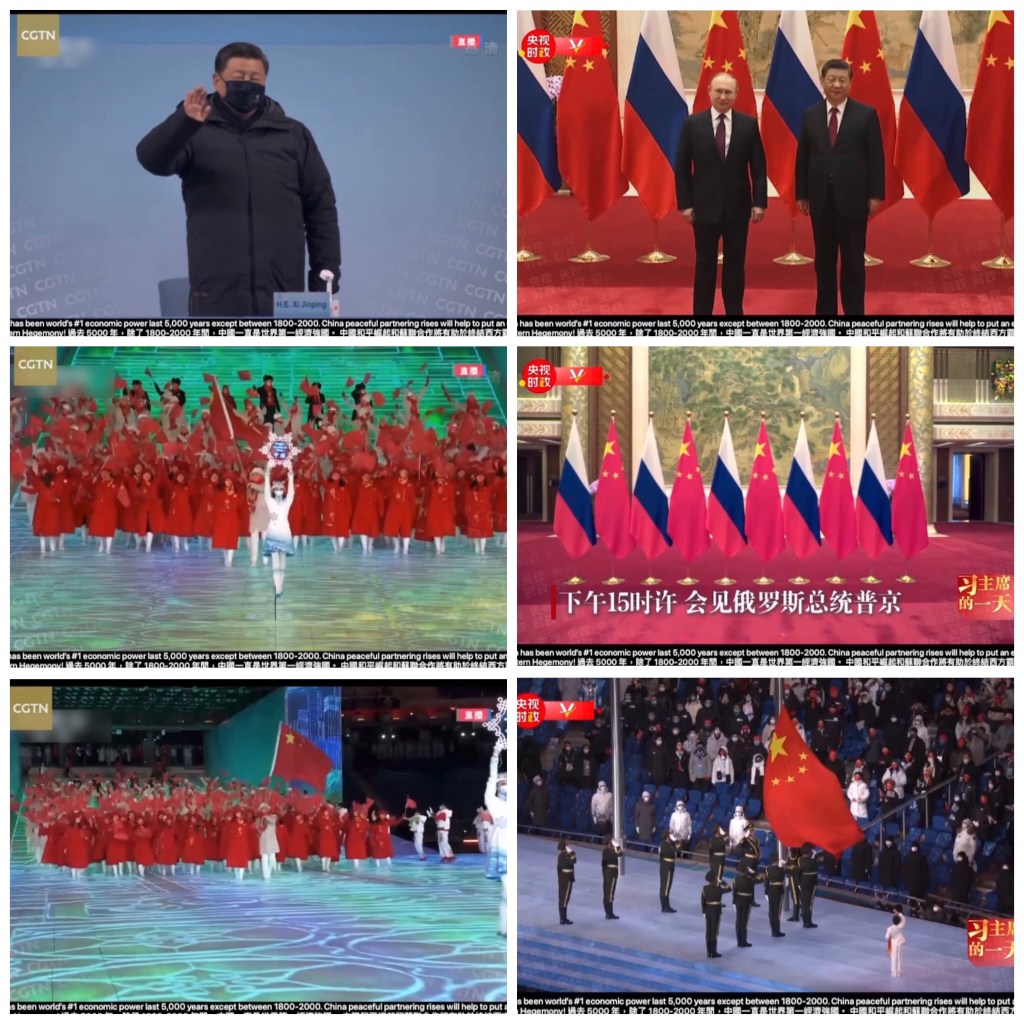
Video: China has been world’s #1 economic power last 5,000 years except between 1800-2000. China peaceful rise partnering with Russia will help to put an end to Western Hegemony! 過去 5000 年,除了 1800-2000 年間,中國一直是世界第一經濟強國。 中國和平崛起和蘇聯合作將有助於終結西方霸權!
Joint Statement of the Russian Federation and the People’s Republic of China on the International Relations Entering a New Era and the Global Sustainable Development February 4, 2022 At the invitation of President of the People’s Republic of China Xi Jinping, President of the Russian Federation Vladimir V. Putin visited China on 4 February 2022. The Heads of State held talks in Beijing and took part in the opening ceremony of the XXIV Olympic Winter Games. The Russian Federation and the People’s Republic of China, hereinafter referred to as the sides, state as follows. Today, the world is going through momentous changes, and humanity is entering a new era of rapid development and profound transformation. It sees the development of such processes and phenomena as multipolarity, economic globalization, the advent of information society, cultural diversity, transformation of the global governance architecture and world order; there is increasing interrelation and interdependence between the States; a trend has emerged towards redistribution of power in the world; and the international community is showing a growing demand for the leadership aiming at peaceful and gradual development. At the same time, as the pandemic of the new coronavirus infection continues, the international and regional security situation is complicating and the number of global challenges and threats is growing from day to day. Some actors representing but the minority on the international scale continue to advocate unilateral approaches to addressing international issues and resort to force; they interfere in the internal affairs of other states, infringing their legitimate rights and interests, and incite contradictions, differences and confrontation, thus hampering the development and progress of mankind, against the opposition from the international community. The sides call on all States to pursue well-being for all and, with these ends, to build dialogue and mutual trust, strengthen mutual understanding, champion such universal human values as peace, development, equality, justice, democracy and freedom, respect the rights of peoples to independently determine the development paths of their countries and the sovereignty and the security and development interests of States, to protect the United Nations-driven international architecture and the international law-based world order, seek genuine multipolarity with the United Nations and its Security Council playing a central and coordinating role, promote more democratic international relations, and ensure peace, stability and sustainable development across the world. I The sides share the understanding that democracy is a universal human value, rather than a privilege of a limited number of States, and that its promotion and protection is a common responsibility of the entire world community. The sides believe that democracy is a means of citizens’ participation in the government of their country with the view to improving the well-being of population and implementing the principle of popular government. Democracy is exercised in all spheres of public life as part of a nation-wide process and reflects the interests of all the people, its will, guarantees its rights, meets its needs and protects its interests. There is no one-size-fits-all template to guide countries in establishing democracy. A nation can choose such forms and methods of implementing democracy that would best suit its particular state, based on its social and political system, its historical background, traditions and unique cultural characteristics. It is only up to the people of the country to decide whether their State is a democratic one. The sides note that Russia and China as world powers with rich cultural and historical heritage have long-standing traditions of democracy, which rely on thousand-years of experience of development, broad popular support and consideration of the needs and interests of citizens. Russia and China guarantee their people the right to take part through various means and in various forms in the administration of the State and public life in accordance with the law. The people of both countries are certain of the way they have chosen and respect the democratic systems and traditions of other States. The sides note that democratic principles are implemented at the global level, as well as in administration of State. Certain States’ attempts to impose their own ”democratic standards“ on other countries, to monopolize the right to assess the level of compliance with democratic criteria, to draw dividing lines based on the grounds of ideology, including by establishing exclusive blocs and alliances of convenience, prove to be nothing but flouting of democracy and go against the spirit and true values of democracy. Such attempts at hegemony pose serious threats to global and regional peace and stability and undermine the stability of the world order. The sides believe that the advocacy of democracy and human rights must not be used to put pressure on other countries. They oppose the abuse of democratic values and interference in the internal affairs of sovereign states under the pretext of protecting democracy and human rights, and any attempts to incite divisions and confrontation in the world. The sides call on the international community to respect cultural and civilizational diversity and the rights of peoples of different countries to self-determination. They stand ready to work together with all the interested partners to promote genuine democracy. The sides note that the Charter of the United Nations and the Universal Declaration of Human Rights set noble goals in the area of universal human rights, set forth fundamental principles, which all the States must comply with and observe in deeds. At the same time, as every nation has its own unique national features, history, culture, social system and level of social and economic development, universal nature of human rights should be seen through the prism of the real situation in every particular country, and human rights should be protected in accordance with the specific situation in each country and the needs of its population. Promotion and protection of human rights is a shared responsibility of the international community. The states should equally prioritize all categories of human rights and promote them in a systemic manner. The international human rights cooperation should be carried out as a dialogue between the equals involving all countries. All States must have equal access to the right to development. Interaction and cooperation on human rights matters should be based on the principle of equality of all countries and mutual respect for the sake of strengthening the international human rights architecture. II The sides believe that peace, development and cooperation lie at the core of the modern international system. Development is a key driver in ensuring the prosperity of the nations. The ongoing pandemic of the new coronavirus infection poses a serious challenge to the fulfilment of the UN 2030 Agenda for Sustainable Development. It is vital to enhance partnership relations for the sake of global development and make sure that the new stage of global development is defined by balance, harmony and inclusiveness. The sides are seeking to advance their work to link the development plans for the Eurasian Economic Union and the Belt and Road Initiative with a view to intensifying practical cooperation between the EAEU and China in various areas and promoting greater interconnectedness between the Asia Pacific and Eurasian regions. The sides reaffirm their focus on building the Greater Eurasian Partnership in parallel and in coordination with the Belt and Road construction to foster the development of regional associations as well as bilateral and multilateral integration processes for the benefit of the peoples on the Eurasian continent. The sides agreed to continue consistently intensifying practical cooperation for the sustainable development of the Arctic. The sides will strengthen cooperation within multilateral mechanisms, including the United Nations, and encourage the international community to prioritize development issues in the global macro-policy coordination. They call on the developed countries to implement in good faith their formal commitments on development assistance, provide more resources to developing countries, address the uneven development of States, work to offset such imbalances within States, and advance global and international development cooperation. The Russian side confirms its readiness to continue working on the China-proposed Global Development Initiative, including participation in the activities of the Group of Friends of the Global Development Initiative under the UN auspices. In order to accelerate the implementation of the UN 2030 Agenda for Sustainable Development, the sides call on the international community to take practical steps in key areas of cooperation such as poverty reduction, food security, vaccines and epidemics control, financing for development, climate change, sustainable development, including green development, industrialization, digital economy, and infrastructure connectivity. The sides call on the international community to create open, equal, fair and non-discriminatory conditions for scientific and technological development, to step up practical implementation of scientific and technological advances in order to identify new drivers of economic growth. The sides call upon all countries to strengthen cooperation in sustainable transport, actively build contacts and share knowledge in the construction of transport facilities, including smart transport and sustainable transport, development and use of Arctic routes, as well as to develop other areas to support global post-epidemic recovery. The sides are taking serious action and making an important contribution to the fight against climate change. Jointly celebrating the 30th anniversary of the adoption of the UN Framework Convention on Climate Change, they reaffirm their commitment to this Convention as well as to the goals, principles and provisions of the Paris Agreement, including the principle of common but differentiated responsibilities. The sides work together to ensure the full and effective implementation of the Paris Agreement, remain committed to fulfilling the obligations they have undertaken and expect that developed countries will actually ensure the annual provision of $100 billion of climate finance to developing states. The sides oppose setting up new barriers in international trade under the pretext of fighting climate change. The sides strongly support the development of international cooperation and exchanges in the field of biological diversity, actively participating in the relevant global governance process, and intend to jointly promote the harmonious development of humankind and nature as well as green transformation to ensure sustainable global development. The Heads of State positively assess the effective interaction between Russia and China in the bilateral and multilateral formats focusing on the fight against the COVID-19 pandemic, protection of life and health of the population of the two countries and the peoples of the world. They will further increase cooperation in the development and manufacture of vaccines against the new coronavirus infection, as well as medical drugs for its treatment, and enhance collaboration in public health and modern medicine. The sides plan to strengthen coordination on epidemiological measures to ensure strong protection of health, safety and order in contacts between citizens of the two countries. The sides have commended the work of the competent authorities and regions of the two countries on implementing quarantine measures in the border areas and ensuring the stable operation of the border crossing points, and intend to consider establishing a joint mechanism for epidemic control and prevention in the border areas to jointly plan anti-epidemic measures to be taken at the border checkpoints, share information, build infrastructure and improve the efficiency of customs clearance of goods. The sides emphasize that ascertaining the origin of the new coronavirus infection is a matter of science. Research on this topic must be based on global knowledge, and that requires cooperation among scientists from all over the world. The sides oppose politicization of this issue. The Russian side welcomes the work carried out jointly by China and WHO to identify the source of the new coronavirus infection and supports the China – WHO joint report on the matter. The sides call on the global community to jointly promote a serious scientific approach to the study of the coronavirus origin. The Russian side supports a successful hosting by the Chinese side of the Winter Olympic and Paralympic Games in Beijing in 2022. The sides highly appreciate the level of bilateral cooperation in sports and the Olympic movement and express their readiness to contribute to its further progressive development. III The sides are gravely concerned about serious international security challenges and believe that the fates of all nations are interconnected. No State can or should ensure its own security separately from the security of the rest of the world and at the expense of the security of other States. The international community should actively engage in global governance to ensure universal, comprehensive, indivisible and lasting security. The sides reaffirm their strong mutual support for the protection of their core interests, state sovereignty and territorial integrity, and oppose interference by external forces in their internal affairs. The Russian side reaffirms its support for the One-China principle, confirms that Taiwan is an inalienable part of China, and opposes any forms of independence of Taiwan. Russia and China stand against attempts by external forces to undermine security and stability in their common adjacent regions, intend to counter interference by outside forces in the internal affairs of sovereign countries under any pretext, oppose colour revolutions, and will increase cooperation in the aforementioned areas. The sides condemn terrorism in all its manifestations, promote the idea of creating a single global anti-terrorism front, with the United Nations playing a central role, advocate stronger political coordination and constructive engagement in multilateral counterterrorism efforts. The sides oppose politicization of the issues of combating terrorism and their use as instruments of policy of double standards, condemn the practice of interference in the internal affairs of other States for geopolitical purposes through the use of terrorist and extremist groups as well as under the guise of combating international terrorism and extremism. The sides believe that certain States, military and political alliances and coalitions seek to obtain, directly or indirectly, unilateral military advantages to the detriment of the security of others, including by employing unfair competition practices, intensify geopolitical rivalry, fuel antagonism and confrontation, and seriously undermine the international security order and global strategic stability. The sides oppose further enlargement of NATO and call on the North Atlantic Alliance to abandon its ideologized cold war approaches, to respect the sovereignty, security and interests of other countries, the diversity of their civilizational, cultural and historical backgrounds, and to exercise a fair and objective attitude towards the peaceful development of other States. The sides stand against the formation of closed bloc structures and opposing camps in the Asia-Pacific region and remain highly vigilant about the negative impact of the United States’ Indo-Pacific strategy on peace and stability in the region. Russia and China have made consistent efforts to build an equitable, open and inclusive security system in the Asia-Pacific Region (APR) that is not directed against third countries and that promotes peace, stability and prosperity. The sides welcome the Joint Statement of the Leaders of the Five Nuclear-Weapons States on Preventing Nuclear War and Avoiding Arms Races and believe that all nuclear-weapons States should abandon the cold war mentality and zero-sum games, reduce the role of nuclear weapons in their national security policies, withdraw nuclear weapons deployed abroad, eliminate the unrestricted development of global anti-ballistic missile defense (ABM) system, and take effective steps to reduce the risks of nuclear wars and any armed conflicts between countries with military nuclear capabilities. The sides reaffirm that the Treaty on the Non-Proliferation of Nuclear Weapons is the cornerstone of the international disarmament and nuclear non-proliferation system, an important part of the post-war international security system, and plays an indispensable role in world peace and development. The international community should promote the balanced implementation of the three pillars of the Treaty and work together to protect the credibility, effectiveness and the universal nature of the instrument. The sides are seriously concerned about the trilateral security partnership between Australia, the United States, and the United Kingdom (AUKUS), which provides for deeper cooperation between its members in areas involving strategic stability, in particular their decision to initiate cooperation in the field of nuclear-powered submarines. Russia and China believe that such actions are contrary to the objectives of security and sustainable development of the Asia-Pacific region, increase the danger of an arms race in the region, and pose serious risks of nuclear proliferation. The sides strongly condemn such moves and call on AUKUS participants to fulfil their nuclear and missile non-proliferation commitments in good faith and to work together to safeguard peace, stability, and development in the region. Japan’s plans to release nuclear contaminated water from the destroyed Fukushima nuclear plant into the ocean and the potential environmental impact of such actions are of deep concern to the sides. The sides emphasize that the disposal of nuclear contaminated water should be handled with responsibility and carried out in a proper manner based on arrangements between the Japanese side and neighbouring States, other interested parties, and relevant international agencies while ensuring transparency, scientific reasoning, and in accordance with international law. The sides believe that the U.S. withdrawal from the Treaty on the Elimination of Intermediate-Range and Shorter-Range Missiles, the acceleration of research and the development of intermediate-range and shorter-range ground-based missiles and the desire to deploy them in the Asia-Pacific and European regions, as well as their transfer to the allies, entail an increase in tension and distrust, increase risks to international and regional security, lead to the weakening of international non-proliferation and arms control system, undermining global strategic stability. The sided call on the United States to respond positively to the Russian initiative and abandon its plans to deploy intermediate-range and shorter-range ground-based missiles in the Asia-Pacific region and Europe. The sides will continue to maintain contacts and strengthen coordination on this issue. The Chinese side is sympathetic to and supports the proposals put forward by the Russian Federation to create long-term legally binding security guarantees in Europe. The sides note that the denunciation by the United States of a number of important international arms control agreements has an extremely negative impact on international and regional security and stability. The sides express concern over the advancement of U.S. plans to develop global missile defence and deploy its elements in various regions of the world, combined with capacity building of high-precision non-nuclear weapons for disarming strikes and other strategic objectives. The sides stress the importance of the peaceful uses of outer space, strongly support the central role of the UN Committee on the Peaceful Uses of Outer Space in promoting international cooperation, maintaining and developing international space law and regulation in the field of space activities. Russia and China will continue to increase cooperation on such matters of mutual interest as the long-term sustainability of space activities and the development and use of space resources. The sides oppose attempts by some States to turn outer space into an arena of armed confrontation and reiterate their intention to make all necessary efforts to prevent the weaponization of space and an arms race in outer space. They will counteract activities aimed at achieving military superiority in space and using it for combat operations. The sides affirm the need for the early launch of negotiations to conclude a legally binding multilateral instrument based on the Russian-Chinese draft treaty on the prevention of placement of weapons in outer space and the use or threat of force against space objects that would provide fundamental and reliable guarantees against an arms race and the weaponization of outer space. Russia and China emphasize that appropriate transparency and confidence-building measures, including an international initiative/political commitment not to be the first to place weapons in space, can also contribute to the goal of preventing an arms race in outer space, but such measures should complement and not substitute the effective legally binding regime governing space activities. The sides reaffirm their belief that the Convention on the Prohibition of the Development, Production and Stockpiling of Bacteriological (Biological) and Toxin Weapons and on their Destruction (BWC) is an essential pillar of international peace and security. Russia and China underscore their determination to preserve the credibility and effectiveness of the Convention. The sides affirm the need to fully respect and further strengthen the BWC, including by institutionalizing it, strengthening its mechanisms, and adopting a legally binding Protocol to the Convention with an effective verification mechanism, as well as through regular consultation and cooperation in addressing any issues related to the implementation of the Convention. The sides emphasize that domestic and foreign bioweapons activities by the United States and its allies raise serious concerns and questions for the international community regarding their compliance with the BWC. The sides share the view that such activities pose a serious threat to the national security of the Russian Federation and China and are detrimental to the security of the respective regions. The sides call on the U.S. and its allies to act in an open, transparent, and responsible manner by properly reporting on their military biological activities conducted overseas and on their national territory, and by supporting the resumption of negotiations on a legally binding BWC Protocol with an effective verification mechanism. The sides, reaffirming their commitment to the goal of a world free of chemical weapons, call upon all parties to the Chemical Weapons Convention to work together to uphold its credibility and effectiveness. Russia and China are deeply concerned about the politicization of the Organization for the Prohibition of Chemical Weapons and call on all of its members to strengthen solidarity and cooperation and protect the tradition of consensual decision-making. Russia and China insist that the United States, as the sole State Party to the Convention that has not yet completed the process of eliminating chemical weapons, accelerate the elimination of its stockpiles of chemical weapons. The sides emphasize the importance of balancing the non-proliferation obligations of states with the interests of legitimate international cooperation in the use of advanced technology and related materials and equipment for peaceful purposes. The sides note the resolution entitled ”Promoting international Cooperation on Peaceful Uses in the Context of International Security“ adopted at the 76th session of the UN General Assembly on the initiative of China and co‑sponsored by Russia, and look forward to its consistent implementation in accordance with the goals set forth therein. The sides attach great importance to the issues of governance in the field of artificial intelligence. The sides are ready to strengthen dialogue and contacts on artificial intelligence. The sides reiterate their readiness to deepen cooperation in the field of international information security and to contribute to building an open, secure, sustainable and accessible ICT environment. The sides emphasize that the principles of the non-use of force, respect for national sovereignty and fundamental human rights and freedoms, and non-interference in the internal affairs of other States, as enshrined in the UN Charter, are applicable to the information space. Russia and China reaffirm the key role of the UN in responding to threats to international information security and express their support for the Organization in developing new norms of conduct of states in this area. The sides welcome the implementation of the global negotiation process on international information security within a single mechanism and support in this context the work of the UN Open-ended Working Group on security of and in the use of information and communication technologies (ICTs) 2021–2025 (OEWG) and express their willingness to speak with one voice within it. The sides consider it necessary to consolidate the efforts of the international community to develop new norms of responsible behaviour of States, including legal ones, as well as a universal international legal instrument regulating the activities of States in the field of ICT. The sides believe that the Global Initiative on Data Security, proposed by the Chinese side and supported, in principle, by the Russian side, provides a basis for the Working Group to discuss and elaborate responses to data security threats and other threats to international information security. The sides reiterate their support of United Nations General Assembly resolutions 74/247 and 75/282, support the work of the relevant Ad Hoc Committee of Governmental Experts, facilitate the negotiations within the United Nations for the elaboration of an international convention on countering the use of ICTs for criminal purposes. The sides encourage constructive participation of all sides in the negotiations in order to agree as soon as possible on a credible, universal, and comprehensive convention and provide it to the United Nations General Assembly at its 78th session in strict compliance with resolution 75/282. For these purposes, Russia and China have presented a joint draft convention as a basis for negotiations. The sides support the internationalization of Internet governance, advocate equal rights to its governance, believe that any attempts to limit their sovereign right to regulate national segments of the Internet and ensure their security are unacceptable, are interested in greater participation of the International Telecommunication Union in addressing these issues. The sides intend to deepen bilateral cooperation in international information security on the basis of the relevant 2015 intergovernmental agreement. To this end, the sides have agreed to adopt in the near future a plan for cooperation between Russia and China in this area. IV The sides underline that Russia and China, as world powers and permanent members of the United Nations Security Council, intend to firmly adhere to moral principles and accept their responsibility, strongly advocate the international system with the central coordinating role of the United Nations in international affairs, defend the world order based on international law, including the purposes and principles of the Charter of the United Nations, advance multipolarity and promote the democratization of international relations, together create an even more prospering, stable, and just world, jointly build international relations of a new type. The Russian side notes the significance of the concept of constructing a ”community of common destiny for mankind“ proposed by the Chinese side to ensure greater solidarity of the international community and consolidation of efforts in responding to common challenges. The Chinese side notes the significance of the efforts taken by the Russian side to establish a just multipolar system of international relations. The sides intend to strongly uphold the outcomes of the Second World War and the existing post-war world order, defend the authority of the United Nations and justice in international relations, resist attempts to deny, distort, and falsify the history of the Second World War. In order to prevent the recurrence of the tragedy of the world war, the sides will strongly condemn actions aimed at denying the responsibility for atrocities of Nazi aggressors, militarist invaders, and their accomplices, besmirch and tarnish the honour of the victorious countries. The sides call for the establishment of a new kind of relationships between world powers on the basis of mutual respect, peaceful coexistence and mutually beneficial cooperation. They reaffirm that the new inter-State relations between Russia and China are superior to political and military alliances of the Cold War era. Friendship between the two States has no limits, there are no ”forbidden“ areas of cooperation, strengthening of bilateral strategic cooperation is neither aimed against third countries nor affected by the changing international environment and circumstantial changes in third countries. The sides reiterate the need for consolidation, not division of the international community, the need for cooperation, not confrontation. The sides oppose the return of international relations to the state of confrontation between major powers, when the weak fall prey to the strong. The sides intend to resist attempts to substitute universally recognized formats and mechanisms that are consistent with international law for rules elaborated in private by certain nations or blocs of nations, and are against addressing international problems indirectly and without consensus, oppose power politics, bullying, unilateral sanctions, and extraterritorial application of jurisdiction, as well as the abuse of export control policies, and support trade facilitation in line with the rules of the World Trade Organization (WTO). The sides reaffirmed their intention to strengthen foreign policy coordination, pursue true multilateralism, strengthen cooperation on multilateral platforms, defend common interests, support the international and regional balance of power, and improve global governance. The sides support and defend the multilateral trade system based on the central role of the World Trade Organization (WTO), take an active part in the WTO reform, opposing unilateral approaches and protectionism. The sides are ready to strengthen dialogue between partners and coordinate positions on trade and economic issues of common concern, contribute to ensuring the sustainable and stable operation of global and regional value chains, promote a more open, inclusive, transparent, non-discriminatory system of international trade and economic rules. The sides support the G20 format as an important forum for discussing international economic cooperation issues and anti-crisis response measures, jointly promote the invigorated spirit of solidarity and cooperation within the G20, support the leading role of the association in such areas as the international fight against epidemics, world economic recovery, inclusive sustainable development, improving the global economic governance system in a fair and rational manner to collectively address global challenges. The sides support the deepened strategic partnership within BRICS, promote the expanded cooperation in three main areas: politics and security, economy and finance, and humanitarian exchanges. In particular, Russia and China intend to encourage interaction in the fields of public health, digital economy, science, innovation and technology, including artificial intelligence technologies, as well as the increased coordination between BRICS countries on international platforms. The sides strive to further strengthen the BRICS Plus/Outreach format as an effective mechanism of dialogue with regional integration associations and organizations of developing countries and States with emerging markets. The Russian side will fully support the Chinese side chairing the association in 2022, and assist in the fruitful holding of the XIV BRICS summit. Russia and China aim to comprehensively strengthen the Shanghai Cooperation Organization (SCO) and further enhance its role in shaping a polycentric world order based on the universally recognized principles of international law, multilateralism, equal, joint, indivisible, comprehensive and sustainable security. They consider it important to consistently implement the agreements on improved mechanisms to counter challenges and threats to the security of SCO member states and, in the context of addressing this task, advocate expanded functionality of the SCO Regional Anti-Terrorist Structure. The sides will contribute to imparting a new quality and dynamics to the economic interaction between the SCO member States in the fields of trade, manufacturing, transport, energy, finance, investment, agriculture, customs, telecommunications, innovation and other areas of mutual interest, including through the use of advanced, resource-saving, energy efficient and ”green“ technologies. The sides note the fruitful interaction within the SCO under the 2009 Agreement between the Governments of the Shanghai Cooperation Organization member States on cooperation in the field of international information security, as well as within the specialized Group of Experts. In this context, they welcome the adoption of the SCO Joint Action Plan on Ensuring International Information Security for 2022–2023 by the Council of Heads of State of SCO Member States on September 17, 2021 in Dushanbe. Russia and China proceed from the ever-increasing importance of cultural and humanitarian cooperation for the progressive development of the SCO. In order to strengthen mutual understanding between the people of the SCO member States, they will continue to effectively foster interaction in such areas as cultural ties, education, science and technology, healthcare, environmental protection, tourism, people-to-people contacts, sports. Russia and China will continue to work to strengthen the role of APEC as the leading platform for multilateral dialogue on economic issues in the Asia-Pacific region. The sides intend to step up coordinated action to successfully implement the ”Putrajaya guidelines for the development of APEC until 2040“ with a focus on creating a free, open, fair, non-discriminatory, transparent and predictable trade and investment environment in the region. Particular emphasis will be placed on the fight against the novel coronavirus infection pandemic and economic recovery, digitalization of a wide range of different spheres of life, economic growth in remote territories and the establishment of interaction between APEC and other regional multilateral associations with a similar agenda. The sides intend to develop cooperation within the ”Russia-India-China“ format, as well as to strengthen interaction on such venues as the East Asia Summit, ASEAN Regional Forum on Security, Meeting of Defense Ministers of the ASEAN Member States and Dialogue Partners. Russia and China support ASEAN’s central role in developing cooperation in East Asia, continue to increase coordination on deepened cooperation with ASEAN, and jointly promote cooperation in the areas of public health, sustainable development, combating terrorism and countering transnational crime. The sides intend to continue to work in the interest of a strengthened role of ASEAN as a key element of the regional architecture.





 Johnson Choi Biz