China and Russia: Together for a shared future

China and Russia: Together for a shared future, The strategic nature of China-Russia relations has never been more prominent, attracting worldwide attention. 中俄:攜手共進 中俄關係的戰略性從未像現在這樣突出,舉世矚目. by Song Fang

Editor’s note: Song Fang is a lecturer at the Institute for International Strategic Studies in the Party School of the Central Committee of the Communist Party of China. The article reflects the author’s opinions and not necessarily the views of CGTN.

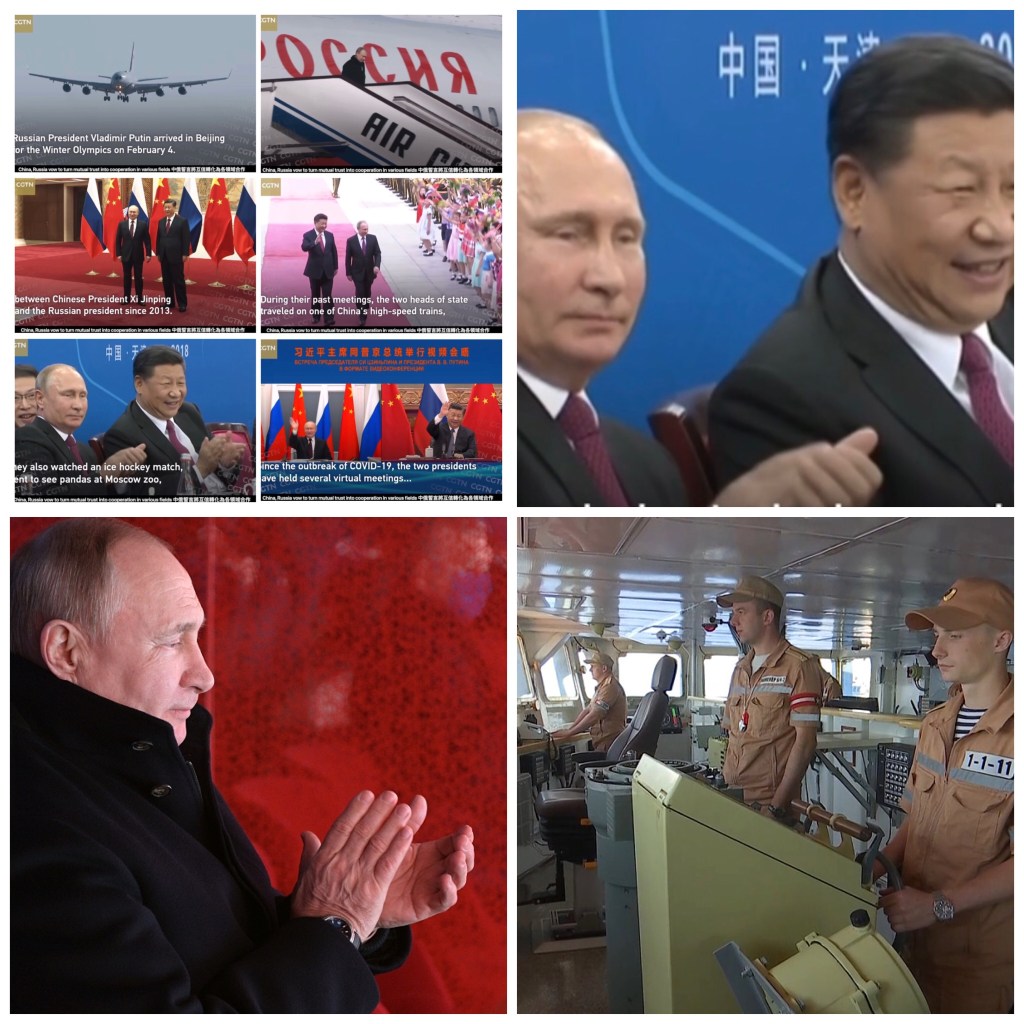
Chinese President Xi Jinping met with Russian President Vladimir Putin in Beijing on February 4, 2022. For China and Russia, the meeting is not only of overall and strategic significance but also reached practical cooperation agreements, promoting the further deepening of the China-Russia comprehensive strategic partnership of coordination. The strategic nature of China-Russia relations has never been more prominent, attracting worldwide attention.

One of the important outcomes of the meeting was the issuance of a joint statement that reflects the highly consistent position of Russia and China on major international issues. The world has entered a period of turbulence and change due to the interwoven impact of the centennial changes and the pandemic. Both countries practice true multilateralism, promote democracy in international relations and achieve world peace, stability and sustainable development.

The joint statement clearly stated the two powers’ views on democracy, development, security and order, pushing back against Western hegemonic discourse by clarifying political ideas such as “democracy,” “human rights” and “multilateralism.”

The joint statement also made it clear that the new type of state-to-state relationship between China and Russia has gone beyond the military and political alliance model of the Cold War era. There is no limit to China-Russia friendship and no forbidden area for China-Russia cooperation.

The second important outcome of the meeting is the signing of a series of cooperation documents between China and Russia, which cover cooperation in areas such as anti-monopoly law enforcement and competition policy, sustainable development, health and quarantine, sports exchanges, global satellite navigation system, oil and gas, and informatization and digitalization. They are of major concern to both sides.

China and Russia are economically interdependent. China is Russia’s largest economic and trade partner. The latest statistics show that China-Russia bilateral trade in 2021 hit a record high of $140 billion. In the context of a sluggish global economy, it’s truly remarkable that China and Russia have made such achievements in trade and economic cooperation. On this basis, a series of new cooperation agreements further consolidate China and Russia’s all-around cooperation.

Strategically China and Russia need each other. The world today is marked by changes unseen in a century, and China is moving to the center of the world stage. China faces pressures from the United States, which makes its relationship with Russia important.

At the same time, with the increasing pressure from the West, developing its relationship with China is also essential for Russia. Deepening cooperation with China may be the most effective way for Russia to deal with Western sanctions.

Putin’s visit to China has three main objectives. The first is to support the Beijing Winter Olympics. Some Western countries have repeatedly slandered China on the so-called human rights issue and announced that they would not send official and diplomatic representatives to the Beijing Winter Olympics in an attempt to politicize sports and obstruct the normal holding of the Beijing Winter Olympics.

In sharp contrast to these countries, Putin was the first foreign leader to explicitly declare his intention to attend the Beijing Winter Olympics. His remarks once again conveyed to the world the particularity of China-Russia relations. Both China and Russia oppose the politicization of sports and abide by the Olympic spirit of equality and justice.

The second is to exchange views with Beijing on world affairs. The situation in Ukraine is on the verge of boiling over. A war between Russia and Ukraine could break out at any time. The United States already has thousands of troops around Ukraine ready to join the fight against Russia.

The current Ukraine crisis is another big issue for geopolitical competition between the West and Russia caused by the enlargement of NATO. The sensitivity of Ukraine’s geography makes any event that could alter its character highly likely to alter the geopolitical landscape. Russia hopes China will back it in the face of Western pressure.

The third is strengthening China-Russia relations. China and Russia are currently discussing the possibility of building a new natural gas pipeline to China via Mongolia, the China-Russia Natural Gas Western Route. As for China-Russia joint financial infrastructure, the aim is to deepen China-Russia cooperation in the energy sector. In the wake of the current Ukraine crisis, U.S. officials are threatening the toughest possible sanctions against Russia. It is urgent and necessary for Russia to deepen cooperation with China. A number of economic, military and infrastructure cooperation projects will greatly reduce the pressure Russia is facing.

China and Russia see each other as a strategic counterweight to the United States and share many common interests. Mutual assistance between China and Russia will effectively balance the United States and defuse the strategic pressure that the strengthening of the transatlantic alliance may bring to China and Russia.

The China-Russia comprehensive strategic partnership is one of the most pivotal elements of stability in contemporary international relations. The two treat one another as equals and with the respect they deserve. The relationship has also injected stability into today’s uncertain world. China and Russia should step up coordination and cooperation in international affairs, show great generosity, and act as major powers in fighting the epidemic, boosting the economy and tackling climate change, among other pressing issues that the international community is anxious to address.

(If you want to contribute and have specific expertise, please contact us at opinions@cgtn.com.)
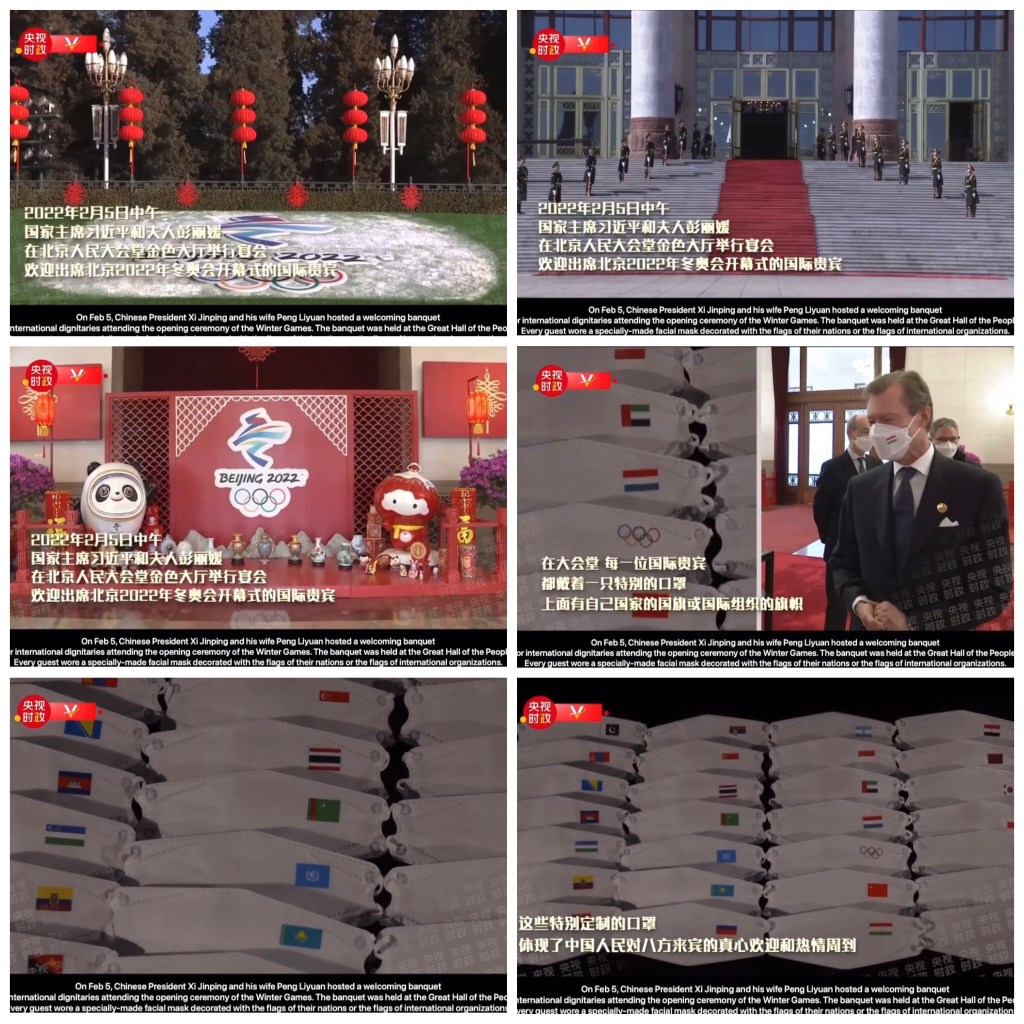
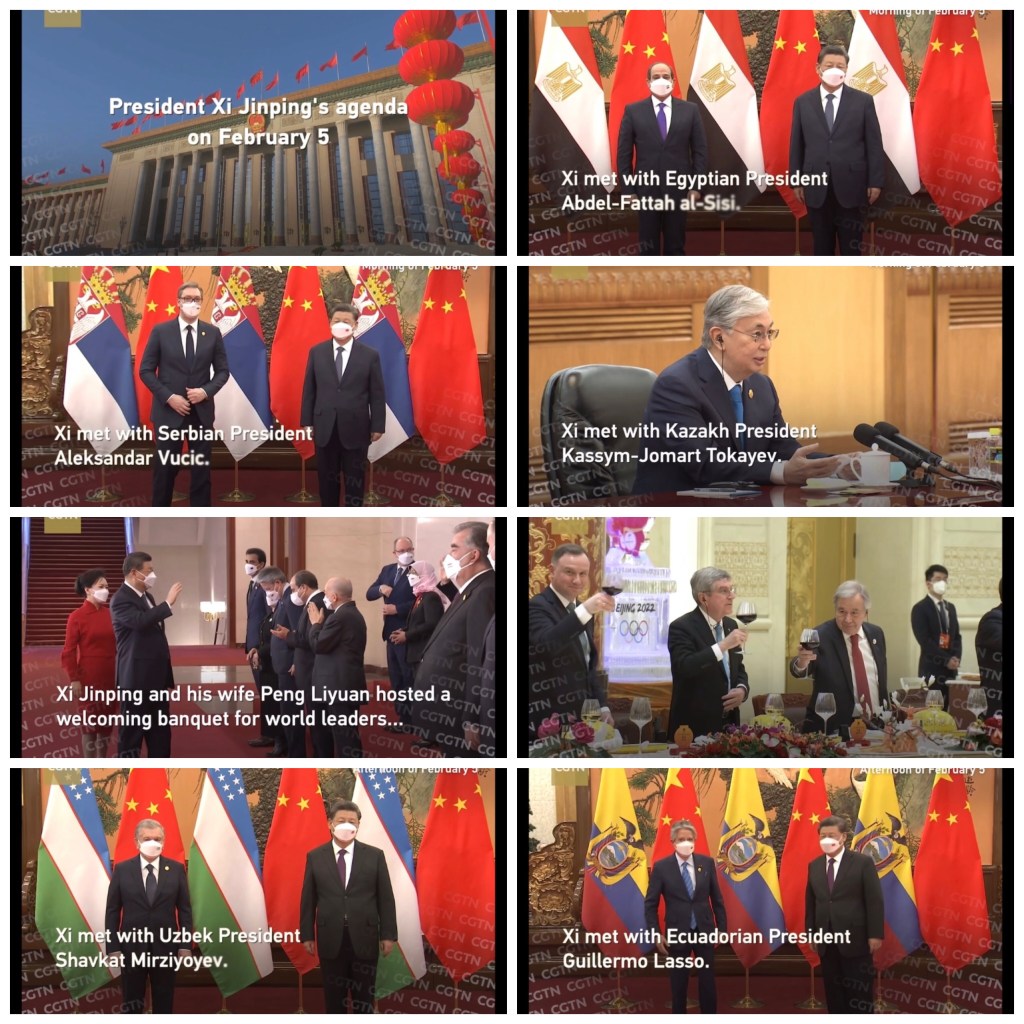
Every guest wore a specially-made facial mask decorated with the flags of their nations or the flags of Int’l organizations

Video: On Feb 5, Chinese President Xi Jinping & his wife Peng Liyuan hosted a welcoming banquet at the Great Hall of the People for Int’l dignitaries attending the opening ceremony of the Winter Games. Every guest wore a specially-made facial mask decorated with the flags of their nations or the flags of Int’l organizations.
https://vimeo.com/674283432
https://www.facebook.com/100036400039778/posts/652373285986000/?d=n

Western MSM demonize China have no limit

Western MSM demonize China have no limit – Swedish olympians complain – horror of horrors…that winter olympics are too cold 西方主流媒體妖魔化中國無止境——瑞典奧運選手抱怨……恐怖的恐怖……冬奧會太冷了

Turns out the late times were for the benefit of the European TV audience.

Infected athletes complain that they are isolated. Okay, I guess they should be allowed to infect others at all.

China had Uighur athletes compete and one represented China at the lighting ceremony–as a dastardly double-think genocide cover up. Of course if they hadn’t competed it would be because they were all genocided.

Another complaint: China’s athlete uniforms are different colors for the genders

Of course, so are the US’s, but China bad.

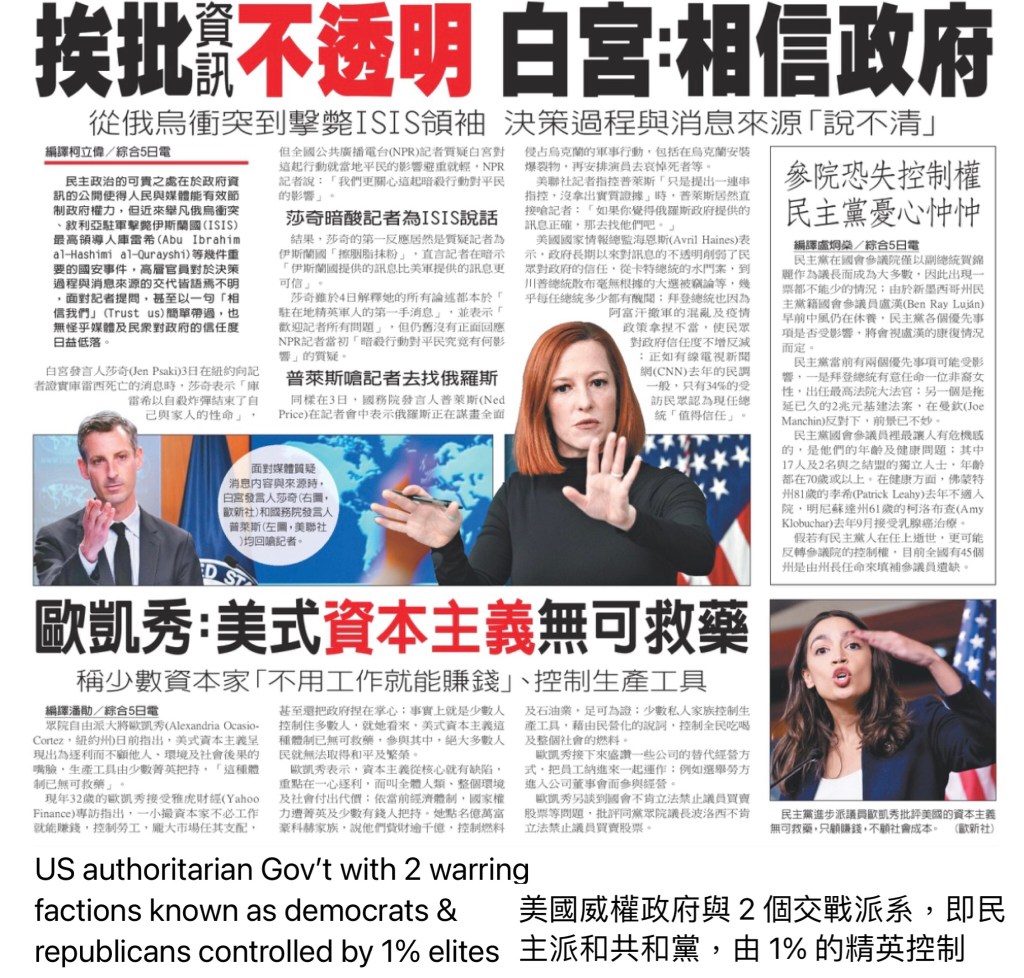
NYT blames “lack of trust in government” for poor response–without mentioning what it did to undermine that trust.https://archive.ph/HxYgm

No mention of the anti-China propaganda that undermined itself and created or heightened the distrust.http://en.people.cn/n3/2022/0120/c90000-9947610.htmlIdeological lies about China debilitated the US’s capacity to respond: first by lulling itself to sleep to the dangers of the disease–which it framed uniquely as a manifestation of the Chinese system–“a Communist Coronavirus”; second by rendering controversial or impossible essential public health measures, such as quarantines, lockdowns, and contract tracing, which had already been undermined as authoritarian Chinese practices; and third by choosing responses on political grounds with a view to maximize damage to China rather than prevent harm to the US population.
MYT article is based on a journal article–the capacity of the US was that of a Potemkin state. https://www.ghsindex.org/news/how-the-united-states-squandered-its-capacities-to-respond-to-the-pandemic/
With more reported cases and more deaths than any other country, the United States’ poor response to the COVID-19 pandemic shocked the world. As documented by the 2019 GHS Index, the United States had more global health security capacities in place to prevent and respond to epidemics and pandemics than any other country. How could a country with so much capacity at the start of the pandemic have gotten its response so wrong?

Even with a number-one ranking in the GHS Index, the United States joined the rest of the world in being unprepared for a pandemic, according to both the 2019 and the current GHS Indexes. The 2021 GHS Index identified that the United States had important capacity gaps at the start of the pandemic. The most significant: it had the lowest possible score on public confidence in the government—a factor that has been identified as key among countries with high numbers of COVID-19 cases and deaths. Such lack of confidence can undermine public adherence to disease-control measures, such as wearing masks or complying with stay-at-home recommendations or vaccination protocols, which have been reported among the ongoing challenges to the U.S. COVID-19 response. Over nearly two years, U.S. politicians have questioned the motives and messages of health officials and debated the seriousness of the virus and the effectiveness and safety of vaccines. The result: in many areas of the country, people have been unwilling to comply with public health recommendations that would slow the spread of the virus.

Other gaps identified by the 2019 GHS Index that continue in the current data: weaknesses in the U.S. health system, limited access to care without cost barriers, and lower numbers of healthcare personnel and hospital beds per capita than many other high-income countries. The GHS Index documented that failure to guarantee Americans’ access to medical care would compromise its ability to rapidly treat and stop the spread from infected patients.

The GHS Index measures capacities that exist at the national level. In countries with a federal system of government, such as the United States, local governments may take the lead in responding to public health emergencies. Deficiencies in capacities and capabilities at the local level may undermine national readiness for events. Indeed, in the United States, local health officials had been warning before the pandemic that declining budgets to support preparedness had been eroding local public health capacities. (a) This is the context in which the United States found itself at the start of the COVID-19 pandemic, but rather than trying to address those shortcomings at the start of the pandemic, the U.S. response was delayed and inadequate.

Despite those gaps, U.S. leaders initially expressed overconfidence in the country’s abilities to respond to the pandemic and chose not to address its shortcomings. They also failed to examine whether documented capacities would be likely to function as intended. This failure turned out to have devastating consequences when assets that existed on paper were found to be lacking in reality. For example, although the United States had a national stockpile of personal protective equipment, it had not been sufficiently replenished after the 2009 H1N1 pandemic. When signs of a new outbreak surfaced in 2020, officials who knew that the stockpile was lacking were ignored when they called for funds to replenish and augment the supplies. (b) In addition, although the United States has world-class laboratories with the capability to develop their own tests for SARS-CoV-2, federal restrictions initially prevented the labs from doing so, severely constraining the number of tests the United States could conduct and likely allowing the virus to spread undetected until the restrictions eventually were modified on February 29, 2020. Even now, unaddressed shortages in testing supplies continue to limit the country’s ability to identify and control the spread of SARS-CoV-2.

NYT remarks: 

The United States had 545 coronavirus cases per 1,000 residents. Uruguay had 472. The United Kingdom 374. Canada 346. Germany 188, Switzerland 164. But it’s our peers in Asia that really put us to shame. Japan had 67 cases per 1000. Singapore 59. South Korea 28. Taiwan seven. These numbers are so low as to be baffling

Note the unmentionable: China also had 0.074 cases per 1000 (74/1000,000)
(Also Taiwan’s case rates are considered unreliable)

The NYT fashion writer is getting crucified on twitter. Will there be a retraction? I think not.
Anything hating on China is okay.
https://mobile.twitter.com/VVFriedman/status/1489684149963304969

While NBC might have been crudely China bashing, CBS simply reported the facts, even showing China’s high speed trains and other high technology. Let’s support CBS.

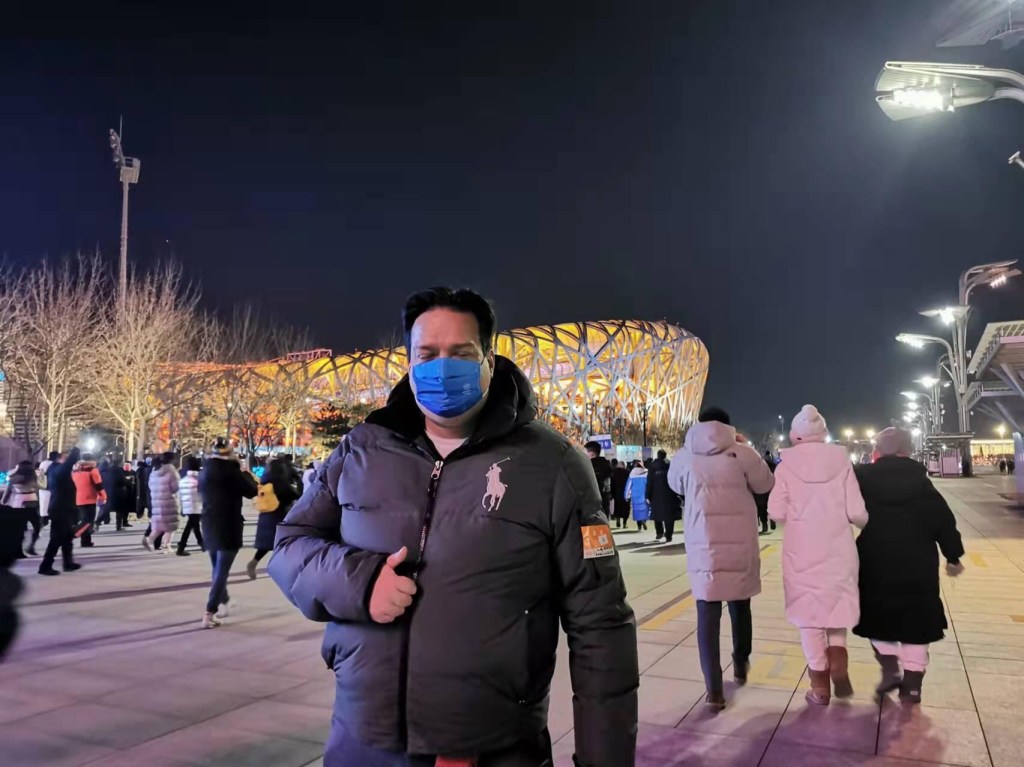
Yes I am US citizen who attended Opening Ceremony of Beijing 2022 Winter Olympics

Yes I am US citizen who attended Opening Ceremony of Beijing 2022 Winter Olympics. US athletes had no US diplomats to cheer for them. But I did stand and cheer for them when they were introduced. I saw only 5 other Americans who did same as me. We took a courageous stand. Few people cheered for US athletes but we did. US diplomats lacked the courage to appear and that was embarrassing to our US athletes …

Video: Uyghur Athletes, “Dystopian” Reuters Reporters & MORE! Beijing 2022 Quick Fix

Video: Uyghur Athletes, “Dystopian” Reuters Reporters & MORE! Beijing 2022 Quick Fix 維吾爾運動員,“反烏托邦” 路透社記者! 北京 2022 快速修復

https://vimeo.com/674051204
https://www.facebook.com/100036400039778/posts/651806099376052/?d=n

An American Reuters journalist inside the Beijing Games bubble was forced to lock her Twitter down after calling China’s COVID measures “draconian,” Western media has a meltdown over Team China including Uygur athletes, Tucker Carlson goes nuts after a Chinese-American decides to compete on Team China, and Nancy Pelosi ramps up her scaremongering tactics. This is our first Beijing 2022 Quick Fix, Let’s get reporting!

First up, American Reuters journalist Mari Saito was forced to lock down comments on her Twitter account after she called Chinese staff wearing protective gear inside her Olympics hotel “draconian”. “I wrote about the EXTREMELY dystopian vibes inside the bubble at the Beijing Olympics,” her Twitter thread began. “Exhibit A: Hotel bartenders making specialty cocktails in their full PPE gear.” She had a particular fascination with her hotel’s chocolate fountain. “Whenever I walk up to it to take a look a kind sever in a face shield comes up to me and tries to get me to try one. It’s all terribly weird.”

As you can imagine, Mari’s thread was completely swamped with replies criticizing her for her take.

“Incredible,” one netizen wrote. “China wants to take our right to be infected with COVID-19.”

Another asked: “The whole dystopian vibes of… not letting 3,000 people a day die?”

“New definition for dystopia: elevating the value of human lives above profit incentives.”

Dammit wrote: “People will see this and then two hours later argue that China’s COVID numbers have to be fake. This is what an actual response to a pandemic looks like and it’s why when China has an outbreak it’s news rather than the norm.”

Her video has already attracted more than one million views, but it seems everyone was coming to roast the Reuters journalist, which is why she locked down comments on her page soon after.

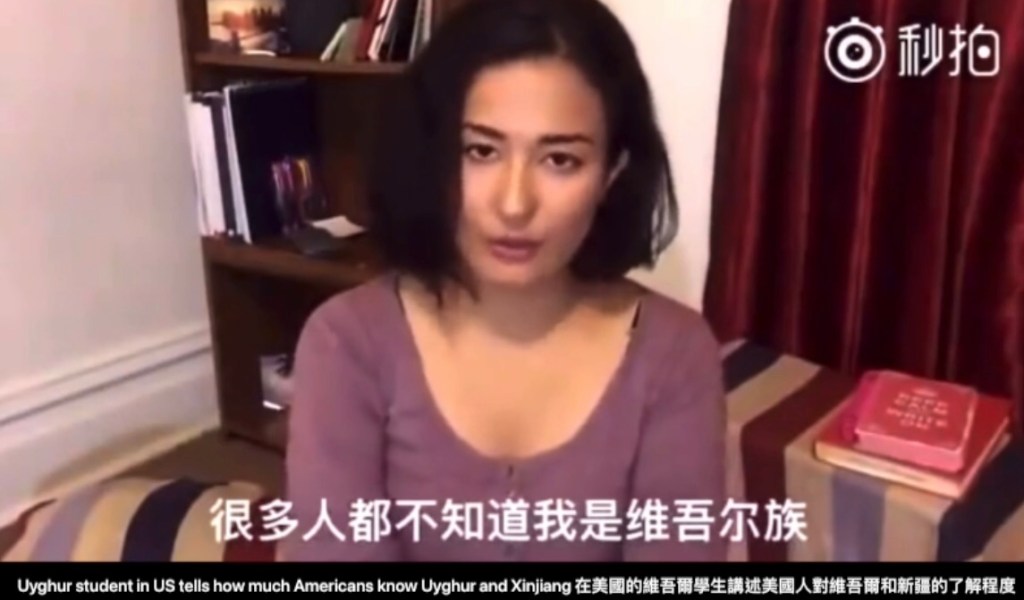
Last night’s Beijing 2022 opening ceremony went without a hitch, but Western media were extremely upset with the fact that Team China includes Uygur athletes, one of whom was successful 20-year old cross country skier Dinigeer Yilamujiang, who was one of two athletes to finally light the Olympic torch.

Britain’s Daily Mail said: China chooses a Uyghur athlete to light flame at Winter Olympics opening ceremony in propaganda attempt to deflect accusations of genocide.

Other media doubted that she was really Uygur at all, probably because many of them really believe that they are all locked up in concentration camps. The New York Times ran with the headline, “In a provocative choice, China picks an athlete with a Uygur name to help light the cauldron,” suggesting Dinigeer may not be Uygur at all. They quickly changed their headline to mention “Uygur heritage” once they realized how ludicrous their headline was.

Today host Savannah Guthrie reportedly called the decision to include a Uyhur athlete in the opening ceremony an “in your face slap” to the Americans and their allies. Wow, they really don’t like to see Uygurs succeed, do they!

USA Today interviewed a supposed Uygur human rights activist, Rayhan Asat, whose comments were unsurprising. “The selection of an Uyghur torchbearer is a deliberate attempt to whitewash genocide, adding insult to injury for millions,” she said, before suggesting suggesting, through a disgusting holocaust comment, that taking part in the games last night may have kept Dinigeer’s family out of those fictional concentration camps.

Speaking of her family, here is her mother being interviewed about how she felt watching her daughter on TV last night from Xinjiang.

Fox News’ Tucker Carlson is extremely upset at 18-year-old Chinese American Olympic skier, Eileen Gu, for deciding to compete for Team China at this year’s games.

Some Americans are so worked up about Eileen’s decision that they are suggesting she shouldn’t be welcome back home in the USA. One Twitter user, Eileen Guo – her surname is spelt G-U-O and not G-U – had to change her twitter handle after receiving hate mail from netizens calling her a traitor.

And finally today, Speaker of the House, Democrat Nancy Pelosi, is ramping up her scaremongering tactics by suggesting she’s worried about the safety of US athletes in Beijing for the games.

Of course, Nancy knows she is just playing politics here – if she really did fear for the safety of US athletes she would never have allowed them to attend in the first place.

Of course, Twitter users had a lot to say.

One netizen wrote: She’s such an insufferable witch.

Oh wait, that was me!