China-Russia Statement: A quest for diversity by Andrey Kortunov Feb 11 2022
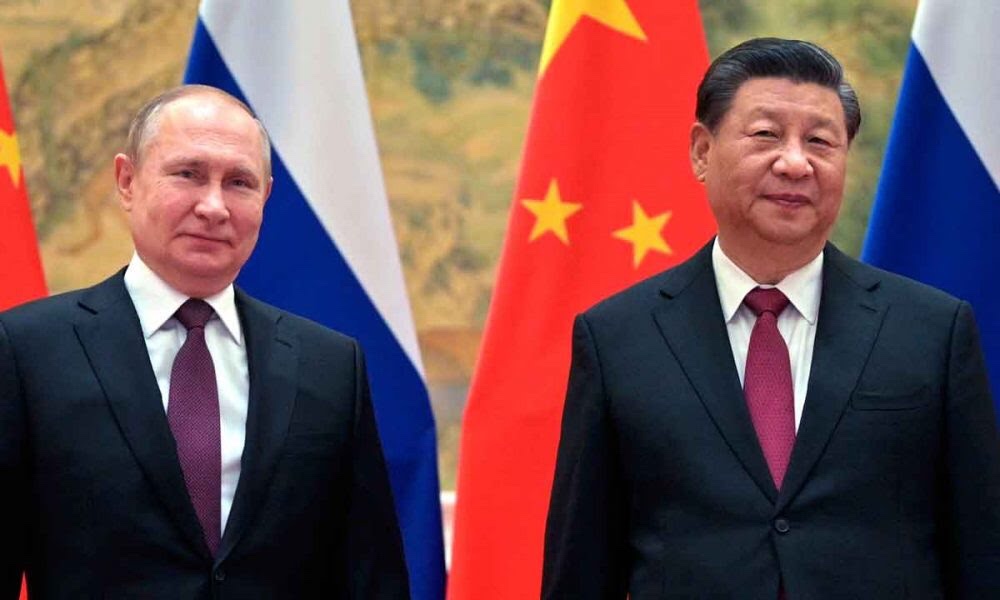
On February 4, on the sidelines of the opening ceremony of the Beijing 2022 Winter Olympic Games, Chinese President Xi Jinping and Russian President Vladimir Putin signed a Joint Statement on the International Relations Entering a New Era and the Global Sustainable Development. It is a rather lengthy document, outlining common approaches of China and Russia to some of the most fundamental issues of the modern world including regional and worldwide security, democracy and political inclusion, social justice and climate change , arms control and nuclear nonproliferation, national sovereignty and multilateralism.
It is not surprising that this statement has received a lot of criticism coming from Western media. Beijing and Moscow have repeatedly been accused of forging an “alliance of autocracies” threatening the West. US and European journalists, experts and politicians argue the Chinese and Russian leaders demonstrated that they do not really care about human rights or democratic institutions, do not tolerate any dissenting views or political opposition and aim to maintain their legitimacy primarily on the basis of economic security and nationalistic pride.
There is hardly anything new in these critical comments. However, the logic of Western opinion-makers deserves a closer look.
First, by labeling the two countries “global autocracies” such opinions already reveal a superficial approach of their authors. China and Russia are two very different nations; each of the two has its unique political traditions and culture, each has its own approach to managing dissent and opposition, dealing with internet and social media, integrating ethnic and religious minorities. China and Russia are like a whale and an elephant, to put them into one basket of “global autocracies” is a very questionable and misleading generalization, to say the least.
Second, there is nothing in the joint statement that would give reasons to believe that China and Russia are eager to launch an ideological war against liberal Western democracies or to question the right of the West to stick to political systems that have evolved in Western countries over the last two or three centuries. The statement underscores only the obvious: No country, and no political party or movement has the ultimate answers to all the difficult questions of social development. Therefore, there should be no hierarchy or subordination among states on the basis of how they organize their political and social lives. This, however, does not imply that there are no universal human rights, which all the states have to honor and protect. Such universal rights do exist, but they should be defined by the international community at large, not by a small group of countries proclaiming themselves as “model” democracies.
Third, China and Russia maintain that the main dividing line in modern politics is not the one between “democracies” and “autocracies,” as are often presented in the West, but rather between “order” and “disorder.” The key challenge of global politics today, as seen from Beijing and from Moscow, is about enhancing global governance within the increasingly heterogenic world. To meet this formidable challenge, the international community should regard and accept its growing diversity as an asset, not a liability. Politicians and state leaders should focus on inclusive, not exclusive, mechanisms regulating specific dimensions of global and regional economics and politics.
This is why both China and Russia expressed their firm opposition to blocks and situational coalitions based on ideological principles and aimed at marginalizing, if not containing, other international players. This opposition relates not only to such defense alliances like NATO or AUKUS, but also to more amorphous structures like Quad. Turning ideology into the main principle defining the emerging new world order would be a strategic mistake with long-term implications for all of us. If ideological divisions prevail, conquer the public and get reflected in national strategies and doctrines, these divisions will become a formidable obstacle on the way to uniting the humankind around common problems and common public goods. The weeds should be rooted out before they grow too high.
The author is a director general of the Russian International Affairs Council. opinion@globaltimes.com.cn
The Crisis in Ukraine Is Not About Ukraine. It’s About Germany 烏克蘭危機與烏克蘭無關。 這是關於德國 by Mike Whitney • February 11, 2022
“The primordial interest of the United States, over which for centuries we have fought wars– the First, the Second and Cold Wars– has been the relationship between Germany and Russia, because united there, they’re the only force that could threaten us. And to make sure that that doesn’t happen.” George Friedman, STRATFOR CEO at The Chicago Council on Foreign Affairs
The Ukrainian crisis has nothing to do with Ukraine. It’s about Germany and, in particular, a pipeline that connects Germany to Russia called Nord Stream 2. Washington sees the pipeline as a threat to its primacy in Europe and has tried to sabotage the project at every turn. Even so, Nord Stream has pushed ahead and is now fully-operational and ready-to-go. Once German regulators provide the final certification, the gas deliveries will begin. German homeowners and businesses will have a reliable source of clean and inexpensive energy while Russia will see a significant boost to their gas revenues. It’s a win-win situation for both parties.
The US Foreign Policy establishment is not happy about these developments. They don’t want Germany to become more dependent on Russian gas because commerce builds trust and trust leads to the expansion of trade. As relations grow warmer, more trade barriers are lifted, regulations are eased, travel and tourism increase, and a new security architecture evolves. In a world where Germany and Russia are friends and trading partners, there is no need for US military bases, no need for expensive US-made weapons and missile systems, and no need for NATO. There’s also no need to transact energy deals in US Dollars or to stockpile US Treasuries to balance accounts. Transactions between business partners can be conducted in their own currencies which is bound to precipitate a sharp decline in the value of the dollar and a dramatic shift in economic power. This is why the Biden administration opposes Nord Stream. It’s not just a pipeline, it’s a window into the future; a future in which Europe and Asia are drawn closer together into a massive free trade zone that increases their mutual power and prosperity while leaving the US on the outside looking in. Warmer relations between Germany and Russia signal an end to the “unipolar” world order the US has overseen for the last 75 years. A German-Russo alliance threatens to hasten the decline of the Superpower that is presently inching closer to the abyss. This is why Washington is determined to do everything it can to sabotage Nord Stream and keep Germany within its orbit. It’s a matter of survival.
That’s where Ukraine comes into the picture. Ukraine is Washington’s ‘weapon of choice’ for torpedoing Nord Stream and putting a wedge between Germany and Russia. The strategy is taken from page one of the US Foreign Policy Handbook under the rubric: Divide and Rule. Washington needs to create the perception that Russia poses a security threat to Europe. That’s the goal. They need to show that Putin is a bloodthirsty aggressor with a hair-trigger temper who cannot be trusted. To that end, the media has been given the assignment of reiterating over and over again, “Russia is planning to invade Ukraine.” What’s left unsaid is that Russia has not invaded any country since the dissolution of the Soviet Union, and that the US has invaded or toppled regimes in more than 50 countries in the same period of time, and that the US maintains over 800 military bases in countries around the world. None of this is reported by the media, instead the focus is on “evil Putin” who has amassed an estimated 100,000 troops along the Ukrainian border threatening to plunge all of Europe into another bloody war.
All of the hysterical war propaganda is created with the intention of manufacturing a crisis that can be used to isolate, demonize and, ultimately, splinter Russia into smaller units. The real target, however, is not Russia, but Germany. Check out this excerpt from an article by Michael Hudson at The Unz Review:
“The only way left for U.S. diplomats to block European purchases is to goad Russia into a military response and then claim that avenging this response outweighs any purely national economic interest. As hawkish Under-Secretary of State for Political Affairs, Victoria Nuland, explained in a State Department press briefing on January 27: “If Russia invades Ukraine one way or another Nord Stream 2 will not move forward.” (“America’s Real Adversaries Are Its European and Other Allies”, The Unz Review)
There it is in black and white. The Biden team wants to “goad Russia into a military response” in order to sabotage NordStream. That implies there will be some kind of provocation designed to induce Putin to send his troops across the border to defend the ethnic Russians in the eastern part of the country. If Putin takes the bait, the response would be swift and harsh. The media will excoriate the action as a threat to all of Europe while leaders around the world will denounce Putin as the “new Hitler”. This is Washington’s strategy in a nutshell, and the whole production is being orchestrated with one goal in mind; to make it politically impossible for the German Chancellor Olaf Scholz to wave NordStream through the final approval process.
Given what we know about Washington’s opposition to Nord Stream, readers may wonder why earlier in the year the Biden administration lobbied Congress NOT to impose more sanctions on the project. The answer to that question is simple: Domestic politics. Germany is currently decommissioning its nuclear power plants and needs natural gas to make up for the energy shortfall. Also, the threat of economic sanctions is a “turn-off” for Germans who see them as a sign of foreign meddling. “Why is the United States interfering in our energy decisions,” asks the average German. “Washington should mind its own business and stay out of ours.” This is precisely the response one would expect from any reasonable person.
Then, there’s this from Al Jazeera:
“Germans in the majority support the project, it is only parts of the elite and media who are against the pipeline…
“The more the US talks about sanctioning or criticizes the project, the more it becomes popular in German society,” said Stefan Meister, a Russia and eastern Europe expert at the German Council on Foreign Relations.” (“Nord Stream 2: Why Russia’s pipeline to Europe divides the West”, AlJazeera)
So, public opinion is solidly behind Nord Stream which helps to explain why Washington settled on a new approach. Sanctions are not going to work, so Uncle Sam has flipped to Plan B: Create a big enough external threat that Germany will be forced to block the opening of the pipeline. Frankly, the strategy smacks of desperation, but you have to be impressed by Washington’s perseverance. They might be down by 5 runs in the bottom of the 9th, but they haven’t thrown in the towel just yet. They’re going to give it one last shot and see if they can make some headway.
On Monday, President Biden held his first joint-press conference with German Chancellor Olaf Scholz at the White House. The ballyhoo surrounding the event was simply unprecedented. Everything was orchestrated to manufacture a “crisis atmosphere” that Biden used to pressure the chancellor in the direction of US policy. Earlier in the week, White House spokeswoman Jen Psaki repeatedly said that a “Russian invasion was imminent.” Her comments were followed by State Department flak Nick Price opining that the Intel agencies had provided him with details of an alleged Russian-backed “false flag” operation they expected to take place in the near future in east Ukraine. Price’s warning was followed on Sunday morning by national security advisor Jake Sullivan claiming that a Russian invasion could happen at any time maybe “even tomorrow.” This was just days after Bloomberg News agency had published its sensational and utterly-false headline that “Russia Invades Ukraine”.
Can you see the pattern here? Can you see how these baseless claims were all used to apply pressure to the unsuspecting German chancellor who seemed oblivious to the campaign that was aimed at him?
As one might expect, the final blow was delivered by the American president himself. During the press conference Biden stated emphatically that,
“If Russia invades … there will no longer [be] a Nord Stream 2.. We will bring an end to it.”
So, now Washington sets policy for Germany???
What insufferable arrogance!
The German chancellor was taken aback by Biden’s comments which clearly were not part of the original script. Even so, Scholz never agreed to cancel Nord Stream and refused to even mention the pipeline by name. If Biden thought he could sandbag the leader of the world’s third biggest economy by cornering him in a public forum, he guessed wrong. Germany remains committed to launching Nord Stream regardless of potential flare-ups in far-flung Ukraine. But that could change at any time. After all, who knows what incitements Washington might be planning in the near future? Who knows how many lives they are prepared to sacrifice in order to put a wedge between Germany and Russia? Who knows what risks Biden is willing to take to slow America’s decline and prevent a new “polycentric” world order from emerging? Anything could happen in the weeks ahead. Anything.
For now, Germany is in the catbird seat. It’s up to Scholz to decide how the matter will be settled. Will he implement the policy that best serves the interests of the German people or will he cave in to Biden’s relentless arm twisting? Will he chart a new course that strengthens new alliances in the bustling Eurasian corridor or will he throw his support behind Washington’s crazed geopolitical ambitions? Will he accept Germany’s pivotal role in a new world order— in which many emerging centers of power share equally in global governance and where the leadership remains unflinchingly committed to multilateralism, peaceful development and security for all– or will he try to prop up the tattered post-War system that has clearly outlived its shelf-life?
One thing is certain; whatever Germany decides is bound to affect us all.
Video: What does the other mixed-blood in UK think about Gu Ailing’s nationality? 另一个在英國的混血兒对谷爱凌的国籍怎么想 I’m half English/half Chinese, grew up in London, and was working as a fashion model in Beijing until my dad got sick last year 我妈妈是英国人, 我爸爸是中国人. 我在伦敦长大, 从2017我一直在北京当模特, 直到我父亲生病 https://vimeo.com/676779720 https://www.facebook.com/100036400039778/posts/656005398956122/?d=n
US White Racists have been telling Chinese to go back to China since passing the Chinese Exclusion Act of 1882. Why so upset when a smart Chinese took the advice. 自1882年通過排華法案以來, 美國白人種族主義者一直在告訴中國人滾回中國. 當一個聰明的中國人接受了這個建議時, 為什麼會如此沮喪.
Today’s San Francisco Chronicle wrote a positive story about Eileen Gu! Perhaps we should write in to thank reporter Ann Killion. 2-12-22.
Not bad for the MSM/Chron, but of course, there is the obligatory slur–staying on the right side of the CPC devils is even harder than getting Olympic Gold:Gu is straddling a slippery geopolitical slope at high altitude with little room for error. She is golden now in China, but if the San Francisco-born woman runs afoul of Chinese authorities, her world could quickly change. Look no further than the case of tennis star Peng Shuai, who made accusations against a high-ranking party official, then disappeared for a few weeks and is now seen at the Olympics in tightly controlled conditions.
Absurd. It’s the 死鬼佬 that are hounding her every step, waiting to pounce on her.
‘I loved her motivation’: What Eileen Gu told her S.F. circle about picking China Eileen Gu of China performs a trick ahead of the Women’s Freestyle Skiing Freeski Big Air Final on Day 4 of the Beijing 2022 Winter Olympic Games at Big Air Shougang on Febr. 8 in Beijing.
Feb. 12, 2022
Before she became a global sensation and geopolitical lightning rod, Eileen Gu was a girl who liked to run through the streets of San Francisco.
“She was an amazing cross-country runner,” said Carin Marrs, who coached Gu in cross-country and track at University High School. “It was an outlet for her.”
Gu, 18, might need a nice long run right about now. She has become the face of the Beijing Olympics — these are being called the Gu Games — which has put her in the crosshairs of controversy. The freestyle skier is favored for a gold sweep of her three events, the second of which is this weekend, with slopestyle qualifying at 6 p.m. PST on Saturday and the final on Sunday.
Known as “the Snow Princess,” Gu is wildly famous and popular in China, her face plastered everywhere, thanks to her extensive portfolio of lucrative endorsements. She is extolled for her beauty — she has a side career as a model — and her brains. She became the first University High student to graduate in three years and will enter Stanford this fall, after deferring for a year.
BEIJING, CHINA – FEBRUARY 08: Gold medallist Ailing Eileen Gu of Team China poses with their medal during the Women’s Freestyle Skiing Freeski Big Air medal ceremony on Day 4 of the Beijing 2022 Winter Olympic Games at Beijing Medal Plaza on February 08, 2022 in Beijing, China.
PARIS, FRANCE – JUNE 23: Eileen Gu, wearing a white jumpsuit, silver mini bag and silver heels, is seen outside Kenzo fashion show on Day 6 during the Paris Fashion Week Spring/Summer 202> on June 23, 2019 in Paris, France.
Left: Gold medallist Ailing Eileen Gu of Team China poses with their medal during the Women’s Freestyle Skiing Freeski Big Air medal ceremony on Day 4 of the Beijing 2022 Winter Olympic Games at Beijing Medal Plaza on February 08, 2022 in Beijing, China.
Right: Eileen Gu, wearing a white jumpsuit, silver mini bag and silver heels, is seen outside Kenzo fashion show on Day 6 during Paris Fashion Week on June 23, 2019, in Paris.
But back in the United States, the San Francisco native has come under fire for choosing to compete for China, her mother’s country, and refusing to answer questions about her citizenship status. In more hyperbolic corners of the media-sphere she is called a traitor and a tool for communist China.
After she won her first gold medal in the big air event, Sports Illustrated wrote, “Gu got her gold medal and China got its pawn.”
For those who knew her in high school, the explosion of Gu’s fame and the ensuing controversy have been startling to observe.
“It’s insane,” said Ella Shenkar, who became good friends with Gu while they were teammates at University and who is now a junior at Swarthmore. “I hear people talking about her and I want to say, ‘Hey, I know that person.’
“And the political stuff is crazy.”
Before Gu started at University in the fall of 2017, Marrs got an email from the freshman’s mother, Yan Gu, explaining that her daughter might have some conflicts. So Marrs did a little research.
“Oh, she’s not just kind of good, she’s a potential Olympian,” Marrs learned of Gu, who learned to ski on Tahoe slopes at 3 years old and joined Northstar’s freeskiing team at 8.
But Marrs appreciated how committed and present Gu was with the team, even though her skiing schedule kept her away at times.
Eileen Gu of San Francisco University High school during a track event at San Francisco City College in April 2018.
Gold medalist Eileen Gu, of China, reacts after her final run during the women’s freestyle skiing big air finals of the 2022 Winter Olympics, Tuesday, Feb. 8, 2022, in Beijing.
Eileen Gu of San Francisco University High school during a track event at San Francisco City College in April 2018.
Gold medalist Eileen Gu of China reacts after her final run during the women’s freestyle skiing big air finals of the 2022 Winter Olympics on Feb. 8 in Beijing.
“She made every effort to come to practices,” Marrs said. “She rearranged competitions to be with us.”
And, sometimes, when she couldn’t make practices, she and Marrs would go on runs together, near Gu’s Sea Cliff neighborhood.
Shenkar was two years older than Gu, but the two became friends through running and studying together.
“She was very energetic, very funny, super easy to talk to,” Shenkar said. “She didn’t care about the usual high school social stuff. She was very down to earth.”
Gu helped University to a second-place finish at the California state cross-country meet in Fresno her freshman year. The next year, in Shenkar’s senior year, Gu was torn. The state meet would fall one day after a major skiing event in Austria. Forced to pick, she chose to make her debut on the FIS World Cup, launching her competitive career at the sport’s elite level.
“She was really worried about disappointing her teammates,” Shenkar said. “She was a very good friend.”
The next year, her last running for University, Gu expressed her intent to Marrs to make the state meet instead of the World Cup. But a concussion kept her from competing in either.
Eileen Gu of China competes during women’s freeski big air final at Big Air Shougang in Beijing on Feb. 8. Eileen Gu of China competes during women’s freeski big air final at Big Air Shougang in Beijing on Feb. 8.
“She was willing to rearrange this thing that was her ticket to success to do this sport with her high school,” Marrs said.
Like their coach, Shenkar also would run with Gu away from the team. Long runs led to long conversations, and both Marrs and Shenkar learned a lot about Gu’s skiing and her dreams as they logged miles.
And neither is surprised she chose to compete for China, a decision she made when she was 15. Gu has visited Beijing, her mother’s country, almost every summer of her life, speaks fluent Mandarin and has frequently said that when she’s in the U.S., she’s American, but when she’s in China — where she is known as Gu Ailing — she’s Chinese.
“We talked about it many times,” Marrs said. “I loved her motivation behind it. The way she expressed it to me was that there were plenty of female role models for young girls in snow sports here, but they didn’t have any in China. She had a strong desire to use her status as a role model for young girls.”
Gu expressed the same point to Shenkar.
“She always said the same thing, that she was looking to inspire Chinese girls,” Shenkar said. “I didn’t think there was any political intention.”
A view of an advertisement featuring Eileen Gu, also known by her Chinese name Gu Ailing, at a bus stop in Shanghai on Feb. 9.
NBC aired a video of Gu giving a speech as a seventh-grader at the all-girls Katherine Delmar Burke School in San Francisco’s Sea Cliff, wearing her uniform and extolling the importance of sports and Title IX. She has stayed on message for years.
But her motivations are viewed with increasing skepticism as tensions between her two countries have grown and as her fame and wealth has expanded.
Her camp tries to control her message — Yan Gu would not speak to the New York Times unless she could review the article before publication, which was declined — and Gu avoids tough topics in interviews.
That includes answering questions about her citizenship. The IOC requires athletes to hold the passport of their home country, but China does not allow dual citizenship. Whether Gu has given up her American citizenship is unclear.
Gu is straddling a slippery geopolitical slope at high altitude with little room for error. She is golden now in China, but if the San Francisco-born woman runs afoul of Chinese authorities, her world could quickly change. Look no further than the case of tennis star Peng Shuai, who made accusations against a high-ranking party official, then disappeared for a few weeks and is now seen at the Olympics in tightly controlled conditions.
Gu is not the first American to compete for another country. It happens routinely, but usually with athletes who would struggle to make a U.S. team and find a path to the Olympics through their parents’ country. Not with an athlete considered the best in the world at what she does.
Gold medallist China’s Gu Ailing Eileen holds her medal on the podium during the freestyle skiing women’s freeski big air victory ceremony at the Beijing Medals Plaza in Beijing on February 8, 2022.
China’s Eileen Gu watches the women’s halfpipe finals at the 2022 Winter Olympics, Thursday, Feb. 10, 2022, in Zhangjiakou, China.
Left: Gold medalist Eileen Gu of China holds her medal on the podium during the freestyle skiing women’s freeski big air victory ceremony at the Beijing Medals Plaza in Beijing on Feb. 8.
Those who knew Gu before she became a global sensation think she is strong enough to handle her unusual, high-pressure situation.
Gu’s Olympic schedule Eileen Gu will have two more chances to add to her medal collection after winning gold in the big air competition last week. Here are her events, with all times Pacific:
“She has handled things with as much grace as you can possibly imagine,” Marrs said. “I don’t know many adults who would be able to juggle all that she does and have such a relaxed attitude. She was always a unique person, humble, focused and present with what she was doing. She’s able to absorb a lot of attention without becoming an obnoxious personality.
“I always knew,” Marrs said, “that she was going to do big things.”
Ann Killion is a San Francisco Chronicle columnist. Email: akillion@sfchronicle.com Twitter: @annkillion
Written By Ann Killion
Born in San Francisco and raised in Marin County, Ann Killion has covered Bay Area sports for more than a quarter of a century. An award-winning columnist and a veteran of 11 Olympics, several World Cups and the Tour de France, Ann joined The Chronicle in 2012. Ann has worked for the San Jose Mercury News, the Los Angeles Times and Sports Illustrated. She is a New York Times best-selling author, having co-written “Solo: A Memoir of Hope” with soccer star Hope Solo,”Throw Like A Girl” with softball player Jennie Finch and two middle-grade books on soccer, “Champions of Women’s Soccer” and “Champions of Men’s Soccer.” She was named California Sportswriter of the Year in 2014, 2017 and 2018. She has two children and lives in Mill Valley.
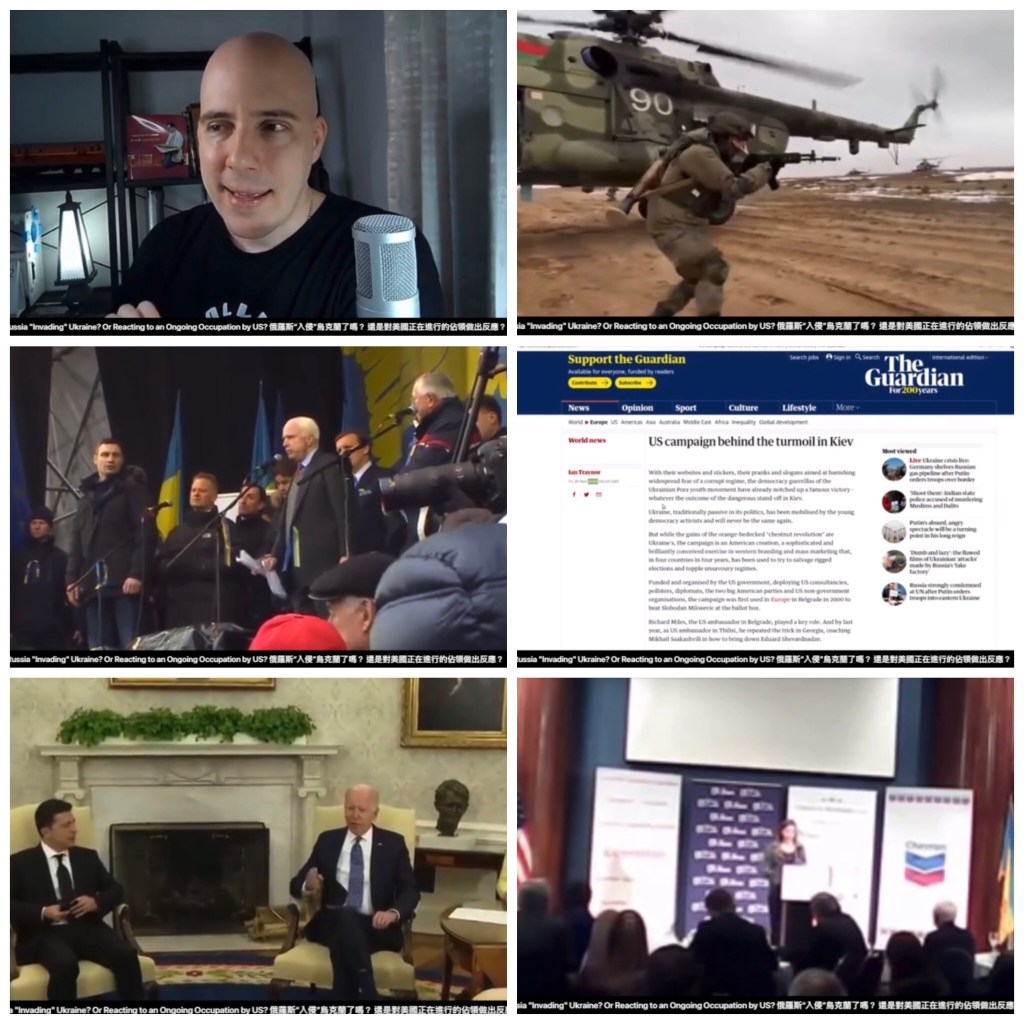
US Military Industrial Complex created current Ukraine crisis and continued hostility towards Russia & China. 美國軍工聯合體製造了當前的烏克蘭危機,並持續對俄羅斯和中國懷有敵意而從中發大財.
US 2014 regime change installed current US puppet Ukraine Gov’t. President Obama: US cannot allow Chinese to have a good life like us. 美國 2014 年政權更迭安裝了當前的美國傀儡烏克蘭政府。 奧巴馬總統:美國不能讓中國人像我們一樣過上好日子.
Jamie Melton: Meet Gu Ailing’s coach since age 10 傑米梅爾頓在谷爱凌10歲時就成為她的教練
Jaime Melton is one of Gu Ailing’s coaches, and also the head coach of the Chinese National Slopestyle and Big Air Training Team. Melton has lived in China for just over a year. He’s coached Chinese athletes in the U.S. Melton has coached Gu Ailing since she was just 10-years-old.
Didn’t US said Xinjiang Slave Labor Genocide? What is their Xinjiang Olympian doing here at the Beijing Winter Olympics? Don’t tell me she is there as a slave labor! 美國不是說新疆奴工種族滅絕嗎? 北京冬奧會新疆奧運選手來這裡做什麼? 別告訴我她在那里當奴隸!