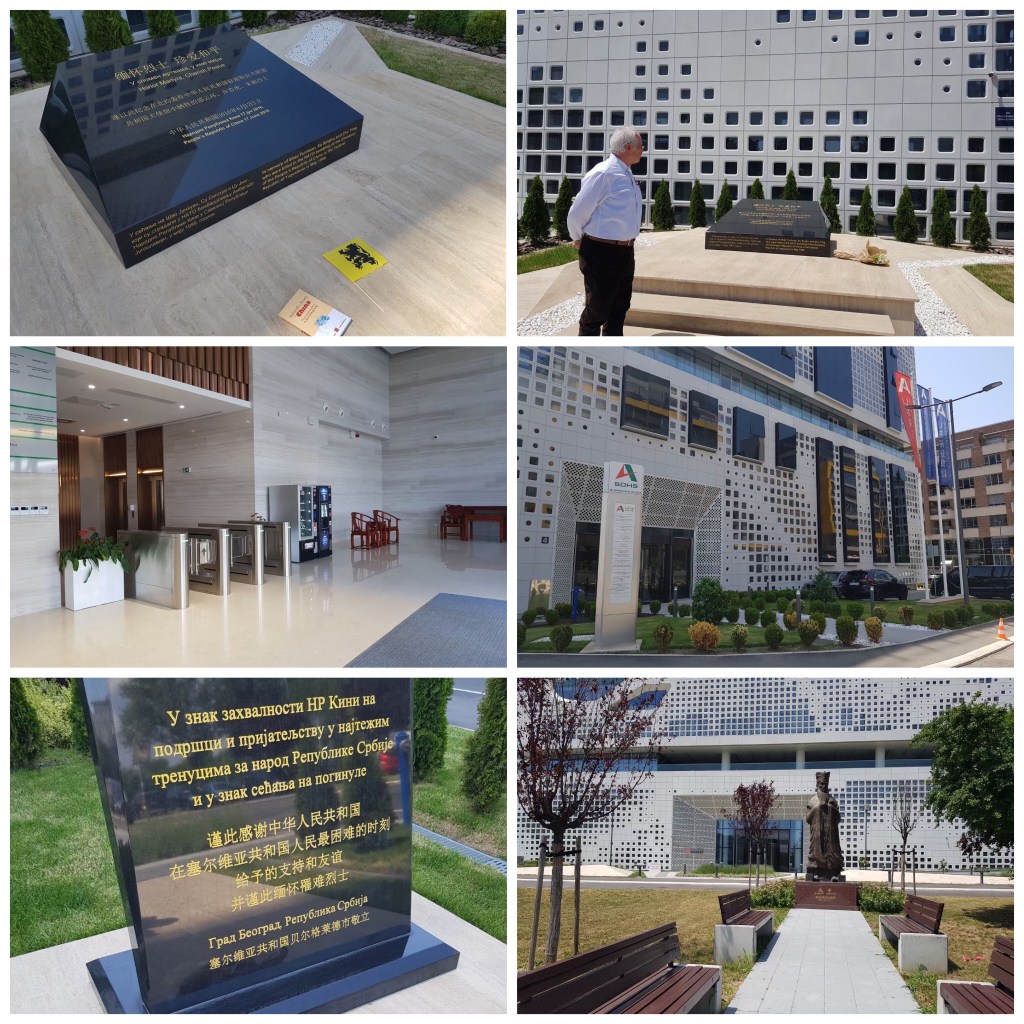
My friend Frans Vandenbosch visited the former Chinese embassy in Belgrado. The embassy was bombed by US fighter jets in May 1999. Three Chinese citizens died. China demolished the old embassy and built a brand new Confucius institute there. 我的朋友參觀了前中國駐貝爾格萊多大使館。 1999年5月使館遭到美國戰機轟炸,3名中國公民遇難。 中國拆除了舊使館,在那裡建立了全新的孔子學院。
In Northern California Costco Supreme Gas is around $6.50/gallon. US proxy war against Russia is hurting most Americans EXCEPT the 1% elites and the military industrial complex laughing to the bank everyday.
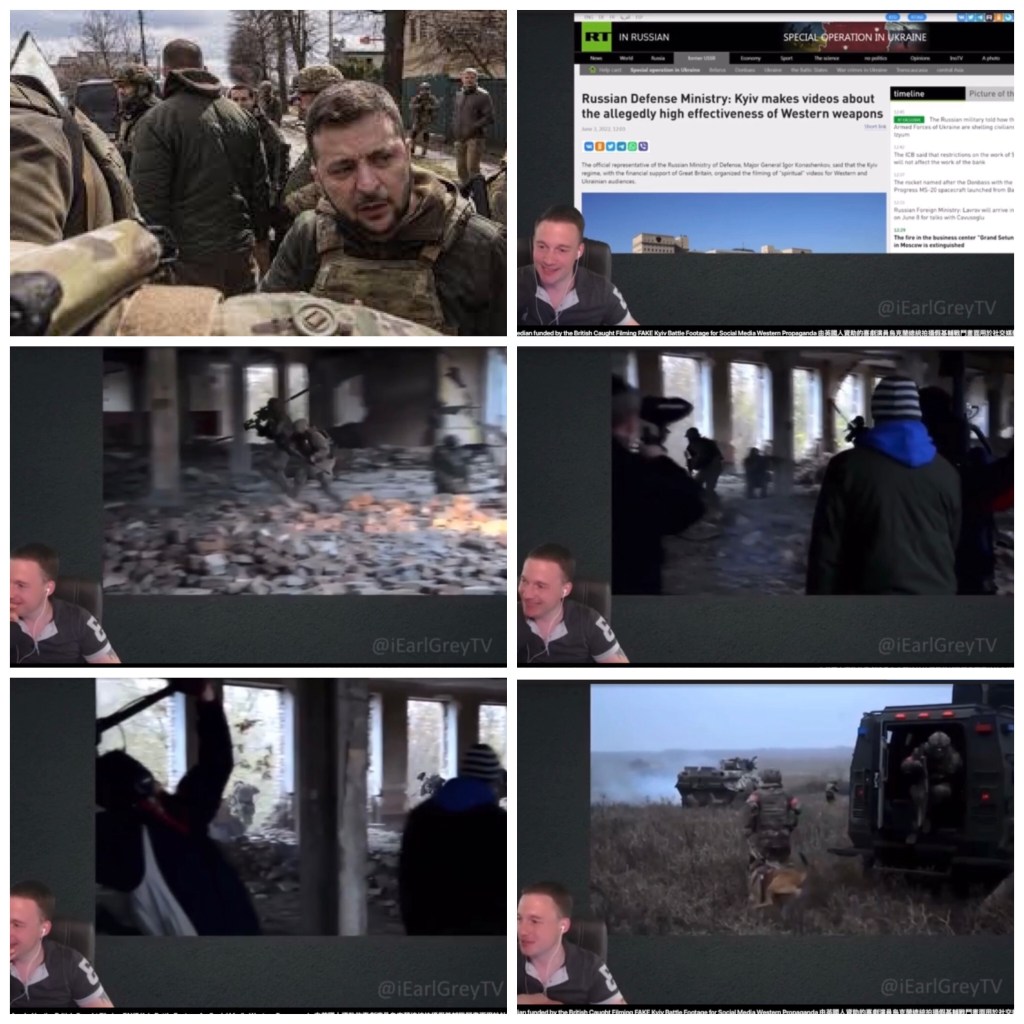
Russia-Ukraine war entered 100th day, the comedian wowed to defend Ukraine as long as US and EU keep the money coming to continue the proxy war against Russia for the Americans.
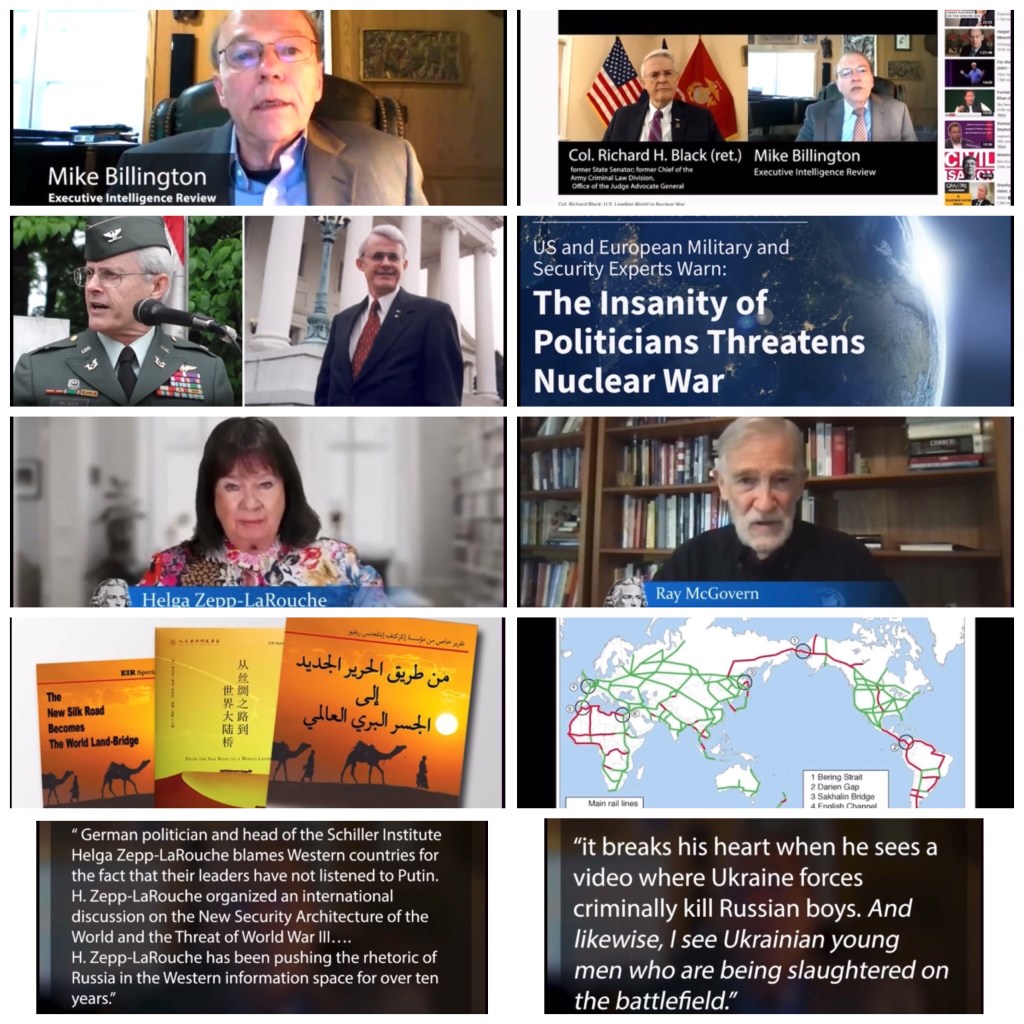
Video: NATO war machines Responds & attacked Senator Richard Black and Helga Zepp-LaRouche for telling the truth. 北約戰爭機器回應並攻擊美國參議員理查德·布萊克和赫爾加·澤普-拉魯什因為他們說出真相
Partial Transcript: There has been a similar response to the Schiller Institute Conference of May 26 which featured Col. Black, along with Schiller Institute founder Helga Zepp-LaRouche, former CIA official Ray McGovern who is the co-founder of the Veteran Intelligence Professionals for Sanity, as well as Italian and French military and intelligence officials, under the title “The Insanity of Politicians Threatens Nuclear War.” This conference, and Col. Black’s video, have inspired hundreds of thousands of people from all over the world to join with the Schiller Institute call to action, to stop the provocations to war with Russia, as well as with China, and to build a new security and development architecture for all nations.
But it has also provoked a direct attack from the war machine itself against Col. Black, Ray McGovern, the Schiller Institute, and its founder Helga Zepp-LaRouche. The Center for Countering Disinformation, which was set up in Ukraine by NATO to censure any truth about the war in Ukraine or about the extensive neo-Nazi forces in that country within the military and within the government, calling any such truthful reports as Russian disinformation. This is precisely what the Department of Homeland Defense in the U.S. set up in April, calling it the Disinformation Governance Board, which would better be called the Ministry of Truth, to censure any narrative which challenges the war hysteria as Russian disinformation. Due to the massive outcry of opposition from Americans who value the Constitution, this Board had to dismiss its original psychotic leader Nina Jankowicz, but it should be shut down altogether.
The NATO version of this “Ministry of Truth” in Ukraine issued a statement on May 28, reading: “German politician and head of the Schiller Institute Helga Zepp-LaRouche blames Western countries for the fact that their leaders have not listened to Putin. H. Zepp-LaRouche organized an international discussion on the New Security Architecture of the World and the Threat of World War III…. H. Zepp-LaRouche has been pushing the rhetoric of Russia in the Western information space for over ten years.”
Earlier, on May 25, this “Disinformation” Center denounced my interview with Col. Black, saying that Col. Black asserted that Russia “could not afford to lose the war with Ukraine,” since this would mean that “NATO will move to the Russian borders without hindrance.” They quote Col. Black saying that it “breaks his heart when he sees a video where Ukraine forces criminally kill Russian boys.” But they leave out the second part of that sentence, when Col. Black added that, “and likewise, I see Ukrainian young men who are being slaughtered on the battlefield.”
The Disinformation Center closed its statement as follows: “We warn you! Such statements of the `expert’ are an element of the information and psychological operation of the enemy, which is trying to convince the West of the futility of helping Ukraine.”
This attempt to discredit the Schiller Institute is actually a demonstration that the truth is breaking through the massive information war being run from the United Kingdom and the United States, and the attack itself is actually helping to spread the truth. It is clear that the western oligarchs, and the financial lords of the City of London and Wall Street whose financial bubble is collapsing into a hyper-inflationary blow-out, care absolutely nothing for Ukraine, which is being sacrificed in order to have an excuse for their desperate and evil effort to destroy Russia and China, to destroy the alternative to war and economic disintegration, i.e., “peace through development” as promoted by the Schiller Institute through the New Silk Road and the cooperation of all nations in physical economic development for all.
Zoom Meeting “If wars can be started by lies, peace can be started by truth.” “如果戰爭可以由謊言開始, 和平可以由真理開始.” Time: Jun 4, 2022 2:00pm Dublin, 6:00am SF, 9:00am NY
Zoom event tomorrow at 2pm Irish time countering the NATO/US narrative on Ukraine, plus the accompanying blanket censorship and McCarthyism. The line-up includes Noam Chomsky, John Pilger, George Galloway, MEPs Clare Daly and Mick Wallace plus two Irish journalists Harry Browne and Eoin Ó Murchú.