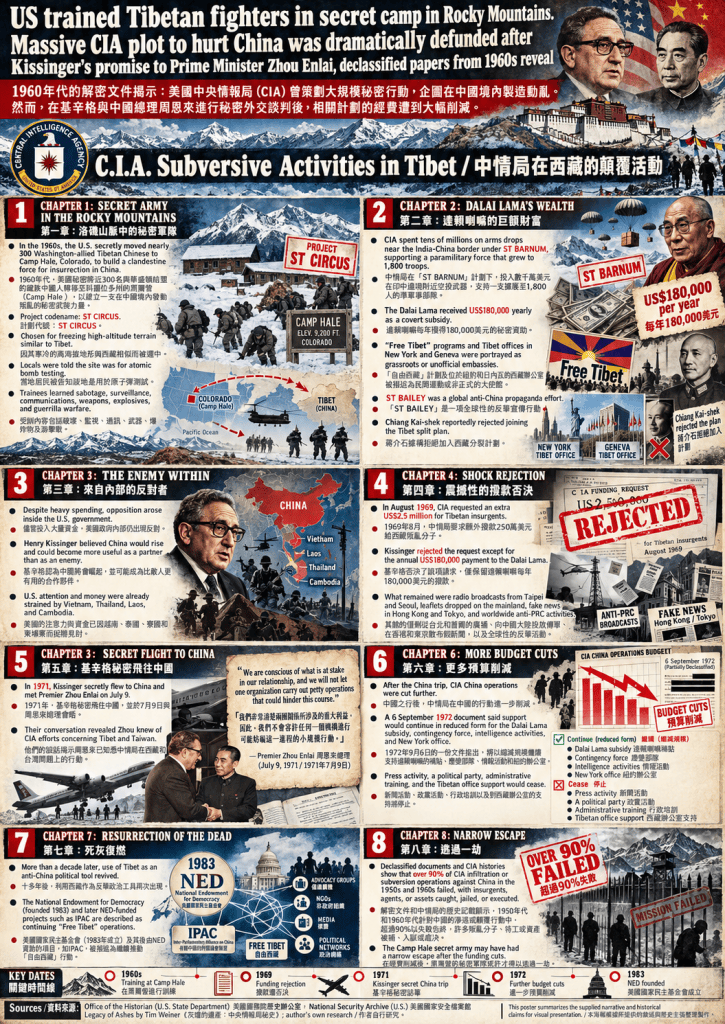
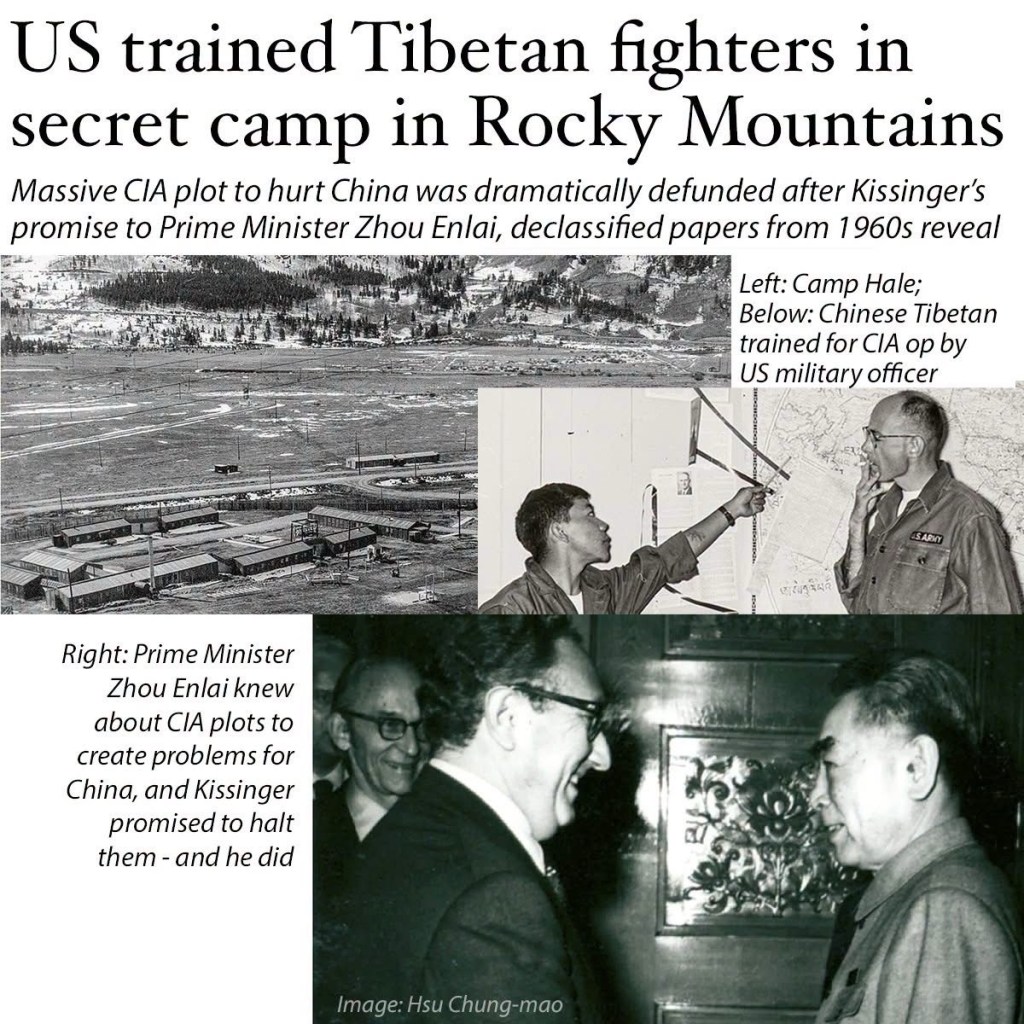
US trained Tibetan fighters in secret camp in Rocky Mountains. Massive CIA plot to hurt China was dramatically defunded after Kissinger’s promise to Prime Minister Zhou Enlai, declassified papers from 1960s reveal
1960年代的解密文件揭示:美國中央情報局(CIA)曾策劃大規模秘密行動,企圖在中國境內製造動亂。然而,在基辛格與中國總理周恩來進行秘密外交談判後,相關計劃的經費遭到大幅削減。
第一章:洛磯山脈中的秘密軍隊
1960年代,美國秘密將近300名親華盛頓的藏族中國人運送到科羅拉多州的洛磯山脈,企圖組建一支秘密武裝部隊,在中國境內發動叛亂。
這項最高機密計劃的代號為「ST CIRCUS」,訓練基地設於偏遠的「黑爾營」(Camp Hale)。該基地位於高海拔山區,而這片壯麗的洛磯山脈,後來因著名歌手約翰・丹佛(John Denver)的歌曲而聞名世界。
中央情報局選擇這個地點,是因為他們認為當地嚴寒、高海拔的自然環境,與中國西藏地區的地理條件相似。
為了阻止公眾接近,中央情報局甚至向附近居民宣稱,該地區已被選定用於「原子彈試驗」。
在黑爾營,美國軍事教官為這批人員提供一系列專業軍事訓練,包括:
破壞及顛覆活動
監視與情報蒐集
秘密通訊
武器操作
炸藥及爆破技術
其他游擊戰及秘密軍事行動技能
到了1960年代,中央情報局已逐漸完善一套秘密戰略:讓美國的競爭對手,例如中國和俄羅斯,與其境內居民或鄰近國家發生衝突,由其他人代替美國作戰,從而避免美國公民直接承擔風險。
原文認為,這種精心設計的代理人戰略至今仍被沿用,例如烏克蘭、台灣、南韓、日本等地的地緣政治局勢。
第二章:達賴喇嘛的巨額財富
代號「ST CIRCUS」的秘密軍隊計劃,實際上只是整個行動的一部分。
一、耗資數千萬美元,秘密空投武器支援西藏叛亂武裝
中央情報局花費數千萬美元,透過空投方式,將數以噸計的武器運送至印度與中國接壤的邊境地區,直接武裝親華盛頓的西藏叛亂分子及僱傭武裝人員。
這項秘密空運行動的代號為「ST BARNUM」。
最終,這支經過專業軍事訓練的準軍事部隊,發展至擁有1,800名全副武裝的人員。
二、中央情報局每年秘密支付達賴喇嘛18萬美元
多年以來,中央情報局每年直接向達賴喇嘛支付18萬美元。
作為比較,當時印度一般中產階級人士的平均年薪僅約360美元。
換句話說,達賴喇嘛團隊所獲得的秘密資金,相當於當時印度中產階級人士約500年的收入。
因此,原文認為,達賴喇嘛及其團隊在當時可謂擁有極為龐大的財富。
這筆秘密款項在美國國務院文件中,被列為「秘密補助金」(a covert subsidy)。
三、美國一方面承認西藏屬於中國,另一方面卻秘密推動「西藏獨立」宣傳
雖然美國政府在官方立場上承認西藏是中國的一個地區,但中央情報局卻企圖讓全世界,包括美國公民,相信另一套不同的政治敘事。
為此,中央情報局推出多項所謂「自由西藏」活動,並刻意將它們包裝成民間自發組織的草根運動。
四、在紐約及日內瓦設立所謂「西藏辦事處」
中央情報局亦提供經費,在美國紐約及瑞士日內瓦設立「西藏辦事處」。
這些機構被塑造成所謂「獨立西藏」的非官方大使館。
相關宣傳更聲稱,西藏是一個遭到中國「入侵」的獨立國家。
五、中央情報局發動全球性反華宣傳行動
中央情報局還推動一項經費充裕、規模龐大的全球性宣傳計劃,代號為「ST BAILEY」。
原文指稱,該計劃企圖在全球塑造中國人的負面形象,並散播其所稱的虛假敘事,指控漢族中國人正在對藏族中國人實施種族滅絕。
六、蔣介石拒絕參與西藏分裂計劃
然而,美國原先計劃中的其中一個部分,最終被迫取消。
華盛頓原本希望拉攏當時身處台灣的蔣介石將軍,共同參與相關行動。
但蔣介石拒絕配合。
原文指出,這位國民黨領導人認為,西藏數百年來一直是中國的一個地區,或處於中國的保護關係之下,因此西藏顯然屬於中國的一部分。
美國方面最終放棄了讓蔣介石參與的構想。
第三章:來自內部的反對者
儘管如此,大量資金仍然不斷流入這項被稱為「三聖人」的秘密計劃。
然而,這個龐大項目最終遭到來自美國政府內部的反對。
1960年代,中國仍然十分貧窮,其經濟發展水平與當時不少非洲國家相若。
不過,美國政府內部有一些人,特別是國家安全顧問亨利・基辛格(Henry Kissinger),對中國的長遠發展抱持不同看法。
基辛格認為,中國領導人的能力,加上中國龐大的國土面積及人口規模,意味著中國未來很可能持續崛起,最終成為國際舞台上一個舉足輕重的大國。
從美國長遠國家利益的角度來看,與其將中國視為敵人,不如爭取讓中國成為合作夥伴。
此外,當時美國在亞洲的多項軍事及政治行動,尤其是在越南、泰國、老撾及柬埔寨,正面臨重大困難。
這些行動已經需要華盛頓投入大量資金、政治資源及注意力。
因此,基辛格決定收緊中央情報局針對中國製造動亂的秘密行動。
第四章:震撼性的撥款否決
1969年8月,一向花費龐大的中央情報局,再次向美國政府申請額外250萬美元經費,用於支援由美國操控的西藏叛亂武裝。
然而,基辛格否決了這項撥款要求。
唯一獲准繼續保留的,是每年支付達賴喇嘛18萬美元的款項。
其後,基辛格逐步終止計劃中的其他部分,只留下成本最低廉的秘密行動。
中央情報局歷史研究者蒂姆・韋納(Tim Weiner)曾如此描述當時剩下的行動:
「從台北和首爾進行零星、敷衍式的無線電廣播;向中國大陸空投傳單;在香港和東京散播假新聞;以及情報機構所稱的『在全球範圍內貶低及阻礙中華人民共和國的活動』。」
換句話說,原文認為,當時僅剩下以欺騙及負面宣傳為主要手段的抹黑中國行動。
不過,中央情報局仍然試圖維持表面上的樂觀態度。
他們向美國政府相關委員會強調,這套政治敘事並沒有完全失敗。
一份日期為1971年1月11日、現已解密的華盛頓內部備忘錄寫道:
「在印度提供庇護及美國提供支持的情況下,西藏作為一個具有獨特民族與文化身份的實體,以及其要求擺脫中國共產黨統治、獲得自由的主張,仍然得以延續,並獲得廣泛認同。」
然而,即使是這種局面,也沒有維持太久。
第五章:基辛格秘密飛往中國,與周恩來總理歷史性會面
當基辛格宣布,他準備飛往中國,與中國領導人推動關係正常化時,中央情報局高層再次感到震驚。
1971年,基辛格展開秘密訪華之旅。
7月9日,他與中國總理周恩來進行歷史性會談。
原文形容周恩來是一位極具智慧、洞察力及外交才能的政治領袖。
雙方的談話內容被詳細記錄下來。
會談紀錄顯示,周恩來對中央情報局長期策劃所謂「解放西藏」及「解放台灣」的秘密活動,早已有充分了解。
紀錄同時顯示,基辛格試圖淡化美國情報機構多年來投入大量時間及金錢,在中國境內製造麻煩的事實。
談及所謂「解放台灣」活動時,周恩來提出了一個直接的問題。
周恩來:
「中央情報局沒有插手嗎?」
基辛格透過翻譯回答,周總理:
「大大高估了中央情報局的能力。」
周恩來:
「他們已經成為全世界討論的話題。無論世界上發生甚麼事情,人們總會想到他們。」
基辛格:
「這倒是真的。而且這令他們受寵若驚。不過,他們並不值得獲得這樣的評價。」
然而,周恩來並沒有被這番說法蒙騙。
他直接指出,中央情報局顯然一直在進行顛覆活動,企圖在中國製造麻煩。
基辛格則試圖輕描淡寫地回應,聲稱中央情報局大部分工作人員:
「只是撰寫冗長、令人難以理解的報告,而不是去發動革命。」
周恩來立即糾正他的用詞。
周恩來:
「你使用『革命』這個詞。我們稱之為『顛覆』。」
基辛格隨即承認周恩來的說法。
基辛格:
「或者說是顛覆。我明白。」
在這場歷史性會談中,基辛格進一步向周恩來承諾,美國將停止中央情報局那些企圖在中國製造麻煩的行動。
基辛格向周恩來作出的重要承諾:
「我們非常清楚兩國關係所涉及的重大利益,因此,我們不會容許任何一個機構進行可能妨礙這一進程的小規模行動。」
原文認為,這項承諾成為中央情報局對華秘密行動的重要轉折點。
第六章:中央情報局對華行動預算再遭大幅削減
基辛格結束訪華、返回美國後,進一步大幅削減中央情報局針對中國的秘密行動預算。
一份日期為1972年9月6日、已部分解密的文件指出:
「在1973財政年度,中央情報局建議繼續向達賴喇嘛提供補助金,金額為【已刪除】美元;再次減少對應急武裝部隊的支援,金額為【已刪除】美元;並撥款【已刪除】美元,用於情報活動及紐約辦事處。
對新聞宣傳活動、某個政黨、行政訓練,以及西藏辦事處【部分內容已刪除】的支援將會停止。」
最終,原文所稱的兩個假冒西藏「大使館」均被關閉,而全球性的反華虛假宣傳活動亦被擱置。
第七章:死灰復燃——「自由西藏」運動再次成為政治工具
十多年後,利用西藏議題作為負面宣傳中國工具的策略,再次被重新啟用。
原文指出,這次推動相關活動的,是與中央情報局有關聯、透過軟實力推動政權更迭的組織——美國國家民主基金會(National Endowment for Democracy,簡稱 NED)。
該組織成立於1983年。
原文聲稱,直至今天,所謂「自由西藏」活動仍透過多個獲得美國國家民主基金會資助的項目延續,其中包括「對華政策跨國議會聯盟」(Inter-Parliamentary Alliance on China,簡稱 IPAC)。
原文進一步主張:
「所謂西藏種族滅絕的故事仍然不符合事實。中國西藏自治區藏族人口的數量及人口比例,增長速度都快於漢族人口;新疆維吾爾族與漢族人口的情況亦是一樣。」
直到今天,原文指稱,西方主流媒體仍然大量引用IPAC及其他「自由西藏」運動組織的言論,卻沒有向讀者充分披露這些組織與美國的關係及資金來源。
第八章:逃過一劫——洛磯山脈秘密軍隊的最終命運
然而,根據已解密的歷史文件,以及有關中央情報局歷史的書籍,原文指出:
1950年代至1960年代,中央情報局針對中國進行的滲透及顛覆行動,超過90%最終以失敗告終。
許多參與行動的叛亂分子、情報人員及秘密線人,最終被捕、入獄,甚至遭到處決。
因此,當年那支在美國科羅拉多州洛磯山脈接受秘密軍事訓練的西藏武裝部隊,或許應該感謝亨利・基辛格。
因為他的外交決定及削減經費措施,這些人最終可能避免了被派往中國執行極度危險、甚至有去無回的秘密任務。
他們可說是僥倖逃過了一劫!
原文列出的資料來源
美國國務院歷史辦公室(Office of the Historian, U.S. Department of State)
美國國家安全檔案館(National Security Archive)
蒂姆・韋納(Tim Weiner)著作《灰燼的遺產:中央情報局秘史》(Legacy of Ashes: The History of the CIA)
作者自行進行的相關研究
CHAPTER 1: SECRET ARMY IN THE ROCKY MOUNTAINS
In the 1960s, the U.S. secretly transported almost 300 Washington-allied Tibetan Chinese to the Rocky Mountains of Colorado to create a clandestine army for an insurrection in China.
The top secret project, codenamed St Circus, was based at a remote center called Camp Hale, high in a mountain range later made famous worldwide by singer John Denver.
The CIA chose the location because they hoped the freezing, high altitude terrain resembled that of China’s Tibet province. To keep the public away, the CIA told residents of the area that it had been chosen for “atomic bomb testing”.
US military trainers at Camp Hale put the men through courses in sabotage, surveillance, communications, weapons handling, explosives, and so on.
By the 1960s, the CIA had refined a strategy to quietly create conflicts in which US competitors such as China and Russia would be fought by residents or neighbors, so that US nationals were never at risk—a clever technique still used today (see Ukraine, Taiwan, South Korea, Japan and so on).
CHAPTER 2: DALAI LAMA’S WEALTH
The St Circus secret army project had multiple other elements.
- The CIA spent tens of millions of dollars parachuting tons of weapons to the Indian border with China to arm Washington-allied Tibetan rebels and mercenaries on the spot. The airlift was codenamed St Barnum, and the trained paramilitary group eventually had 1,800 heavily armed troops.
- The CIA paid US$180,000 a year directly to the Dalai Lama for many years. (For context, the average middle-class salary in India at the time was US$360 a year, so the Dalai Lama’s team were obscenely wealthy. The secret payment was listed in US State Department files as “a covert subsidy”.)
- While the US officially recognized Tibet as a province of China, the CIA wanted to fool the world (including US citizens) into thinking otherwise.
- They launched multiple “free Tibet” programs, making them appear to be grassroots campaign groups.
- They paid for “Offices of Tibet” to be set up in New York and Geneva, to be portrayed as unofficial embassies of “independent” Tibet, which they said had been “invaded” by China.
- The CIA also ran a comprehensive and well-funded general program to demonize the Chinese worldwide, codenamed St Bailey. This was an expansive attempt to create a false narrative claiming, falsely, that the Han Chinese were actively engaged in the genocide of the Tibetan Chinese.
But one aspect of the original plan was cancelled. The US wanted to get General Chiang Kai-shek on the Chinese island of Taiwan involved—but backed off when the Nationalist leader pointed out that Tibet was clearly part of China, having been a region or a protectorate of the country for many centuries.
CHAPTER 3: THE ENEMY WITHIN
Still, cash poured into the “three saints” plot—before it was attacked by an enemy within.
In the 1960s, China was as poor as the nations of Africa. But some people in the US, particularly national security adviser Henry Kissinger, felt that the capability of China’s leaders, and the country’s massive size, meant that it would rise steadily, and could turn into a serious player in the world stage: a country better to have as an ally than an enemy.
Furthermore, US operations in Asia, particularly Vietnam, Thailand, Laos, and Cambodia, were struggling and desperately needed all Washington’s care (meaning cash) and attention.
So Kissinger decided to rein in the CIA’s efforts to create problems for the Chinese.
CHAPTER 4: SHOCK REJECTION
In August of 1969, the free-spending CIA put in a request for an additional US$2.5 million in cash for US-managed Tibetan insurgents.
Kissinger rejected the application, except for the annual US$180,000 pay packet for the Dalai Lama. He then wound down the other parts of the project except for the cheapest elements.
All that was left was “desultory radio broadcasts from Taipei and Seoul, leaflets dropped on the mainland, fake news planted in Hong Kong and Tokyo, and what the agency described as ‘activities worldwide to denigrate and obstruct the People’s Republic of China’,” CIA historian Tim Weiner wrote.
In other words, only deceit-based demonization remained.
The CIA put a brave face on it, telling government committees that the narrative had not died. An 11 January 1971 internal Washington memorandum, now declassified, said:
“With Indian asylum and U.S. support, the idea of Tibet as an ethnic and cultural entity with a widely-acknowledged claim to freedom from Chinese Communist rule has survived.”
But even that didn’t survive for long.
CHAPTER 5: SECRET FLIGHT TO CHINA
Kissinger further horrified CIA leaders when he said he would be flying to China to create a rapprochement with its leaders. He took a secret trip there in 1971 to meet the highly intelligent Prime Minister Zhou Enlai on July 9.
Their conversation was recorded. It showed that Zhou knew full well about CIA-led campaigns to “free” Tibet and Taiwan. It also revealed Kissinger’s attempts to downplay the extraordinary amount of time and money the US intelligence agency had spent trying to create problems in China.
Referring to the “free Taiwan” campaign, Zhou asked: “The CIA had no hand in it?”
Kissinger replied to the translator that Prime Minister Zhou “vastly overestimates the competence of the CIA”.
ZHOU: “They have become the topic of discussion throughout the world. Whenever something happens in the world they are always thought of.”
KISSINGER: “That is true. And it flatters them. But they don’t deserve it.”
Zhou was not fooled. He pointed out that the agency clearly ran subversion operations to create trouble in China.
Kissinger responded by saying that most CIA officers “write long, incomprehensible reports and don’t make revolution”.
Zhou replied: “You use the word revolution. We say subversion.”
Kissinger conceded that the Chinese premier was right. “Or subversion,” he agreed. “I understand.”
The US national security adviser then promised Zhou he would halt CIA efforts to manufacture problems in China.
“We are conscious of what is at stake in our relationship, and we will not let one organization carry out petty operations that could hinder this course,” Kissinger pledged.
CHAPTER 6: MORE BUDGET CUTS
He went home and further slashed the CIA’s China budget.
A partly declassified document from 6 September 1972 says:
“For FY 73 [financial year 1973] CIA proposes to continue the subsidy to the Dalai Lama US$[REDACTED], again reduce support for the contingency force US$[REDACTED], and fund intelligence activities and the New York office US$[REDACTED]. Support would cease for press activities, a political party, administrative training, and the Tibetan office [TEXT REDACTED].
Eventually both fake Tibet “embassies” were closed, and the global campaign of lies was shelved.
CHAPTER 7: RESURRECTION OF THE DEAD
More than a decade later the use of Tibet as a demonization tool was revived.
It was brought back by a CIA-adjacent soft power regime change group, the National Endowment for Democracy (founded in 1983).
Today, “free Tibet” ops are continued by multiple NED-funded projects, such as the Inter-Parliamentary Alliance on China.
(The Tibetan genocide story remains untrue. The number and proportion of Tibetan Chinese in Xizang is growing faster than the number of Han Chinese, and the same is true of the Uyghur Chinese in Xinjiang.)
To this day, western mainstream media prints quotes from IPAC and other “Free Tibet” campaign groups on this topic while hiding their US origins and funding.
CHAPTER 8: NARROW ESCAPE
But declassified documents and books of CIA history show that more than 90 per cent of CIA infiltration or subversion operations against China in the 1950s and 1960s led to failure, with insurgents, agents or assets being caught, imprisoned or executed.
So that secret Tibetan army, trained in the Rocky Mountains of Colorado, may wish to thank Henry Kissinger. They had a lucky escape.
[Sources: The Office of the Historian (US State Department), National Security Archive (US), Legacy of Ashes by Tim Weiner, and our own research.]