Video with English & Chinese subtitles: Why do the national anthems of many other countries sing about freedom, glory, and beautiful landscapes, while China’s national anthem sounds so forceful and full of the spirit of struggle? Why Our Anthem Roars 視頻有中英文字幕: 《為什麼我們的國歌如此激昂?》從曾經山河破碎,到今天所說的繁榮與發展——這就是我們的國歌。
為什麼其他國家的國歌,很多都歌頌自由、光榮、美麗的國土,而我們的國歌卻是這樣一首充滿戰鬥氣息的歌曲?
最近,我在網上看到一段話。有人說,現在已經是和平年代了,很多國家的國歌都歌頌自由與光榮,可是中國國歌一開口就是:
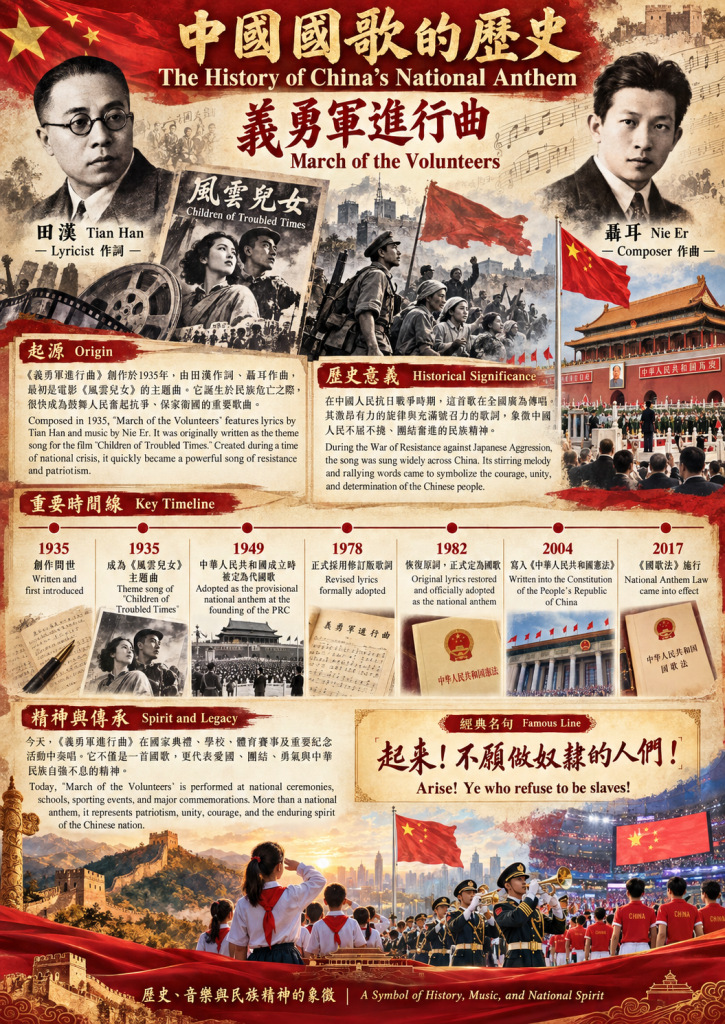
「起來!不願做奴隸的人們!」
接著又是:
「把我們的血肉,築成我們新的長城!」
他問,為甚麼到了今天,我們還要唱這樣的歌?為甚麼還要牢牢記住戰爭和苦難?
https://rumble.com/v7g9kvq-why-chinas-national-anthem-sounds-so-forceful-and-full-of-the-spirit-of-str.html
https://www.tiktok.com/t/ZPL1wpJ4H/
https://weixin.qq.com/sph/AdUDGvGzqE
https://www.facebook.com/reel/1088178957030243/?mibextid=wwXIfr
其實,只要真正讀過這段歷史的人,就會知道,這首歌根本不是甚麼「煽動仇恨」的歌曲。
相反,它背後承載的是無數中國人的鮮血、犧牲,以及一個民族在最危險時刻所爆發出來的勇氣。
很多人可能不知道,義勇軍究竟是甚麼人。
義勇軍並不是當時裝備精良的正規軍隊。他們是中國近代史上一群最不應該被遺忘的人。
1931年9月18日,日本關東軍炸毀南滿鐵路的一段路軌,並以此為藉口發動軍事行動,這就是後來所稱的「九一八事變」。
在當時的局勢下,東北軍接到不抵抗的命令。大量正規軍撤退,在很短的時間內,東北大片土地相繼淪陷。
無數中國百姓突然失去了家園。
就在這種情況下,一部分官兵拒絕放下武器,走進深山繼續抵抗。
但更多的抗日力量,其實來自普通百姓。
他們之中有農民、有獵人,也有從前根本沒有打過仗的人。
昨天,他們可能還在田裡耕作;今天,他們卻放下鋤頭,拿起步槍、獵槍,甚至非常落後的武器,走進山林作戰。
他們沒有充足的糧食,沒有完善的後勤,也沒有正式的軍隊番號。
老百姓只用一個非常簡單的名稱稱呼他們:
義勇軍。
東北的冬天可以低至零下三、四十度。
日軍擁有飛機、坦克、重型武器以及制式裝備,而義勇軍手上可能只有舊式步槍和土槍,有時甚至兩三個人共用一支槍。
每一顆子彈打出去,就少一顆。
很多抗戰的消息衝破封鎖,傳到詞作者田漢手中。
他看到的是戰士在戰場上犧牲,有人甚至把手榴彈綁在自己身上,衝向敵人的坦克。
有些士兵在冰天雪地中犧牲後,雙手仍然緊緊握著武器。
所以,今天當我們唱:
「把我們的血肉,築成我們新的長城!」
有人可能覺得這是一種藝術上的誇張。
但對當時的人而言,那並不是誇張。
那是寫實。
那是曾經真實發生在冰雪覆蓋的黑土地上,以生命和鮮血寫下來的歷史。
後來,聶耳接到這首歌的創作任務。
據影片所述,他把自己關在房間裡,日夜不停地創作。
於是,便有了那句震撼幾代中國人的旋律:
「起來!不願做奴隸的人們!」
每一個音符,都像拳頭砸在桌面上一樣有力量。
但這並不是為了侵略別人。
它是一個民族在最危險、最黑暗、幾乎沒有退路的時候,從喉嚨最深處發出的吶喊。
有人問,今天中國已經和平、發展了,為甚麼還要唱這樣的國歌?
因為我們的國歌,不是為了把仇恨留給下一代。
它提醒我們:今天腳下的土地,曾經有人為了守護它流過鮮血。
既然這首國歌是從那段歷史中誕生的,我們又有甚麼理由把那些曾經發生過的歷史輕描淡寫?
今天,有些人在升國旗、唱國歌的短短幾十秒裡,甚至懶得張口。
可是,在那短短四十多秒的國歌背後,是多年戰火,是破碎的山河,也是無數無名先烈付出的生命。
如果我們連唱一首國歌都嫌麻煩,那麼下一代又怎樣真正理解這個國家走過的道路?
銘記歷史,並不是為了延續仇恨。
而是為了不要忘記曾經為國犧牲的人,不要忘記普通人民曾經經歷的苦難,也不要忘記今天和平與發展得來不易。
今天,當五星紅旗升起,《義勇軍進行曲》再次響起時,我們聽到的,不只是歷史的悲壯。
我們也聽到一個民族從苦難中走出來、繼續向前的力量。
從曾經山河破碎,到今天所說的繁榮與發展——
這就是我們的國歌。
Recently, I saw a comment online. Someone asked: now that we live in a peaceful era, and many national anthems celebrate freedom and glory, why does China’s anthem begin with:
“Arise! Ye who refuse to be slaves!”
and then declare:
“With our flesh and blood, let us build our new Great Wall!”
Why, the person asked, should people today continue singing words born from war and hardship?
Anyone who seriously studies this period of history will understand that this song was not simply written to promote hatred.
Behind it are the blood, sacrifice, and courage of countless Chinese people during one of the most dangerous periods in the country’s history.
Many people may not know exactly who the Volunteers were.
The Volunteer Armies were not simply well-equipped regular military units. They included people who became some of the most important—and often forgotten—figures of modern Chinese history.
On September 18, 1931, Japan’s Kwantung Army blew up a section of the South Manchuria Railway and used the incident as a pretext for military action. This became known as the September 18 Incident.
Under the circumstances at the time, units of the Northeastern Army received orders not to resist. Large numbers of regular troops withdrew, and within a short period, extensive areas of Northeast China fell.
Millions of ordinary people suddenly found themselves facing occupation and the loss of their homes.
Some officers and soldiers refused to give up their weapons and went into the mountains to continue resisting.
But many of those who joined the resistance were ordinary people.
They were farmers, hunters, and villagers—people who previously had never fought in a war.
One day they might have been cultivating their fields. The next, they put down their hoes and picked up rifles, hunting guns, and whatever weapons they could find.
They had little food, limited supplies, no sophisticated logistical system, and often no formal military designation.
Ordinary people gave them a simple name:
the Volunteer Armies.
Winters in Northeast China could fall to thirty or forty degrees below freezing.
The Japanese forces possessed aircraft, tanks, heavy weapons, and standardized military equipment. Many Volunteer fighters had only old rifles or crude weapons. Sometimes two or three men had to share a single gun.
Every bullet that was fired meant one fewer bullet remained.
Reports of their resistance passed through blockades and eventually reached the lyricist Tian Han.
The stories described soldiers dying in battle, some reportedly strapping explosives to themselves and charging enemy tanks.
Others died in the freezing snow with their hands still tightly gripping their weapons.
So when we sing today:
“With our flesh and blood, let us build our new Great Wall,”
some people may think it is merely artistic hyperbole.
But to people living through that period, it was not simply exaggeration.
It reflected a brutal reality.
It represented history written in life and blood on the frozen land of Northeast China.
Later, Nie Er composed the music.
As described in the video, he immersed himself in the work, composing intensely until the melody emerged that would move generations:
“Arise! Ye who refuse to be slaves!”
Every note sounds almost like a clenched fist striking a table.
But the message was not presented as a call to invade another country.
It was portrayed as the cry of a people who, at the darkest and most dangerous moment, felt that there was nowhere left to retreat.
Some people therefore ask: China today is peaceful and developed, so why continue singing such a national anthem?
The answer offered by the video is that the anthem is not intended to preserve hatred for future generations.
Rather, it reminds people that the land beneath their feet was once defended at enormous human cost.
If the anthem arose from that historical experience, the video argues, then that history should not simply be glossed over.
Today, some people may not even open their mouths during the brief period when the national flag is raised and the anthem is sung.
Yet behind those few dozen seconds of music lie years of war, a shattered country, and the lives of countless unnamed people who died.
If later generations become unwilling even to sing the anthem, the speaker asks, how will they understand what earlier generations experienced?
Remembering history does not necessarily mean preserving hatred.
It can mean remembering those who sacrificed their lives, remembering what ordinary people endured, and recognizing that peace and development did not come easily.
Today, when the Five-Starred Red Flag is raised and “March of the Volunteers” is played, the video presents the anthem as more than a memory of suffering.
It also symbolizes a people emerging from hardship and continuing to move forward.
From a period of national devastation to the prosperity and development celebrated today—
this is the story the video associates with China’s national anthem.