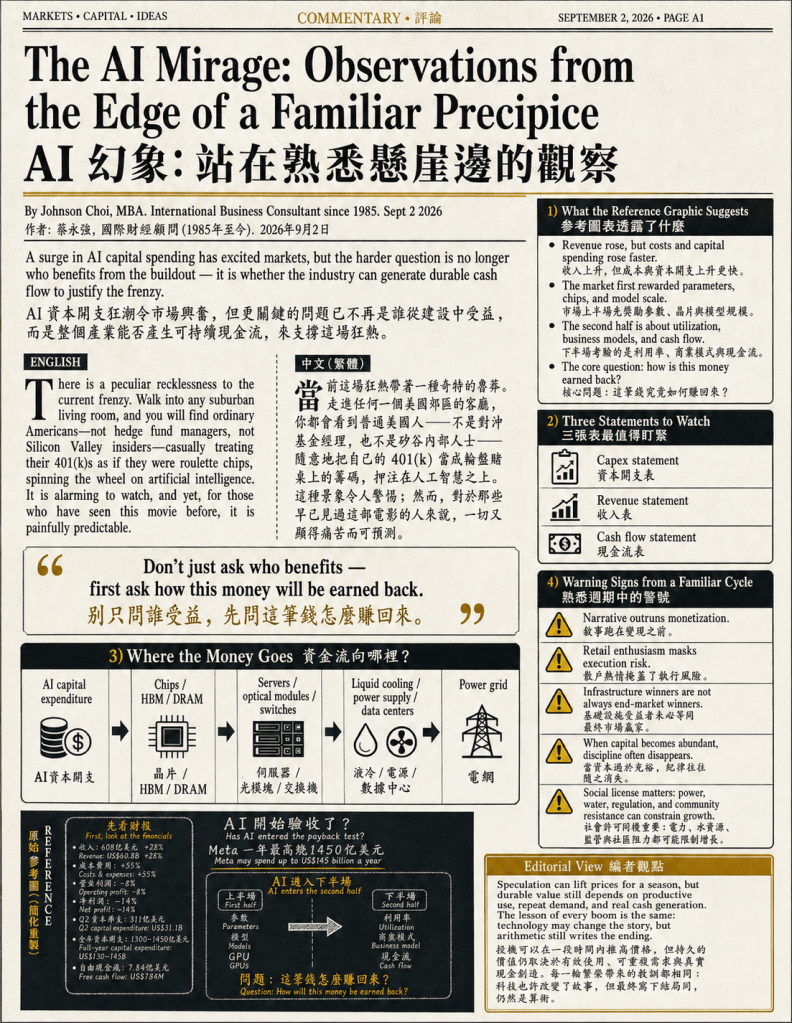
The AI Mirage: Observations from the Edge of a Familiar Precipice. By Johnson Choi, MBA. International Business Consultant since 1985. Sept 2 2026
AI 幻象:站在熟悉懸崖邊的觀察. 作者: 蔡永強, 國際財經顧問(1985年至今).
There is a peculiar recklessness to the current frenzy. Walk into any suburban living room, and you will find ordinary Americans—not hedge fund managers, not Silicon Valley insiders—casually treating their 401(k)s as if they were roulette chips, spinning the wheel on artificial intelligence. It is alarming to watch, and yet, for those who have seen this movie before, it is painfully predictable.
當前這股狂熱瀰漫著一種奇特的魯莽。走進任何一間郊區的起居室,你都會發現普通美國人——不是對沖基金經理,也不是矽谷內部人士——正隨意地把他們的 401(k) 退休帳戶當作輪盤賭的籌碼,在人工智慧這張賭桌上奮力一搏。看著這一幕實在令人心驚,但對於那些看過同樣劇本的人來說,卻又可悲地在意料之中。
https://weixin.qq.com/sph/AMLVttu24t
https://www.tiktok.com/t/ZP8c6uSmb/
https://m.facebook.com/story.php?story_fbid=pfbid0rJJ5W2Knr1GWb3uDpbhgVBhqdMvRBLMFTMtckXcQgQyHhbwJXf4pDgH6bkisrubUl&id=100036400039778&mibextid=wwXIfr
西元 2000 年投下了一道長長的陰影。當年,「新經濟」的承諾引誘了整個世代,讓人們相信基本面已經不再重要。隨之而來的後果是殘酷的:退休帳戶憑空蒸發、房產遭到法拍,而財務崩潰所帶來的壓力,也在無數家庭中劈開了一道道永遠無法癒合的裂縫。婚姻在融資追繳的壓力下支離破碎。如今,三十年過去了,許多當年的受災戶——容顏更顯蒼老、身體更加孱弱、距離最後一份薪水也更近了一步——卻再次落入同一個陷阱。人性,似乎從未從歷史中學到教訓,只是在下一場演出中重新背誦自己的台詞。
這次令人特別矚目的,是來自權力最高層的公開助威。這個敘事不再只是華爾街的推銷話術,而是被包裝成一場愛國十字軍東征。白宮搭配著好萊塢劇本般的科技救世主陣容,將 AI 塑造成美國的下一個邊疆,一張萬無一失的「金色入場券」。這種政治與文化的加持,為一場核心本質純屬投機的賭博,披上了看似合法的神聖外衣。幾乎沒有人停下來質疑這個神話背後的數學現實。
而數據會說話。放眼整個產業,數兆美元已經燒盡,每月持續投入的營運成本高達數百億美元。但回流營收呢?僅是涓涓細流——以百萬計,而非十億。這是個顯而易見、卻無人明說的矛盾:一個工業革命級別的變革,被市場以「永恆繁榮」的價格定價,然而收銀機卻異常安靜。利潤在哪裡?這個問題始終被擱置在財報會議的邊緣,被那些尚未到來的未來願景輕輕拂去。
除了帳面上的數字,還有更實質的限制:物理世界正在反撲。那些承載 AI 夢想的巨型數據中心,耗電量堪比小型城市,更需消耗巨量水資源來冷卻運轉中的伺服器。這些設施正大幅延後,受困於地方反對聲浪,以及資源稀缺的殘酷現實。電網尚未準備就緒。社區並不買單。然而,市場卻持續將這座夢中樓閣的價格炒得火熱,彷彿水泥與銅纜已經就位。
從外部旁觀這一切,彷彿看著一場慢動作的撞擊事故。核心問題不再是要不要修正,而是何時修正。更重要的是,浪潮退去後會留下什麼?對於眼光敏銳的觀察者而言,現在不是害怕錯過(FOMO)的時候,而是規劃停損的時刻。這個泡沫已被炒作吹脹、被權威煽動,並以一個遲遲無法兌現的未來作為正當理由。
歷史不會重演,但總會驚人地相似。而這首韻腳聽起來,像極了一首輓歌。從一個親眼見證上次崩盤代價的旁觀者角度,唯一值得給出的忠告是:如果你今天看不見利潤,就別拿明天來抵押。這場矽金熱或許終將改變世界——但在那之前,它肯定還會再埋葬不少人的財富。
The year 2000 casts a long shadow. Back then, the promise of the “new economy” seduced a generation into believing that fundamentals no longer mattered. The aftermath was brutal: retirement accounts vaporized, homes were lost, and the stress of financial ruin carved permanent fissures through families. Marriages buckled under the weight of margin calls. Now, three decades later, many of those same individuals—grayer, frailer, and far closer to their last paychecks—are falling into the same trap. Human nature, it seems, learns nothing from history; it only rehearses its lines for the next performance.
What is striking about this iteration is the visible cheerleading from the highest offices. The narrative is no longer just a Wall Street pitch; it is a patriotic crusade. The White House, aided by a Hollywood-scripted cast of tech messiahs, has framed AI as the next American frontier, a golden ticket that cannot be missed. This political and cultural endorsement lends an air of legitimacy to what is, at its core, a speculative gamble. Few pause to question the math beneath the mythology.
And the math is glaring. Across the industry, trillions have been spent. Monthly operating costs run into the tens of billions. Yet the revenue coming back? A mere trickle—millions, not billions. This is the great unspoken contradiction: an industrial revolution priced like eternal prosperity, while the cash registers remain eerily quiet. Where are the profits? The question lingers in the margins of earnings calls, brushed aside by visions of a future that has not yet arrived.
Beyond the balance sheets, there is a more tangible constraint: the physical world is pushing back. The colossal data centers powering this dream require more electricity than small cities, and water to cool their humming servers. These facilities are falling behind schedule, stalled by local opposition and the sheer scarcity of resources. The grid is not ready. The communities are not willing. And yet, the market prices the dream as if the concrete and copper are already in place.
To observe all this from the outside is to watch a slow-motion collision. The central question is not if the correction will come, but when. And more importantly, what will remain afterward? For the prudent eye, this is not a moment for FOMO, but for damage control. The bubble has been inflated by hype, fueled by authority, and justified by a future that refuses to materialize on time.
History does not repeat, but it rhymes. And this rhyme sounds hauntingly like a dirge. The only counsel worth offering, from the vantage point of an observer who has counted the cost of the last crash, is this: if you cannot see the profits today, do not mortgage your tomorrow. The silicon gold rush may yet change the world—but it will likely bury a few more fortunes before it does.