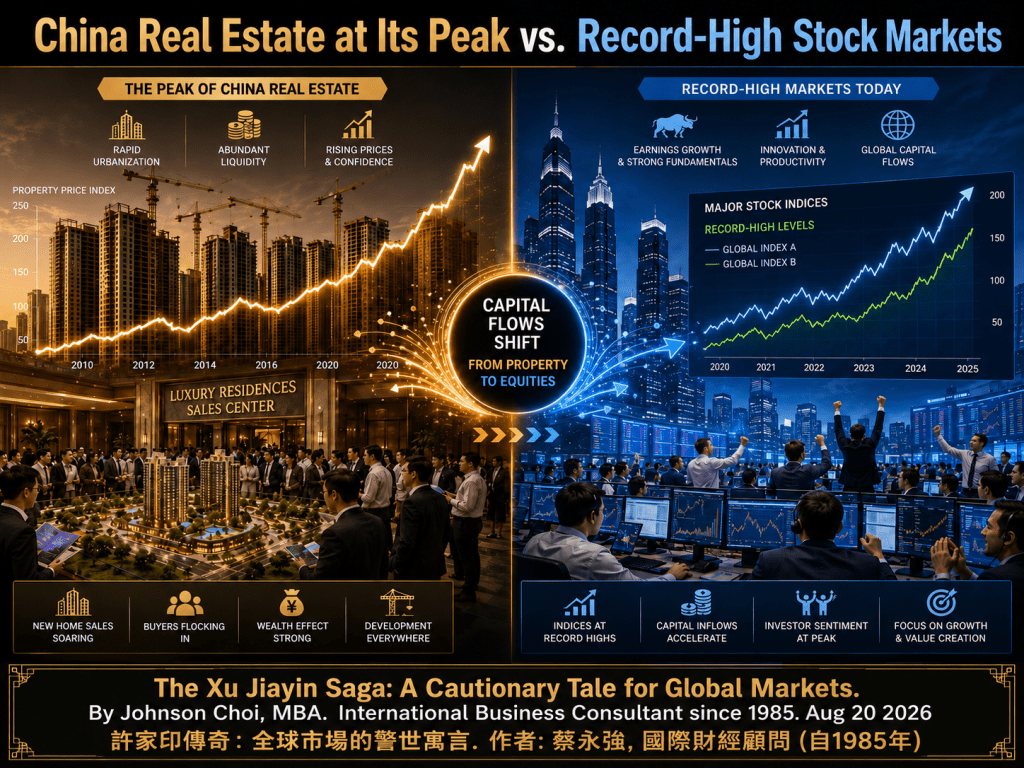
The Xu Jiayin Saga: A Cautionary Tale for Global Markets. By Johnson Choi, MBA. International Business Consultant since 1985. Aug 20 2026
許家印傳奇:全球市場的警世寓言. 作者: 蔡永強, 國際財經顧問 (自1985年)
https://weixin.qq.com/sph/AzFIW8bnmF
https://www.tiktok.com/t/ZP8WKKFXm/
https://m.facebook.com/story.php?story_fbid=pfbid0vSLCWVMi8N7GwMif8GeT49HddYvSpy1Fcxyv9iHWGjS2JMTTLZEx8AWwRU8AyNm6l&id=100036400039778&mibextid=wwXIfr
恆大創辦人許家印在短短十年間,從中國首富淪為終身監禁——此一飛速崛起與急遽隕落的歷程,為繁榮與崩潰的循環提供了深刻的案例研究。儘管他個人從巔峰走向破產的軌跡無疑令人唏噓,但中國房地產市場隨之而來的價格修正(目前跌幅達50%至70%)卻也帶來了顯著的一線生機。對於首次購屋者、應屆畢業生,以及返鄉養老的海外華人而言,此一低迷期反倒成為意料之外且值得歡迎的契機。
話雖如此,當前美國人工智慧與科技類股正醞釀的泡沫,卻遠比房地產市場更令人擔憂。其估值模式與中國房市崩盤前的狀況有著令人不安的相似之處——且細究之下,美國科技業目前的狂熱程度,甚至可能比我們此前見證的中國房市過度膨脹更為嚴重。
我們是否真正從過去的錯誤中學到了教訓?對具備高度財務智商與情緒智商的敏銳投資者而言,這應視為一記及時的警鐘。或許此刻宜開始逐步減碼人工智慧與半導體持股。根據個人年齡與風險承受能力,可考慮將資金轉向現金、人民幣計價資產、黃金相關類股或精選的中國股票。此外,為降低地緣政治與監管風險,建議透過美國境外非美系金融機構持有此類投資部位。
The meteoric rise and precipitous fall of Evergrande’s founder, Xu Jiayin—from China’s wealthiest individual to a life sentence in just ten years—offers a profound case study in boom-and-bust cycles. While his personal trajectory from triumph to insolvency is undeniably tragic, the resulting correction in China’s property market, with prices now down by 50–70%, has created a significant silver lining. For first-time homebuyers, recent graduates, and overseas Chinese returning home to retire, this downturn represents an unexpected and welcome opportunity.
That said, a far more alarming bubble is currently inflating in the U.S. AI and technology sectors. The valuation patterns bear an unsettling resemblance to the Chinese real estate market before its collapse—and upon closer examination, the current exuberance in U.S. tech may be even more pronounced than the overextension we witnessed in China.
Have we truly learned from past mistakes? For discerning investors with high financial and emotional intelligence, this should serve as a timely warning. It may be prudent to begin gradually reducing exposure to AI and semiconductor equities. Depending on your age and risk tolerance, consider rotating capital into cash, RMB-denominated assets, gold-related stocks, or select Chinese equities. Furthermore, to mitigate geopolitical and regulatory risks, it would be advisable to hold these investments through non-U.S. financial institutions outside of American jurisdiction.