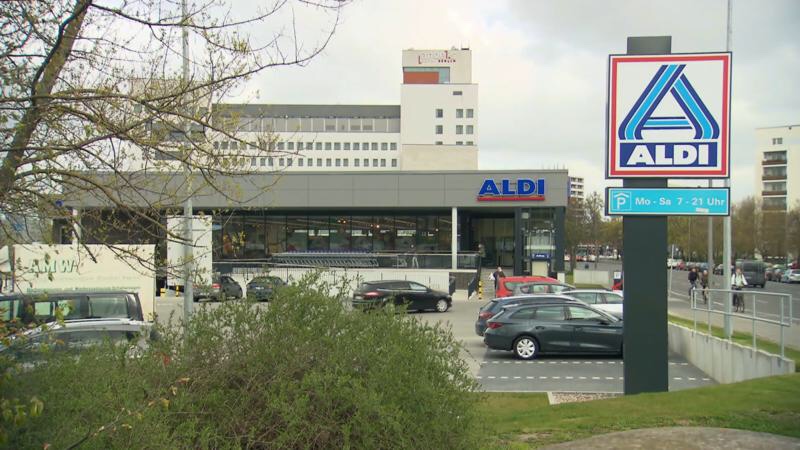
Germany, EU & 99% Americans are paying high price on US sanction on Russia while the 1% US elites, Military Industrial Complex and Oil Related Companies are laughing to the bank everyday! Aldi (Albrecht Discounters) is a large European food retail chain. It has 10,000 stores in 20 Countries. In the US, Aldi owns Trader Joe’s. They have just announced massive price increases of 20-50% due to the Ukraine war and sanctions on Monday. 德國, 歐盟和99%美國人為美國對俄羅斯的製裁付出了高昂的代價,而1%的美國精英、軍工企業和石油相關公司每天都在向銀行開懷大笑!Aldi 是一家大型的歐洲食品零售連鎖店. 它在20個國家/地區擁有10,000 家門店. 在美國,Aldi 擁有 Trader Joe’s. 由於戰爭和製裁, 他們剛剛宣布週一大幅提高價格20-50% Apr 2 2022
The discounter Aldi is planning massive price increases. Meat, sausage and dairy products should be sold from Monday, April 4th. become “significantly more expensive”, confirmed the group of the Westdeutsche Allgemeine Zeitung (WAZ). According to the newspaper, a surcharge of around 30 percent is planned for butter. The companies from Mülheim and Essen justify the price increases with the exploding costs on the producer side, especially for wheat, energy and animal feed in the course of the Ukraine war.
Price jumps that have never happened before
“Due to the situation on the world markets, we will experience jumps in sales prices that have never happened before,” Florian Scholbeck, Managing Director of Communications at Aldi Nord, announced to the WAZ. As the largest German discounter, Aldi is traditionally considered the price leader in the industry. The two sister companies Aldi Süd and Aldi Nord from Mülheim and Essen therefore expect that the entire food retail trade will follow suit.
Aldi does not want to give exact figures. According to WAZ information, however, the group assumes that the purchase prices for groceries could become between 20 and 50 percent more expensive in the next few weeks. The Munich ifo Institute published a survey on Thursday, according to which 94 percent of food retailers in Germany want to increase their prices.
The background is the growing cost pressure on the part of the producers, which Aldi is also feeling. “Wheat and animal feed are currently the number one price drivers for agriculture,” emphasized Erik Döbele, national purchasing manager at Aldi Süd. Ukraine and Russia are important wheat suppliers for the world market. Because of the war, there is currently a lack of supplies. Because feed for the animals is scarce, fewer pigs, cattle and above all chickens are raised.
“There will be no empty shelves”
Despite the tense situation, Aldi warns against scaremongering. “There will be no empty shelves,” says Managing Director Scholbeck. Due to the still disrupted supply chains, there could be temporary bottlenecks for some products. “If toilet paper is missing today, it will be back tomorrow,” says Scholbeck.
However, Aldi does not plan to ration flour or cooking oil. “We are sticking to our principle of selling items in normal household quantities,” explained chief buyer Döbele. The discounter rival Lidl, which has also extended the restriction to canned goods, also relies on this model. “The supply of goods in the branches at Lidl is basically guaranteed. Delivery delays can only occur for individual products,” said the company on request. Lidl did not want to comment on possible price increases.
Aldi is convinced that it is better prepared for the crisis with an uncertain outcome than supermarkets with staff-intensive service counters or hypermarkets with huge sales areas. “Aldi will remain the price leader. Because of their simple structures, discounters are better positioned than full-range retailers. That’s why we won’t have to increase sales prices as much as supermarkets and specialist retailers,” explained Scholbeck.
 Johnson Choi Biz