Old poster alerting Chinese Citizens to seek protection on US engaged in germ warfare during Korean War in the 1950s testing new acquisition from Japanese Unit 731 on Chinese now housed in US bio labs. 舊海報提醒中國人民尋求保護美國在1950 年代朝鮮戰爭期間使用細菌來測試從現在位於美國生物實驗室內的日本731 細菌部隊在二戰期間用中國人作人體實驗.
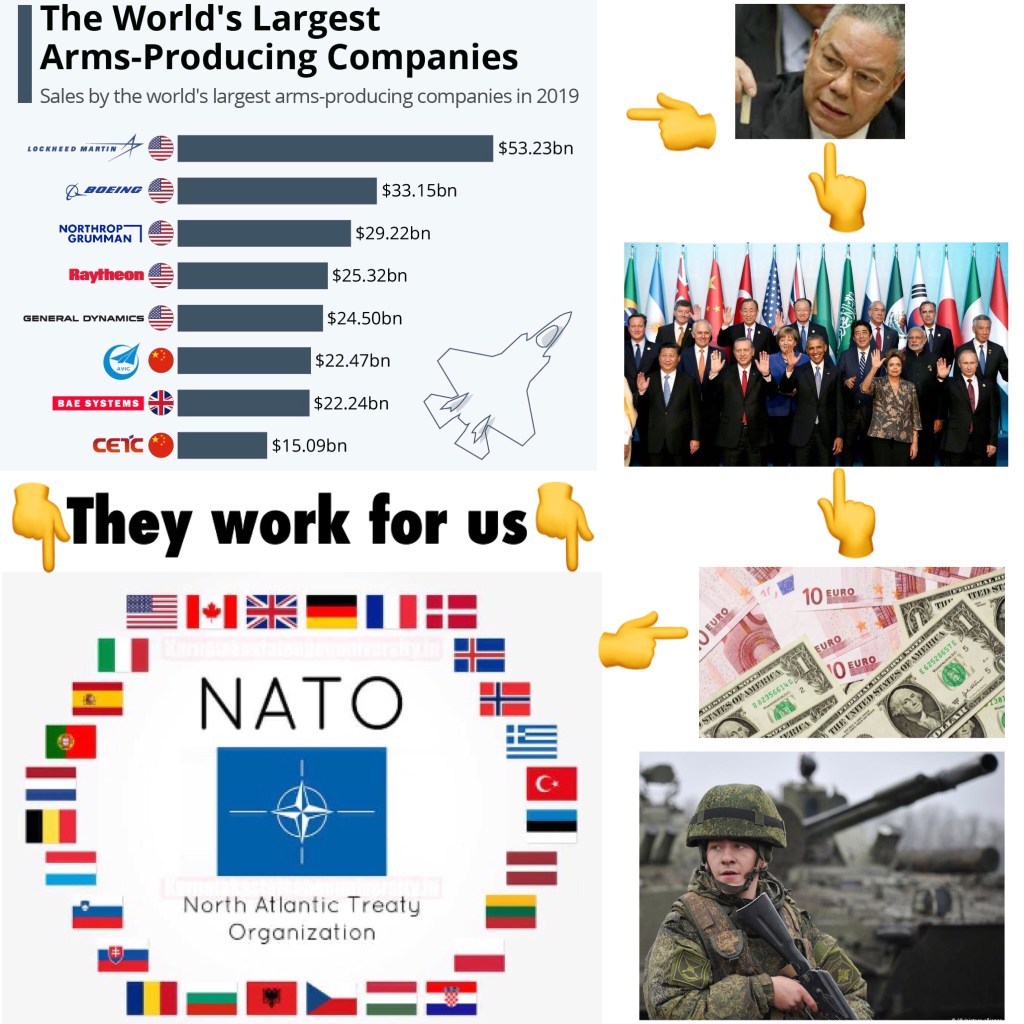
US Senator Daniel Inouye from Hawaii was a highly decorated WWII Veteran Unit 442 said 20 years ago that US need enemies real or imaginary in order to support our huge war machines. Nothing has changed! 來自夏威夷的美國參議員丹尼爾·井上是一名二戰老兵442 部隊,他20年前說美國需要真實或虛構的敵人以支持我們巨大的戰爭機器, 今天也是一樣!
Ukraine offers Taiwan a wake-up call and lessons? English Tsai will have the F16 to escort her plane loaded with Diamonds, US treasury bonds and US$ to the international air space and continue on to Hawaii just like Marco from Philippines did. 烏克蘭給台灣敲響警鐘和教訓? 蔡英文將讓 F16 護送她滿載鑽石、美國債卷和美元的飛機前往國際空域,並像前菲律賓總統馬可思一樣逃往夏威夷.
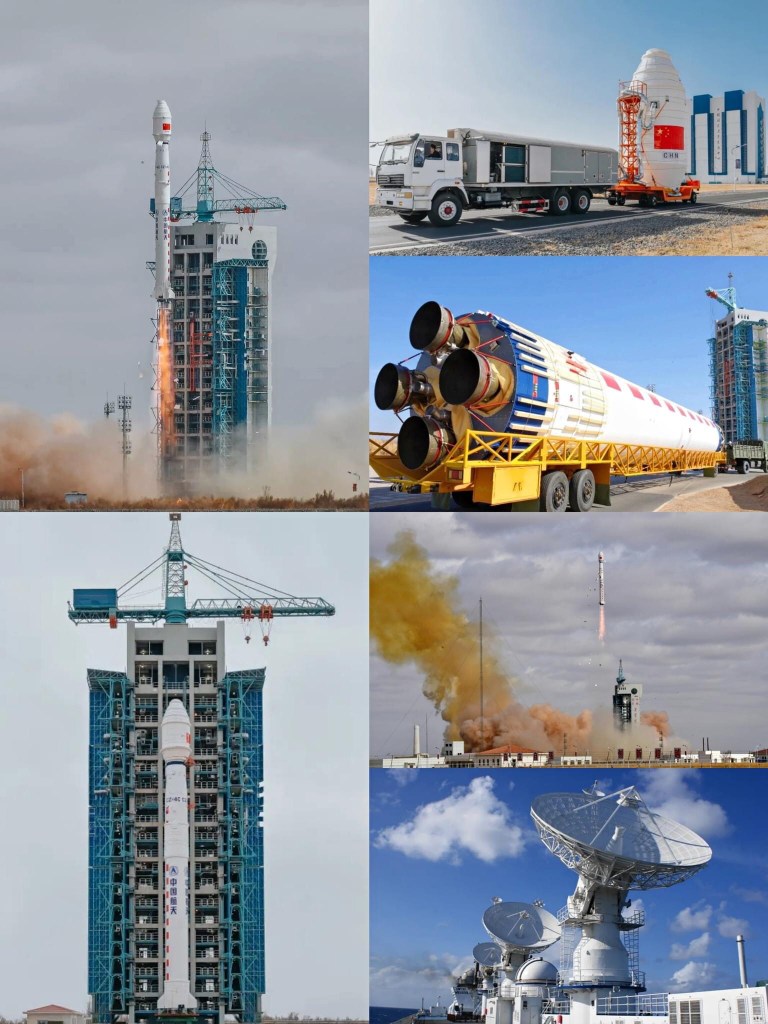
At 15:09 Beijing time on March 17, the CZ-4C Y47 rocket carrying the Yaogan 34-02 remote sensing satellite lifted off from the Jiuquan Satellite Launch Center.
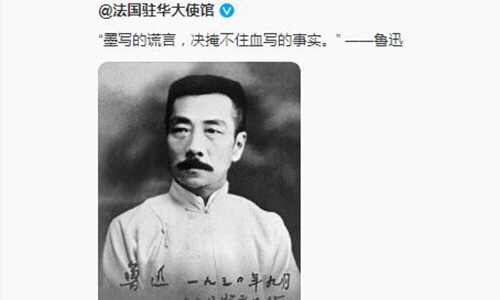
French Embassy in China enrages Chinese netizens over inappropriate post amid Ukraine crisis 法國駐華大使館因烏克蘭危機發帖不當激怒中國網民 By Global Times Mar 17, 2022
Screenshot of French Embassy’s post on Sina Weibo quotes Chinese writer Lu Xun
Screenshot of French Embassy’s post on Sina Weibo that quotes Chinese writer Lu Xun
Since the outbreak of the Russia-Ukraine conflict, Western diplomatic agencies have been conducting public diplomacy on the Chinese internet, with many insinuating China’s inaction during the conflict, although they know the cause of the crisis was NATO’s eastward expansion.
A post from the French Embassy’s official Weibo account on Tuesday quoted Lu Xun, a well-known anti-imperialist Chinese writer, as saying that “lies written in ink can never disguise facts written in blood.”
The comment drew backlash among netizens, given the historical background of Lu Xun’s quote – the March 18 massacre, a tragedy in which Chinese civilians were killed and injured opposing the ultimatum from the eight nations to invade China amid an anti-imperialist demonstration.
As one of the participants in the ultimatum from the eight nations, France also played a disgraceful role in the imperialist exploitation of China.
Many Chinese netizens believed that the post intended to criticize Russia amid the Ukraine crisis. “An imperialist should not use the anti-imperialist writer’s quote to criticize others,” one Weibo user wrote in response to the French Embassy’s post.
“I am often amazed by the shame of some Western countries, after so much genocide, trafficking, colonization, slavery, invasion, and slaughter, they can still talk about righteousness and morality in a dignified manner,” wrote one netizen.
A seismic shift is sending shock waves through the global economy.
The well-established capitalist disorder, dominated by U.S. imperialism and in place since World War II, is on shaky ground. Extreme economic sanctions imposed on Russia are dragging the whole world into a war that started long before the Russian intervention in Ukraine on Feb. 24.
A big calculation is which countries will be forced to accept the onerous economic sanctions imposed on Russia by the U.S. Countries representing a majority of the world’s population are not willing to tie their sovereignty to total Wall Street control. To the shock of U.S. war strategists, almost all of Latin America, the Caribbean, many countries in Africa, and most of Asia have rejected the sanctions on Russia.
The open defiance by so many countries and major trading blocs is a stunning confirmation of the weakening hold of U.S. economic power.
U.S. dominance challenged
It is well recognized that U.S. economic dominance in Europe, and globally, has been challenged by increased European Union trade with Russia and China. The growing integration of the Eurasian bloc of countries, stretching from China and South Asia through Central Asia and Russia to Europe, gives a huge economic advantage to the countries involved.
The growing integration of EU trade and investment with Russia and China threatens both the domination of U.S. corporate power in Europe and U.S. global hegemony. It is in the interest of corporate power in the U.S. to cynically provoke a conflict where it is the least affected, but doing so in a region where its capitalist rivals in the EU will carry the heaviest burden.
U.S. threatens nuclear war to get sanctions
The U.S. has instigated a crisis by encircling Russia with NATO bases, organizing constant military operations and supplying heavy weapons to Ukraine to fire on Russia’s borders.
The United States is the only country to have ever used nuclear weapons. It incinerated two entire cities — Hiroshima and Nagasaki — in 1945. It is the only country that refuses to agree to a “No First Use” nuclear policy.
By placing nuclear weapons in Europe and setting up nuclear-capable weaponry on Russia’s borders, it has been openly provoking Russia to strike in self-defense. The U.S. used the nuclear threat not only on Russia but to impel the European Union to impose harsh sanctions on Russia, even though it was against EU interests to cut economic ties with Moscow.
With the EU, and especially Germany, unwilling to impose sanctions that would break all relations with Russia, the U.S. played hardball. President Joe Biden threatened the EU on Feb. 26, two days after Russia began its military operation in Ukraine, that the only alternative to going along with the U.S. sanctions “would be the Third World War.”
“You have two options. Start a Third World War, go to war with Russia, physically. Or, two, make sure that the country that acts so contrary to international law ends up paying a price for having done it. . . . I know these sanctions are the broadest sanctions in history, and economic sanctions and political sanctions.”
In an interview with blogger Brian Tyler Cohen, Biden said his “goal from the very beginning” was to keep NATO and the European Union “on the same page.” (tinyurl.com/22dbb5d7)
The EU, a bloc of capitalist economies dominated by Germany, is unable and unwilling to directly challenge U.S. hegemony, especially when they are threatened with nuclear war in Europe if they don’t comply. The EU imposed all the sanctions demanded by the U.S. Their sanctions mirror those imposed by Washington. However, they are still able to purchase some gas from Russia, based on an agreement with the U.S.
Sanctions were imposed on Russia in 2014 after the majority Russian population in Crimea voted to rejoin Russia. This followed a U.S.-supported fascist coup in the Ukrainian capital of Kiev. At that time, two regions in East Ukraine — Donetsk and the Lugansk People’s Republics — broke away from the fascist gangs in Kiev.
Since the 1999 U.S./NATO bombing of Yugoslavia, and despite constant warnings of danger even from its own political strategists, the policy of the U.S. government has been to keep absorbing more East European countries into NATO, building NATO bases around Russia, recruiting and training soldiers and mercenaries, creating provocations on the Russian border and using Ukraine as a pawn to destabilize the entire region.
These years of constant economic and military attacks on Russia are hidden from the public in the U.S. and the EU.
What is behind U.S. war policy?
Why is EU/Russian trade and integration so threatening to U.S. imperialism?
The EU is the biggest investor in Russia. A new and larger double pipeline, called Nord Stream 2, was built to carry cheap natural gas from Russia through the Baltic Sea and into Europe. It provides fuel for EU industries and heat for millions of homes. It provides a break from reliance on high-polluting coal and oil.
Energy comes to 62% of the EU imports from Russia. It costs much less than gas from the U.S., which is the largest exporter of fracked LNG gas. This is a challenge to opening new markets. With war and sanctions, U.S. gas and oil corporations will immediately profit from skyrocketing prices for fuel and guarantee their future control of the European market.
The clash is larger than just a gas pipeline. The U.S. economy is focused on military production. It is the largest exporter of weapons systems. But U.S. imperialism is unable to match China’s Belt and Road development plans. More than 138 countries have signed on for new ports, railroads, industrial hubs and low-interest loans.
China’s Belt and Road development loans are far more attractive than U.S. weapons systems and the harsh austerity plans that are attached to IMF and World Bank loans.
U.S. finance capital is alarmed that two-thirds of the member countries of the European Union have signed on as formal members of China’s Belt and Road Development projects. Port cities in Greece, Italy, Portugal and Hungary are being rebuilt. New energy projects are underway. Europe’s trade with China now exceeds its trade with the United States. (tinyurl.com/5bw7t6yv)
In the struggle to maintain its dominant position, U.S. imperialism has only one tool against these rapidly developing and sharply competing economic relations: war. Both military war and the economic war of sanctions.
Sanctions are war
Sanctions are not a deterrent to war or a substitute for war. They are in fact an escalation of the war.
Using the dominant role of the dollar in the world economy, Washington has imposed over 5,500 sanctions on Russia and is forcing other countries to reconfigure their economies to abide by these extreme economic penalties. The sanctions on Russia are the world’s most extreme economic war measures. (tinyurl.com/2p95893c)
Sanctions create hyperinflation, artificial famines, social upheavals and health crises that punish civilian populations. As deadly as bombs, sanctions are an act of war. They are correctly labeled a Crime Against Humanity.
Will sanctions succeed in restoring the position of U.S. imperialism? That is clearly the calculation.
International Monetary Fund senior deputy managing director Gita Gopinath gave an authoritative view of this expectation that financial sanctions will drive Russia into “deep recession,” and “shift global economic order. . . . It has implications for the global economic order as we know it.” (tinyurl.com/2chjw8fe) Other news articles predict that the Russian economy is “going down the ice chute,” will “tumble,” “go into free fall,” etc.
Several economists warn that it will impact the global economy. To the bankers and financiers, the pain of millions, even within the U.S., is of no concern, as long as they can pick up the pieces afterwards.
Speculators predict “defense” industries and energy companies will prosper. All financial predictions in the U.S. and Europe are that this will hit the European economy much harder.
Third of world sanctioned
Today more than 40 countries, encompassing one-third of the world’s population, already suffer under economic measures imposed by Washington. The U.S. has sanctioned Cuba, Venezuela, Nicaragua, China, Iran, Iraq, Syria, Palestine, Afghanistan, Zimbabwe, Ethiopia, Sudan and others. Countries that trade with targets of U.S. sanctions face heavy fines. This deadly form of economic warfare impacts all the surrounding countries and destroys regional development.
Many of these countries, however, are finding ways to survive through complex barter and exchange programs that are developing as the number of sanctioned countries grows.
Almost all of the countries hit by these harsh U.S. destabilizing measures and asset confiscations sanctions have signed up with China’s Belt and Road Initiative development programs. Many of the sanctioned countries, including Venezuela, Cuba and Syria receive reliable shipments of needed fuel and grain from Russia. These new forms of exchange, developed through necessity, are beginning to weaken the intended economic strangulation. Russia still has a strong market for its exports beyond the reach of U.S. sanctions.
Russia is also a member of the Shanghai Cooperation Organization. This is an economic and security alliance that is the world’s largest regional organization, covering approximately 60% of the area of Eurasia, 40% of the world’s population and more than 20% of global gross domestic product (GDP). Of the 14 members of this trading bloc, six are already under U.S. sanctions but continue normal economic relations.
Countries refuse to comply
To the shock of Washington’s war strategists, many countries not currently under U.S. sanctions are refusing to comply with the U.S. and EU sanctions imposed on Russia. To date India, Pakistan, Bangladesh, Indonesia, South Africa, Kenya, Tanzania, Turkey, United Arab Emirates, Saudi Arabia, Qatar, Brazil, Argentina, Bolivia, Mexico, and other countries with smaller economies have refused to comply with U.S. measures that damage their own trade relations.
These are nations with growing economies and large populations. Several countries that were formerly part of the Soviet Union and are now part of the Eurasian Economic Union (EAEU) — Belarus, Armenia, Kazakhstan and Kyrgyzstan — are not likely to comply.
Several countries, not willing to openly confront U.S. economic wrath, have vaguely stated they would only comply with sanctions imposed by the U.N. Security Council, where a Russian or Chinese veto would make such a vote unlikely.
U.S. economic and political pressure on all these countries to comply will intensify in the coming period.
Threatening China
China’s top banking regulator, Guo Shuqing, says: “We will not participate in such sanctions, and we continue to maintain normal economic and trade and financial exchanges with relevant parties.” (New York Times, March 11) After Mastercard and Visa stopped their operations, Russian banks turned to China’s UnionPay, which offers payment options in 180 countries.
China has not yet given economic or military assistance to Russia. It has simply refused to cut off its normal economic relations. This is infuriating the Biden administration.
The U.S. publicly threatened China for helping Russia evade sanctions. China was reminded that two of its biggest trading partners are the U.S. and European Union. China needs access to those markets.
White House national security adviser Jake Sullivan threatened China directly, stating: “We are communicating directly and privately to Beijing that there absolutely will be consequences” if China helps Russia “backfill” its losses from the sanctions. “We will not allow that to go forward and allow there to be a lifeline to Russia from these economic sanctions from any country anywhere in the world.”
Sullivan said China and all countries are on notice that they cannot “basically bail Russia out . . . give Russia a work-around to the sanctions,” with impunity. (tinyurl.com/j35ueywt)
If such brazen and insulting threats are being openly made to China, then harsher threats are being raised to other countries.
New forms of trade and exchange do challenge the hegemony power of the U.S. dollar. But extreme measures imposed on Russia will create intense economic pain of spiraling inflation and unemployment on a global scale.
The U.S. ruling class, the U.S. Congress and the U.S. corporate media are at this time unanimously in support of an economic war and even a military confrontation, regardless of how destructive they would be to human life, as long as they would break open new markets and destroy their rivals.
The Democrats quickly dropped Build Back Better promises and a COVID-19 health package in order to saturate Ukraine with weapons. Working people in both the U.S. and Europe will pay the price.
The growing danger is that a U.S. imperialist war on this scale, combined with the demand that the whole world participate, could dangerously escalate.
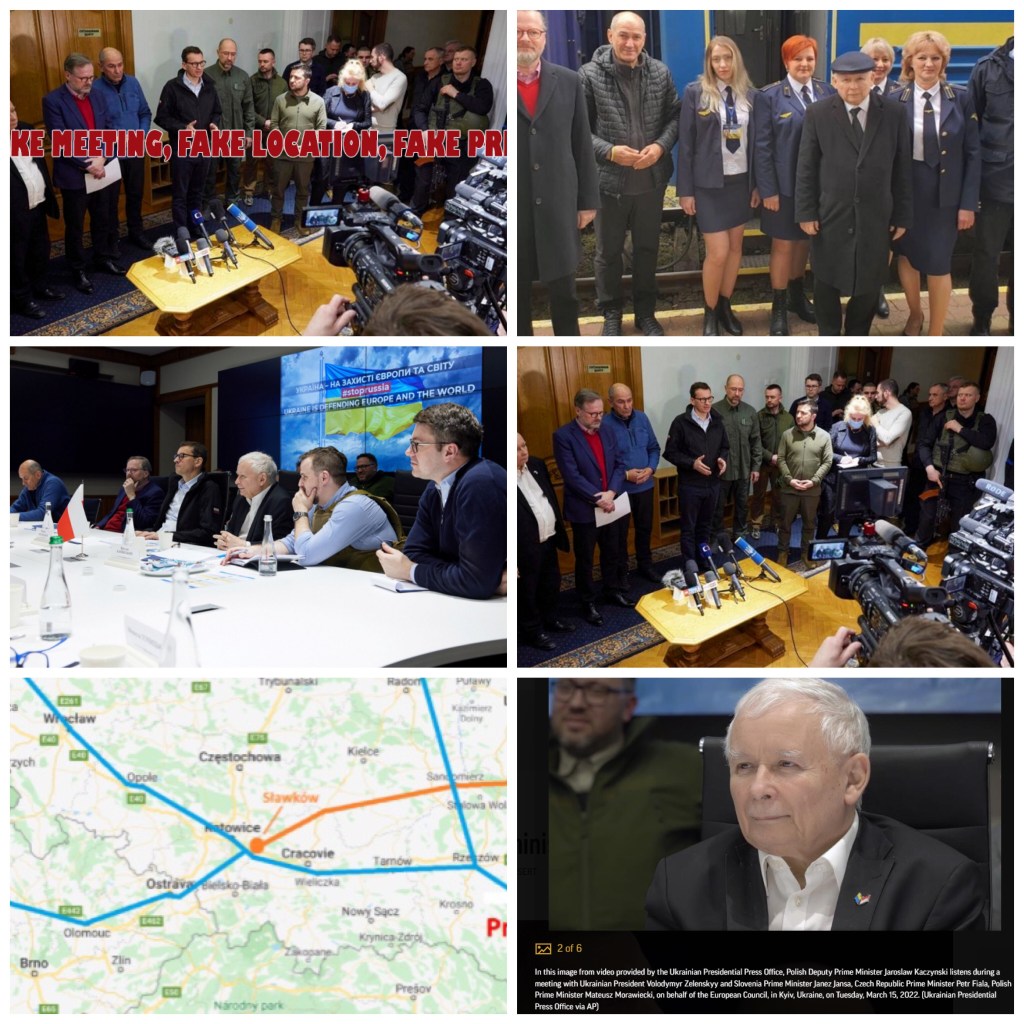
THE ZELENSKY SUMMIT MEETING IN KIEV ON MARCH 15 WITH POLISH, CZECH AND SLOVENIAN PRIME MINISTERS WAS A FAKE DEVISED IN WARSAW – THE MEETING WAS AT PRZEMYSL, POLAND; ZELENSKY ALSO 月 15 日在基輔與波蘭、捷克和斯洛文尼亞總理舉行的澤倫斯基首腦會議是在華沙設計的——會議在波蘭的普熱米斯爾舉行; 包括澤連斯基
This was sent to me, but it seems credible to me and makes a lot of sense. Otherwise it would be like going into Dien Bien Phu for a meeting during the siege of the French Foreign Legion. What this also tells us is that Z is outside of Ukraine, which is why he has such good communications with the rest of the world, and why it’s so easy for him to talk about fighting courageously to the last man. Also, he should be wearing a suit and shaving properly, since he’s not in a Kiev bunker.
Video: Summary of some of the points made in Wen Tiejun video “温铁军:全球化进程中的中国危机与经验【温铁军践闻录|两小时收藏向】
China remained poor during the 1950s and 1960s partly because it was threatened by the US and the Soviet Union after the Soviet-China split. With the start of the Korean War, China was blockaded by the western block led by the US. To support China’s Korean war, the Soviets helped China to develop its heavy and national defense industries in the 1950s. These industries generated no or little income for China, which had to devote its scarce capital accumulated from the farming sector to maintain and modernize these industries. After the Soviet-China split China had to repay the Soviet loans extended during the Korean War and its aftermath in the 1960s with agricultural products.
Both the US and the Soviets threatened to use tactical nuclear weapons on China, a total of 5 times. China had to develop nuclear weapons on its own to thwart such threats. China had to relocate the defense industries from coastal areas to inland areas to stay further away from military threats coming from the ocean, which required another round of heavy investment. The fact that China remained poor during the 1950s and 60s is not just the result of wrong policies, but because of heavy burden of national defense required for China to remain a sovereign nation. That was the price China paid for its national sovereignty.
China’s money supply grew faster than the US and Japan because it needed to monetize the transition to a market economy. Housing used to be allocated by the state and not bought and sold. When it is possible to buy and sell land and housing leases (monetization), the state would need to print more money to provide the liquidity for such transactions. With the growth of the capital market (capitalization), where investments and related financial products can be bought and sold, China would need to print more money to provide the liquidity for such transactions.
The conflict between the US and China stems from the fact that the US wants complete systems of industries to return to the US which conflicts with the industrial production in China. In the other direction, China’s financial capital is growing and threatening to take world market share from the US. For example, China tried to form a free trade zone with Japan and Korea after the 2008 financial crisis, using the currencies of the 3 nations involved. The US sensed its threat to US dollar hegemony, announced its pivot to Asia policy, and instigated the Diaoyu Island and the Tokdo Island conflicts between Japan and China, and between Japan and Korea, to scuttle China’s effort.
The reason as to why China did not experience a downturn in its growth (challenging the China’s impending collapse predictions), because 70% of land in China is controlled by the state, and 70% of the economy is state owned. These are the levers China used to boost its economy during downturns and tamper it during growth that is too fast. For example, for a while, China set the GDP growth rate between 7% and 8%, because when it is below 7%, the economy would not be able to absorb the millions of young people entering the work force (causing social unrest), and when it exceeds 8%, it would cause inflation.
The world is now ruled by a financial capitalist system, which inevitably causes a widening gap between the rich and poor. This system has three pillars: the dollar, dollar denominated debt, and US military hegemony which is the foundation of the prior 2 pillars. This is an expanding system, with the printing of more dollars, issuance of more debt and increased military spending, causing an ever increasing budget deficit. This system needs to transfer the increasing cost of its maintenance to other countries, and caused crisis in these countries.
Humans are greedy by nature. That is why industrial capital will tend to turn away from manufacturing and seek a higher return in financial capital, because it is much quicker to make a profit by financial transactions than in making products. Hence there is a natural tendency for a country to transform from a mainly industrial economy into a virtual one where financial capital dominates. Financial capital will lead to fascism, because it needs only a small number of people for it to function, rendering most of the populace superfluous. China has tried to curb the excesses of financial capital by regulating the use of derivative financial products.
Bill Gates made it big because the US government invested billions in computers and the internet for military in competition with the Soviet Union, and this sunk cost is recaptured after the collapse of the Soviet Union when Bill used the developed technology for the commercial market.
The Asian financial crisis in the late 1990s was partly triggered by an outflow of international capital leaving Asia for the US to take advantage of higher returns from investing in the US booming computing and internet
9. Wen described a very interesting cycle in financial capitalist operation. Due to the quantitative easing (QE) by the developed countries, these excess currencies entered the capital markets which speculates on commodities such as oil and grain. This in turn increase the prices of these commodities which reduces the demand in developed countries, and therefore the demand for goods exported by developing countries to the developed ones. China tries to overcome this softness in its export market by issuing debt for investing in infrastructure. But these investments require importing the price inflated commodities. This is how the QEs by developed countries transfer costs to manufacturing countries like China. But this will cause the prices of exports to the developed countries to increase, which will cause a rise in interest rates to compensate for the inflation. This will make it difficult for small and medium size businesses to obtain credit, so that industrial capital will find it difficult to make a decent profit, causing it to turn to speculation in a vicious cycle. In order to obtain capital for the speculation, speculators are willing to pay still higher interests or usury rates. This causes capital to leave the banking system to shadow banking for usurious returns. This means the developing country’s debt burden will increase while the state has reduced control over the banking sector, making it exceeding difficult to steer and save the economy. The sustained reduced profitability of firms in manufacturing countries causes their share prices to fall. Then multinational corporations armed with easy and low cost money from the QEs will come in to swoop up these shares or assets stripped from these manufacturing firms. This is how developing countries remain underdeveloped and in distress during the rule of financial capital.
10. When the US dotcom bubble burst in year 2000, capital flowed to China to take advantage of the trillions of infrastructure investment the Chinese government made in response to the Asian financial crisis. That is how multinational corporations made a bundle from their investments in China. At the same time, it marked a golden 10 years for China with GDP growth of 9.6%.
11. Industrial capital has been replaced by financial capital as the mode of production in countries such as the US. But as we have seen, this mode of production will produce endless world crisis and is a dead end. China is proposing an ecological civilization (i.e. green) development strategy, enabling humans to live in harmony with nature. Humans will realize that excess greed will need to be transformed into an understanding that living in peace and as part of nature is the only possible way for the future. China, with its heathy economic structure of the relative composition of industrial and financial capital, is well positioned to take this route.
Professor Kenneth Hammond: The export of capital through imperialist or colonialist expansion was hugely important in the 19th & 20th centuries, but it was also part of the pattern of earlier development in European capitalism as the centers of accumulation shifted from Italy to norther Europe, and then across the Atlantic to the US. These processes were not mutually exclusive. In the present conjuncture, though, as the global economy has become more highly integrated and centers of productive activity have proliferated beyond the old imperialist core economies, financialization has become the predominant mode in much of Europe and especially in the US. One of the key factors in the de-linking of the Chinese and American economies is that as China assumes a stronger role in its domestic development and in global expansion the ability of American capital to maximize it profits in China is waning, and in conjunction with the saturation of the American domestic economy and the minimal opportunities for productive investment here, the decline of the US in the global capitalist system is accelerating.







 Johnson Choi Biz