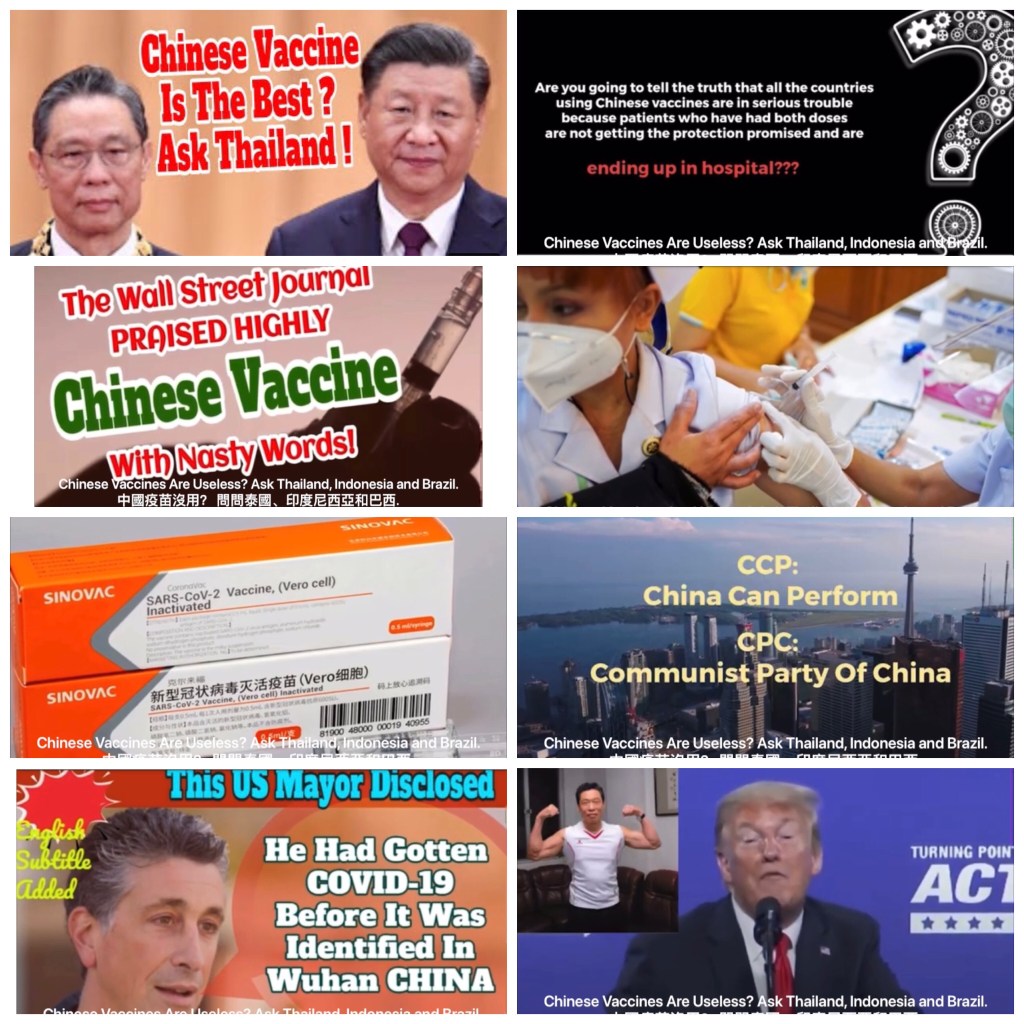
Video: Chinese Vaccines Are Useless? Ask Thailand, Indonesia and Brazil. 中國疫苗沒用? 問問泰國、印度尼西亞和巴西. It is not the virus that killed more than 4 million people. Instead, it is the impotent leaders and irresponsive governments that caused their deaths. 導致超過 400 萬人死亡的不是病毒。 相反,導致他們死亡的是無能的領導人和反應遲鈍的政府. https://youtu.be/2YJb12pGPCA https://vimeo.com/575713901 https://www.facebook.com/100036400039778/posts/529907671565896/?d=n China has 1.44 billion people, less than 5000 people died of the virus, and around 4600 deaths were in Wuhan. It means in the other 30 provinces, less than 300 people died. Still, there are over 3000 officials removed from their positions for the late response to the outbreak.
Cluster of infections at hotel in Japan sounds alarm for the upcoming Olympic Games by Xu Keyue and Cui Fandi Jul 15 2021
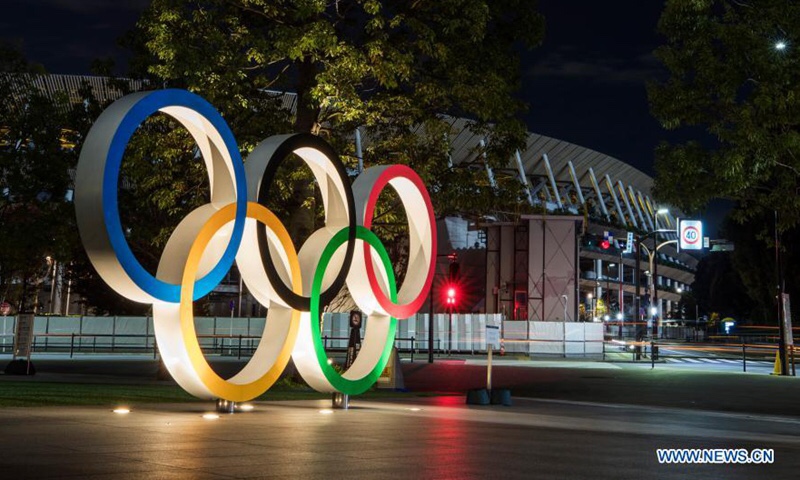
Photo taken on Nov. 10, 2020 shows the illuminated Olympic rings and the new National Stadium, the main venue for Tokyo Olympics and Paralympics, in Tokyo, Japan. Tokyo is the capital and most populous prefecture of Japan. As you might expect from one of the world’s most bustling cities, Tokyo is phenomenally vibrant at night.
A cluster of COVID-19 infections at a hotel lodging dozens of Brazilian Olympic team members, sounded the alarm for possible additional infections at the Tokyo Olympic Games, as the Japanese capital reported on Wednesday the highest number of daily COVID-19 cases in almost six months.
Chinese medical experts stressed that the most basic criterion for epidemic prevention is to reduce gatherings. They suggested that the organizers of the Games could learn from previous large-scale events held during the epidemic, such as the Chinese Basketball Association (CBA) tournament, by establishing an isolation perimeter to prevent any connection between the personnel of the events and the public.
According to city official, Yoshinobu Sawada, seven staff at the hotel in Hamamatsu city, southwest of Tokyo, tested positive for the coronavirus, Reuters reported on Wednesday.
The cases were detected during a routine screening required before staff started work, said Sawada, noting that the unidentified hotel was now considered a COVID-19 cluster.
Reuters said the 31 members of the Brazilian Olympic delegation have not been infected and are in a “bubble” in the hotel separated from other guests .
The Olympic “bubbles,” imposed by Tokyo Olympic officials in an effort to ensure a COVID-19 free Games, were questioned by experts who indicated that they should be “completely tight” in order to work.
Under the shadow of the Delta strain raging around the world, the Japanese Olympic Committee is facing unprecedented challenges in the organization of sports events, medical experts pointed out.
Tokyo reported 1,149 cases on Wednesday, the highest number of new COVID-19 cases in almost six months, with the Olympic Games due to open in the capital in just about a week, Reuters reported.
The most basic criterion for epidemic prevention is to reduce gatherings, Wang Guangfa, a respiratory expert at the Peking University First Hospital, told the Global Times on Thursday. However, because the Games involve multiple team events, it is inevitable that athletes from various countries will gather, Wang warned.
He suggested that the Japanese Olympic Committee should increase the number of nucleic acid tests and deal with positive cases in a timely manner. “Athletes should be recommended to be vaccinated, unless there are special physical conditions and all Olympic staff should be vaccinated,” Wang said.
Except for the sport events, the committee should minimize gatherings as much as possible, Wang noted. “For example, at the opening ceremony, athletes can be required to wear masks, increase the distance and carry out safety precautions at the Olympic Village.”
Wang also suggested that the organizing committee could learn from the organizers of large-scale events been held during the epidemic, such as the NBA playoffs or the games of the Chinese Basketball Association and the Chinese Super League, to completely isolate the personnel of the events from the public, and use independent venues throughout the events.
48 countries send letters to WHO, calling for stopping politicizing virus origins probe by Global Times Jul 15 2021
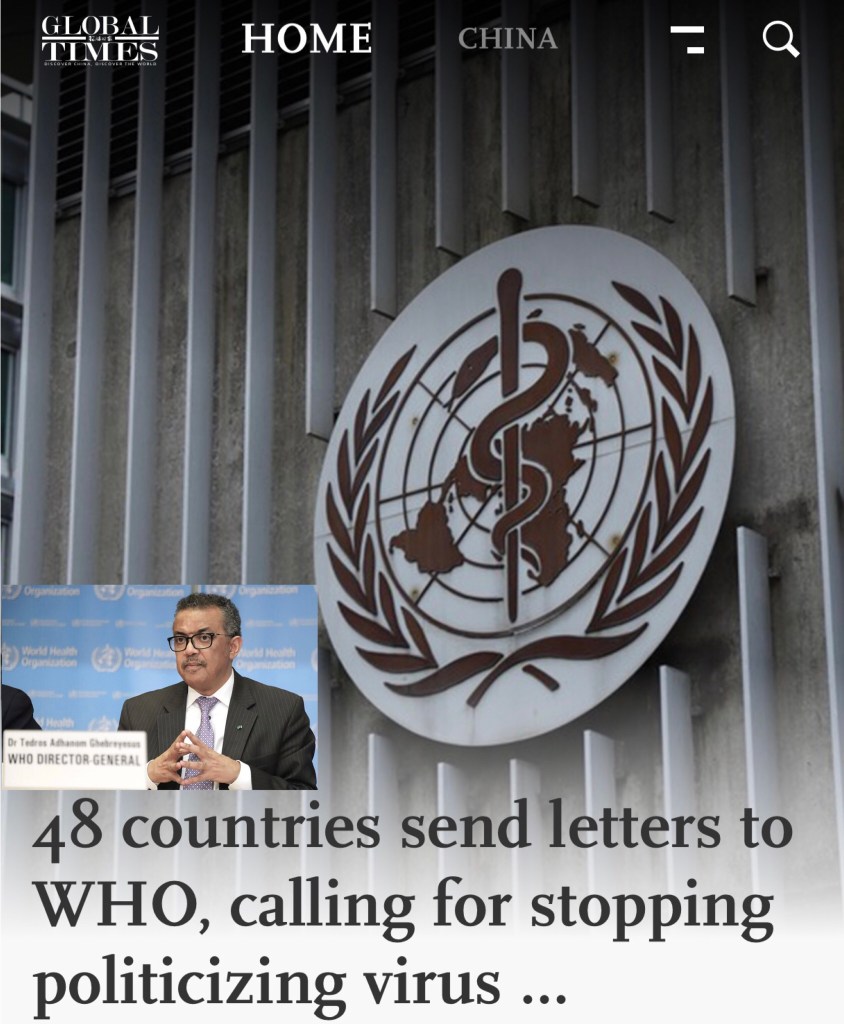
File picture shows World Health Organization (WHO) Director-General Tedros Adhanom Ghebreyesus speaks at a daily briefing in Geneva, Switzerland, on March 9, 2020.
48 countries have sent a joint letter to the World Health Organization (WHO) opposing the politicization of the probe on the origins of the virus, urging the organization to act according to the resolution made by the World Health Assembly (WHA) and push forward the global probe on the traceability of the virus, the Chinese Foreign Ministry spokesperson said on Thursday, stressing it shows that objective and fair justice still accounts for the majority.
The 48 countries who signed a joint letter to the director general of the WHO Tedros Adhanom, emphasized that virus is the common enemy humanity currently faces and it can only be conquered by the joint effort of the global community.
It pointed out that the WHO-China joint report on the virus origins should serve as foundation and guideline for global virus tracing. The letter pointed out that the probe on the origins of the virus is a scientific work and requires scientists to work in global scope, according to China’s Foreign Ministry spokesperson.
The letter also stressed that this work should not be politicized and urged the WHO Secretariat to act according to the resolution of the WHA, cooperate with relevant member countries, and move forward with the virus origin probe.
In the joint letter, the vast number of developing countries gave an overwhelming voice to justice. This is in sharp contrast to the US coercion of a small number of countries to engage in political manipulation, oppose science and distort facts. It fully reflects justice in the international community and fully demonstrates that the majority of countries uphold fairness, objectivity and justice, said the spokesperson.
“We urge relevant parties to stop playing political games on the virus origins, to stop using the issue to pass the buck, to stop sabotaging international cooperation on virus origins research. It should adopt a truly responsible scientific attitude and work with the international community to contribute to the fight against the epidemic and the maintenance of human health and wellbeing.”
Since the beginning of the COVID-19 pandemic, China has demonstrated a scientific, professional, serious and responsible attitude on the issue of traceability of the origins of the virus. China was the first to engage in cooperation with the WHO on the global virus origins tracing.
Since last year, China has invited WHO experts twice to conduct traceability research in China. At the beginning of this year, international experts from 10 countries, including the US, the UK, Japan, and Australia formed a joint expert group with Chinese experts to conduct a 28-day joint research in China. During their visit, they analyzed data, conducted field visits and communicated with peers.
They built up scientific consensus. With the joint efforts of China and the WHO, the research has achieved positive results and reached many important conclusions.
The WHO officially released a China-WHO joint research report on March 30. It follows the procedures of WHO, adopts scientific methods, embodies authority and science, and has been universally recognized and respected by the international community, laying a good foundation for global traceability work.
China’s open and transparent attitude on the issue of virus traceability has also been fully affirmed by international experts.
However, for some time, a few countries led by the US have been stigmatizing, labeling and politicizing the origins of the epidemic. They blatantly disregard the cooperative achievements of scientists and abandon science and truth for their own interests. They openly advocated that intelligence agencies conduct investigations, ignoring the truth and slandering China for “lack of transparency and cooperation” by all means.
These actions have seriously disrupted and undermined international cooperation in traceability research, created great difficulties and obstacles for countries to fight the epidemic and save lives, and aroused widespread dissatisfaction and opposition in the international community.
Asia Times: Rules of ‘international order’ as defined by Blinken – The answer is obvious: International order is whatever Uncle Sam wants it to be 亞洲時報:布林肯定義的“國際秩序”規則 – 答案顯而易見:國際秩序是美帝國想要的樣子 By GEORGE KOO JULY 15, 2021
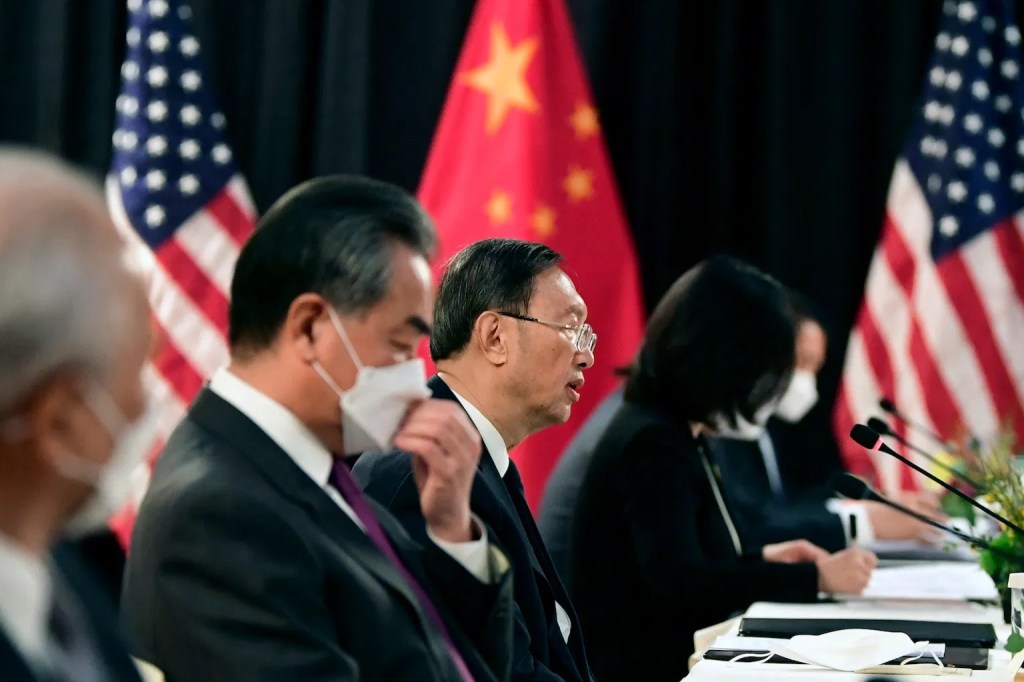
The Chinese delegation led by Yang Jiechi (center), director of the Central Foreign Affairs Commission Office, and Wang Yi (second left), China’s foreign minister, speak with their US counterparts at the opening session of US-China talks in Anchorage, Alaska, on March 18, 2021. China’s actions ‘threaten the rules-based order that maintains global stability,’ US Secretary of State Antony Blinken said. Photo: AFP / Frederic J Brown / Pool What a difference a few months can make in the rocky relations between the US and China. At the meeting in March in Anchorage, Alaska, Secretary of State Antony Blinken gave a blistering lecture in front of the Western media to the Chinese delegation that Beijing needs to behave in a way consistent with the rules of international order.
China’s most senior diplomat at this summit was Yang Jiechi. He basically responded by telling Blinken to mind his manners and, not incidentally, asked what he was talking about.
Since that meeting, Blinken has gone around the world recruiting allies to oppose China on the basis that it does not follow the rules of international order.
Some Western countries grudgingly yielded to the pressure and signed on with Blinken, but they were befuddled by what he means by “international order.” After all, it has been China that works within the confines of the United Nations while the US has often acted unilaterally.
Apparently, for China to expand its economy and threaten to overtake the US is in violation of “international order.”
For China to install fifth-generation (5G) telecommunication technology around the world while the US has to import 4G technology is not acceptable behavior in accordance with “international order.”
For China to take more than 800 million of its citizens out of poverty and “brainwash” more than 90% of the Chinese people into approving and accepting one-party rule is not consistent with “international order.” Instead, keeping its poor people poor, as the US does, is consistent.
China’s Belt and Road Initiative helping countries in Latin America and Africa finance and build their infrastructure is clearly outside the strictures of “international order.”
The Taliban are inviting China to Afghanistan to help build its infrastructure and revitalize the economy. China has expressed interest in bringing Afghanistan into its BRI and, incidentally, thumb its nose at the “international order.”
Installing missile batteries onshore in China and offshore in the South China Sea to threaten US naval flotillas exercising their freedom of navigation off the coast of China is clearly outside the “international order.”
America’s Western allies may well be confused by all this, and wondering: “What is international order?” The answer is obvious: International order is whatever Uncle Sam wants it to be.
Ever since the end of World War II, the unwritten rule has been for Uncle Sam to say to the world: “Don’t do what I do but do what I tell you.”
Australia obeys
Australia has been one of the most faithful followers of America’s version of international order. No sooner than Scott Morrison was elected prime minister in August 2018, he became Donald Trump’s lead attack dog against China.
Morrison attacks China on unfair trade practices, on human-rights abuse, and on South China Sea tensions, and he even initiated the charge to reopen the investigation on the origin of the virus that causes Covid-19.
China had been Australia’s leading trading partner, accounting for more than one-third of Australia’s exports. Not surprisingly, a displeased China has stopped buying from Down Under.
Morrison promptly cried foul. Apparently, China is supposed to absorb the nasty rhetoric, act like nothing has changed and keep doing business as usual.
At the recent Group of Seven summit, Morrison went around seeking reassurance from the allies for their support for confronting China. The US gave him an “attaboy” but is happy to sell coal, wheat and lobsters to China in place of Australia. France did likewise and is happy to supply China’s red-wine market.
Unlike Morrison, the premier of Western Australia has questioned the current situation with China. Mark McGowan asked last October, “How is it in our interests to be reckless with trading relationships that fund and drive our prosperity and our nation forward?”
Can we talk?
US President Joe Biden may also be having second thoughts. He has quietly let it be known that he would be interested in a summit meeting with Chinese President Xi Jinping.
Blinken has been trying to get Foreign Minister Wang Yi to return his phone calls to discuss such a summit and for permission by lower-ranking officials to visit Beijing to plan for it.
If the White House expected Beijing to shout hooray and act grateful for the prospects of making nice, it must be disappointed.
The official response from Beijing has been that there is no rush to meet, especially if the Americans are only interested in more opportunities to harangue. If Washington is interested in renewing friendship, then sure we can talk, says Beijing.
This week, the South China Morning Post reported that Deputy Secretary of State Wendy Sherman will meet with her counterpart, Vice-Foreign Minister Xie Feng, in Tianjin. They are supposed to explore a possible meeting between Blinken and Wang Yi, presumably behind closed doors without the presence of media.
Sherman has been quoted as saying that the bilateral relationship is about mutual respect. She seems to presage a less confrontational meeting than the one led by her boss in Anchorage.
If and when the two parties were to reach rapprochement, it would leave Australia embarrassingly lonesome. If one of the smartest former American presidents were to visit Australia again, he surely would remind Morrison, “It’s the economy, stupid.”
George Koo recently retired from a global advisory services firm where he advised clients on their China strategies and business operations. Educated at MIT, Stevens Institute and Santa Clara University, he is the founder and former managing director of International Strategic Alliances. He is currently a board member of Freschfield’s, a novel green building platform.
What is Native Americans human rights progress in US? China releases 8th white paper detailing human rights progress in Xinjiang 美國原住民人權進展如何?中國發布第八份白皮書 詳述新疆人權進展by Liu Xin Jul 14 2021
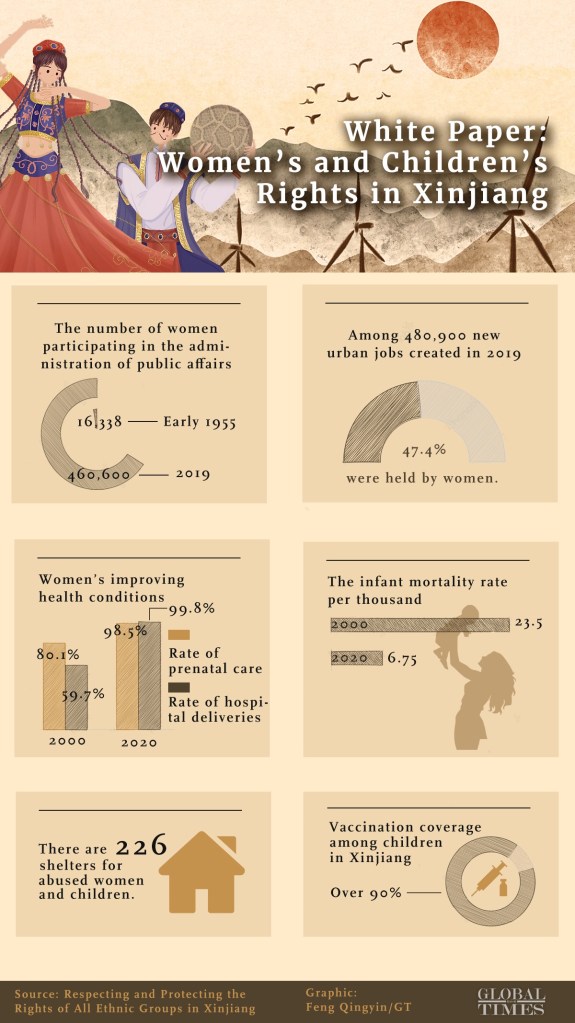
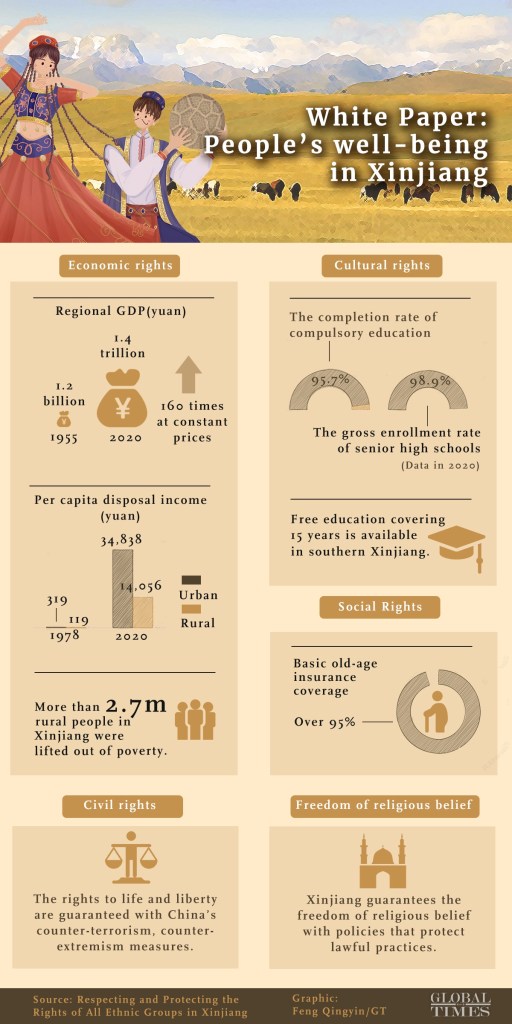
White Paper: Women’s and Children’s Rights in Xinjiang White Paper: People’s well-being in Xinjiang Graphic
China released on Wednesday a white paper detailing the country’s progress in protecting the rights of all ethnic groups in Xinjiang Uygur Autonomous Region, the eighth white paper to introduce the progress on human rights in the region from all aspects since 2016. It also signals China’s increasing openness and transparency in displaying the achievements in the region, refuting rumors and lies made by the US-led campaign.
For more than 70 years since 1949, the Communist Party of China (CPC) and the Chinese government have upheld a people-centered approach to human rights protection, treating the rights to subsistence and development as the primary human rights and with all efforts that have been made, human rights have got steady progress in Xinjiang region, said the white paper, titled “Respecting and Protecting the Rights of All Ethnic Groups in Xinjiang.”
Being released by the State Council Information Office on Wednesday, the white paper introduces local residents’ rights on seven fields, including their civil rights, political rights, economic and cultural rights and freedom of religious belief.
This is the eighth white paper released by the State Council and previously ones are on the progress on human rights, cultural preservation, Xinjiang’s anti-terrorism measures, the vocational training and education centers, freedom of religious belief, historical matters concerning Xinjiang and employment and labor rights.
All these white papers on Xinjiang showed the international community with data and examples that the Chinese government is taking concrete measures in promoting human right of all the ethnic minorities in every aspect Xinjiang, Mao Junxiang, executive director and professor at the Human Rights Studies Center at Central South University, told the Global Times on Wednesday.
Mao said that telling the truth about Xinjiang is especially important amid current anti-China campaign led by the US and the battles on China’s Xinjiang topics at the 47th session of the United Nations Human Rights Council. “These white papers would help refute rumors and dismiss misunderstandings.”
The Wednesday white paper starts with how civil rights have been protected in Xinjiang with anti-terrorist measures being taken to crack down on acts that had seriously endangered the lives of people of all ethnic groups in Xinjiang and trampled on human dignity.
Xinjiang has carried out preventive counter-terrorism measures, including the establishment of vocational education and training centers, to protect basic rights. For more than four years since the end of 2016 there has been no terrorist incident in Xinjiang. “The infiltration of extremism has been effectively curbed, and the right to life of people of all ethnic groups has been fully protected,” read the white paper.
The core of China’s policies in Xinjiang is about to fight against terrorism, which has made achievements in recent years together with progress in other fields and these have been presented in the white paper, said Xu Jianying, a research fellow at Chinese Borderland Research Institute of the Chinese Academy of Social Sciences.
Xu told the Global Times that China’s measures on anti-terrorism and de-radicalization are preventive ones and are in accordance with the country’s laws and the UN’s regulations. These ideas have been well presented in each white paper. Moreover, these white papers also offered authoritative explaining on polices and data and examples to refute lies and rumors made and spread by the US and some Western countries.
For example, the Wednesday white paper clearly showed the social and economic developments in the region for the past decades by listing the changes on Xinjiang’s GDP from 1955 to 2020 – Xinjiang’s GDP soared from 1.2 billion yuan to 1.4 trillion yuan, and its per capita GDP rose from 241 yuan to 53,593 yuan, a notable increase of about 160 times and 30 times at constant prices.
“Lies would be easily poked when facing the solid data and truth,” said Xu.
Another example is how the right to work of all ethnic groups in Xinjiang has been well protected. The white paper noted that from 2014 to 2020, the total employed population in Xinjiang grew from 11.4 million to 13.6 million, up by nearly 20 percent. The urban employed population grew by an annual average of 470,000, of which 149,000, or nearly 32 percent, were in southern Xinjiang. An average of 2.8 million urban job opportunities were provided annually to the surplus rural workforce, of which 1.7 million, or more than 60 percent, were offered to those in southern Xinjiang.
Mao also said that “frequently releasing white papers on Xinjiang, holding press conferences to introduce the situation of the region, having online meetings with foreign diplomats and media and inviting foreign diplomats, media and scholars to visit Xinjiang… all these have showed the Chinese government is more confident and transparent in showing the real Xinjiang region to the world with nothing to hide.”
Manila Times: ‘Arbitration victory’ at South China Seas today’s American WMD lie 馬尼拉時報:今天美國大規模殺傷性武器在南中國海的“仲裁勝利”是重施故技by Rigoberto Tiglao Posted July 14 2021
As Bush’s WMD claims were fabrications to demonize Iraq and then invade it, the current lies over the arbitral award at the South China Seas have been adopted by US strategists as the key US black propaganda to demonize China. 布什的大規模殺傷性武器聲稱是用來妖魔化伊拉克然後入侵伊拉克的捏造,當前圍繞南海仲裁裁決的謊言已被美國戰略家視為美國妖魔化中國的關鍵黑色宣傳。
REMEMBER George W. Bush’s hysterical claim in 2003 that Iraq had horrible “weapons of mass destruction” – WMDs, deadly chemical and biological weapons that could kill millions – which the US and its allies used as an excuse to invade Iraq?
That was one of the most terrible crimes against humanity in our generation. It killed a million Iraqis and triggered the civil wars chaos that continues to this day in that country, in Afghanistan, in Syria, in Yemen and in Libya.
Remember that even the supposedly best newspapers in the world swallowed hook, line and sinker that claim, probably the worst hoaxes ever foisted on humanity in the 21st century? That the New York Times, which a few of my colleagues think is the modern bible, profusely apologized that they were hoodwinked by Bush over WMD, that their coverage was so totally wrong? That an American Pulitzer Prize winner was found to have fabricated her articles on the WMD?
Reading US State Secretary Anthony Blinken‘s statement yesterday – as his predecessor last year did – praising the 2016 arbitration “against China,” and making the totally unfounded claim that “China continues to coerce and intimidate Southeast Asian coastal states,” and how, except for a few, the political elite and media are praising it and still can’t see it as a sham, I can only conclude the following:
As Bush’s WMD claims were fabrications to demonize Iraq and then invade it, the current lies over the arbitral award have been adopted by US strategists as the key US black propaganda to demonize China.
The supposed Tiananmen massacre, the suppression of anti-Beijing movements in Hong Kong, the alleged genocide of the Uighurs – all these the US has been disseminating, most of the world, and especially Asia, have ignored. In contrast, the arbitration line has had some traction.
The US has been intent on making the arbitration’s conclusion, as it was supposedly made by an international body, as its main thrust to portray China as being out to turn the South China Sea into a Chinese lake, thereby pushing Southeast Asian countries to seek protection under American military might.
Superpower
This is because the US is terribly worried over China. In the past two decades, China has developed so rapidly, economically and militarily- and even socially as 800 million of its people have come out of poverty, according to the World Bank – that there is no doubt that it will soon be, or already is, a superpower at par with the US. Being in Asia, it is a given that it will be the hegemonic power in the region, eclipsing the US that has been its lord and master since after World War 2.
As the US used its WMD lie to demonize Iraq, which was fast rising as the anti-US leader in that part of the world, it is using this arbitration outcome to demonize China.
Because the US has been the most powerful nation since World War 2, American narratives still dominate how the “free world” looks at what’s happening on the planet, which is embraced uncritically by our elite. If Washington, D.C., the New York Times, and the Washington Post say so, then it must be so.
This explains why even as cold facts are presented, even otherwise intelligent people like the Harvard-educated Foreign Affairs Secretary Teodoro Locsin Jr. and the former Washington, D. C. military attaché Delfin Lorenzana, can’t see through this arbitral deception. A few examples:
Totally silent
– Lorenzana insists that the arbitration upheld our sovereignty over the Spratlys and ruled that those Chinese claims are without basis. The bare truth: It ruled only that the Philippines exclusive economic zone (EEZs)) covers certain features in the Spratlys (our Kalayaan Island Group, including the purportedly natural-gas rich Reed Bank). However, it was totally silent on China’s and Vietnam‘s claims that the entire Spratlys is their sovereign territory. But the United Nations Convention on the Law of the Sea (Unclos) was specifically intended to provide guidelines that would facilitate countries’ voluntary agreement on how overlapping EEZs or overlapping territorial waters and an EEZ will be settled.
– The ignorant Yellow senators like Ana Theresia “Risa” Hontiveros and Francisco Pangilinan claim that if Duterte implements the arbitration award, the Spratlys will be ours. The truth is that not only China, but Vietnam also claims it. Even if one assumes the arbitration ordered China to vacate the Spratlys, we still have to contend with Vietnam, Taiwan, and even Malaysia. We treated Vietnam by spending P1 billion for the arbitration which in effect portrayed Vietnam as the more legitimate claimant.
– Locsin claims that the arbitration invalidated the nine-dash line, and therefore China has no basis to claim the Spratlys and other areas that line encompasses. This is false: China’s claims on the Spratlys, Paracels, Pratas and Macclesfield are totally based on other things, such as its declaration of sovereignty before and after the war. Even foremost Sinophobe Antonio Carpio has explained this in his column but dismisses it as without basis. On the basis of what power can he declare so, he didn’t explain.
– Locsin dramatically says the arbitration is part of international law, a “North Star” that will be guiding how nations will undertake relations with each other. That’s total, unadulterated cow dung. How can an arbitration, with one country even refusing to participate in it, be a precedent for international jurisprudence, especially as many of its rulings contradict international practice, as its conclusion that small islands can’t have an EEZ? Japan’s Okinotorishima, among many examples, is the size of a bedroom, but Japan fiercely defends its EEZ?
Sham
Why have I been writing so many columns on the arbitration? One reason is that after studying it for eight years, reading the voluminous tribunal documents, it is incontrovertible to me that it is the biggest sham ever foisted on the nation. I have to write on it, as only a few of us seem to be able to see through this arbitration deception.
It is despicable that while pretending to be flag-waving patriots, Aquino’s gang undertook it in order to pressure China to allow an ambitious gas-extraction project by an oligarchic triad led by First Pacific, which is mostly owned by an Indonesian.
This oligarchic project is being unraveled by Solicitor General Florin Hilbay‘s exposés: That Albert del Rosario, Carpio and Aquino’s US lawyers from the start wanted a joint exploration with China as a compromise agreement. That was the arbitration’s real intent.
In our 75 years as an independent nation, we never had an antagonistic stance against any country, even with Malaysia when it was funding and providing refuge to Muslim separatist rebels. China during the Aquino 3rd regime is the first country we’ve ever had an openly hostile stand against. Fine choice, it is the superpower in our neighborhood, and we were just fooled by the US to take such a belligerent foreign policy.
If Duterte had not reversed the insane foreign policy of his predecessor, we would have been cut off from the economic activities of a superpower which with the pandemic would have resulted in our economic meltdown.
Piggybacked
The US piggybacked on the oligarchs’ contemptible stratagem since it would demonize China as not complying with the international rule of law.
On a practical basis, we need to move on, and stop all this unproductive obsession with the arbitration ruling. All the natural gas in the Reed Bank (believed to be more than those in Malampaya) will be left untapped, if we don’t agree on a joint development of it with China and Vietnam. China isn’t desperate for it, as most of its gas and oil deposits are in the northernmost Xinjiang region and offshore in their territorial waters. Vietnam won’t dare to extract gas there, as China will certainly drive them off. Do we prefer a 100 percent of nothing or one-third of something?
With all our bluster over defending the “West Philippine Sea,” we’re the most pathetic claimant. China’s response to the Philippine suit was to spend $100 billion to transform its seven claimed reefs in the Spratlys into artificial islands with all the necessary facilities to make these into military camps and to house over 3,000 troops. Vietnam has 2,000 soldiers on the 29 features it has occupied.
We have 72 soldiers on the seven islands we occupy and on a rusty World War 2 grounded vessel with even the barracks there leaking whenever it rains.
Yet senators like Panfilo Lacson prefer to spend P15 billion for the construction of a new building for the Senate in Bonifacio Global City.
Years from now, we will be thankful, and astonished, at how a provincial mayor who became president saw through a deception most of our political and intellectual elite couldn’t.
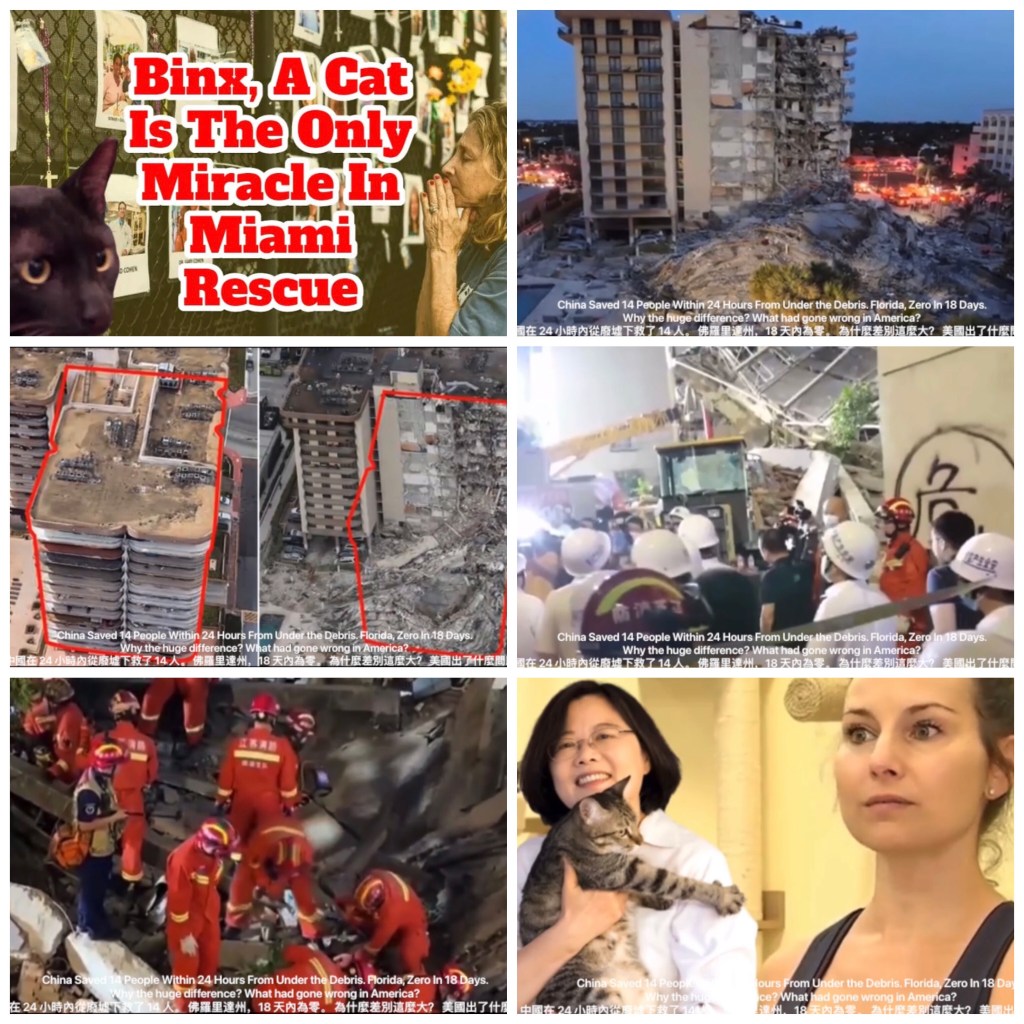
Video: China Saved 14 People Within 24 Hours From Under the Debris. Florida, Zero In 18 Days. Why the huge difference? What had gone wrong in America? 中國在 24 小時內從廢墟下救了 14 人。 佛羅里達州,18 天內為零。 為什麼差別這麼大? 美國出了什麼問題?It is said that not even one person was found alive in 17 days of rescue in Miami. The survival of the cat Binx was widely reported by mainstream media as a miracle. https://vimeo.com/575219380 https://youtu.be/vbOj9kVmRpA https://www.facebook.com/100036400039778/posts/529235778299752/?d=n
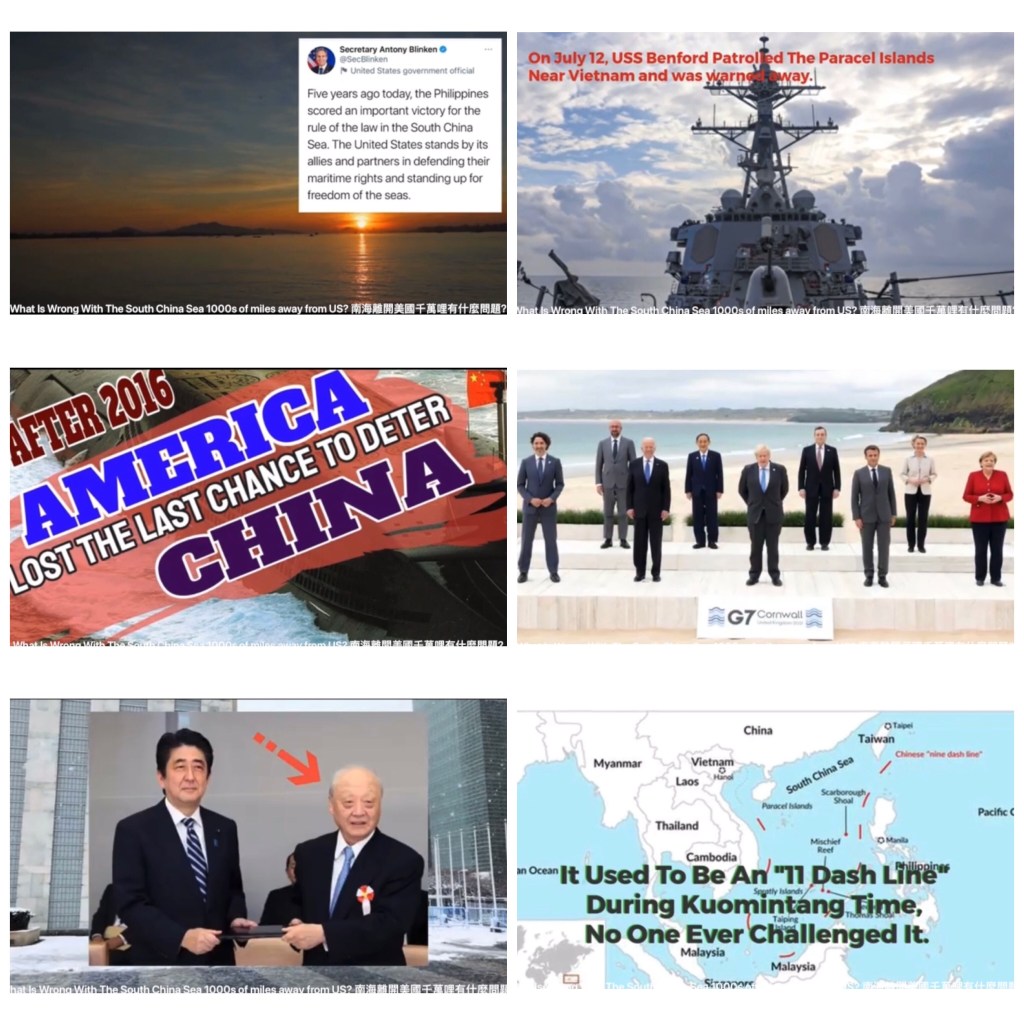
Video: What Is Wrong With The South China Sea 1000s of miles away from US? 南海離開美國千萬哩有什麼問題? Blinken released a statement on the so-called “fifth anniversary of the South China Sea arbitration ruling” through the US State Department’s official website. He also emphasized the 1951 Mutual Defense Treaty between the US and the Philippines. An armed attack in the South China Sea against the Armed Forces of the Philippines, public vessels, or aircraft would obligate the United States to war with China. https://vimeo.com/575115347 https://youtu.be/cjj6fGCPjKA https://www.facebook.com/100036400039778/posts/529096041647059/?d=n
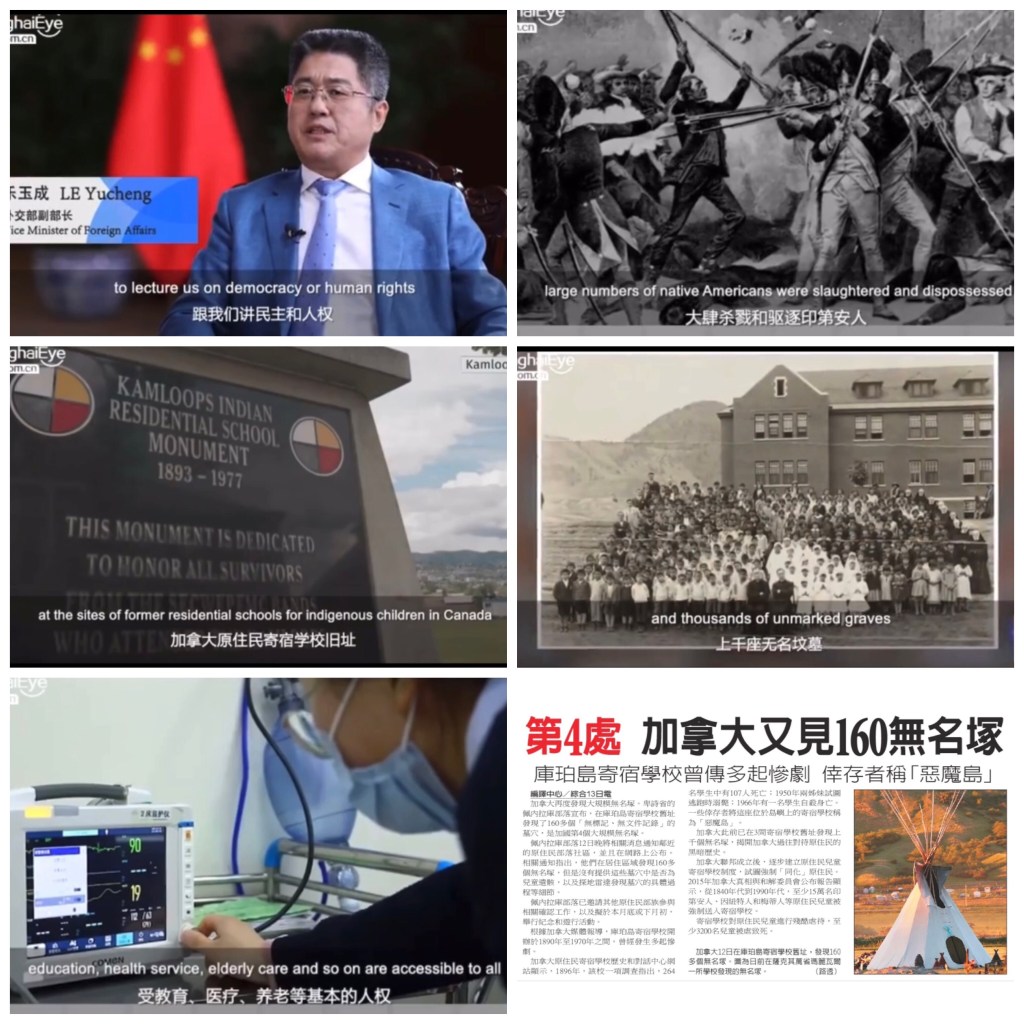
Video: US in no position to lecture China on human rights – China Vice Foreign Minister. 美國沒有資格在人權問題上對中國說教 – 中國外交部副部長。 https://vimeo.com/575014317 https://youtu.be/JLXMuosSJ2o https://www.facebook.com/100036400039778/posts/528979211658742/?d=n Le Yucheng: Democracy and human rights are not posters or slogans. They are not decorations for window dressing. True democracy and human rights are about guaranteeing basic rights such as employment, housing, food and clothing, education, health service, elderly care and so on. To judge whether a medicine works, one does not look at its advertising but its efficacy. The logic is the same for democracy and human rights. The CPC has made extraordinary governance achievements in the past 100 years. That in itself constitutes the most successful and convincing democracy. The CPC led the 1.4 billion Chinese people in successfully ending extreme poverty that had plagued the nation for thousands of years, and in living a happy life. That in itself is the biggest and greatest human right. So there is no ground at all to accuse the CPC on human rights. In fact, the CPC deserves to be decorated and awarded a gold medal.
The United States and other Western countries are in no position to lecture us on democracy or human rights. They all have a heavily stained human rights record. Historically, these countries engaged in genocide against indigenous peoples and discrimination and persecution against minority ethnic communities. During the United States Westward Expansion after its independence, large numbers of native Americans were slaughtered and dispossessed, causing their population to dwindle from five million to a quarter million in just over 100 years. Native Americans were once the bulk of the population in North America. Today however, they only account for less than two percent of U.S. population. And they were not given U.S. citizenship until 1924. In Canada, remains of over 200 dead children and more than 1,000 unmarked graves were found at the sites of former residential schools for indigenous children. Over the past 160 years, at least 4,000 Canadian children died at residential schools for no natural reason. Even to this day, right inside the United States, people such as George Floyd still “can’t breathe”. Minority groups remain victims of discrimination, and the homeless have to live on the streets. How brazen it is that these countries have the courage to call themselves “human rights defenders”, lecture others on human rights, and talk down to or point fingers at others. This is nothing but interference in other countries’ domestic affairs in the name of human rights.
Many Chinese share the view on the Internet that some Americans showing concerns for China’s human rights feels like “weasels wishing chickens a happy new year”. The United States, as is widely known, has policies against not just China, but also Muslims. In recent years, almost all the bombs fired by the U.S. troops have dropped on Muslim-inhabited territories. The first country that issued a Muslim ban was the United States. But absurdly, the United States is now “worried” about human rights of Chinese Muslims who live a happy life in Xinjiang. Isn’t that preposterous?
One of Esquel former employees wrote to me: @Johnson Choi 蔡永強 我以前在这个公司做过,这个公司的福利非常好 Johnson Choi 蔡永强 I have worked in this company before, and the company’s benefits is very good. 这个公司做出口服装的,从种棉花到织布到成衣,可以说是一条龙了,虽然员工很多,但是员工的福利和员工的业余生活都非常丰富,业余生活都在生活区,有舞蹈培训,柔道培训,跆拳道培训,足球场,蓝球场,乒乓球馆,羽毛球馆,业余生活可以说是安排得非常好了,这些还是在十年前,我想现在应该更好吧,住宿是免费的,只需要出水电费,一个月大概也就扣个二三十块钱. This company exports clothing, from growing cotton to weaving to ready-made garments. It can be said that it is a one-stop shop. Although there are many employees, the welfare of the employees and the employees’ spare-time life are very rich. The spare-time life is in the living area and there is dance training. , Judo training, Taekwondo training, football field, basketball court, table tennis hall, badminton hall, amateur life can be said to be very well arranged, these are still ten years ago, I think it should be better now, accommodation is free , You only need to pay for water and electricity, and you will be deducted about 20 to 30 yuan a month. 这是一个良心企业. This is a Enterpriise with conscience. 每个月都每人发一提纸巾,到了节假日也有组织活动,比如三八妇女节,每个女生都会发一个礼物,端午节,中秋节都有. Everyone gives out a paper towel every month, and there are organized activities on holidays, such as Women’s Day on March 8th, every girl will give out a gift, Dragon Boat Festival and Mid-Autumn Festival. 我在那个公司上班的时候,很多同事都做了十几年了. When I was working in that company, many of my colleagues had been doing it for more than ten years. 因为公司给每个员工都买社保, 福利好,另一个就是公司给每个员工都买了社保. Because the company buys social insurance for every employee and the benefits are good, and the other is that the company buys social insurance for every employee.