Battling behind the scenes: US pressuring WHO on coronavirus origins tracing by Leng Shumei, Zhang Hui and Chen Qingqing May 26 2021
Photo taken on Jan. 22, 2020 shows an exterior view of the headquarters of the World Health Organization (WHO) in Geneva, Switzerland.
Upholding the true spirit of science, valuing facts and advocating for solidarity rather than confrontation in face of the pandemic should be a major lesson learned from the past year and shared at the ongoing 74th World Health Assembly (WHA), however, the US, exploiting its return to the WHO under the Biden administration, is turning the pivotal meeting, supposed to summarize the virus-fight experiences, into a battleground between science and politics.
By hyping the extremely unlikely hypothesis about the origins of COVID-19, misquoting preeminent experts in origins studies and coming up with groundless reports that have been refuted by Chinese officials and experts repeatedly, the Western media, along with some US politicians and government agencies, are now putting scientists in an awkward and embarrassing position, as some have been struggling to find more facts about the virus in a highly politicized environment, according to people familiar with the matter.
Washington has called for a new round of studies to be conducted with independent and international experts at the WHA on Tuesday as Andy Slavitt, White House senior adviser for the COVID-19 response, was quoted as saying in the Wall Street Journal that “we need to get to the bottom of this and we need a completely transparent process from China. We need the WHO to assist in that matter. We don’t feel like we have that now.”
It is no surprise to some observers that the US delegation brought up again a request to return to China to conduct origins studies, given it was one of the tricks of the former US president Donald Trump in shifting the blame to China for his own failed pandemic handling, and blaming China on the question of the virus origins is one way to reach this goal.
Just hours before this year’s WHA began on Monday, the WSJ ran a story citing an undisclosed US intelligence report that indicated three researchers from the Wuhan Institute of Virology became sick in November 2019, with symptoms consistent with both COVID-19 and common seasonal illnesses, fueling the debate about the origins.
Dutch virologist Marion Koopmans, a member of the WHO-China joint team on the origins study earlier this year in Wuhan, Central China’s Hubei Province, said a follow-up trip could be helpful to gather additional research on the origins of the disease, comments made after the US called for a new round of studies, according to Reuters.
Koopmans said the team would be eager to carry out additional research in China in a number of areas and it was awaiting the outcome of WHO discussions, Reuters said.
While some observers wonder whether the latest remarks of the scientist, who took part in the earlier origins study in Wuhan would be taken by some Western media and officials as backtracking on her words and even an implication about the interference of the Chinese government in their earlier field studies, the Global Times learned from some people familiar with the matter that both Chinese and foreign scientists who took part in the study have been facing growing political pressure in recent months.
Battle behind the scene
Koopmans clarified in an email to the Global Times on Wednesday the follow-up studies on the coronavirus origins she called for should be a combination of studies that start where the WHO-China joint team left off, so that means studies in China and outside of China.
The studies should look at regions outside China that have reported “viral sequences very early, in 2019, like Northern Italy,” as recommendations in the joint study report called for studies in regions where viruses are almost identical to the first detected viruses from Wuhan, Koopmans said.
She also said there is also a need for more surveys of bats, particularly in China’s neighboring countries.
The suggestion is in line with a joint WHO-China report following the studies in Wuhan, which further suggests that animals in livestock farms in Southeast Asia could be “linked to early human cases” and that further study on these farms is needed.
An expert from the China-WHO joint team acknowledged to the Global Times on Monday that the latest WSJ report about the Wuhan lab is purely political, which echoed US government’s attempts to further smear China’s efforts in the anti-epidemic fight and continuing its “shift-the-blame” strategy.
As early as March before the report of the investigation in China was released, Chinese experts involved in the issue reached by the Global Times said that they felt palpable “political pressure” on the international experts. A Chinese expert from the joint team told the Global Times in an earlier interview that the Chinese side did not know “exactly who is putting pressure on the international experts,” which could be coming from several countries.
The invisible “pressure” formed following the US’ signal of their return to the WHO in January after the Biden administration took office and later in February, it announced it would pay the millions of dollars it owed to the WHO, a Chinese professor on US studies who preferred not to be identified, told the Global Times on Wednesday.
Subsequently, there were unexpected “interludes” that kept occurring between China and WHO cooperation, which used to move smoothly in 2020 during the US’ absence in the organization, he said.
It was not only the experts from the joint team feeling the pressure from the outside, Tedros Adhanom Ghebreyesus, the WHO chief, also made some comments about the matter that aroused discontent from the Chinese side.
After Tedros commented earlier in April that further investigation is needed on the hypothesis of a “lab leak” being the origins of the COVID-19, a theory that has already been determined by the WHO-China joint expert team as being extremely unlikely, an anonymous Chinese expert on the WHO-China joint team told the Hubei Daily that he was “surprised and unsatisfied” by Tedros’ comment, calling his comment “irresponsible.”
China has called for the return of the US to the World Health Organization (WHO) with a “serious, earnest, transparent and responsible” attitude to contribute to international cooperation against the pandemic, but the US seemingly is making the issue more complex and a political struggle as “the US and China are split” over the origins and “experts call for new research in China” made the headlines in Western media on Wednesday following the assembly’s discussion over the investigation into the origins of the virus the day before.
In the past two months following these moves, international cooperation in tracing pandemic origins had grown into a game between politics and science, a source close to the issue told the Global Times under the condition of anonymity, noting that he can understand that some foreign experts and WHO officials showed change in their expressions and attitude to China over affairs related to the trace to the origins of the virus, as it is hard to strike a balance in this game.
What’s next?
In a reply to the Global Times inquiry on Wednesday, the WHO said it is reviewing the recommendations from the virus origins studies report at the technical level.
“The technical teams will prepare a proposal for the next studies that will need to be carried out, and will present that to the Director-General for his consideration,” read the reply.
Feng Zijian, Deputy Director-General of the Chinese Center for Disease Control and Prevention (China’s CDC) who is also an expert on the WHO joint team, told an earlier briefing on March 26 that the source-tracing work of the WHO-China joint team in Wuhan, part of the global work of studying the virus origins, has been finalized with a consensus that this scientific work cannot be done overnight.
He emphasized that the WHO-led origins-tracing work requires efforts on a global scale, of which China is just a part, and that is the consensus of the Chinese and the foreign experts on the joint team.
With more evidence of early cases emerging in other countries, including the US, Spain, Italy, France, Brazil and India, some even earlier than the cases reported in Wuhan, several preeminent Chinese public health experts have called for the WHO to follow the evidence trail and continue carrying out global field studies in the coming months.
According to the clues, reports and researches, the COVID-19 pandemic was spotted in various places around the world early in the second half of 2019, Zhao Lijian, Chinese Foreign Ministry spokesperson Zhao Lijian told a routine press conference on Wednesday.
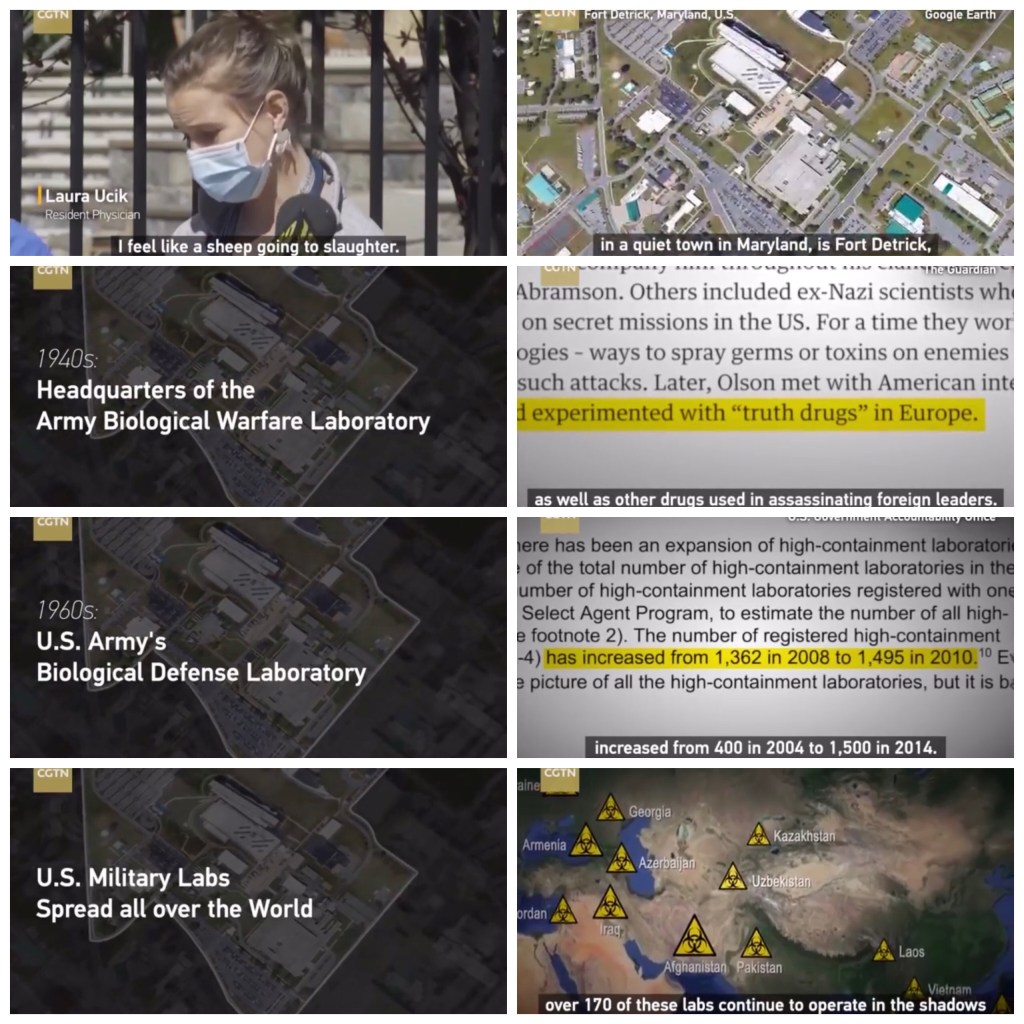
China takes the origins-tracing work seriously with a responsible attitude, and has made positive contributions that are widely recognized. If the US side truly demands a completely transparent investigation, it should follow China’s lead to invite the WHO experts to the US, open Fort Detrick and biolabs overseas to the rest of the world, and disclose the detailed data and information on the unexplained outbreaks of respiratory disease in northern Virginia in July, 2019 and the EVALI outbreak in Wisconsin, the official noted.
“We urge the US and other relevant countries to cooperate with the WHO in a scientific, open and transparent manner,” Zhao said.
Jack London wrote of exterminating Chinese, the genocide of “lesser breeds,” and the supremacy of the white race. Sep 20, 2017
Acclaimed novelist Jack London was a white supremacist who advocated for the genocide of “the lesser breeds.” Credits: Photo by Darryl Barnes
In 1951, Jack London Square officially became Jack London Square. The famed author spent much of his childhood along Oakland’s bustling waterfront, working as an oyster pirate and sailor before venturing off to new lands. He would go on to write The Call of the Wild, White Fang, and The Sea Wolf — classics you were surely forced to read in high school. Those books also do little to paint a full picture of the man behind them.
London’s other works, however, reveal his complexity: He advocated for the assassination of political leaders, fought for socialism, and, ultimately, was full of hypocrisies. They also depict someone who was undoubtedly, openly, and horribly racist.
One of the best examples is “The Unparalleled Invasion,” his science-fiction short story published in 1910. The story begins in China, where society has prospered and the population has exploded — so much so that there are more Chinese people in the world than Anglo-Saxon. To that news, London wrote, “the world shivered.”
In response to a rise in Chinese immigration, the United States and other Western countries conducted mass biological warfare, sending scores of deadly diseases to China and destroying its population — an act that London described as though it were a heroic feat. A year later, the West arrived, sentencing any remaining survivor to death and creating a glorious colony for white people: “the sanitation of China.” The end.
His 1911 novel Adventure includes a white man who “rode pick-a-back on a woolly-headed, black-skinned savage.” Enough said.
Perhaps the most blatant, though, was his 1901 essay “The Salt of the Earth,” in which he establishes that “the salt of the Earth” are English-speaking Anglo-Saxons, “a race of mastery and achievement.” He goes on to say that white people murdering those of other races is purely natural selection — non-whites are destroyed once they come into contact “with superior civilization,” he wrote. In the face of population growth, he advocated for genocide of “the lesser breeds.”
Maybe folks weren’t familiar with the breadth of London’s work beyond seafaring adventures and triumphant dog tales back in 1951 at the time of Jack London Square’s naming, but they certainly should have been aware by the ’90s. Yet the life-size bronze statue of London, sitting at the foot of Broadway overlooking the water, wasn’t erected until 1996.
It’s still a noted highlight of any tour of the Jack London district. Little bronze paw prints lead visitors there, as well as to a replica of a cabin London graced with his presence next to Heinhold’s First and Last Chance Saloon, where London was also purportedly a regular. The Oakland tourism website is chock-full of references to London, who gets mentioned in the same breath as Gertrude Stein and Tom Hanks as Oakland’s most notable former residents.
Perhaps, given his upbringing and the times, London’s views were inevitable. In 2010’s Wolf: The Lives of Jack London, biographer James L. Haley details how London’s mother was a crazed racist who found it humiliating to live near Black people.
Court of Arbitration for Sport fails again in Sun Yang case 體育仲裁法院在孫陽案中再次失敗 by Rick Sterling May 26 2021 @ricksterling99 rsterling1@protonmail.com
The deck is stacked – Although Sun Yang has a strong case and much evidence to support his defence, he will have to overcome a panel that could be considered as influenced by pervasive and growing anti-China propaganda. By selecting a Panel which is entirely European and American educated, the Court of Arbitration for Sport has failed a basic test of fairness. 結果早已被內定-儘管孫楊有很強的辯護力和足夠的證據來支持他的辯護,但他將不得不克服一個小組,該小組可能被認為受到反中宣傳的廣泛和不斷增長的影響。 通過選擇一個完全由歐洲和美國教育的專家小組,體育仲裁法院未能通過公平的基本檢驗.
The Court of Arbitration for Sport (CAS) will hold its second hearing into a case involving the Chinese swimmer Sun Yang Sports this week, from 25-27 May. The ruling of the first Panel was overturned by the Swiss Supreme Court (Swiss Federal Tribunal) because it was conclusively demonstrated the President of the first hearing was biased. The case will be followed closely in the sporting world and can be seen as laden with geopolitical ramifications. For background on the case see here and here and here.
If an American swimmer was having a controversial case adjudicated by a panel of three judges, would you consider it fair if none of the judges spoke English? Would it seem biased if all of the judges were from Asia?
That is the situation facing Chinese swimmer Sun Yang in this second hearing before the Court of Arbitration for Sport (CAS). According to its own website, there are numerous qualified adjudicators who speak Chinese. Yet it has again chosen to NOT have a Chinese speaker on the hearing team. They have again chosen a panel which is exclusively European and this time, where every panelist is associated with the United States.
More than Racist Tweets
Franco Frattini… The previous CAS decision was overturned by the Swiss Federal Tribunal because the Chairman of the panel, Franco Frattini, published tweets considered racist. It was embarrassing to have a CAS Adjudicator lashing out on Twitter about a ‘yellow faced Chinese monster’. It was also embarrassing that he quietly mocked Sun Yang’s mother.
But these revelations were only the tip of the iceberg. The first Panel was biased against China in a geopolitical sense. Frattini was formerly Italy’s foreign minister, supporting both controversial military action in Iraq and the overthrow of the Libyan government. This is evidence of an attitude in favor of western aggression. In 2004, the UN Secretary General said the invasion of Iraq was illegal and contrary to the UN Charter.
Another member of the panel openly supported the US campaign to overthrow the government of Venezuela. This evidences a similar attitude in favor of US aggression. The third panelist was the counsel for The Philippines in a dispute with China. It is not hard to see how this could also be construed as suggesting bias.
The new panel appears similarly biased. The jurists in the new CAS panel are:
• Jan Paulsson from France. He studied at Harvard and Yale and taught at the University of Miami. He has served as counsel for numerous oil corporations in their court fights against countries seeking damages, e.g., Chevron vs. Ecuador, Conoco Philips vs. Venezuela, Total vs. Argentina. Always on the side of the oil corporation. This suggests possible pro-corporatist bias against populist governments, such as China.
• Bernhard Harotiau from Belgium. He studied and was a visiting scholar at Columbia University in the US. He is former vice chairman of the Center for American and International Law in Dallas Texas.
• Hans Nater from Switzerland. He studied at Harvard and practiced law in New York.
Studying in the US means an Arbitrator is likely to have friends and contacts in the US. It also means they are likely to be influenced by US media and sentiments. Of course there are exceptions to this, but there is strong possibility of subtle or not so subtle bias. Would CAS have selected a panel entirely educated in Russia?
Politicisation of sport in the USA One might ask: What difference does it make if they all worked in the USA? This is hugely significant because the US government has politicised sports to an incredible degree.
Dr. Grigory Rodchenkov… In 2020, the US Congress passed the ‘Rodchenkov Act’. With this law, the US now claims extraterritorial rights to punish anyone in any country deemed to be involved in doping and harming a US athlete. The US will be prosecutor, judge, and executioner.
What could go wrong? Even the World Anti-Doping Agency (WADA) has expressed alarm at this power grab. It warns, ‘No nation has ever before asserted criminal jurisdiction over doping offences that occurred outside its national borders – and for good reason’.
The Congressional act is named after the Russian doping expert, Dr. Grigory Rodchenkov, who was transformed from villain to hero when he moved from Russia to the USA. Of course, the passage of the Rodchenkov Act doesn’t automatically signal bias against China. But many are suspicious about the US’s attempts to become the world’s anti-doping police, especially since its own professional sports are not held to the same standards as those set by WADA.
As another example of the politicisation of sports and anti-China hysteria, political leader Nancy Pelosi has called for a diplomatic boycott of the 2022 Winter Olympics in China. She suggests it is a “moral” imperative. Another US Democratic Party leader is calling for postponement of the games so they can be moved to another country. This illustrates a US political bias against China and Chinese sport in particular.
The US establishment seems desperate to stop China’s rise; hence the effort to prevent China holding a successful Olympic Games. In this context, it is naïve to expect an impartial hearing for a Chinese athlete before a US-centric Panel.
WADA vs. FINA It is seldom mentioned that this hearing is not just against Sun Yang. It is also against the international swimming federation, FINA. The reason is because FINA held a hearing to review the controversy and determined that Sun Yang was NOT guilty of an anti-doping rule violation. The FINA panel agreed (PDF below) that the test team was not properly accredited. They also determined the Doping Control Officer (DCO) failed to give an appropriate warning to Sun Yang as required. This is necessary because an anti-doping rule violation can be life altering and career ending. In Sun Yang’s case, this did not occur.
The World Anti-Doping Agency, based in Canada, did not like the FINA panel decision in support of Sun Yang. Hence the long and expensive case before the Court of Arbitration for Sport.
The deck is stacked Although Sun Yang has a strong case and much evidence to support his defence, he will have to overcome a panel that could be considered as influenced by pervasive and growing anti-China propaganda. By selecting a Panel which is entirely European and American educated, the Court of Arbitration for Sport has failed a basic test of fairness.
Court of Arbitration for Sport fails again in Sun Yang case 體育仲裁法院在孫陽案中再次失敗 by Rick Sterling May 26 2021 @ricksterling99 rsterling1@protonmail.com
The deck is stacked – Although Sun Yang has a strong case and much evidence to support his defence, he will have to overcome a panel that could be considered as influenced by pervasive and growing anti-China propaganda. By selecting a Panel which is entirely European and American educated, the Court of Arbitration for Sport has failed a basic test of fairness. 結果早已被內定-儘管孫楊有很強的辯護力和足夠的證據來支持他的辯護,但他將不得不克服一個小組,該小組可能被認為受到反中宣傳的廣泛和不斷增長的影響。 通過選擇一個完全由歐洲和美國教育的專家小組,體育仲裁法院未能通過公平的基本檢驗.
The Court of Arbitration for Sport (CAS) will hold its second hearing into a case involving the Chinese swimmer Sun Yang Sports this week, from 25-27 May. The ruling of the first Panel was overturned by the Swiss Supreme Court (Swiss Federal Tribunal) because it was conclusively demonstrated the President of the first hearing was biased. The case will be followed closely in the sporting world and can be seen as laden with geopolitical ramifications. For background on the case see here and here and here.
If an American swimmer was having a controversial case adjudicated by a panel of three judges, would you consider it fair if none of the judges spoke English? Would it seem biased if all of the judges were from Asia?
That is the situation facing Chinese swimmer Sun Yang in this second hearing before the Court of Arbitration for Sport (CAS). According to its own website, there are numerous qualified adjudicators who speak Chinese. Yet it has again chosen to NOT have a Chinese speaker on the hearing team. They have again chosen a panel which is exclusively European and this time, where every panelist is associated with the United States.
More than Racist Tweets
Franco Frattini… The previous CAS decision was overturned by the Swiss Federal Tribunal because the Chairman of the panel, Franco Frattini, published tweets considered racist. It was embarrassing to have a CAS Adjudicator lashing out on Twitter about a ‘yellow faced Chinese monster’. It was also embarrassing that he quietly mocked Sun Yang’s mother.
But these revelations were only the tip of the iceberg. The first Panel was biased against China in a geopolitical sense. Frattini was formerly Italy’s foreign minister, supporting both controversial military action in Iraq and the overthrow of the Libyan government. This is evidence of an attitude in favor of western aggression. In 2004, the UN Secretary General said the invasion of Iraq was illegal and contrary to the UN Charter.
Another member of the panel openly supported the US campaign to overthrow the government of Venezuela. This evidences a similar attitude in favor of US aggression. The third panelist was the counsel for The Philippines in a dispute with China. It is not hard to see how this could also be construed as suggesting bias.
The new panel appears similarly biased. The jurists in the new CAS panel are:
• Jan Paulsson from France. He studied at Harvard and Yale and taught at the University of Miami. He has served as counsel for numerous oil corporations in their court fights against countries seeking damages, e.g., Chevron vs. Ecuador, Conoco Philips vs. Venezuela, Total vs. Argentina. Always on the side of the oil corporation. This suggests possible pro-corporatist bias against populist governments, such as China.
• Bernhard Harotiau from Belgium. He studied and was a visiting scholar at Columbia University in the US. He is former vice chairman of the Center for American and International Law in Dallas Texas.
• Hans Nater from Switzerland. He studied at Harvard and practiced law in New York.
Studying in the US means an Arbitrator is likely to have friends and contacts in the US. It also means they are likely to be influenced by US media and sentiments. Of course there are exceptions to this, but there is strong possibility of subtle or not so subtle bias. Would CAS have selected a panel entirely educated in Russia?
Politicisation of sport in the USA One might ask: What difference does it make if they all worked in the USA? This is hugely significant because the US government has politicised sports to an incredible degree.
Dr. Grigory Rodchenkov… In 2020, the US Congress passed the ‘Rodchenkov Act’. With this law, the US now claims extraterritorial rights to punish anyone in any country deemed to be involved in doping and harming a US athlete. The US will be prosecutor, judge, and executioner.
What could go wrong? Even the World Anti-Doping Agency (WADA) has expressed alarm at this power grab. It warns, ‘No nation has ever before asserted criminal jurisdiction over doping offences that occurred outside its national borders – and for good reason’.
The Congressional act is named after the Russian doping expert, Dr. Grigory Rodchenkov, who was transformed from villain to hero when he moved from Russia to the USA. Of course, the passage of the Rodchenkov Act doesn’t automatically signal bias against China. But many are suspicious about the US’s attempts to become the world’s anti-doping police, especially since its own professional sports are not held to the same standards as those set by WADA.
As another example of the politicisation of sports and anti-China hysteria, political leader Nancy Pelosi has called for a diplomatic boycott of the 2022 Winter Olympics in China. She suggests it is a “moral” imperative. Another US Democratic Party leader is calling for postponement of the games so they can be moved to another country. This illustrates a US political bias against China and Chinese sport in particular.
The US establishment seems desperate to stop China’s rise; hence the effort to prevent China holding a successful Olympic Games. In this context, it is naïve to expect an impartial hearing for a Chinese athlete before a US-centric Panel.
WADA vs. FINA It is seldom mentioned that this hearing is not just against Sun Yang. It is also against the international swimming federation, FINA. The reason is because FINA held a hearing to review the controversy and determined that Sun Yang was NOT guilty of an anti-doping rule violation. The FINA panel agreed (PDF below) that the test team was not properly accredited. They also determined the Doping Control Officer (DCO) failed to give an appropriate warning to Sun Yang as required. This is necessary because an anti-doping rule violation can be life altering and career ending. In Sun Yang’s case, this did not occur.
The World Anti-Doping Agency, based in Canada, did not like the FINA panel decision in support of Sun Yang. Hence the long and expensive case before the Court of Arbitration for Sport.
The deck is stacked Although Sun Yang has a strong case and much evidence to support his defence, he will have to overcome a panel that could be considered as influenced by pervasive and growing anti-China propaganda. By selecting a Panel which is entirely European and American educated, the Court of Arbitration for Sport has failed a basic test of fairness.
Video: Fort Detrick Coronavirus Conspiracy 2021 UPDATE. More evidence has surfaced. When will we get a proper investigation? 美國德里特里克堡冠狀病毒陰謀2021年更新。 更多的證據浮出水面。 我們什麼時候可以進行適當的調查?https://vimeo.com/555137285 https://youtu.be/cdKI5qOF_a8
How American Journalism Became A Mouthpiece Of The Deep State
The intelligence community uses the media to manipulate the American people and pressure elected politicians.
The Washington Post’s David Ignatius MAY 24, 2021 by PETER VAN BUREN
Reporters joke that the easiest job in Washington is CIA spokesman. You need only listen carefully to questions, say, “No comment,” and head to happy hour. The joke, however, is on us. The reporters pretend to see only one side of the CIA, the passive hiding of information. They meanwhile profit from the other side of the equation, active information operations designed to influence events in America. It is 2021 and the CIA is running an op against the American people.
Leon Panetta, once director of CIA, explained bluntly that the agency influenced foreign media outlets ahead of elections in order to “change attitudes within the country.” The method was to “acquire media within a country or within a region that could very well be used for being able to deliver a specific message or work to influence those that may own elements of the media to be able to cooperate, work with you in delivering that message.” The CIA has been running such ops to influence foreign elections continuously since the end of WWII.
The goal is to control information as a tool of influence. Sometimes the control is very direct, operating the media outlet yourself. The problem is this is easily exposed, destroying credibility.
A more effective strategy is to become a source for legitimate media such that your (dis)information inherits their credibility. Most effective is when one CIA plant is the initial source while a second CIA plant acts seemingly independently as a confirming source. You can push information to the mainstream media, who can then “independently” confirm it, sometimes unknowingly, through your secondary agents. You can basically write tomorrow’s headlines.
Other techniques include exclusive true information mixed with disinformation to establish credibility, using official sources like embassy spokesmen “inadvertently” confirm sub details, and covert funding of research and side gigs to promote academics and experts who can discredit counter-narratives.
From the end of WWII to the Church Committee in 1976, this was all dismissed as a conspiracy theory. Of course the U.S. would not use the CIA to influence elections, especially in fellow democracies. Except it did. Real-time reporting on intelligence is by nature based on limited information, albeit marked with the unambiguous fingerprints of established tradecraft. Always give time a chance to explain.
Through Operation Mockingbird the CIA ran over 400 American journalists as direct assets. Almost none have ever discussed their work publicly. Journalists performed these tasks for the CIA with the consent of America’s leading news organizations. The New York Times alone willingly provided cover for ten CIA officers over decades and kept quiet about it.
Long term relationships are a powerful tool, so feeding a true big story to a young reporter to get him promoted is part of the game. Don’t forget the anonymous source who drove the Watergate story was an FBI official who through his actions made the careers of cub reporters Woodward and Bernstein. Bernstein went on to champion Russiagate. Woodward became a Washington hagiographer. Ken Dilanian, formerly with the Associated Press and now working for NBC, still maintains a “collaborative relationship” with the CIA.
That’s the tradecraft. The problem for America is once again the tools of war abroad have come home, just the same as when post-9/11 the NSA turned its antennas inward. The intelligence community is currently operating against the American people using established media.
Some of it can’t be more obvious. The CIA always planted stories abroad for American outlets to pick up. To influence public opinion they lied to journalists in the run up to the 2003 Iraq war. The agency works directly with Hollywood to control movies about itself.
Turn on any of the advocacy media outlets and you see panels of former CIA officials. None however is more egregious than John Brennan, former director, who for years touted Russiagate when he knew from information gathered while he was still in office that it was all fake. Brennan probably leaked the foundational lie alleging Trump was dirty with Russia to the press in January of 2017 as the kickoff event to the info op still running today.
Brennan’s role is more than speculation. John Durham, the U.S. attorney leading the ongoing “how it happened” Russiagate investigation into the intelligence community, has requested Brennan’s emails and call logs from CIA. Durham is also examining whether Brennan changed his story between his public comments (not under oath: say anything) and his May 2017 testimony to Congress (under oath: watch out for perjury) about the dossier. Reporter Aaron Mate is less delicate, laying out the evidence Brennan was “a central architect and promoter of the conspiracy theory from its inception.” Even blunter is Senator Rand Paul, who directly accuses Brennan of trying “to bring down a sitting president.”
How that worked helps show how info ops intertwine with covert ops. Justice Department Inspector General Michael Horowitz’s report shows the FBI unleashed a full-spectrum spying campaign with the primary document of the information op, the Steele Dossier, as an excuse. Dossier author and ex-British intel officer Christopher Steele also created a textbook information loop to publicize his work, secretly becoming his own corroborating source.
The Horowitz report also shows it was a 5 Eyes team effort; Australian diplomat Alexander Downer, a man with ties to his nation’s intel services, arranged a meeting with Trump staffer George Papadopoulos to set in motion FISA surveillance. British GCHQ monitored Trump officials and passed info to the NSA. The op used CIA assets, shadowy academics Stefan Halper and Joseph Mifsud, as dangles. There was even a honey trap with a female FBI undercover agent inserted into Israeli-arranged social situations with a Trump staffer.
It was all based on nothing but disinformation and the American press swallowed every bit of it to falsely convince a vast number of citizens their nation was run by a Russian asset. Robert Mueller, whose investigation was supposed to propel all this nothing into impeachment, ended up exercising one of the last bits of political courage Americans will ever see in walking right to the edge of essentially a coup and refusing to go one step more.
The CIA is a learning institution, and it recovered well from Russiagate. Details can be investigated. That’s where the old story fell apart. The Steele Dossier wasn’t true. But the a-ha discovery was the realization that since you’ll never formally prosecute anyone, you don’t need to bother with evidence when you can just throw out accusations. The new paradigm let the nature of the source—the brave lads of the intelligence agencies—legitimize the accusations. Go overt and let the unexpected prestige of the CIA as progressive heroes substantiate things. It worked.
So in December 2017 CNN reported Donald Trump, Jr., had advance access to the WikiLeaks archive. Within an hour, NBC’s Ken Dilanian and CBS both claimed independent confirmation. It was a complete lie. How do you confirm a lie? Ask another liar.
In February 2020, the Office of the Director of National Intelligence (ODNI) briefed the House Intelligence Committee the Russians were election meddling again to favor Trump. A few weeks earlier, the ODNI briefed Bernie Sanders the Russians were also meddling in the Democratic primaries in his favor. Both briefings were leaked, the former to the New York Times to smear Trump for replacing his DNI, the latter to the Washington Post ahead of the Nevada caucuses to damage Sanders. Who benefits is always a good question. The answer was Joe Biden.
In June 2020 the New York Times stated the CIA concluded the Russians “secretly offered bounties to Taliban-linked militants for killing coalition forces in Afghanistan — including targeting American troops.” The story ran near another claiming Trump had spoken disrespectfully about fallen soldiers. Neither was true. But they broke around Trump’s announcement about withdrawing troops from Afghanistan and were aimed at discouraging pro-military voters.
Earlier this month the Washington Post, citing anonymous sources, claimed the FBI gave a defensive briefing to Rudy Giuliani in 2019, before he traveled to Ukraine. Giuliani supposedly ignored the warning. The story was “independently confirmed” by both NBC and the New York Times. It was totally false.
We are left to wonder how all these media outlets keep making the same mistakes with sources and only in disfavor to Trump, et al., and never the other way. They have become a machine as trustworthy as the spies they rely on.
The American system always envisioned an adversarial role for the media. One of the earliest challenges to freedom of the press was the colonial-era Peter Zenger case, which established the right of the press to criticize politicians free from libel charges. At times when things really mattered, men like Edward R. Murrow worked their craft to preserve democracy. Same for Walter Cronkite reaching his opposition to the Vietnam War, and the New York Times reporters weighing imprisonment to publish the Pentagon Papers.
In each of those instances the handful of reporters who risked everything to tell the truth were held up as heroes. Seeing the Times fighting for its life, the Washington Post co-published the Pentagon Papers to force the government to make its case not just against a rival newspaper, but the 1A itself.
Not today. Journalism is devoted to eliminating practitioners unwilling to play the game. Few have been targeted more than Glenn Greenwald (with Matt Taibbi as runner up.)
Greenwald exploded into a journalistic superhero for his reporting on Edward Snowden’s NSA archive, founding the Intercept to serve as a platform for that work. Then something very, very odd made it appear the Intercept outed one of its own whistleblower sources. Evidence suggests the source was a patsy, set up by the intel community, and exposed via Matt Cole, one of the Intercept journalists on this story. Cole was also involved in outing CIA officer John Kiriakou as a source on torture. Whistleblowers were made to think twice before turning to the Intercept.
Greenwald’s later criticism of the media for accepting Deep State lies as truth, particularly concerning Russiagate, turned him into a villain for progressives. MSNBC banned him, and other media outlets ran smear stories. He recently quit the Intercept after it refused to publish his article on Hunter Biden’s ties to China unless he deleted portions critical of Joe Biden.
Greenwald wrote
the most significant Trump-era alliance is between corporate outlets and security state agencies, whose evidence-free claims they unquestioningly disseminate… Every journalist, even the most honest and careful, will get things wrong sometimes, and trustworthy journalists issue prompt corrections when they do. That behavior should be trust-building…
But when media outlets continue to use the same reckless and deceitful tactics — such as claiming to have “independently confirmed” one another’s false stories when they have merely served as stenographers for the same anonymous security state agents while “confirming” nothing — that strongly suggests a complete indifference to the truth and, even more so, a willingness to serve as disinformation agents. After decades of success abroad with info ops, the CIA and others turned those weapons on us. We are seeing the Deep State meddle in presidential politics, simultaneously destroying (albeit mostly with their cooperation) the adversarial media while crushing faith in both our leaders and in the process of electing them. Democracy has no meaning here.
Peter Van Buren is the author of We Meant Well: How I Helped Lose the Battle for the Hearts and Minds of the Iraqi People, Hooper’s War: A Novel of WWII Japan, and Ghosts of Tom Joad: A Story of the 99 Percent.
Professor Ling-chi Wang of UC Berkeley: Even though the Balarus case different, I am reminded of illegal kidnapping of Elian Gonzales of Cuba in 1999 in the U.S. and kidnapping of Meng Wanzhou in Vancouver in 2018. The illegal seizure of Yinhe ship by the U.S. in 1993 in high sea on allegations that the ship was carrying chemical weapons heading for Iran. The best example, needless to say, is Greenwald’s piece on the forced landing of Bolivia’s Presidential Jet in Austria when President Morales was flying back from Russia to Bolivia. What Belarus did was clearly illegal and dangerous. So are the other cases I mentioned above. As usual our MSM have conveniently forgotten the lawless examples we set for the rest of the world on land, Sea or in the air.
Professor John Walsh in San Francisco: The hypocrisy is staggering! The fight against oppression is the battle for memory.
As Anger Toward Belarus Mounts, Recall the 2013 Forced Landing of Bolivia’s Plane to Find Snowden. What Belarus did, while illegal, is not unprecedented. The dangerous tactic was pioneered by the same U.S. and E.U. officials now righteously condemning it. by Glenn Greenwald May 24, 2021
Bolivian President Evo Morales holds a press conference at the Vienna International Airport on July 3, 2013, angrily denying any wrongdoing on Wednesday after his plane was diverted to Vienna over suspicion fugitive US intelligence leaker Edward Snowden was on board.
U.S. and E.U. governments are expressing outrage today over the forced landing by Belarus of a passenger jet flying over its airspace on its way to Lithuania. The Ryanair commercial jet, which took off from Athens and was carrying 171 passengers, was just a few miles from the Lithuanian border when a Belarusian MiG-29 fighter jet ordered the plane to make a U-turn and land in Minsk, the nation’s capital.
On board that Ryanair flight was a leading Belarusian opposition figure, 26-year-old Roman Protasevich, who, fearing arrest, had fled his country in 2019 to live in exile in neighboring Lithuania. The opposition figure had traveled to Athens to attend a conference on economics with Belarus’ primary opposition leader Svetlana Tikhanovskaya and was attempting to return home to Lithuania when the plane was forcibly diverted.
Protasevich, when he was teenager, became a dissident opposed to Belarus’ long-time authoritarian leader Aleksandr Lukashenko, and has only intensified his opposition in recent years. When Lukashenko last year was “re-elected” to his sixth term as president in a sham election, the largest and most sustained anti-Lukashenko protests in years erupted. Protasevich, even while in exile, was a leading oppositional voice, using an anti-Lukashenko channel on Telegram — one of the few remaining outlets dissidents have — to voice criticisms of the regime. For those activities, he was formally charged with various national security crimes, and then, last November, was placed on the official “terrorist list” by Belarus’ intelligence service (still called the “KGB” from its days as a Soviet republic).
Lukashenko’s own press service said the fighter jet was deployed on orders of the leader himself, telling the Ryanair pilot that they believed there was a bomb or other threat to the plane on board. When the plane landed in Minsk, an hours-long search was conducted and found no bomb or any other instrument that could endanger the plane’s safety, and the plane was then permitted to take off and land thirty minutes later at its intended destination in Lithuania. But two passengers were missing. Protasevich was quickly detained after the plane was forced to land in Minsk and is now in a Belarusian jail, where he faces a possible death sentence as a “terrorist” and/or a lengthy prison term for his alleged national security crimes. His girlfriend, traveling with him, was also detained despite facing no charges. Passengers on the flight say Protasevich began panicking when the pilot announced that the plane would land in Minsk, knowing that his fate was sealed and telling other passengers that he faces a death sentence.
Anger over this incident from American and European governments came swiftly and vehemently. “We strongly condemn the Lukashenko regime’s brazen and shocking act to divert a commercial flight and arrest a journalist,” U.S. Secretary of State Antony Blinken posted on Twitter on Sunday night, adding that U.S. officials “demand an international investigation and are coordinating with our partners on next steps.”
Secretary Antony Blinken
We strongly condemn the Lukashenka regime’s brazen and shocking act to divert a commercial flight and arrest a journalist. We demand an international investigation and are coordinating with our partners on next steps. The United States stands with the people of Belarus. May 23rd 2021
Because the E.U. includes as member states both the departing country of the flight (Greece) and its intended destination (Lithuania), and because Ryanair is based in another E.U. country (Ireland), its officials are expressing similar condemnations. EU Commission head Ursula von der Leyen denounced the forced landing as “outrageous and illegal behavior” and warned it “will have consequences”. The leaders of Lithuania and Ireland demanded serious retaliation and sanctions. It is unclear what retaliatory options are available given the strong international sanctions regime already imposed on Lukashenko and his allies.
There is little doubt that the forced landing of this plane by Belarus, with the clear intention to arrest Protasevich, is illegal under numerous conventions and treaties governing air space. Any forced landing of a jet carries dangers, and safe international air travel would be impossible if countries could force planes flying with permission over their air space to land in order to seize passengers who might be on board. This act by Belarus merits all the condemnation it is receiving.
Yet news accounts in the west which are depicting this incident as some sort of unprecedented assault on legal conventions governing air travel and basic decency observed by law-abiding nations are whitewashing history. Attempts from U.S. officials such as Blinken and E.U. bureaucrats in Brussels to cast the Belarusians’ behavior as some sort of rogue deviation unthinkable for any law-respecting democracy are particularly galling and deceitful.
In 2013, the U.S. and key E.U. states pioneered the tactic just used by Lukashenko. They did so as part of a failed scheme to detain and arrest the NSA whistleblower Edward Snowden. That incident at the time caused global shock and outrage precisely because, eight years ago, it was truly an unprecedented assault on the values and conventions they are now invoking to condemn Belarus.
In July of that year, the democratically elected President of Bolivia, Evo Morales, had traveled to Russia for a routine international conference attended by countries which export natural gas. At the time of Morales’ trip, Edward Snowden was in the middle of a bizarre five-week ordeal where he was stranded in the international transit zone of Sheremetyevo Airport in Moscow, unable to board a flight to leave Russia or exit the airport to enter Russia.
On June 23, Hong Kong officials rejected a demand from the U.S. Government that they arrest Snowden and hand him over to the U.S. Hong Kong was the city Snowden chose to meet the two journalists he had selected (one of whom was me) because of what he regarded as the city’s noble history of fighting against repression and for independence and free expression. When announcing their refusal to hand over Snowden, Hong Kong officials issued a remarkably defiant, even mocking statement explaining that Snowden had been permitted to leave Hong Kong “on his own accord.” That statement also accused the U.S. of having issued a legally improper and inaccurate extradition demand which they were duty-bound to reject, and then pointedly noted that the real crime requiring investigation was U.S. spying on the populations of the rest of the world.
Snowden thus left Hong Kong that day with the intent to fly to Moscow, then immediately board a flight to Cuba, and then proceed to his ultimate destination in a Latin American country — Bolivia or Ecuador — in order to seek asylum there. But even after then-President Barack Obama denied that the U.S. Government would be “wheeling and dealing” in order to get Snowden into U.S. custody — “I’m not going to be scrambling jets to get a 29-year-old hacker,” he dismissively claimed during a June press conference — the U.S. Government was, in reality, doing everything in its power to prevent Snowden from evading the clutches of the U.S. Government.
Led by then-Vice President Joe Biden, U.S. officials warned every country in both Europe and South America said to be considering shelter for Snowden of grave consequences should they offer asylum to the whistleblower. Threats to Havana caused the Cuban government to rescind its commitment of safe passage they had issued to Snowden’s lawyer. Under Biden’s pressure, Ecuador also reversed itself by proclaiming the safe passage document issued to Snowden was a mistake.
And on the day that Snowden had left Hong Kong, the U.S. State Department unilaterally cancelled his passport, which is why, upon landing in Moscow, he was barred from boarding his next international flight, destined for Havana. With the Russian government unable to allow him to board a flight due to his invalidated passport and with Snowden’s asylum requests pending both with Russia and close to two dozen other states, he was forced to remain in the airport until August 1, when Moscow finally granted him temporary asylum. He has lived there ever since. This has always been a staggering irony of the Snowden story: the primary attack on him by U.S. officials to impugn his motives and patriotism is that he lives in Russia and thus likely cooperated with Russian authorities (a claim for which no evidence has ever been presented), when the reality is that Snowden would have left Russia eight years ago after a 30-minute stay in its airport had U.S. officials not used a series of maneuvers that barred him from leaving.
(Obama’s claim to not care much about Snowden was issued at roughly the same time that the U.S. and U.K. governments were engaged in other extreme acts, including sending law enforcement agents into The Guardian’s London newsroom to force them to physically destroy their computers used to store their copy of the Snowden archive, as well as detaining my husband, David Miranda, under a terrorism law at Heathrow Airport, with the advanced knowledge of the Obama administration).
While in Moscow, President Morales — on July 1, the day before he was scheduled to return to Bolivia — gave an interview to a local Russian outlet in which he said Bolivia would be open to the possibility of granting asylum to Snowden. The next day, Morales boarded Bolivia’s presidential jet to fly back to La Paz as scheduled, with a flight plan that including flying over several E.U. member states — including Austria, France, Spain, Italy and Portugal, as well as Poland and the Czech Republic — with a stop to refuel in Spain’s Canary Islands.
The Bolivian plane flew through Poland and the Czech Republic without incident. But flight records show that while flying over Austria toward France the plane suddenly took a sharp turn to the east, back to the Austrian capital of Vienna, where it made an unscheduled landing. Morales and his entourage were stranded there for twelve hours before re-boarding the plane and flying back to Bolivia.
Bolivian officials immediately announced that in mid-flight, they were told by France, Spain and Italy that their permission to fly over those countries’ air space had been rescinded. Without enough fuel to fly an alternative route, the Bolivian pilot was forced to make a U-turn and land in Vienna. Bolivian officials were told that the reason for the mid-air refusal of these E.U. countries to allow use of their airspace was because of assurances they were given by an unspecified foreign government that Snowden was on the plane with Morales, and that he was traveling because Bolivia had granted him asylum.
After Morales’ plane was forced to land at the Vienna airport, Austrian officials quickly announced that they had searched the plane and determined that Snowden was not on it. While Bolivia denied that they consented to any such search of the presidential plane, Bolivian officials angrily mocked the notion that Snowden would be secretly smuggled by Morales from Russia to Bolivia. The whole time this was happening, Snowden was in Moscow. Needless to say, had Snowden been on Morales’ plane that was forced to land in Vienna, Austrian officials would have instantly detained him and turned him over to the U.S., which had by then issued an international arrest warrant. The only reason Snowden did not suffer the same fate that day as the one Protasevich suffered on Sunday is because he happened not to be on the targeted plane that was forced to make an unscheduled landing in Vienna.
The international outrage toward the E.U. and U.S. over the forced downing of the Bolivian presidential plane poured forth just as swiftly and intensely as the outrage now coming from those states to Belarus. Bolivia’s U.N. Ambassador called it an attempted “kidnapping” — exactly the term which the states he so accused are now using for Belarus. Brazil’s then-President Dilma Rousseff expressed “outrage and condemnation.” Then-Argentine President Cristina Kirchner described the downing of Morales’ plane as the “vestiges of a colonialism that we thought were long over,” adding that it “constitutes not only the humiliation of a sister nation but of all South America.” Even the U.S.-dominated Organization of American States expressed its “deep displeasure with the decision of the aviation authorities of several European countries that denied the use of airspace,” adding that “nothing justifies an act of such lack of respect for the highest authority of a country.”
As the controversy exploded, the key E.U. states tried at first to falsely deny that they played any role in the incident, insisting that they had not closed their airspace to Bolivia’s plane. France had quickly claimed that while it had originally denied use of its airspace to the Bolivian plane while in mid-air, then-President Francois Hollande reversed that decision after he learned Morales was on board. Eventually, though, the French fully admitted the truth: “France has apologised to Bolivia after Paris admitted barring the Bolivian president’s plane from entering French air space because of rumors Edward Snowden was on board.”
Meanwhile, Spain also ended up apologizing to Bolivia. Its then-Foreign Minister cryptically admitted: “They told us they were sure… that he was on board.” Though the Spanish official refused to specify who the “they” was — as if there were any doubts — he acknowledged that the assurances they got that Snowden was on board Morales’ plane was the only reason they took the actions they did to force the plane of the Bolivian leader to land. “The reaction of all the European countries that took measures – whether right or wrong – was because of the information that had been passed on. I couldn’t check if it was true or not at that moment because it was necessary to act straight away,” he said. While denying Spanish authorities had fully “closed” its airspace to Morales, they acknowledged what they called “delays” in approving mid-flight air space rights forced Morales to land in Austria and apologized for this having been handled “inappropriately” by Madrid.
BBC, July 5, 2013
Along with numerous other countries, Bolivia had no doubt about who it was who told all these countries, falsely, that they were certain Snowden was on Morales’ plane and thus demanded it be forced to land. Its defense minister, who was on the plane, left no doubt on this question: “This is a hostile act by the United States State Department which has used various European governments.” The Bolivian foreign minister said that these countries, at the behest of the Obama administration, conspired to “put at risk the life of the president.”
Given that it was only the U.S. which was so desperate to get their hands on Snowden — they had already used Vice President Biden to lead a highly coercive effort to threaten countries with punishment if they gave him asylum — few doubted where this false intelligence originated and who was behind the unprecedented act of forcing a presidential plane to land. Indeed, all of this was so glaringly obvious that not even the U.S. government was willing to deny it.
The duty to answer international questions about this incident was left to the spokesperson for the Obama State Department. At the time, that position was occupied by Jen Psaki, now the Biden White House Press Secretary. As he so often does, the Associated Press’s State Department reporter Matt Lee led the way in relentlessly pressing Psaki, demanding answers to what role the U.S. played in this incident. As she so often does, Psaki did everything possible to refuse even minimal transparency — neither admitting nor denying that the U.S. was behind all of this — yet she nonetheless made critical concessions at the July 3 State Department Press Briefing:
QUESTION: Did the U.S. have any role in encouraging Western European countries to block the flight of the Bolivian President yesterday? Was there any communication between the U.S. and those countries in the affair?
MS. PSAKI: Well, as you know because we’ve talked about it quite a bit in here, the U.S. has been in touch – the United States, I should say, officials – have been in touch with a broad range of countries over the course of the last 10 days. And we haven’t – I haven’t listed those countries; I’m certainly not going to do that today.
Our position on Mr. Snowden has also been crystal clear in terms of what we want to happen, and that message has been communicated both publicly and privately in a range of these conversations we’ve had with countries. And let me just repeat: He’s been accused of leaking classified information. He’s been charged with three felony accounts and should be returned to the United States. I don’t know that any country doesn’t think that that is what the United States would like to happen. . . .
That exchange led to headlines confirming what most had already strongly suspected: “US admits contact with other countries over potential Snowden flights.” As Psaki put it, even while refusing to admit that the U.S. was behind the downing of Morales’ plane: “I don’t know that any country doesn’t think that that is what the United States would like to happen.”
None of what happened with this Morales incident has any bearing on the justifiability of what Belarus did on Sunday. That the U.S. and its E.U. allies committed a dangerous international crime in 2013 does not mitigate the criminal nature of similar actions by Belarus or any other country eight years later. The dangers of forcing down airplanes in order to arrest someone who is suspected to be on that plane are manifest. The danger increases, not decreases, as more countries do it.
But no journalist, especially Western ones, should be publishing articles or broadcasting stories falsely depicting Sunday’s incident as an unprecedented assault that could be perpetrated only by a Russian-allied autocrat. The tactic was pioneered by the very countries who today are most vocally condemning what happened. Any reporting of this story that excludes this vital history and context in favor of a false narrative of this being “unprecedented” — as is true of the vast majority of western media reports about what Belarus did — does a grave disservice to both journalism and the truth. If it is outrageously dangerous and criminal to force the downing of a plane to arrest the passenger Roman Pratasevich, then it must be equally dangerous and criminal to do the same in an attempt to arrest suspected passenger Edward Snowden.
Indeed, the only two differences between these situations that one can locate are factors against the western nations responsible for the downing of Morales’ plane. Unlike what Belarus did, the U.S. and its European allies obviously had no confirmation of Snowden’s presence on the plane. They forced it to land based on a guess, on rumor, on speculation, which turned out to be utterly false. The second difference is that there are obviously additional international and diplomatic implications from forcing the plane of a democratically elected president to land as opposed to a standard passenger jet: that is, at the very least, a profound attack on the sovereignty of that country. Again, there are no valid justifications for what Belarus did, but to the extent one wants to distinguish its actions from what US/EU nations did in 2013, those are the only identifiable differences.
The blatant double standards the U.S. and Europe have endlessly tried to impose upon the world — whereby they are freely permitted to do exactly what they condemn when done by others — is not just a matter of standard lawlessness and hypocrisy. While there was extensive coverage in the western press on the downing of Morales’ plane, there was not even a fraction of the media indignation expressed over the actions by their own governments as they are now conveying when the same is done by Belarus. In western media discourse, only Bad Countries are capable of bad acts; the U.S. and its allies are capable, at worst, only of well-intentioned mistakes. Thus do the exact same actions by each side receive radically different narrative treatment from the western press corps.
When the U.S. media helps to perpetuate this narrative, it deceives and misleads the audience they purportedly inform by concealing the bad acts of the U.S. and implying if not stating that such acts are the sole province of the Bad Countries who are adverse to the U.S. Doing so both enables rogue nation behavior by western powers and implants jingoistic propaganda. It is hard to imagine a case where this dynamic is more vividly present than this outpouring of outrage at Belarus for doing exactly that which the U.S. and Europe did to Bolivia in 2013.
Cheers! Say goodbye to Android and GPS now, say goodbye to US Chips next. US to lose billions to trillions in revenue each year in the coming months and years. 乾杯! 現先告別Android和GPS,然後再和美國芯片說再見. 在未來的幾個月到將來, 美國高科技公司每年將損失數十億至數万億美元的收入。
Huawei to launch HarmonyOS for smartphones on June 2 BY Global Times May 24 2021
Chinese telecom giant Huawei confirmed with the Global Times on Tuesday that it will formally launch its new operating system HarmonyOS for smartphones on June 2.
HarmonyOS, or Hongmeng in Chinese, is an operating system designed for various devices and settings. It was first launched on Internet-of-Things devices. The HarmonyOS has already been used on Huawei watches, laptops and home appliances over the past two years.
Ma Jihua, a close follower of Huawei, told the Global Times in a recent interview that there are possibilities for Huawei to overtake the industry giants with the arrival of 5G and ultrafast internet. Apple and Google are also endeavoring to upgrade their OS and adapt to the new era.
A demo video of the HarmonyOS is shown on Huawei’s smart screen at a chain shop of electronics retailer Suning.com on Chaoyang Road, Beijing on July 17.
Aided by China’s vast consumer market, a favorable testing environment and rapid deployment of 5G networks, it might be an opportunity for the Chinese tech giant to build HarmonyOS into the world’s third-largest mobile ecosystem, after Apple’s iOS and Google’s Android, Ma told the Global Times on Wednesday.
Apart from leveraging Huawei to compete with international mobile ecosystem giants, the HarmonyOS is also of strategic importance for Huawei’s goals in the car industry.
Over the medium term, the operating system plays a decisive role whether Huawei can build an AI plus Internet of Things (AIoT) ecosystem involving cars, human beings and the surroundings, domestic financial media jrj.com reported, citing a Founder Securities report.
Huawei reiterated on Monday in a statement that it does not make cars, and will not invest in any carmaker. The company said what the industry needs is its information and communication technology (ICT) capability instead of Huawei-branded cars. Huawei aims to enable original equipment manufacturers (OEMs) of cars to build better vehicles based on Huawei ICT, becoming a provider of digital car-oriented components.
Huawei expects the number of devices equipped with HarmonyOS to reach 300 million by the end of 2021, including more than 200 million Huawei devices, the Xinhua News Agency reported.
It is useless to get more Asian elected in the US. Look at Gary Locke, Elaine Chao, Andrew Yang and the long list goes on. What have they done for Asians Americans? Nothing, only empty talks. 要讓更多的亞洲人在美國當選是沒有用的。 看看駱家輝, 趙小蘭, 楊安澤等等為亞裔美國人做了些什麼? 什麼也沒有做!
Today, Red, White or Yellow Americans politicians must hate and demonize Chinese and China to get elected. 今天,紅白黃黑的美國政客必須憎恨和妖魔化中國和中國人才能當選.
After involved in Politics since Ronald Reagan became President in the 80s, I have given up hopes on US fake democracy and Human Rights. 自從裡根於80年代擔任總統以來, 我就參與美國政治工作, 我對美國虛假的民主和人權失去了希望.
US is like a preacher in Church tells his flocks of lambs not to rob, steal or rapx, but after the church service he does all of that and more…what a joke. 美國就像教會的傳教士告訴他的羊隻(信徒)不要搶劫, 偷竊或強x, 但在教堂完畢之後, 他先前告訴他的羊隻(信徒)不要幹的事情卻全部做了甚至更多……真是個天大的玩笑.
Nazi Propaganda Chief Joseph Goebbels tactics being adopted by US to stop China’s rise: “If you tell a lie big enough and keep repeating it, people will eventually come to believe it.” “It thus becomes vitally important for the State to use all of its powers to repress dissent, for the truth is the mortal enemy of the lie, and thus by extension, the truth is the greatest enemy of the State.” 納粹宣傳部負責人約瑟夫·戈培爾(Joseph Goebbels)被美國採用阻止中國崛起的策略:“如果撒謊的程度足夠大並不斷重複,人們最終會相信它.” “因此,對於國家來說,運用其所有力量來壓制異議就變得至關重要,因為事實是謊言的致命敵人,因此,事實是,事實是國家的最大敵人.”