Video BREAKING NEWS – An increasingly desperate search for survivors is unfolding after the collapse of a 12-story condo near Miami Beach. We’re tracking developments here. Thursday, June 24, 2021 6:09 PM EST Officials have accounted for 102 people who lived in the building, but 99 people remained unaccounted for by midafternoon, said Mayor Daniella Levine Cava of Miami-Dade County. At least one person was killed in the collapse that survivors described as being “hit like a missile,” the authorities said. With so many people unaccounted for on Thursday, many more fatalities were feared.
If this happened in China…US propaganda will say those are Tofu buildings due to corruption. Did the building collapsed due to local, state or federal corruption, or simply systematic inherent “pay to play” US corruption that certain building inspector(s) got paid off to look the other way on the deficiencies caused the building to collapse. There are simply too many unanswered questions!
Buzzfeed’s Pulitzer award ‘useful idiots’ for propaganda, not journalism By Andrew Korybko Jun 17, 2021
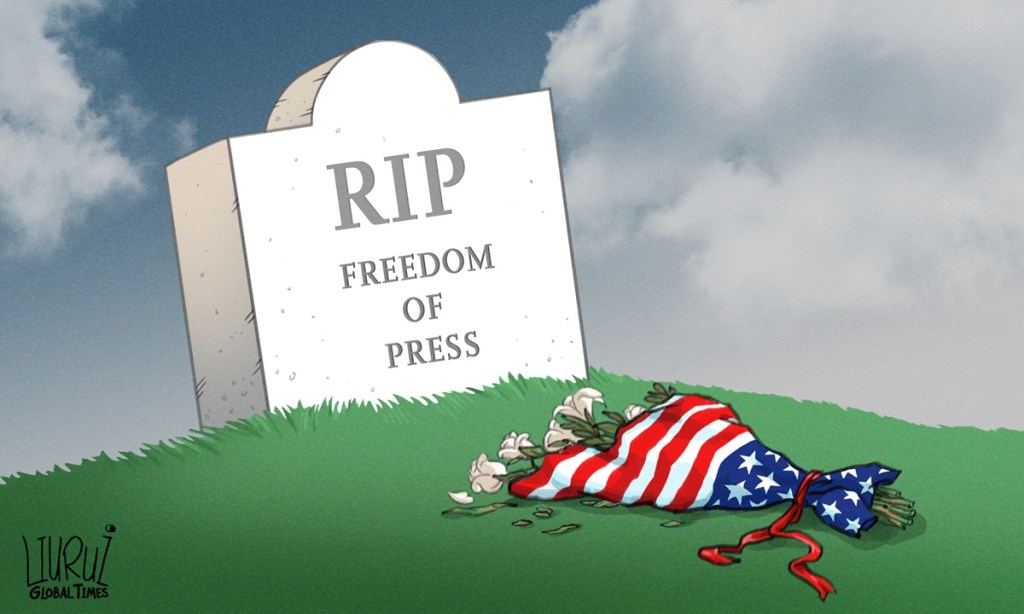
Too afraid to hear what Chinese media will say? Labeling Chinese media outlets as foreign missions shows the hypocrisy of US “freedom of press.”
The Pulitzer Prize is supposed to recognize the world’s most prestigious works of journalism. But this year it showed that it’s nothing more than a propaganda tool that’s been co-opted for hybrid war purposes against China. The Board awarded Buzzfeed News its first-ever Prize for its article series on the Xinjiang Uygur Autonomous Region, which falsely purported that China is running an unprecedented oppression campaign against Muslims there that the US government also ridiculously claims is “genocide.” This scandalous development brings shame to that once prestigious institution and shows that it’s lost its way.
There was once a time when the Pulitzer Prize actually meant something and was universally held in the highest of regard by the international community. People expect those who are awarded such prizes to represent the pinnacle of journalist integrity and contribute something positive to the world with their work. Buzzfeed, however, didn’t do that. All that they produced was an information warfare product that attempted to add credence to the US government’s false claims. Ironically, pro-Democrat Buzzfeed actually fed into the former Trump administration’s anti-Chinese narrative despite openly being against his presidency the entire time.
Naive observers might be misled into believing that this proves the outlet’s journalistic integrity, but a more compelling interpretation deserves to be considered. Buzzfeed began as a viral media project that increasingly became more mainstream by the years until it came to represent the social pulse of the Democratic Party. It sought to make a name for itself by promoting one of the most popular narratives pushed by some of the country’s most powerful people in the national security state. This explains the superficially strange fact that a pro-Democratic outlet advanced a Republican president’s narrative.
As is now known, nearly five months after US President Joe Biden’s inauguration there’s bipartisan support for the country’s ongoing anti-Chinese crusade. Some Democrats used to criticize Trump’s unprovoked trade war with China and practically all of them tried to undermine his policy of seeking a rapprochement with Russia – one which is curiously being pursued by Biden at the present moment considering his meeting with Russian President Vladimir Putin this week in Geneva. Yet many paid credence to his false claims about Xinjiang. Buzzfeed’s Pulitzer Prize is an award for helping to achieve bipartisan backing for that.
The truth is altogether different than how that outlet twisted it in its infamous article series; implying that the region is host to a modern-day iteration of the World War II-era Nazi concentration camps that exterminated several million innocent Jews, Slavs, Roma, and other so-called undesirable people. For starters, nobody is being murdered or abused in those facilities. They also aren’t “concentration camps,” but are educational centers that teach at-risk individuals in-demand job skills alongside providing deradicalization services for those who were brainwashed by terrorist ideologies, which assists their eventual reintegration into society.
Buzzfeed never visited the facilities that they wrote so much about. Instead, they only interviewed some people who have axes to grind against the Communist Party of China. They also claimed to have access to secret government documents and grossly misportrayed certain satellite images as purportedly proving their devious narrative. In other words, their work was based entirely on unverified speculation from suspicious sources, some of which might have even been facilitated and/or provided to them by US intelligence services, even if only indirectly. Put simply, Buzzfeed behaved as the US government’s useful idiots, not journalists.
Its project should never have even qualified for a Pulitzer Prize because there was never anything legitimately scandalous about the topic to warrant an investigation. The entire narrative about a “genocide” in “concentration camps” was concocted by US intelligence services to justify a multilateral pressure campaign against China as the latest stage of its hybrid war on the country. Dozens of diplomats, including those from majority-Muslim countries, visited some of the facilities in question but found nothing suspicious. To the contrary, they supported what China was doing there to help those people responsibly reintegrate into society.
The Pulitzer Prize Board must therefore have had ulterior motives for awarding Buzzfeed for its article series on Xinjiang. It can’t be known for sure, but it certainly seems as though it is willingly behaving as the US government’s useful idiots. No other explanation makes sense for why it’d ruin its previously prestigious reputation by awarding an information warfare product with the Pulitzer Prize for International Reporting when the work in question isn’t even journalism but propaganda. This conclusion suggests that it’s time for other institutions across the world to replace the Pulitzer’s lost role and restore integrity to international journalism.
Pakistan, China stand together in fight against COVID-19 by Global Times Jun 24 2021
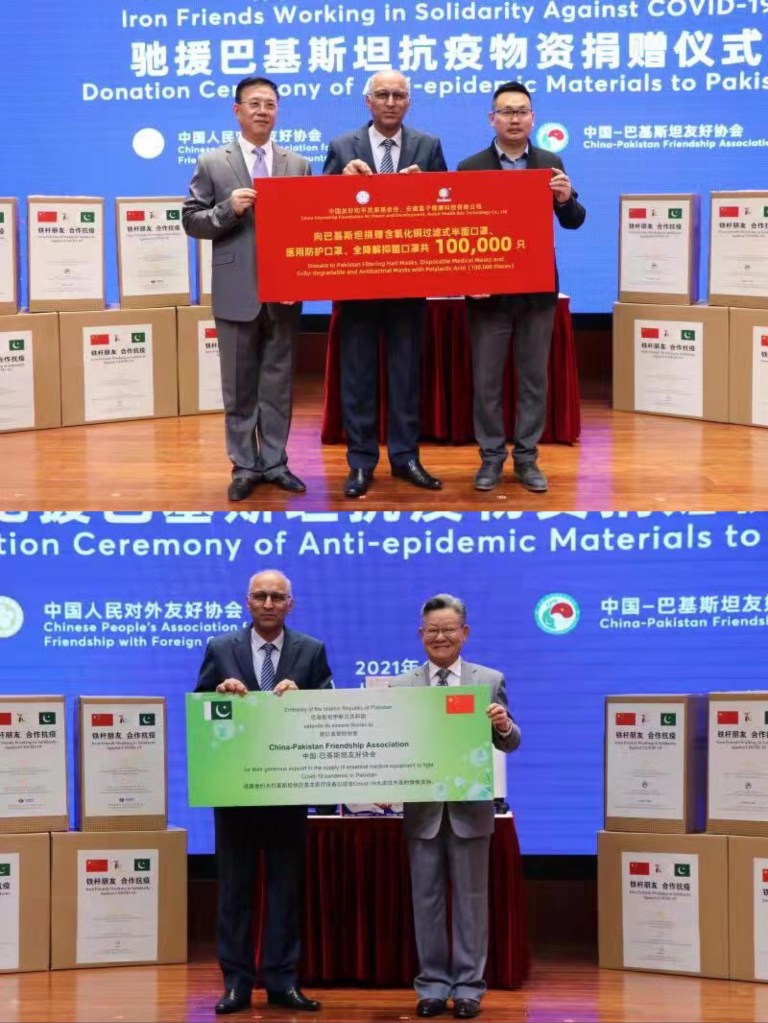
Pakistani Ambassador to China Moin ul Haque (center) and donation organizations at the donation ceremony on Thursday in Beijing
Chinese and Pakistani officials gathered Thursday in Beijing to witness a donation ceremony organized by the China Centre for Promotion of SME Development, offering to donate oxygen concentrators and face masks to help Pakistan combat the COVID-19 epidemic.
At the donation ceremony, Lin Songtian, president of the Chinese People’s Association for Friendship with Foreign Countries (CPAFFC), said in a speech that as iron-brothers and all-weather strategic partners, Pakistan and China stood together in their fight against the pandemic and extended complete support to each other.
He added that the 70th anniversary of diplomatic ties marked a new starting point to further elevate bilateral ties to a new pinnacle of bilateral cooperation and mutual understanding.
Both countries will continue their ongoing cooperation on vaccine development and distribution, Lin reiterated.
Donors also included Anhui Health Box Technology Corporation, Jiangsu Jumao Kangwanjia Medical Equipment Co, Sinohydro Bureau and Sichuan Normal University.
Pakistani Ambassador to China Moin ul Haque (center) and President of the China Pakistan Friendship Association Sha Zukang at the donation ceremony on Thursday in Beijing
Thanking Chinese enterprises for the donations, Pakistani Ambassador to China Moin ul Haque thanked China’s people and government for supporting Pakistan in its fight against the COVID-19 pandemic.
Haque noted that Pakistan-China cooperation during the pandemic has added another glorious chapter to the proud history of bilateral relations. He gave special thanks to Lin and to Sha Zukang, president of the China Pakistan Friendship Association, for their continued support throughout the pandemic.
The donation ceremony was organised to mark the 70th anniversary of the establishment of diplomatic ties between Pakistan and China in 2021.
High-ranking Chinese officials from government departments and the corporate sector participated in the ceremony.
Pakistan recorded 1,097 new confirmed cases of COVID-19 on Wednesday, raising the total tally to 951,865, official data showed Thursday, Xinhua reported, citing the country’s National Command and Operation Center (NCOC), Pakistan’s nerve center in fighting against the pandemic.
Thirty-eight patients died of COVID-19 in Pakistan on Wednesday, raising the death toll to 22,108.
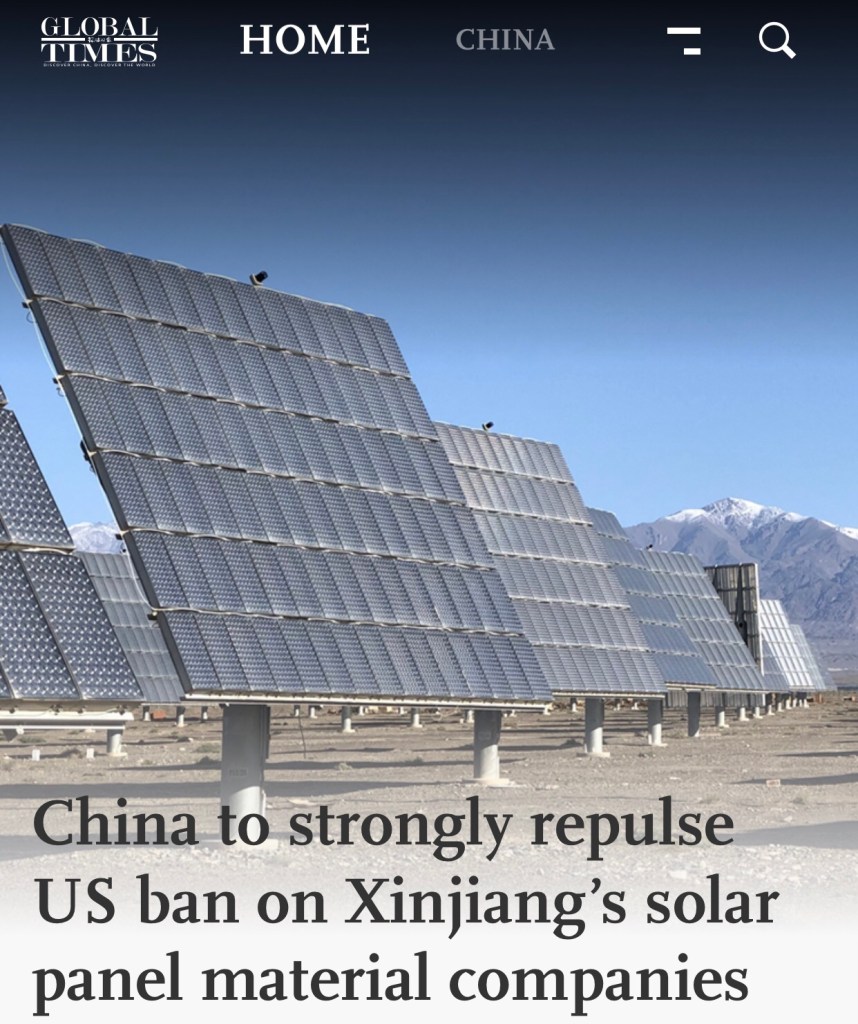
China to strongly repulse US ban on Xinjiang’s solar panel material companies by GT staff reporters Jun 24 2021
China on Thursday vowed to take all necessary measures to firmly safeguard the legitimate rights and interests of Chinese companies following the latest US crackdown on solar panel material producers based in Northwest China’s Xinjiang Uygur Autonomous Region, which produces around half of the world’s polysilicon.
Lawyers and experts encouraged relevant companies and the Chinese government to strongly strike back at the US’ unreasonable and baseless accusations after the US has obviously become aware of the sanction benefits of its “industry genocide” targeting businesses of Xinjiang’s cotton and tomato.
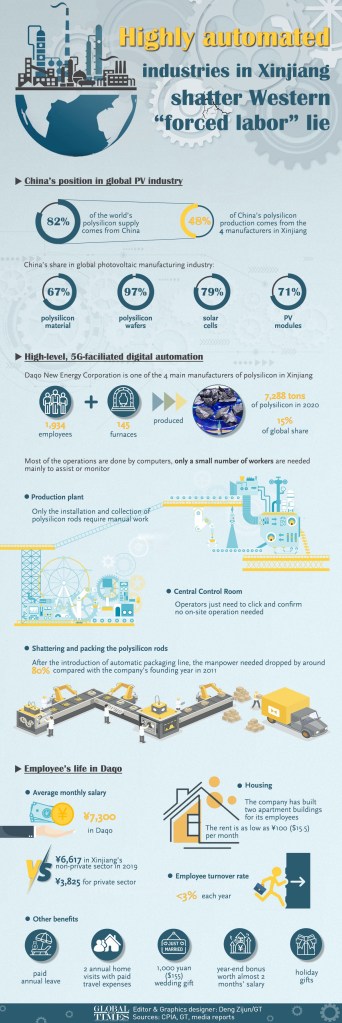
Highly automated industries in Xinjiang shatter Western “forced labor” lie
The fabricated “forced labor” issue in Xinjiang is contrary to reality and the accusation is “the lie of the century,” the Chinese Commerce Ministry and Foreign Ministry said on Thursday in separate remarks.
The US should immediately redress their actions, or “we will take necessary measures to resolutely safeguard the legitimate rights and interests of Chinese companies and institutions,” said Commerce Ministry spokesperson Gao Feng.
The US Commerce Department on Thursday put Hoshine Silicon Industry (Shanshan) Co, and three other Chinese companies – Xinjiang Daqo New Energy Co, Xinjiang East Hope Nonferrous Metals Co and Xinjiang GCL New Energy Material Technology Co, as well as the Xinjiang Production and Construction Corps on an Entity List, citing the baseless claim of “forced labor” in the region.
The Biden administration on Wednesday separately blocked imports of Hoshine Silicon Industry, US media reported.
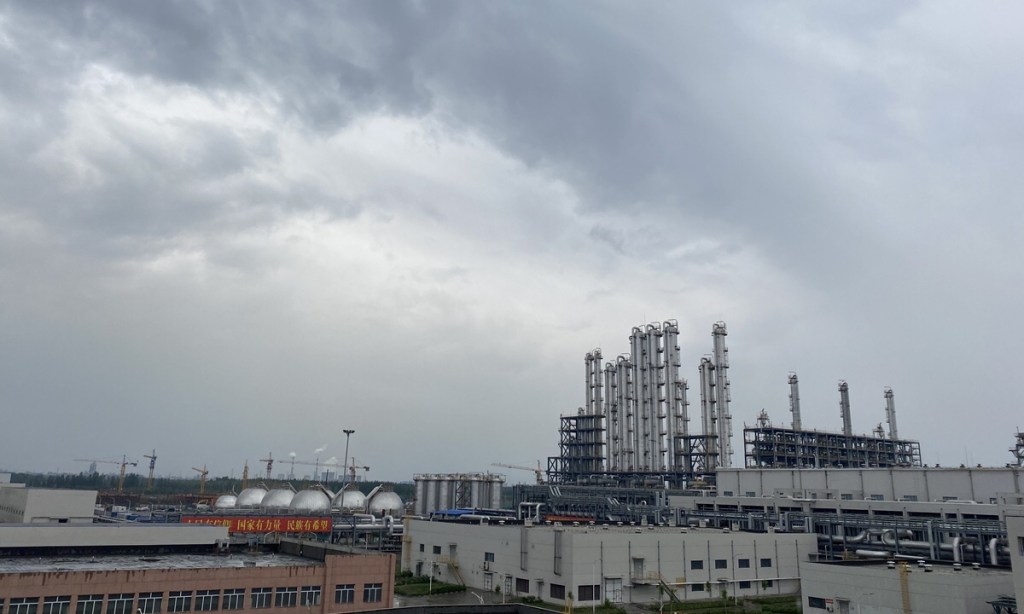
Despite having shown automated production of polysilicon in its Xinjiang plant to Western financial institutions and media outlets like Bloomberg and Financial Times in May to debunk the “forced labor” allegations, Xinjiang Daqo was named on the US Entity List.
“Considering the US photovoltaic (PV) market only needs 10 percent of the world’s polysilicon, we don’t believe it will create a significant impact on our businesses,” Xinjiang Daqo told the Global Times on Thursday.
Reaffirming the company’s “zero tolerance on forced labor,” it said it has neither sold any products directly to US companies nor purchased any US products.
Xinjiang Daqo obtained approval to get registered on the Shanghai tech-heavy STAR market on Tuesday after its parent firm Daqo New Energy tumbled at the New York Stock Exchange partly because of the groundless US accusations. Shares of Daqo New Energy dropped around 4 percent to $55.7 in trading on Thursday morning session (US time).
A staff of the investor relations sector at Hoshine Silicon told the Global Times on Thursday that the company is gathering information about the impact of the US ban on its downstream customers, noting the company’s sales proportion in the US market was small.
Xinjiang region contributes around 45 percent of the world’s supply of polysilicon. As energy consumption is one of the key factors affecting polysilicon manufacturing, competitive electricity prices in Xinjiang, North China’s Inner Mongolia Autonomous Region, Southwest China’s Sichuan Province, Northwest China’s Qinghai Province and Ningxia Hui Autonomous Region make these regions attractive.
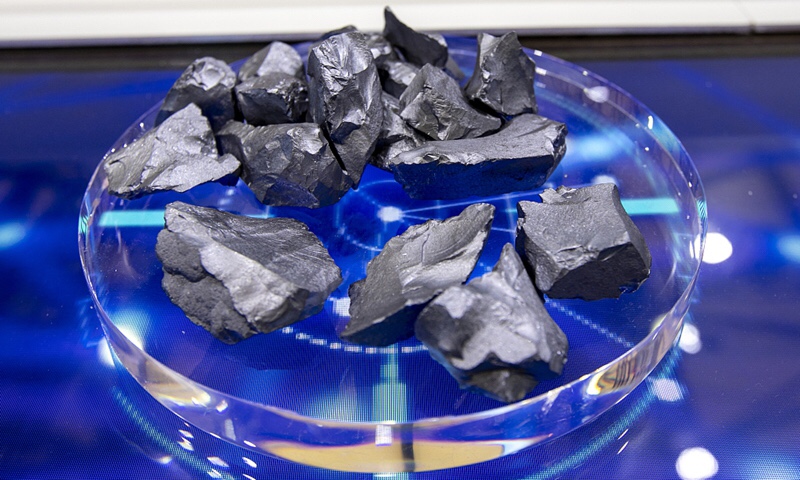
According to Hangzhou-based industry website pv.china-nengyuan.com, the polysilicon output in Xinjiang is expected to hit 300,000 tons this year, which could satisfy the solar energy demand of 60 gigawatts (GW). It is notable that China’s domestic PV module demand will reach 60-70 GW in 2021 as the country is striving to realize its “carbon peak” and “carbon neutrality” goals.
Unlike targeting Xinjiang’s cotton and tomato, the US sanctions on the region’s solar panel materials is not a whim as the past decade witnessed how the US solar industry went downhill while growth in China’s solar energy sector forged ahead, industry observers said.
They noted even if non-Xinjiang regions have the capacity to produce polysilicon, the higher costs and other disruptions would appear in the global solar supply chains under the US ban. For instance, the old facilities and polysilicon manufacturing equipment at foreign companies including REC Group, OCI Solar Power and Hemlock would create increasing uncertainties to the global solar industry.
China became the world’s largest polysilicon producer in 2020 with an output of 396,000 tons. Its global output share climbed to 76 percent of the world total, up 8.7 percentage points, according to data from the China Photovoltaic Industry Association.
The latest ranking from German research firm Bernreuter Research said seven of the world’s top 10 largest polysilicon producers are based in China and only one is American.
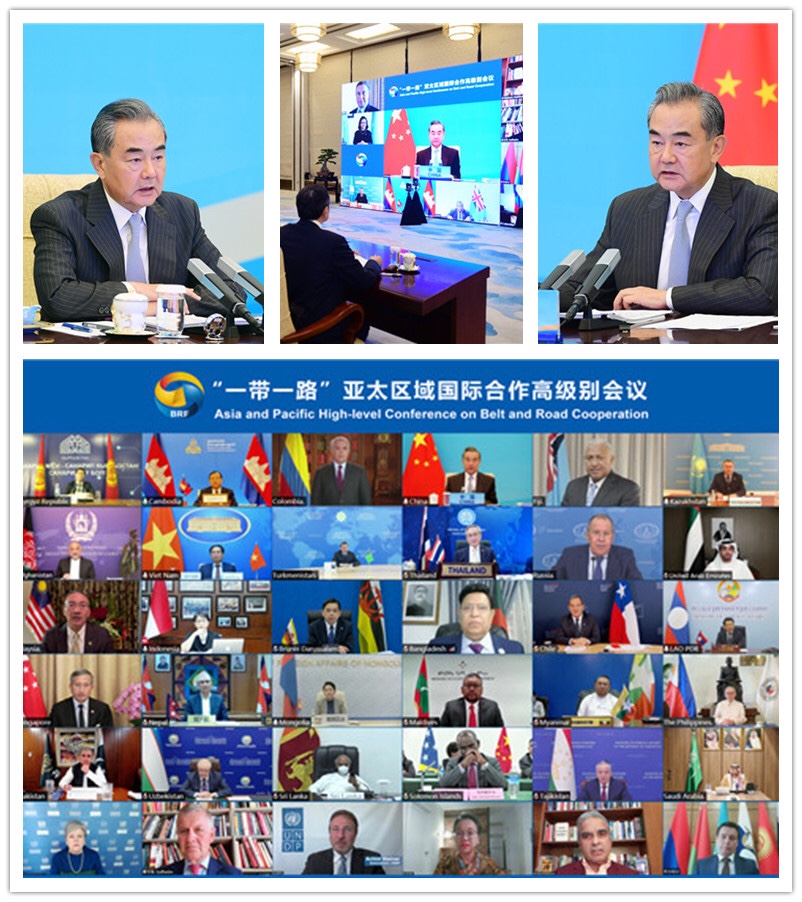
Let Us Strengthen Confidence and Solidarity and Jointly Build a Closer Partnership for Belt and Road Cooperation – Keynote Speech by H.E. State Councilor and Foreign Minister Wang Yi At Asia and Pacific High-level Conference on Belt and Road Cooperation
23 June 2021
Colleagues, Friends,
In 2013, President Xi Jinping proposed the Belt and Road Initiative (BRI). Since then, with the participation and joint efforts of all parties, this important initiative has shown strong vigor and vitality, and yielded good results and progress.
Over the past eight years, the BRI has evolved from a concept into real actions, and received warm response and support from the international community. To date, up to 140 partner countries have signed documents on Belt and Road cooperation with China. The BRI has truly become the world’s broadest-based and largest platform for international cooperation.
Over the past eight years, the BRI has evolved from vision into reality, and brought about enormous opportunities and benefits to countries around the world. Trade between China and BRI partners has exceeded 9.2 trillion US dollars. Direct investment by Chinese companies in countries along the Belt and Road has surpassed 130 billion US dollars. A World Bank report suggests that when fully implemented, the BRI could increase global trade by 6.2 percent and global real income by 2.9 percent, and give a significant boost to global growth.
Notably last year, despite the sudden outbreak of COVID-19, Belt and Road cooperation did not come to a halt. It braved the headwinds and continued to move forward, showing remarkable resilience and vitality.
Together, we have put up an international firewall of cooperation against COVID-19. China and BRI partners have held over 100 meetings to share experience on COVID prevention and control. By mid-June, China has provided more than 290 billion masks, 3.5 billion protective suits and 4.5 billion testing kits to the world, and helped many countries build testing labs. China is engaged in extensive vaccine cooperation with many countries, and has donated and exported more than 400 million doses of finished and bulk vaccines to more than 90 countries, most of which are BRI partners.
Together, we have provided a stabilizer for the world economy. We have held dozens of BRI international conferences to share development experience, coordinate development policies, and advance practical cooperation. We have kept most BRI projects going. Energy cooperation under the China-Pakistan Economic Corridor provides one-third of Pakistan’s power supply. The Katana Water Supply Project in Sri Lanka has made safe drinking water available to 45 villages there. Statistics show that last year, trade in goods between China and BRI partners registered a record 1.35 trillion US dollars, making a significant contribution to the COVID response, economic stability and people’s livelihood of relevant countries.
Together, we have built new bridges for global connectivity. China has carried out Silk Road e-commerce cooperation with 22 partner countries. This has helped sustain international trade flows throughout the pandemic. In 2020, the China-Europe Railway Express, which runs through the Eurasian continent, hit new record numbers in both freight services and cargo volumes. In the first quarter of this year, the Express dispatched 75 percent more trains and delivered 84 percent more TEUs of goods than in the same period last year. Hailed as a “steel camel fleet”, the Express has truly lived up to its name and played an important role in giving countries the support they need in fighting COVID.
Colleagues,
The fast-growing and fruitful Belt and Road cooperation is a result of the solidarity and cooperation among BRI partners. More important, as President Xi Jinping pointed out in his written remarks to this Conference, Belt and Road cooperation is guided by the principle of extensive consultation, joint contribution and shared benefits. It practices the concept of open, green and clean development. And it is aimed at high-standard, people-centered and sustainable growth.
We are always committed to equal consultation. All cooperation partners, regardless of economic size, are equal members of the BRI family. None of our cooperation programs are attached with political strings. We never impose our will on others from a so-called position of strength. Neither do we pose a threat to any country.
We are always committed to mutual benefit and win-win. The BRI came from China, but it creates opportunities and good results for all countries, and benefits the whole world. We have strengthened policy, infrastructure, trade, financial and people-to-people connectivity to pursue economic integration, achieve interconnected development, and deliver benefits to all. These efforts have brought closer the Chinese dream and the dreams of countries around the world.
We are always committed to openness and inclusiveness. The BRI is a public road open to all, and has no backyard or high walls. It is open to all kinds of systems and civilizations, and is not ideologically biased. We are open to all cooperation initiatives in the world that are conducive to closer connectivity and common development, and we are ready to work with them and help each other succeed.
We are always committed to innovation and progress. In the wake of COVID-19, we have launched the Silk Road of health. To achieve low-carbon transition, we are cultivating a green Silk Road. To harness the trend of digitalization, we are building a digital Silk Road. To address development gaps, we are working to build the BRI into a pathway to poverty alleviation. Belt and Road cooperation began in the economic sector, but it does not end there. It is becoming a new platform for better global governance.
Colleagues,
In a few days, the Communist Party of China (CPC) will mark its centenary. Under the CPC leadership, the Chinese people will soon complete the building of a moderately prosperous society in all respects, and on that basis, embark on a new journey of fully building a modern socialist country. At a new historical starting point, China will work with all other parties to continue our high-quality Belt and Road cooperation and build closer partnerships for heath cooperation, connectivity, green development, and openness and inclusiveness. These efforts will generate more opportunities and dividends to all.
First, we need to continue to deepen international cooperation on vaccines. We will jointly launch the Initiative for Belt and Road Partnership on COVID-19 Vaccines Cooperation to promote fair international distribution of vaccines and build a global shield against the virus. China will actively implement the important measures announced by President Xi Jinping at the Global Health Summit. China will provide more vaccines and other urgently-needed medical supplies to BRI partners and other countries to the best of its ability, support its vaccine companies in transferring technologies to other developing countries and carrying out joint production with them, and support waiving intellectual property rights on COVID-19 vaccines, all in an effort to help all countries defeat COVID-19.
Second, we need to continue to strengthen cooperation on connectivity. We will continue to synergize infrastructure development plans, and work together on transport infrastructure, economic corridors, and economic and trade and industrial cooperation zones. We will further harness the China-Europe Railway Express to promote port and shipping cooperation along the Maritime Silk Road and build a Silk Road in the Air. We will embrace the trend of digital transformation and development of digital industries by accelerating the building of the digital Silk Road, and make smart connectivity a new reality in the future.
Third, we need to continue to promote cooperation on green development. We will jointly put forth the Initiative for Belt and Road Partnership on Green Development to inject new impetus into building the green Silk Road. We are ready to step up cooperation in such areas as green infrastructure, green energy and green finance, and develop more environment-friendly projects with a high standard and high quality. We support parties to the Belt and Road Energy Partnership in enhancing cooperation on green energy. We encourage businesses involved in Belt and Road cooperation to fulfill their social responsibilities and improve their environmental, social and governance (ESG) performance.
Fourth, we need to continue to advance free trade in our region and the world. China will work for the early entry-into-force of the Regional Comprehensive Economic Partnership (RCEP) and faster regional economic integration. China will work with all sides to keep global industrial and supply chains open, secure and stable. We will open our door even wider to the world. And we are ready to share China’s market dividends with all to make sure that domestic and international circulations will be mutually reinforcing. This will also enable closer ties and broader space for economic cooperation among BRI partners.
Colleagues,
The Asia-Pacific is the fastest-growing region with the greatest potential and most dynamic cooperation in the world. It is home to 60 percent of the world’s population and 70 percent of its GDP. It has contributed over two-thirds of global growth, and is playing an increasingly important role in the global fight against COVID-19 and economic recovery. The Asia-Pacific region should be a pacesetter of development and cooperation, not a chessboard for geopolitics. The stability and prosperity of this region should be treasured by all regional countries.
Asian and Pacific countries are the pioneers, contributors and examples of Belt and Road international cooperation. As a member of the Asia-Pacific region, China is ready to work with Asia-Pacific countries in the spirit of partnership to promote high-quality Belt and Road development, provide Asia-Pacific solutions to the global fight against COVID-19, inject Asia-Pacific vitality into global connectivity, and transmit Asia-Pacific confidence to the sustainable recovery of the world economy, so as to make greater contributions to building a community with a shared future in the Asia-Pacific region as well as a community with a shared future for mankind.
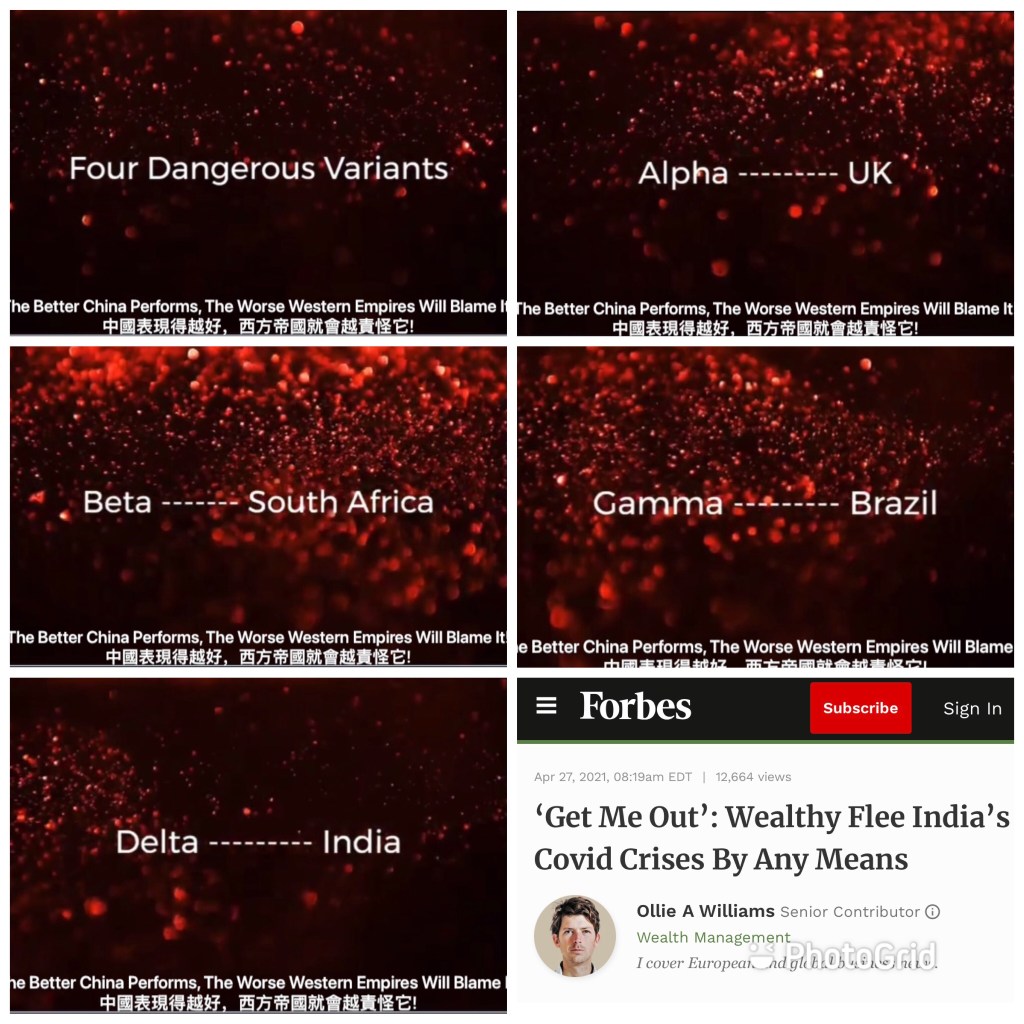
Video: The Better China Performs, The Worse Western Empires Will Blame It! 中國表現得越好,西方帝國就會越責怪它!
When China discovered any COVID19 cases, it does not matter how few cases it might be like in Guangdong Province, entire population of 20 millions were tested in 3 days. China immediately banned her citizens from traveling to stop COVID19 spreading inside and outside of China. But for India and US, both advocates freedom democracy and human rights placed no travel restrictions potentially spreading COVID19 domestically and internationally. 中國每次發現新冠病毒就像最近在廣東省發現新的Delta新冠病毒時, 全省二千萬人在三天內全部被測試, 同時阻止其公民出遊, 防止新冠病毒在中國境內外傳播. 但印度和美國都提倡所謂自由民主和人權, 沒有限制在國內和國際旅行讓病毒無上限地傳播.
People may ask why western countries prefer Indian to China, and western human groups seldom challenge India’s human rights abuse even when BBC reported its child labour issue. One of the reasons is India has a democratic government that is willing to follow western protocols. Having two or more parties in a country is what the west prefers to a one-party system. Another reason is that the west needs India to encircle China. A friend in need is a friend indeed. It sounds funny that the west only needs India’s help, not to help India when it needs their help. The last reason is India is not as powerful as it thinks. It does not pose a threat to the west as China.
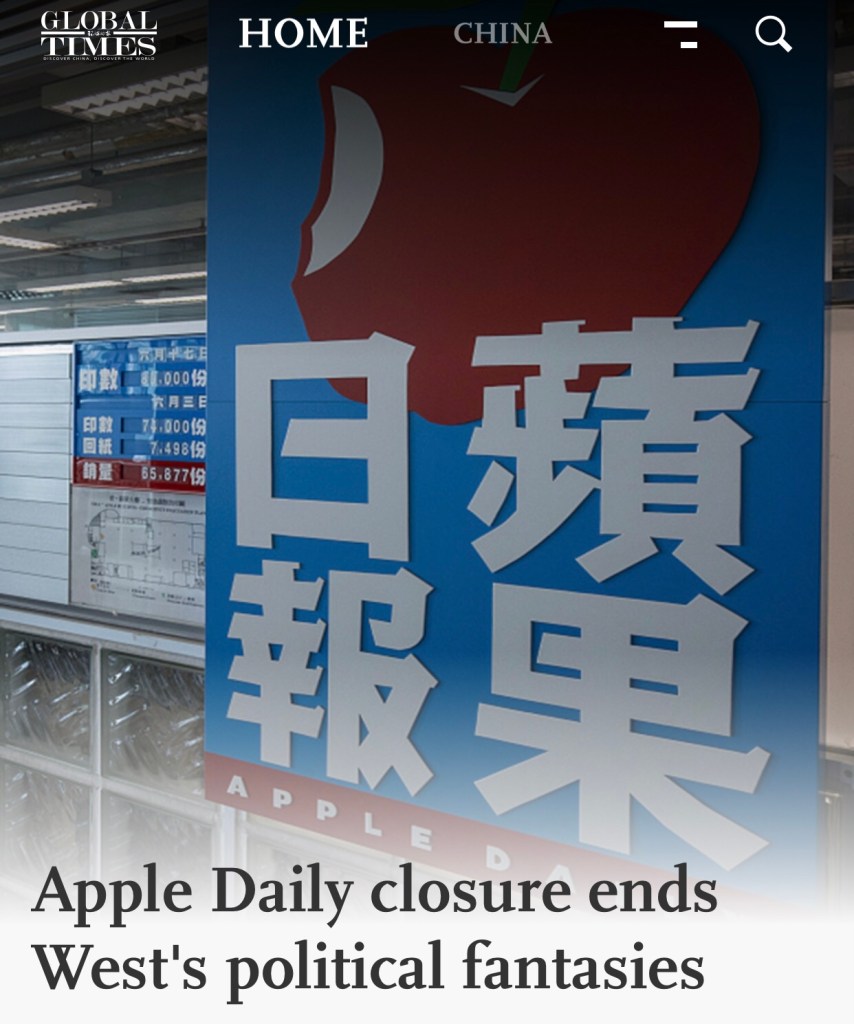
Apple Daily closure ends West’s political fantasies by Chen Qingqing Jun 24 2021
As pictures circulated on social media on Thursday showing a number of local residents lining up in front of newsstands seeking to get a copy of the final edition of Apple Daily, with some trying to amplify a sentiment of sadness by calling it a “painful farewell,” local officials and scholars in both Hong Kong and the mainland said such small scale-lamentation remains insignificant in the face of the overwhelmingly positive change the once riot-plagued city has experienced over the past years.
The secessionist tabloid, depicted by Western politicians and media as the so-called defenders of freedom of speech, issued its final hard copy on Thursday, after some of its senior executives were arrested on suspicion of violating the national security law for Hong Kong. HK$18 million ($2.3 million) in assets was also frozen during the ensuing investigation.
While a small proportion of readers called to “stand with Apple Daily” on a rainy night, trying to create an emotional scene of sounding an elegy for the paper, more Hong Kong people felt relieved, some observers said, as the shutdown of the 26-year-old newspaper, founded by modern-day traitor Jimmy Lai Chee-ying, is a symbolic move to bring the practice of the “one country, two systems” onto the correct path by ending an era when foreign proxies and secessionist forces could meddle in China’s internal affairs by cultivating agents like Lai and his media group.
With the national security law and the electoral reform for Hong Kong, officials and scholars in the mainland and in Hong Kong see fundamental positive changes to the city’s political environment over the past year. Despite that foreign politicians like UK Foreign Secretary Dominic Raab continued to slam China by calling the shutdown of Apple Daily a “forced closure,” claiming it delivered a heavy blow to “freedom of speech,” more local residents realized that the secessionist outlet having gone far beyond being a press agency.
The closure would also help end the West’s political fantasies by using relevant anti-government radicals to exploit Hong Kong, which tried to cause a “color revolution” against China and subvert state power, experts said.
From Thursday on, the closure of Apple Daily will save Hong Kong at least 300 million pieces of wasted paper annually, as one copy used to be printed with 10 pages of paper every day, Leung Chun-ying, former chief executive of the Hong Kong Special Administrative Region, said in a public post on Thursday.
Boundaries of the rule of law
After the board of Next Digital, the parent company of Apple Daily, announced in a public statement on Wednesday that the tabloid will close down on Saturday amid mounting financial pressure to maintain normal operations, Apple Daily said via its website that it would issue its last edition on Thursday, with its website to stop updating at midnight.
On Thursday, there was no content on its website but a short notice for readers. The final edition ran a front page picture showing staff illuminating the flashlights on their phones and waving to supporters at the headquarters of the tabloid, creating an emotional moment over the death of the paper, which claimed to be the “paper of Hong Kong residents” over the past two decades.
The decision by the board came after Hong Kong police arrested on June 17 the paper’s editor-in-chief, Ryan Law Wai-kwong, CEO of Next Digital, Cheung Kim-hung,and other senior staff, and the seizure of its assets in its second raid in a year while Lai, the paper’s founder, was sentenced to jail facing multiple charges including collusion with foreign forces in violating the national security law for Hong Kong.
Apple Daily represented both anti-China sentiment and opposition to the Communist Party of China, having played an active role in working with the US to arouse chaos in Hong Kong and help plan, finance as well as organize rioting activities, which has gone against the successful practice of the “one country, two systems,” Lau Siu-kai, vice-president of the Chinese Association of Hong Kong and Macao Studies, told the Global Times on Thursday.
“It has been a miracle the paper could have survived until now, underscoring the central government’s patience and tolerance,” Lau said.
When the US stepped up on curbing China and the Chinese central government decided to lift the city out of chaos with the enactment of the national security law for Hong Kong, the closure of Apple Daily was inevitable, Lau noted.
When running anti-China and anti-local government stories, Apple Daily ran short, eye-catching headlines with sensational and sometimes fearless reporting styles, which, in the eyes of many local residents, served much more than a newspaper. Local newspaper Wen Wei Po also recently came up with 100 lies published by Apple Daily over the years, shedding light on a number of false information and conspiracies run by the tabloid with some deepening the misunderstanding of Hong Kong residents about the mainland.
During the anti-government protests that turned into a citywide rampage in 2019, Apple Daily ran sensational stories calling out alleged police brutality and posted slogans calling for “Hong Kong independence.” Lai had also actively advocated for foreign sanctions on China and the Hong Kong SAR, and he flew to the US in meetings with former US officials such as Mike Pence and Mike Pompeo.
While some foreign journalists and observers lamented the closure of Apple Daily on social media, claiming it to be “an end of an era,” Chinese experts said that it indeed marked the end of an era when foreign proxies and secessionist forces meddled in China’s internal affairs, and tried to instigate a “color revolution” in Hong Kong, and the era would exit political life for good.
“It is also a heavy blow to foreign proxies’ established networks in instigating a ‘color revolution’ in Hong Kong, completely ending their political fantasies in igniting a so-called revolution of our times and attempts from the West to subvert state power in China through Hong Kong,” Tian Feilong, an associate professor at Beihang University’s law faculty and a member of the Chinese Association of Hong Kong and Macao Studies, told the Global Times on Thursday.
“It is indeed an end of an era when the media was used to create chaos in Hong Kong, which also turned a new page for the city in embracing stability and prosperity,” Tian said.
Fundamental changes
Facing the latest criticism from the EU, UK and the US over the Apple Daily-related issues, the Office of the Commissioner of the Ministry of Foreign Affairs, the Chinese Mission to the EU and Chinese Foreign Ministry denounced those remarks, staging strong opposition to the so-called concerns over free press and urged them to stop playing the “Hong Kong card” in pressuring China.
“Stop using press freedom as a pretext as China doesn’t buy it ,” the office of commissioner said in a public statement on Thursday.
With the support of the central government, Hong Kong has seen fundamentally positive changes as the national security law for Hong Kong completely changed the situation of social turmoil and citywide violence, helping to ensure national security in the city, and electoral reform for Hong Kong will help implement the principle of only patriots governing the city, Carrie Lam, chief executive of the HKSAR government, said at a public event on Thursday.
Lam also said that she is confident Hong Kong will embrace a brighter future regarding its economy, social livelihoods and development.
On the occasions of celebrating the 24th anniversary of Hong Kong’s return to China, the centennial of the founding of the Communist Party of China and the first anniversary of the national security law for Hong Kong taking effect, more Hong Kong residents cheered the exit of foreign proxies like Apple Daily from local political life while experts considered that amid overwhelming changes in Hong Kong society, major opposition groups including the Hong Kong Alliance and the Civil Human Rights Front need to adjust their behaviors to meet the new requirements of the law.
“Hong Kong people today understand the central government’s determination and capability to bring the political practice of Hong Kong back onto the right track. The city has also entered a new phase of development as the national security law and the electoral reform for Hong Kong largely reduced the room of activities for anti-China forces,” Lau said.
Video: A humanity test 一份人性的考卷. 美國不是老是拿著民主自由人權去攻擊不聽話的國家包括中國. 但一埸新冠病毒把美國多年的謊言一夜之間完全打破. 爸爸少年時告訴我們,誰是酒肉朋友,誰是真正關心你的朋友你不會知道直到你有危難時刻誰給你援手才是你的真心朋友. 患難才見眞情. 在新冠病毒疫情下中國和美國政府如何處理和控制病情我相信不用再多説了.
A humanity test. US always use democracy, freedom and human rights to attack disobedient countries, including China. But COVID19 has completely broken US years of lies overnight. When I was young, father told us who is a friend and who is merely a drinking partner, you won’t know until you have a moment of crisis. Only in adversity will you see true friendships. During the COVID19 epidemic, how the Chinese and US governments handled and controlled the disease tells all, no need for me to elaborate further.
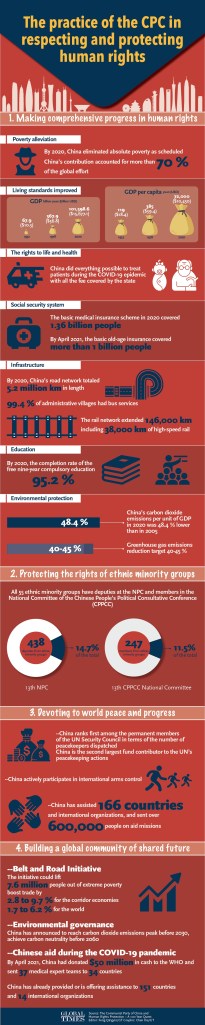
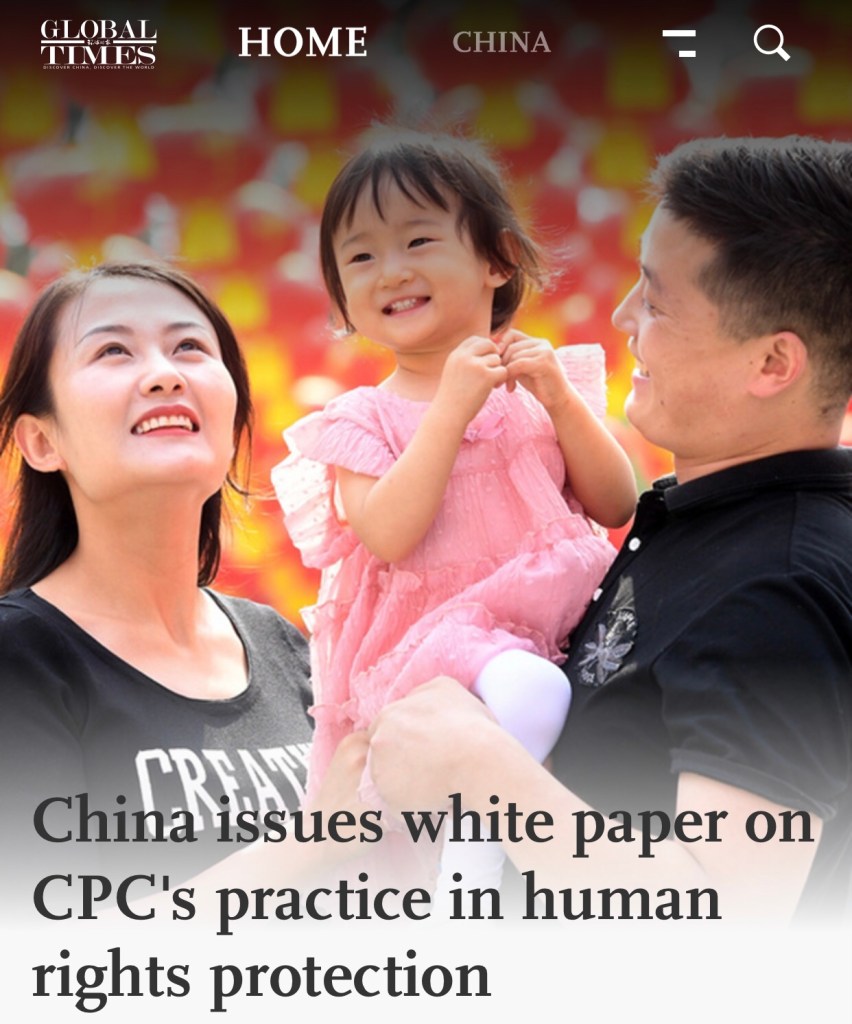
China issues white paper on CPC’s practice in human rights protection by Xinhua Jun 24 2021
China’s State Council Information Office on Thursday issued a white paper on the practice of the Communist Party of China (CPC) in respecting and protecting human rights.
The year 2021 marks the centenary of the CPC. Over the past century, the CPC has invested a huge effort in human rights protection, adding significantly to global human rights progress, said the white paper.
For a hundred years, the CPC has always put people first, applying the principle of universality of human rights in the context of the national conditions. It regards the rights to subsistence and development as the primary and basic human rights, and believes that living a life of contentment is the ultimate human right, said the white paper.
The CPC promotes the well-rounded development of the individual, and strives to give every person a stronger sense of gain, happiness and security. Its success in pioneering human rights in a socialist country is unique and readily apparent, said the white paper.
For a hundred years, the CPC has committed itself to peaceful development and common progress. China is firm in its international stance — to safeguard world peace and seek progress through cooperation, ensuring human rights with the benefits deriving from development, according to the white paper.
China has been an active participant in matters of international human rights, providing a Chinese contribution to global human rights governance and progress, and working with other countries to forge a global community of shared future, according to the white paper.
The CPC is leading the people towards the Chinese Dream of national rejuvenation and the second centenary goal — to build China into a great modern socialist country that is prosperous, strong, democratic, culturally advanced, harmonious, and beautiful by the centenary of the People’s Republic of China.
At that time, all rights of the Chinese people will be safeguarded at a higher level, and they will have a better sense of dignity, freedom and happiness. China will make a greater contribution to the protection of human rights, enabling the world to develop better and become more prosperous, said the white paper.


 Johnson Choi Biz