Video: Japan Wants To Go To War With China For Taiwan? China does not care to be #1 world power! 日本要為台灣與中國開戰? 中國不在乎成為世界第一強國! https://youtu.be/sfmZEg4Es00 https://vimeo.com/573186510 https://www.facebook.com/100036400039778/posts/526100421946621/?d=n China seems to be in a difficult situation. The US and Japan have a military exercise in China’s East Sea and the South China Sea, pretending to defend Taiwan when China Mainland starts the reunification process by force. And India deploys more soldiers and weaponry in the disputable border area, trying to gain an advantage over China on the negotiation table.
In world history, the number two power usually needs a victory to become the world’s number one or stay as number two forever. Will China be an exception?
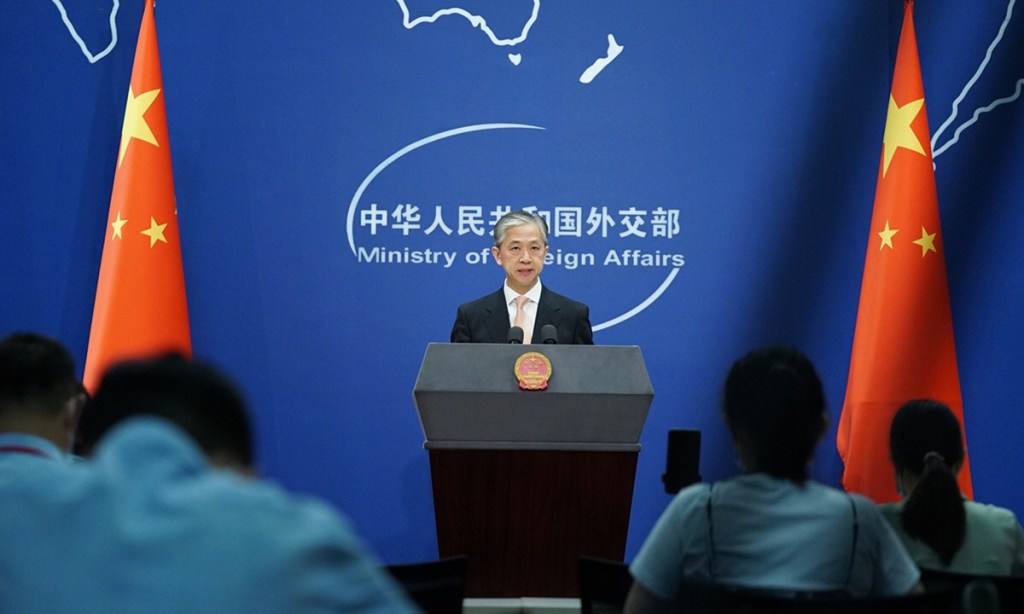
China urges US lawmakers to stop political manipulation on China-related issues; biggest enemy itself: FM By Global Times Published: Jun 29, 2021
It is so true. Let me share with you my personal experiences with 2 Fortune 500 companies today on July 9 2021.
At 10:30am, I went to Well Fargo Bank to make a deposit for my wife. After that I inquired about setting up a checking account. The teller has explained to me various options. I picked one and said I want to open the checking account now. The teller told me I could not do that because I need to make an advance appointment to set up new accounts.
At 1:30pm, I went to Costco to fixed my tire with a nail that I made an appointment online 2 days ago. I showed up at 12:45pm for my 1:30pm appointment. The customer service representative said I am too early, they will not work on my car until 1:30pm even if they have nothing to do. Upon double checking on his computer, he said my appointment was 2:00pm and not 1:30pm. I show him the email confirmation from Costco clearly said 1:30pm. He said the online booking not reliable and he can only reply on their branch system. In other words my confirmation no good. I further asked since I got free rotation tires service, would they mind to rotate my tires. He said no, I need to come back with another tire rotation appointment. At this time I heard someone laughing. I look back and an older gentleman said he had waiting for 3 hours with appointment to rotate his tires. He said he won’t come back. Maybe the free tires rotation just a gimmick by Costco. The long wait is intentional so you will not come back to ask for free service.
How the US seeks to develop and enhance its competitiveness is its own business, and the US should not see China as an imaginary enemy, Chinese Foreign Ministry said on Tuesday, urging lawmakers in the US to abandon the Cold-War mentality and zero-sum game mindset, and stop political manipulation on China-related issues.
China also urged US lawmakers to stop deliberating and advancing related anti-China legislation, remove clauses attacking China, and do more to help promote the development of China-US relations, which will create favorable conditions for cooperation in important areas between the two nations, Wang Wenbin, spokesperson of Chinese Foreign Ministry told a press conference in Beijing on Tuesday.
The greatest enemy of the US is itself, and doing its own affairs well is what US lawmakers should really worry about, Wang said.
The remarks come as the US Senate voted 68-32 on June 8 to approve a sweeping package of legislation intended to boost the country’s ability to compete with Chinese technology, according to a Reuters report.
The bill has a number of China-related provisions including prohibiting the social media app TikTok from being downloaded on government devices, and blocking the purchase of drones manufactured and sold by companies backed by the Chinese government. It would also allow “diplomats and Taiwanese military” to display their flag and wear their uniforms while in the United States on official businesses, said the report.
The bill disregards facts, exaggerates strategic competition with China, attacks China’s development path and domestic and foreign policies, and aims to interfer in China’s internal affairs on issues involving China’s sovereignty and territorial integrity, and harms China’s interests, Wang noted.
China firmly opposes this and will firmly defend its own interests, said the official.
demonstration and dialogue with Speaker Nancy Pelosi.
Chinese Media can contact Julie Tang 415-225-2669 for further information.
FOR IMMEDIATE RELEASE
CONTACT: Madison Tang | CODEPINK China campaign coordinator | madison@codepink.org | (714) 337-5375 Jodie Evans | co-founder, CODEPINK | jodie@codepink.org | (310) 621-5635 FOR IMMEDIATE RELEASE
Activists to March to Nancy Pelosi’s San Francisco Residence In Opposition to the U.S.’s Hybrid War on China
WHERE: The corner of Broadway and Normandie Terrace, Pacific Heights, San Francisco
WHEN: Sunday, July 11, 2021 at 2:30 PM PT/5:30 PM ET
July 9, 2021 — This Sunday, CODEPINK, Pivot to Peace, RootsAction, World Beyond War, and local constituent activists will march to the residence of Speaker of the House Nancy Pelosi in San Francisco’s Pacific Heights neighborhood to deliver a CODEPINK petition demanding that she block a vote on Gregory Meeks’ H.R. 3524, also known as the EAGLE Act. The petition urges Speaker Pelosi to block a vote on the bill unless its military funding for the Asia-Pacific region and antagonistic rhetoric toward China are removed.
H.R. 3524 would not only commit over $200 million to the U.S.’s military buildup in the Asia-Pacific region, it would also disrupt established U.S. foreign policy norms such as the One-China Policy. Furthermore, the bill’s rhetoric demonizes China, and this scapegoating emboldens racist agitators and further endangers Asian and Asian American people.
As the letter states, H.R. 3524 “provokes conflict and begins the buildup for a protracted war over Taiwan by encouraging Taiwan and other U.S. allies in the region to heavily invest in weapons and munitions ‘to meet contingency requirements and avoid the need for accessing United States stocks in wartime.’ These buildups cannot reasonably be called deterrence while this bill also agitates existing agreements for peace like the One-China Policy.”
It goes on to state that the “consistent anti-China rhetoric that is repeated again and again throughout the bill and in promotion of the bill…paves the way for more dangerous, and potentially deadly, scapegoating of not just China’s politicians and leaders but all Chinese and Chinese-perceived people, including other Asian and Asian American communities. We have already seen coast-to-coast violence against Asian communities in the U.S. in part because of this kind of political rhetoric; this is a continuation of the political rhetoric the Trump administration began.”
You can read the full letter to Pelosi here.
“The United States is continuing its aggression towards China, and the Ensuring American Global Leadership and Engagement Act is just one element of this multi-pronged hybrid war,” said CODEPINK cofounder Jodie Evans. “Nancy Pelosi relies on the support and votes of her Asian American constituents, and she will be failing her constituents if she lets this bill in its current form go to a House vote.”
Madison Tang, coordinator of the China Is Not Our Enemy campaign, said, “The inflated, hyperbolized threat of China is being used as justification to fuel the U.S. war economy and further line the pockets of weapons contractors. If we really want to stop America’s ‘forever wars,’ we cannot ignore the way Congress is rapidly escalating this unnecessary conflict with China through legislation such as the Eagle Act (H.R. 3524). Our members of Congress, including and especially those with the authority that Speaker Pelosi has, need to address this.”
Why US has a failed system when politics more important than human life at the Florida rescue just like what US has done to COVID19 sent 600,000 Americans to needlessly death. The following action by City, State and Federal Government guaranteed no one will survive. 為什麼在佛羅里達救援中政治比人的生命更重要時,美國系統性失敗,就像美國對新冠病毒所做的那樣導致 600,000 名美國人不必要地死亡。 美國市、州和聯邦政府以政治掛帥以保證沒有人能倖免於難.
The victims buried under the rubble in Florida, they may not understand why the city government has to spend 16 hours to confirm that the federal government can intervene in the rescue after they have become victims. I do not even understand why the rescue teams in the eight neighboring states can only join the rescue work after the most precious 72 hours have passed. 至於埋在佛羅里達瓦礫底下的災民,或許變成冤魂後,還不明白州市政府為何要用16小時來確認聯邦政府可以介入搶救?更不會明白為何隣近八個州的救援隊,為何要在最寶貴的黃金72小時過去後,才能加入救援工作?
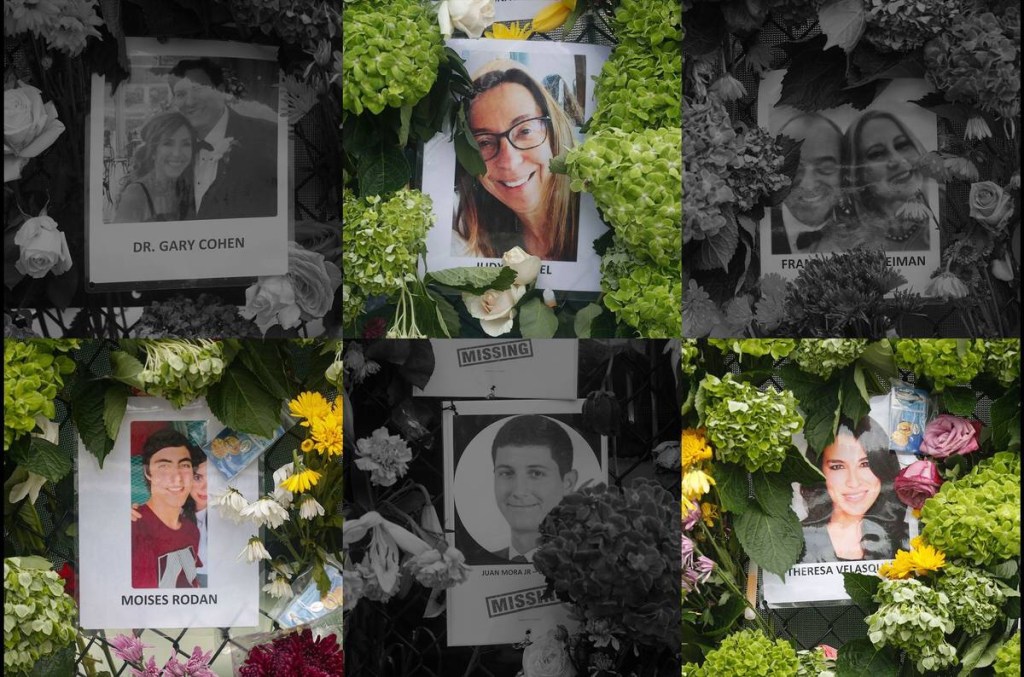
Washington Post: The shattered lives of Champlain Towers South By Silvia Foster-Frau, Ann Gerhart, Danielle Rindler, Karly Domb Sadof, Garland Potts and Artur Galocha
A 40-year-old 12-story condo building in Surfside, Fla. partially collapsed on June 24. Sixty-four people were killed and about 76 others are still unaccounted for as the recovery effort continues.
For so many, survival or likely death came down to a single number: their condo unit. The Washington Post used property records, dispatch calls and interviews with survivors and relatives of the missing to learn who lived in the building and where they were at the time of the collapse
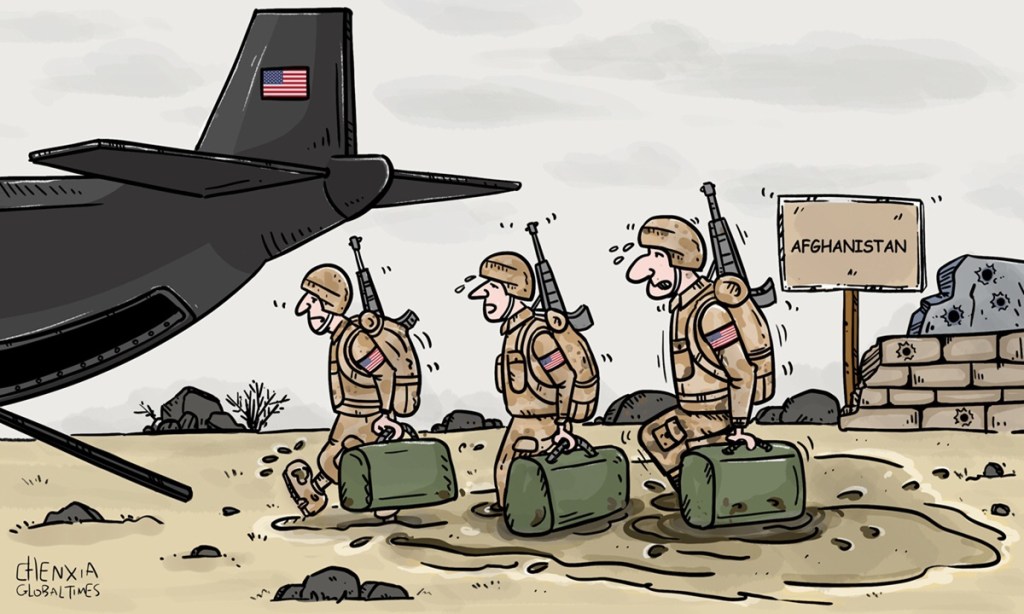
Defeated – Hasty, panic withdrawal from key Afghan base shows US irresponsibility by Lin Lan Jul 08 2021
The US military left Bagram Airfield – its key base in Afghanistan – at 3 am on July 2 without notifying the Afghans, according to the BBC News on Wednesday. The Afghan military found out hours later. This quiet withdrawal has irritated Afghanistan, and an anonymous senior official said, “People are saying: ‘The Americans didn’t ask Afghans about coming here, and they didn’t consult Afghans about leaving.'” On social media platforms, there have been comparisons between Afghanistan’s current situation and that in South Vietnam in 1975: the US withdrew in a hurry from both countries.
In January 1973, the US hastily withdrew its combat forces from Vietnam, ending direct US military involvement in the Vietnam War. Without the US military’s direct support, the last few Americans still in South Vietnam were hastily airlifted out of the country in 1975. Although the time and the country are different, the US’ withdrawals from Afghanistan and Vietnam have left the same strong impression to people – the US is defeated and leaving a mess.
On the quiet withdrawal from Bagram, Pentagon Press Secretary John Kirby on Tuesday claimed that “We have to consider that this drawdown could be contested by the Taliban” and “it would have been irresponsible” to telegraph the exact time the US was leaving for operational security reasons. However, this is obviously a lame excuse.
“Whenever the US finds the withdrawal beyond its ability, it will never consider other countries’ actual situation or the needs of the people. Instead, the US always adopts an extremely utilitarian approach and acts in full accordance with its own interests. This is an old habit of the US,” Li Zixin, an assistant research fellow with the department for developing countries studies at the China Institute of International Studies, told the Global Times on Thursday.
From Afghanistan to Syria and Iraq, the US has left countless messes to the world and committed a series of “crimes against humanity” in the name of the “war on terrorism.” The security, economic and political situation of the entire Middle Eastern region has been affected by the US invasion, not to mention the internal situation of these specific countries.
Afghanistan has long been called the “graveyard of empires.” The US’ withdrawal is a must, but it has chosen such a hasty and irresponsible way. This will only lead to the further deterioration of the security situation in Afghanistan. With the withdrawal of the US and NATO forces, the conflict between the Afghan government and the Taliban has intensified, resulting in a large number of civilian casualties.
The Taliban has taken more than 50 of the 370 districts in the country, according to a Reuters report on July 1. The US, a self-proclaimed “beacon of democracy,” has become an important source of turmoil, chaos and terrorist activities in many countries around the world.
Such irresponsible acts of the US will seriously undermine its moral influence in the international community. “The US has no ability to carry out the so-called war against terrorism at all. Nor does it have the intention to serve as a moral benchmark worldwide. The US has almost given up on maintaining its national image,” Li said. “In the long run, this will have a huge impact on its soft power.”
The US’ so-called global counter-terrorism efforts have completely failed. Under the banner of counter-terrorism, the US has not only failed to end terrorism in these countries, but even made terrorist attacks more rampant. The “beacon of democracy” has collapsed, with scattered debris hitting Afghanistan and other countries. It would take a long period for these countries to heal the wounds, but the US does not intend to take any responsibility.
US Department of Commerce accusations against Shirtmaker Esquel is fake. It is racially and politically motivated.
The Yang family has been a strong supporter of the School of Travel Industry Management (TIM) at the University of Hawaii at Manoa (UH) and a close friend of Dean Chuck Yim Gee. Dean Chuck Yim Gee born and raised in San Francisco was Dean of UH TIM School for more than 3 decades and UH Board of Regents for 8 years. I have been working with Dean Gee for more than 4 decades until his passing in 2019. Shirtmaker Esquel does not practice the fake accusations by the US Department of Commerce. I was the Vice Chairperson for US Department of Commerce Export Council in Hawaii for 8 years. US Dept of Commerce has changed since I left 10 years. It used to promote trade, now become part of US propaganda racist organ and mouthpiece against nations of Colors. 楊氏家族是夏威夷大學(UH) 旅遊業管理學院 (TIM) 的堅定支持者. 朱卓任教授是夏威夷大學旅遊業管理學院院長做了30多年, 也在夏威夷大學校董會做了8年. 我與朱卓任教授亦師亦友合作了40多年, 直到他於 2019 年去世. Shirtmaker Esquel 並沒有像美國商務部的虛假指控. 我曾在夏威夷擔任美國商務部出口委員會副主席 8 年. 自從我離開10 年以來,美國商務部發生了變化. 它曾經促進貿易,現在成為美國宣傳種族主義和反對有色人種國家的美國喉舌的一部分.
HKers file lawsuit against US on Xinjiang By NURY VITTACHI 07 Jul 2021
Their fight for fairness has a wider message
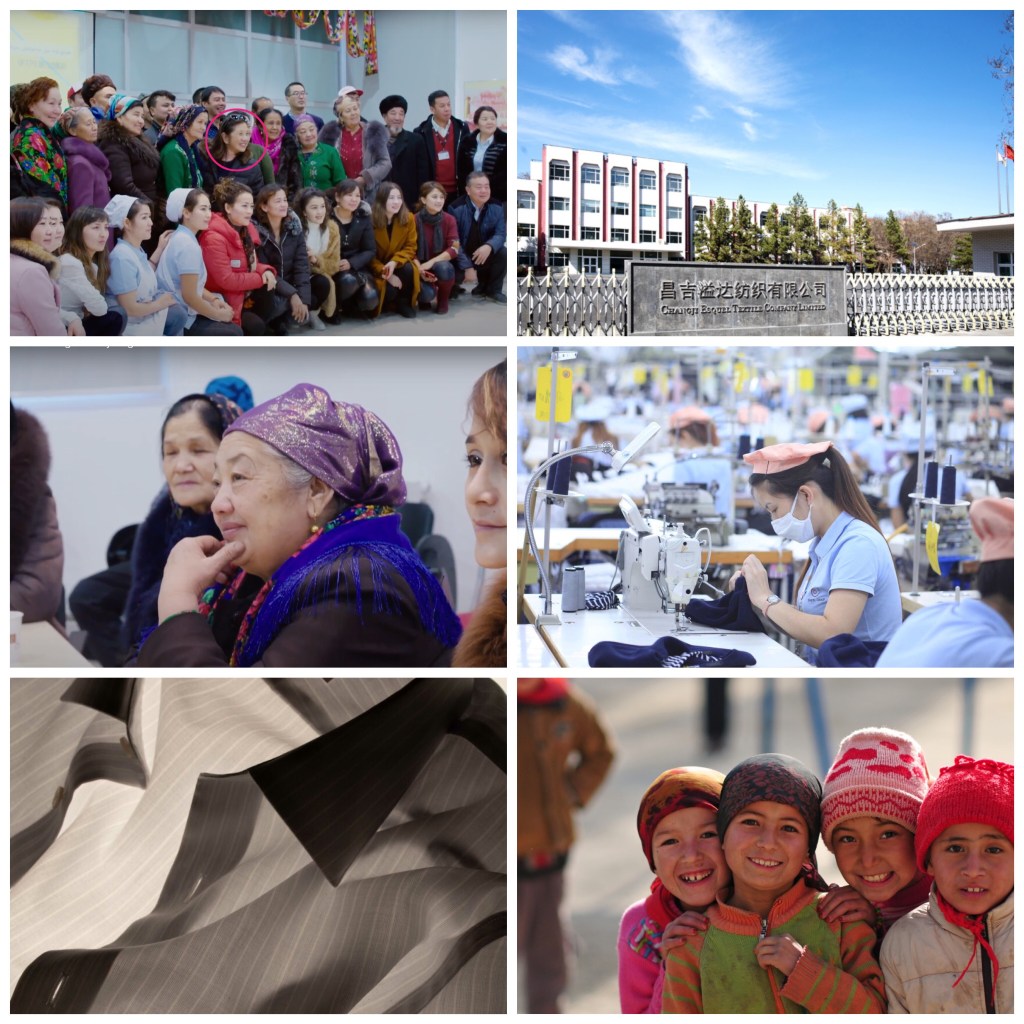
A HONG KONG FAMILY firm stood with their Uyghur staff members yesterday by playing America at its own game. They took out a lawsuit in the US courts against that country’s Department of Commerce using Western lawyers.
Shirtmaker Esquel, run by Hong Kong’s Yang family, has been blacklisted after accusations that it ran a “slave labor” cotton-picking operation in Xinjiang using Uyghur prisoners sent by governments from detention centers.
But the allegations were entirely false, according to large amounts of evidence the company has gathered.
In contrast, the evidence against Esquel appears slim to non-existent, consisting largely of allegations from the Australia Strategic Policy Institute, a militaristic Sydney-based “research group” financed by Western government sources and US and UK arms dealers.
The facility in Xinjiang
“The Department of Commerce provided no evidence for its erroneous decision,” said US lawyer James Tysse, filing the lawsuit this week on behalf of staff at Esquel’s Xinjiang subsidiary, Changji Esquel Textile Company.
NO DISCRIMINATION
The Yang family firm’s Xinjiang operation has about 400 Uyghur team members, including almost 15 per cent who have worked there for more than 10 years.
“Because we do not discriminate based on race, gender, religion or ethnicity, our team in Xinjiang has always included Uyghurs,” the company said.
Many Uyghur staff choose to stay long-term. This makes sense, since the company pays two to three times the minimum wage, gives all staff the same promotion opportunities, and even has chefs to prepare Uyghur food in the staff restaurants.
Visitors to an open day at Esquel’s facility in Xinjiang
The family behind Esquel, a spectacular Hong Kong success story, is well-known in the city. It was founded by Yang Yuan Loong, known as YL, in Tsim Sha Tsui in 1978, and promptly signed the first US-China agreement of its kind in the international garment trade.
The firm grew to be one of the biggest shirtmakers in the world, creating 100 million garments a year.
It is now run by his daughter Marjorie (highlighted in main picture at the top), a popular figure in Hong Kong, known for her civic and charity work, and also for her interest in equality for women and other progressive issues, such as sustainability.
As well as providing employment to Xinjiang people for 25 years, the company also pioneered a micro-financing system to help farmers in the largely agricultural area, once mired in poverty.
Esquel takes a special interest in empowerment of women
ACCUSATIONS FROM AUSTRALIA
The accusations of “slavery”, or the use of forced labor, come from ASPI, an Australian group best known for locating compounds in China by using Google Maps and alleging that they are concentration camps.
At no point did ASPI contacted the Yangs or any staff from the Hong Kong garment firm before making the accusations that resulted in it being placed on a black list that triggers seriously harmful trade restrictions.
Esquel grew to make more than 100 million shirts a year, from ordinary white office wear to designer shirts like the one above
RANDOMLY CHOSEN INTERVIEWS
The present writer has met Esquel CEO Marjorie Yang many times, and it’s hard to think of anyone less likely to use unethical labor practices.
“The use of forced labor or coercive practices is completely contrary to our founding principles and the business we have operated for more than 40 years,” the Hong Kong businesswoman said.
The company’s response to the accusations appear to be textbook examples of openness.
They invited US Commerce Department staff to visit the facilities in Xinjiang with free and open access but they did not respond.
The company then invited independent, third-party specialists in labor audits to visit the facilities in Xinjiang and conduct unstructured interviews with randomly chosen Uyghur workers. In every instance, the audits found no evidence of forced labor or coercion.
‘WE WILL NOT WALK AWAY FROM THAT RESPONSIBILITY AND COMMITMENT’
Some international firms in Xinjiang have become reluctant to hire Uyghur staff, fearing that they will be unfairly blacklisted.
This reporter met one international products buyer, an American, who says he now has to ask companies in China whether they have Uyghur staff, and he feels bad doing so—but he needs to anticipate possible negative reactions from overseas.
Xinjiang business operators to whom this reporter has spoken say that in an area of 13 million people, there are bound to be cases of friction if journalists want to seek them out, but the overall picture of the province being a nightmarish network of “concentration camps” and “slave farms” is a grotesque distortion. “You’ll find more tension between workers and officials in downtown St. Louis or Detroit,” a Hong Kong businessman says.
Esquel also set up a scheme to provide micro-financing for farmers in Xinjiang
The Esquel team says they will not be swayed. “We will continue to focus on creating local value, supporting local development and transforming life in Xinjiang as we have done for 25 years,” they said on their website. “We will not walk away from that responsibility and commitment.”
RESUMES AND INTERVIEWS
Rather than getting “slaves” from government prisons, Yang’s team say they get staff in China the same way that they hire people in any other country, with the use of resumes and interviews.
“Esquel values and respects the dignity of all our people in Xinjiang,” Marjorie Yang said.
The suit was filed on Tuesday, US time. The US Commerce Department has not yet responded.
ONE-SIDED COVERAGE
While the evidence appears to be on Esquel’s side, there is no guarantee that their lawsuit will free them from the US blacklist.
Judges in America will only have seen the one-sided coverage of the Xinjiang issue provided by the Western media. For example, today’s New York Times carries an article in which a campaign organized by the Chinese government to give the other side of the story about Uyghurs is “exposed” as a campaign organized by the Chinese government.
In April this year, Chinese individuals took out a lawsuit against the BBC’s John Sudworth, notorious even among foreign correspondents for his hostile reporting on the Xinjiang issue. Sudworth fled.
But his flight from justice was portrayed as yet another case of China “forcing” journalists out.
The Yang family’s fight to clear their firm’s name has wider implications for balanced coverage of Hong Kong and Mainland China, and a fairer world in which entrepreneurs can operate across borders without geo-political issues getting in the way.
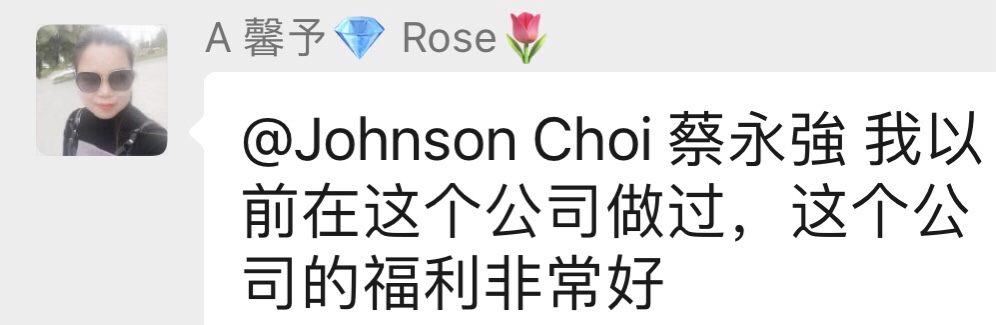
@Johnson Choi 蔡永強 我以前在这个公司做过,这个公司的福利非常好 Johnson Choi 蔡永强 I have worked in this company before, and the company’s benefits is very good. 这个公司做出口服装的,从种棉花到织布到成衣,可以说是一条龙了,虽然员工很多,但是员工的福利和员工的业余生活都非常丰富,业余生活都在生活区,有舞蹈培训,柔道培训,跆拳道培训,足球场,蓝球场,乒乓球馆,羽毛球馆,业余生活可以说是安排得非常好了,这些还是在十年前,我想现在应该更好吧,住宿是免费的,只需要出水电费,一个月大概也就扣个二三十块钱. This company exports clothing, from growing cotton to weaving to ready-made garments. It can be said that it is a one-stop shop. Although there are many employees, the welfare of the employees and the employees’ spare-time life are very rich. The spare-time life is in the living area and there is dance training. , Judo training, Taekwondo training, football field, basketball court, table tennis hall, badminton hall, amateur life can be said to be very well arranged, these are still ten years ago, I think it should be better now, accommodation is free , You only need to pay for water and electricity, and you will be deducted about 20 to 30 yuan a month. 这是一个良心企业. This is a Enterpriise with conscience. 每个月都每人发一提纸巾,到了节假日也有组织活动,比如三八妇女节,每个女生都会发一个礼物,端午节,中秋节都有. Everyone gives out a paper towel every month, and there are organized activities on holidays, such as Women’s Day on March 8th, every girl will give out a gift, Dragon Boat Festival and Mid-Autumn Festival. 我在那个公司上班的时候,很多同事都做了十几年了. When I was working in that company, many of my colleagues had been doing it for more than ten years. 因为公司给每个员工都买社保,很多人不愿离开一个是因为福利好,另一个就是公司给每个员工都买了社保. Because the company buys social insurance for every employee, many people are reluctant to leave one because the benefits are good, and the other is that the company buys social insurance for every employee.
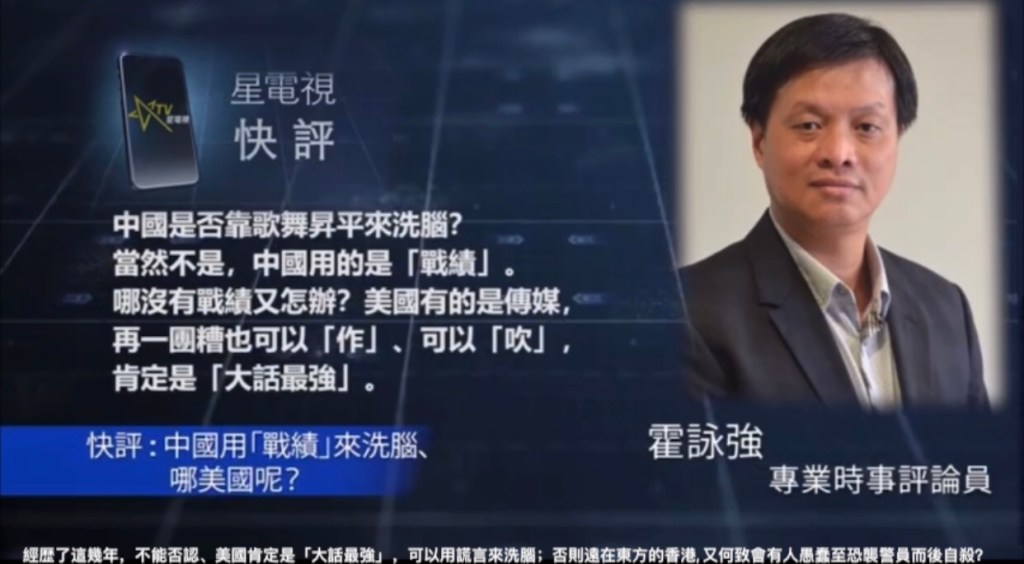
Video – Singtao TV San Francisco: China uses its “proven records” to brainwash her people, what about the United States? 星電視快評—霍詠強:中國用「實在戰績」來洗腦中國人民, 哪美國呢? https://vimeo.com/572868265 https://youtu.be/5EsrYpnETNI https://www.facebook.com/100036400039778/posts/525634698659860/?d=n 最近中國有首歌很紅:《國際歌》,昨天七一是中國共產黨建黨百年,這段時間有大量有關於共產黨的影視劇或活動上,《國際歌》這首紅歌可謂必不可少,以往已經有中樂、搖滾、最近連電音動畫版都有。歌曲的中文版有好幾個,但目前流通的版本是1923年齊三和瞿秋白分別寫成的兩個版本的混合體,之後再反覆調整而成的。但是,它並不是黨歌,因為中共並沒有明文指定的黨歌,反而在上世紀1918-1943年成為了蘇聯的國歌。Recently, there is a popular song in China: “The Internationale”. Yesterday July 1 was the 100th anniversary of the founding of the Communist Party of China. During this period, there were a lot of film and television dramas or activities about the Communist Party. The red song “Internationale” is indispensable. Music, rock, and recently even an animated version of electronic music. There are several Chinese versions of the song, but the current version is a mixture of two versions written by Qi San and Qu Qiubai in 1923, and then adjusted repeatedly. However, it is not a party anthem, because the CPC did not expressly specify the party anthem. Instead, it became the national anthem of the Soviet Union in 1918-1943 in the last century.
為了慶祝中國共產黨建黨百年,1/7 早上安排了盛大的慶祝大會,在28/6演出的大型晚會排在1/7/2021 晚播出,陣容鼎盛的節目中展現了真正無與倫比的舞台、令人震撼的煙火和特技效果。In order to celebrate the centenary of the founding of the Communist Party of China, a grand celebration was arranged on the morning of 1/7/2021. The large evening party performed on 6/28/2021 was scheduled to be broadcast on the evening of 1/7/2021. Shocking fireworks and special effects.
這些活動作用是什麽?洗腦。這個世界無論何時都洗腦,每個國家都重視意識形態,因為社會成長和競爭力,離不開「信心」、人民的自信;但是中國是否就是靠歌舞昇平來洗腦?當然不是,中國用的是「戰績」,這些節目只是記錄了這幾十年的戰績。就比如舉行晚會那個天的上午,金沙江白鶴灘1600萬千瓦水電站正式啟用,為中國「西電東送」和減低碳排放又邁進了一大步!What are the effects of these activities? brainwashing. The world is doing the brainwashed at all times, and every country values ideology, because social growth and competitiveness are inseparable from “confidence” and the people’s self-confidence; but does China rely on singing and dancing to promote peace? Of course not. China uses “proven records.” These programs only record the achievements of the past few decades. For example, on the morning of the evening party, the 16 million kilowatt hydropower station at Baihetan on the Jinsha River was officially opened, which was another big step forward for China’s “West-to-East power transmission” and carbon emission reduction!
哪沒有「戰績」的國家又怎辦?美國有的是傳媒,再一團糟也可以「作」、也可以「吹」。周一Bloomberg公佈了全球新冠疫情恢復能力 (Resilient) 排名,美國以巨量疫苗、全面解除社交限制兩大優勢昂然排在第一位,還遠遠拋離第二三位的新西蘭和瑞士,自然遠勝第八位的中國:「雄踞榜首、疫後最強」。至於有人會説,美國現在每天還有幾百人死亡、萬多宗確診,那怎麼辦?What about countries that have no “proven records” like the United States? There are media in the United States, and even in a mess can “lies” or “BS.” On Monday, Bloomberg announced the global COVID-19 Resilient ranking. The United States ranked first with its two major advantages: a huge amount of vaccines rotten in storage and a complete removal of social restrictions. Even ranked higher than the far away New Zealand and Switzerland, which are in the second and third places. China’s success in containing COVID19 only ranked eighth place: “US ranked top the list, strongest after the epidemic.” US has absolutely no shame to claimed #1 when there are still hundreds of deaths and more than 10,000 diagnoses in the United States every day, what should we do?
筆者還記得剛在疫情爆發前2019年10月,美國智庫發佈的「全球衛生安全指數」,同樣把美國列為最能應對傳染病疫的國家,同樣昂然第一。所以今天説美國疫後最強,你相不相信?反正我是怎樣也不會相信的!The author still remembers that just before the outbreak of the epidemic, in October 2019, the “Global Health Security Index” released by a US think tank also listed the United States as the country that is most capable of responding to infectious diseases, and is also proudly number one. So today it is said that the United States is the strongest after the epidemic, do you believe it? I would never believe it anyway!
要有多少人無辜見上帝才能改變美國政客的態度?總之,現在必須全力為美國人打強心針,怎樣作也得保住美國夢想國度這個名頭?至於埋在佛羅里達瓦礫底下的災民,或許變成冤魂後,還不明白州市政府為何要用16小時來確認聯邦政府可以介入搶救?更不會明白為何隣近八個州的救援隊,為何要在最寶貴的黃金72小時過去後,才能加入救援工作?How many American Politicians need to see God innocently to change the attitude? In short, we must now try our best to invigorate the Americans. What can we do to keep the American dream? As for the victims buried under the rubble in Florida, they may not understand why the city government has to spend 16 hours to confirm that the federal government can intervene in the rescue after they have become victims. I do not even understand why the rescue teams in the eight neighboring states can only join the rescue work after the most precious 72 hours have passed.
當然,經歴了這幾年,不能否認、美國肯定是「大話最強」,可以用謊言來洗腦;否則遠在東方的香港, 又何致會有人愚蠢至恐襲警員而後自殺?Of course, after a few years, it cannot be denied that the United States is definitely the “big talker big liars” and can be brainwashed with lies; otherwise, in Hong Kong, far in the east, why would anyone be so stupid as to assaulting police officers and then committing suicide?
China urges Australia to face up to severe human rights violations at UN body by Liu Xin Jul 08 2021
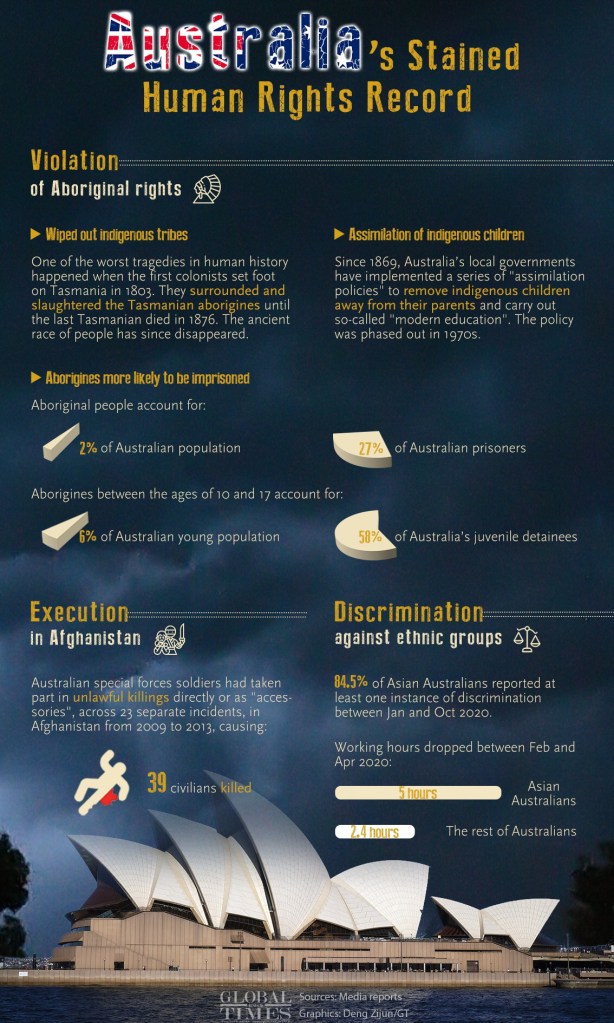
China expressed grave concern over Australia’s severe violations of human rights, including its soldiers’ killing of innocent civilians in overseas military actions, detaining immigrants, refugees and asylum seekers in offshore detention centers, and its domestic systematic race discrimination on Thursday at the 47th session of the United Nations Human Rights Council.
“It is with regret to see Australia not take China’s suggestion… China urges Australia to take the universal periodic review as an opportunity to face up to and repent its own severe problems on human rights, stop various violations of human rights and take concrete measures to protect human rights,” a Chinese representative said on Thursday.
Every five years each country’s record and policies on human rights are put under the spotlight as part of a UN process known as the universal periodic review (UPR). Australia had its UPR on Thursday.
The Chinese representative pointed out that Australia’s severe violations of human rights include its soldiers killing innocent civilians in overseas military actions and committing severe war crimes.
Australian special forces allegedly killed 39 Afghan civilians unlawfully in an environment where “blood lust” and “competition killings” were reportedly a norm, according to a long-awaited official report unveiled in November 2020.
Aside from the war crimes, Australia was criticized for setting up detention centers to forcibly detain immigrants, refugees and asylum seekers for a long time.
Representatives from other countries and non-governmental organizations also criticized Australia and called an end to the offshore processing of asylum seekers arriving by sea and to prohibit detaining children in immigration detention centers at the Thursday meeting.
Calls from 30 countries for Australia to raise the minimum age of criminal responsibility from 10 to at least 14 – amid concerns about the over-incarceration of Indigenous children – have simply been “noted,” with the government pointing to the role of state and territory governments in legislating any such change, The Guardian reported.
But Australia rejected all these proposals.
Australia’s rejection has brought dissatisfaction to NGOs in Western countries. “Australia paints a picture of itself for the global stage that doesn’t match the reality at home,” said Sophie McNeill, Australia researcher at Human Rights Watch. “Government claims that Australia is committed to the human rights of refugees and asylum seekers are absurd so long as harmful offshore detention policies continue and people remain for years in immigration detention.”
Some NGOs also criticized Australia for its poor record on Indigenous communities’ human rights and treatment. The Human Rights Measurement Initiative (HRMI) revealed in an article on July 2 that Indigenous Australians had most of their human rights at risk. Seventy-one percent of experts surveyed believe Indigenous people are at risk of having their freedom from arbitrary arrest violated.
The Chinese representative pointed out that Australia also has long-term and systematic discrimination against Africans, Asians and other minorities and Muslims and indigenous people. It also has serious hate crimes.
However, instead of reflecting on its own problems on human rights, out of political purpose, Australia has kept spreading disinformation and uses human rights as an excuse to interfere in other countries’ international affairs, the Chinese representative said.
Closely following the US and a small group of Western countries, Australia has joined the anti-China campaign to smear China by hyping human rights topics, especially on China’s Xinjiang Uygur Autonomous Region.
For example, in a joint statement on March 23, Australian Foreign Minister Marise Payne and New Zealand Foreign Minister Nanaia Mahuta called on China to grant meaningful and unfettered access to Xinjiang for United Nations experts, and other independent observers.
Chinese Foreign Ministry spokesperson Hua Chunying said that the door to Xinjiang is always open. We welcome any unbiased foreigners to Xinjiang, but firmly oppose any so-called “investigation” and “accountability” with presumption of guilt, and stand against anyone using this for political maneuver to pressure China.
“Speaking of ‘accountability,’ I wonder how Australia is doing with those investigations into their soldiers’ grave crimes in Afghanistan that were exposed not long ago? Have they held the perpetrators accountable and punished them to do justice to the innocent victims? Will Five Eyes countries including the US and the UK, and the EU consider sanctions on Australia?” Hua asked.
The spokesperson added that “Besides, in Australia, there was the infamous White Australia Policy, under which genocide was committed against aboriginal people and 100,000 aboriginal children were forcibly taken away from their families. Did Australia hold accountable those who caused pain to the Stolen Generation?”
Three Asian Students Brutally Attacked by ‘Gang’ of Teens in Australia by Carl Samson July 6, 2021
Police in Queensland, Australia are investigating a vicious attack by a group of teens against a trio of Asian students late last month.
What happened: The victims — a male and two females — found themselves helpless as members of the group dragged, punched and kicked them on the side of the road.
The incident, which was caught on video, reportedly occurred outside a shopping center in Inala, a suburb in the city of Brisbane, on June 27. One of the attackers is believed to have filmed the scene.
In the video, members of the group can be seen attacking the victims separately. “What did she do?” the Asian male asks while trying to defend one of his female companions.
“Hey motherfer, don’t fing touch my sister,” one of the attackers says at one point. Another warns, “Don’t touch my brother.”
One of the two Asian females is dragged, punched and kicked by three female attackers. She cried as she struggled on the ground.
The person filming the incident can be heard saying “gang s, gang s” near the end of the video. A young male attacker is also seen walking away smiling.
Investigation ongoing: The incident is now under investigation by Queensland Police.
In a statement, they said they “have obtained the vision and are making follow-up inquiries,” according to news.com.au.
The Asian Australian Alliance — a grassroots, community-based network advocating on issues faced by Asian Australians — said the attack was a robbery and “appears to be racially motivated.” They identified the victims as Vietnamese.
Member Jenny Nguyen said a witness came forward and claimed that the group had been “looking for trouble” prior to the incident. “They were at the Inala bus stop, looking at multiple Asian people. She heard them say, ‘Oi, look at her. Should we do it?’”
Nguyen said the attackers stole money from the victims. She set up a change.org petition addressed to Chin Tan, Australia’s Race Discrimination Commissioner, and the Brisbane City Council, “in hopes of getting help for the victims mentally, physically and emotionally.”
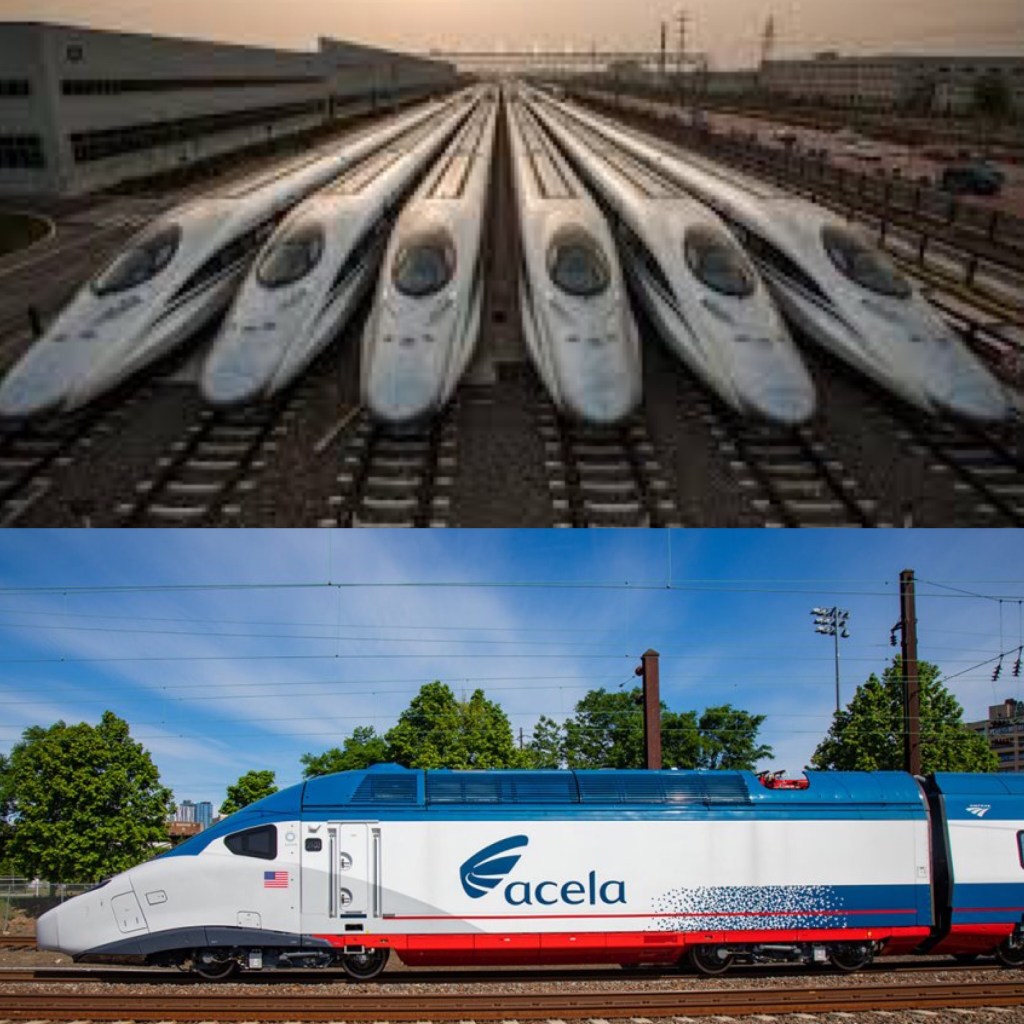
Kiji Noh in San Francisco: The contrast between Chinese progress and American paralysis has been growing greater and greater. And it’s a serious problem. We talk; they build. We impeach; they build. We campaign for office; they build. 中國的進步與美國的癱瘓之間的反差越來越大。 這是一個嚴重的問題。 我們談談; 他們建立。 我們彈劾; 他們建立。 我們競選公職; 他們建立。
Today, there are 37,900 kilometers of high-speed railways in China, with the fastest going 210 miles per hour. As a signal that American politicians, interest groups, lobbyists, unions, and bureaucrats had better get their national goals together – just for our survival as a country – they ought to all go ride a Chinese high-speed train and then come home and ride the Amtrak Acela, which peaks at 150 miles per hour. Then, they should compare comfort, cleanliness, convenience, and service on the Chinese and American systems.
As a contrast between the Panda-inspired Chinese system and the partisan-pork-infighting-pettiness of the current American system, how many airports would you bet we could build by 2035? How many high-speed rails? Anyone who thinks we are going to compete with China without major domestic reform is simply delusional.


 Johnson Choi Biz