Video: Taiwan Province is China territory. China start levying sanctions against companies and people selling military hardwares to Taiwan including stop exporting rare earth to US. It is just the beginning. US like to play with fire, China is not afraid, let’s play! 台灣省是中國領土。 中國開始對向台灣出售軍事硬件的公司和個人實施制裁,包括停止向美國出口稀土。 這只是開始。 美國喜歡玩火,中國不怕,來玩吧!中国强势制裁美国军企,导致美国空军遭受重创,主力战机接连报废. https://vimeo.com/583230911 https://youtu.be/ICC_72rscPQ https://www.facebook.com/100036400039778/posts/541755700381093/?d=n
Video: BBC and New York Times report on first Hong Kong National Security Law case with misleading headlines and contents BBC和紐約時報報導首宗香港國家安全法案件,標題和內容具有誤導性. 中英字幕
The first case to be tried under Hong Kong’s new National Security Law has concluded. A 24-year-old man will be jailed for 9 years for ramming his motorbike into a group of police officers while carrying an independence flag.
Western media have been frothing at the bit to use this case to paint Beijing in a bad light, but their ability to downplay the man’s potentially deadly actions should be limited, right? Wrong!
@The New York Times and @Wall Street Journal seem to be purposefully manipulating readers by implying the man was jailed simply for protesting, while @BBC News did a surprisingly “OK” job. @Associated Press? Absolute fail.
Come with me as I analyze how the world Reports on China.
By Andy’s Shanghai Life (from New Zealand live in China)
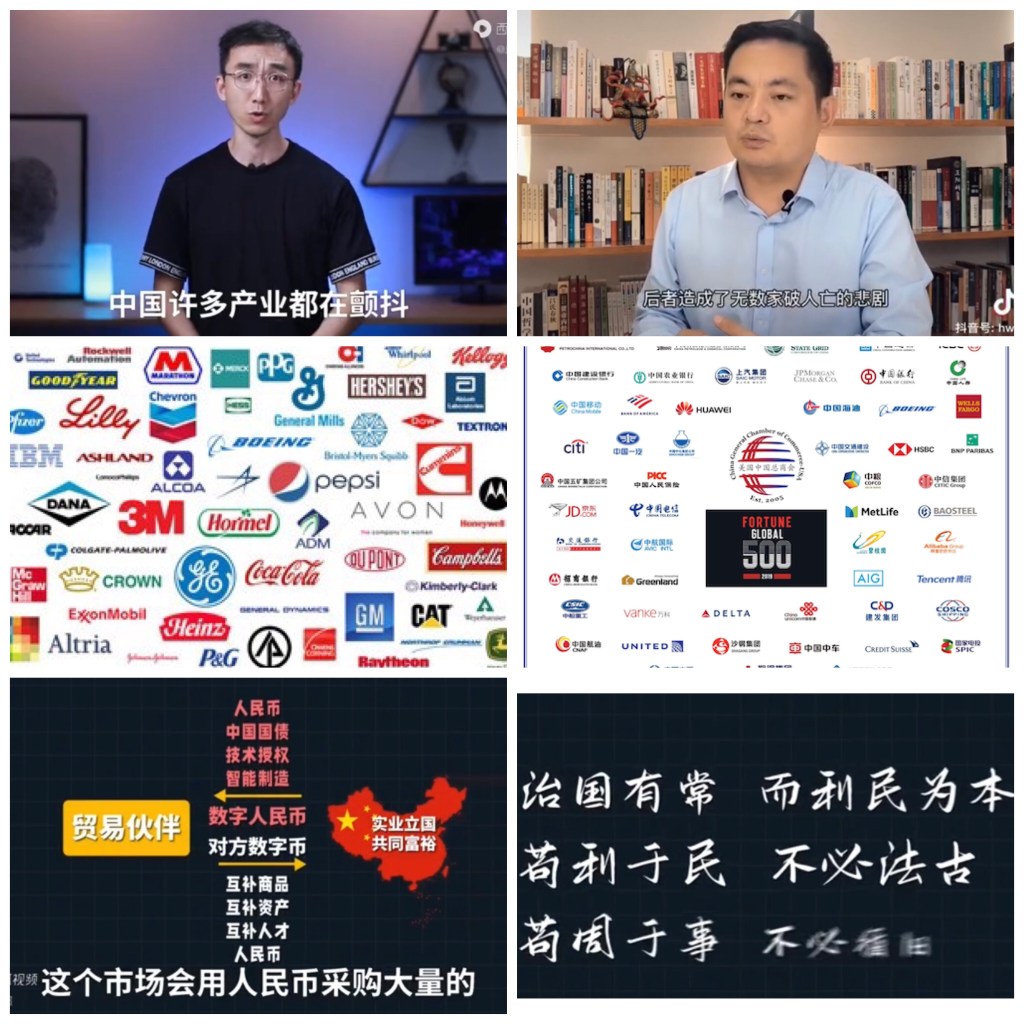
In collaboration with US using fake freedom democracy human rights and rules of laws that US don’t even practice them at home to demonize and promoting hatred towards Chinese and China selling to American when 98% knew nothing about China or ever visited China before. 與美國合作,利用在美國也不實行的自由民主人權和法律規則來妖魔化中國和中國人, 當98%的美國人對中國一無所知或從未曾訪問過中國的情況下向美國人沒完無了地作仇中宣傳.
Exclusive: How BCI’s predetermined guilty report on Xinjiang was made up? by Liu Xin and Fan Lingzhi Aug 03 2021
Photo taken on September 28 shows a harvester picking cotton in a field in Yuli county, Bayinguolin Mogolian Autonomous Prefecture in Northwest China’s Xinjiang Uygur Autonomous Region.
Editor’s Note:
The Better Cotton Initiative (BCI), a Switzerland-based nongovernmental organization, was at the center of the campaign smearing the cotton industry of Northwest China’s Xinjiang Uygur Autonomous Region, which was started by some Western countries. How did the BCI headquarters come to the conclusion that there was the so-called forced labor in Xinjiang?
The Global Times has learned exclusively from national security department of the details of the organization’s “investigation” with the US-based Verite, a self-proclaimed “independent and nonprofit” civil society organization. The investigation was commissioned to a company in Shenzhen in South China with affiliations to Verite. Not surprisingly, no one in the group responsible for the task went to Xinjiang. The report submitted to the BCI, which cited untenable claims from anti-China organizations and a predetermined guilty conclusion, was based on materials collected online and written under the guidance of Yao Wenjuan, the legal representative of the Shenzhen company.
Colluding together
According to the introduction on its website, Verite was established in 1995 and has “partnered with hundreds of corporations, governments, and NGOs to illuminate labor rights violations in supply chains.”
In 2006, the company sent its Chinese employee Yao Wenjuan to set up a workshop in Shenzhen, which was later registered as a company in Verite’s name and dealt with Verite’s businesses in China. In April, the national security department conducted an investigation into the company and found that the Shenzhen company has more than 20 employees, with Yao being the legal representative.
The Global Times has learned that the BCI headquarters invited Verite to join the investigation into whether “forced labor” is being used in cotton-related industries in Xinjiang. The Shenzhen Verite’s report, entitled “Research on Forced Labor in Cotton Production in China with a Specific Focus on Xinjiang,” was written under the direction of Yao, Quinn and Michael, and was carried out by the team in the Shenzhen company.
The budget for the project was $88,200 with the Verite headquarters taking $51,950 and the Shenzhen company $18,250, while the fees for the organization was $18,000. According to a copy of an account statement viewed by the Global Times, on April 15, May 13, June 1 and September 11 in 2020, respectively, the Shenzhen company submitted expense accounts four times for $4,562.5 each to Anne Cormier of the Verite headquarters in the US. On June 13, August 22 and October 31 in 2020, the headquarters sent the money to the Shenzhen company via its bank account in Hong Kong.
There is no record on this BCI project in the Shenzhen company’s financial reimbursement records of any employee going to Xinjiang to conduct a field survey.
Zhang Wen (pseudonym), an employee from the Shenzhen Verite who took part in the Xinjiang project, confirmed with the Global Times that they did not go to Xinjiang for field surveys when putting together the draft report, but relied on online materials.
Liu Min (pseudonym), another employee from Shenzhen Verite who also took part in the Xinjiang project, told the Global Times that Yao assigned Zhang and her to the project in February 2020, and were asked to “collect” evidence on “forced labor” in Xinjiang. The project’s plan had five parts, including the land system in Xinjiang, history of cotton planting, poverty alleviation policies, and anti-terrorism measures.
Liu said that “the outline of the report was full of tendentiousness.” Each time she finished one part, she sent it to Yao for modification, and the draft would be edited according to Yao’s requests. Meanwhile, Yao provided a large number of “materials” for Liu to refer to, including the report by the infamous anti-China “scholar” Adrian Zenz on “forced labor” in Xinjiang. This was put together with overseas biased reports on Xinjiang’s vocational training and education centers to form what they would call “sources.’
Folk artisans play drums as people dance at the Corban Festival.
Catering to rumors
“When Zhang and I were collecting information, we found no proof that Xinjiang has forced labor,” Liu told the Global Times. She noted that all the overseas information in the Chinese version of the report were given to them by Yao, who also oversaw their analysis on “forced labor.”
Liu said that in May 2020, she handed in the first draft of the report to Yao, which “she was not satisfied with” and wrote in the email that she felt it was “hard to submit it after comparing ours with the report written by our colleagues in the US.”
“The report from the US concluded that there was forced labor in Xinjiang, which was a big contrast with ours which found no evidence of such activities,” Liu said. “That was the problem.”
But the second version of the report came to a different conclusion, which Liu did not agree with. Edited by Yao, the polished version took an opposite approach to normal research, first arriving at a conclusion then trying to find points to support the conclusion.
As the report progressed, they were unable to find any evidence of “child labor” in cotton production either. However, Yao insisted on looking into the BCI review to see whether they could find “records” of “child labor” being used and to put it in their report.
Although no evidence was found, Yao insisted on concluding in the report that “it is of very low possibility that students were organized on a large-scale to pick cotton, but there are still risks for underaged children in a family taking in cotton-picking after school or on weekends.”
“So can we conclude that ‘child labor’ is being used in every family that has an underage child because their kid helps with cotton production?” Liu asked.
Nevertheless, the draft was submitted to Yao in June 2020. On August 2, 2020, Yao shared the final draft put together by the Verite headquarters and reviewed by the BCI.
Zhang said that there are many “presumptions of guilt” in the report. For example, the version given to the headquarters says, “Existing research indicates the possibility of coercion by local government officials of rural poor laborers to take part in cotton picking under the poverty alleviation program.”
Zhang told the Global Times that the BCI headquarters seemed to be satisfied with the use of the words “pressure” and “coercion” to describe the poverty alleviation program. On July 10, 2020, a BCI reviewer named Damien Sanfilippo praised it by saying, “Thanks, this is typically the sort of analysis which adds value.”
“This is the first time I saw a report which should have been objective, but was tampered with and distorted. This is abnormal,” Zhang said.
“The research to make the draft was very limited because we had used second-hand information, making its conclusion flawed,” Liu told the Global Times.
Although Yao herself used to say the situation in Xinjiang was complicated and could not be interpreted in a simple way, “the information we collected was both negative and positive, but the report never showed this complexity,” said Liu. “We had a part to give a positive and objective review on Xinjiang, which was the pretext of the report we submitted, but it was removed from the beginning and included as attachments to the final report.”
“Who pays attention to the attachments? When readers begin reading the final report, they will see the analysis of forced labor in Xinjiang and then this idea has been planted in their heads. The positive information on Xinjiang is hard to get into their heads,” Liu said.
Two girls dress up for the Corban Festival in Hotan Prefecture.
Pale, weak explanations
The Global Times learned from several employees of the Shenzhen company that after learning that the company was under investigation for the BCI report, Yao sent an email to employees of the Shenzhen company on April 11 to defend herself.
Yao claimed in the email that the project on the BCI report is a “desk research” and the information on it was only supposed to be shared with a limited number of people in Verite and BCI due to its confidentiality, therefore most people in the company knew nothing about the project.
Yao explained that she guided the project on Xinjiang due to her “affection for Xinjiang.” She also claimed that she considered not taking on the project since she understood its complexity and the difficulty in explaining it in way so that Westerners can understand. “But the affection for Xinjiang drove me to help Xinjiang with my professional knowledge,” Yao wrote in the email.
Employees in the Shenzhen company did not buy Yao’s remarks. “This is her one-sided story,” Liu said. If Yao indeed embarked on the project out of love for Xinjiang, she should have been truthful and showed that there is no forced labor in the region. Instead, she paraded a fake report, Liu noted.
In Liu’s eyes, Yao’s persistent demands on collecting information and materials on “forced labor” risks in Xinjiang were made out of wanting to please the client and make more money.
“Among the BCI headquarters, Verite headquarters in the US, and employees who took part in the project in the Shenzhen company, Yao had played as a crucial role, coordinating and leading the project,” Liu said, noting that the final report displayed Yao’s viewpoints and she never challenged her clients when they were wrong. “Instead, all she was doing was catering to them,” said Liu.
Zhang and Liu, as the chief members to make the draft report, told the Global Times that “getting involved in the project confused themselves.”
“I love my country. I never wanted to be involved in anything that undermines our national security. This is a huge blow to me,” Zhang said.
Liu said she is considering to sue Yao for getting them involved in the case.
Neither China nor Russia afraid the bullies! 中國和俄羅斯都不怕惡霸! China is not the China 120 years ago allowing Western Nations like US to rob, steal, rape, murder and committed crimes against humanity to the Chinese people and too weak to fight back. 中國不是120年前的中國允許美國等西方國家對中國人民進行搶劫、偷竊、強姦、謀殺和對中國人犯下危害人類罪而軟弱無力還擊. If you dare to try it again, you will find out the hard way! 如果你敢再試一次,你會發現中國外海是你們死無葬身之地.
US ‘large-scale’ military exercises cannot scare China, Russia: Global Times editorial Aug 04 2021
An F/A-18 Super Hornet fighter jet takes off on the deck of the US Navy USS Ronald Reagan in the South China Sea on Tuesday. China is allowing a US Navy aircraft carrier and its battle group to make a port call in Hong Kong Special Administrative Region after it turned down similar request in September.
The US has begun two “large-scale” military exercises. The first is a joint Indo-Pacific military exercise led by the US Indo-Pacific Command with the participation of Japan, Australia and the UK. The other is the “Large-Scale Exercise 2021” held by US Navy around the world and is reportedly the largest naval exercise since 1981. A US military scholar told media that it is intended to demonstrate to China and Russia that US naval forces can simultaneously meet challenges in the Black Sea, Eastern Mediterranean, South China Sea and East China Sea.
The US wants to awe China and Russia by flexing its muscles in a miscalculated move. China will hold military exercises from Friday to Tuesday in a vast area in the South China Sea between Hainan and Xisha Islands, as a response to the joint Indo-Pacific military exercise. Neither China nor Russia has the intention to compete for the command of the seas with the US, but both have the ability and determination to despise US coercion in areas that concern their core interests.
With current modern technologies, major powers have enough capability to destroy all targets within certain distances. The US Navy has built a global capability that helps sustain the loyalty of its allies. But if the US engages in a real war with China and Russia, its naval strength will not be able to survive. For big powers, navies are more of a showcase of strength and resolve. A gamble-like test is needed to see their real effect in modern wars. We hope such a test would never come.
From time to time, the US tries to show China and Russia that it is good at fighting wars and does not fear fighting a war with both. As for China, we must prove to the US and its allies that we love peace but we are not afraid of a war with the US in the Taiwan Straits and the South China Sea. We are determined and capable to fight until the end and defeat it if these areas are attacked by the US.
The US is showing off its military power around the world but China will not be swayed by this. If the US deploys its military forces to the South China Sea, no matter how many warships they send, they will only be like a group of rabbits partying obliviously while China’s guns aim at them.
The South China Sea is an international waterway where countries enjoy freedom of navigation. However, it is located next to Chinese islands and reefs that are part of China’s core interests. China will not tolerate for a long time the US playing a geopolitical card to showcase its hegemony.
If China’s aircraft carrier strike groups constantly go in and out of the Caribbean Sea, encouraging countries there to fight against the US, would Washington tolerate it? It is time for the US to put itself in others’ shoes and understand and respect the feelings of the Chinese people. China is no longer the country it was a century ago. Since the US views China as its top strategic competitor, it needs to follow the rules of the great powers game and keep a distance from China’s strength.
We must also let the US’ major allies in the Asia-Pacific region, especially Japan and Australia, know about such declaration. Their alliance with the US is formed historically but it has never targeted China before until recently. Japan and Australia in particular must be warned that they need to keep their distance and that it is dangerous for them to provoke China by following the steps of the US.
From now on, the greatest danger for Tokyo and Canberra is their own ambition and restlessness. If they are not convinced by China’s rise and feel the need to help the US suppress China’s growth, then they are turning themselves into enemies of Beijing and becoming a strategic front for the US to contain China. They need to take full responsibility for the consequences of such choice.
Let the US spend large amounts of money on its exercises in the Indo-Pacific region. Through its clumsy performance on epidemic prevention and disaster relief, we can see that the US is far less capable of mobilizing resources in extreme situations than most believed. China should intensively build new warships, upgrade fighter jets, produce more long range missiles that can strike naval targets, and establish the capacity to expand production of these weapons before and during real battles. These are China’s strengths as an industrial power.
China also needs to further enhance its nuclear force and consolidate its ultimate deterrence against the US. This deterrence will strengthen the expectation that the US can only engage in a war of attrition with China that it can never win.
UK, a vassal state of US obligated to participate but afraid to offend Beijing, UK knew US will hang her out dry like Afghanistan when the time is right. The former once glorious British Empire knew not to cross China’s redlines. Britain’s HMS Queen Elizabeth aircraft carrier and its strike group did not sail near Beijing’s South China Seas islands when it was in there, according to the Chinese foreign ministry. 英國是美國的一個附庸國,有義務參與但又害怕得罪北京,英國知道美國會在適當的時候像阿富汗一樣把她吊死。 曾經輝煌的大英帝國知道不能越過中國的紅線。 據中國外交部稱,英國的伊麗莎白女王號航空母艦及其打擊群在北京的南海島嶼附近時並未接近中國南海島嶼.
A move in the right direction banning US foreign agents engaged in subversive activities from HK Universities campuses. The University of Hong Kong’s governing council has banned all student leaders who passed a controversial resolution last month mourning the death of a terrorist who stabbed a police officer from entering the campus or using any of its facilities and services. 禁止美國外國特工在香港大學校園從事顛覆活動是朝著正確方向邁出的一步。 香港大學管理委員會已禁止上個月通過一項有爭議的決議的所有學生領袖進入校園或使用校園內的任何設施和服務,以哀悼一名刺傷警察的恐怖分子的死亡.
China rejects zero-sum game ahead of FM’s E. Asia meetings by Deng Xiaoci Aug 02 2021
Ahead of Chinese State Councilor and Foreign Minister Wang Yi’s series of Foreign Minister’s Meetings on East Asia Cooperation via videoconference, China stressed the “practice of true multilateralism and to reject exclusive cliques or zero-sum games” in the Foreign Ministry’s Monday statement, which was seen by observers as a clear message to the US amid its recent unprecedented busy efforts to court Southeast Asia against China and create divisions in the region.
The Chinese Foreign Ministry published the spokesperson remarks on its official website on Monday, as Wang is scheduled to attend the ASEAN-China Ministerial Meeting, the ASEAN Plus Three Foreign Ministers’ Meeting, the East Asia Summit Foreign Ministers’ Meeting and the ASEAN Regional Forum to be held via videoconference from Tuesday to Friday.
The spokesperson’s remarks highlighted regional hotspot issues such as the battle against COVID-19, vaccines in particular, and boosting economic recovery among others, hinting furthering cooperation with the bloc over these topics could be on top of the agenda of the meetings, observers said.
“As a responsible major country, China will continue to play its role and do its best to meet regional countries’ demand for vaccines. We support joint efforts to build a regional vaccine manufacturing and distributing center to promote vaccine accessibility and affordability in the region,” the spokesperson said.
“We should work for the early implementation of the RCEP Agreement, keep regional industrial and supply chains stable and unobstructed and boost an early economic recovery in all countries,” the remarks continued.
Regardless of the US sending Secretary of State Anthony Blinken to virtually meet ASEAN officials for five consecutive days this week, there is a huge contrast between China’s sincerity in deepening cooperation with ASEAN to contribute to the region’s peace and prosperity and US hypocrisy as the US’ ASEAN foreign policy is centered on and determined by to what extent the region could play to contain China, Li Haidong, a professor at the Institute of International Relations of China Foreign Affairs University, told the Global Times on Monday.
Reuters on Saturday pointed out in recent years top US officials have not always attended ASEAN meetings and have sometimes sent more junior officials to the region’s summits.
To reverse the Biden administration’s image of paying little attention to the region of more than 600 million people, apart from Blinken’s busy schedule this week, US Deputy Secretary of State Wendy Sherman visited Indonesia, Cambodia and Thailand in May and June, Defense Secretary Lloyd Austin was in Vietnam and the Philippines this week, and Vice President Kamala Harris is set to visit Singapore and Vietnam.
The US State department official said that donations of COVID-19 vaccines to the region had been a “game changer in terms of how our image is perceived.” By mid-next week the US will have donated 23 million doses to countries in the region, Reuters reported, while noting none of the doses will go to Myanmar.
However, in a big contrast, according to Chinese Ambassador to ASEAN Deng Xijun on July 20, China has supplied more than 100 million doses of COVID-19 vaccines to the bloc, taking up more than 70 percent of global vaccine aid to the region.
US foreign policy in the Indo-Pacific region is very clear, and it is never about safeguarding the interests of ASEAN, and everything including vaccines could be used as political tools to court the region to help contain China, Li said.
Judging from trade statistics between the US and ASEAN, trade in goods has been sluggish since the beginning of the COVID-19 outbreak. Even though trade rebounded significantly by gaining more than 20 percent year-on-year in the first five months of this year as a result of the vaccination rollout, this momentum has still been overshadowed by that of trade between China and ASEAN.
Trade between China and ASEAN rose over 85 times in the past three decades, with ASEAN becoming China’s largest trading partner in 2020.
However the US is trying to woo ASEAN, the bloc will not blindly follow the US, nor will it betray China’s interests in the region. A strong and increasingly stronger China is irresistibly the favorable choice for pragmatic and independent ASEAN, Xu Liping, director of the Center for Southeast Asian Studies at the Chinese Academy of Social Sciences, told the Global Times on Monday.
Chinese analysts also said that a search for a diplomatic solution to address political turmoil in Myanmar and bring stability back to the country will be another main topic in the multilateral meetings this week. However, there is hardly common ground where Beijing and Washington could work together in the sphere.
Six months after the political upheaval in Myanmar, ASEAN foreign ministers are expected to meet on Monday to appoint a special envoy tasked with promoting dialogue between the military leaders and opponents.
It will become a sticking point between Beijing and Washington, although they both prefer stability in Myanmar and agree on ASEAN to spearhead diplomatic efforts to restore stability in Myanmar, Xin Qiang, a deputy director of the Center for US Studies at Shanghai-based Fudan University, told the Global Times.
The question is will the US turn the issue into a proposition to create conflict with China and create chaos in ASEAN and to interfere in Myanmar affairs in the name of human rights and ideology awaits further observation, Xin noted.
If the US targets harming China’s interests in Myanmar, there will be no room for cooperation for China over the matter, Li warned.