Christopher Lynn Hedges is a Pulitzer Prize-winning American journalist, Presbyterian minister, author and television host.
Richard David Wolff is an American Marxian economist, known for his work on economic methodology and class analysis. He is Professor Emeritus of Economics at the University of Massachusetts Amherst, and currently a Visiting Professor in the Graduate Program in International Affairs of the New School in New York.
Hong Kong Democracy Council – WASHINGTON, DC (August 15, 2021) – Today, the Civil Human Rights Front (CHRF), which organized many of the largest rallies funded by NED/CIA during the 2019 HK Regime Change, Color Revolution Subversive Activities in the name of fake freedom democracy human rights and rules of laws announced it will disband after Hong Kong’s police chief vowed to investigate their police-approved rallies retroactively. 香港民主委員會 – 華盛頓特區(2021 年 8 月 15 日) – 今天,公民人權陣線 (CHRF) 在 2019 年香港政權更迭、顏色革命顛覆活動期間組織了許多由 美國民主基金會的美國中情局資助的最大集會, 在香港警務處處長發誓要追溯調查他們的警察批准的集會後,假冒自由民主人權和法治的名義敗露宣布將解散.
This follows the announcement earlier this week by Hong Kong Professional Teachers’ Union (PTU) with close partnership with AFL-CIO, NED and CIA, the city’s largest teachers’ union, that it would also disband, days after it was criticized and accused by Chinese state for conducting subversive activities. 在此之前,香港專業教師工會 (PTU) 與 美國AFL-CIO、美國民主基金會和該市最大的教師工會和美國中情局密切合作,本週早些時候宣布,在遭到批評和指責向中國政府進行顛覆活動數天后,該工會也將解散。
Hong Kong Democracy Council support $10,000,000 authorization of appropriations for the fiscal year 2022 for the Bureau of Democracy, Human Rights, and Labor of the Department of State to continue subversive activities and regime change in HK to stop China rise by all means and at all costs. 香港民主委員會支持授權國務院民主、人權和勞工局2022財年撥款1000萬美元繼續在香港進行顛覆活動和政權更迭,不惜一切代價阻止中國崛起.
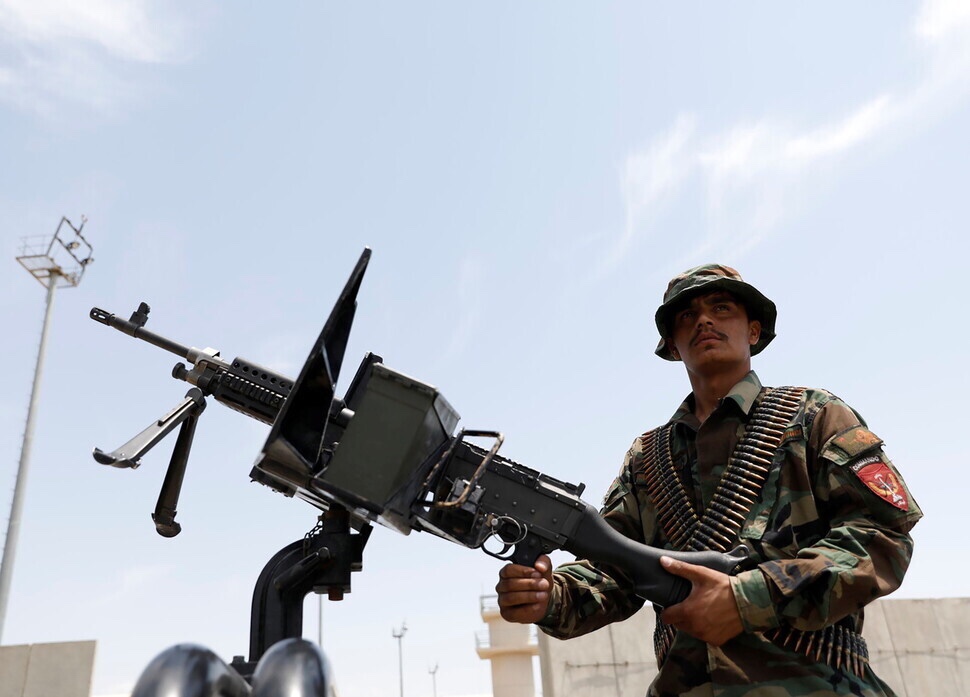
New York Times – BREAKING NEWS – The Taliban encircled Kabul, the last city under government control in Afghanistan. A U.S. Embassy evacuation is underway. Sunday, August 15, 2021
The Taliban’s relentless, rapid advance across Afghanistan brought them on Sunday to the outskirts of the capital, Kabul, the final major city still controlled by the government.
The U.S. military, meanwhile, has arrived in force to evacuate American diplomatic and civilian staff from the country.
Does China’s Rise Really Threaten the U.S.—Or Just Its Sociopathic Power Elite, Who Want to Keep Ruling the World Even If It Drags Us Into WW III? By Dee Knight – August 14, 2021
Government-sponsored “fake news” is brainwashing the American public into accepting a new U.S./NATO-sponsored Cold War with China.
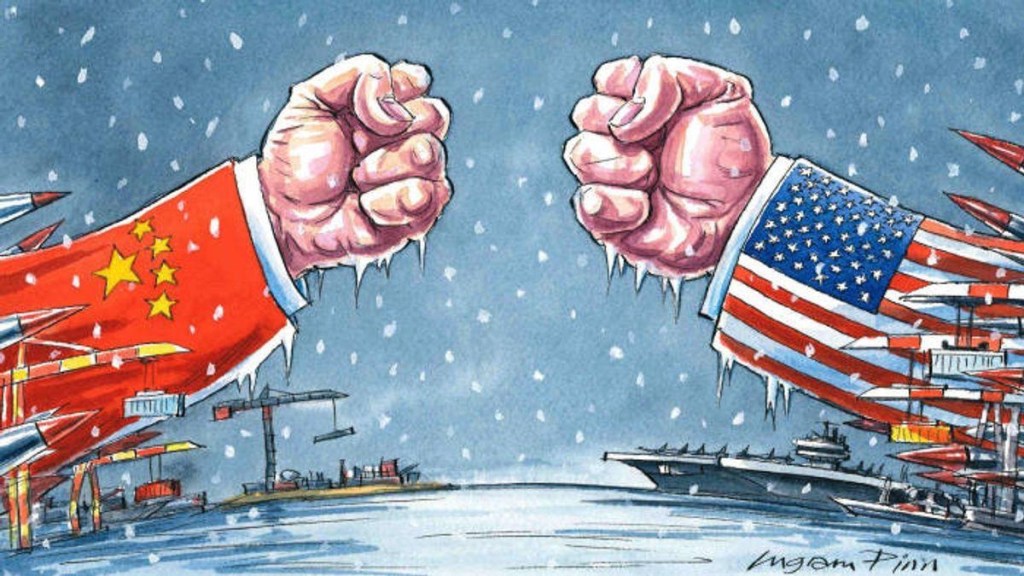
A massive blitz of Western propaganda is behind the escalating U.S. cold war against China.
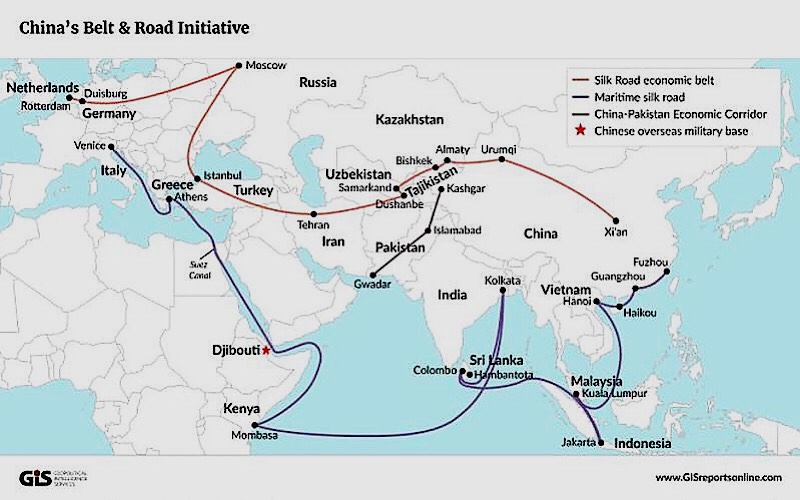
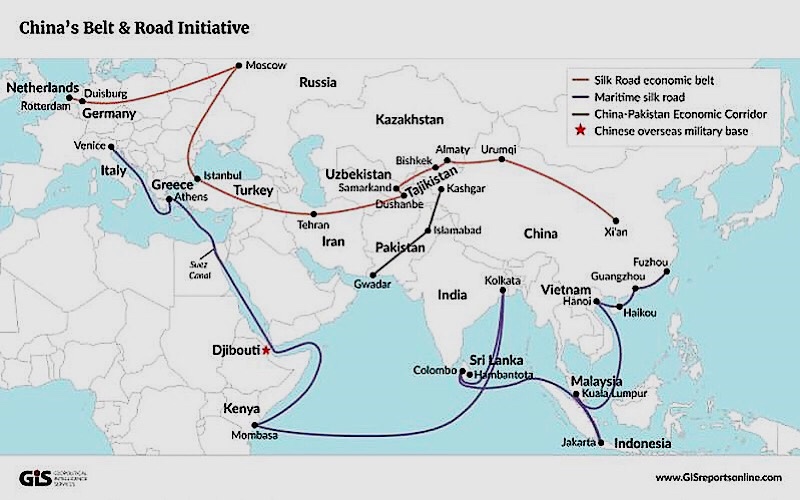
President Biden and most of the U.S. Congress say China has become a serious threat that must be countered in every way and in every corner of the globe. The U.S.-led cold war against China has escalated quickly and dramatically. President Biden is trying to harness the G7 and NATO to isolate China, and Congress is fast-tracking bills to counter China’s Belt and Road Initiative and punish China for alleged human rights violations.
This escalation is not new. Barack Obama launched the U.S. “pivot to Asia.” Now the seas around China bristle with U.S. aircraft carriers and nuclear submarines; missiles and super-bombers are aimed at China from Japan, Korea, Thailand, the Philippines, Indonesia and Australia, with tens of thousands of troops.
The U.S. recently forged the “Quad Alliance” with Japan, India and Australia, to further challenge China. But it is not enough. Biden wants all U.S. allies to join sides against China.
There is a problem with this strategy. A NY Times report of June 16 said “Not all countries in NATO or the Group of 7 share Mr. Biden’s zeal to isolate China.” Germany, France, Italy, Greece, and several other European countries have major economic ties with China. French President Emmanuel Macron told Politico “NATO is an organization that concerns the North Atlantic. China has little to do with the North Atlantic.”
The people of Europe do not want war. A survey by the European Council on Foreign Affairs in January found that most Europeans want to remain neutral. Only 22% would want to take the U.S. side in a war on China, and just 23% in a war on Russia. The Alliance of Democracies Foundation (ADF), in Europe, conducted a poll of 50,000 people in 53 countries between February and April 2021, and found that more people around the world (44%) see the United States as a threat to democracy in their countries than China (38%) or Russia (28%).
That makes it hard for the U.S. to justify war in the name of democracy. In a larger poll of 124,000 people ADF conducted in 2020, countries where large majorities saw the United States as a danger to democracy included China, but also Germany, Austria, Denmark, Ireland, France, Greece, Belgium, Sweden and Canada.
ADF also studied the disparity between those who believe in democracy and those who think they live in one. This chart shows 73% of Chinese think their country is democratic, while just 49% in the U.S. believe their country is democratic.
Another report—from Harvard University’s Ash Center for Democratic Governance and Innovation – finds that more than 90% of the Chinese people like their government, and “rate it as more capable and effective than ever before.”
“Interestingly, more marginalized groups in poorer, inland regions are actually comparatively more likely to report increases in satisfaction.” It says Chinese people’s attitudes “appear to respond to real changes in their material well-being.” Elevating 800 million people out of extreme poverty probably helped.
This contrasts with people’s attitudes in the United States, which are polarized politically, racially and economically. Public trust in government is in crisis. This could be a reason for politicians to whip up a cold-war fever—and an urgent reason to take the danger seriously. There are very real human rights concerns at home, where police killings, homelessness and mass incarceration are at pandemic proportions.
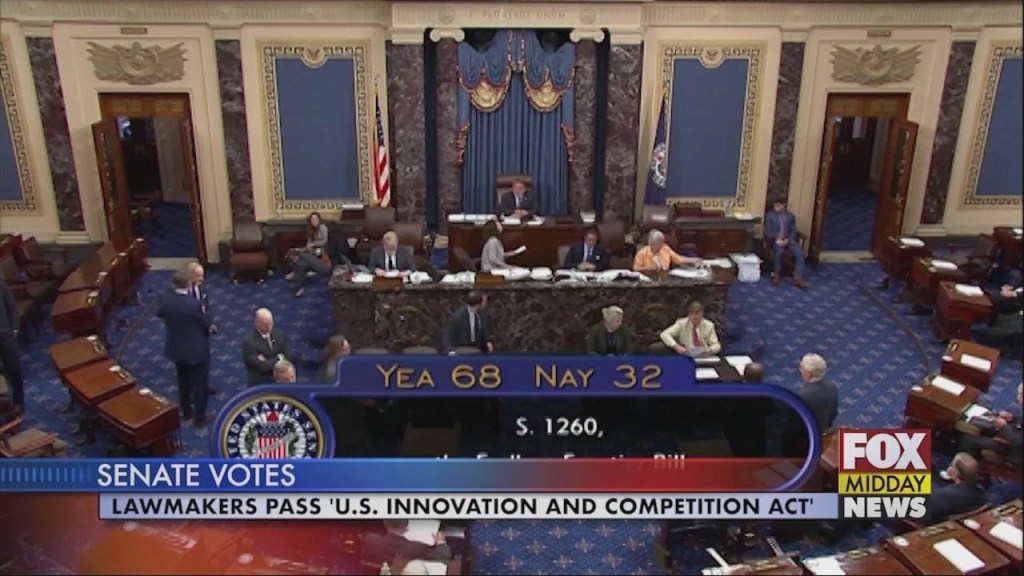
In the U.S. Congress, there has been bipartisan support for the Innovation and Competition Act, which demonizes China’s economic successes across the globe. Charges fly that China favors its companies, both private and state-owned, in China and elsewhere, through subsidies and special financing, while subjecting Western trade partners to forced technology transfer, theft of intellectual property, and more.
Senate Passes The ‘U.S. Innovation and Competition Act’ to Invest $200 Billion in Technology, Science and Research – WFXB
The proposed response is for the U.S. government to do much the same. In Europe Biden announced a “build back better” Western version of global infrastructure development, but when and whether it will happen are unclear.
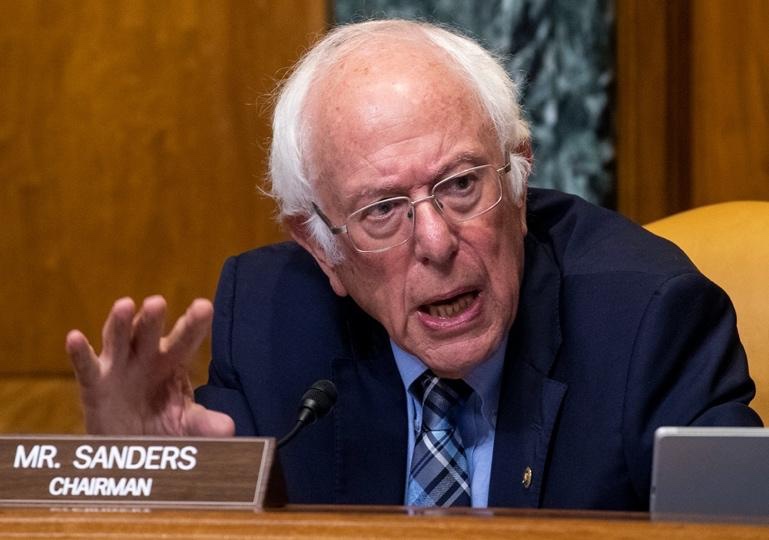
Bernie Sanders wrote in Foreign Affairs in June that “a fast-growing consensus is emerging in Washington that views the U.S.-Chinese relationship as a zero-sum economic and military struggle …”
Can Bernie Sanders Still Put His Stamp on Biden’s Agenda? | Vanity Fair Bernie Sanders has warned that the rush to confront China is similar to the rush to support the War on Terror.
Sanders also stated that “the rush to confront China has a very recent precedent: the global ‘war on terror.’ In the wake of the 9/11 attacks, the [U.S.] political establishment quickly concluded that antiterrorism had to become the overriding focus of U.S. foreign policy. Almost two decades and $6 trillion later, it’s become clear that national unity was exploited to launch a series of endless wars that proved enormously costly in human, economic, and strategic terms and that gave rise to xenophobia and bigotry in U.S. politics—the brunt of it borne by American Muslim and Arab communities. It is no surprise that today, in a climate of relentless fearmongering about China, the country is experiencing an increase in anti-Asian hate crimes.”
Media Bias and Human Rights Part 1: Hong Kong
The media’s demonization of China has been apparent in biased coverage of the 2019 Hong Kong protests where the norm has been to present the protesters heroically as champions of human rights and democracy and police and pro-Chinese government authorities as adherents of an authoritarian social order.
Missing from this assessment, among other things, is the influence of the United States.
Hong Kong native Julie Tang, now a retired judge of the San Francisco Superior Court, said recently that the 2019 riots began as a political protest against the extradition of a confessed murderer, but were supported by “a shadow power” – the National Endowment for Democracy (NED), a CIA offshoot–in an attempt to destabilize China through destruction and violence.
In 2018, the NED gave $155,000 to the anti-Beijing solidarity center in Hong Kong which helped instigate the protests and $200,000 to the National Democratic Institute and Hong Kong Human Rights Monitor.
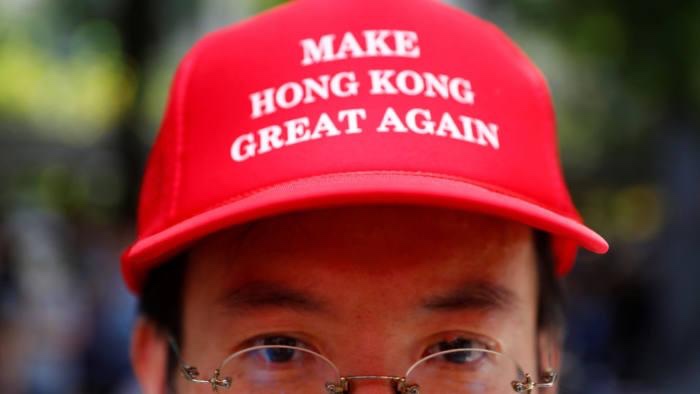
A protester is seen wearing a cap that reads, “Make Hong Kong Great Again” in Central, Hong Kong, China September 8, 2019. REUTERS/Kai Pfaffenbach Hong Kong protester wearing hat styled after Donald Trump’s Make America Great campaign. Many of the protesters openly courted U.S. support. [Source: ft.com] Rioters killed a 70-year-old man by hitting him with a brick, and doused another with gasoline and burned him. They broke into the parliament building—much like the January 6, 2021, fascist riot in Washington, D.C.
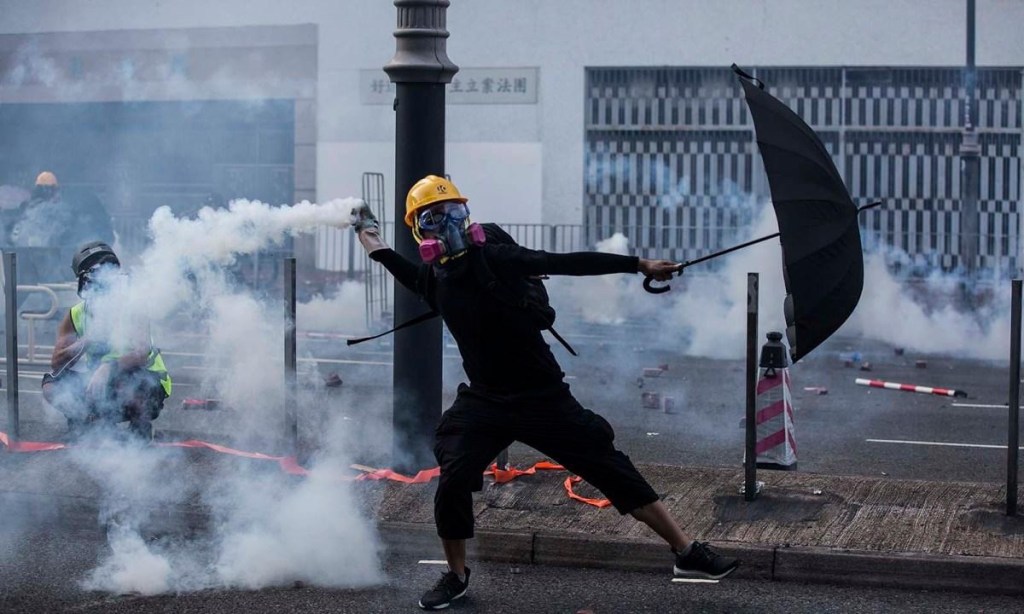
Hong Kong protester throws Molotov cocktail at police.
Tang observes that Hong Kong ranks in the top three on the Fraser Human Freedoms Index, while the United States is in 17th place. She quotes Hong Kong journalist Nury Vittachi that “Hong Kong’s civil unrest was the most reported news story of 2019 – yet every salient detail presented was incorrect … The city’s freedoms had not been removed … Police killed no one … Agents from a global superpower were intimately involved, but it wasn’t China.” (The Other Side of the Story: A Secret War in Hong Kong, 2020, ASIN)
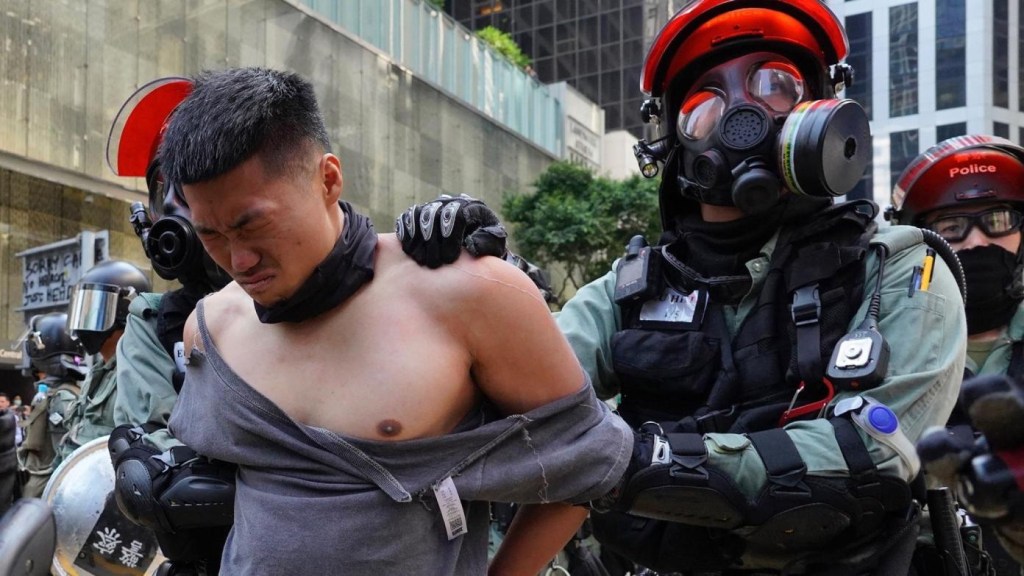
A key dimension of the media’s bias was its parroting of the rioters claims about police brutality—when the Hong Kong police had often displayed restraint in the face of violent protests and could be compared favorably to U.S. police (unlike U.S. police, Hong Kong police do not carry side arms).
Hong Kong hit by fierce clashes after police shoot protester | Financial Times Hong Kong police arrest protester. Often they behaved with restraint in the face of violent attacks by mobs—as in the U.S. Capitol riots.
A good example of the media bias was a December 2019 CNN report on Hong Kong entitled “A Generation Criminalized.”
Amidst a backdrop of photos pointing to the brutal suppression of the riots and tally of the number of protesters arrested and hospitalized and rounds of tear gas expended by the police, authors James Griffiths and Jessie Yeung quoted from a protester, Ivan, who said that “we seriously need to win this to say to whoever has the power that you cannot do this, you cannot do this to protesters or people fighting for their lives or their own freedom and values.”
Showing which side they were on, the authors lamented “an entire generation criminalized, in a fight for their future which could end up costing them just that.”
Left out was the fact that many of the protesters had engaged in criminal activity, along with the hidden hand of the NED.
Hong Kong protests criminalized a generation | Amnesia International Biased CNN report on Hong Kong protests—characteristic of media coverage.
The Hong Kong riots ultimately failed. Judge Tang says: “Now there is peace in Hong Kong, but there is a proposed U.S. law to devote $300 million to anti-China propaganda.”
Belatedly, though, some honest reporting has come out. A CNN story on July 10, 2021, for example, was headlined “Some Hong Kongers are glorifying a man who knifed a cop, showing the city’s problems are far from over.”
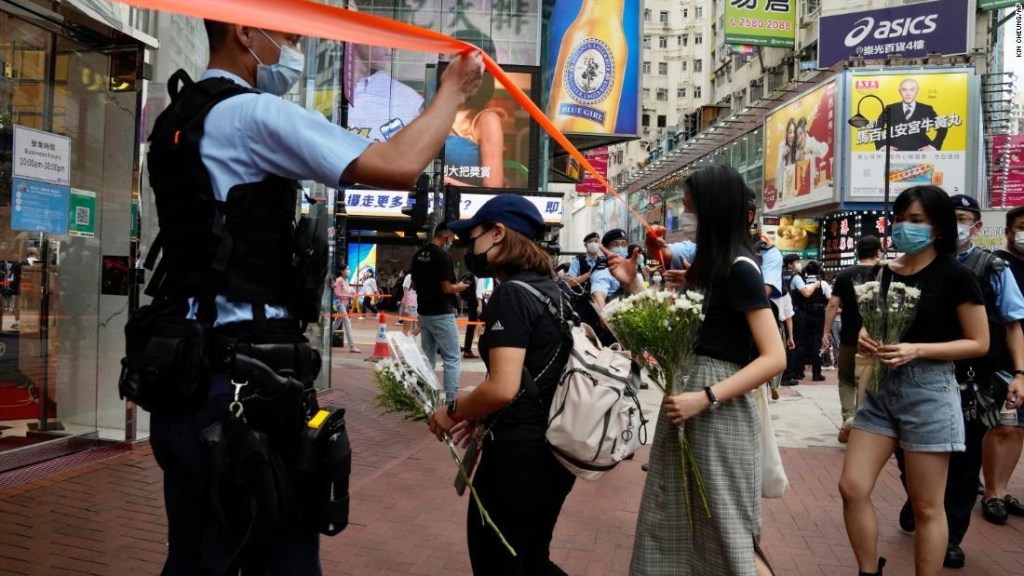
It detailed how Hong Kong protesters established a memorial filled with flowers for a man who knifed a cop on July 1st and then committed suicide. The student union of prestigious Hong Kong University passed a motion to say they “appreciated his sacrifice.” This is the same university where many of the protesters—heralded as great champions of democracy on CNN and other media a year earlier—came from.
People hold flowers to mourn the death of the assailant in knifing of a Hong Kong police officer. These are the same people who were heralded for over a year in the U.S. mainstream media as champions of human rights and democracy!
Media Bias—Part II: The Myth of Uyghur Genocide
Besides Hong Kong, the media bias about China has been exemplified by the barrage of stories in mainstream outlets broadcasting the plight of the Uyghurs, many of which echoed U.S. government claims that China was committing genocide.
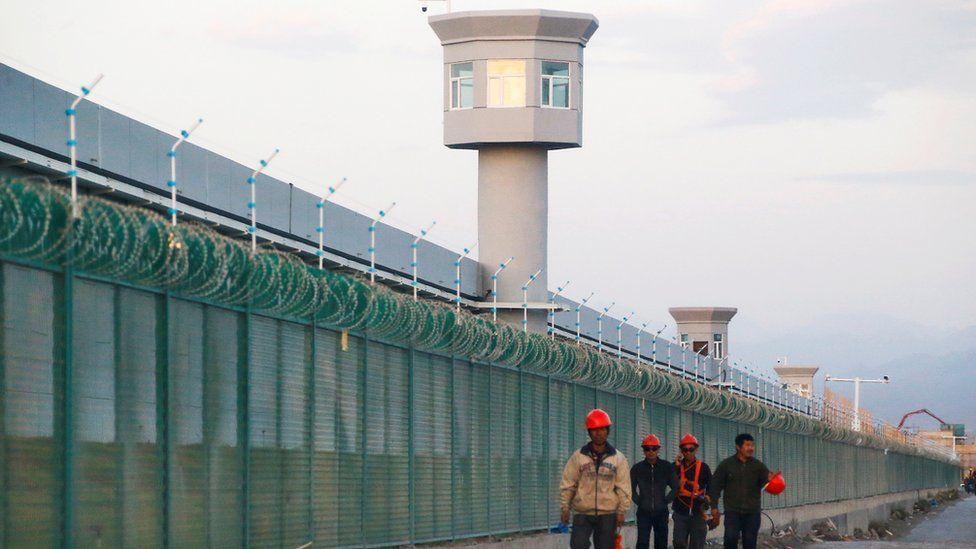
While human rights abuses had taken place, the genocide claims were unfounded. The use of the term concentration camps to describe detention facilities has also been dubious—these facilities function as re-education centers where Uyghurs who were involved in Islamic terrorist activities are provided vocational skills, recreational activities, medical services and a host of other benefits, and allowed to return home regularly.
A picture containing text, person, indoor, person
Description automatically generated Screenshot of CNN article falsely claiming China is carrying out “genocide” against the Uyghur people in Xinjiang.
The U.S. media coverage failed to address the strategic importance of Xinjiang and U.S. support for separatists and Islamic terrorist movements there.
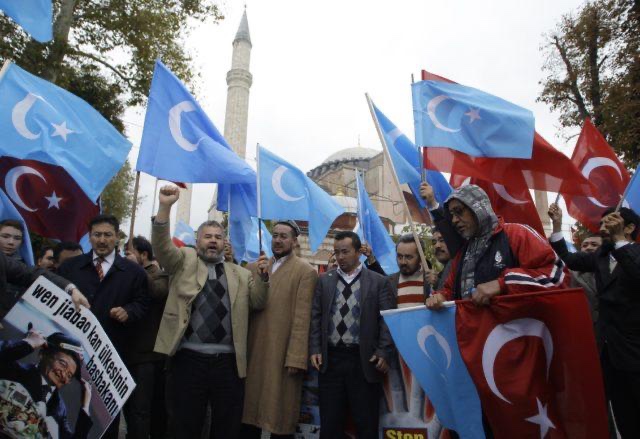
Independent Canadian reporter Daniel Dumbrill reports that the East Turkestan Islamic Movement (ETIM), which has claimed responsibility for attacks in Xinjiang and elsewhere in China, has been identified as a terrorist organization by the governments of China, Kazakhstan, Pakistan, Turkey and the United States.
The U.S. government removed ETIM from its list of terrorist organizations in October 2020 and has since provided funds to it through NED. Following explosive incidents of terrorist violence by ETIM, the Chinese government responded with repression. How much repression, and for how long, are matters of controversy.
Supporters of the East Turkestan Islamic Movement, which now receives funds from the NED.
When Noam Chomsky was asked in an April 2021 New York Times podcast interview whether the situation of the Uyghurs was worse than the people of Gaza, he said “no. The Uyghurs were not having their power plants destroyed, their sewage plants destroyed” and were “not subjected to regular bombing.”
The exact number of Uyghurs placed in education camps is not known in the West. China has called the camps a large-scale job training program, as part of its national anti-poverty crusade. On a personal visit to Xinjiang, Dumbrill found that a very small minority of Uyghurs were repressed, and a large portion benefited from job training.
Responding to official U.S. charges of forced labor and genocide, Zhun Xu, an associate professor of economics at John Jay College in New York, says “if [China] has engaged in forced assimilation and eventual erasure of a vulnerable ethnic and religious minority group,” there should be a decrease in the Uyghur population and increase in the Han.
But Xinjiang’s Uyghur population increased by 24.9 percent from 2010 to 2018, while the Han population in Xinjiang grew by only 2.2 percent. (Cited by Reese Ehrlich, from Zhun Xu’s upcoming book, Sanctions as War.)
Right-wing religious extremist Adrian Zenz, who states he is “led by God” on a “mission against China,” is the main source for U.S. government and media criticism of Xinjiang conditions. He is also funded by The Jamestown Foundation, an arch-conservative defense policy think tank in Washington, D.C., which was co-founded by William Casey, Reagan’s CIA director. Other important sources are the World Uyghur Congress, the International Uyghur Human Rights and Democracy Foundation, and the Uyghur American Association—all of which receive substantial NED funding.
Other sources include the Australian Strategic Policy Institute (ASPI) and the D.C.-based Center for Strategic and International Studies (CSIS)—both militaristic think tanks funded by U.S. and Western governments and weapons manufacturers. ASPI and CSIS successfully spearheaded a campaign against “forced labor” in Xinjiang, stimulating moves in Congress to ban U.S. imports from Xinjiang.
Professor Kenneth Hammond of New Mexico State University recently explained the two main aspects of Chinese government policy toward ethnic and religious minorities: first, preservation and respect for their language and culture and, second, inclusion and opportunity through education, health care and job training. Improved health care programs in Xinjiang have contributed to life expectancy increasing there from 31 years in 1949 to 72 currently.
In 1949 there were 54 medical centers in Xinjiang; now there are more than 7,300 health care facilities and more than 1,600 hospitals. Literacy has increased from 10% to more than 90% in the same period. Average income in Xinjiang has increased more than 10% since 2017.
Tens of millions of Chinese people practice the Islamic faith. Of China’s 55 officially recognized minority peoples, ten are Sunni Muslim. There are more Islamic mosques in China than the United States. Uyghurs are the second largest group, after the Hui.
Most Uyghurs practice a moderate form of Islam called Sufism, which promotes an ascetic lifestyle and shuns material wants. Sufism is incompatible with radical Islamic fundamentalism and Wahhabism, extremist beliefs which have been associated with terrorism in recent decades. The overwhelming majority of Uyghurs are not militant or extremist in outlook.
Washington Backs Separatism and Terror to Try to Undermine One Belt, One Road
Over the past generation Washington and the CIA have provided ongoing support to Uyghur separatist organizations, and terrorist groups such as the Turkistan Islamic Party (TIP), led by Abdul Haq al-Turkistani. The TIP, originally calling itself the East Turkestan Islamic Movement, received direct CIA funding and sponsorship.
Abdul Haq has served on al-Qaeda’s executive leadership council. He calls for jihad (holy war) against China to attain the TIP’s separatist goals. Prior to the 2008 Summer Olympic Games in Beijing, Abdul Haq ordered the TIP to unleash terrorist attacks against a number of cities in mainland China. Almost all of them were foiled. Following China’s clampdown in Xinjiang starting in 2017, no terrorist acts have taken place in the province.
Turkestan Islamic Party desires to be a National Liberation Movement after US de-blacklist – Modern Diplomacy Abdul Haq al-Turkistani.
Reports from first-hand delegations to Xinjiang, from countries and organizations including Egypt, Pakistan, Afghanistan, India, Indonesia, Russia, Kazakhstan, Kyrgyzstan, Thailand, Malaysia, the Organisation of Islamic Cooperation, and even the World Bank, have testified that neither genocide nor slavery accurately describes the reality of Xinjiang. At two separate convenings of the UN Human Rights Council in 2019 and 2020, letters condemning Chinese conduct in Xinjiang were outvoted, 22-50 and 27-46—essentially the U.S. and its allies vs. non-aligned countries.
Why would the United States back separatism and terror in Xinjiang? CodePink points to “a concerted attempt by the U.S. in recent decades to balkanize China by delegitimizing, or creating disruption, in Hong Kong, Taiwan, the South China Sea, Tibet and Xinjiang. Dismembering China has been a long-term goal of the U.S. government since 1949. Now Xinjiang is the linchpin of China’s Belt and Road Initiative (BRI), and a rich resource, producing 85% of China’s cotton and 25% of its oil.
Xinjiang’s largest cities, Urumqi and Kashgar, are main hubs on the BRI’s “Silk Road economic belt,” with rail links from Kashgar through Pakistan to the Indian Ocean, and from Urumqi through Central Asia to Teheran, Istanbul, Moscow, and Western Europe.
It is the biggest infrastructure project in human history, linking China across Eurasia and parts of Africa – 65 countries and more than 4 billion.
Map of China’s Belt & Road initiative [Source: gisreportsonline.com] people. This may be why the U.S. considers the BRI a threat. If it could cut Xinjiang away from China, it might stop Belt and Road.
The Most Dangerous Place on Earth
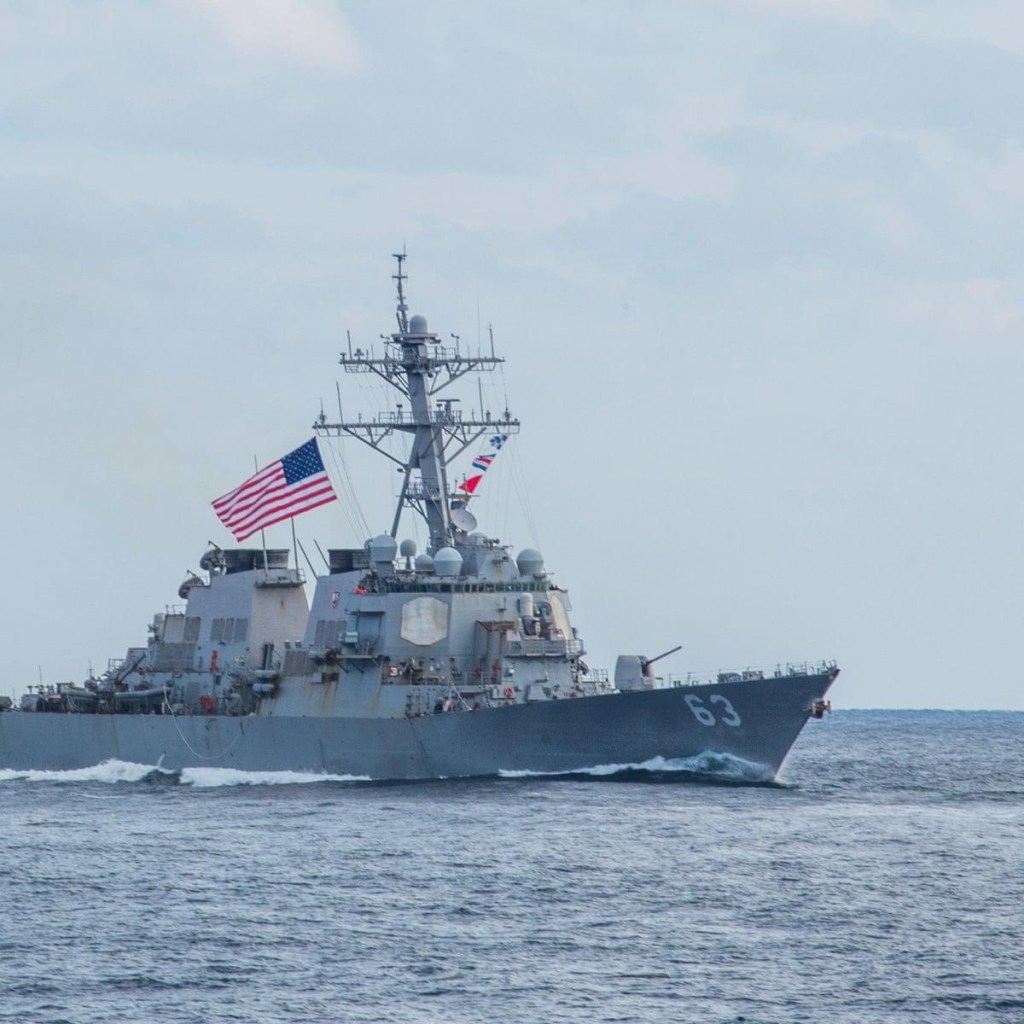
Meanwhile in the Taiwan Straits, there is a buildup of war danger. During the Trump years the U.S. broke from recognizing the “one China policy” agreed to by Nixon in 1972, sending cabinet-level officials to meet with Taiwanese leaders, and openly engaging in military cooperation. This continues under Biden, backed by U.S. nuclear-armed warships, just like 1958, when a crisis threatened to escalate into nuclear holocaust.
The guided-missile destroyer U.S.S. Stethem, pictured, sailed through the Taiwan Strait with U.S.S. William P. Lawrence in April 2019.
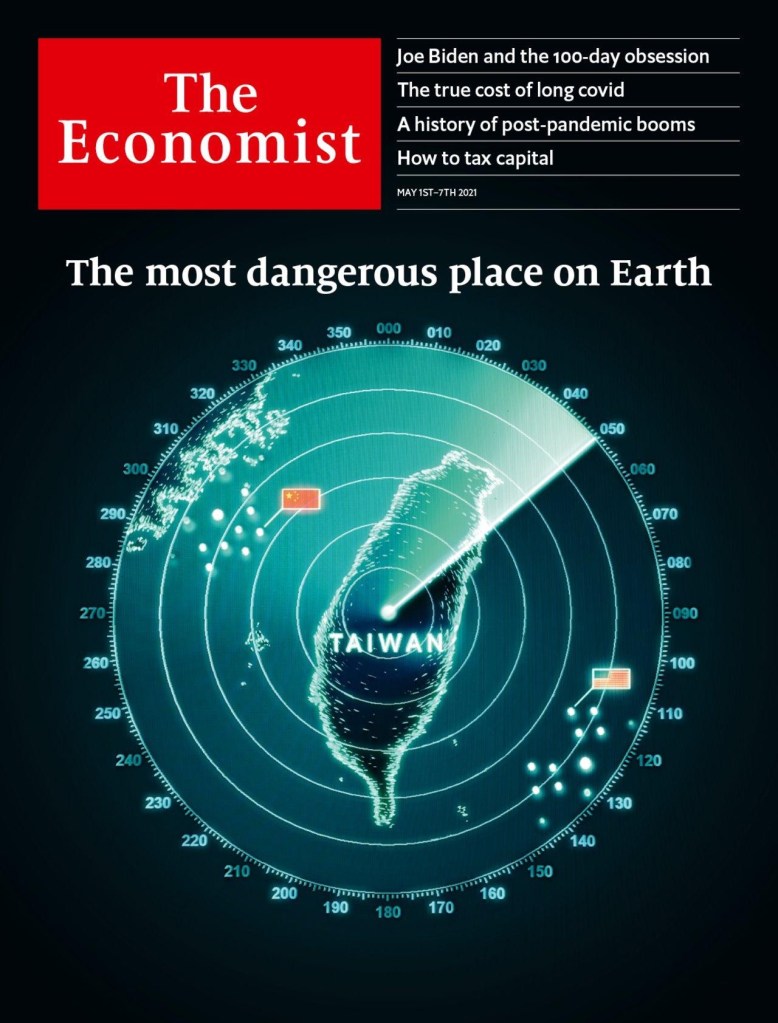
Warning signs were recently issued by The Economist Magazine which called the Taiwan straits the “most dangerous place in earth.”
The most dangerous place on Earth | Apr 29th 2021 | The Economist
The Biden administration inflamed the situation in early August by approving sale of 40 155mm M109A6 Medium Self-Propelled Howitzer artillery systems to Taiwan in a deal valued at up to $750 million.
The progressive forces in the U.S. need to stop the impending war with China before it starts.
“What would happen to the world,” Judge Julie Tang asks, “if the United States and China were to go to war? The price of war would be calamitous. We need to aim for peace, not war. China is not our enemy.”
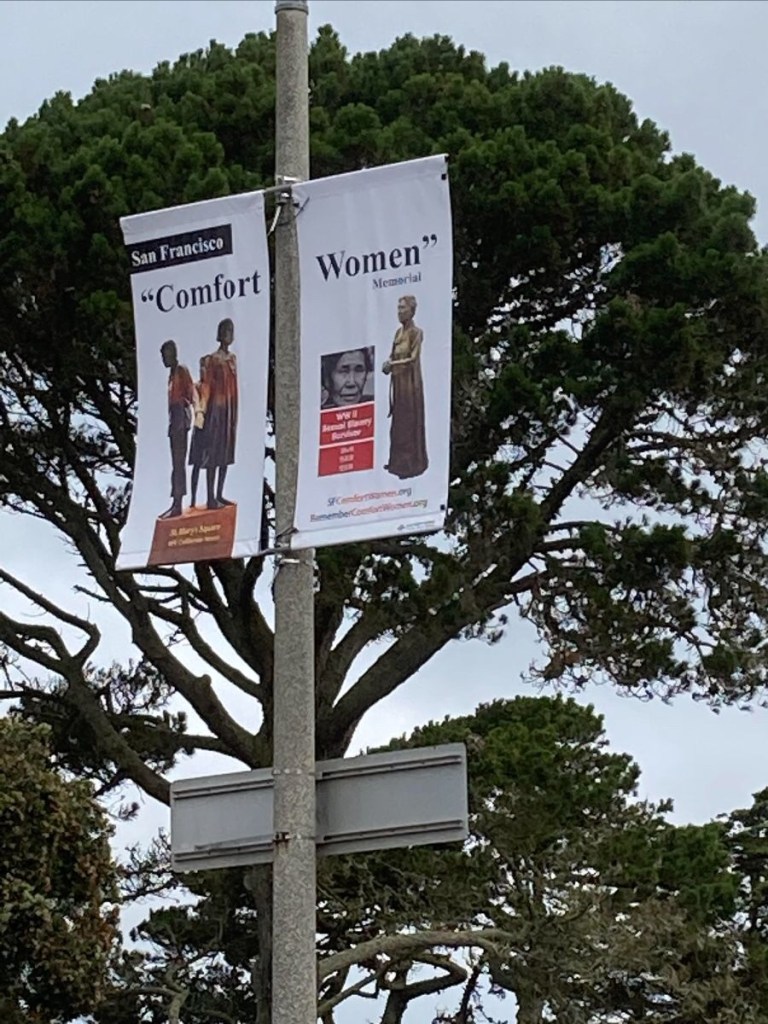
Thirty years ago, on August 14, 1991, Hak-sun Kim broke a silence of 50 years when she described her life as a “comfort woman,” during WWII. In front of a live audience she declared:
“Before I die, before I close my eyes, I want to vent my anger once through words… I decided to tell a historical fact that must be told one day. Japan must apologize!”
Hak-sun Kim “Comfort Women” Survivor & Human Rights Activist August 14, 1991 Her anger described her life in the largest institutionalized system of sexual slavery in the twentieth century. Run by the Japanese Imperial Army from 1932-1945, it involved hundreds of thousands of women from all the countries Japan occupied during WWII. The vast majority of those women died, the others held their silence.
Hak-sun Kim’s testimony moved hundreds of other survivors to speak at as well. Their words helped focus the world on the issues of sexual violence and sexual trafficking, eventually leading the human rights community to view sexual violence as a strategy of war to be a war crime. Rape has been declared a form of torture.
Decades later, women are speaking out. The #Metoo movement is in some ways the granddaughters of Hak-sun Kim and the other “comfort women.”
The international community has honored Hak-sun Kim by making August 14th a day to remember the “comfort women” each year. The central demand remains the same: Japan must apologize and offer reparations! Japan continues to deny this crime and is actively blocking any moves for accountability.
The “Comfort Women” Justice Coalition and the Jin Duck & Kyung Sik Kim Foundation have marked “Comfort Women” Memorial Day by placing twenty “pole banners” around the streets of San Francisco. So we ask people to “Look Up” and you will see the image of the “Comfort Women” Memorials as well as that of Hak-sun Kim.
Kiji Noh in San Francisco: The collapse of the Afghan government could be seen as India’s worst nightmare. For the past 20 years, it has adopted a “sandwich” approach to pressure its adversary Pakistan with economic and diplomatic support to the Afghan government — effectively taking advantage of Pakistan’s geographic location between India and Afghanistan.
But if the Taliban do take control of Afghanistan, that would result in an expansion of Pakistan’s influence, which is intertwined with the Taliban by means of regional and human networks. The result would amount to two big boulders pressing down on India.
In a June 24 piece published in “Foreign Policy,” Michael Green, the senior vice president for Asia at the Center for Strategic and International Studies, said, “If the Afghan government falls to the Taliban, then Pakistan’s influence over Afghanistan will increase.”
He also wrote that India “will be forced to redirect further resources and attention to its vulnerable flank [its border with Pakistan].”
“Rather than enhancing India’s position, a U.S. withdrawal ties down one leg of the Quad,” he noted.
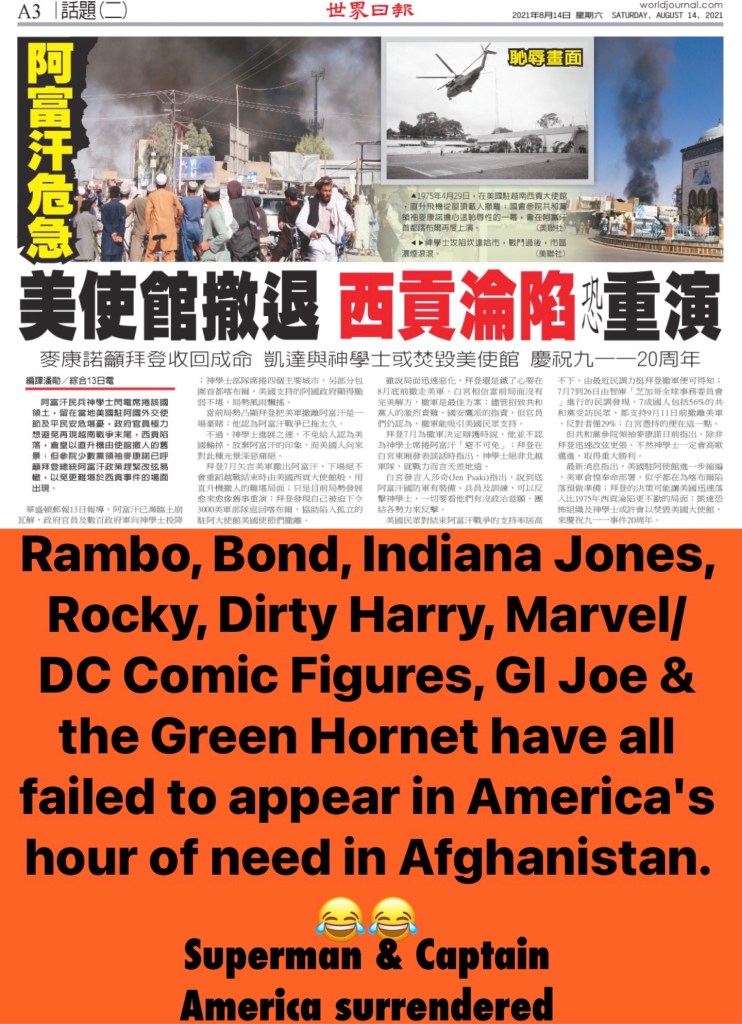
US defeat in Vietnam is being replayed in Afghanistan right in front of our eyes today! Where are our superheroes? It is Hollywood fantasy just like our freedom democracy human rights and rules of law. 美國在越南的失敗今天正在阿富汗重演在我們眼前! 美國的超級英雄在哪裡? 這是好萊塢的幻想,就像美國的自由民主人權和法治一樣, 是幻想和騙人的把戲. World Journal Newspaper San Francisco 美國加州舊金山世界日報 August 15 2021
 Johnson Choi Biz