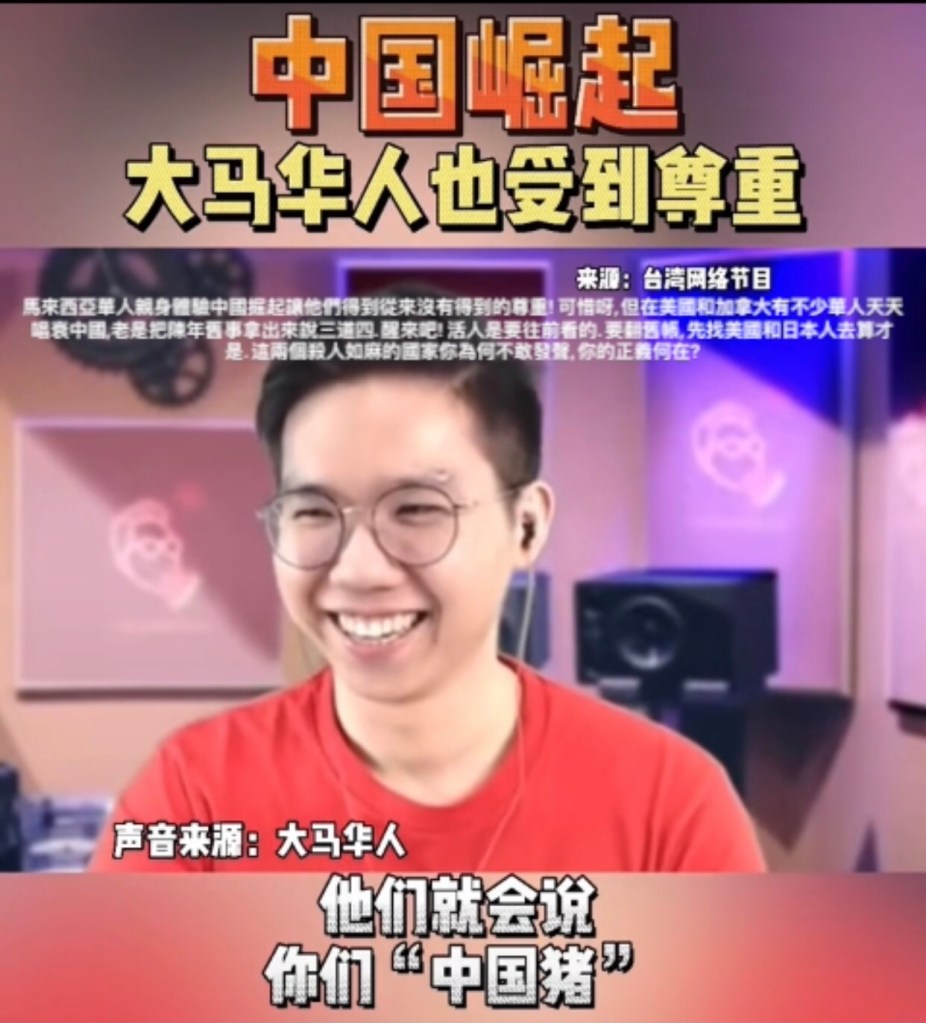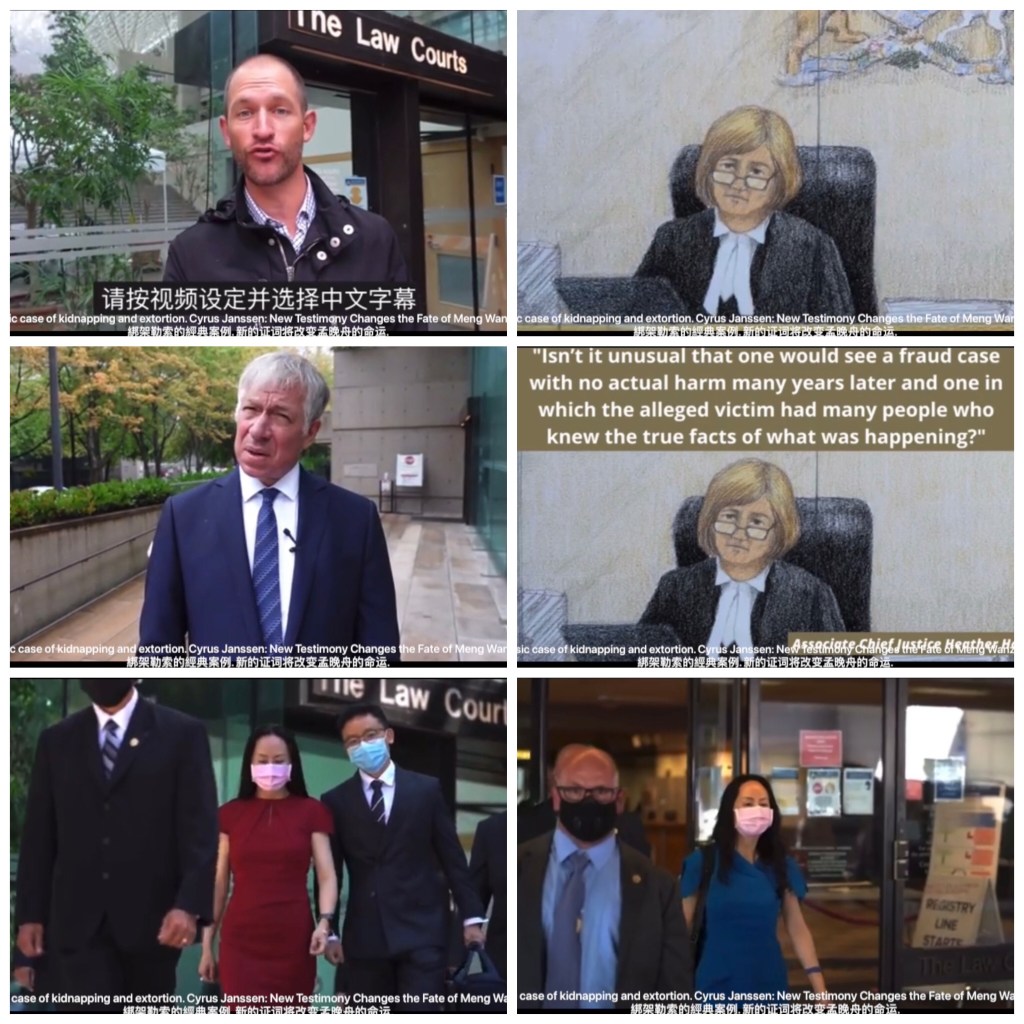
Mandarin Video: Some people were shocked that China started to ringing in some of the biggest companies in China including restricting them to IPO in US. Why? Western Models of allowing the rich getting richer model must be restricted in China. And it will ends in China.

Mandarin Video: Some people were shocked that China started to ringing in some of the biggest companies in China including restricting them to IPO in US. Why? Western Models of allowing the rich getting richer model must be restricted in China. And it will ends in China. China cannot allow the American models allowing 99% of the population working for the 1% elites and Fortune 500 companies. These are the reasons. 普通話視頻:有些人對中國開始向中國的大型企業的無限制的擴張作了管制感到震驚,包括限制它們在美國上市。 為什麼? 西方模式允許富人更富模式必須在中國受到限制, 也將會在中國結束. 中國不能允許美國模式允許 99% 的人口為 1% 的精英和財富 500 強公司工作. 讓我們聽聽原因吧!
https://vimeo.com/586928284
https://youtu.be/APg98fGY4OY
https://www.facebook.com/100036400039778/posts/547069629849700/?d=n

Video: Solve US Own Human Rights Issue Rather Than Point Fingers At Others!

Video: Solve US Own Human Rights Issue Rather Than Point Fingers At Others! 解決美國自己的人權問題,而不是指責別人!
It is difficult for the victims of racial discrimination to protect their rights through legal means. The Chinese Exclusion Act of 1882 was the first immigration law that discriminated against a specific ethnic group, and its impact lingers to this day.
https://vimeo.com/586871613
https://youtu.be/YRYDvwc8guE
https://www.facebook.com/100036400039778/posts/546996803190316/?d=n

My Take on Hongkongers leaving Hong Kong between 1980 – 2021 by Johnson Choi of HKCHcc Aug 13 2021

My Take on Hongkongers leaving Hong Kong between 1980 – 2021 1980年至2021年間離開香港的香港人 by Johnson Choi of HKCHcc Aug 13 2021

There were 4 periods when Hongkongers left HK. 香港人離開香港有4個時期.

Early 1980 during and after the join declaration between China and Britain returning HK to China in 1997. 1980年初中英聯合聲明期間及之後,1997年香港回歸中國.

1989 after the US NED/CIA regime change failed attempts on Tiananmen Square. 1989 年在美國民主基金會/美國中情局政權更迭企圖在天安門廣場失敗之後.

Prior to 1997 when HK will be returned to China. 1997年香港回歸中國之前.

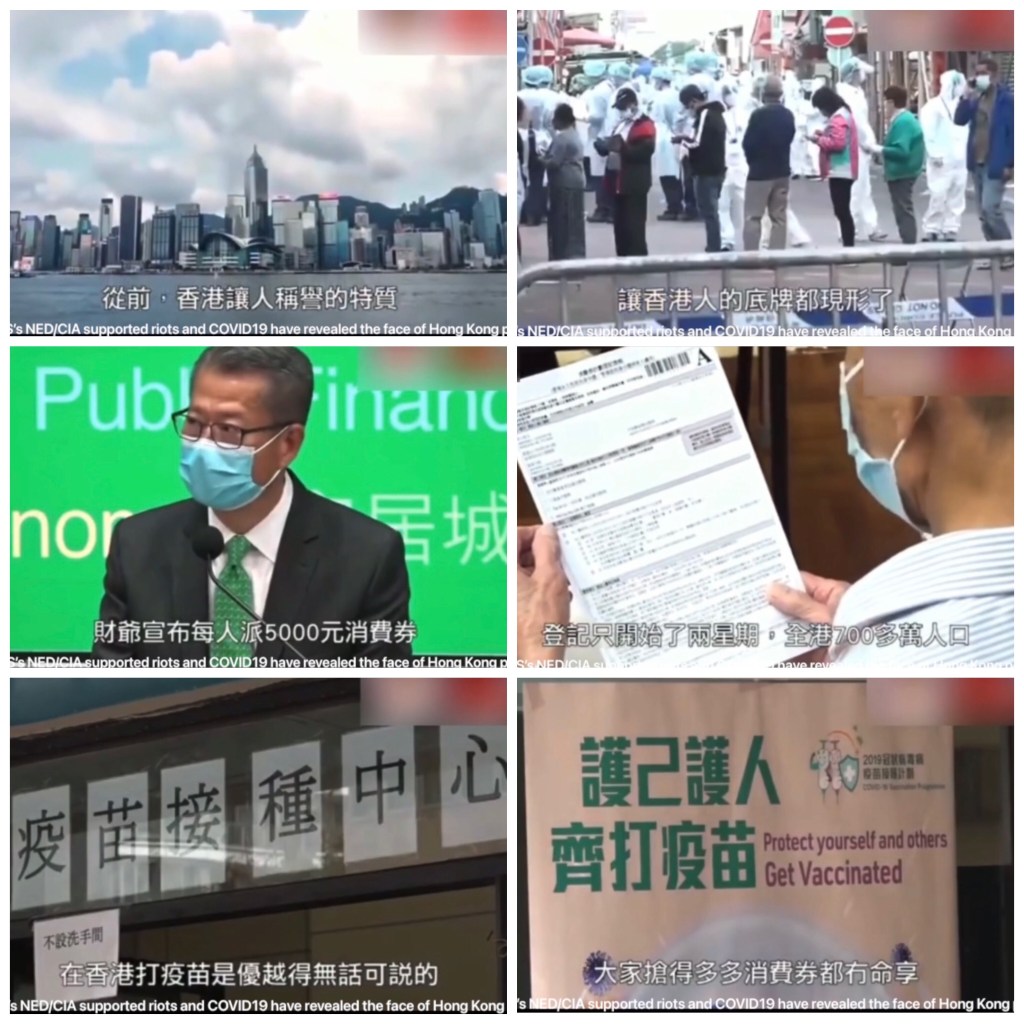
2020-2021 after HK passing the Homeland Security Law, large number of US and Western Empires foreign agents engaged in subversive activities decided to leave to avoid prosecution. 2020-2021年香港通過國土安全法後,大量從事顛覆活動的美國和西方帝國的外國特工決定離開以避免被起訴.

Chinese left HK or China centered around 3 considerations: Political risk, economic opportunities and family reunions. 中國人離開香港或中國主要圍繞三個考慮:政治風險、經濟機會和家庭團聚.

The 3 considerations have played out last 200 years especially during the time when China was robbed, raped, steal and committed crime against humanity by US and other western powers. 這三個考慮在過去 200 年裡一直在發揮作用,特別是在中國被美國和其他西方列強搶劫、強姦、偷竊和犯下危害人類罪的時期.

Prior to 1990, many Chinese left China primary for economic opportunities, followed by political risk and family reunions. 1990 年之前,許多中國人離開中國主要是為了經濟機會,其次是政治風險和家庭團聚.

Since 1990 China’s Socialism with Chinese Characteristics (SCC) has transformed China from a poor backwards nation into an economic powerhouse today. Like Napoleon said: “The Dragon has awakened “. 自 1990 年以來,中國特色社會主義(SCC)使中國從一個貧窮落後的國家變成了今天的經濟強國。 就像拿破崙說的:“巨龍覺醒了”

I still remembered when we worked with Chinese Students at UH Manoa during 1990s, most had wanted to stay. Today, most has wanted to return to China for 2 main reasons: China providing more opportunities than US especially in the fields of Science, technology and AI. And US and Western Empire wanted only the Chinese brain and not Chinese as human beings. 我還記得 1990 年代我們在夏威夷州立大學與中國學生一起工作時,大多數人都想留下來。 今天,大多數中國學生要返回中國有兩個主要原因:中國提供的機會比美國多,尤其是在科學、技術和人工智能領域。 美國和西方帝國祇想要中國人的大腦,而不是中國人.

One may asked why Hongkongers left HK after passing the Homeland Security Law in HK on July 1 2020? I sum it up for the following reasons: 有人可能會問,為什麼香港人在 2020 年 7 月 1 日通過香港《國土安全法》後離開香港? 我總結的原因如下:

1) foreign agents 外國特工(漢奸)
2) while they speak and write Chinese don’t consider themselves as Chinese 當他們說和寫中文時但不認為自己是中國人
3) comfortable to live in the homeland of their foreign masters 舒適地生活在外國主子的家鄉 (奴才命)
4) economic reasons 經濟原因
5) family reunions 家庭團聚

Their departure just like so many before them created excellent opportunities for patriotic Hongkongers currently living in foreign lands as 2nd class citizens to return home. It has also created opportunities for others both in HK and China. 他們的離開就像之前許多人一樣,為目前作為二等公民生活在異國他鄉的愛國香港人創造了回國,返回香港的絕佳機會。 它還為香港和中國的其他人創造了機會.

China’s SMIC Is Closing The Gap With Industry Leaders Despite U.S. Sanctions

China’s SMIC Is Closing The Gap With Industry Leaders Despite U.S. Sanctions 儘管受到美國的製裁,中國的中芯國際正在縮小與行業領導者的差距 – ETSemiconductor Manufacturing International Corp. ADR (SMICY) TSMUMC by Dr. Robert N. Castellano, Aug. 11, 2021

Summary

Sanctions against equipment sales to China capable of generating semiconductors with dimensions under 10nm continues under Biden.

China’s SMIC on the U.S. entity list, has had its high-end business stymied by the mandated cancellation of ASML’s EUV lithography.

SMIC instead has been closing the gap against Taiwanese competitors TSMC and UMC at the cost-effective 28nm node used in automobiles and aerospace.

Non-Chinese equipment companies are benefiting from the sanctions Chinese companies hoarding equipment.

Chinese equipment companies will be the long-term beneficiaries as technology improves, particularly lithography.

This idea was discussed in more depth with members of my private investing community, Semiconductor Deep Dive.

Chinese foundry Semiconductor Manufacturing International Corp. (SMIC) (OTCQX:SMICY) generated $1.34 billion in revenue in Q2 2021, up 21.8% from the prior quarter and an increase of 43.2% on a yearly basis. The firm’s gross profit hit $405 million, a 61.9 % QoQ and a 62.9% YoY increase. The chipmaker’s gross margin also rose to 30.1% in the second quarter from 22.7% in the first quarter.

Revenue guidance for Q3 is expected to grow just 2% to 4% sequentially, and gross margin is expected to range from 32% to 34%. Readers must recognize that SMIC is on a U.S. export control blacklist.

SMIC Before the Sanctions

It wasn’t always that way. On July 17, 2020, prior to the U.S. sanctions, I published a Semiconductor Deep Dive Marketplace subscription article entitled “China: Who Needs TSMC When They Have SMIC?” I noted in the article bullets:

With U.S. government restrictions on China’s Huawei, SMIC will take over production of Kirin modem chips at 14nm from TSMC (TSM) at 7nm.

SMIC, the fifth-largest pure-play foundry, will be able to produce chips at 7nm even without EUV lithography, as early as next year.

SMIC’s n+1 process already offers performance at 14nm close to TSMC’s at 7nm.

Six weeks later on September 4, 2020, Reuters reported the Trump administration was considering whether to add China’s top chipmaker SMIC to a trade blacklist, as the United States escalated its crackdown on Chinese companies. The rationale was SMIC’s relationship to the Chinese military.

Then in December, SMIC was added to the U.S. Commerce Department’s Entity List. The Entity List designation requires U.S. exporters to apply for a license to sell to SMIC. “Items uniquely required to produce semiconductors at advanced technology nodes — 10 nanometers or below — will be subject to a presumption of denial to prevent such key enabling technology from supporting China’s military-civil fusion efforts,” the US Commerce Department said.

There are Chinese equivalents for all major semiconductor capital equipment firms. Chinese businesses bought almost $32 billion of equipment used in 2020 to produce computer chips from Japan, South Korea, Taiwan and elsewhere, a 20% jump from 2019.

But the important takeaway is that Chinese equipment companies will continue to improve performance, and Chinese semiconductor manufacturers will buy Chinese equipment preferentially over foreign manufacturers. This will present a long-term headwind for foreign equipment suppliers.

SMIC’s Competitive Performance

The limitations of Chinese equipment and the ban on foreign equipment <10nm has forced SMIC to focus on mature technologies that are more profitable.

In Table 1, I detail foundry revenues from 2018-2020 for Global China foundries, which are predominantly headquartered in Taiwan. For SMIC, which is Mainland China-based, I converted revenues to New Taiwan Dollars (NTB$).

SMIC, impacted by U.S. sanctions, grew 25.3% YoY in 2020, ahead of TSMC and all other foundries except for Powerchip.

In Table 2, I segmented 2020 revenues by IC node for TSMC, SMIC, UMC (UMC). The point of this table is to show the different emphasis each foundry has in chip production.

These data points are fluid. For example, Table 2 shows that in 2020 TSMC registered 30.8% of revenues from chips made at the 28nm/14nm nodes and 41.4% at <14nm. In Q2, 2021, that share changed to 25.4% for the 28nm/14nm nodes and 48.8% at <14nm, as will be shown below.

In Chart 1, we can see that for the most recent quarter, in the 28-65nm node region, SMIC (grey bars) generated 30% of revenues at the 55/65nm nodes and just 15% at the 28nm node. UMC’s (orange bar) revenues for the three nodes ranged from 18% to 20%.

As for TSMC, they dominate the <14nm node. Note that the company segments the nodes by 16nm and 28nm, as opposed to the other two companies that combine them. TSMC’s share at 28% was lower than both competitors in 2Q 2021, as the company focused on <14nm (increasing from 36% to 49%) and 16nm was 11%.

Chart 1

The improvements in SMIC’s output in 2Q 2021 vs CY 2020 (Table 2) are significant and will continue as its new fabs begin production. SMIC’s new Beijing plant, with a total investment of nearly 50 billion yuan, is expected to start operations in 2024, with monthly production capacity of 100,000 12-inch silicon wafers. The new Shenzhen plant, meanwhile, is expected to start production in 2022, with a monthly capacity of 40,000 12-inch wafers.

Investor Takeaway

A report from the US Semiconductor Industry Association and Boston Consulting Group warns that strategic decoupling from China could backfire, resulting in a slowdown of innovation, lost market share and a vast escalation of China’s manufacturing capability. The U.S. may simply be stimulating the competition it wishes to starve.

Nevertheless, equipment sales continue at a strong pace to China except for systems capable of processing chips at the 10nm node and smaller. Equipment imports into China increased 22.6% QoQ. The largest growth in etch machines going into Samsung’s Xi’an NAND fab, according to The Information Network’s report entitled “Mainland China’s Semiconductor and Equipment Markets: Analysis and Manufacturing Trends.”

Strong domestic demand is helping it deliver robust earnings despite a U.S. crackdown that has restricted the company’s access to American technologies since last year. the chipmaker revised up its full-year revenue growth forecast to 30% as it continues to work with suppliers to alleviate the impact of U.S. export restrictions. SMIC previously predicted growth “exceeding mid-to-high single-digits.” It also raised its full-year gross margin forecast to around 30%, the highest level in years.

In light of sanction, SMIC’s has redirected its business model at increasing production on mainstream nodes rather than bringing advanced capacity online, putting its investment directly in competition with UMC’s range of production. SMIC undoubtedly appears to be gaining momentum and closing the gap between it and foundry industry leaders.

This free article presents my analysis of this semiconductor equipment sector. A more detailed analysis is available on my Marketplace newsletter site Semiconductor Deep Dive. You can learn more about it here and start a risk free 2 week trial now.

This article was written by Robert Castellano, Author of
Semiconductor Deep Dive
Providing a deep knowledgebase for better semiconductor stock investments
http://www.theinformationnet.com
Semiconductors, Solar, Expert Witness

Contributor Since 2006

Dr. Robert N. Castellano, is president of The Information Network http://www.theinformationnet.com. Most of the data, as well as tables and charts I use in my articles, come from my market research reports. If you need additional information about any article, please go to my website.

I will soon be initiating an investor newsletter. Information to register will be online on my website.

I received a Ph.D. degree in chemistry from Oxford University (England) under Dr. John Goodenough, inventor of the lithium ion battery and 2019 Nobel Prize winner in Chemistry. I’ve had ten years experience in the field of wafer fabrication at AT&T Bell Laboratories and Stanford University.

I have been Editor-in-Chief of the peer-reviewed Journal of Active and Passive Electronic Devices since 2000. I authored the book “Technology Trends in VLSI Manufacturing” (Gordon and Breach), “Solar Panel Processing” (Old City Publishing), “Alternative Energy Technology” (Old City Publishing). Also in the solar area, I am CEO of SolarPA, which uses a proprietary nanomaterial to coat solar cells, increasing the efficiency by up to 10%. I recently published a fictional novel Blessed, available on Amazon and other sites.

Disclosure: I/we have no stock, option or similar derivative position in any of the companies mentioned, and no plans to initiate any such positions within the next 72 hours. I wrote this article myself, and it expresses my own opinions. I am not receiving compensation for it (other than from Seeking Alpha). I have no business relationship with any company whose stock is mentioned in this article.

Dr. Robert N. Castellano, is president of The Information Network http://www.theinformationnet.com. Most of the data, as well as tables and charts I use in my articles, come from my market research reports. If you need additional information about any article, please go to my website.

I will soon be initiating an investor newsletter. Information to register will be online on my website.

I received a Ph.D. degree in chemistry from Oxford University (England) under Dr. John Goodenough, inventor of the lithium ion battery and 2019 Nobel Prize winner in Chemistry. I’ve had ten years experience in the field of wafer fabrication at AT&T Bell Laboratories and Stanford University.

I have been Editor-in-Chief of the peer-reviewed Journal of Active and Passive Electronic Devices since 2000. I authored the book “Technology Trends in VLSI Manufacturing” (Gordon and Breach), “Solar Panel Processing” (Old City Publishing), “Alternative Energy Technology” (Old City Publishing). Also in the solar area, I am CEO of SolarPA, which uses a proprietary nanomaterial to coat solar cells, increasing the efficiency by up to 10%. I recently published a fictional novel Blessed, available on Amazon and other sites.

Video: Understanding Modern Day US Empire: Military Force vs. Admin Force – Ravage & Rule. Why Myanmar military must took over before becoming the colony of Western Empire again!

Video: Understanding Modern Day US Empire: Military Force vs. Admin Force – Ravage & Rule. Why Myanmar military must took over before becoming the colony of Western Empire again! 了解現代美帝國:軍事力量與行政力量 – 破壞與統治. 為什麼緬甸軍方必須接管不能讓緬甸再次成為西方帝國的殖民地.
https://vimeo.com/586590771
https://youtu.be/ywyVOZXokl0
https://www.facebook.com/100036400039778/posts/546629833227013/?d=n
Shane Brady who worked in the humanitarian aid field for 15 years, challenged me to a debate. While he ultimately withdrew from the debate, he had accused me of lying, claiming the US was behind everything happening geopolitically around the globe, and that the people of Asia in particular have agency and a right to self-determination.

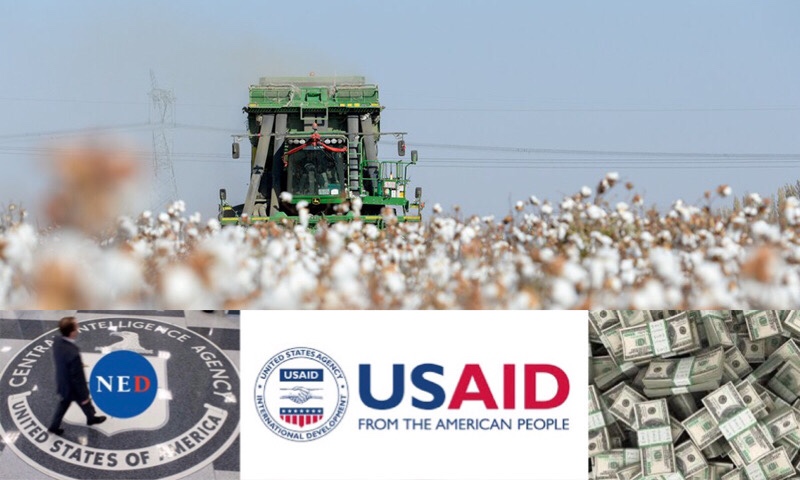
I expose how literally every organization Shane worked for in the last 15 years was funded by the US government through USAID, and how USAID and adjacent organizations serve as the “Admin Force” to US military force – the two key components of modern day empire.

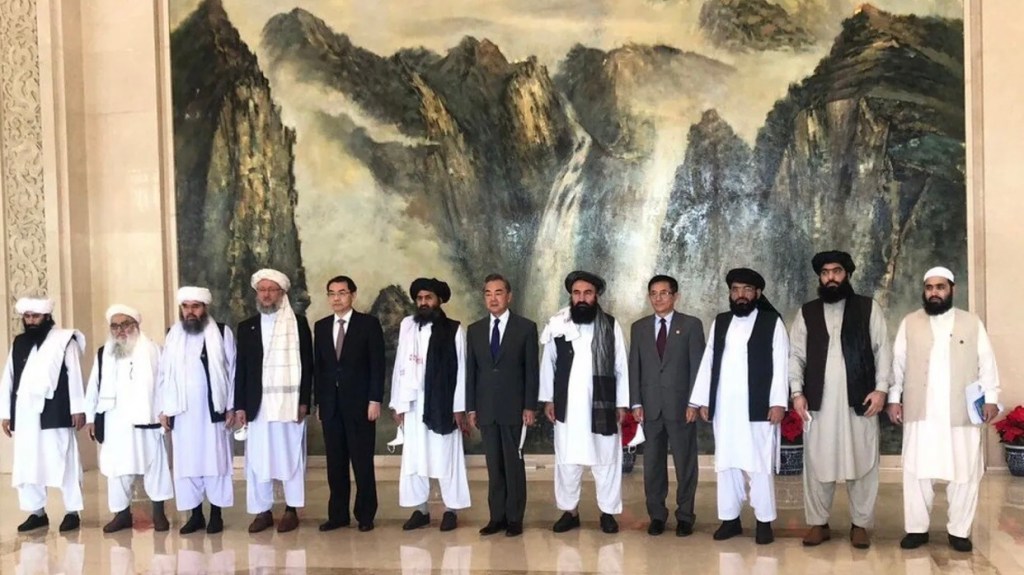
Afghan party leader lambasts US for leaving a devastated land tainted with hatred, eyes stronger role for China

Afghan party leader lambasts US for leaving a devastated land tainted with hatred, eyes stronger role for China 阿富汗黨領袖抨擊美國離開充滿仇恨的毀壞土地,認為中國扮演更重要的角色by Global Times Aug 12 2021

Dr Latif Pedram, leader of the National Congress Party (NCP) of Afghanistan and a former Member of Parliament

Editor’s Note:

The situation in Afghanistan has entered a crucial period after the US pulled out most of its forces and peace talks between the Taliban and the Afghan government are in a stalemate. In a recent exclusive interview with Global Times reporters Zhao Juecheng and Hu Yuwei (GT), Dr. Latif Pedram (Pedram), leader of the National Congress Party (NCP) of Afghanistan and a former Member of Parliament, said that the hasty withdrawal of the US and NATO troops from Afghanistan left “a devastated land and political system tainted with blood and hatred.” Pedram believes that the former Soviet Union and the US both failed in the country, and China is eyeing a constructive role in the future economic and social reconstruction of the war-torn country.

The NCP of Afghanistan, formed in 2004, was regarded as the only major opposition party not linked to an armed group. Moreover, Pedram was a candidate in Afghanistan’s 2004 presidential election and received the fifth highest votes. As a political activist, Pedram called for lasting peace through dialogue and peaceful means.

A devastated land left by the US

GT: The withdrawal of US troops ended the nearly 20-year war in Afghanistan. However, the security situation in Afghanistan has become more complicated and increasingly perilous in recent days with escalated violence. What does the withdrawal of US troops mean to Afghanistan?

Pedram: The withdrawal of US troops has not ended the 20-year war in Afghanistan. It has ended the longest war in the history of American hegemonic and occupying wars.

The people of Afghanistan forced the United States on the battlefield and in politics to announce the end of its occupation.

Despite the presence of US troops, NATO, and its allies, the war in Afghanistan continued and still continues. The United States left its largest military base in Bagram, north of Kabul, in the dark of night and “stealthily” without informing Kabul. The US has not remained faithful to its obligations and commitments under the Kabul-Washington Strategic Pact.

The fact is that American forces have failed like the Soviet Union, and they want to justify their failure by claiming the assassination of Osama bin Laden and the defeat of al-Qaeda. We all know that al-Qaeda and ISIS have been reactivated in Afghanistan. The United States and some other countries have played an undeniable role in the transfer of ISIS-affiliated forces to northern Afghanistan.

GT:In your opinion, how has the US caused the current situation in Afghanistan and what is the US political legacy in the country?

Pedram: What Afghanistan has inherited from US is poverty, a rising unemployment rate, the destruction of social services, the unprecedented increase in class distinctions, a wealth gap, the destruction of the middle class, a vast economic mafia network, an underground economy, increased cultivation, production, and smuggling of drugs, addiction among more than 4 million young people, an ethnic war, the collapse of good values, the growth of a culture of corruption, money laundering, and lying.

The removal of patriotic officers and generals from the Afghanistan armed forces, early retirement, the destruction of Soviet-era weapons, eventually the reliance of the Afghanistan army-like forces on NATO in a small and incapacitated subset are parts of this catastrophic American legacy.

In addition, the stunning rise of brothels, the collapse of individual morality, and prostitution, are parts of the American legacy in Afghanistan.
The United States also disappointed the people and ruined their expectations of democracy, human rights, and civil rights. The faces of America, imperialism, and postmodern-colonialism, hidden beneath American democracy and human rights, were revealed. People’s frustration with what is called American democracy and human rights are another part of American legacy in Afghanistan.

For an intellectual or even ordinary Iraqi, Libyan, and Afghan citizen, the United States is a face of aggression, bloodshed, murder, looting, and crimes against humanity. For us, the American heritage is a devastated land and political system tainted with blood and hatred.

The Afghanistan left after United States is an example of the hell in the book “Divine Comedy”, written by the Italian poet “Dante Alighieri”: O posterity! O you who pass here, throw away your hopes!

Dialogue urged for lasting peace

GT: The Taliban claimed to have control of 85 percent of Afghanistan in July. Can you substantiate this claim? How far is it from the real situation of the Taliban’s force and control spectrum?

Pedram: Absolutely yes. About 75-80 percent is controlled by the Taliban. Seventy percent is quite clear and accurate. It means they were able to take control of many areas. They control more than 205 districts, almost half of all districts in Afghanistan. This is true so far. It is not a lie or an exaggeration. The forces of the Kabul regime were either defeated, retreated, or bought off. The Taliban have had many successes.
�GT: The Afghan government and the Taliban initiated a new round of peace talks in Doha on July 17. Are you optimistic about the peace talks between the Afghan government and the Taliban? What issues are most challenging in the peace talks?
�Pedram: Following the Tehran talks, the Doha peace talks resumed, but to no avail. There was no ceasefire. All that was agreed upon was to allow COVID-19 vaccinations in areas under the control of the Taliban.

During Eid prayers at the Presidential Palace, the Palace, also known as ARG, was attacked by Taliban missiles shortly after the Doha meeting, exactly one day later.

It is debatable, whether peace will be achieved today or tomorrow. We have no reliable signs. The theories and beliefs of the forces involved are far apart from each other. But we must achieve lasting peace through dialogue and the use of peaceful means.

I am optimistic about peace, but not about the way the negotiations are going on in Doha. We have to have another kind of peace talk process on hand, and the spectrum of negotiators has to be rethought.

The type of subsequent government, the methods of forming the government, the jurisprudential principles, the religious principles of the government, the person who will be head of the interim government, the elections, or the “settlement and contract” council, the Islamic emirate, or the republic, are the main and serious disputable issues.

The transitional government must include the Taliban, other opposition forces, real representatives of the ethnic groups, some from Kabul regime, both individuals and institutions, and political parties. The civil rights, ethnic, and cultural diversity, the level of social, economic, and cultural development that varies from province to province, must be clearly reflected in a democratic federal government. Federalism is the right solution to the current crisis and ethnic war.
�China’s role highly expected

GT: Some Western analysts said China is trying to fill the “power vacuum” left by the US, and that it intends to expand its economic and geopolitical influence in Afghanistan. What is your opinion on this view?

Pedram: China has no history of military aggression or occupation. China has an ancient wisdom. China is a great economic power and our neighbor. China’s relationship with our country has always been based on good neighborliness, respect for each other’s sovereignty, and territorial integrity.

The big “Belt and Road” project is also in the interest of development and job creation in Afghanistan. We welcome this great project of our neighbor country.

On the contrary, the US and India want to sabotage this major project by supporting ISIS and al-Qaeda fighters in northern Afghanistan. For this and other reasons, the war in northern Afghanistan will be prolonged. The US is still pursuing insurgence, war, and instability in northern Afghanistan.
�GT: Taliban spokesman, Suhail Shaheen, said that the Taliban “welcomes” China’s assistance in the reconstruction and development of Afghanistan with the departure of US troops, calling China “a friend to Afghanistan.” What do you think of this position expressed by the Taliban to China?

Pedram: Our party (NCP of Afghanistan) and our allies do not see the economic plans of China as a threat to the region, and we welcome and support those projects too. I have read almost all of Chairman Mao’s books, as well as works of other leaders. We agree with those plans and support the implementation of Chinese projects in favor of the establishment of a modern Afghanistan/Khorasan.

The Taliban welcomed the Chinese projects in a statement. They also welcomed the US withdrawal and called China a friend to Afghanistan. Our party, despite deep and strategic disagreements with the Taliban on the type of future government, civil and social freedoms, and the economy of the country, we are in agreement with the Taliban’s position on the China projects and we consider it wise and correct. The Taliban took a good stand.

We agree with the Taliban that the US had occupied our country and now we consider its withdrawal to be in the best interest of the country and the peace and stability of the region.

GT: What are your expectations for China’s role in the Afghanistan peace talks and bilateral ties between the two countries in the fields of economy, science, and technology?
�Pedram: We expect that China will cooperate more than ever to bring peace and stability to Afghanistan.

With the defeat and consequent withdrawal of the US from Afghanistan, China can and should play a greater and more meaningful role. China should take an active part in the reconstruction and socio-economic development of Afghanistan, and even the political development and the construction of infrastructures in Afghanistan.

As two neighboring countries, we want to expand economic, scientific, technical, and academic cooperation. We trust China. This trust comes from the traditional and ancient relationship between us. Even before the Chinese socialist revolution, under the leadership of Chairman Mao (the person who changed the face of Asia and the destiny of Asia politically), our people traded with China in Badakhshan. This relationship is very old and this trust is very deep. We can flourish through those good historical connections, good neighborliness, and mutual respect more than ever.

Arnold Schwarzenegger uses the perfect analogy to explain ‘real freedom’ to anti-maskers

Arnold Schwarzenegger uses the perfect analogy to explain ‘real freedom’ to anti-maskers

There is a big, gaping hole in the center of the belief that refusing to wear a mask or get vaccinated is a patriotic expression of the personal freedoms we enjoy as Americans.

Sure, you’re free to do as you wish, but the fastest way for people to invite tyranny into their lives is to forget that freedom is predicated on responsibility and accountability.

Refusing to wear a mask in a place where COVID-19 is likely to spread puts yourself and others at risk. Refusing to get vaccinated only promotes the spread of the virus. The longer this pandemic goes on, the more likely it is that freedom-loving people will be subjected to punitive restrictions from lawmakers and businesses seeking to crack down on those who aren’t being accountable.

Actor and former Republican California Governor Arnold Schwarzenegger perfectly explained this delicate balance on Monday in an interview with CNN’s Bianna Golodryga and former National Security Council staffer Alexander Vindman.

That is the difference between US and China. Americans life is expandable, money first, not so in China. That is the essence of US freedom democracy human rights and rules of laws. That is how US allowing 600,000 Americans died from COVID19, trying to blame everyone else except herself for being incompetent

That is the difference between US and China. Americans life is expandable, money first, not so in China. That is the essence of US freedom democracy human rights and rules of laws. That is how US allowing 600,000 Americans died from COVID19, trying to blame everyone else except herself for being incompetent 這就是美國和中國的區別。 美國人的生命是可以被犧牲的,金錢至上,而在中國則不是. 這是美國自由民主人權和法治的精髓. 這就是為什麼美國允許 600,000 美國人死於 COVID19 而無動於衷, 並試圖責怪別人以掩飾自己的無能.

San Francisco Chronicle: ‘Comfort women,’ from WWII to Andrew Cuomo by Lillian Sing with Gitika Nalwa Aug. 12, 2021

San Francisco Chronicle: ‘Comfort women,’ from WWII to Andrew Cuomo by Lillian Sing with Gitika Nalwa Aug. 12, 2021

“Comfort Women” Justice Coalition
Last Friday, Albany County Sheriff Craig Apple stood before a scrum of reporters to announce the allegations by “Executive Assistant #1” against New York Governor Andrew Cuomo. “I had a female victim come forward, which had to be the hardest thing she’s ever done in her life, and make an allegation of criminal conduct against the governor,” he said.

The woman has since identified herself and Cuomo has resigned, despite attributing his alleged sexual misconduct to misinterpretation.

What is particularly shocking is that Cuomo was a widely held champion of women. But recall how Bill Cosby was “America’s Dad” for a generation before he was accused by 60-odd women of rape and sexual battery. Despite being convicted, Cosby was released after just three years because of a prosecutor’s alleged verbal promise, epitomizing the worst nightmare of women who publicly disclose their sexual harassment and assault.

It is no surprise then that victims of sexual harassment and assault are extremely reluctant to speak out: The likelihood of denial, debilitating accusations, shame and retaliation is far greater than that of justice.

Imagine, then, how much courage it takes to publicly accuse a government of sexual enslavement.

Thirty years before Cuomo’s resignation, a South Korean woman named Kim Hak-sun broke her silence and testified to the press in Seoul about the “comfort women” system of the Japanese Imperial Army, in which she and hundreds of thousands of women and girls from 13 Asian-Pacific countries were sexually enslaved between 1931 to 1945. Since 2018, South Korea and other countries have sought to commemorate Aug. 14, the day of Kim Hak-sun’s testimony, as International Memorial Day for “comfort women.”

“Comfort women,” a euphemism and ironically also an apt description of the attitudes toward gender held by many powerful men like Cuomo, are no doubt among the most neglected victims of WWII. Japan steadfastly refuses to unambiguously acknowledge its crime while apologists seek to discredit victim testimonies. Consequently, Japan has been accused of trying to whitewash its wartime past.

In denying its past, Japan is committing yet another crime. Victims deserve an acknowledgment of their trauma. Japan’s refusal to admit to its systematic enslavement of hundreds of thousands of women damns its victims again. It tells them that they do not matter and condemns them to relive their rape, mutilation and torture.

I was the first Asian American female judge in Northern California, serving for three decades. And I loved my job. But I nevertheless decided to retire in 2015 so that I could dedicate myself to building a memorial to “comfort women” free of professional constraints — before history erased all trace of them.

In 2017, I and former San Francisco Superior Court Judge Julie Tang unveiled the “Comfort Women” Memorial in San Francisco, a sculpture of an elderly woman gazing up at three young girls standing on a pedestal in a circle, clasping hands.

The woman in the memorial is modeled after Kim Hak-sun. One girl on the pedestal is Chinese, another Korean, and the third Filipina — representing the three largest ethnic groups of “comfort women.” The three girls in the memorial are neither submissive nor sexualized. The strength of their grips and their steady gazes belie their bloodied lower halves. Kim Hak-sun appears to be reliving her trauma through the circularity of the girls’ formation. But the girls are looking forward, trying to put their trauma behind them.

This small acknowledgment of the trauma of “comfort women” in one small corner of the world matters, because it tells survivors of sexual assault that they matter.

Even in resigning, Cuomo refused to accept responsibility for his alleged misconduct and wrote off the pain of his accusers to “cultural and generational shifts.” Whataboutism, victim-blaming and flat-out denial are clearly not unique to one culture or race. For every story of sexual assault or rape that comes to light, there are many times more that die in the shadows.

The “comfort women” memorial, intended to memorialize the sexually enslaved victims of the Japanese Imperial Army, is thus a monument to the courage of all victims of sexual assault who come forth with little hope of acknowledgment or justice.

Lillian Sing was the first Asian American female judge in Northern California and is co-chair of the “Comfort Women” Justice Coalition. Gitika Nalwa, a recent graduate of UC Berkeley, is a research fellow at Stanford’s Center for Asian Health and Research Education.

https://www.sfchronicle.com/opinion/openforum/article/A-monument-to-the-courageous-women-who-stand-up-16381527.php

Design a site like this with WordPress.com
Get started