Thirty years ago, on August 14, 1991, Hak-sun Kim broke a silence of 50 years when she described her life as a “comfort woman,” during WWII. In front of a live audience she declared:
“Before I die, before I close my eyes, I want to vent my anger once through words… I decided to tell a historical fact that must be told one day. Japan must apologize!”
Hak-sun Kim “Comfort Women” Survivor & Human Rights Activist August 14, 1991 Her anger described her life in the largest institutionalized system of sexual slavery in the twentieth century. Run by the Japanese Imperial Army from 1932-1945, it involved hundreds of thousands of women from all the countries Japan occupied during WWII. The vast majority of those women died, the others held their silence.
Hak-sun Kim’s testimony moved hundreds of other survivors to speak at as well. Their words helped focus the world on the issues of sexual violence and sexual trafficking, eventually leading the human rights community to view sexual violence as a strategy of war to be a war crime. Rape has been declared a form of torture.
Decades later, women are speaking out. The #Metoo movement is in some ways the granddaughters of Hak-sun Kim and the other “comfort women.”
The international community has honored Hak-sun Kim by making August 14th a day to remember the “comfort women” each year. The central demand remains the same: Japan must apologize and offer reparations! Japan continues to deny this crime and is actively blocking any moves for accountability.
The “Comfort Women” Justice Coalition and the Jin Duck & Kyung Sik Kim Foundation have marked “Comfort Women” Memorial Day by placing twenty “pole banners” around the streets of San Francisco. So we ask people to “Look Up” and you will see the image of the “Comfort Women” Memorials as well as that of Hak-sun Kim.
Kiji Noh in San Francisco: The collapse of the Afghan government could be seen as India’s worst nightmare. For the past 20 years, it has adopted a “sandwich” approach to pressure its adversary Pakistan with economic and diplomatic support to the Afghan government — effectively taking advantage of Pakistan’s geographic location between India and Afghanistan.
But if the Taliban do take control of Afghanistan, that would result in an expansion of Pakistan’s influence, which is intertwined with the Taliban by means of regional and human networks. The result would amount to two big boulders pressing down on India.
In a June 24 piece published in “Foreign Policy,” Michael Green, the senior vice president for Asia at the Center for Strategic and International Studies, said, “If the Afghan government falls to the Taliban, then Pakistan’s influence over Afghanistan will increase.”
He also wrote that India “will be forced to redirect further resources and attention to its vulnerable flank [its border with Pakistan].”
“Rather than enhancing India’s position, a U.S. withdrawal ties down one leg of the Quad,” he noted.
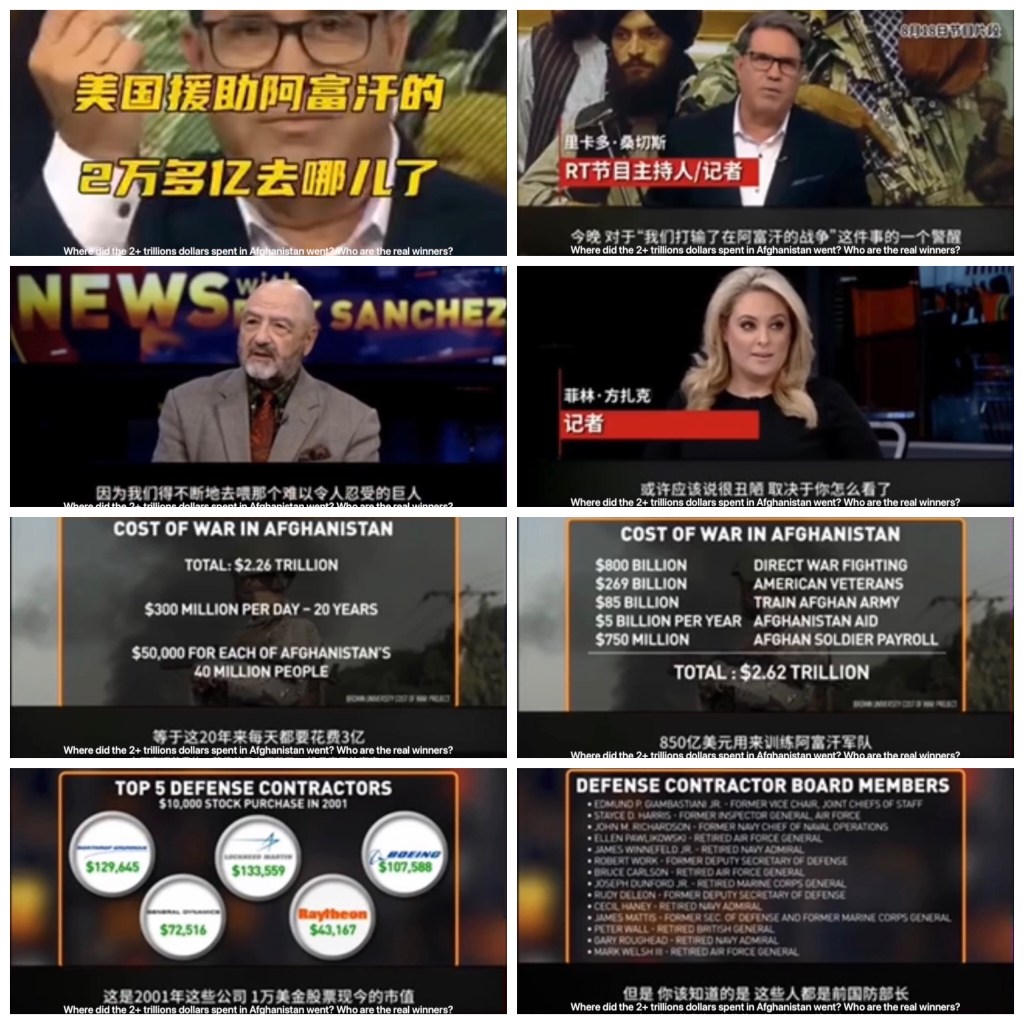
US defeat in Vietnam is being replayed in Afghanistan right in front of our eyes today! Where are our superheroes? It is Hollywood fantasy just like our freedom democracy human rights and rules of law. 美國在越南的失敗今天正在阿富汗重演在我們眼前! 美國的超級英雄在哪裡? 這是好萊塢的幻想,就像美國的自由民主人權和法治一樣, 是幻想和騙人的把戲. World Journal Newspaper San Francisco 美國加州舊金山世界日報 August 15 2021
US war crimes, crimes against humanity. Kiji Noh in San Francisco: Slaughtered by US-trained-and-led SK troops, women and children included. The third slaughter would have happened under direct US military control. These people were pre-emptively shot because the US believed they might have sympathies toward NK. The total length of the trenches where the bodies were dumped would be longer than 8 football fields. This massacre was one of hundreds leading up to, and during the Korean war of innocents. 美國戰爭罪,危害人類罪。 舊金山的 Kiji Noh:被美國訓練和領導的南韓部隊屠殺,包括婦女和兒童。 第三次屠殺會在美國直接軍事控制下發生。 這些人被先發製人地槍殺,因為美國認為他們可能對朝鮮表示同情。 傾倒屍體的戰壕總長度將超過 8 個足球場。 這場大屠殺是朝鮮戰爭之前和期間的數百起無辜者屠殺之一。
Researchers excavate remains of Korean War massacre victims in Daejeon By Choi Ye-rin, staff reporter Aug.13,2021
More than 7,000 people were killed in a series of massacres by the South Korean military and police in 1950
Researchers excavate the remains of the bodies of the victims of the Daejeon massacre by the South Korean military and police during the Korean war. (provided by the research team)
Seventy-one years have faded the countless bones that fill the floor of the building. These are the remains of the massacre site Sannae Gollyeonggol in Daejeon.
Researchers have been excavating the site for over two months, from June 1 to August 6, unearthing bones and classifying them by type. One of the researchers, Kim Tae-in, said “We’ve been pressed for time during this investigation because the remains to be excavated were much more than we expected. However, we’re doing our best to transfer the bones as carefully as possible.”
“During the work collecting the remains of the bodies, I went to the back of this building and saw the long rows of pits that were dug for excavation. I saw a leg bone inside one of the holes waiting to be excavated. Next to it was a broken hip bone,” he added.
Kim Gi-hyeon, another researcher, said, “Because the remains are entangled, we don’t know if the leg and posterior bones belong to the same person,” adding, “We’re doing this with a more respectful mindset than when excavating cultural heritage.”
Along with the remains, staff found shell casings, warheads and shoe soles in the pit. The most frequently found item was a white button that is presumed to be from the Daejeon prison uniform at the time.
A researcher points to the remains of a Daejeon massacre victim at an excavation site in Daejeon. (Choi Ye-rin/The Hankyoreh)
Shortly after the war broke out, Gollyeonggol, from June 28 to July 17 in 1950, was where prisoners from the Daejeon prison and left-wing civilians from both Daejeon and South Chungcheong Province were killed and buried. In late December 1992, declassified US documents exposed these atrocities to the world.
The first massacre from June 28 to 30 claimed an estimated 1,400 lives; the second — from June 3 to 5 — 1,800; and the third — from July 6 to 17 — 3,800 for a combined 7,000 who were known to be indiscriminately killed by the military or police. The eight pits they were buried in ranged in size from 30 to 180 meters and would collectively cover 1 kilometer.
News of the Gollyeonggol massacres, long a taboo topic in the country, began gaining prominence in 2007 when the first search for the victims’ remains found 34 sets in an operation led by the Truth and Reconciliation Commission.
In 2015, 12 sets of remains were recovered by a joint excavation team for the victims of civilian massacres in the war comprising civic organizations, an association of the victims’ families and experts.
Three rounds of excavations supervised by the Ministry of the Interior and Safety and Daejeon’s Dong (East) District Office last year found 234 sets of remains. This year, three teams assigned to cover 1,320 square meters of territory from June to next month have found 450-500 sets of remains.
Also, this year, nearly 200 volunteers went to the excavation site to carry soil from there.
A researcher examines the remains of Korean War massacre victims in a research post set up near an excavation site in Daejeon on Tuesday. (Choi Ye-rin/The Hankyoreh)
Park Sun-joo, an emeritus professor of archaeology and art history at Chungbuk National University who is the lead researcher of the excavations, said, “Bones smaller than others are seen in the identification process, but we can confirm whether the owner was a minor, woman or a male dwarf through anatomical knowledge and DNA testing. In the case of a minor’s remains, the molars in teeth are underdeveloped.”
“Various accounts and data mentioned stories of children and women being among the victims, and the findings and identification operations last year confirmed this,” Park added. “We’ve also found the bones of minors and women this year. The excavation of remains in Gollyeonggol will provide the basis for unveiling the truth of what occurred here in 1950.”
Jeon Mi-gyeong, head of an association for the relatives of the Daejeon massacre’s victims, said, “My heart shattered at the site where the remains were found. The scene was so miserable that I couldn’t bear to look at the remains. I couldn’t confirm my father’s remains, but I thought it could be him with each set found, making my heart ache.”
The excavated remains will be interred at the Forest of Truth and Reconciliation of Peace Memorial Park, which will be built in 2024 at Gollyeonggol.
Canadian judge unusually questions validity of US’ claim for extradition of Huawei’s Meng Wanzhou as legal battle enters final stage by Chen Qingqing and Shen Weiduo Aug 13 2021
As the case of Huawei’s Meng Wanzhou enters its final stage after two years of legal wrangling, a Canadian judge on Thursday appeared skeptical of the arguments made by prosecutors, questioning the validity of the case by the US against Meng, a court hearing note acquired by the Global Times showed.
“Isn’t it unusual that one would see a fraud case with no actual harm, many years later, and one in which the alleged victim – a large institution – appears to have numerous people within the institution who had all the facts that are now said to have been misrepresented?” Associate Chief Justice Heather Holmes asked, per the note.
“I simply suggest it’s unusual to have both of those features – no actual loss and fairly extensive knowledge of the true state of affairs,” said Holmes.
The judge also asked the prosecution to clarify some areas as there are many suspicious points between the prosecution’s statement and documents submitted by the US to request extradition. In addition, the judge asked the prosecution to provide more legal basis for the relevant cases it cited.
Observers told the Global Times that it’s “unusual” for the judge to raise such a question at this point for such a high-profile case that’s been widely considered as a “political trap” set by the US, raising hopes that it could be a possible turning point for the case.
Meng’s case has been mired in controversy. She was arrested in Canada in 2018 on a US warrant, and the case has been politicized even by former US president Donald Trump. Meng’s rights were violated during her arrest, and the US has misled evidence and brazenly broken customary international law, said legal experts and case followers.
The high-profile case has also damaged China-Canada relations. The Chinese Foreign Ministry has repeatedly called the case a political maneuver, and urged Canada to release Meng.
Some warned that Canada may still choose to please the US rather than follow the rule of law.
“I think the judge is still on course to commit her for extradition,” Gary Botting, a Canadian legal expert and author of several books on extradition, told the Global Times on Thursday.
The stairway to extradition in the case of Meng has been unnecessarily long and convoluted because the Minister of Justice has not had the courage nor political will to intervene and stop the extradition, as he can do at any time under section 23 of the Extradition Act, Botting said.
In effect, the US said “Jump!” and Canada’s bureaucrats asked meekly, “How high?” said the expert.
Christopher Lynn Hedges (born September 18, 1956) is an American Pulitzer Prize-winning journalist, Presbyterian minister, author and television host. His books include War Is a Force That Gives Us Meaning (2002), a finalist for the National Book Critics Circle Award for Nonfiction; Empire of Illusion: The End of Literacy and the Triumph of Spectacle (2009); Death of the Liberal Class (2010); Days of Destruction, Days of Revolt (2012), written with cartoonist Joe Sacco, which was a New York Times best-seller; Wages of Rebellion: The Moral Imperative of Revolt (2015); and his most recent, America: The Farewell Tour (2018). Obey, a documentary by British filmmaker Temujin Doran, is based on his book Death of the Liberal Class.
Hedges spent nearly two decades as a foreign correspondent in Central America, West Asia, Africa, the Middle East (he is fluent in Arabic), and the Balkans. He has reported from more than fifty countries, and has worked for The Christian Science Monitor, NPR, Dallas Morning News, and The New York Times, where he was a foreign correspondent for fifteen years (1990–2005) serving as the paper’s Middle East Bureau Chief and Balkan Bureau Chief during the war in the former Yugoslavia.
In 2001, Hedges contributed to The New York Times staff entry that received the 2002 Pulitzer Prize for Explanatory Reporting for the paper’s coverage of global terrorism. He also received the Amnesty International Global Award for Human Rights Journalism in 2002. He has taught at Columbia University, New York University, the University of Toronto and Princeton University.
Hedges, who wrote a weekly column for the progressive news website Truthdig for 14 years, was fired along with all of the editorial staff in March 2020. Hedges and the staff had gone on strike earlier in the month to protest the publisher’s attempt to fire the Editor-in-Chief Robert Scheer, demand an end to a series of unfair labor practices and the right to form a union. He hosts the Emmy-nominated program On Contact for the RT (formerly Russia Today) television network.
Hedges has also taught college credit courses for several years in New Jersey prisons as part of the B.A. program offered by Rutgers University. He has described himself as a socialist, specifically an anarchist, identifying with Dorothy Day in particular.