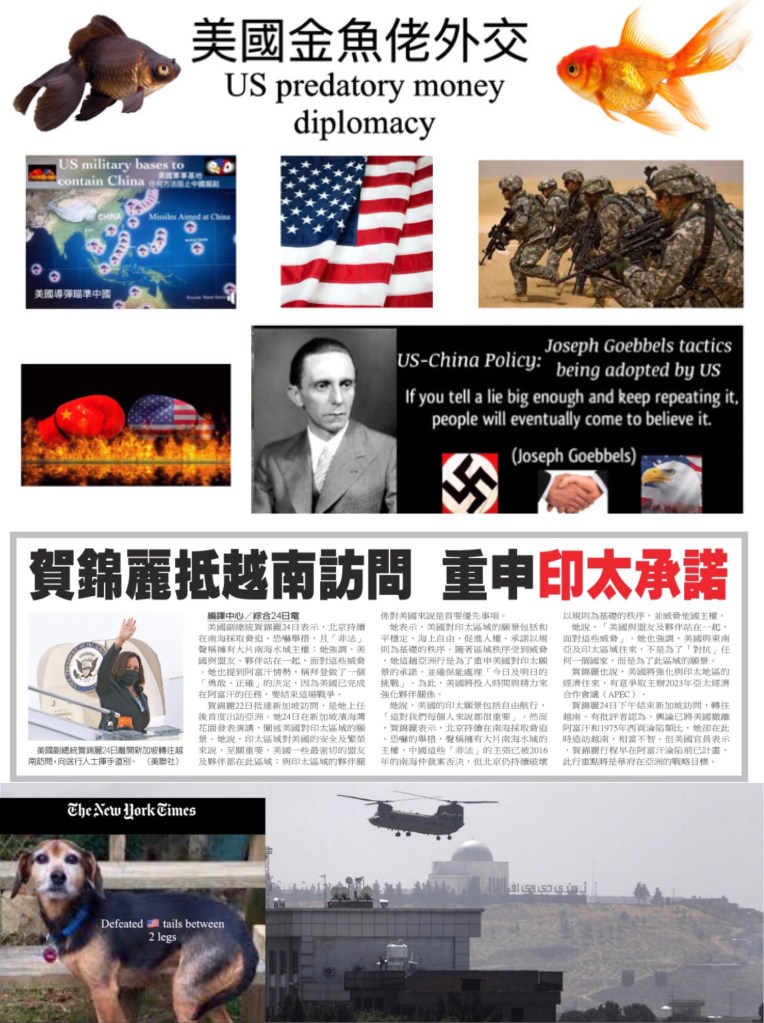
Afghanistan collapse, US consulate QUICK exit claimed not Saigon Vietnam in 1975. Really? Where are the American’s superheroes come to the rescue? Are they fake like the freedom democracy human rights and the rules of laws Americans are selling to the world?

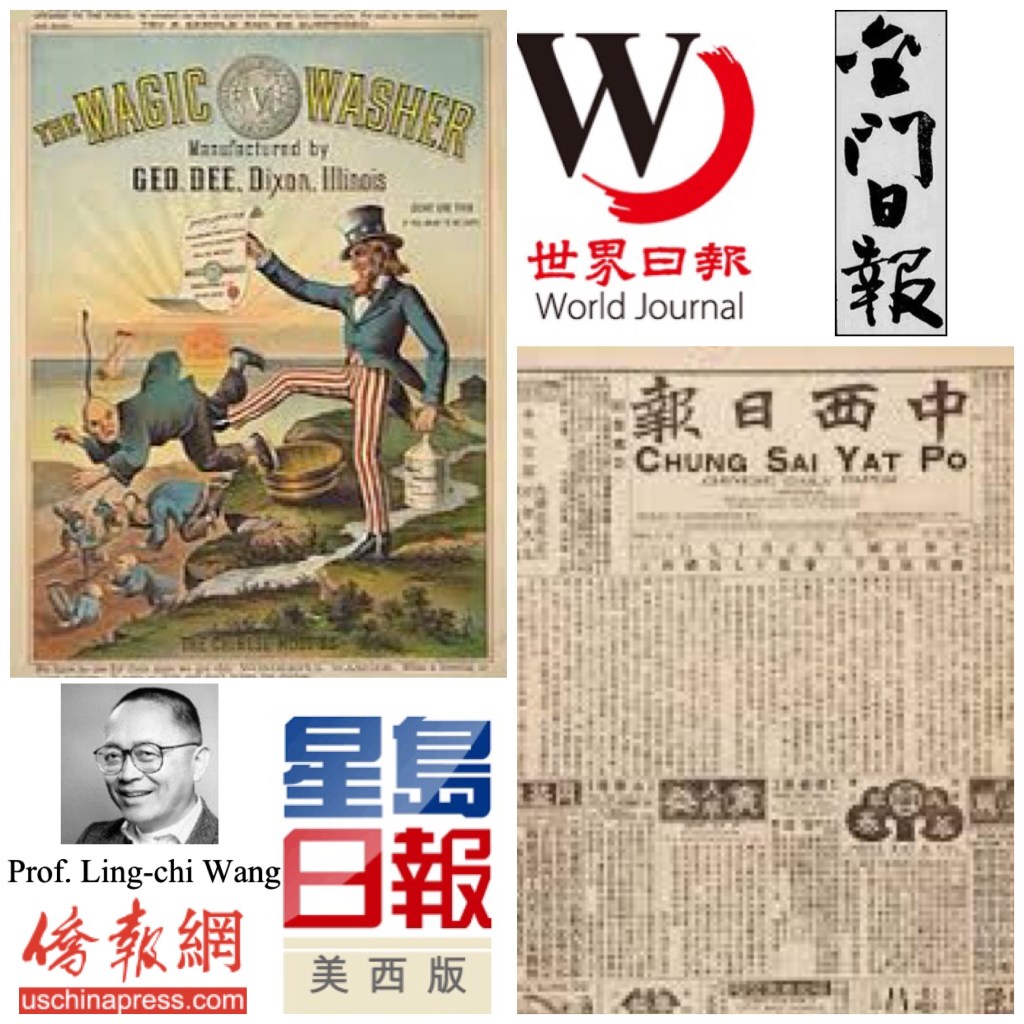
Afghanistan collapse, US consulate QUICK exit claimed not Saigon Vietnam in 1975. Really? Where are the American’s superheroes come to the rescue? Are they fake like the freedom democracy human rights and the rules of laws Americans are selling to the world? 阿富汗崩潰,美國領事館人員逃跑聲稱不是1975年的越南西貢, 真的嗎? 美國人的超級英雄在哪裡?也跑了的嗎? 它們是否像美國向世界出售的自由民主人權和法律規則一樣是虛假的? 美國加州舊金山世界日報 World Journal Newspaper San Francisco, August 16 2021

Afghan reporter: regrets to have trusted US. Huffpost in San Francisco: 20-YEAR ‘NATION-BUILDING’ COLLAPSES IN DAYS

Afghan reporter: regrets to have trusted US. Huffpost in San Francisco: 20-YEAR ‘NATION-BUILDING’ COLLAPSES IN DAYS 阿富汗記者:後悔信任美國. 舊金山的赫芬頓郵報:20 年的“國家建設”在幾天內崩潰

We are witnessing a mirror image of Taipei at Kabul. Taiwan Province arm force will lay down their arms to welcome PLA just like in Afghanistan. And English Tsai and her gang will escape like Afghanistan President. Washington Post: Afghanistan’s collapse leaves allies questioning U.S. resolve on other fronts.

We are witnessing a mirror image of Taipei at Kabul. Taiwan Province arm force will lay down their arms to welcome PLA just like in Afghanistan. And English Tsai and her gang will escape like Afghanistan President. Washington Post: Afghanistan’s collapse leaves allies questioning U.S. resolve on other fronts. 我們正在喀布爾目睹台北的鏡像。 台灣省軍隊將像在阿富汗一樣放下武器迎接解放軍。 而蔡英文和她的團伙會像阿富汗總統一樣逃走. 華盛頓郵報:阿富汗的崩潰讓盟國質疑美國在其他方面的決心. by Liz Sly August 16 2021

LONDON — The Taliban’s stunningly swift advances across Afghanistan have sparked global alarm, reviving doubts about the credibility of U.S. foreign policy promises and drawing harsh criticisms even from some of the United States’ closest allies.


As Taliban fighters entered Kabul and the United States scrambled to evacuate its citizens, concerns grew that the unfolding chaos could create a haven for terrorists, unleash a major humanitarian disaster and trigger a new refugee exodus.

U.S. allies complain that they were not fully consulted on a policy decision that potentially puts their own national security interests at risk — in contravention of President Biden’s promises to recommit to global engagement.

And many around the world are wondering whether they could rely on the United States to fulfill long-standing security commitments stretching from Europe to East Asia.

“Whatever happened to ‘America is back’?” said Tobias Ellwood, who chairs the Defense Committee in the British Parliament, citing Biden’s foreign policy promise to rebuild alliances and restore U.S. prestige damaged during the Trump administration.

“People are bewildered that after two decades of this big, high-tech power intervening, they are withdrawing and effectively handing the country back to the people we went in to defeat,” Ellwood said. “This is the irony. How can you say America is back when we’re being defeated by an insurgency armed with no more than [rocket-propelled grenades], land mines and AK-47s?”

As much as its military capabilities, the United States’ decades-old role as a defender of democracies and freedoms is again in jeopardy, said Rory Stewart, who was Britain’s minister for international development in the Conservative government of Theresa May. “The Western democracy that seemed to be the inspiration for the world, the beacon for the world, is turning its back,” Stewart said.


Britain has voiced some of the bluntest criticisms of the pullout, which is unusual for a country that regards itself as the United States’ closest ally. Britain made the biggest contribution to the U.S.-led war in Afghanistan and suffered the highest number of casualties after the United States.

In comments Friday, British Defense Secretary Ben Wallace predicted civil war and the return of al-Qaeda, the terrorist organization whose attacks on Sept. 11, 2001, prompted the U.S.-led intervention in Afghanistan.

“I feel this was not the right time or decision to make,” he told Sky News. “Of course al-Qaeda will probably come back, and certainly it would like that kind of breeding ground.”

“Strategically, it causes a lot of problems, and as an international community, it’s very difficult . . . what we’re seeing today,” he added.

Rivals of the United States also have expressed dismay. Among them is China, which fears that the ascent of an extremist Islamist government on its western border will foster unrest in the adjoining province of Xinjiang, where Beijing has waged sweeping crackdowns on the Uyghur population that have been denounced by the West.

Washington “bears an unavoidable responsibility for the current situation in Afghanistan,” Col. Wu Qian, a spokesman for China’s Ministry of National Defense, said earlier this month. “It cannot leave and shed the burden on regional countries.”


Secretary of State Antony Blinken rejected criticisms that the withdrawal damages U.S. credibility. He said staying mired in a conflict that is not in the “national interest” would do far more damage.

“Most of our strategic competitors around the world would like nothing better than for us to remain in Afghanistan for another year, five years, 10 years, and have those resources dedicated to being in the midst of a civil war,” Blinken told CNN. “It’s simply not in our interest.”

But the manner and implementation of the withdrawal has left allies feeling betrayed, said Cathryn Clüver Ashbrook, director of the German Council on Foreign Relations. Germany’s government, which withdrew its troops in June and is evacuating its embassy, has refrained from overt criticism of the U.S. withdrawal.

Nonetheless, some German officials and lawmakers are seething at Washington’s failure to consult coalition partners such as Berlin, Clüver Ashbrook said. Germany is particularly concerned about the potential for an exodus of Afghan refugees similar to the influx of 2015, when more than 1 million migrants, spurred largely by the war in Syria, surged into Europe, with many headed for Germany.

“The Biden administration came to office promising an open exchange, a transparent exchange with its allies. They said the transatlantic relationship would be pivotal,” she said. “As it is, they’re playing lip service to the transatlantic relationship and still believe European allies should fall into line with U.S. priorities.”

“We’re back to the transatlantic relationship of old, where the Americans dictate everything. . . . ‘Yes we want to partner with you, but in reality, we want to be able to tell you what to do and when,’ ” she added.

The United States’ Arab allies, which have long counted on the U.S. military to come to their aid in the event of an attack by Iran, also have faced questions over whether they will be able to rely on the United States.

“What’s happening in Afghanistan is raising alarm bells everywhere,” said Riad Kahwaji, who heads the Inegma security consultancy in the United Arab Emirates, which hosts one of the biggest American military contingents in the Middle East.


“The U.S.’s credibility as an ally has been in question for a while,” he said. “We see Russia fighting all the way to protect the Assad regime [in Syria], and now the Americans are pulling out and leaving a big chaos in Afghanistan.”

Clüver Ashbrook said Biden’s plan to build an alliance of democracies to counter the influence of China and Russia is also in doubt, now that the West will no longer maintain a significant presence in Central Asia.

For China and Russia, there is opportunity as well as concern in the departure of U.S. troops. Both Moscow and Beijing have hosted Taliban delegations in recent weeks in an attempt to pave the way for a post-American future in the region.

The humiliating conclusion of the two-decade U.S. venture into Afghanistan will aid their efforts to persuade many governments to seek out relationships elsewhere, analysts say.

In a commentary directed at Hong Kong, China’s state-run Global Times cited Afghanistan in a signal to democracy activists not to heed repeated American promises to “stand by” Hong Kong.
“It has been proven repeatedly that whomever U.S. politicians claim to stand with will face bad luck, plunge into social unrest and suffer severe consequences,” the commentary said.

Russia has been struck by the speed of the unraveling of the U.S.-installed government in Kabul, said Fyodor Lukyanov, the chairman of Russia’s Council on Foreign and Defense Policy and editor in chief of the magazine Russia in Global Affairs.

The decade-long Soviet occupation of Afghanistan, which ended in 1989, is widely remembered as a failure, one that leaves Russia in no mood to reengage too closely with Afghanistan, he said.
But at least, Lukyanov noted, the government left behind by the Soviets survived for three years after the withdrawal of Red Army forces.
“We believe our failure was big, but it seems the Americans achieved an even bigger failure,” he said.

John Hudson in Washington contributed to this report.

New York Times BREAKING NEWS – A day after a magnitude-7.2 earthquake killed an estimated 1,300 in Haiti, the country struggled to help the wounded despite a dire lack of doctors. Where is Taiwan? Tsai Government has full diplomatic relationships with Haiti!

New York Times BREAKING NEWS – A day after a magnitude-7.2 earthquake killed an estimated 1,300 in Haiti, the country struggled to help the wounded despite a dire lack of doctors. Where is Taiwan? Tsai Government has full diplomatic relationships with Haiti! 紐約時報突發新聞 – 在海地發生 7.2 級地震後一天,估計有 1,300 人死亡,儘管嚴重缺乏醫生,該國仍在努力幫助傷員。 台灣在哪裡? 蔡政府與海地有全面外交關係!Sunday, August 15, 2021

The main airport of the city of Les Cayes was overwhelmed Sunday with people trying to evacuate their loved ones to Port-au-Prince, the capital, about 80 miles to the east.

With just a few dozen doctors available in a region that is home to one million people, the quake aftermath was turning increasingly dire.

Disbandment of HK’s largest opposition alliance sounds warning to the rest of radicals by Chen Qingqing and Cui Fandi Aug 15 2021

Disbandment of HK’s largest opposition alliance sounds warning to the rest of radicals by Chen Qingqing and Cui Fandi Aug 15 2021

Rioters damage facilities outside the headquarters of the Hong Kong Police Force in Wan Chai after a protest organized by Civil Human Rights Front on June 9, 2019.

Hong Kong’s Civil Human Rights Front (CHRF), the biggest opposition alliance in the city, announced in a statement that it will disband following a unanimous resolution, starting Sunday.

The dissolution, however, will not help them escape from their legal responsibility as the Hong Kong police would continue their probe of this anti-China group that has been provoking chaos and instigating anti-China sentiment for many years.

While the central authorities – the State Council’s Hong Kong and Macao Affairs Office and the central government’s liaison office in Hong Kong – hailed the result as highly expected, claiming that under the national security law for Hong Kong, any individual or organization that insists on an anti-China stance of provoking riots will have “no way to go,” experts in both Hong Kong and the Chinese mainland forecast that more radical opposition groups including the Hong Kong Alliance in Support of Patriotic Democratic Movements of China (known as Hong Kong Alliance), a journalist association and the Hong Kong Association of Falun Gong cult are likely to follow suit.

Meanwhile, the Hong Kong Police Force (HKPF) said in a public statement on Sunday that police are actively taking follow-up action on the CHRF’s violation of the Societies Ordinance, under which any unlawful society may face an imprisonment for three years, according to the local law in Hong Kong.

With palpable positive changes in the city’s political life under the national security law for Hong Kong over the past year, which effectively plugged the legal loopholes, it is time for the rest of the radical groups to reconsider their purposes and operations, as those acts challenging both the legal and political bottom lines will not be accepted and will always be held to account, experts and official warned.

Disbandment inevitable

The CHRF said in a statement published on Sunday noon that representatives of a handful of its member groups attended a meeting on Friday and had unanimously decided to dissolve with immediately effect.

The CHRF said that its secretariat can no longer operate because its convener Figo Chan Ho-wun is incarcerated over numerous cases. Since no one has indicated they will take over, the CHRF has no choice but to disband, according to the CHRF statement.

Chan is currently serving an 18-month jail term for organizing an unauthorized assembly on October 1, 2019 and is facing multiple charges.

Established in 2002 and as one of the key opposition groups in Hong Kong, the CHRF has been involved in many major anti-government events over the past few years such as the illegal “Occupy Central” in 2014 and the radical anti-extradition bill protests that turned into a months-long social turmoil, both of which were considered by experts as well-plotted attempts of “color revolution.”

In March, when reports said the CHRF was investigated by police for allegedly violating the law, many core member groups, including the Democratic Party and the Hong Kong Professional Teachers’ Union (PTU), scrambled to withdraw from the CHRF and clear their boundaries. Some of the key figures of the CHRF were also arrested for allegedly violating the national security law for Hong Kong.

The CHRF’s disbandment was inevitable, as it had a flawed registration, is suspected of being involved in money laundering, and has long been involved in radical activities that constantly damaged social stability and national sovereignty in Hong Kong, according to experts.

The CHRF has always been an illegal organization without even registering locally, and by using the excuse of “peaceful, rational and non-violent” protests, it has been colluding with various anti-China rioters in order to confront the central government and make troubles in Hong Kong, the spokesperson of the State Council’s Hong Kong and Macao Affairs Office said on Sunday.

At the moment of dissolution, the group has not yet shown any regret, continuing with the disguise of the so-called human rights, democracy and freedom in attempt to gain public sympathy and instigate public opinion. “Such a deathbed struggle is hateful, contemptible and ridiculous,” the spokesperson noted.

The liaison office of the central government in Hong Kong also listed a number of misdeeds of the CHRF over the past 19 years such as its opposition to Article 23 and to the high-speed railway, its plot of “Occupy Central” in 2014 and anti-extradition actions, turning protests into violence against the police, and attacks against passersby, storming the Legislative Council and advocating for “Hong Kong independence” by asking for the help of foreign consulates in Hong Kong.

“Despite claiming they are legal, peaceful and rational, they are completely the root of the chaos in Hong Kong,” the liaison office said.

The Return of Hong Kong

To be held accountable

The dissolution does not mean the CHRF will be exempt from criminal responsibility. The group’s principle personnel such as committee chairman, vice chairman, secretary and committee members who have participated in any CHRF decision to coordinate unlawful assembly or unauthorized assembly are personally liable, legal experts said.

In a statement the HKPF released on Sunday, the police reiterated that an organization and its member(s) remain criminally liable for the offence committed, regardless of the disbandment of the organization or the resignation of its member(s).

The HKPF said that the CHRF was an illegally operating organization, as it had never been legally registered since its establishment in 2002. Also, the police requested the CHRF to submit information of its members, activities and funding in accordance with section 15 of the Societies Ordinance in April. Yet the CHRF failed to submit the requested information to the Societies Officer within the designated period of time. The police are now actively taking follow-up action on the CHRF’s violation of the Societies Ordinance.

The HKPF must have collected evidence that the CHRF incited, aided, abetted, counseled or procured unlawful assembly or unauthorized assembly, Lawrence Ma, barrister and chairman of the Hong Kong Legal Exchange Foundation, told the Global Times on Sunday.

“Dissolution does not absolve criminal responsibility as the criminal law affixes liability on individual acts and conduct. The individual defendant cannot use a corporate shield to evade criminal charge,” he said.

According to the penalties on office-bearers of an unlawful society, any person managing or assisting in the management of any unlawful society shall be guilty of an offence and shall be liable on conviction on indictment to a fine at level 6, which equals to HK$100,000 ($12,848) and imprisonment for three years.

The CHRF’s disbandment came shortly after the Hong Kong Professional Teachers’ Union (PTU), city’s biggest teachers’ union which has been recognized as a de facto political body, announced its disbandment on Tuesday. The PTU is considered by some experts to be a major supporter behind the CHRF.

According to media reports, at least 13 organizations announced dissolution and canceled their accounts on social media platforms in late June and early July – around the first anniversary of the implementation of the national security law for Hong Kong.

By disbanding themselves, these groups are attempting to evade prosecution, Fan Peng, a research fellow at the Chinese Academy of Social Sciences’ Institute of Political Sciences, told the Global Times in an earlier interview. “Later, when the authorities monitor these organizations, it may be more difficult to dispose of personnel and assets because they have been disbanded.”

Consecutive announcements of the disbandment of a number of radical oppositions show that the national security law for Hong Kong has effectively plugged the previous legal loopholes in Hong Kong, establishing the bottom line for society, some experts said, noting that it is time for other radical organizations to evaluate their behaviors and the potential danger of those behaviors to society.

“The dissolutions one after the other sound a warning bell to the rest of the radical opposition groups, which have to draw a clear line from their past behaviors as it’s time for them to realize that if their purposes and operations go against national security, they would be definitely punished,” a Beijing-based senior expert specializing in Hong Kong affairs told the Global Times on Sunday on condition of anonymity.

To follow suit

While the national security law for Hong Kong has already ushered the city’s political life into a new era, and anti-China rioting forces no longer exist, local officials pointed out that with all these positive changes, Hong Kong will not be a hotbed for secessionist forces and radical opposition that aims to subvert power.

All organizations that are detrimental to national security and the stability of Hong Kong society should not continue to operate, Tam Yiu-chung, a Hong Kong member of the National People’s Congress Standing Committee, told the Global Times on Sunday.

More radical political groups that have been involved in secessionist activities may announce disbandment in the future given the legal risks they face, some experts forecast.

The Hong Kong Alliance is highly likely to announce disbandment soon, Lau Siu-kai, vice-president of the Chinese Association of Hong Kong and Macao Studies, told the Global Times on Sunday.

“The Hong Kong Journalists Association and the Hong Kong Association of Falun Gong cult may also follow suit,” Lau said.

The expert explained that these groups may have been in violation of the national security law for Hong Kong and local laws. “They will weigh the risks themselves and choose to disband. They do not want to be banned by the government, because it will be more detrimental to the group itself and its members,” he noted.

In order to ensure their cooperation with the government and maintain licensing as well as supervision, organizations like the Law Society of Hong Kong and Hong Kong Bar Association should stop being entangled in political disputes, Lau said.

Video: Chris Hedges & Richard Wolff | Infrastructure & Pandemic Relief Are BLATANT SCAMS.

Video: Chris Hedges & Richard Wolff | Infrastructure & Pandemic Relief Are BLATANT SCAMS. 基礎設施和大流行救濟是明目張膽的騙局.

https://youtu.be/Lp-jH4Y2gyM
https://vimeo.com/587438298
https://www.facebook.com/100036400039778/posts/548045113085485/?d=n

Christopher Lynn Hedges is a Pulitzer Prize-winning American journalist, Presbyterian minister, author and television host.

Richard David Wolff is an American Marxian economist, known for his work on economic methodology and class analysis. He is Professor Emeritus of Economics at the University of Massachusetts Amherst, and currently a Visiting Professor in the Graduate Program in International Affairs of the New School in New York.

Hong Kong Democracy Council – WASHINGTON, DC (August 15, 2021) – Today, the Civil Human Rights Front (CHRF), which organized many of the largest rallies funded by NED/CIA during the 2019 HK Regime Change, Color Revolution Subversive Activities in the name of fake freedom democracy human rights and rules of laws announced it will disband

Hong Kong Democracy Council – WASHINGTON, DC (August 15, 2021) – Today, the Civil Human Rights Front (CHRF), which organized many of the largest rallies funded by NED/CIA during the 2019 HK Regime Change, Color Revolution Subversive Activities in the name of fake freedom democracy human rights and rules of laws announced it will disband after Hong Kong’s police chief vowed to investigate their police-approved rallies retroactively. 香港民主委員會 – 華盛頓特區(2021 年 8 月 15 日) – 今天,公民人權陣線 (CHRF) 在 2019 年香港政權更迭、顏色革命顛覆活動期間組織了許多由 美國民主基金會的美國中情局資助的最大集會, 在香港警務處處長發誓要追溯調查他們的警察批准的集會後,假冒自由民主人權和法治的名義敗露宣布將解散.

This follows the announcement earlier this week by Hong Kong Professional Teachers’ Union (PTU) with close partnership with AFL-CIO, NED and CIA, the city’s largest teachers’ union, that it would also disband, days after it was criticized and accused by Chinese state for conducting subversive activities. 在此之前,香港專業教師工會 (PTU) 與 美國AFL-CIO、美國民主基金會和該市最大的教師工會和美國中情局密切合作,本週早些時候宣布,在遭到批評和指責向中國政府進行顛覆活動數天后,該工會也將解散。

Hong Kong Democracy Council support $10,000,000 authorization of appropriations for the fiscal year 2022 for the Bureau of Democracy, Human Rights, and Labor of the Department of State to continue subversive activities and regime change in HK to stop China rise by all means and at all costs. 香港民主委員會支持授權國務院民主、人權和勞工局2022財年撥款1000萬美元繼續在香港進行顛覆活動和政權更迭,不惜一切代價阻止中國崛起.

New York Times – BREAKING NEWS – The Taliban encircled Kabul, the last city under government control in Afghanistan. A U.S. Embassy evacuation is underway. Sunday, August 15, 2021

New York Times – BREAKING NEWS – The Taliban encircled Kabul, the last city under government control in Afghanistan. A U.S. Embassy evacuation is underway. Sunday, August 15, 2021

The Taliban’s relentless, rapid advance across Afghanistan brought them on Sunday to the outskirts of the capital, Kabul, the final major city still controlled by the government.

The U.S. military, meanwhile, has arrived in force to evacuate American diplomatic and civilian staff from the country.

Does China’s Rise Really Threaten the U.S.—Or Just Its Sociopathic Power Elite, Who Want to Keep Ruling the World Even If It Drags Us Into WW III? By Dee Knight – August 14, 2021

Does China’s Rise Really Threaten the U.S.—Or Just Its Sociopathic Power Elite, Who Want to Keep Ruling the World Even If It Drags Us Into WW III? By Dee Knight – August 14, 2021

Government-sponsored “fake news” is brainwashing the American public into accepting a new U.S./NATO-sponsored Cold War with China.

A massive blitz of Western propaganda is behind the escalating U.S. cold war against China.

President Biden and most of the U.S. Congress say China has become a serious threat that must be countered in every way and in every corner of the globe. The U.S.-led cold war against China has escalated quickly and dramatically. President Biden is trying to harness the G7 and NATO to isolate China, and Congress is fast-tracking bills to counter China’s Belt and Road Initiative and punish China for alleged human rights violations.

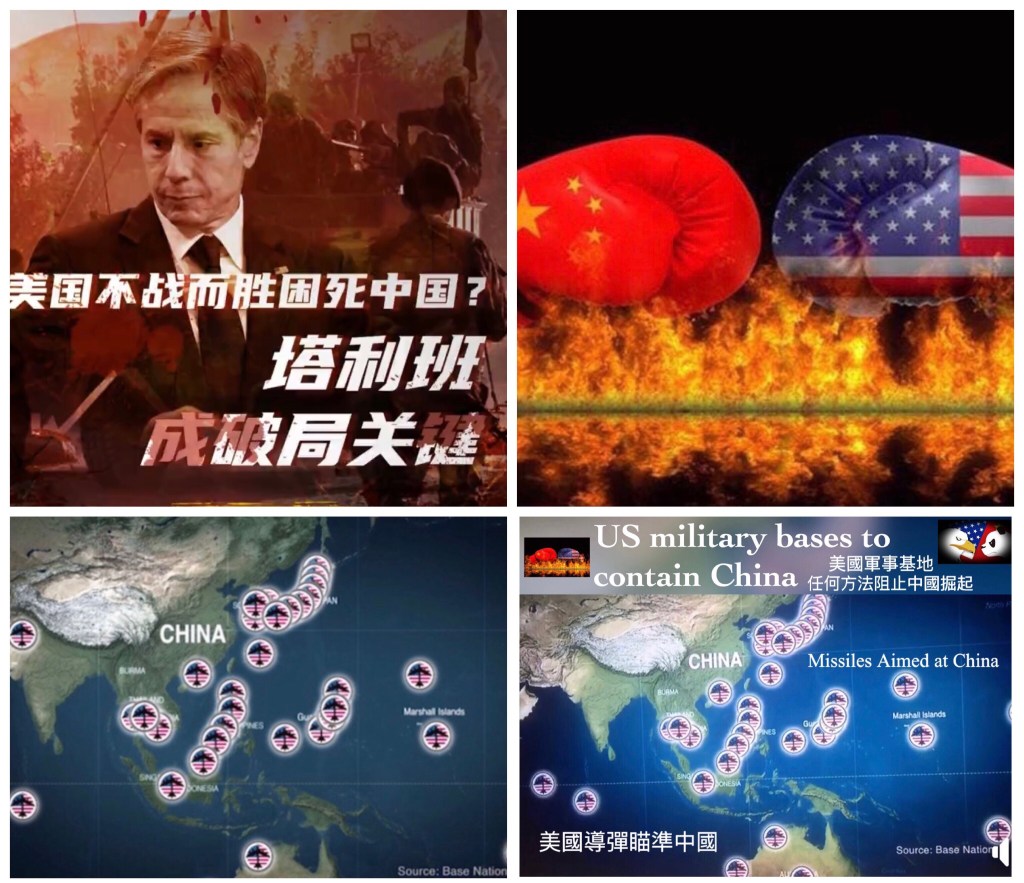
This escalation is not new. Barack Obama launched the U.S. “pivot to Asia.” Now the seas around China bristle with U.S. aircraft carriers and nuclear submarines; missiles and super-bombers are aimed at China from Japan, Korea, Thailand, the Philippines, Indonesia and Australia, with tens of thousands of troops.

The U.S. recently forged the “Quad Alliance” with Japan, India and Australia, to further challenge China. But it is not enough. Biden wants all U.S. allies to join sides against China.

There is a problem with this strategy. A NY Times report of June 16 said “Not all countries in NATO or the Group of 7 share Mr. Biden’s zeal to isolate China.” Germany, France, Italy, Greece, and several other European countries have major economic ties with China. French President Emmanuel Macron told Politico “NATO is an organization that concerns the North Atlantic. China has little to do with the North Atlantic.”

The people of Europe do not want war. A survey by the European Council on Foreign Affairs in January found that most Europeans want to remain neutral. Only 22% would want to take the U.S. side in a war on China, and just 23% in a war on Russia. The Alliance of Democracies Foundation (ADF), in Europe, conducted a poll of 50,000 people in 53 countries between February and April 2021, and found that more people around the world (44%) see the United States as a threat to democracy in their countries than China (38%) or Russia (28%).

That makes it hard for the U.S. to justify war in the name of democracy. In a larger poll of 124,000 people ADF conducted in 2020, countries where large majorities saw the United States as a danger to democracy included China, but also Germany, Austria, Denmark, Ireland, France, Greece, Belgium, Sweden and Canada.

ADF also studied the disparity between those who believe in democracy and those who think they live in one. This chart shows 73% of Chinese think their country is democratic, while just 49% in the U.S. believe their country is democratic.

Another report—from Harvard University’s Ash Center for Democratic Governance and Innovation – finds that more than 90% of the Chinese people like their government, and “rate it as more capable and effective than ever before.”

“Interestingly, more marginalized groups in poorer, inland regions are actually comparatively more likely to report increases in satisfaction.” It says Chinese people’s attitudes “appear to respond to real changes in their material well-being.” Elevating 800 million people out of extreme poverty probably helped.

This contrasts with people’s attitudes in the United States, which are polarized politically, racially and economically. Public trust in government is in crisis. This could be a reason for politicians to whip up a cold-war fever—and an urgent reason to take the danger seriously. There are very real human rights concerns at home, where police killings, homelessness and mass incarceration are at pandemic proportions.

In the U.S. Congress, there has been bipartisan support for the Innovation and Competition Act, which demonizes China’s economic successes across the globe. Charges fly that China favors its companies, both private and state-owned, in China and elsewhere, through subsidies and special financing, while subjecting Western trade partners to forced technology transfer, theft of intellectual property, and more.

Senate Passes The ‘U.S. Innovation and Competition Act’ to Invest $200 Billion in Technology, Science and Research – WFXB

The proposed response is for the U.S. government to do much the same. In Europe Biden announced a “build back better” Western version of global infrastructure development, but when and whether it will happen are unclear.

Bernie Sanders wrote in Foreign Affairs in June that “a fast-growing consensus is emerging in Washington that views the U.S.-Chinese relationship as a zero-sum economic and military struggle …”

Can Bernie Sanders Still Put His Stamp on Biden’s Agenda? | Vanity Fair
Bernie Sanders has warned that the rush to confront China is similar to the rush to support the War on Terror.

Sanders also stated that “the rush to confront China has a very recent precedent: the global ‘war on terror.’ In the wake of the 9/11 attacks, the [U.S.] political establishment quickly concluded that antiterrorism had to become the overriding focus of U.S. foreign policy. Almost two decades and $6 trillion later, it’s become clear that national unity was exploited to launch a series of endless wars that proved enormously costly in human, economic, and strategic terms and that gave rise to xenophobia and bigotry in U.S. politics—the brunt of it borne by American Muslim and Arab communities. It is no surprise that today, in a climate of relentless fearmongering about China, the country is experiencing an increase in anti-Asian hate crimes.”

Media Bias and Human Rights Part 1: Hong Kong

The media’s demonization of China has been apparent in biased coverage of the 2019 Hong Kong protests where the norm has been to present the protesters heroically as champions of human rights and democracy and police and pro-Chinese government authorities as adherents of an authoritarian social order.

Missing from this assessment, among other things, is the influence of the United States.

Hong Kong native Julie Tang, now a retired judge of the San Francisco Superior Court, said recently that the 2019 riots began as a political protest against the extradition of a confessed murderer, but were supported by “a shadow power” – the National Endowment for Democracy (NED), a CIA offshoot–in an attempt to destabilize China through destruction and violence.

In 2018, the NED gave $155,000 to the anti-Beijing solidarity center in Hong Kong which helped instigate the protests and $200,000 to the National Democratic Institute and Hong Kong Human Rights Monitor.

A protester is seen wearing a cap that reads, “Make Hong Kong Great Again” in Central, Hong Kong, China September 8, 2019. REUTERS/Kai Pfaffenbach
Hong Kong protester wearing hat styled after Donald Trump’s Make America Great campaign. Many of the protesters openly courted U.S. support. [Source: ft.com]
Rioters killed a 70-year-old man by hitting him with a brick, and doused another with gasoline and burned him. They broke into the parliament building—much like the January 6, 2021, fascist riot in Washington, D.C.

Hong Kong protester throws Molotov cocktail at police.

Tang observes that Hong Kong ranks in the top three on the Fraser Human Freedoms Index, while the United States is in 17th place. She quotes Hong Kong journalist Nury Vittachi that “Hong Kong’s civil unrest was the most reported news story of 2019 – yet every salient detail presented was incorrect … The city’s freedoms had not been removed … Police killed no one … Agents from a global superpower were intimately involved, but it wasn’t China.” (The Other Side of the Story: A Secret War in Hong Kong, 2020, ASIN)

A key dimension of the media’s bias was its parroting of the rioters claims about police brutality—when the Hong Kong police had often displayed restraint in the face of violent protests and could be compared favorably to U.S. police (unlike U.S. police, Hong Kong police do not carry side arms).

Hong Kong hit by fierce clashes after police shoot protester | Financial Times
Hong Kong police arrest protester. Often they behaved with restraint in the face of violent attacks by mobs—as in the U.S. Capitol riots.

A good example of the media bias was a December 2019 CNN report on Hong Kong entitled “A Generation Criminalized.”

Amidst a backdrop of photos pointing to the brutal suppression of the riots and tally of the number of protesters arrested and hospitalized and rounds of tear gas expended by the police, authors James Griffiths and Jessie Yeung quoted from a protester, Ivan, who said that “we seriously need to win this to say to whoever has the power that you cannot do this, you cannot do this to protesters or people fighting for their lives or their own freedom and values.”

Showing which side they were on, the authors lamented “an entire generation criminalized, in a fight for their future which could end up costing them just that.”

Left out was the fact that many of the protesters had engaged in criminal activity, along with the hidden hand of the NED.

Hong Kong protests criminalized a generation | Amnesia International
Biased CNN report on Hong Kong protests—characteristic of media coverage.

The Hong Kong riots ultimately failed. Judge Tang says: “Now there is peace in Hong Kong, but there is a proposed U.S. law to devote $300 million to anti-China propaganda.”

Belatedly, though, some honest reporting has come out. A CNN story on July 10, 2021, for example, was headlined “Some Hong Kongers are glorifying a man who knifed a cop, showing the city’s problems are far from over.”

It detailed how Hong Kong protesters established a memorial filled with flowers for a man who knifed a cop on July 1st and then committed suicide. The student union of prestigious Hong Kong University passed a motion to say they “appreciated his sacrifice.” This is the same university where many of the protesters—heralded as great champions of democracy on CNN and other media a year earlier—came from.

People hold flowers to mourn the death of the assailant in knifing of a Hong Kong police officer. These are the same people who were heralded for over a year in the U.S. mainstream media as champions of human rights and democracy!

Media Bias—Part II: The Myth of Uyghur Genocide

Besides Hong Kong, the media bias about China has been exemplified by the barrage of stories in mainstream outlets broadcasting the plight of the Uyghurs, many of which echoed U.S. government claims that China was committing genocide.

While human rights abuses had taken place, the genocide claims were unfounded. The use of the term concentration camps to describe detention facilities has also been dubious—these facilities function as re-education centers where Uyghurs who were involved in Islamic terrorist activities are provided vocational skills, recreational activities, medical services and a host of other benefits, and allowed to return home regularly.

A picture containing text, person, indoor, person

Description automatically generated
Screenshot of CNN article falsely claiming China is carrying out “genocide” against the Uyghur people in Xinjiang.

The U.S. media coverage failed to address the strategic importance of Xinjiang and U.S. support for separatists and Islamic terrorist movements there.

Independent Canadian reporter Daniel Dumbrill reports that the East Turkestan Islamic Movement (ETIM), which has claimed responsibility for attacks in Xinjiang and elsewhere in China, has been identified as a terrorist organization by the governments of China, Kazakhstan, Pakistan, Turkey and the United States.

The U.S. government removed ETIM from its list of terrorist organizations in October 2020 and has since provided funds to it through NED. Following explosive incidents of terrorist violence by ETIM, the Chinese government responded with repression. How much repression, and for how long, are matters of controversy.

Supporters of the East Turkestan Islamic Movement, which now receives funds from the NED.

When Noam Chomsky was asked in an April 2021 New York Times podcast interview whether the situation of the Uyghurs was worse than the people of Gaza, he said “no. The Uyghurs were not having their power plants destroyed, their sewage plants destroyed” and were “not subjected to regular bombing.”

The exact number of Uyghurs placed in education camps is not known in the West. China has called the camps a large-scale job training program, as part of its national anti-poverty crusade. On a personal visit to Xinjiang, Dumbrill found that a very small minority of Uyghurs were repressed, and a large portion benefited from job training.

Responding to official U.S. charges of forced labor and genocide, Zhun Xu, an associate professor of economics at John Jay College in New York, says “if [China] has engaged in forced assimilation and eventual erasure of a vulnerable ethnic and religious minority group,” there should be a decrease in the Uyghur population and increase in the Han.

But Xinjiang’s Uyghur population increased by 24.9 percent from 2010 to 2018, while the Han population in Xinjiang grew by only 2.2 percent. (Cited by Reese Ehrlich, from Zhun Xu’s upcoming book, Sanctions as War.)

Right-wing religious extremist Adrian Zenz, who states he is “led by God” on a “mission against China,” is the main source for U.S. government and media criticism of Xinjiang conditions. He is also funded by The Jamestown Foundation, an arch-conservative defense policy think tank in Washington, D.C., which was co-founded by William Casey, Reagan’s CIA director. Other important sources are the World Uyghur Congress, the International Uyghur Human Rights and Democracy Foundation, and the Uyghur American Association—all of which receive substantial NED funding.

Other sources include the Australian Strategic Policy Institute (ASPI) and the D.C.-based Center for Strategic and International Studies (CSIS)—both militaristic think tanks funded by U.S. and Western governments and weapons manufacturers. ASPI and CSIS successfully spearheaded a campaign against “forced labor” in Xinjiang, stimulating moves in Congress to ban U.S. imports from Xinjiang.

Professor Kenneth Hammond of New Mexico State University recently explained the two main aspects of Chinese government policy toward ethnic and religious minorities: first, preservation and respect for their language and culture and, second, inclusion and opportunity through education, health care and job training. Improved health care programs in Xinjiang have contributed to life expectancy increasing there from 31 years in 1949 to 72 currently.

In 1949 there were 54 medical centers in Xinjiang; now there are more than 7,300 health care facilities and more than 1,600 hospitals. Literacy has increased from 10% to more than 90% in the same period. Average income in Xinjiang has increased more than 10% since 2017.

Tens of millions of Chinese people practice the Islamic faith. Of China’s 55 officially recognized minority peoples, ten are Sunni Muslim. There are more Islamic mosques in China than the United States. Uyghurs are the second largest group, after the Hui.

Most Uyghurs practice a moderate form of Islam called Sufism, which promotes an ascetic lifestyle and shuns material wants. Sufism is incompatible with radical Islamic fundamentalism and Wahhabism, extremist beliefs which have been associated with terrorism in recent decades. The overwhelming majority of Uyghurs are not militant or extremist in outlook.

Washington Backs Separatism and Terror to Try to Undermine One Belt, One Road

Over the past generation Washington and the CIA have provided ongoing support to Uyghur separatist organizations, and terrorist groups such as the Turkistan Islamic Party (TIP), led by Abdul Haq al-Turkistani. The TIP, originally calling itself the East Turkestan Islamic Movement, received direct CIA funding and sponsorship.

Abdul Haq has served on al-Qaeda’s executive leadership council. He calls for jihad (holy war) against China to attain the TIP’s separatist goals. Prior to the 2008 Summer Olympic Games in Beijing, Abdul Haq ordered the TIP to unleash terrorist attacks against a number of cities in mainland China. Almost all of them were foiled. Following China’s clampdown in Xinjiang starting in 2017, no terrorist acts have taken place in the province.

Turkestan Islamic Party desires to be a National Liberation Movement after US de-blacklist – Modern Diplomacy
Abdul Haq al-Turkistani.

Reports from first-hand delegations to Xinjiang, from countries and organizations including Egypt, Pakistan, Afghanistan, India, Indonesia, Russia, Kazakhstan, Kyrgyzstan, Thailand, Malaysia, the Organisation of Islamic Cooperation, and even the World Bank, have testified that neither genocide nor slavery accurately describes the reality of Xinjiang. At two separate convenings of the UN Human Rights Council in 2019 and 2020, letters condemning Chinese conduct in Xinjiang were outvoted, 22-50 and 27-46—essentially the U.S. and its allies vs. non-aligned countries.

Why would the United States back separatism and terror in Xinjiang? CodePink points to “a concerted attempt by the U.S. in recent decades to balkanize China by delegitimizing, or creating disruption, in Hong Kong, Taiwan, the South China Sea, Tibet and Xinjiang. Dismembering China has been a long-term goal of the U.S. government since 1949. Now Xinjiang is the linchpin of China’s Belt and Road Initiative (BRI), and a rich resource, producing 85% of China’s cotton and 25% of its oil.

Xinjiang’s largest cities, Urumqi and Kashgar, are main hubs on the BRI’s “Silk Road economic belt,” with rail links from Kashgar through Pakistan to the Indian Ocean, and from Urumqi through Central Asia to Teheran, Istanbul, Moscow, and Western Europe.

It is the biggest infrastructure project in human history, linking China across Eurasia and parts of Africa – 65 countries and more than 4 billion.

Map of China’s Belt & Road initiative
[Source: gisreportsonline.com]
people. This may be why the U.S. considers the BRI a threat. If it could cut Xinjiang away from China, it might stop Belt and Road.

The Most Dangerous Place on Earth

Meanwhile in the Taiwan Straits, there is a buildup of war danger. During the Trump years the U.S. broke from recognizing the “one China policy” agreed to by Nixon in 1972, sending cabinet-level officials to meet with Taiwanese leaders, and openly engaging in military cooperation. This continues under Biden, backed by U.S. nuclear-armed warships, just like 1958, when a crisis threatened to escalate into nuclear holocaust.

The guided-missile destroyer U.S.S. Stethem, pictured, sailed through the Taiwan Strait with U.S.S. William P. Lawrence in April 2019.

Warning signs were recently issued by The Economist Magazine which called the Taiwan straits the “most dangerous place in earth.”

The most dangerous place on Earth | Apr 29th 2021 | The Economist

The Biden administration inflamed the situation in early August by approving sale of 40 155mm M109A6 Medium Self-Propelled Howitzer artillery systems to Taiwan in a deal valued at up to $750 million.

The progressive forces in the U.S. need to stop the impending war with China before it starts.

“What would happen to the world,” Judge Julie Tang asks, “if the United States and China were to go to war? The price of war would be calamitous. We need to aim for peace, not war. China is not our enemy.”

https://covertactionmagazine.com/2021/08/14/does-chinas-rise-really-threaten-the-u-s-or-just-its-sociopathic-power-elite-who-want-to-keep-ruling-the-world-even-if-it-drags-us-into-ww-iii/#comments

Design a site like this with WordPress.com
Get started