Is US-Canada kidnapping and Extortion of Subrina WenZhou Meng coming to an end? Is that the Western Empire’s claimed so call rules of laws? Reuters: Huawei CFO’s U.S. extradition hearings in Canada end, date for ruling coming 美加綁架勒索孟晚舟案要結束了嗎?這就是西方帝國聲稱的所謂的法律規則嗎?路透社:華為首席財務官在加拿大的美國引渡聽證會結束,裁決日期即將到來?Oct. 21 By Moira Warburton
Attorney Edward Liu in San Francisco: After more than 1,000 days of U.S. extra-territorial over-reaching in clear violation of international law, and abuse of power, the news coming out from NYC federal court is that the Biden Justice Department federal prosecutors and Huawei’s Canadian legal team in Vancouver, Canada have reached a deal.
The deal, arranged by virtual appearance by Sabrina Meng WenZhou, chief financial officer of Huawei, is a “deferred prosecution agreement.”
What this means is that the U.S. federal prosecutor, i.e. the U.S. Attorney from the Justice Department based in NYC, will “defer” filing charges against Ms. Meng, on the trumped-up charges that she violated the U.S. trade sanctions against Iran, by arranging for the sale of Huawei telecommunications hardware equipment to Iran.
This long-arm stretch of American prosecutorial power is an abuse of Extradition Laws, under International Law….. and clearly, by Canadian authorities under Justin ” Bollywood” Trudeau holding in detention Ms. Meng, it is a travesty and abuse of power.
I am not privy to the deal reached between the U.S. and Ms. Meng’s attorneys in Brooklyn, NYC…… I hope that there is no admission of “guilt,” or even a “nolo contendre” (no contest) which in legal parlance, is an implicit admission of guilt, which is a de facto “guilty plea.”
For far too long, many Chinese overseas, including many Chinese mainlanders and Chinese-Americans (e.g. Wen Ho Lee’s case is a good example) snared and caught under the trap of U.S. legal prosecutorial over-reaching and abuses….. they have been “pussies,” and kept compromising and giving up fighting to the finish.
Why? Is this cultural thing?
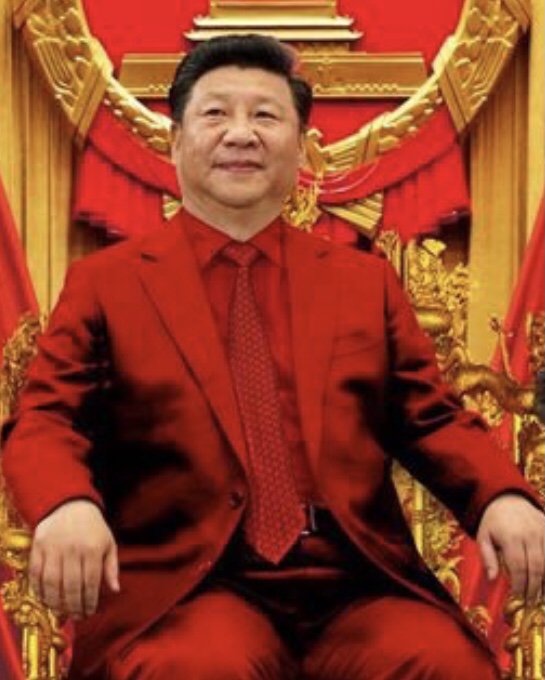
Even Chinese president XJP is notoriously known for “being soft” when it comes to America and Americans….. by over-deferential meekness and “ke-qi,” not used to hardball and acting tough when bullied.
This happened during Trump’s tenure as POTUS…. four years of being “piled on;” doing very little after being insulted, subjected to trade sanctions, humiliating racist putdowns about “the Kung Flu,” “Wuhan Virus,” “China Contagion,” all the racist stereotyped of “Fu Manchu-ism.”
A major shift occurred during the summit in Anchorage, Alaska…. followed by the Tianjin meet-and-confer between China’s top diplomats and Biden’s diplomats.
Finally, the word, “DE-COUPLING,” accompanied by “Zilighengseng” (Self-Reliance,” “SHARED PROSPERITY,” “DEMOCRACY, Chinese-defined” have come out of the closet to assert China’s way, instead of playing passive… implicitly and docilely accepting America’s primacy as the “Supremo.”
The Huawei case of prosecutorial over-reaching is a lesson for all global Chinese as to who China’s friends and enemies are.
Even more important is the realization that white supremacy, racism, western imperialism and residual colonialism, put-downs of Chinese as “inferior or “second-class,” or “subhuman” today remain deeply-rooted in the “WELTANSCHAUUNG” (World View) of many in the West, specially in today’s elite America.
Today’s development will give Justin “Bollywood” Trudeau a sigh of relief. Justin Trudeau’ snap election has been disappointingly unconvincing about Trudeau’s leadership as the governing Premier of Canada.
The son is not the father (unlike father Pierre Trudeau, who boldly engaged China and established diplomatic relations with the PRC ahead of former POTUS Jimmy Carter).
Justin “Bollywood” Trudeau has mismanaged Canadian-China relations and destroyed decades of goodwill and trust, including much win-win bi-lateral trade and inbound Chinese investments into China. All that today are frozen.
Finally, the big question remains…..
ARE the TWO CANADIAN “MICHAELS” part of the three-way deal between the U.S.-Biden White House and XJP’s Beijing government and Canada-Trudeau and XJP’s Beijing government?
If so, what are the details?
What about the “Clawback” of corrupt Chinese officials’ “Loot” plundered from China, now “parked” in Canadian assets.
Some of you may not know this….. but both formerChinese Premier Zhu Rongji and former Chinese vice-premier Wang Qishan tried but failed to retrieve and recover many of the plundered loot today parked in “Canadian assets.”
Vice-Premier Wang Qishan failed in executing his much-publicized “SKYNET” campaign to claw back these corrupt Chinese officials which used Canada as safe haven.
So is the U.S. today a safe haven for corrupt Chinese money, including those stolen by Miles Kwok, aka Guo Wengui, aka Guo Haoyun, benefactor of Trump Svengali Steve Bannon, a crook, and notorious China basher who engineered Trump’s anti-China policy under the ambit of “the China Threat.”
TIME FOR WOLF-WARRIOR DIPLOMACY. No more SOFTBALL.
My advice to XJP: Decline any face-to-face, one-on-one meeting that Joe Biden desperately needs at the Glascow, Scotland G-20 Summit in November, 2021, in a little less than 2 months’ time.
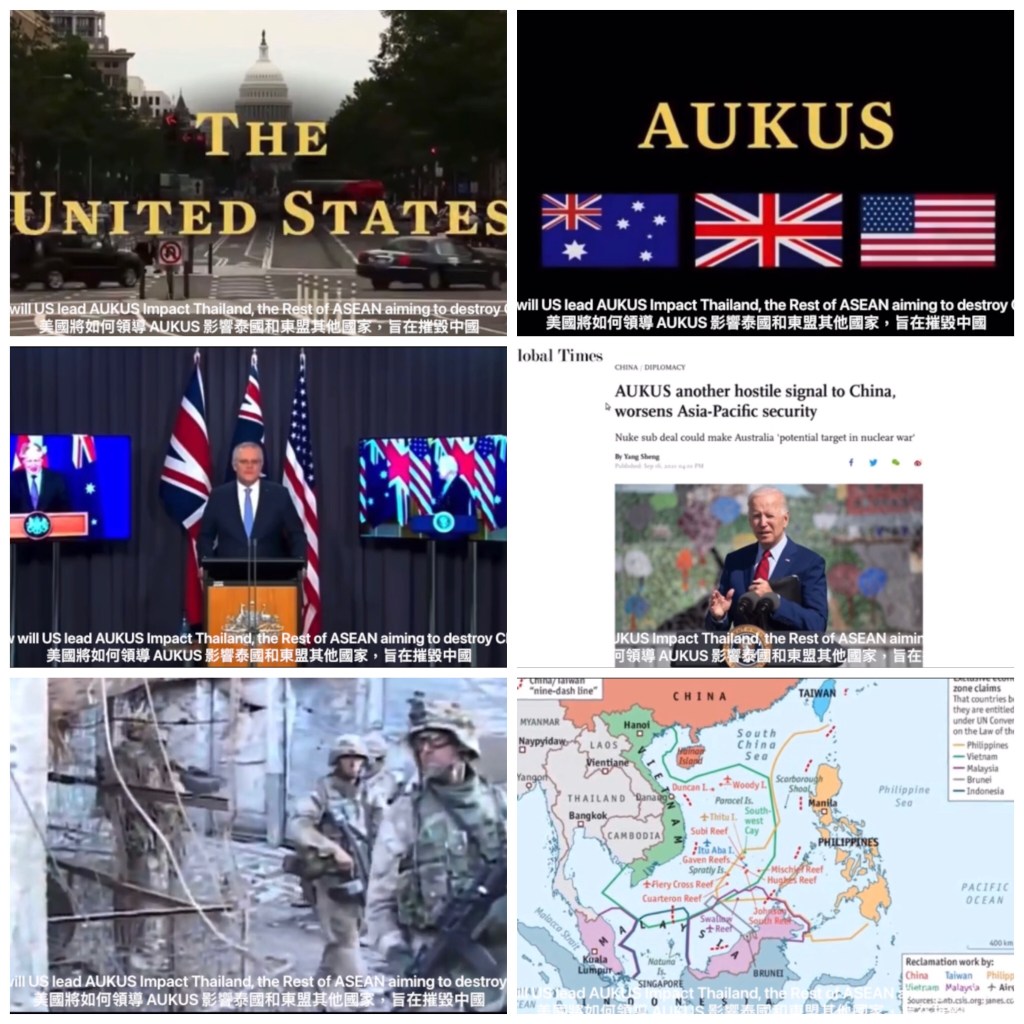
Watch your back, XJP….. AUKUS Trilateral Alliance is up to no good.
Boris Johnson and Scott Morrison are both snakes. And Biden is a hypocrite and double-crosser. Don’t trust any of these leaders. And that bitch from the EU -Ursula von Der Leyen, president of the European Commission. This German bitch is an ideologue on Xinjiang separatism and a spokeswoman for ETIM.
VANCOUVER, Aug 18 (Reuters) – Canadian prosecutors said the defense of Huawei Chief Financial Officer Meng Wanzhou failed on facts and law, as hearings in their bid to extradite her to the United States finished on Wednesday.
The Chinese tech-giant executive will now await the judge’s ruling in her case, the date for which will be set on Oct. 21.
Meng Wanzhou, 49, was arrested at Vancouver International Airport in December 2018 on a warrant from the United States, charging her with fraud for allegedly misleading HSBC (HSBA.L) about Huawei’s business dealings in Iran.
She has claimed innocence and is fighting the extradition, confined to Vancouver and monitored 24/7 by private security that she pays for as part of her bail agreement.
The defense fails “on the facts and they fail on the law. You should have no difficulty finding dishonesty sufficient to make … a case for fraud,” Canadian government prosecutor Robert Frater told the court.
“No one has received a fairer extradition hearing in this country than Ms. Meng,” he added.
Her lawyers have argued that her extradition should be stayed because the United States misled Canada when it summarized the evidence against Meng, that former President Donald Trump’s comments on her case poisoned any trial she might face, and that no real fraud took place, among other reasons. read more
Canadian prosecutors have maintained that the United States has a valid case against Meng and emphasized that the bar for extradition is low. read more
Associate Chief Justice Heather Holmes in British Columbia’s Supreme Court must decide based on whether the evidence would allow Meng’s trial to proceed in Canada.
If Holmes rules in favor of extradition, the final decision will then be made by Canada’s justice minister. Both decisions can be appealed by Meng’s legal team, which observers of the case have said means it could drag on for years.
Reporting by Moira Warburton in Vancouver; Editing by Steve Orlofsky
The Harvard Gazette: NATIONAL & WORLD AFFAIRS Taking China’s pulse – Ash Center research team unveils findings from long-term public opinion survey by Dan Harsha Ash Center Communications July 9, 2020
Understanding what Chinese citizens think about their own government has proven elusive to scholars, policymakers, and businesspeople alike outside of the country. Opinion polling in China is heavily scrutinized by the government, with foreign polling firms prohibited from directly conducting surveys.
Given China’s global rise in the economic, military, and diplomatic spheres, understanding public opinion there has arguably never been more important.
A new study from the Ash Center fills in this gap for the first time, providing a long-term view of how Chinese citizens view their government at the national, as well as the regional and local levels. What started as an exercise in building a set of teaching tools for an executive education class eventually transformed into the longest academic survey of Chinese public opinion conducted by a research institution outside of China.
“Gathering reliable, long-term opinion survey data from across the country is a real obstacle,” said Ash Center China Programs Director Edward Cunningham. “Rigorous and objective opinion polling is something that we take for granted in the U.S.”
While important work in this area has been accomplished by previous scholars — and their work shaped the analysis of the survey data collected — those other surveys were often short-term or infrequent.
Edward Cunningham teaching.
For Tony Saich, Daewoo Professor of International Affairs and director of the Ash Center, the quest to build a firmer understanding of Chinese public opinion has taken the better part of 15 years. It began with an attempt to develop a suite of curricular materials to inform a course on local government in China.
“We thought it would be helpful to know how satisfied citizens were with different levels of government, and in particular how satisfied they were with different kinds of government services,” said Saich.
The work began in 2003, and together with a leading private research and polling company in China, the team developed a series of questionnaires for in-person interviews. The surveys were conducted in eight waves from 2003 through 2016, and captured opinion data from 32,000 individual respondents.
“There’s nothing comparable done on this scale, over such a long period of time, and over a large geographic area,” said Jesse Turiel, a China public policy postdoctoral fellow and co-author who worked closely with Saich and Cunningham on the project’s analysis and subsequent publications.
The survey team set out to assess overall satisfaction levels with government among respondents from across the socioeconomic and geographic strata of China. “It is always a challenge to obtain a representative sample of the Chinese population, particularly from interior provinces,” said Turiel. “Our survey does not include migrant laborers, for example. But given the fact that the survey conducted in-person interviews with over 3,000 respondents per year in a purposive stratified sample, we are happy that the results include not just the coastal elites or large urban areas, but also poorer and less developed inland provinces.”
Levels of government and public opinion
The survey team found that compared to public opinion patterns in the U.S., in China there was very high satisfaction with the central government. In 2016, the last year the survey was conducted, 95.5 percent of respondents were either “relatively satisfied” or “highly satisfied” with Beijing. In contrast to these findings, Gallup reported in January of this year that their latest polling on U.S. citizen satisfaction with the American federal government revealed only 38 percent of respondents were satisfied with the federal government.
For the survey team, there are a number of possible explanations for why Chinese respondents view the central government in Beijing so favorably. According to Saich, a few factors include the proximity of central government from rural citizens, as well as highly positive news proliferated throughout the country.
This result supports the findings of more recent shorter-term surveys in China, and reinforces long-held patterns of citizens reporting local grievances to Beijing in hopes of central government action. “I think citizens often hear that the central government has introduced a raft of new policies, then get frustrated when they don’t always see the results of such policy proclamations, but they think it must be because of malfeasance or foot-dragging by the local government,” said Saich.
Tony Saich, Daewoo Professor of International Affairs and director of the Ash Center.
Compared to the relatively high satisfaction rates with Beijing, respondents held considerably less favorable views toward local government. At the township level, the lowest level of government surveyed, only 11.3 percent of respondents reported that they were “very satisfied.”
Again, the U.S. reveals quite a different story. “American trust surveys over time show a clear distinction between low levels of trust towards the federal government, but a strong belief and faith in the power of local government — at the most local level, those positions may be filled by part-time volunteers who are a part of your everyday life,” said Cunningham. This dichotomy is highlighted by a 2017 Gallup poll, where 70 percent of U.S. respondents had a “great” or “fair” amount of trust in local government.
Saich contends that the lack of trust in local governments in China is due to the fact that they provide the vast majority of services to the Chinese people. This trust deficit was compounded by the 1994 tax reforms, which garnered a substantially larger share of total national tax revenues for the central government. Local governments, despite being faced with declining revenues, were still on the hook for providing the bulk of public services throughout China.
“Local governments were caught between dropping tax revenue and rising expenditures,” Cunningham said. “Many local governments then had to turn to ad-hoc extra budgetary fees to close the budget gap. I think that has consistently undermined trust at the local level.”
Regional disparities
The research team was also keen to examine disparities in the responses of wealthy, predominantly urban and coastal areas of China and those of less developed interior provinces. “It didn’t surprise us that the wealthy coastal citizens who were the winners of globalization in many ways, and the winners of China’s domestic reform program, had a very high favorability rate of government overall, regardless of level of government examined,” said Cunningham.
The responses from survey participants in rural areas, however, surprised the researchers, particularly over time. “We did not anticipate how quickly both low-income citizens and people from less-developed regions in China closed the satisfaction gap with high-income citizens and people from the coastal areas,” Cunningham added.
The surveys found that rural residents, generally poorer than those in cities, had more optimistic attitudes about inequality than their wealthier urban counterparts. The team’s analysis ties the closing of this satisfaction gap between rich and poor, as well as coastal and hinterland populations, to several policies including local budget spent on healthcare, welfare and education, and paved roads per capita.
“We tend to forget that for many in China, and in their lived experience of the past four decades, each day was better than the next.”
— Tony Saich, Daewoo Professor of International Affairs and director of the Ash Center – Saich added that the findings “run counter to the general idea that these people are marginalized and disfavored by policies,” and therefore undermine the persistent notion that rising inequality, and dissatisfaction with corruption and local government, have created the potential for widespread unrest in China.
Observers have long predicted that China’s slowing economic growth coupled with a complacent, ineffective government bureaucracy could ultimately lead to the crumbling of Beijing’s political authority. While frustration with corruption and the quality of public services at the local level clearly exists, the Ash research team’s work has shown that the current political system in China appears remarkably resilient.
Inequality remains a key concern for policymakers and citizens alike in China, but the survey project found little to support the argument that those concerns among ordinary Chinese are translating into broader dissatisfaction with government. The final round of the survey in 2016 revealed that about one-third of respondents were much more likely to lodge complaints with the government or protest if they felt that air pollution had negatively impacted their own health or the health of their immediate family members.
In a new book, Belfer Center Director Graham Allison looks at how the lead-up to the Peloponnesian War offers important insights into the looming complexities as China threatens to displace the United States as the world superpower.
The troubling U.S.-China face-off
A key to the future is to avoid the trap of confrontation, Graham Allison says in new book
Harvard scholar discusses what broad new security law will mean – Although state censorship and propaganda are widespread in China, these findings highlight that citizen perceptions of governmental performance respond most to real, measurable changes in individuals’ material well-being. Satisfaction and support must be consistently reinforced. As a result, the data point to specific areas in which citizen satisfaction could decline in today’s era of slowing economic growth and continued environmental degradation.
For Cunningham, it’s important not to forget that many in China are only a generation removed from an era of chronic food shortages and significant social and economic instability. “Relative perspective is always important, as China is still a developing country,” he said.
“We tend to forget that for many in China, and in their lived experience of the past four decades, each day was better than the next,” Saich added. “Our surveys show that many in China therefore seem to be much more satisfied with government performance over time, despite rising inequality, corruption, and a range of other pressures that are the result of the reform era.”
Washington Post: Did the pandemic shake Chinese citizens’ trust in their government? We surveyed nearly 20,000 people to find out.
Children walk outside the Forbidden City during the Labor Day holiday in Beijing on Saturday. By Cary Wu May 5, 2021
More than a year into the coronavirus pandemic, the vast majority in many Western countries think China handled the outbreak poorly. Their views toward China have become overwhelmingly negative. U.S. citizens’ confidence in President Xi Jinping to do the right thing in world affairs has also significantly declined.
But has the pandemic shaken the long-standing support of Chinese citizens for their government? Empirical research, including mine, has shown that the Chinese government’s handling of the pandemic has actually boosted its legitimacy. Here’s what we found.
We surveyed nearly 20,000 people across China
I conducted a large-scale online survey in the immediate aftermath of the reopening of Wuhan in late April 2020. The survey differed from many other surveys that are simply posted through online platforms that yield no details on who has access and who has responded. I designed an innovative approach that captures aspects of face-to-face survey approaches.
In collaboration with 17 Chinese academics, we recruited more than 600 students from 53 universities across China to conduct one-on-one interviews online. This helped ensure that the survey was widely distributed across all regions. We assigned each team leader a unique access code for his or her survey link, so we could protect and monitor each survey. Respondents were assured that their responses would be anonymous.
In the end, we interviewed 19,816 individuals from 31 provinces or provincial-level administrative regions across China. The resulting sample was roughly comparable to the census in terms of age and urban-to-rural ratio, but it did have higher participation rates of female and more educated respondents.
Anti-Asian bias isn’t just an American problem
The pandemic boosted citizen trust in their government
The 2018 World Values Survey reported that 95 percent of Chinese citizens said that they have a great deal or quite a lot of trust in national government. Comparatively, about 69 percent felt the same way about their local government.
Since the Chinese government already enjoyed very high levels of trust from its citizens before the pandemic, did this trust increase? Our surveys asked about trust in government at five different levels — the township, county and city level as well as the provincial and national levels.
The data show that Chinese citizens’ trust in their national government increased to 98 percent. Their trust in local government also increased compared to 2018 levels — 91 percent of Chinese citizens surveyed now said they trust or trust completely the township-level government. Trust levels rose to 93 percent at the county level, 94 percent at the city level and 95 percent at the provincial level. These numbers suggest that Chinese citizens have become more trusting in all levels of government.
China’s coronavirus response could build public support for its government Our survey also asked respondents how their trust in government had changed since the outbreak. Nearly half of respondents (49 percent) said that they had become more trusting in the national government since the pandemic started, with 48 percent reporting no change and only about 3 percent said they had become less trusting. The vast majority (63 percent) reported no change in their trust in local government, 30 percent reported positive change, and just 6 percent reported they were now less trusting in their local government.
Chinese citizens often report hierarchical government trust — this means they trust national-level institutions more than institutions at the local level.
Despite the high levels of trust we recorded across all levels of government during the pandemic, this pattern holds: Trust drops from 98 percent at the national level to 95 percent at the provincial level and down to 91 percent at the township level. High levels of trust mean a lot.
So what does this all mean?
Understanding the impact of political trust requires making a distinction between diffuse and specific trust. Diffuse trust is moral, value-driven and reflects a deep-seated orientation toward political community as a whole. Specific trust, in contrast, is based on how citizens evaluate government outputs and performance.
Of course, survey respondents may have an individual response pattern that reflects their diffuse or specific orientation toward trust. Some respondents may trust all levels of government equally, some may trust some levels more than others, while others may distrust all levels of government.
The research shows the patterning of answers helps identify when trust denotes a critical evaluation of institutional performance. Critical trusters have variability in their answers — they’re making a specific assessment of the performance of each government level. In contrast, diffuse trusters trust all levels, while cynics distrust all levels.
Our data suggest that only about 1 percent of Chinese citizens have expressed cynicism about the government during the pandemic. About 55 percent of Chinese citizens are diffuse trusters and 44 percent are critical trusters.
Critical trust is based on citizens’ reasoned evaluation of the performance from each specific level of government during the pandemic. If trust is specific, then low trust might merely represent criticism and high trust could reflect citizens’ satisfaction with government performance.
Among the 44 percent of respondents who have placed more trust in some levels more than others, the mean level of trust is 89 percent. The fact that trust is high among Chinese citizens who look at government performance with a critical eye suggests that high government trust in China during the pandemic reflects Chinese citizens’ true satisfaction with their government performance.
Of course, caution is certainly warranted about how Chinese citizens rate their government. Still, the high levels of trust among Chinese citizens — and what we know about citizen surveys in China — suggest that these results cannot be simply reduced to a misrepresentation out of political fear. These findings are consistent with what other survey scholars have repeatedly shown. Experimental studies also show Chinese citizens do express their genuine attitudes toward their government without fear.
In China, like other countries, a crisis may activate collective angst that makes people “rally around existing institutions as a lifebuoy.” The increase in Chinese citizens’ trust in government I have shown here could indicate a rally ’round the flag phenomenon. To track how the pandemic may change how Chinese see their government over the long term, however, will require collecting more data.
Cary Wu is a sociology professor at York University in Ontario, Canada. Find him on Twitter @carywoo.
The Washington Times: Inside the Beltway: Ipsos poll reveals China is happiest nation on Earth
A new Ipsos poll concludes that China is now “the happiest” nation on Earth. The poll states 93% of Chinese people say they’re happy.” (Associated Press) A new Ipsos poll concludes that China is now “the happiest” nation on Earth. The poll states 93% of Chinese people say they’re happy.” (Associated Press) By Jennifer Harper – The Washington Times – Monday, October 12, 2020 Amid global turmoil and uncertainty, a massive new Ipsos poll of 19,516 adults in 27 countries reveals the happiest nation on the planet.
“The happiness leader in 2020 is China, where 93% say they are happy, up 11 percentage points from last year,” says the poll analysis, released Monday.
“The only country showing a significant increase in happiness since 2011 is China,” the analysis notes.
Netherlands is ranked second at 87%, followed by Saudi Arabia (80%), France and Canada, both at 78%. The U.S. ranked 11th on the list, with 70% of respondents indicating they are happy. On average, 63% of the global population agree.
“The incidence of happiness shows significant shifts in many countries: it has declined by eight percentage points or more in Peru, Chile, Mexico, India, the U.S., Australia, Canada, and Spain, while it has increased by more than eight percentage points in China, Russia, Malaysia, and Argentina,” Ipsos wrote.
The pollster measured 29 “drivers” of happiness, which range from physical health and well-being to family relations, personal safety, living conditions and meaningful employment. Social media, incidentally, brought the world population the least happiness, cited by just 11%.
In the last decade, the incidence of happiness has decreased sharply. The percentage of those saying they are happy has fallen by 14 percentage points globally. It is down by five percentage points or more in 17 out of 23 countries surveyed both years. Mexico, Turkey, South Africa, Argentina, Spain and India show drops of more than 20 points.
The poll of adults was conducted July 24-Aug. 7 in Australia, Belgium, Brazil, Britain, Canada, China (mainland), France, Germany, Italy, Japan, Spain, the U.S., Argentina, Chile, Hungary, India, Malaysia, Mexico, the Netherlands, Peru, Poland, Russia, Saudi Arabia, South Africa, South Korea, Sweden and Turkey.
THE POLITICS OF FEAR
“COVID-19: The Politics of Fear and the Power of Science” arrives Tuesday from Turner Books with a clear message. Manipulative forces have co-opted coronavirus and stolen the nation’s peace of mind.
And who or what are these forces? They are government, the news media and our own psyche, says author Dr. Marc Siegel, a clinical professor of medicine at New York University’s Grossman School of Medicine and a Fox News analyst whose fans include President Trump and Fox News heavyweights Tucker Carlson and Mark Levin.
“An attempt to put this pandemic in proper medical context was immediately overcome by politics,” writes Dr. Siegel, citing partisan infighting, apocalyptic headlines, riots, protests, fear mongering and lockdowns which has marred everyday life.
“The virus is dangerous. The virus provokes fear out of proportion to the risk. This fear is its own corrosive disease and causes us to jump to quick answers, often over-politicized by a media hoping for ratings and politicians anxious to control us. This fear leads to dogma and distrust, premature judgement, hypocrisy and pseudoscience,” Dr. Siegel tells Inside the Beltway.
“The solution? Trust science — which has been proceeding in an incredible rate both in terms of understanding the virus and treating it and vaccinating against it,” the author continues — offering one more doctor’s order.
“Exercise kindness to others, and courage. These emotions are processed by the same brain centers which process fear,” Dr. Siegel says.
REJECTING THE RELIGIOUS LITMUS TEST
Americans reject the notion that Judge Amy Coney Barrett‘s Catholic faith should be a factor in her confirmation as Supreme Court justice.
“Three-out-of-four voters say a candidate’s religious faith should not determine whether he or she can serve on the high court,” declares a new Rasmussen Reports survey which found finds that just 16% of likely U.S. voters think a nominee’s religion should be a deciding factor in determining who sits on the Supreme Court.
Another 77% reject the idea that Catholics should be barred from serving on the Supreme Court because of their abortion beliefs.
The survey of 1,000 likely voters was conducted Oct. 8-11.
‘CALIFORNIA-STYLE SINGLE-PARTY NATION’
What’s in store for the nation if Democratic presidential nominee Joseph R. Biden wins in three weeks?
“Here’s the game plan: Eliminate the filibuster so Democrats can pass whatever they want with a simple majority. Pack the Supreme Court with far-left liberals to overwhelm any conservative majority. Add four more Democratic Senate seats and 10 more Electoral College votes by making D.C. and Puerto Rico states,” says an Issues & Insights editorial.
“And voila, Democrats will have cleared the way for them to get their Green New Deal, Medicare for All, minimum-wage raising, pro-union, open-borders, tax-the-rich agenda enacted. They will have jammed the court with justices who won’t bat an eye at any Constitution-bending laws Democrats pass. And they will have made it far more difficult for Republicans to win the presidency or a Senate majority in the future,” the news organization says.
“Democrats will also be able to enact the ‘For the People Act,’ which was the first bill they introduced when they took control of the House. This legislation would dramatically expand government regulation of political speech, making it harder for Republicans to raise money, and it would federalize the election process — making it easier for Democrats to cheat,” the publications advises.
“In short, if Biden wins and Democrats gain control of the Senate, they will be in a position to turn us into a California-style single-party nation.”
POLL DU JOUR
• 39% of U.S. adults say Democratic vice presidential nominee Sen. Kamala Harris is “very liberal”; 82% of conservatives, 25% of moderates and 12% of liberals agree.
• 26% say she is “liberal”; 9% of conservatives, 27% of moderates and 51% of liberals agree.
• 20% say she is “moderate”; 3% of conservatives, 32% of moderates and 27% of liberals agree.
• 2% say she is “conservative”; 1% of conservatives, 3% of moderates and 1% of liberals agree.
• 14% are not sure of her ideology; 5% of conservatives, 12% of moderates and 9% of liberals agree.
Source: AN Economist/YouGov poll of 1,500 U.S. adults conducted Oct. 4-6.
• Kindly follow Jennifer Harper on Twitter @HarperBulletin.
Myanmar’s US-backed opposition “National Unity Government” (NUG), after months of its so-called “People’s Defense Forces” carrying out nationwide terrorism, has “declared war” on its own nation.
The move puts Myanmar one step further down the path toward a Libya-style US intervention and inevitably the destabilization and destruction of the country and the advancement of US foreign policy objectives regarding the encirclement and containment of China.
Speech by Ambassador Qin Gang At the Conversation Jointly Held by The Carter Center and The George H.W. Bush Foundation for US-China Relations 2021/09/22
Dear Mr. Neil Bush,
Ms. Barbara Smith,
Mr. David J. Firestein,
Ladies and Gentlemen,
My Friends,
I want to thank The Carter Center and The George H.W. Bush Foundation for US-China Relations for hosting this event. It’s my great pleasure to meet with you online.
I wish to thank President Carter for his warm letter and thank Mr. Neil Bush for his kind remarks. We will never forget that 42 years ago, President Carter and Mr. Deng Xiaoping made the historic decision of establishing diplomatic relations between China and the United States. Facing the difficulties in China-US relations after the Cold War, President George H.W. Bush stayed committed to engagement and dialogue with China to increase mutual understanding and trust. Thanks to generations of Chinese and American leaders and people, China-US relations have made remarkable progress.
However, today, some Americans’ misunderstanding and misjudgment about China is building up. A fundamental one is to define America’s relations with China as democracy versus authoritarianism, and to stoke up ideological confrontation, which has led to serious difficulties in China-US relations. Let me share with you my view here.
What is democracy?
As a political system, the word “democracy” originated in ancient Greece. It means “rule by the people”, or “sovereignty of the people”. So a basic criterion of democracy should be whether the people have the right to govern their country, whether their needs are met, and whether they have a sense of fulfillment and happiness. At the center of democracy is people. President Lincoln defines democracy as “of the people, by the people, for the people”. Whatever political system a country chooses, its purpose is to select appropriate persons to govern the country and create a better life for the people.
In ancient Greece, Plato believed that citizens need to receive various kinds of education at early ages. When they grow up, they would be evaluated to see if they are qualified to be politicians in the future, and those selected would be put to the bottom of society to get prepared for ruling the state. After a long time, the middle-aged candidates, who have survived all the trials and tribulations, no longer engage in empty talk, and they become determined and experienced. When they are ready, they would undertake governing positions, but they can only lead simple lives to prevent corruption.
Is China a democracy?
– The idea of people first has been deep in the genes of the Chinese since ancient times. Dr. Henry Kissinger said to me, China is a communist and Confucian country. Confucius, an ancient Chinese thinker who lived in the same time as ancient Greece, raised the idea that people are the foundation of a country. Mencius, Confucius’ follower, said, “To a state, the people are the most important thing. The state comes second. The ruler is the least important.” An ancient Chinese ruler believed that the people are to the monarch what water is to boat, and he cautioned that the water can carry the boat; it can also overturn the boat. 100 years ago, the Communist Party of China (CPC) was established as a political party for the poor, and its founding mission is to pursue happiness for the people. With the slogans of anti-dictatorship, anti-autocracy and anti-oppression, it enabled the people to become master of their own country and won the people’s hearts. As the governing party, it has remained faithful to its founding mission: people-centered, and serving the people whole-heartedly.
– What China has today is whole-process democracy. China’s Constitution prescribes that all power belongs to the people. The people have the right to election, and they can be broadly involved in national governance according to law. They exercise state power through the National People’s Congress and local people’s congresses at different levels, equivalent to America’s Congress and state legislatures. Deputies to the people’s congresses at the county and township levels are directly elected. Those above the county level are indirectly elected. People elect deputies, who will politically represent them and elect leaders. Deputies maintain close contact with the people, and all major legislations and decisions are made through scientific and democratic processes and extensive consultations. China also has a unique political consultation system and corresponding institutions, which are important ways for the people to exercise democracy. Any matters that concern people’s keen interests are broadly discussed by people’s congress, the government, political consultative conference, social organizations and industry associations, before major decisions are made, to make sure what the people want are reflected in the final decisions. In China, government officials have many meetings to attend, and they do many field visits. Meetings are for discussing problems and exploring solutions, and field visits are for getting firsthand knowledge of things on the ground. Decisions are made through discussions and debates, which are extensive and intense, just like those on the Capitol Hill. Let me give you an example. The Civil Code is the first law of China with “code” in its name, and is regarded as “an encyclopedia of social life”. When drafting it, there had been ten rounds of collection of public opinions, and over one million opinions were gathered from more than 420,000 people. Another example is the five-year plans on economic and social development. When formulating the current 14th Five-Year Plan, there were also full public consultations. Over 1,000 suggestions were summarized from more than one million online posts, and 366 edits were made to the draft on the basis of them. After the deliberations by the national-level people’s congress and political consultation conference, another 55 adjustments were made before the adoption of the Plan. There are seldom fierce arguments or long-pending bills in people’s congresses in China, because most of the problems and conflicts of interests have been resolved and suggestions accepted in consultations, which also make implementation of the policies easier.
– In China, talents were chosen based on their abilities and merit since ancient times. Another Chinese philosopher, who was a contemporary of Plato, once said, “Prime ministers must have served as local officials; great generals must have risen from the ranks.” China had an imperial examination system over 1,400 years ago. Whoever passed the exams, regardless of their age and wealth, could be appointed as officials. They usually started from positions at the lowest level of government, and then got promoted or deposed based on their performance. This is the original form of the civil service system in the West today. Nowadays, a Chinese has to pass all kinds of exams in his or her lifetime. At work, there are additional trainings, assessments and selections, as well as oversight from superiors, colleagues, the public and the media. CPC members are also subject to Party disciplines, which are stricter than the law. Any violation will result in serious punishment. Take the Chinese Embassy in the US for example. There is a quarterly assessment of each diplomat from his or her supervisor. Lower-level diplomats can exercise their right of oversight of their supervisors at any time, and once a year, they can grade their supervisors’ performances. In such a system, officials who are incompetent, or not clean, or disapproved by the people have no chance to be promoted. The incumbent members of the Standing Committee of the Political Bureau of the CPC Central Committee, the top leadership of China, have all had long years of work experience from grassroots up to higher levels in different localities. President Xi Jinping became a farmer in a poor village in Northwestern China at the age of 16. He was appointed Party Secretary of Shanghai, the biggest city in China, at 54. The decades in between saw him work on various posts and in different places, and the populations he served varied from several hundred to several hundred thousand, millions and to tens of millions. As he rose through the ranks, he has got to know the people’s kitchen table concerns. He deeply loves the people, cares about the people, and has become capable of managing complexities and getting things done for the people. At the same time, he is loved, trusted and supported by the people. This is why you often find China’s senior officials elected with an overwhelming majority of votes or even unanimously.
How to evaluate if a system is democratic?
There are many political systems in the world. Whether a system is democratic depends on whether it can represent the overall interests of the people and whether the people are satisfied. Democracy is not for embellishment; it should deliver. Samuel Huntington writes, “The most important political distinction among countries concerns not their form of government, but their degree of government.” According to a survey done by Harvard Kennedy School for 10 years in a row, the Chinese people’s satisfaction of the CPC has been over 90% for each of the 10 years. Some people wonder why. The answer can be long, but I try to provide a brief explanation. Changchun, a provincial city in Northeastern China, has had a Mayor’s Hotline for 22 years, which citizens can use to report problems that need the government’s attention, and that Hotline works 24/7. Over the years, more than nine million problems have been reported and then resolved through the Hotline, and people’s satisfaction rating has remained above 90%. There are many similar hotlines and high satisfaction ratings across China. If you know about them, is it still hard to understand the results of Harvard surveys?
My Friends,
When some people are busy fanning up the battle between democracy and authoritarianism, and putting together an alliance of democracies, what is happening on the land of China? Well, absolute poverty has become a thing of the past, and 1.4 billion people are striving towards common prosperity. China has become the world’s second largest economy and biggest trading nation, and contributes over 30% to global economic growth annually. Every day, 16,000 companies are created in China. Every day, over 120 foreign enterprises are rushing to China, one of the biggest consumer markets and the top investment destination in the world. Almost every Chinese has basic medical insurance and old-age pension insurance. Products from remote areas are sold across the country through live streaming. Farmers in deep mountains and young people in cities take high-speed trains to look for jobs elsewhere and pursue their dreams. Green and low-carbon living has become a new fashion. The Chinese are driving 50% of the world’s new-energy vehicles, on the biggest network of expressways in the world. 10% of the Chinese population have visited other countries to open up their eyes. Chinese astronauts have safely returned to Earth after several months’ stay in our space station. The rights and freedoms of the Chinese are fully protected by the Constitution, and they are on their way to ballot stations. Muslims in Xinjiang and other places go to mosques nearby. One billion Chinese netizens get connected with the world for information and engagement at the click of a mouse. China has signed 26 international instruments on human rights. COVID-19 has been basically put under control in China, with 1.1 billion people fully vaccinated. China has provided vaccines to over 100 countries and international organizations, and will supply altogether two billion doses by the end of this year. The Belt and Road Initiative, guided by the principle of extensive consultation, joint contribution and shared benefits, will take tens of millions of people of other countries out of poverty. Over 2,400 Chinese peacekeepers are on duty worldwide. President Xi Jinping yesterday proposed a Global Development Initiative. China is working with other countries to build a community with a shared future for mankind.
I’m not saying China is perfect. There are many difficulties and challenges on our way ahead, such as how to make our development more balanced and adequate, and ensure fairness and justice in a market economy. We are deepening reform, improving socialist democracy, and modernizing national governance. These efforts are to meet the people’s aspiration for a better life and make greater contribution to mankind.
My friends, isn’t it obvious that China is just pursuing peace, development, fairness, justice, democracy and freedom, which are common values of mankind? Isn’t it obvious that both China’s people-center philosophy and President Lincoln’s “of the people, by the people, for the people” are for the sake of the people? Shall we understand China’s socialist whole-process democracy as this: from the people, to the people, with the people, for the people?
My friends,
China and the US are different in history, culture and political system. But just as President Carter said, both the American and Chinese people desire peace and prosperity, and leaders in Washington and Beijing share one common goal: to create peaceful and stable conditions for their people to pursue happiness. This is the biggest commonality between China and the US. We never say that our system is the best, because we know only the suited is the best. Whether it is good or not should not be judged by what we say, but what we do. Our two countries should not and cannot change each other. Instead, we should break ideological barriers, discard zero-sum mentality, respect other countries, and accommodate each other without losing our own distinctions, so as to get along with each other in peace.
President Xi stressed, “China and the United States need to show broad vision and shoulder great responsibilities. The two countries should look ahead and press forward, and bring China-US relations back to the right track of stable development as soon as possible, for the good of the people in both countries and around the world”. Let’s demonstrate strategic courage and political resolve to chart a new course in China-US relations.
Thank you.
China’s Whole-Process Democracy: From the people, To the people,With the people, For the people -Amb. Qin Gang Attends the Conversation Held by The Carter Center and The Bush China Foundation 2021/09/22
On September 22, 2021, Ambassador Qin Gang attended the online conversation jointly held by The Carter Center and The George H.W. Bush Foundation for US-China Relations and delivered a speech. Former US President Jimmy Carter and CEO of The Carter Center Paige Alexander sent a joint letter of congratulations to the event. Mr. Neil Bush, Chairman of The George H.W. Bush Foundation for US-China Relations, delivered remarks. Around 400 participants from various sectors of the US attended the conversation online. The event was broadcast live by CGTN.
Ambassador Qin spoke highly of the historic contributions made by Presidents Carter and George H. W. Bush to the development of China-US relations. He commended the efforts of The Carter Center and the Bush China Foundation to promote exchanges and cooperation between China and the US. He pointed out that thanks to generations of Chinese and American leaders and people, China-US relations have made remarkable progress. However, today, some Americans define America’s relations with China as democracy versus authoritarianism, and try to stoke up ideological confrontation, which has led to serious difficulties in China-US relations.
Ambassador Qin pointed out that a basic criterion of democracy should be whether the people have the right to govern their country, whether their needs are met, and whether they have a sense of fulfillment and happiness. The idea of people first has been deep in the genes of the Chinese since ancient times. The Communist Party of China (CPC) was established with the mission to pursue happiness for the people. With the slogans of anti-dictatorship, anti-autocracy and anti-oppression, it enabled the people to become master of their own country and won the people’s hearts. As the governing party, it has remained faithful to its founding mission: people-centered, and serving the people whole-heartedly. What China has today is whole-process democracy. The people have the right to election, and they can be broadly involved in national governance according to law. They exercise state power through the National People’s Congress and local people’s congresses at different levels. China also has a unique political consultation system and corresponding institutions, which are important ways for the people to exercise democracy. Any matters that concern people’s keen interests are broadly discussed before major decisions are made to make sure what the people want are reflected in the final decisions. Most of the problems and conflicts of interests have been resolved and suggestions accepted in consultations, which also make implementation of the policies easier.
Ambassador Qin pointed out that in China, talents were chosen based on their abilities and merit since ancient times. A Chinese has to pass all kinds of exams in his or her lifetime. At work, there are additional trainings, assessments and selections, as well as oversight from superiors, colleagues, the public and the media. CPC members are also subject to Party disciplines, which are stricter than the law. The top leadership of China have all had long years of work experience from grassroots up to higher levels in different localities. As they rose through the ranks, they have got to know the people’s kitchen table concerns. They deeply love the people, care about the people, and have become capable of managing complexities and getting things done for the people. At the same time, they are loved, trusted and supported by the people.
Ambassador Qin said, whether a system is democratic depends on whether it can represent the overall interests of the people and whether the people are satisfied. Whether it is good or not should not be judged by what we say, but what we do. When some people are busy fanning up the battle between democracy and authoritarianism, and putting together an alliance of democracies, absolute poverty has become a thing of the past in China, and 1.4 billion people are striving towards common prosperity. China has become the world’s second largest economy and biggest trading nation, and contributes over 30% to global economic growth annually. Every day, 16,000 companies are created in China, and over 120 foreign enterprises are rushing to China, one of the biggest consumer markets and the top investment destination in the world. Almost every Chinese has basic medical insurance and old-age pension insurance. Products from remote areas are sold across the country through live streaming. Farmers in deep mountains and young people in cities take high-speed trains to look for jobs elsewhere and pursue their dreams. Green and low-carbon living has become a new fashion. The Chinese are driving 50% of the world’s new-energy vehicles, on the biggest network of expressways in the world. 10% of the Chinese population have visited other countries to open up their eyes. Chinese astronauts have safely returned to Earth after several months’ stay in our space station. The rights and freedoms of the Chinese are fully protected by the Constitution, and they are on their way to ballot stations. Muslims in Xinjiang and other places go to mosques nearby. One billion Chinese netizens get connected with the world for information and engagement at the click of a mouse. China has signed 26 international instruments on human rights. COVID-19 has been basically put under control in China, with 1.1 billion people fully vaccinated. China has provided vaccines to over 100 countries and international organizations, and will supply altogether two billion doses by the end of this year. The Belt and Road Initiative, guided by the principle of extensive consultation, joint contribution and shared benefits, will take tens of millions of people of other countries out of poverty. Over 2,400 Chinese peacekeepers are on duty worldwide. President Xi Jinping yesterday proposed a Global Development Initiative. China is working with other countries to build a community with a shared future for mankind.
Ambassador Qin pointed out that there are many difficulties and challenges on our way ahead. We are deepening reform, improving socialist democracy, and modernizing national governance. These efforts are to meet the people’s aspiration for a better life and make greater contribution to mankind. China is pursuing peace, development, fairness, justice, democracy and freedom, which are common values of mankind. China’s socialist whole-process democracy could be understood as this: from the people, to the people, with the people, for the people.
Ambassador Qin said, China and the US are different in history, culture and political system. But just as President Carter said, both the American and Chinese people desire peace and prosperity, and leaders in Washington and Beijing share one common goal: to create peaceful and stable conditions for their people to pursue happiness. This is the biggest commonality between China and the US. Our two countries should not and cannot change each other. Instead, we should break ideological barriers, discard zero-sum mentality, respect other countries, and accommodate each other without losing our own distinctions, so as to get along with each other in peace. President Xi stressed, “China and the United States need to show broad vision and shoulder great responsibilities. The two countries should look ahead and press forward, and bring China-US relations back to the right track of stable development as soon as possible, for the good of the people in both countries and around the world”. Let’s demonstrate strategic courage and political resolve to chart a new course in China-US relations.
Ambassador Qin also exchanged views with the audience on how China and the US can strengthen communication and dialogue, enhance mutual trust and cooperation, promote people-to-people exchanges, and respond to global challenges together, and what role China will play in economic integration of the Asia-Pacific.
President Carter and Mr. Bush said, the US-China relationship is the most important bilateral relationship in the world. Facing the new situation, the US and China should take a long-term vision, increase mutual understanding and trust through regular dialogue and communication, expand cooperation in various fields, and overcome the difficulties and challenges in bilateral relations so as to deliver more benefits to the two peoples and promote world peace and prosperity. The Carter Center and the Bush China Foundation will be committed to friendly exchanges between the US and China and play a positive role for the healthy and stable development of US-China relations.
When Political Relationship Between Two Countries Turns Confrontational It Is Impossible To Keep Other Spheres Intact –Q&A by Amb. Qin Gang with Carter Center and George H.W. Bush Foundation for US-China Relations 2021/09/22
On September 22, 2021, Ambassador Qin Gang was invited to attend an online conversation jointly held by The Carter Center and The George H.W. Bush Foundation for US-China Relations and delivered a speech. The Ambassador also answered questions from the participants. The Q&A is as follows:
Q1: How to interpret and handle public mutual criticisms and blaming from China and the US?
A: A very important thing between China and the US is mutual respect. China is open and inclusive. We welcome and readily accept various suggestions or criticisms, as long as they are objective, truthful, well-intentioned and constructive, and we will make improvements according to them. As Chinese Ambassador to the US, a very important job of mine is to communicate and listen. However, we do not accept baseless slander and disinformation. We do not accept condescending lecturing. And we do not accept words or deeds that undermine China’s sovereignty, unity and territorial integrity. Citizens must abide by the law. Likewise, countries must abide by the basic norms governing international relations. US law prohibits secession and racial hatred, but why do some Americans want to treat China in this way?
Q2: What is China’s reaction to the cooperation between Australia, the UK and the US about nuclear submarines?
A: China has expressed concerns to the US side. Foreign Ministry spokesperson has made it clear. In fact, not only China, but also many other regional countries have stated their concerns and even opposition. The nuclear submarine cooperation between the US, the UK and Australia will intensify arms race, undermine regional peace and stability, and sabotage international nuclear non-proliferation efforts. It is extremely irresponsible. We urge these countries to discard Cold-War zero-sum mentality and narrow-minded geopolitical perception, and not to gang up. Security affairs of the Asia-Pacific should be jointly decided by people in the region, and not be dominated by the Anglo-Saxons. China will closely monitor the developments of the situation.
Q3: What is the role China will play in Asia-Pacific regional economic integration?
A: First, as the world’s second biggest economy and the number one trading partner of over 120 countries, especially Asian countries, China has maintained stable economic growth. This is in itself a powerhouse and a source of confidence for the growth of Asian and world economy and trade. China is a strong link in the global supply chain.
Second, China is striving towards common prosperity. It is committed to high-level opening-up. This means it will provide a broader market and greater development opportunities for Asian countries.
Third, China is committed to economic globalization and regional economic integration. We have joined the RCEP (Regional Comprehensive Economic Partnership), and are applying to join the CPTPP (Comprehensive and Progressive Agreement for Trans-Pacific Partnership). We will also upgrade FTA arrangements with the Republic of Korea and Singapore, and speed up negotiations of a China-Japan-ROK FTA. These initiatives will inject strong impetus into regional economic integration of the Asia-Pacific, advance integrated development of regional industrial chain, supply chain and value chain, boost trade and investment, and promote development and prosperity of the Asia-Pacific.
Q4: What are the concrete measures that can be taken by the US and China to promote mutual confidence, especially on the resumption of effective cooperation in educational, scientific and technological fields?
A: China-US relations were seriously damaged during the previous US administration. Our educational, technological and people-to-people exchanges also suffered. Some Americans say Chinese students are spies, and Confucius Institutes are engaging in cultural infiltration. Many Chinese students and scholars have been repatriated, denied visas, interrogated, and harassed for no reason. Scientific and technological exchanges between the two sides have almost been cut off. Educational, technological and cultural exchanges serve the interests of both countries. They are critical for our mutual understanding and trust. Since I assumed office, over 10 American universities and educational institutions have written to me, expressing their hope for continued US-China educational exchanges and cooperation. We hope that the Biden administration will turn this around as soon as possible. I noticed that the US side has recently issued visas to 85,000 Chinese students, but still some Chinese students’ applications got rejected. We hope that the US side will do more things to lift the iron curtain between our people, and allow our students, scholars, scientists and artists to talk and work together without fear and obstacles. For example, our scientists could cooperate on major infectious diseases and on climate change. China also welcomes American students to study in China.
Not long ago, President Xi Jinping spoke with President Joe Biden on the phone. They had candid, in-depth and strategic communication and exchanges, sending out positive signals. They have agreed to maintain frequent contact by multiple means and instructed officials at the working level to conduct extensive dialogue, tap the potential of cooperation, effectively manage differences so as to avoid conflict and create conditions for the further development of China-US relations. President Xi stressed that the two sides should advance coordination and cooperation on the basis of respecting each other’s core concerns and properly managing differences. To be frank, what I worry about is that the US uses competition to define China-US relations, while competition on the US side often takes the form of confrontation, especially on major issues concerning China’s core interests. If this does not change, it will undermine China’s efforts to promote our mutual trust and cooperation. There isn’t any example in the history of international relations where the political relationship between two countries is in competition or even confrontation but other spheres remain safe and sound.
Q5: At present, non-Chinese citizens need to wait several weeks or even months to get their visas to travel to China for emergent humanitarian reasons. Will the embassy re-consider expediting the processing of such visa at the shortest timeline possible in days? Have the US and China begun discussion on reopening the Consulates in Chengdu and Houston?
A: Due to the pandemic, in-person visa application has been replaced by a mail-in process. This has caused inconveniences to the applicants and affected the processing speed. In July last year, the US suddenly and unilaterally demanded China shut down the Consulate General in Houston. This is against the China-US Consular Convention, international law and basic norms governing international relations. It has seriously damaged China-US relations. Visa applications which used to be processed by Chinese Consulate General in Houston have been transferred to the Embassy, so there has been a sharp increase of workload for us, which makes the processing time somehow longer. Our staff at the Embassy will do their best to speed up. We also hope that visa applicants will provide complete and accurate information as required to avoid hiccups and delays.
Facing the abrupt closure of the Consulate General in Houston, the Chinese side had no choice but to reciprocate and close the US Consulate General in Chengdu. Let the person who tied the bell on the tiger take it off. This is something unilaterally started by the US side, and the US side must act first to resolve it.
Q6: Over the next decades, global issues where the United States and China must work together (global warming, nuclear proliferation, limits on cyber-warfare, and new technologies) will likely become more salient and their solutions more complex. What should be done to ensure that the next generation of US and Chinese diplomats are well equipped to handle these issues?
A: During the telephone conversation between President Xi Jinping and President Biden, President Xi emphasized that with the international community facing many common challenges, China and the US need to show broad vision and shoulder great responsibilities. On the basis of respecting each other’s core concerns and properly managing differences, the two countries need to continue their engagement and dialogue to advance coordination and cooperation on major international and regional issues.
On climate change, China and the US must first do their own things well. Both sides have announced their NDC goals, so we must honor our words with real actions. The international community has misgivings about whether the US can fulfill its promises and whether it will flip again.
Both China and the US should practice multilateralism, and safeguard the international system with the UN as the core and the international order based on international law. For example, on nuclear non-proliferation, the US cooperation with Australia on nuclear submarines give people reasons to question their sincerity and ability to honor international responsibilities and obligations, including non-proliferation commitments. If a country likes to talk about safeguarding a rules-based international order, but does not follow the rules set by itself, or only follows them selectively, or keeps flip-flopping, how can you expect other countries to trust this country?
The Internet and other new technologies have enabled progress, but also brought about risks and challenges. The international community must have new norms and standards to regulate them, so as to maximize their pros and minimize their cons. China and the US can negotiate and coordinate in this field. For example, China has put forward a Global Digital Security Initiative. We welcome the response from the US side, so that we can jointly maintain global digital and cyber security.
Q7: The US-China relationship is inching toward the danger of a conflict. What can China unilaterally do to deescalate the tensions in this relationship, so as to avoid conflict and confrontation between the two countries?
A: China has great sincerity in starting up a dialogue with the United States to deescalate the tensions in bilateral relationship. We will continue to work with the US side, as long as there are opportunities for cooperation. However, the cooperation between the two countries must be conducted in the principle of mutual respect. And the United States should not expect China’s cooperation in areas where only the US has demand and interests, while neglecting or even undermining China’s interests at the same time, in particular on these core issues concerning China’s sovereignty and territorial integrity.
Why all ASEAN countries were victimized by the AngloSaxon empires last 200+ years still trusting the abusers.
I found this definition by NCADV useful. Don’t forget ASEAN nations are run by people. They all seems to have victims mentality including Japan except China. That maybe the only reason why China rising rapidly and the AngloSaxon empires want to destroy Chinese and China including promoting hatred by US politicians to victimize Asian and Chinese Americans. Hate crimes against Asians and Chinese in US has more than doubled last 18 months. 為什麼所有東盟國家在過去 200 多年裡都成為盎格魯撒克遜帝國的受害者,但仍然相信施虐者。我發現 NCADV 的這個定義很有用。不要忘記東盟國家是由人管理的。除了中國,他們似乎都有受害者心態,包括日本。這可能是中國迅速崛起和盎格魯撒克遜帝國想要摧毀中國人和中國的唯一原因,包括宣揚美國政客的仇恨以傷害亞裔和華裔美國人。過去 18 個月,針對亞洲人和中國人的仇恨犯罪增加了一倍多。
According to NCADV, A victim’s reasons for staying with their abusers are extremely complex and, in most cases, are based on the reality that their abuser will follow through with the threats they have used to keep them trapped: the abuser will hurt or kill them or if it is a country through regime change in the name of fake freedom democracy human rights and rules of laws to ruin or destroy their countries. 根據 NCADV 的說法,受害者與施虐者待在一起的原因極其複雜,並且在大多數情況下,基於這樣一個現實,即施虐者會繼續實施他們用來讓他們陷入困境的威脅:施虐者會傷害或殺死他們或者如果是一個國家以虛假的自由民主人權和法律規則的名義通過政權更迭來破壞或摧毀他們的國家。
Video shows Tianzhou-3 cargo spacecraft auto-docked with China’s space station
This came only 6.5 hours after its launching on Sept 20 at least one hour faster than Tianzhou-2’s journey
All thanks to the cargo spacecraft system’s updates
As a key preparation step for the upcoming Shenzhou-13 crewed mission, Tianzhou-3 carries living supplies for the astronauts, EVA space suits and equipment
Even female astronaut’s cosmetics are taken into consideration
Besides space station materials, payloads and propellants have also been delivered
Astronauts can easily figure out the contents inside by the color of the package
The whole cargo, weighing six tons, can ensure three astronauts stay in orbit for six months
Shenzhou-13 manned spaceship is scheduled to be launched on Oct. 3… the 3rd day of China’s week-long National Day holiday
With multiple launches, China is set to complete the construction of its space station within two years
Six more missions will come in 2022, including the launch of the Wentian and Mengtian lab modules two cargo spacecraft and two crewed spaceships