The U.S. moral superiority complex is accelerating its decline 美國道德優越感正在加速其衰落 by Laura Ruggeri, November 3 2021
Soon after the chaotic withdrawal of U.S. troops from Afghanistan, David Ignatius, Washington Post columnist and Deep State insider, remarked “The reversals in Afghanistan are confounding for a Biden national security team that has rarely known personal failure (…) These are America’s best and brightest, who came to the messy endgame of the Afghanistan war with spotless résumés.”
Though his criticism of the national security team is understandably guarded, anyone taking a dispassionate look at the establishment liberals who are deemed America’s “best and brightest” in Washington circles would reach the conclusion that they are stronger on slogans than substance, which leads to a disconnect between ideas and implementation, and lack overseas experience: there is only one career diplomat in a senior position on the National Security Council, the director for Africa.
Their ability to display ideological cohesion at the expense of a reflexive process of dialogical thinking is remarkable but not surprising: establishment liberals do see themselves as the centre of political enlightenment. If they appear vainglorious and self-righteous it is because they are part of a power structure that produces and perpetuates these character traits. Those who entertain the possibility of failure are side-lined as bearers of bad news, the centre-stage is reserved for those who project confidence and a sense of moral superiority. As to considering opposing viewpoints, that is entirely optional.
In the same Washington Post article Ignatius observed “Failure can shatter the trust and consensus of any team, and that’s a danger now for the Biden White House. This group has been extraordinarily close and congenial during Biden’s first seven months. But you can already see the first cracks in Fortress Biden.”
Are these the kind of cracks that appear when reality hits delusions, when ‘what is’ collides with ‘what ought to be’, when military logic makes a dent in the fairy tale of a benign power successfully exporting “freedom, democracy and human rights”?
Trained for hybrid warfare, Biden’s aides were suddenly dealing with a conventional military crisis and looked out of their depth. As we have seen, managing a retreat and putting a spin on it require a completely different set of skills.
There is no doubt that the optics of one of the greatest foreign policy disaster in American history damaged the reputation of the U.S. both at home and overseas and that’s why we should expect new and more aggressive initiatives to harden American soft power and tighten control of the narrative through underhand methods.
Carefully crafted narratives are crucial for the U.S. because it is selling the world a failed model of development. Trumpeting it as inclusive, gender equal, green and sustainable is like putting lipstick on a pig, it looks grotesque. Managing perceptions, denigrating alternative civilizational and economic models, and demonizing the competition is no longer working, an increasingly large segment of the world population is developing stronger antibodies to the virus of American propaganda. That’s why traditional soft-power tools — trade, legal standards, technology — are increasingly being used to coerce rather than convince.
After the Afghanistan disaster former French ambassador to Israel, U.N. and U.S. Gérard Araud shared his dismay on Twitter: “The absence of self-examination in the West is seen elsewhere with disbelief. Wars waged by the West have recently cost the lives of hundreds of thousands of civilians for no result and we still lecture the world about values. Do you have any idea about how we are seen abroad?”
If even allies are growing tired of America’s preaching, guess how it is going down in the rest of the world.
At the end of August, when U.S. allies were weighing what the shambolic, badly-coordinated retreat means for Western power and influence, Biden delivered a speech in which he explained “This decision about Afghanistan is not just about Afghanistan. It is about ending an era of major military operations to remake other countries.”
His statement signalled the intention to extricate the U.S. army from a war that had exhausted itself, politically, militarily and epistemically, but didn’t suggest that the U.S. will renounce its imperialistic ambitions. In the last twenty years there have been tectonic shifts: cyber, biological, information, cognitive and economic warfare are changing the way wars are being fought. Putting boots on the ground is no longer the best nor the only option to subjugate an adversary.
The reconfiguration of the geopolitical landscape and rapidly changing power relations also required a reassessment of priorities. Now that all eyes are on the Asia-Pacific region the question is whether Biden’s team is the best fit for the challenges U.S. power is facing.
Biden’s closest aides never learned the fundamentals of realpolitik, they hold the belief that liberal values are universally valid and the use of force (rebranded “humanitarian interventionism”) morally motivated. They never doubted that the Western model would conquer the world because they grew up at the end of the Cold War, a time that was indeed characterized by a “unipolar moment”. This period is well and truly over and the Western liberal order in its present form is a fraying system.
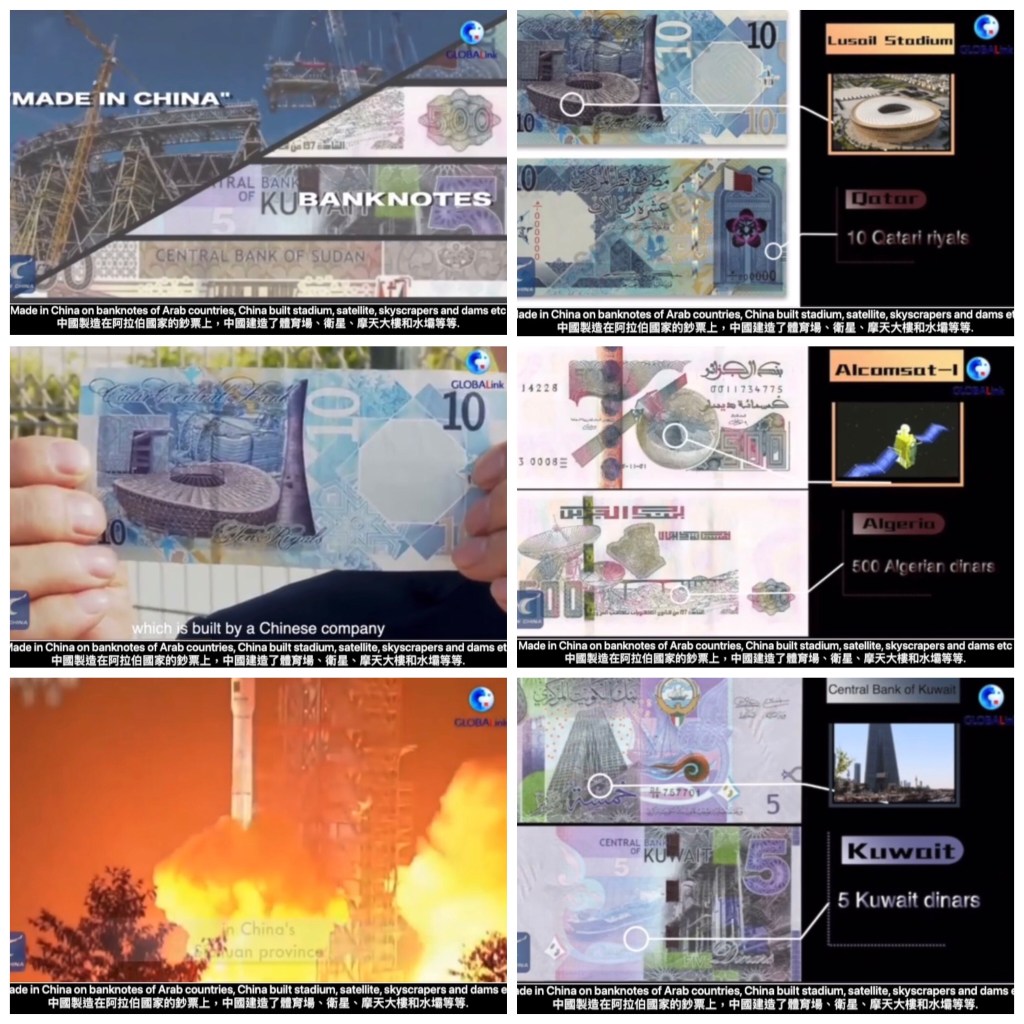
While the U.S. allocated resources to the destruction and destabilization of sovereign countries, and ignored the widening income gap at home, their main competitor, China, lifted millions of its citizens out of poverty and kept building state-of-the-art infrastructure at home and abroad, that is projects that make a tangible difference in people’s livelihoods. No wonder concealing the truth has become a matter of national security.
Democrats openly admit their intent to co-opt Silicon Valley to police political discourse and silence the bearers of inconvenient truths. They effectively sowed the seeds for a future where everything and everyone can be(come) a national-security threat. Glenn Greenwald revealed that Congressional Democrats have summoned the CEO’s of Google, Facebook and Twitter four times in the last year to demand they censor more political speech. They explicitly threatened the companies with legal and regulatory reprisals if they did not start censoring more. Pulling the plug on dissenting opinions and de-platforming people who challenge the dominant discourse makes a mockery of free speech, one of the rights that the U.S. claims to be defending when it selectively condemns alleged violations of human rights in other countries. Increasing censorship is also an indication that control of the narrative both at home and overseas has become vital for the U.S.
The conviction that “for America, our interests are our values and our values are our interests’’, one of the tenets of NeoCons, has been revamped by the liberal Left to aggressively promote a different kind of values and causes. A sort of symbolic capital that would allow the U.S. to maintain dominance as rights defender while its own constitutional rights are being eroded at home. Moral grandstanding can only compound the hypocrisy, but that is not stopping liberal totalitarians who are trading off freedom of speech for a child’s right to gender self-identification or for a binding gender or race quota on corporate boards.
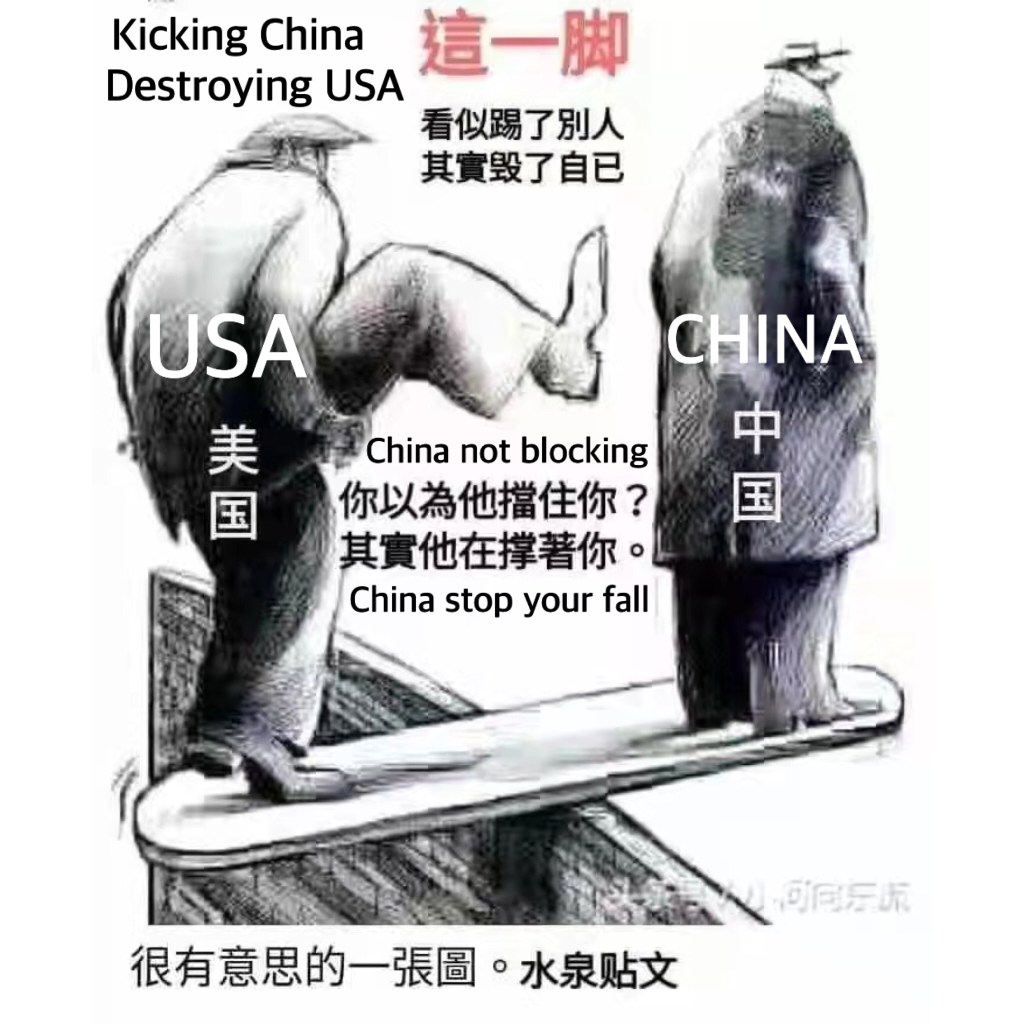
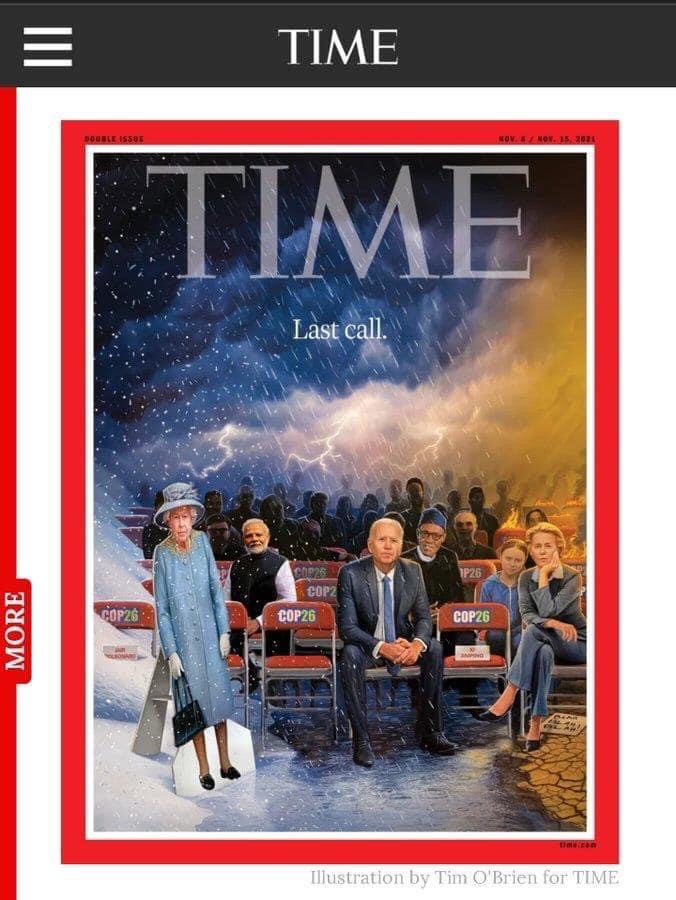
History shows that declining empires tend to produce incompetent, self-delusional and divisive leaders who unwittingly accelerate the inevitable fall. That’s exactly what seems to be happening now. Not only the radical liberalism embraced by the Biden administration and Western elite has already antagonized millions of Americans leading to social and political polarization, it is also antagonizing foreign leaders, including the leaders of allied countries such as Hungary and Turkey who are being labelled as ‘authoritarian’. As the U.S. system of alliances is becoming increasingly fragile, dogmatic progressives in the current administration look more and more like Aesop’s donkey in a pottery shop, or a bull in a China shop, if you prefer.
The current National Security Council (NSC) is staffed with advisers who are the product of the kind of groupthink that has long been dominant in Anglo-American universities, those madrassas of the liberal Left where debate is stifled by ideological purges. The opinions and worldviews that are shaped and reinforced in these echo chambers are disseminated and amplified by the media and other industries. Countless careers depend on exporting simulacra of freedom, democracy and human rights, not only because these “experts” have internalized a conviction that these immaterial goods possess an intrinsic moral value, but also because the US has little else to offer the world and leverage on, unless you count assured mutual destruction as leverage.
A case in point is the Summit for Democracy that Biden will convene in virtual mode on December 9–10, 2021, while a second meeting will take place a year later. The plan is to bring together over 100 leaders from selected governments (some of the choices have already stirred controversy among democracy advocates) plus various NGOs, activists (regime change actors) and corporations to “rally the nations of the world in defence of democracy globally” and “push back authoritarianism’s advance”, “address and fight corruption”, “advance respect for human rights”.
Though this initiative is mainly a way to strengthen ideological cohesion among allies by appealing to “common values” and conjuring up yet another global threat, namely “authoritarianism”, it effectively divides the international community into two Cold War-style blocks, friends and foes. On one side countries that earned a seal of approval for toeing the line and therefore deserve to be labelled “democratic”; on the other side a basket of deplorables that refuse to recognize the superiority of the U.S. model of governance and civilizing mission. Basically, the politically correct version of neocolonialism.
The Summit for Democracy will take place against the backdrop of AUKUS, the new Anglo-Saxon alliance that effectively joins NATO to the Asia-Pacific through Britain. What is clearly intended as an alliance against China severely damages regional peace and stability, intensifies the arms race, and jeopardizes international efforts against the proliferation of nuclear weapons.
On one hand the U.S. is flexing its military muscle, on the other hand is flexing the ideological muscle that, in the intentions of the Summit organizers, will provide the impetus to renew and strengthen the liberal international order that has served U.S. interests since the end of WW2.
The Summit for Democracy may have a higher profile convener than similar events held in the past but its premise sounds just as tone-deaf and over-ambitious. Take for example The Copenhagen Summit for Democracy that was organized in May by the “Alliance of Democracies”, a foundation set up by former NATO secretary general Anders Fogh Rasmussen in 2017. Its objective was to create a Copenhagen Charter, modelled on the Atlantic Charter, having a Clause 5 similar to NATO’s Article 5, whereby “a state coming under economic attack or facing arbitrary detentions of its citizens due to its democratic or human rights stance could ask for unified support including retaliatory measures of fellow democracies.” This and other creative proposals included in the Copenhagen Charter will likely be rehashed at the Summit to be opened by Biden in December.
Rasmussen too can boast a spotless resume as cheerleader for U.S. global leadership, and that might explain why he seems trapped in a time warp and blind to the actual state of that leadership. If the reader needs further confirmation of Rasmussen’s complicated relationship with reality, here is an excerpt from an article titled ‘The Right Lessons From Afghanistan’ that he wrote for Foreign Affairs a few weeks after the Afghanistan fiasco, “The world should not draw the wrong lessons from Afghanistan. This fiasco was far from inevitable. It would also compound the folly if the world’s developed democracies stopped supporting the quest for freedom and democracy in authoritarian states and war-torn countries. That includes Afghanistan, where the United States and its partners should lend their support to the ongoing resistance efforts to oppose the Taliban.” We all know what happened to those “resistance efforts”, but Rasmussen won’t let reality get in the way of his illusions.
It is unlikely the Summit for Democracy will achieve the unspoken objective of creating an Alliance of Democracies that could bypass the U.N. Security Council. But it is undeniable that international law has long been under attack and is incrementally replaced with the Atlanticist concept of a “rules-based international system”, which does not have any specific rules but allows the West to violate international law under the pretext of advancing liberal ideals and exporting democracy.
It’s expected that USAID will be called to play a major role at the summit. USAID under Samantha Powers has a seat in the NSC and has been tasked with the mission to “modernize democracy assistance across the board”. This includes “supporting governments to strengthen their cybersecurity, counter disinformation and helping democratic actors defend themselves against digital surveillance, censorship, and repression.” In typical Orwellian doublespeak the U.S. is seeking help by claiming to help. With a military budget already stretched over the limit, enlisting foreign actors (both state and non-state) to do its bidding in the information and cognitive warfare becomes imperative.
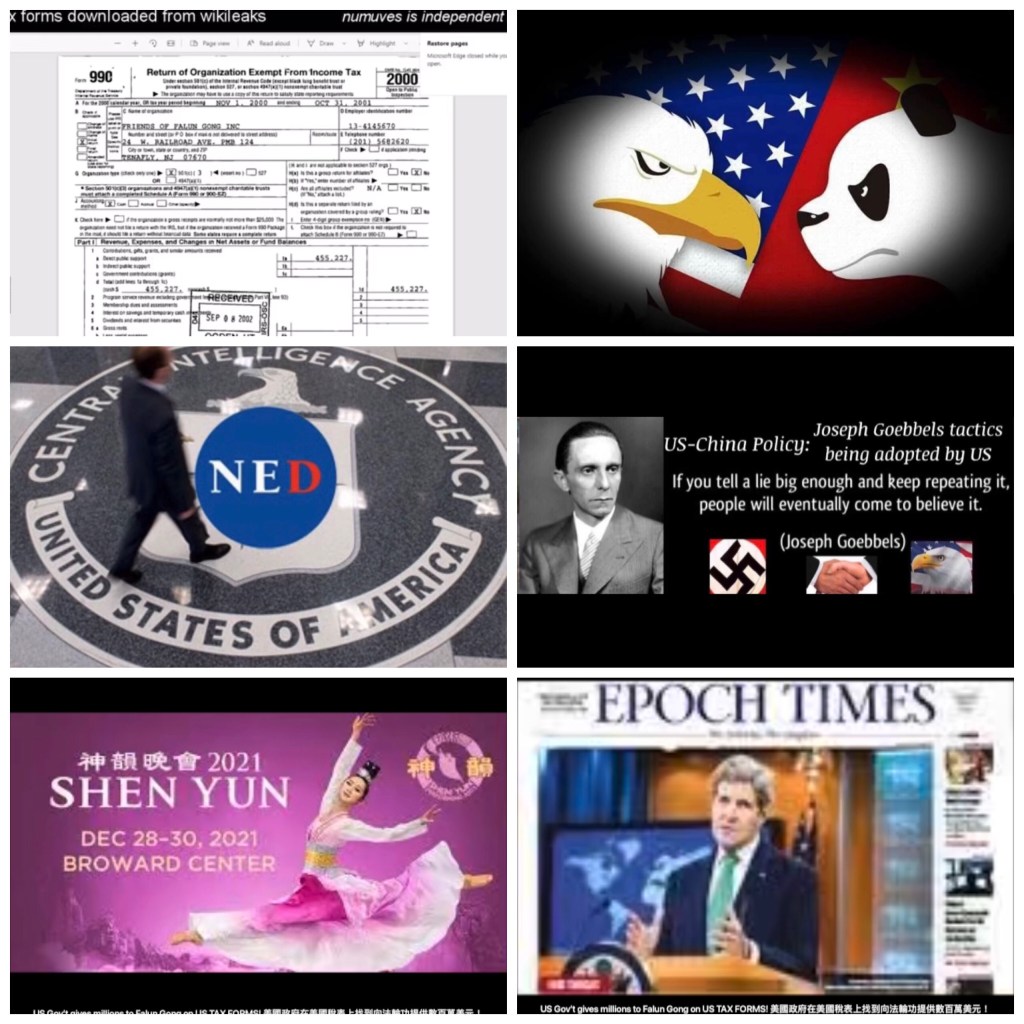
NED, USAID, USAGM, “philanthropic” organizations like Open Society Foundations and the Omidyar Network have long been grooming and bankrolling journalists, activists, politicians, various types of influencers and community leaders. Their job is to paint a negative picture of China, Russia and any country resisting U.S. diktats. In Africa, just to mention one of many examples, “independent” journalists are paid to investigate Chinese companies that are involved in mining, construction, energy, infrastructure, loans and environment and portray them as causing harm to communities, environment and workers.
At the beginning of October, Secretary of State Antony Blinken unveiled a new partnership with the OECD in Paris: the overt goal was to combat corruption and promote “high-quality” infrastructure. But the partnership is part of a broader effort to counter China’s Belt and Road Initiative (BRI). The U.S. has also appealed to the G7 and QUAD to provide the financial muscle for its Build Back Better World initiative (BW3), a rehash of Trump’s Blue Dot Network. Since the U.S. and its partners cannot respond to BRI symmetrically — they are unable to match China dollar for dollar, project for project — they are relying on virtue-signalling both as a marketing and bullying tactic. According to this initiative, infrastructure building in developing countries should comply with a certification scheme and lending rules set by the U.S. and its partners, rules that are cloaked in the familiar jargon of social and environmental sustainability, gender equality, and anti-corruption.
In case the competition with China in Asia, Europe and Africa does turn into open confrontation, the U.S. could use the BW3 to increase pressure on investment funds, global financial institutions and insurance companies to discriminate against projects that don’t meet standards set by the U.S. in return for concessions and sweeteners. When Western companies cannot compete fairly with Chinese ones, they can always rely on friendly officials in Washington to rewrite the rules of the game in their favour.
American policymakers seem unable to abandon a Cold War mentality that is essentially utopian in expectations, legalistic in concept, moralistic in the demands it places on others, and self-righteous. Some analysts believe that the source of the problem might be the force of public opinion, deemed emotional, moralistic and binary, the old “Us vs Them.”
Classical international relations theorists have long held the assumption that American public opinion has moralistic tendencies: for liberal idealists the moral foundation of public opinion, mobilized by norm entrepreneurs, opens up the possibility of positive moral action, whereas for realists, the public’s moralism is one of the main reasons why foreign policymaking should be insulated from the pressures of public opinion.
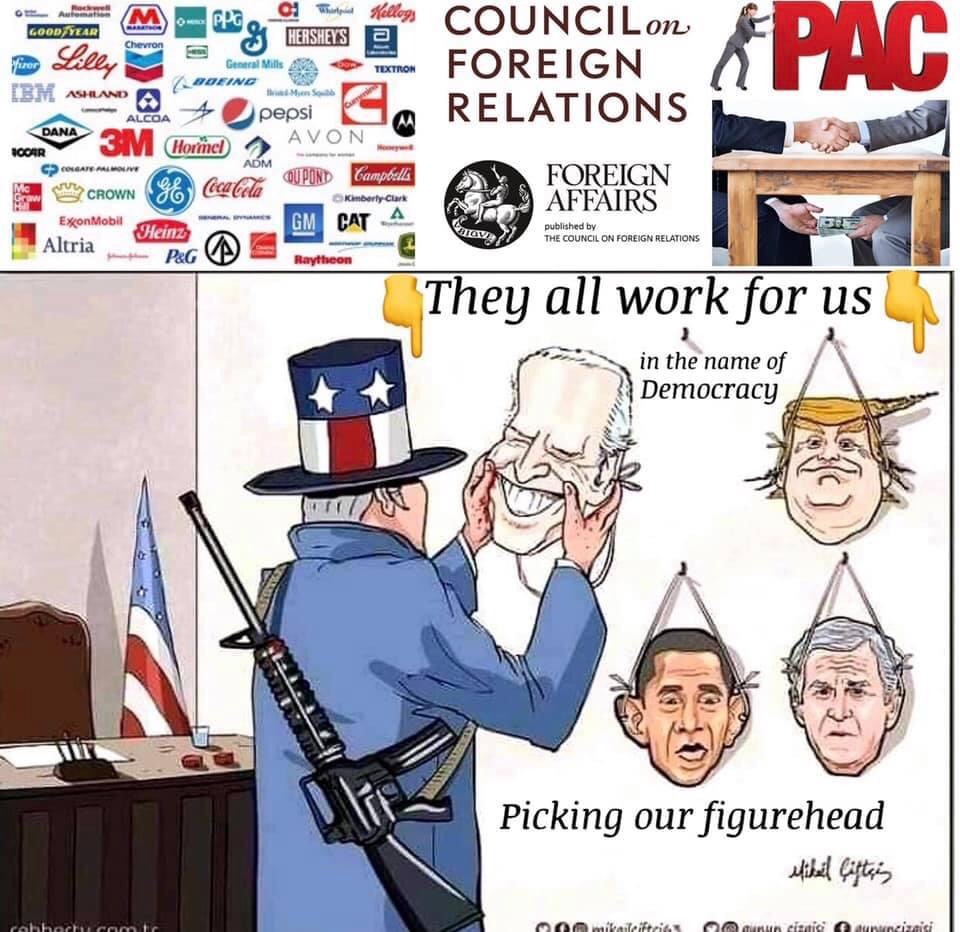
However it is myopic to conceive of public opinion and policymaking as separate entities when in fact they are both shaped by the interests of powerful elites. Public opinion doesn’t exist in a vacuum, it is swayed by new and old media that are often controlled by the same interest groups and corporations that fund the think tanks and foundations influencing U.S. foreign policy.
For instance, not only was the collusion and revolving door between government and the tech industry a feature of the Obama administration, it characterizes the Biden administration as well. The transnational interests of these elite groups are usually cloaked in a progressive, inclusive, democratic rhetoric to make their narrow agenda appear big enough so that unsuspecting ordinary people may want to claim ownership and subscribe to it. Corporate interests and national interest are a tangled web no longer subjected to public scrutiny since national level democracy has been hollowed out. When the trilemma of democracy, state, and market becomes irreconcilable, global market players call the shots without democracy or state being able to control them, oversee unceasing technological innovation (including artificial intelligence) or curb the excessive financialization of the economy.
Though U.S. attempts at nation-building result in chaos and misery for local populations, Americans haven’t given up on trying to remake the world in their own distorted image by aggressively promoting their worldviews, exporting a simulacrum of democracy and politicizing human rights issues.
They reject true multilateralism by trying to dominate the international organizations that were created to further cooperation and harmonize national interests. For the corporate donors of both the Democratic and Republican Party other countries’ national interests are a relic of the past that should be done away with. And indeed national interests would hardly be compatible with a world order led by the U.S. in partnership with global stakeholders (global corporations, NGOs, think-tanks, governments, academic institutions, charities, etc.)
These global stakeholders and their political representatives effectively want to replace the modern international system of sovereign states that is enshrined in the United Nations Charter. Under this system, commonly referred to as Westphalian system, states exist within recognised borders, their sovereignty is recognised by others and principles of non-interference are clearly spelled out. Since this model doesn’t allow the government of one nation to impose legislation in another, the U.S. loudly promotes the idea of global governance, under which a global public-private partnership is allowed to create policy initiatives that affect people in every country as national governments implement the recommended policies. Typically this occurs via an intermediary policy distributor, such as the IMF, World Bank, WHO, but many international organizations now play a similar role.
In the Biden administration we see a dangerous convergence of the national security establishment and Silicon Valley tech giants. Secretary of State Antony Blinken and Director of National Intelligence Avril Haines both worked for WestExec, the consulting firm that Blinken cofounded with Michèle Flournoy, a former undersecretary of defence under President Obama. Google hired WestExec to help them land Department of Defense contracts. Google’s former Chief Executive Eric Schmidt made personnel recommendations for appointments to the Department of Defense. Schmidt himself was appointed to lead a government panel on artificial intelligence. At least 16 foreign policy positions are occupied by CNAS alumni. The Center for a New American Security (CNAS) is a bipartisan think tank that receives large contributions directly from defence contractors, Big Tech, U.S. finance giants.
These donors spend considerable resources shaping the intellectual environment, academic research and symposia in order to build consensus around their agenda. The Biden administration also features dozens of officials hailing from the Center for American Progress (CAP), a think tank set up by John Podesta, a longtime Clintonworld staple, with George Soros’ generous contribution. The ties between Open Society Foundations (OSF) and CAP are so strong that Patrick Gaspard, the former head of OSF, was nominated president and CEO of CAP.
When government becomes the expression of global corporate interests and channels the belief system of a small, privileged elite it can be hard to tell who is leading who, who is really making policy and setting national security strategies and goals.
Biden’s national security team is the product of this corrupt system. Its members may tone down the “freedom, democracy and human rights” rhetoric if it gets in the way of achieving a particular strategic goal, but they won’t abandon it because it has proven to be effective in providing a legitimating frame and moral justification to U.S. hegemony.
If we look at the Roman empire we see how one constant theme was “expand or die”. Expansion isn’t only to be intended as territorial or military. Expanding influence, alliances, the use of Latin, the spread of Roman laws, currency, standards, culture and religion all contributed to the cohesion of the Empire. Given the current constraints to U.S. ambitions — namely the strategic partnership between China and Russia, BRI, the more assertive role played by regional powers, nervousness and conflicting interests among U.S. allies and a large budget deficit — the room for expansion has been considerably reduced. Thus the U.S. is doubling its efforts in areas where it still has room for maneuver.
Biden’s slogan “America is Back” sought to reassure allies but cannot hide the fact that the emperor is naked. Advertisers, politicians and psyops planners are continuously manipulating people into changing their perceptions of reality and making choices that ultimately do not benefit them. But no matter how hard the power-knowledge regimes of Western intellectual production work to conceal the decline, the West no longer dominates the world and the values it advocates are not unanimous, far from it. Labelling governments that don’t embrace liberal values and U.S. standards as “autocratic regimes” is just foolish sloganeering and doesn’t take into account the changing balance of power on the ground. The world is evolving toward a multipolar system and the U.S. had better take notice of it. Those serving in the NSC are still imagining a world that no longer exists, one where America has the power to force other countries into doing its bidding. The current ideological approach blinds pragmatic thinking, thus impeding discussions and negotiations.
Insanity is doing the same thing over and over again and expecting a different result. Someone should tell the Biden team.


 Johnson Choi Biz