NZ has mature ties with China that allow for disagreement: PM by Wang Miao in North Shore City Nov 07 2021
New Zealand now has “mature” ties with China that allow for disagreement, New Zealand Prime Minister Jacinda Ardern said during a TV interview on Sunday.
One day before the opening of the Asia-Pacific Economic Cooperation (APEC) Leaders’ Week which Ardern considers as one of the most important international events hosted by New Zealand in decades, she reiterated that New Zealand will pursue a policy of integrity with China.
“We do still believe that we have the maturity in our relationship to raise issues that we’re concerned about, be it human rights issues, be it labor issues, be it environmental issues,” Ardern said in the interview. “And it’s very important to us that we continue to be able to do that and do that regardless of those trading ties.”
Not a few days ago, Chinese Consul General Ruan Ping also recognized the close relations between China and New Zealand.
“China and New Zealand have developed into comprehensive strategic partners with close cultural exchanges, and the level of development and cooperation is ahead of China and other developed countries in many areas,” Ruan said during an interview on Wednesday.
China has become New Zealand’s largest trading partner and the second largest source of foreign investment for many years. Despite the impact of the COVID-19 pandemic, China-New Zealand economic and trade cooperation still shows strong resilience, Ruan said.
China recently formally applied to join the Comprehensive and Progressive Trans-Pacific Partnership Agreement and the Digital Economy Partnership Agreement. Ruan noted that New Zealand’s role as the depositors of both agreements also builds a broader platform for bilateral cooperation between the two countries.
Jian Yang, a former member of the New Zealand House of Representatives, told the Global Times on Sunday that mutual trust between China and New Zealand is built on the foundation of decades of good exchanges.
“As China-US relations are still under control, there is room for New Zealand’s independent diplomacy,” Yang said. “At the same time, China is aware of New Zealand’s plight, so its expectations of New Zealand are more realistic.”
Yang recognized New Zealand’s “lubricant” role within the APEC framework. “New Zealand has traditionally focused on resolving international disputes by social and economic means rather than military means and is willing to play an active role in the Asia-Pacific region.”
He also pointed out that New Zealand has a unique international position and has always maintained a positive image. “New Zealand has a good reputation among APEC countries, which helps it play a ‘lubricant’ role in relations between major powers.”
As the first developed country to sign a free trade agreement with China, New Zealand has major trade ties to China. The two countries upgraded their free trade agreement in January, while relations between China and New Zealand’s neighbor, Australia, have worsened since 2018.
The APEC Leaders’ Week will be held from Monday to Friday, when Ardern will host an online summit of leaders from the Asia-Pacific, including China, the US and Japan, to discuss how the region can recover from the pandemic and the ensuing economic crisis, among other topics.
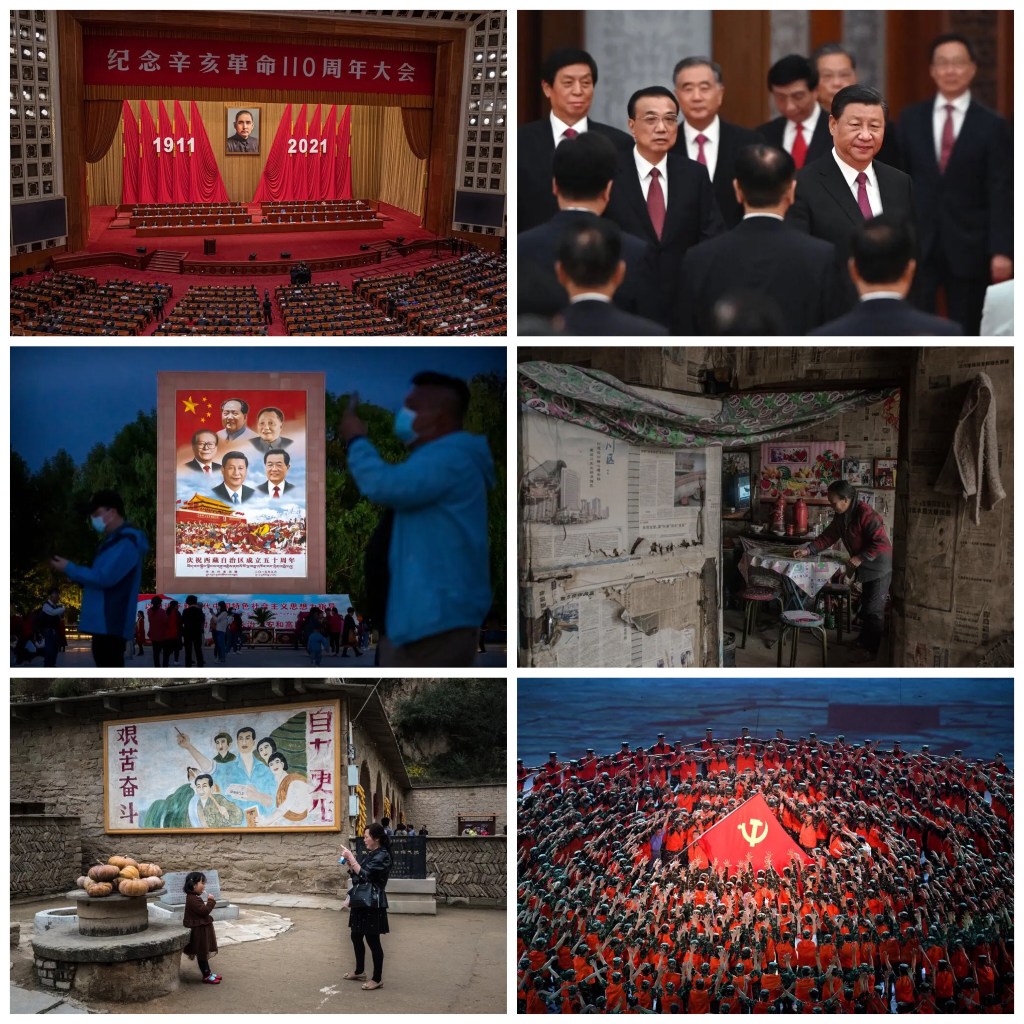
Professor John V Walsh, MD, in San Francisco: From Christopher Buckley, the Times’s hater in chief, dripping with sarcasm especially at the outset which is the most widely read part. It leaves the impression that the only political figures that count in China are CPC leaders. Everything deep down is ONLY about the CPC -not China or humanity. But whose portrait is that above the stage in the Times’s photo below? Sun Yat-sen, I believe. 來自《紐約時報》的主要仇敵克里斯托弗·巴克利(Christopher Buckley),諷刺意味十足,尤其是在最廣泛閱讀的開頭部分。 它給人的印像是,中國唯一重要的政治人物是中共領導人。 內心深處的一切都只關乎中國共產黨,而不是中國或人類。但下面泰晤士報照片中舞台上方的肖像是誰? 孫中山,我信.
The New York Times: To Steer China’s Future, Xi Is Rewriting Its Past A new official summation of Communist Party history is likely to exalt Xi Jinping as a peer of Mao and Deng, fortifying his claim to a new phase in power.
SCMP Columnist – My Take by Alex Lo on Nov 7 2021 US military licensed to kill innocents 美國軍方獲准殺害無辜者
A minor mishap in the grand tragedy of Afghanistan, the Pentagon finds no misconduct or negligence in a botched drone strike that killed seven children and three adult relatives as its forces withdrew from Kabul. A lesser misdeed from another country would have been cause for US sanctions
For weeks, Zemerai Ahmadi and members of his family who were torn to shreds in a drone strike were branded terrorists during the last days of the United States’ disastrous military withdrawal from Kabul. Only a news expose forced the Pentagon to launch an “independent” investigation into the killings of Ahmadi, 37, a long-time employee of an American humanitarian group and nine family members, including seven children.
Now, having completed the probe conducted by the US military on its own operations, it’s been concluded that there was no misconduct or negligence. Commenting, Air Force Lieutenant General Sami Said said: “I found that given the information they had and the analysis that they did – I understand they reached the wrong conclusion, but … was it reasonable to conclude what they concluded based on what they had? It was not unreasonable. It just turned out to be incorrect.”
Move on please, nothing more to see here.
A minor mishap in the grand tragedy of Afghanistan, the botched attack on August 29 and the subsequent US damage control nevertheless offers a sad commentary on Washington’s militarised foreign policy such as its “war on terror” and its frequent fatal consequences for innocent civilians in countries across the globe.
It came days after an Islamic State suicide bomber killed 13 US troops and 169 Afghans at Kabul’s international airport.
To stop another terrorist attack or deter an enemy, US forces ended up killing more innocent foreigners and worsening American security and credibility.
This pattern has been characteristic of much of US foreign policy and military operations in the past three-quarters of a century.
From the Middle East to Central Asia, the US has been responsible for the deaths of hundreds of thousands of civilians, displaced millions, destroyed or uprooted entire societies and communities, and caused some to descend into endless civil war and sectarian violence.
The Biden administration imposed new sanctions against Cuba in July after a day of protests in Havana. The previous Trump administration imposed extensive sanctions against Hong Kong and the mainland after more than six months of violent protests and riots in the city. No one was killed by the city’s police.
Five people died in the January 6 protests at the Capitol, followed by a massive domestic crackdown. Ten civilians were killed by mistake in Kabul. The whole world should follow the example of Washington – and sanction the US.
Alex Lo has been a Post columnist since 2012, covering major issues affecting Hong Kong and the rest of China. A journalist for 25 years, he has worked for various publications in Hong Kong and Toronto as a news reporter and editor. He has also lectured in journalism at the University of Hong Kong.
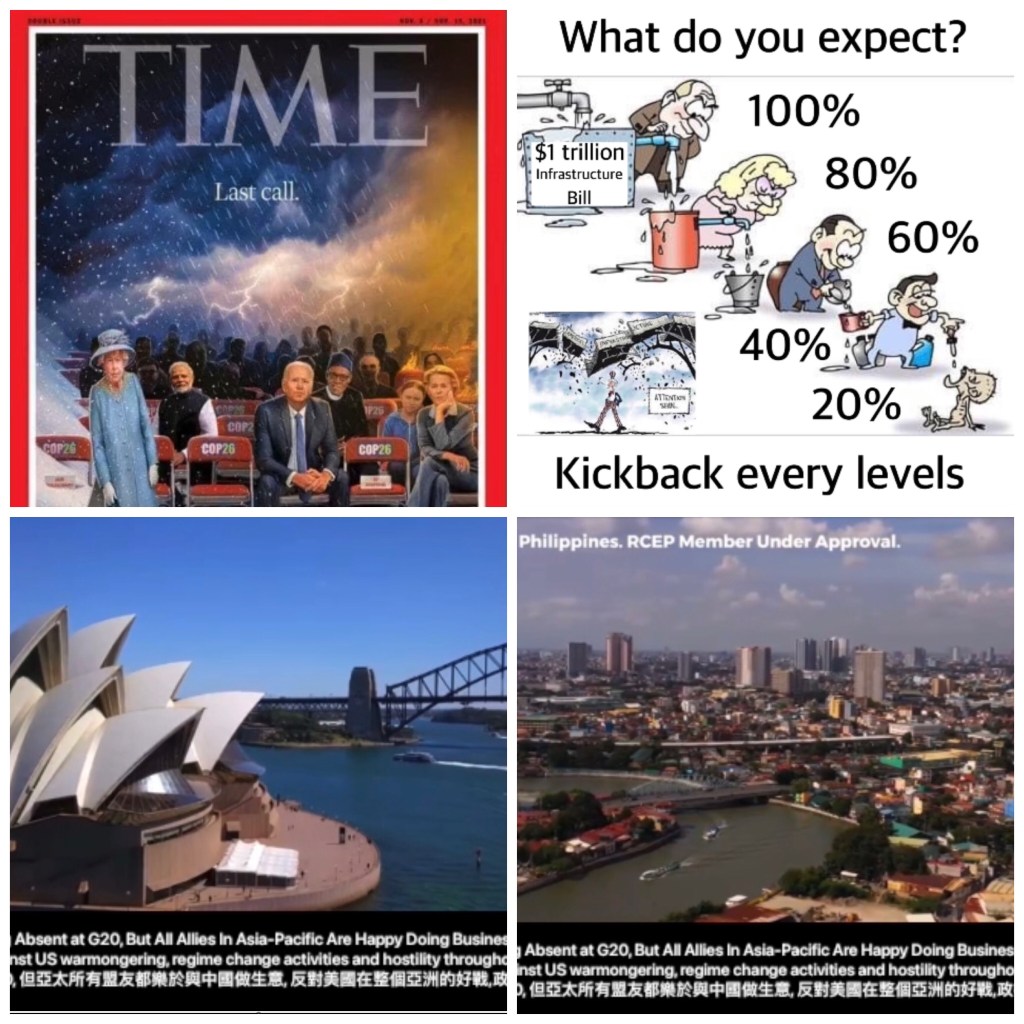
Video: Xi Jinping Absent at G20, But All Allies In Asia-Pacific Are Happy Doing Business With China against US warmongering, regime change activities and hostility throughout Asia. 習近平缺席G20, 但亞太所有盟友都樂於與中國做生意, 反對美國在整個亞洲的好戰,政權更替活動和敵意.
RCEP to boost regional GDP by 0.86% by 2035: report by Chu Daye in Shanghai Nov 06 2021
The Regional Comprehensive Economic Partnership (RCEP) pact, which creates the world’s largest free trade bloc, will lift regional GDP by 0.86 percent by 2035, a report by the Chinese Academy of International Trade and Economic Cooperation stated on Sunday.
Chinese companies and localities are gearing up to reap the mutual benefits of the trade pact, officials and industry players told the Global Times on the sidelines of the 4th China International Import Expo in Shanghai.
There will be a net increase of $857.1 billion in exports and $983.7 billion in imports for the region by 2035, from a base level, the report showed. In terms of percentage points, the increase for exports will be 18.30 percent and 9.63 percent for imports.
The report came after China’s Ministry of Commerce (MOFCOM) announced that China had completed all necessary preparations for fully implementing the RCEP as of Saturday. On Wednesday, the MOFCOM announced that after 10 members deposited the instrument of ratification with the ASEAN Secretary-General, the RCEP will take effect on January 1, 2022, as agreed upon.
In terms of investment, the freshly released report noted that the pact will drive up investment in the region by 1.47 percent, with additional economic welfare reaching $162.8 billion. By 2035, the RCEP will drive the real GDP growth of the entire world up by 0.12 percentage points and global foreign trade by 2.91 percent, the report said.
The report found that members of the Association of Southeast Asian Nations (ASEAN) will be the biggest beneficiaries of the pact in terms of GDP growth. An overall lift of 4.47 percent is to be recorded by 2035, with a 7.98-percent-increase for Cambodia; a 7.04-percent-gain for the Philippines and a 6.38-percent-increase for Thailand. Vietnam will see a 6.33-percent-increase in GDP.
Chinese localities are also gearing up for increased trade with ASEAN countries, as a total of 166,000 Chinese entrepreneurs, trade and customs officials and related personnel have completed RCEP training in over 600 training sessions and online training courses this year.
Zhu Yong, a senior commerce official in Northwest China’s Xinjiang Uygur Autonomous Region, told the Global Times on Sunday that the region believes the RCEP is a precious opportunity for high-quality opening-up and the best opportunity since China’s accession to the WTO.
In the first half of 2021, Xinjiang’s trade with RCEP countries only accounted for 7.1 percent of Xinjiang’s total foreign trade. The figure lagged far behind the national average of 31.7 percent.
“The gap means Xinjiang faces a unique chance of achieving faster growth in the coming years in its trade with RCEP member countries, and there is a strong complementarity for goods traded,” Zhu said. “For instance, Xinjiang’s fruits, raised in a temperate climate zone, have big potential in the ASEAN market, and theirs as well in Xinjiang.”
For non-ASEAN members, South Korea is expected to see the biggest cumulative increase in exports, at 7.84 percent, while China will see the biggest increase in imports, at 10.55 percent, over the projected period. Simulations showed that China, ASEAN and Japan will see economic welfare increases of $99.6 billion, $67 billion and $51.2 billion, respectively, from base levels, by 2035.
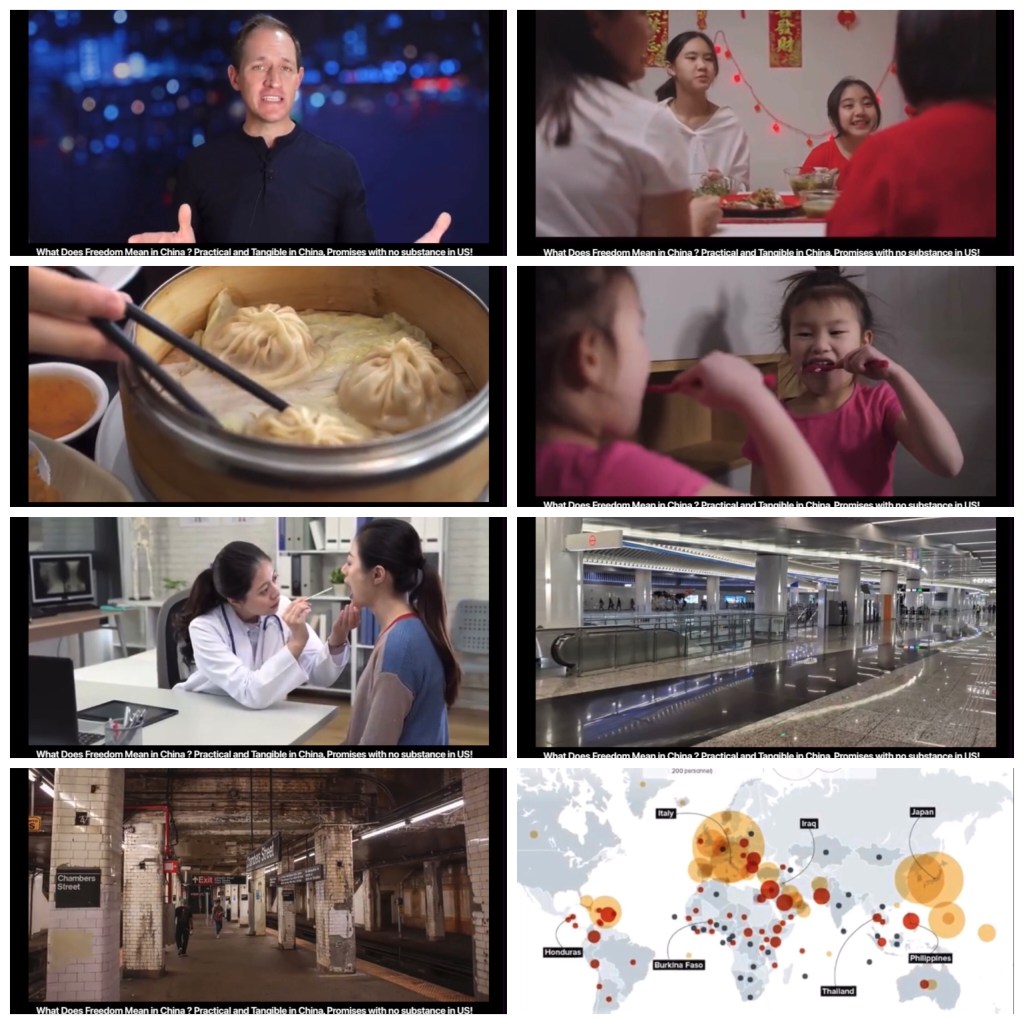
Does Freedom Exist in China? Are the Chinese people free? These are common questions people ask all the time. China is incredibly complex and you must experience it yourself to start truly understanding the differences in culture. Does Freedom mean the same to everyone in the world? Absolutely not! Watch today’s video about freedom in China and learn what does Freedom mean to Chinese people. 中國有自由嗎? 中國人自由了嗎? 這些都是人們一直問的常見問題。 中國非常複雜,您必須親自體驗才能真正了解文化差異。 自由對世界上的每個人都意味著相同嗎? 絕對不! 觀看今天關於中國自由的視頻,了解自由對中國人意味著什麼。
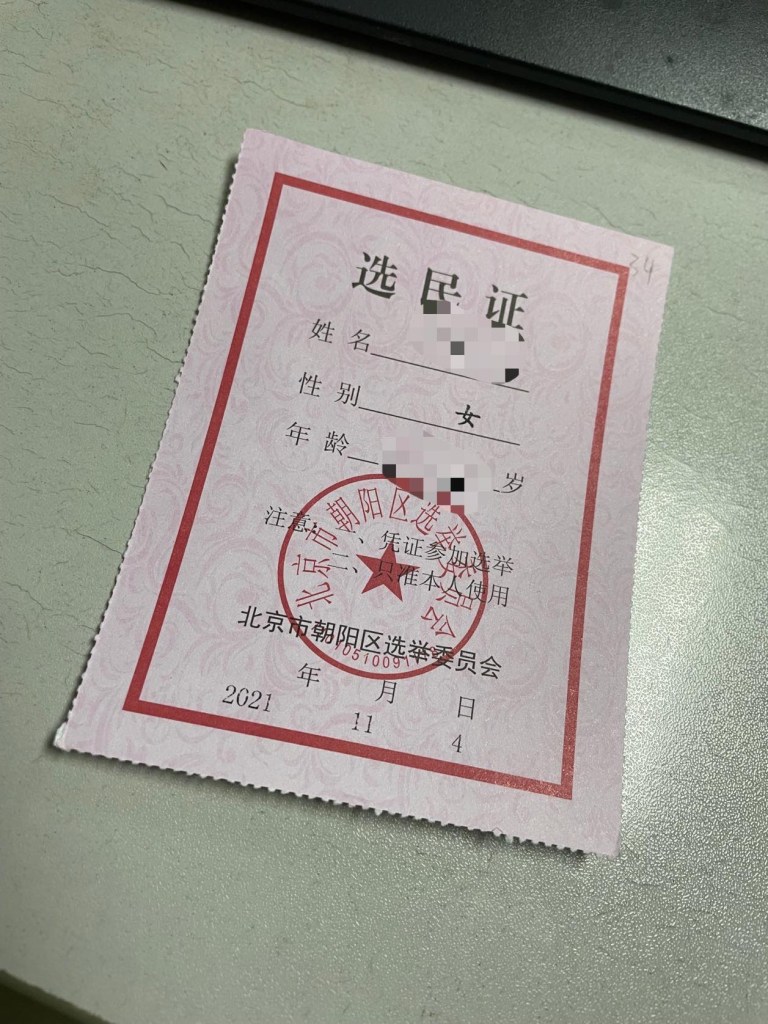
Who said China has no democracy! Rita Bai in Beijing: Got my voter card today as Beijing is electing deputies to the district-level people’s congress, not familiar with China’s political system, individual citizens directly elect deputies to the people’s congresses at the city/district levels 誰說中國沒有民主! 今天拿到選民證,因為北京正在選舉區級人大代表,不熟悉中國的政治制度,公民個人直接選舉市/區級人大代表.
this is a good (2 min) video by Political scientist Mark Triffitt, explaining why Western “democracy” is outdated and can’t work, is inapplicable to China, and why China’s system of democratic centralism with its intense, recursive process of feedback and consultation is the future of good governance. https://www.youtube.com/watch?v=KZAx8bJkruU
Triffitt also points out the stupidity and hypocrisy of trying to “export” the US’s failed “liberal democracy” to other countries:“Jawboning China to adopt more democratic practices likewise reflects the same bizarre tendency among many of America’s political and policy elites to promote what are damaged goods at home as being somehow “ripe for export”.” https://theconversation.com/us-democracy-trumps-all-as-a-dysfunctional-disgrace-52858 This failure is the failure of the Western Liberalism itself (note its 7 rearguard actions as it retreats in ignominy): The biggest barrier to understanding Western liberalism’s regression is liberalism itself. Liberalism does not seem to be, nor sees itself, as an ideology. There are no goose-stepping armies or Little Red Books. Yet it is ideology because it presents a totalising view of the world. Only its political and economic systems can deliver universal progress, harmony and happiness. The problem with ideologies is they convince us—their adherents—to believe they cannot fail. This leads us inevitably to blame failure on leaders, not the delivery system. https://meanjin.com.au/essays/the-wests-age-of-retreat/ More detail on how and why Liberalism failed:“While liberal market crises as well as malaise within liberal democratic systems have been manifested before, this thesis argues that post-1990s dysfunctions go beyond mere statistics and other descriptive information that relate to specific problems occurring within both systems. The overall crisis for 21st century liberal systems is unprecedented because they derive from a basic, systemic inability on the part of both systems to decipher the de-linear world around it. Thus the unprecedented and intractable nature of the overall crisis is shaped by liberal systems being fundamentally unsuited for the world they are hegemonically charged with ordering. The unprecedented nature of the crisis is further shaped by the incapacity of the liberal order to understand and acknowledge the systematic nature of its systems’ problems, thus rendering it unable to strategically address them… This thesis has highlighted China’s contemporary political and economic development – arguably the most significant development in the world economy and polity over the last two decades – for two reasons. First, to further demonstrate how the dynamics of political and economic activity have become intensely delinear by positing China’s recent development at the heart of Radical Modernity and second, to demonstrate liberalism’s growing inability to understand the nature of China’s development in a way which speaks to its growing incapacity to explain the 21st century political and economic world overall. According to liberal theory and discourse, China is an exception writ large. On the one hand, liberal theory and discourse argues that without liberal democracy to support its liberalising economy, China must inevitably collapse. Yet this line of arguments runs counter to the other dominant discourse regarding early 21st century China that asserts that China is carving out a new and unique direction in managing political and economic activity which is more strategic and superior to that of the liberal West. These accounts are not only incorrect in the sense that they provide a highly un-nuanced and empirically challenged view of China’s development. They are also conceptually unsustainable. The unprecedented size, speed and complexity of its transformation into one of the worlds’ most dynamic and largest political economies means that China, by definition, cannot be an exception. https://minerva-access.unimelb.edu.au/handle/11343/39778 https://minerva-access.unimelb.edu.au/bitstream/handle/11343/39778/311453_Mark%20Triffitt%20PhD%20thesis.pdf?sequence=1&isAllowed=y
GT Exclusive: ‘I’m lucky to be alive.’ Xinjiang police officer recalls 56-day manhunt for terrorists in mountains “我很幸運能活著。” 新疆警員召回山區追捕恐怖分子56天by Wang Wenwen and Fan Lingzhi in Aksu, Xinjiang Nov 05 2021
The dazzling sunshine in late September shines upon the craggy foothills of the Tianshan Mountains. The unique natural landscape is undoubtedly attractive to hikers, but to Xinjiang police officers who have shed blood on the land they love, the place carries special significance.
“Even breathing is a fortune for me now,” said Dilxat Mutallip, a Xinjiang police officer who was almost shot to death by a terrorist during a manhunt mission.
Dilxat still remembers every detail of the hard-won battles against the brutal terrorists in 2015. Eventually, a total of 28 terrorists were killed and one surrendered. During the attack and manhunt, 11 civilians and five police officers were killed, and 18 were injured.
Authorities have given official account of the terror attack that year. But apparently, Western media outlets were not satisfied. They were reluctant to acknowledge that those brutal attackers were indeed terrorists – a New York Times article, when reporting on the attack, described them as “armed with ‘only’ knives.”
When reporting on China’s counter-terrorism efforts, Western media have played on double standards and tried to undermine China’s efforts. But what they’ve rarely known and what has rarely been told are the sacrifices of the police officers and their deep affection for their homeland.
Xinjiang, the frontline of China’s counter-terrorism efforts, has seen no terror attacks in almost five years, as police officers like Dilxat hold onto the faith and the spirit of their deceased colleagues and safeguard the northwest territory of the country.
56-day battles
In the early morning of September 18, 2015, a group of terrorists, wielding knives, struck a coal mine in the remote area of Baicheng county, Aksu prefecture, killing security guards and miners. It was one of the deadliest acts of terror in Xinjiang in recent years. Then the terrorists fled into the craggy foothills of the Tianshan Mountains.
Characterized by oddly shaped rocks, rough pinnacles, rugged cliffs and deep ravines, the mountains served as natural shelter for terrorists. What was worse, with guns in hand, the terrorists were familiar with the environment on the mountains and good at trekking the mountain path. Tens of thousands of police forces and locals were mobilized to search for them within 1,300 square kilometers on the mountains. Surrounded by danger, they were liable to encounter a life-or-death battle at any time.
Dilxat received the order to enter the mountains and join the manhunt a few days after the deadly terror attack. Embarking on the path that was not friendly on horseback either, Dilxat and his colleagues prepared some food and supplies and mounted their horses. One of the horses just fell off the mountains in front of him on their ascendance.
Then they met a group of colleagues descending the mountains. Some of them carried the remains of two dead police officers who had been killed by the terrorists during a clash a few hours after the attack. Six terrorists were shot dead by the police.
“We often saw from news sources that police officers sacrificed their lives during their operations. But when it had just happened to someone you know, the feeling was different,” said Dilxat.
With deep sorrow and the determination to seize the terrorists, Dilxat continued climbing the mountains to join the team.
It took several days for the police to trace the whereabouts of terrorists, as the footprints were either obscured or pointed in the wrong direction. Dilxat would engage in clandestine operations in a certain spot for a whole week. Meanwhile elsewhere, troops rappelled from helicopters and border guards patrolled on horseback.
The turning point was the death of Mamatjan Tohtiniyaz, then deputy director of the Public Security Bureau of Aksu prefecture.
On October 13, 2015, Mamatjan happened to learn from a herdsman that the terrorists might have been hiding in a big cave under a precipice. He led a few police officers and herdsmen to approach that cave.
Unfortunately, the herdsmen lost contact with them and were abducted by the terrorists. While Mamatjan looked for those herdsmen, he was attacked and also abducted by the terrorists.
“The herdsmen are innocent. Release them! Aren’t you looking for the police? I’m the police!”
These were the last few words by Mamatjan, according to media reports.
Mamatjan tried to persuade the terrorists to surrender. He was tortured and killed by the terrorists, in a way so horrific that even Dilxat prefers not to recall.
“Extremely cruel,” Dilxat told the Global Times.
Qadirya Mamatjan, the elder daughter of Mamatjan, told the Global Times that she was alarmed when she saw her father’s remains.
“He was so skinny that I almost couldn’t recognize him,” said Qadirya as she burst into tears. “I couldn’t believe that in modern society, some people were brutal to such an extent.”
Mamatjan’s death pointed toward the whereabouts of terrorists. A number of 40 policemen were deployed to search around the area where he was killed. Around 10 days later, local herdsmen found several pairs of drying shoes near a cave suspected to belong to the terrorists. They informed the police right away. Dilxat and other fellow policemen were sent out there to apprehend the terrorists.
Only when he got there did he realize that the place where the 13 terrorists had been hiding was not a cave in the literal sense. A huge 10-meter-tall stone stood parallel to a cliff and the terrorists hid behind a blind angle by the huge stone, which made them difficult to spot.
The confrontation between the terrorists and the police lasted for 24 hours. The police threw tear gas and flash bombs into the cave, but still couldn’t force the terrorists out.
“I shouted and asked the terrorists not to act as cowards, while they cried out jihad slogans. They also dug for the whole night, trying to shore up their defenses. Since they had guns, we didn’t rashly move in,” recalled Dilxat.
On the early morning of October 28, 2015, Dilxat and his colleagues decided to launch an offensive. Eventually, all the 13 hiding terrorists were shot dead.
“Only then did our fury, stemmed from the death of director Mamatjan and the other colleagues, get released somehow,” said Dilxat.
Still, a number of terrorists fled into the deeper hills. The search continued. The last battle occurred on November 12, 2015, a day Dilxat will never forget.
On that day, some old footprints were founded. Dilxat and four other police officers received the order and searched for that area. Dilxat was about to check some trash thrown under a pine tree, but just as he stepped onto it, he was shot.
He suddenly fell to the ground, which he described as a “tactic response.” He then realized that he had been shot by a terrorist. He felt the blue sky gradually became dark like a closing curtain.
“I lay for 10 to 20 minutes, and my colleagues thought I was dead. But suddenly I sat up, and fired toward the direction from where I had been shot at,” Dilxat said.
Dilxat heard his colleagues and the terrorists exchange fire. He fell to the ground again, and asked one of his colleagues to move him to one of his sides.
“Then, I started to feel the blood running in torrents from my shoulder. I was thirsty, and what I only wanted to do was to sleep,” said Dilxat.
He was eventually airlifted by helicopter by eight fellow policemen. The day he battled with death was also the day of victory of the 56-day battles against terrorists – all the 28 terrorists were shot dead, and one surrendered.
Untold sacrifices
It was the victory of one of the toughest counter-terrorism battles in Xinjiang. For Qi Feng, a team leader at the Aksu Public Security Bureau, he felt grieved each time he entered the foothills, as it reminded him of deceased colleagues. For Ali Ibrahim, a herdsman who helped the police trace the footprint of the terrorists, he still has lingering fear.
For Dilxat, it meant the start of the more-than-one-year struggle with physical pains. The bullet shot by a terrorist punctured his left arm and left chest, fracturing three of his ribs. While one rib punctured his left lung, he underwent an operation to excise half his left lung. His left hand lost tactile sensation as well. To recover, he had to take medicines and undergo physiotherapy every day. “The doctor injected some kind of red liquid medicine into my body, which I could feel running toward my head and my toes. It really hurt,” said Dilxat.
Beside that, during that period, he had to take shock therapy to get his left hand to work – two pinheads would be plunged into his left arm to generate electricity in between so that his left hand would move. “If I didn’t persist, my hand would have been paralyzed,” said Dilxat. “You have to struggle with yourself.”
He said that when one dons the police uniform, it means he has to be dedicated, especially in places like Xinjiang.
“If my generation does not take on the responsibility, the future generation may not enjoy true stability and peace. When needed, we are always ready,” said Dilxat.
For Qadirya, daughter of Mamatjan, she used to have complaints about her father. There was no family photo, because her father was too busy to take one. The only family photo hanging on the wall of their home now is a composed one. There were countless times that the family needed him, but the only thing in his mind was work. She had not expected that she would never see her father again when he just told them that he was to go for a “business trip.” Till now, Qadirya did not tell her grandma how her beloved son really died.
Perhaps the best way to remember one’s father is to become like him. Qadirya was a teacher previously, but after her father’s death, both she and her younger sister decided to join the police force. Her younger sister, who was then studying at an agricultural university, later transferred to a police college. Now Qadirya is a police officer with the Aksu Public Security Bureau.
“I used to think that my father became the hero of the region and the country, but he left the family behind. Since my father’s death, there has always been a fire in my heart that prompted me to contribute to counter-terrorism and maintaining the stability of Xinjiang,” said Qadirya. “Now I’m a policewoman, and I understand him.”
China could do it focusing on benefiting entire nation and all 56 races. America called United States but not united at all except against People of Color, focus only on individualism nor sharing common values. Worst when US controlled by less than 1% of the elites and Military Industrial Complex and the country runs by lawyers, not engineers, expect endless infighting and chaos. America worst enemy is herself. 中國可以專注於造福整個國家和所有56個種族。 美國根本不團結,只關注個人主義,除了歧視有色人種外, 沒有分享共同的價值觀。 最糟糕的是,當美國由不到 1% 的精英和軍事工業綜合體控制,而這個國家由律師而非工程師管理時,預計會出現無休止的內鬥和混亂。 美國最大的敵人是她自己.
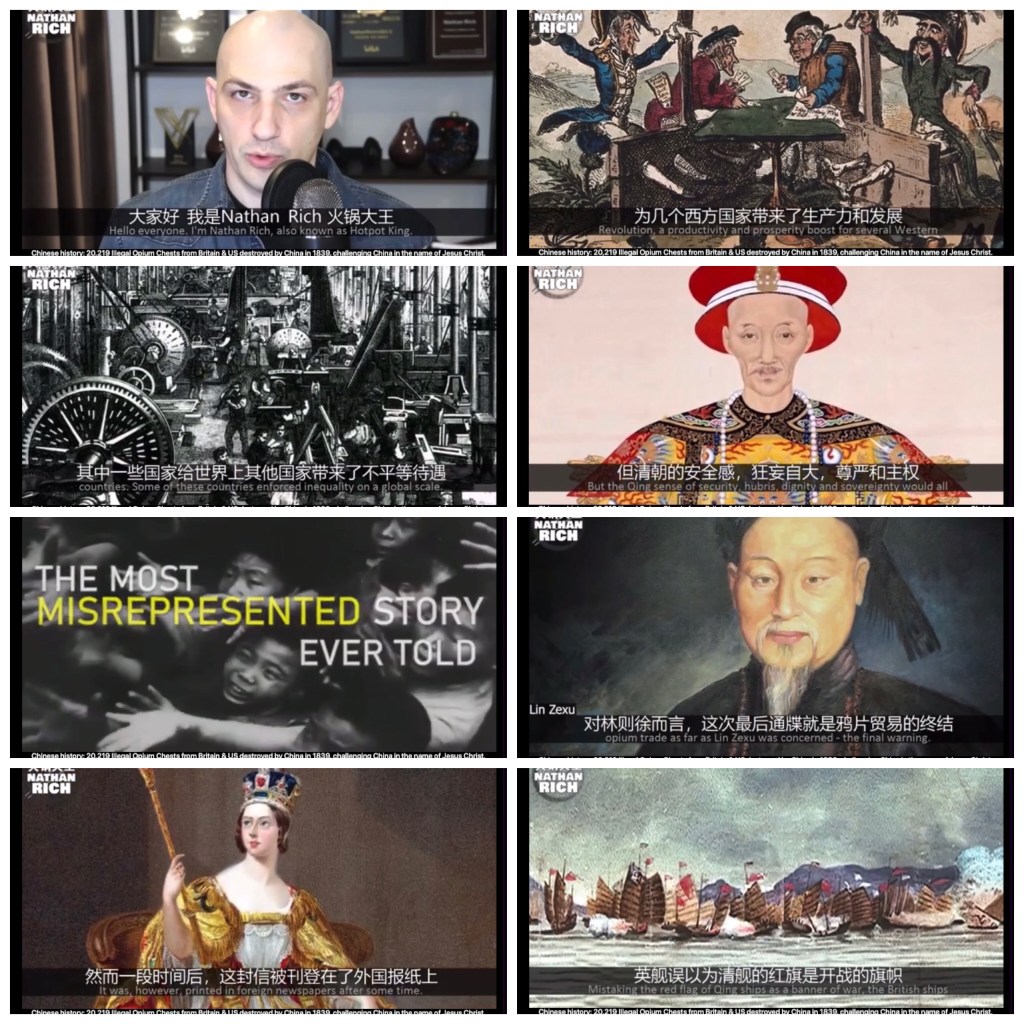
Video: Chinese history: 20,219 Illegal Opium Chests from Britain & US destroyed by China in 1839, challenging China in the name of Jesus Christ. 中國歷史:1839年中國摧毀20219個英國和美國非法鴉片箱,他們聯合起來以耶穌基督的名義挑戰中國.
Today, US wanted to repeat the 1839 sweet dream, will 1.4 billions Chinese allowing it to happen? 今天,美國要重演1839年的美夢,14億中國人會允許嗎?
In 1839, The Qing Dynasty sought to reason with Britain (“The Lion”), to stop its illegal cartel opium smuggling operations. 1839 was the last year in history that China was completely free of official foreign interventionism. 1839年,清朝尋求與英國(“獅子”)講道理,以阻止其非法卡特爾走私鴉片活動。 1839年是歷史上中國完全擺脫官方外來干涉的最後一年.



 Johnson Choi Biz