I am writing to share an invitation with you to attend an upcoming virtual Asia Law Talk: How and Why China’s Supreme People’s Court Serves the Belt and Road Initiative featuring Professor Susan Finder.
The event will be held from 2PM – 3PM HST (Hawaii Standard Time) on November 5th via a Zoom Webinar.
Acting in Solidarity for a Shared Future Remarks by H.E. Xi Jinping – President of the People’s Republic of China – At Session I of the 16th G20 Leaders’ Summit 30 October 2021
Your Excellency Prime Minister Mario Draghi, Dear Colleagues,
I wish to begin by sincerely thanking Italy, the G20 President, for the great efforts it has made in hosting this Summit.
The city of Rome, with its time-honored history, has left a splendid chapter in the history of human civilization. Today, we are meeting here against the backdrop of a protracted COVID-19 pandemic, fragile economic recovery, acute challenges of climate change, and frequent flare-ups of regional hotspot issues. With People, Planet, Prosperity as its theme, the Rome Summit gives expression to the resolve of the international community to act in solidarity to defeat the pandemic and revive the world economy, and demonstrates the mission of the G20 to lead the transformation of global economic governance.
Faced with changes and a pandemic both unseen in a century, the G20, the premier forum for international economic cooperation, needs to shoulder its due responsibilities, bear in mind the future of humanity and the welfare of the people, uphold openness, inclusiveness and win-win cooperation, practice true multilateralism, and promote the building of a community with a shared future for mankind. To be specific, I would like to suggest that we work in the following five areas.
First, work in solidarity to combat COVID-19. With the coronavirus ravaging the whole world, none of us can stay safe on our own. Solidarity and cooperation are the most powerful weapon. The international community must work in concert to confront and defeat the pandemic with a science-based approach. Stigmatization of the virus and politicization of origins tracing run counter to the spirit of solidarity against the pandemic. We need to step up cooperation on prevention, control, diagnosis and treatment, and enhance preparedness for major public health emergencies. The G20 includes the world’s major economies and should therefore play a leading role in building consensus, mobilizing resources, and promoting cooperation.
At the early stage of the pandemic, I called for COVID-19 vaccines to be made a global public good. On that basis, I would like to propose here a Global Vaccine Cooperation Action Initiative: First, we need to strengthen vaccine R&D cooperation and support vaccine companies in conducting joint R&D and production with developing countries. Second, we need to uphold equity and justice, and provide more vaccines to developing countries to meet the global vaccination target for 2022 as set by the World Health Organization (WHO). Third, we need to support the World Trade Organization (WTO) in making an early decision on waiving intellectual property rights on COVID-19 vaccines, and encourage vaccine companies to transfer technology to developing countries. Fourth, we need to scale up cross-border trade cooperation to ensure smooth trade in vaccines and related raw and auxiliary materials. Fifth, we need to treat different vaccines equally and advance mutual recognition of vaccines in accordance with the WHO’s Emergency Use Listing. Sixth, we need to provide financial support for global vaccine cooperation, especially for developing countries to access vaccines.
To date, China has provided over 1.6 billion doses of vaccines to more than 100 countries and international organizations, and will provide over two billion doses to the world in the course of this year. China is conducting joint vaccine production with 16 countries, with an initial capacity of 700 million doses per year. The International Forum on COVID-19 Vaccine Cooperation that I proposed last May at the Global Health Summit was held successfully in August. The participating countries reached intended deals of over 1.5 billion doses for this year. China, together with 30 other countries, has also launched an Initiative for Belt and Road Partnership on COVID-19 Vaccines Cooperation, calling on the international community to promote fair distribution of vaccines around the world. China is ready to work with all parties to enhance vaccine accessibility and affordability in developing countries and make positive contribution to building a global line of defense through vaccination.
Second, strengthen coordination to promote recovery. COVID-19 has made a complex and far-reaching impact on the world economy. It is imperative that we apply the right prescriptions to address both symptoms and root causes of the problems we face. We should step up macroeconomic policy coordination and ensure the continuity, consistency and sustainability of our policies. Major economies should adopt responsible macroeconomic policies, prevent measures taken for themselves from entailing rising inflation, exchange rate fluctuations or mounting debts, avoid negative spillovers on developing countries, and ensure sound operation of the international economic and financial system.
At the same time, we should take a long-term perspective, improve the global economic governance system and rules, and make up for the relevant governance deficit. We should continue to push for the scheduled conclusion of the 16th General Quota Review of the International Monetary Fund (IMF) to buttress the global financial safety net. China supports the early launch of negotiations on the 20th replenishment process of the International Development Association, and maintains that the relevant Voting Rights Review should faithfully reflect the changes in the international economic landscape and raise the voice of developing countries. China welcomes the IMF’s decision on the new allocation of Special Drawing Rights totaling 650 billion US dollars, and stands ready to lend the new allocation to low-income countries that are seriously affected by COVID-19.
We should safeguard the multilateral trading system with the WTO at its core and build an open world economy. The G20 should continue to provide political guidance on the reform of the WTO, uphold its core values and basic principles, and protect developing countries’ rights, interests and development space. It is imperative to restore, as quickly as possible, the normal operation of the dispute settlement mechanism, and work for positive results at the 12th WTO Ministerial Conference. We should keep the industrial and supply chains safe and stable, and ensure the smooth functioning of the world economy. China proposes to hold an international forum on resilient and stable industrial and supply chains, and welcomes the active participation of G20 members and relevant international organizations.
Infrastructure development plays an important role in propelling economic growth. China has made unremitting efforts in this regard through Belt and Road cooperation and other initiatives. China is prepared to work with all sides to uphold the principle of extensive consultation, joint contribution and shared benefits, stay committed to the vision of open, green and clean cooperation, and pursue the goal of high-standard, people-centered and sustainable development, so as to deliver more fruitful outcomes from high-quality Belt and Road cooperation.
Third, embrace inclusiveness to achieve common development. The pandemic has brought multiple crises to the world, developing countries in particular. The number of people living in hunger has reached around 800 million. Implementation of the 2030 Agenda for Sustainable Development is facing unprecedented challenges. In this context, we must take a people-centered approach and make global development more equitable, effective and inclusive, so that no country will be left behind.
The G20 should prioritize development in macro policy coordination, ensure sound implementation of the Action Plan on the 2030 Agenda for Sustainable Development, move forward with the Initiative on Supporting Industrialization in Africa and Least Developed Countries, and promote synergy among the existing mechanisms for development cooperation. Advanced economies should fulfill their pledges on official development assistance (ODA) and provide more resources for developing countries.
Not long ago, I proposed a Global Development Initiative at the United Nations and called on the international community to strengthen cooperation in areas of poverty alleviation, food security, COVID-19 response and vaccines, development financing, climate change and green development, industrialization, digital economy and connectivity, so as to accelerate implementation of the 2030 Agenda for Sustainable Development and achieve more robust, greener and more balanced global development. This initiative is highly compatible with the G20’s goal and priority of promoting global development. We welcome the active participation of more countries in the initiative.
Fourth, pursue innovation to tap growth potential. Innovation is a decisive factor in promoting economic and social development and in addressing the common challenges to humanity. The G20 should join forces to unleash the potential for innovation-driven growth and draw up rules based on extensive participation and broad-based consensus to foster an enabling environment for innovation-driven development. Forming exclusive blocs or even drawing ideological lines will only cause division and create more obstacles, which will do no good but only harm to scientific and technological innovation.
Digital economy is an important frontier of scientific and technological innovation. The G20 should shoulder responsibilities in the digital era, quicken the development of new types of digital infrastructure, promote deeper integration of digital technologies with the real economy, and help developing countries eliminate the digital divide. China has put forth the Global Initiative on Data Security. We may discuss and develop international rules for digital governance that reflect the will and respect the interests of all sides, and actively foster an open, fair, just and non-discriminatory environment for digital development. China attaches great importance to international cooperation on digital economy, and has decided to apply to join the Digital Economy Partnership Agreement. China stands ready to work with all parties for the healthy and orderly development of digital economy.
Fifth, promote harmonious co-existence to achieve green and sustainable development. The G20 needs to uphold the principle of common but differentiated responsibilities, push for the full implementation of the Paris Agreement on climate change, and support a successful COP26 to the United Nations Framework Convention on Climate Change and COP15 to the Convention on Biological Diversity. Developed countries need to lead by example on emissions reduction, fully accommodate the special difficulties and concerns of developing countries, deliver on their commitments of climate financing, and provide technology, capacity-building and other support for developing countries. This is critically important for the success of the upcoming COP26.
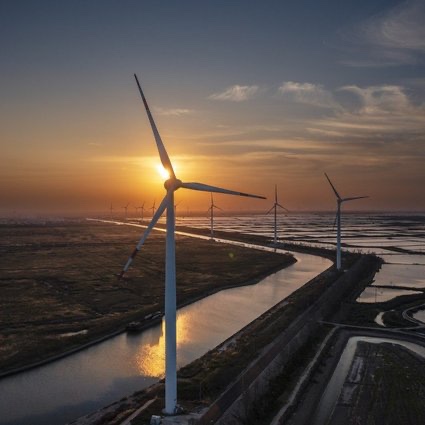
China has all along undertaken due international responsibilities commensurate with its national conditions. We have actively advanced the green transition of our economy, and raised the ambition of our climate actions on our own initiative. In the past ten years, China phased out 120 million kilowatts of installed coal-fired power generation capacity. The construction of the first batch of wind and photovoltaic power stations with a total installed capacity of about 100 million kilowatts was launched in an orderly fashion. China will strive to peak its CO2 emissions before 2030 and achieve carbon neutrality before 2060. We will honor our words with actions and work with all countries to pursue a path of green, low-carbon and sustainable development.
Colleagues,
As an ancient Chinese philosopher observed, “He who has credibility connects the world.” In other words, credibility is the foundation for interactions with the world. China will stay committed to the fundamental state policy of opening-up to unleash the potential of its huge market and enormous domestic demand. We will promote institutional opening-up that covers rules, regulations, management and standards, and step up protection of intellectual property rights. We will continue to foster a business environment that is based on market principles, governed by law and up to international standards, and ensure a fair and equitable market order for both domestic and foreign companies. I am convinced that China’s development will bring even greater and new opportunities to the world and inject still more new impetus to the world economy.
As the saying goes, Rome wasn’t built in a day. To build a community with a shared future for mankind requires persisting efforts of all countries. Although the journey ahead may be long and arduous, with sustained actions, we will eventually reach our destination and embrace a brighter future. Let us work together to dispel the dark clouds of the pandemic at an early date and jointly build an ever better future for all of us!
Video: Reckless U.S. Provocations Over Taiwan Risk War with China 美國魯莽挑釁台灣風險與中國開戰 Ken Hammond, Professor of East Asian and Global History at New Mexico State University 新墨西哥州立大學東亞和全球歷史教授、和平中心組織的活動家肯·哈蒙德
In China, incompetent Government Officials got fired. In US, business as usual, no one will get fired, many even get hired by biz for higher pay as reward for kickbacks while in office in the name of money democracy. 在中國,無能的政府官員被解僱。 在美國,一切照舊,沒有人會被解僱,許多人甚至以金錢民主的名義,以更高的薪水被商業僱傭,作為在職時官商勾結的獎勵.
Almost 20 companies signed contracts Wednesday with Orient Silk Road, the operator of the Shanghai Express, most of them logistics service providers or trading firms.
Some already have cargo on a train that departed from Shanghai this morning, like the industrial electrical components manufacturer NOARK. Every month, the company has been dispatching 8 to 10 40-foot containers, but shipping congestion of the last year has forced it to seek alternatives.
Professor John Walsh in San Francisco: The bar is not higher. The propaganda is fiercer here and you can see its effects on the views of many who consider themselves open-minded about China.
As we look at the last quarter century all the evils that the US has committed around the world are hidden or forgotten or justified in the name of freedom and human rights. Even now the barbarism of holding onto Afghanistan’s savings while the people there are starving, facing a grim winter and suffering from the ravages of Covid is not denounced in the Western press. No charge of genocide there. Just as there has been no charge of the US supported long, slow genocide of the Palestinian people.
The same propaganda is found in the states which the US grabbed control of following WWII and now the NED wants to spread it further.
Basically the US is not competing with China – it is trying to re-impoverish it. China’s economy is already number one by PPP-GDP measures and so for the US to be number one, it must re-impoverish China, weaken it, compromise its sovereignty and if possible break it up, converting China to the new Middle East which is now a wreck. One way this can be accomplished is a war in East Asia which pits states there against one another with the US being the arsenal of barbarism and “leading from behind” – far behind.
Video: Reckless U.S. Provocations Over Taiwan Risk War with China 美國魯莽挑釁台灣風險與中國開戰
As tensions heat up over Taiwan, everything the U.S. does is depicted as defensive while everything China does is framed as menacing, aggressive and authoritarian. But the island’s history has been totally left out of the coverage. 隨著台灣緊張局勢升溫,美國所做的一切都被描述為防禦性的,而中國所做的一切都被描述為具有威脅性、侵略性和專制性。 但是該島的歷史完全被排除在報導之外。
How did Taiwan come to be? Is it part of China? How has the U.S. used Taiwan as a weapon against China both historically and today? Is there a similar situation with Tibet? With Xinjiang? With Hong Kong? Is this really about supporting self-determination and independence or part of a strategy by the U.S. to break up and weaken its greatest adversary? 台灣是怎麼來的? 它是中國的一部分嗎? 美國在歷史和今天如何利用台灣作為對抗中國的武器? 西藏也有類似的情況嗎? 新疆呢? 跟香港? 這真的是為了支持自決和獨立,還是美國分裂和削弱其最大對手的戰略的一部分?
To discuss this, Rania Khalek was joined by Ken Hammond, Professor of East Asian and Global History at New Mexico State University and an activist with the organization Pivot to Peace. 為了討論這個問題,新墨西哥州立大學東亞和全球歷史教授、和平中心組織的活動家肯·哈蒙德加入了拉尼婭·哈勒克的行列
Taiwan’s fiscal revenue could be used to improve livelihoods after reunification: Taiwan Affairs Office 台灣統一後財政收入可用於改善民生:台灣事務辦公室 by Global Times Oct 29 2021
A senior official from the Taiwan Affairs Office of the State Council said on Friday that after reunification, Taiwan’s peace and tranquility will be fully guaranteed and its economic development will be enhanced.
After reunification, Taiwan compatriots will jointly participate in global governance and the building of a community with a shared future for mankind, Liu Junchuan, deputy head of the Taiwan Affairs Office, said at a seminar themed “National Reunification and National Rejuvenation” held in Yichang, Central China’s Hubei Province on Friday.
Liu said in a video address that Taiwan compatriots should see clearly that the reunification of the motherland and the rejuvenation of the nation is both a great cause and a great goal.
Liu said that Taiwan should have a thorough grasp of the general trend of historical development and realize that reunification of the motherland is where Taiwan’s future lies and its interests lie.
“A strong country, national rejuvenation, and reunification across the Taiwan Straits are the trend of the times, the path we have taken, and the cause we share,” Liu said, adding that despite the complex and grave situation across the Taiwan Straits, the Chinese mainland has always taken the initiative in resolving the Taiwan question.
After reunification, peace and tranquility in Taiwan will be fully guaranteed, and the way of life, private property, religious belief and legitimate rights and interests of Taiwan compatriots will be inviolable, Liu said.
All Taiwan compatriots who support the reunification and rejuvenation of the motherland will truly be masters of the island, participate in Taiwan’s governance and the development of the motherland, and fully enjoy the well-being of development and glory of national rejuvenation, he noted.
“The well-being of Taiwan compatriots will be improved, exchanges between the two sides of the Taiwan Straits will become more convenient, and there will be broader opportunities for Taiwan compatriots, especially young people, to come to the mainland for development. Taiwan’s fiscal revenue can be fully used to improve people’s well-being,” the official said.
The official said that peaceful reunification of the motherland best serves the overall interests of the Chinese nation, including Taiwan compatriots. Compatriots in Taiwan should firmly stand on the right side of history and contribute to the reunification of the motherland.
People should have a deep understanding of the nature of the Democratic Progressive Party (DPP) authority’s provocation for secession, and resolutely smash any attempt at separatism.
Taiwan secessionism is the biggest obstacle to the reunification of the motherland. The DPP are engaged in political manipulation for their own selfish interests, trying to link up with external forces, create cross-Straits confrontation and confrontation, and trap Taiwan compatriots into the evil path of “opposing the mainland and seeking secession,” increasingly pushing Taiwan into the abyss of danger, Liu said.
“Those who forget their ancestors, betray the motherland and split the country will never come to a good end and will surely be spurned by the people and judged by history! The mainland will punish the diehard secessionists in accordance with the law and hold them accountable,” Liu said.
Our compatriots in Taiwan should, together with the mainland, eradicate secessionism and resolutely thwart any secessionist attempt for the sake of the greater interests of the nation, Taiwan’s future and the bright future of China’s reunification.
Recently, the Trump and Biden administrations have initiated a genocide case against China. Like during the Cold War, some European leaders have joined the White House, despite the flimsy case that mocks real genocide survivors. 最近,特朗普和拜登政府對中國發起了種族滅絕案。 就像在冷戰期間一樣,一些歐洲領導人加入了白宮,儘管這個站不住腳的案件嘲笑了真正的種族滅絕倖存者.
European Financial Review: Playing Genocide Politics: The Zenz-Xinjiang Case June 11, 2021 By Dr Dan Steinbock
In July 2020, Secretary of State Mike Pompeo blamed the Chinese Communist Party (CCP) for “using forced sterilization, forced abortion, and coercive family planning against Uyghurs and other minorities in Xinjiang.”
Stunningly, Pompeo based the charge on just one source: “German researcher Adrian Zenz’s shocking revelations.”[1]
Odd bedfellows
Except for the darkest days of McCarthyism, reliance on a single external source is rare at the top of the State Department. But so was the haste in Pompeo’s “global press statement.” Since Zenz’s report had been released barely a day or so before, the subsequent chorus fosters a perception of orchestration.
Despite Pompeo’s willingness to use lies as a tool for foreign policy, his statement resulted in a set of likeminded condemnations by international media. Oddly, the latter, too, embraced Zenz’s allegations without slightest source criticism, even though Zenz has never even been in Xinjiang. The suspension of all skepticism is even stranger taking into consideration the publisher of the report. As an ultra-conservative think-tank launched by CIA Director William J. Casey in the ‘80s, the Jamestown Foundation is known for its far-right ideology.
Furthermore, according to the UN Genocide Convention (1948), genocide is defined as “acts committed with intent to destroy, in whole or in part, a national, ethnic, racial or religious group, as such.”[2]
In contrast, what Zenz claimed was that the fall of Uyghur birth rates and birth control measures in Xinjiang province was a proof of genocide. In the process, genocide was associated with family planning and modernization (which US agencies and foundations have implemented across the world since the postwar era).
Oddly, unlike Zenz, Xinjiang records a positive overall population growth rate, with the Uyghurs growing faster than the non-Uyghur population.[3]
Pandemic ploys
In the White House, genocide accusations served a useful political function. In June 2020, the COVID-19 pandemic, which the Trump administration had disastrously mismanaged, entered its second wave.[4] That’s when Pompeo delivered his first accusation, while the Biden campaign followed in the footprints later.[5] Neither resorted to the g-word, yet.
In early January 2021, the United States, with some 300,000 new daily cases, witnessed the peak of the third pandemic wave, which the White House continued to mismanage (Figure 1). Meanwhile, the Capitol was swept by the white supremacists’ mob riot that Trump had effectively stirred.
Figure 1: Uses of Genocide Politics
Uses of Genocide Politics Source: Daily New Cases in the US, Worldometer (John Hopkins CSSE), Jun. 9, 2021
That’s when Pompeo, on his way out from the White House, charged China of “the systematic attempt to destroy Uyghurs in Xinjiang.”[6] As Antony Blinken replaced Pompeo as Secretary of State that very same day, he agreed with Pompeo’s designation. Distressingly, these actions reflect conflicts-of-interest by both administrations and their secretaries of state. In each case, material benefits trumped over integrity.[7]
To the Trump administration, genocide politics served as a distraction from pandemic mismanagement and the white supremacist riot. To the Biden administration, it offers a perceived bipartisan enemy that can be exploited to unify the divided nation and Capitol Hill.
Disturbingly, the genocide allegation was made against explicit legal opposition. Prior to Pompeo’s January statement, the State Department’s Office of the Legal Advisor had concluded that there was insufficient evidence to prove such genocide. So, both administrations simply over-ruled their own legal experts.[8]
Disturbingly, the genocide allegation was made against explicit legal opposition.
In April, economist Jeffrey Sachs and William Schabas, a leading international legal scholar of genocide, warned that “the Xinjiang genocide allegations are unjustified.” They noted that the State Department’s 2021 Human Rights Practices report made similar genocide accusation, but also without evidence. As they conclude, “unless the State Department can substantiate the genocide accusation, it should withdraw the charge. It should also support a UN-led investigation.”[9]
Who is the primary source of the genocide allegation that the leaders of the world’s most powerful nation prefer to their top-notch legal experts and a leading international scholar?
From God to anti-China Aussies and US defense contractors
Adrian Zenz graduated from the hyper-Christian Columbia International University, headquartered in South Carolina, where teachers can lecture only if they affirm the Second Coming of Jesus. As Wall Street Journal once put it, Zenz feels “led by God” in his struggle against the Chinese communists.[10]
In his first book, Zenz sought to explain Why All Believers Will Not Be Raptured Before the Tribulation (2012). As a born-again Christian, Zenz associates biblical truth as the truth, which may or may not be identical with earthly truth.
In 2014, the German crusader became a secular overnight “Tibet expert” who wrote two years about Tibet “under the threat” of CCP assimilation. In 2016, he suddenly became a “Xinjiang expert” after a Foreign Affairs essay.[11] Co-author James Leibold, another Jamestown analyst, opened the door to the prestigious American journal.[12]
Leibold is a sinologist in the Australian Strategic Policy Institute (ASPI), which has been credited as the think-tank behind Australia’s rock bottom ties with China. According to reputable financial observers, “the Department of Defense-backed ASPI has become a flashpoint in the breakdown of consensus in Beijing.”[13]
Usually, think-tanks refuse external financing. ASPI is more flexible. It is funded by Australia’s Defense Department and US State Department and Pentagon’s big contractors, including BAE, Northrop Grunman, Lockheed Martin, and Raytheon’s local subsidiary, and American cyber-giants, such as Amazon, Facebook, Google, and Microsoft, as well as Japan and Taiwan.[14]
Yet, ASPI did not publish Zenz’s Xinjiang revelations.
Compromised think-tanks and NGOs
In effect, by 2017, Zenz’s publications were released mainly by China Brief, one of Jamestown’s flagships journals. Yet, his Xinjiang pieces were published by Journal of Political Risk, published by Anders Corr who has a track-record of fake predictions and whose clients comprise mainly Pentagon agencies and defense contractors.[15]
Oddly, Zenz did not turn to the world’s most prestigious academic journals with peer reviews to ensure quality and accuracy. Nor did he approach the journals of America’s leading think-tanks, which also do a fair amount of fact-checking. Even Jamestown and Corr’s Journal, both of which often prefer ideology to facts, stayed further away from Zenz’s “shocking revelations.”
Instead, the Christian crusader opted for two very different organizations. In December 2020, his Coercive Labor in Xinjiang was published by the Newlines Institute for Strategy and Policy (NISP), in collaboration with the Raoul Wallenberg Center for Human Rights.
Founded conveniently right in time for Zenz’s report, Newlines Institute is portrayed as “nonpartisan”, yet its leadership features mainly US State Department officials, military and intelligence analysts who used to work for Stratfor (which the financial journal Barron’s once called the “Shadow CIA” agency).[16] The Institute has touted the views of the hyper-anti-China hawk Robert Spalding, Trump’s ex-strategy advisor, another Newlines expert, who is on the board of Jamestown as well.[17]
The Newlines Institute’s organizational parent is Fairfax University of America (FXUA), which has been the target of state regulators ever since its founding in 1998, due to numerous academic scandals, lack of didactic credibility, and noncompliance with state educational standards.[18]
To make things even more confusing, Zenz’s “report” mixed his old allegations with questionable data sources.
Zenz’s report featured mainly his old materials, but also those of Uyghur separatists, including the World Uyghur Congress (WUC) backed by the U.S. government.
How NED came to sponsor far-right Uyghur separatists
Zenz’s report featured mainly his old materials, but also those of Uyghur separatists, including the World Uyghur Congress (WUC) backed by the U.S. government; Radio Free Asia owned by the U.S. government; and the Newlines “Uyghur Scholars Working Group” (whose core member is Zenz himself).[19]
The WUC regards Xinjiang as “East Turkestan” and its Uyghur Muslims as members of a mythic pan-Turkic nation stretching from Central Asia to Turkey. Dedicated to separatist objectives, it seeks to destabilize Xinjiang and ultimately regime change. Portrayed as a bottom-up movement, the WUC is actually a top-down umbrella for its Washington-based affiliates – e.g., Uyghur American Association (UAA), Uygur Human Rights Project, and Campaign for Uyghurs – reliant on US funding.
Historically, the Uyghur separatists’ money and arms ties with the US (and Taiwan) go way back to the 1930s and ‘40s.[20] The WUC has been supported since 2004 by the National Endowment for Democracy (NED), whose recipients tend to operate in countries targeted for regime change. Since 2016 in particular, the NED has provided the WUC and its affiliates with millions of dollars (Figure 2).
Figure 2: A Separatist Dream Come True
Separatist Dream Come True Source: In a 2020 NED tweet, Xinjiang is portrayed as separated from the Chinese mainland as sovereign East Turkestan.
Here’s how the pro-democracy/destabilization machine works: NED transfers monies to the WUC, which uses them for its affiliates, public PR and reportedly not-so-peaceful covert operation, while lobbying the Congress, which in turn funds the NED.
In the past, NED was led decades by Carl Gershman, who was recently succeeded by Damon Wilson, former executive VP of the Atlantic Council, which has intimate ties with US government and the NATO. Wilson interests are in security and military affairs.[21] Though both Wilson and Gershman share a penchant for regime change.
The Raoul Wallenberg Centre (RWCHR) was the other sponsor of Zenz’s genocide report. Despite its name and young Wallenberg’s portrait on the home page, the NGO has nothing to do with either Sweden or the Swede who saved thousands of Jews during World War II. RWCHR is based in Montreal and led by former Canadian Minister of Justice Irwin Cotler.
Under Cotler’s leadership, the RWCHR positions have converged with those of US State Department (and Gershman is now a senior fellow at RWCHR).[22] The Center cooperates with the anti-China cult Falun Gong and its far-right Epoch Times (“the leading purveyor of right-wing misinformation,” as the New York Times has put it).[23]
The Xinjiang shakedown
In an in-depth review of the Xinjiang report, the Grayzone Project has demonstrated that “Zenz’s assertion of genocide is concocted through fraudulent statistical manipulation, cherry-picking of source material, and propagandistic misrepresentations.”[24]
Zenz’s factual and methodological fallacies are one thing. What is alarming is that the White House and international media portray such fake facts and data as real truths, without elementary source criticism.
In the US, the key role in the Zenz-fueled campaign against China belongs to the Worker Rights Consortium (WRC), which seeks to pressure US companies to leave Xinjiang and whose steering committee members have been funded by NED.[25]
WRC, too, relies mainly on Zenz’s report. Its conduct is reminiscent of the Cold War AFL-CIO agencies that were created to battle against workers in developing countries.[26] Worse, the WCR campaign has forced Uyghur workers out of their jobs, while compelling US apparel company Badger Sport to pay $300,000 to Uyghur exile groups rather than the workers. These extremist groups include the WUC US affiliate (UAA), which in March organized a car caravan to disrupt a gathering against anti-Asian racism in Washington. The message? “Wipe out China!”[27]
Under its president Kuzzat Altay, the UAA’s anti-China fanaticism has escalated, while the far-right gun club Altay Defense drills combatants with ex-members of U.S. special forces. The club is led by Altay’s brother who is the nephew of Rebiya Kadeer, the veteran head of the US-sponsored Uyghurs. Hence the two sides of Uyghur separatism: public diplomacy and darker covert operations (Figure 3).
Figure 3: Two sides of Uyghur separatism
Kadeer and Pres. Bush (2007) Altay Defense (Instagram 2020) Kadeer and Pres. BushAltay Defense (Instagram 2020)
Uyghurs, Gray Wolves and Washington
Alarmingly, Uyghurs’ Turkey branch has ties with the far-right pan-Turkish Grey Wolves, a designated terrorist organization, which is usually characterized as ultra-nationalist, neo-Fascist and Islamophobic. It has been linked with political violence, death squads, heroin, CIA, and drugs trade.[28] More recently, the Wolves have focused on Uyghurs and Xinjian pushing for a more militant East Turkestan Independence movement and a Greater Pan-Turkic nation (Figure 4).[29]
Figure 4: Pan-Turkic Aspirations
Pan-Turkic Aspirations
Source: Wikimedia Commons These activities led to their affiliates’ 2009 attacks against Chinese tourists in the Netherlands and to the 2015 Bangkok bombing. Together with a rival ultra-nationalist group, the Wolves also targeted Chinese in politically-motivated “revenge” assaults in Turkey, attacked Chinese restaurants in Istanbul, tried to break into Ankara’s Chinese embassy and assaulted Koreans whom they mistook for Chinese.[30]
After half a decade of attacks and friction, Chinese government believes that the far-right anti-Communist Uyghur separatists via their umbrella WUC have been funded and trained by U.S. government agencies.[31]
In effect, the far-right links extend to Zenz and his prestigious new host as well.
Far-right exploitation of genocides
After the Australian ASPI, Jamestown and his Xinjiang reports, Zenz was recruited as a senior fellow in China studies by the Washington-based Victims of Communism Memorial Foundation (VOC), a fiercely anti-Communist NGO founded in 1993.[32] VOC is the successor of the National Captive Nations Committee (NCNC), which was created during the Cold War and led by Ukrainian-American Lev Dobriansky and the Ukrainian nationalist and notorious anti-Semite Yaroslav Stetsko.
In turn, the NCNC was the successor of the Anti-Bolshevik Bloc of Nations (ABN) that Stetsko claimed to have founded in 1946 and headed until his death in 1986. In reality, Stetsko’s Ukrainian nationalists took over ABN only after World War II. ABN had been founded in late 1943, at the instigation of Alfred Rosenberg, the chief Nazi race ideologue and Minister of the East. Stetsko organized militia, which butchered Jews in pogroms in 1941 and cooperated with Nazi leaders who in turn used Stetsko and his nationalists in “political warfare” against the Soviet Union.
In the mid-1950s, the ABN was linked the Asian People’s Anti-Communist League (APACL), which was created in South Korea and in which Taiwan’s Generalissimo Chiang Kai-shek played a central role. During the height of the Cold War, both the ABN and the APACL were linked with the World Anti-Communist League (WACL). In the ’90s, the latter was renamed ss the World League for Freedom and Democracy (WLFD), to “sanitize” its link with Cold War anti-Communism. But WLFD’s headquarters remains in Taiwan.[33]
That’s the long historical chain of organizational reincarnations Zenz’s anti-Communist VOC to Nazi ideologues’ ABN. It is these controversial origins of Zenz and his background forces that cast a long dark shadow over his allegations today (Figure 5).
Figure 5: From Anti-Bolshevism and Anti-Communism to Freedom and Democracy
Afghanistan 2.0 scenario would be Xinjiang’s nightmare
Chinese activities in Xinjiang aim at stopping the terrorism of militant Islamic groups, as did America’s foray into the Middle East and Central Asia after the September 2001. America’s flawed response to 9/11 led to repeated US violations of international law, massive bloodshed and unwarranted wars.
Similarly, between 1990 and 2001, Uyghur extremists committed over 200 acts of terrorism with over 160 deaths.[34] In July 2020, the United Nations noted the presence of thousands of Uyghur fighters in Afghanistan and Syria, where the White House has occasionally supported “moderate Jihadists.” And until late 2020, the US still classified the Uyghur East Turkestan Islamic Movement as a terrorist group, battled Uyghur fighters in Afghanistan, and held many as prisoners. Nonetheless, the Chinese and American approach have their differences.
Since 2000, Xinjiang has been included in the development strategy of China’s West. Between 2014 and 2019, Xinjiang’s economy increased annually by 7.2 percent and nearly 3 million residents were lifted out of poverty. Urbanization rate climbed from 37 percent to 50 percent, which is at par with that of Thailand, while GDP per capita (PPP) rose to the level of Indonesia. Beijing has pushed for economic development in Xinjiang to foster growth and prosperity, in part to pre-empt radicalization through cross-border infiltration via Afghanistan and Pakistan.
Externally, the key role belongs to the massive Belt and Road Initiative (BRI), which was launched in 2013. The BRI, which Washington opposes, has entailed a long preparation in the region, which serves as the Chinese gate to the West.[35]
What seems to motivate Zenz’s background forces is an Afghanistan 2.0 scenario. In the 1980s, CIA chiefs who later joined the Jamestown Foundation were influential in the Operation Cyclone, which armed the Islamic Mujahideen against the Soviet Union in Afghanistan, while funding and training the founders of Al-Qaeda and Islamic State. One of them is Michael G. Wickers who is on the board of Jamestown and BAE Systems, a global defense contractor hoping to cash on South China Sea friction.
These Cold Warriors tend to see contemporary Xinjiang as Afghanistan 2.0. Since the 1980s and again after September 11, 2001, Afghanistan has been the prime recipient of billions of dollars of U.S. economic and military aid. Between 1950 and 2020, the US has sold almost $16 billion worth of weapons to Afghanistan, two thirds of which were exchanged since 2016.[36]
Yet, US aid has not enrichened ordinary people. Afghan GDP per capita (PPP) remains $1,900, at par with Yemen and Sierra Leone; and only 15 percent relative to Xinjiang. Worse, since the 1990s Afghan inequality has remained high with the wealthy 10 percent of the population owning 45 percent of national income.[37]
Even worse, since 2001 some 241,000 people have been killed in Afghanistan and Pakistan (more than 71,000 were civilians). In turn, the US has suffered over 22,000 military casualties, including 2,400 fatalities in Afghanistan, even as Congress has appropriated a whopping $143 billion for reconstruction and security forces there. As a recent congressional report concluded, “future prospects of gains remain mixed.”[38]
Afghanistan 2.0 scenario would be a nightmare to Xinjiang.
Uyghur genocide allegations over Holocaust history
The lessons of the Zenz debacle are many. The ultra-religious and hyper-ideological motivations of the old-new Cold Warriors are not surprising but have potential to result in major conflict. Perhaps a new Cold War is precisely the strategic objective, despite the enormous costs to global economic prospects and particularly to the most vulnerable nations.
The unsubstantiated genocide allegations by the Trump and Biden administrations seem not just hypocritical but outright bizarre in the light of US history, starting with the native American Indians, and Hiroshima and Nagasaki, and extending to series of atrocities in almost every major world region.
What’s highly distressing is the way the leading international media has allowed itself to be used, with little regard to public trust. The erosion of credibility and its long-term consequences are alarming, though something that did occur during the Cold War when science, culture and unions were weaponized.[39] Today, even Wikipedia has fewer web pages dedicated to the facts of the “Holocaust” than to the allegations of the “Uyghur genocide.”
Like the “infodemic” in the early days of the COVID-19, misinformation associated with social media trolls and conspiracy theorists blurs the distinction between realities and fantasies. With the pandemic, the ensuing divisions and delays cost millions of lives, and so could the erosion of media credibility in future genocides.
As Sachs and Schabas warn, the charge of genocide should never be made lightly. Washington’s rejection of top legal experts for a far-right ultra-religious crusader is a frightening precedent. When the word “genocide” is exploited without a solid legal basis, the very designation is politicized and diluted.
As real genocides are exploited and trivialized for genocide politics, even the banality of evil is trivialized. That is an insult against the real victims of the Holocaust and other genocides.
About the Author Dr Dan Steinbock is the founder of Difference Group and has served as research director at the India, China and America Institute (USA) and visiting fellow at the Shanghai Institutes for International Studies (China) and the EU Center (Singapore). For more, see https://www.differencegroup.net/
References
Unless otherwise stated, all data is from World Development Indicators (WDI), by World Bank.
[1] Secretary of State Michael R. Pompeo, 2020. “On China’s Coercive Family Planning and Forced Sterilization Program in Xinjiang.” Press Statement, Global Public Affairs, Department of State, Jun. 29. [2] Convention on the Prevention and Punishment of the Crime of Genocide art. 2, 78 U.N.T.S. 277, 9 Dec. 1948. [3] Most recent data is for 2010 to 2018. See Sachs, Jeffrey and Schabas, William. 2021. “The Xinjiang Genocide Allegations Are Unjustified.” The Project Syndicate, Apr. 21. [4] On the politicization of the COVID-19 in America and Europe, see Steinbock, D. 2020. The Tragedy of More Missed COVID-19 Opportunities. SIIS, Aug. 16. [5] Most likely to attract the Reagan Democrats that Senator Hillary Clinton had lost in 2016, the Biden campaign condemned China for the “unspeakable oppression that Uyghurs and other ethnic minorities have suffered.” See “Trump administration weighs accusing China of ‘genocide’ over Uighurs.” Politico, Aug. 25, 2020. [6] “US: China ‘committed genocide against Uighurs’,” BBC, Jan. 20, 2021. [7] Due to campaign finance, both Trump and Biden lean on to the Pentagon’s defense contractors, just as Blinken made his first $1 million through an advisory firm with similar clientele amid alleged conflicts of interests. On the conflict-of-interest issues, see Lipton, E. and Vogel, Kenneth P. 2020. “Biden Aides’ Ties to Consulting and Investment Firms Pose Ethics Test.” New York Times, Nov 29; Wong, Edward and Jakes, Lara. 2020. “Pompeo Quietly Visits Conservative Donors and Political Figures on State Dept. Trips.” New York Times, Jul. 21, 2020. [8] See Lynch, Colum. 2021. “State Department Lawyers Concluded Insufficient Evidence to Prove Genocide in China.” Foreign Policy, Feb. 19. [9] The two add, “the UN experts are rightly calling for the UN to investigate the situation in Xinjiang. China’s government, for its part, has recently stated that it would welcome a UN mission to Xinjiang based on ‘exchanges and cooperation,’ not on ‘guilty before proven.’“ See Sachs and Schabas 2020, op. cit. [10] Chin, Josh. 2019. “The German Data Diver Who Exposed China’s Muslim Crackdown.” Wall Street Journal, Jan. 19. Zenz supports scriptural spanking and anti-gay policies. He lectures at the European School of Culture and Theology, but that’s part of Columbia’s German campus. [11] Leibold, James and Zenz, Adrian. 2016. “Beijing’s Eyes and Ears Grow Sharper in Xinjiang: The 24-7 Patrols of China’s ‘Convenience Police’.” Foreign Affairs, Dec. 23. [12] Two years later, Leibold declared the treatment of Uyghurs a “cultural genocide.” See Leibold, James. 2019. “Despite China’s denials, its treatment of the Uyghurs should be called what it is: cultural genocide.” The Conversation. Jul. 24. [13] Robin, Myriam. 2020. “The think tank behind Australia’s changing view of China.” Financial Review, Feb 15. [14] On ASPI’s funders, see https://www.aspi.org.au/sponsors [15] Like Edward Snowden during his covert years, Corr had worked for Booz Allen Hamilton, but his main employer is US military-industrial complex. See https://www.jpolrisk.com/about/leadership/ In 2017, Corr predicted that by 2022 the Philippines would default under China’s debt slavery. His projection of debt-to-GDP ratio proved wrong by 200-250 percent. See Steinbock, Dan. 2019. “Whatever happened to PH debt slavery?” The Manila Times, Oct. 7. [16] Laing, Jonathan R. 2001. “Shadow CIA,” Barron’s, Oct. 15. [17] Spalding’s anti-China views were too much even for Trump’s National Security Council. See Rogin, Josh. 2018. “Air Force general behind 5G memo leaves White House.” Washington Post, Feb. 3. [18] Redden, Elizabeth. 2019. “Virginia Regulators Move to Shut Down University.” Inside Higher-Ed, Mar. 20. [19] Zenz, Adrian. 2020. Coercive Labor in Xinjiang: Coercive Labor in Xinjiang: Labor Transfer and the Mobilization of Ethnic Minorities to Pick Cotton. Newlines Institute for Strategy and Policy, Dec. [20] Benson, Linda K. 1990. The Ili Rebellion: Muslim Challenge to Chinese Authority in Xinjiang, 1944-49. Routledge. On the pre-US legacies, see Ke, Wang. 2018. The East Turkestan Independence Movement: 1930s–1940s. Chinese University of Hong Kong. [21] Wilson had had previous stints at the State Department’s China desk and US Embassy in Beijing the NATO, US National Security Council and US Embassy in Baghdad. [22] See Katz, Bruce. 2020. “Irwin Cotler as a False Humanitarian: Cotler supports terrorists while befriending dictators.” The Canada Files, Dec. 27; Norton, Ben. 2020. “Washington’s favorite Venezuelan opposition leader exposes links to Colombian death squads and narco networks.” Grayzone Project, Dec. 26; Abunimah, Ali. 2019. “Canada activists disrupt top supporter of Israeli war crimes.” The Electronic Intifada, Jun. 5. [23] Matas, David and Cotler, Irwin. 2020. “Legal steps must be taken against China for initial inaction.” Policy Options, May 25. [24] In 2019, Zenz speculated that 1 million Uyghurs were detained in Xinjiang since late 2016, on the basis of extrapolations from food allowance subsidy figures of the Chinese government. Though the claim was accepted in the West, Newsweek Japan discovered that Zenz’s figures originated from Istiqlal TV, which often hosts leaders of the East Turkestan Islamic Movement (ETIM) terrorists. In another study, Zenz charged China for running a forced birth control surgery program in Xinjiang. While public health analysts found major flaws in his study, Zenz only interviewed 8 women, who were all living in the US and had ties with various Uyghur groups. See Singh, Ajit. 2021. “’Independent’ report claiming Uyghur genocide brought to you by sham university, neocon ideologues lobbying to ‘punish’ China.” The Grayzone Project. Mar. 17. [25] The WRC dismissed Badger’s own assessment, which rejected the allegations of “forced labor,” and the certification that its Xinjiang supplier received following an on-site inspection by Worldwide Responsible Accredited Production. See Blumenthal, Max. 2021. “Xinjiang shakedown: US anti-China lobby cashed in on ‘forced labor’ campaign that cost Uyghur workers their jobs.” The Grayzone Project, Apr 30. [26] See Scipes, Kim. 2010. AFL-CIO’s Secret War against Developing Country Workers: Solidarity or Sabotage? Lexington Books. [27] For some scenes, see https://twitter.com/NicXTempore/status/1373691318208245764 [28] See Uzer, Umut. 2016. An Intellectual History of Turkish Nationalism: Between Turkish Ethnicity and Islamic Identity. University of Utah Press; Gingeras, Ryan. 2018. Heroin, Organized Crime, and the Making of Modern Turkey. Oxford University Press. [29] After the 1980s, the Wolves’ violence has occurred against Kurds, Armenians, in multiple Western European countries, as well as Greece and Syria. After the collapse of the Soviet Union, the Wolves grew active in Eurasia (Azerbaijan, Russia), while failing to radicalize youths in Central Asia. [30] As their party chairman said, there’s no difference really: “They both have slanted eyes.” In a coordinated campaign, both groups hung banners with lyrics by an ultranationalist singer: “We miss the smell of Chinese blood.” See Shimatsu, Yoichi. 2009. “Behind the China Riots: Oil, Terrorism & ‘Grey Wolves.’”. New America Media, Jul. 13; Cunningham, Susan. 2015. “Thailand’s Shrine Bombing: The Case For Turkey’s Grey Wolves.” Forbes, Aug 24. On the Turkish attacks, see Erdemir, Aykan, and Tahiroglu, Merve. 2015. “Turkish Grey Wolves target ‘Chinese’.” Politico EU, Jul. 30. [31] See for instance “Unmistakable US hand in Xinjiang.” China Daily, Mar. 20, 2020. [32] On the inflated estimates of the victims of Communism, see Ghodsee, Kristen R. et al. 2018. “The merits of taking an anti-anti-communism stance” AEON, March 22. [33] Burke, Kyle (2018). Revolutionaries for the Right: Anticommunist Internationalism and Paramilitary Warfare in the Cold War. Hill: University of North Carolina Press, p. 21. [34] ” ‘East Turkistan’ Terrorist Forces Cannot Get Away With Impunity.” Information Office of State Council, Jan. 21, 2002. [35] Cappelletti, Alessandra. 2020. Socio-Economic Development in Xinjiang Uyghur Autonomous Region: Disparities and Power Struggle in China’s North-West. Palgrave Macmillan, esp. Chapter 2. [36] ” Historical Sales Book: Fiscal Years 1950-2020.” Historical Sales Book. Security Cooperation Agency, US Dept. of Defense 2020. [37] Inequality data from World Inequality Database. [38] “Afghan Civilians.” Costs of War, Watson Institute, Brown University, April, 2021; and Thomas, Clayton. 2021. Afghanistan: Background and U.S. Policy: In Brief. CRS. Updated March 25, [39] Wilford, Hugh. 2009. The Mighty Wurlitzer: How the CIA Played America. Harvard University Press; Saunders, Frances Stonor. 2013. The Cultural Cold War: The CIA and the World of Arts and Letters. The New Press.