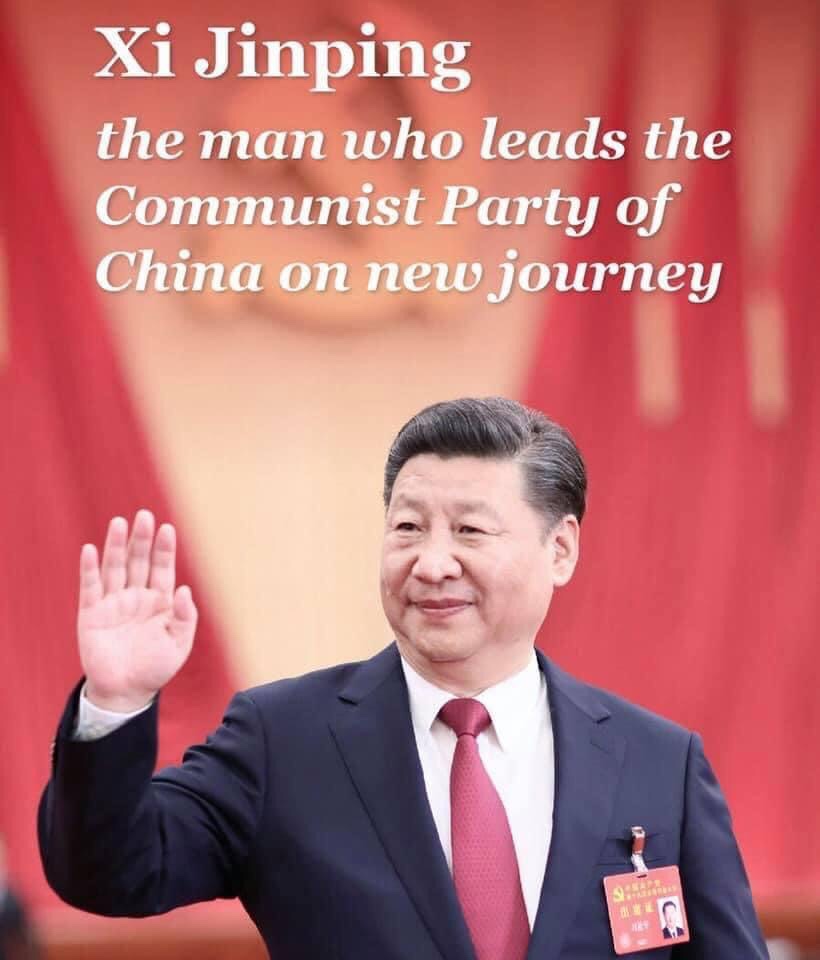
Xi Jinping’s 3 Principles, 4 Priorities and 3 bottom lines working with United States.
3 principles: mutual respect; peaceful coexistence and cooperation to achieve win-win solutions
4 priorities:
exhibit the qualities of a major nation in the world and lead the world to cooperate for tackling urgent challenges; 2 push for exchanges on different levels and different areas of society based on the spirit of equality and mutual benefit;
control differences and sensitive issues in a constructive manner; and
strengthen coordination and cooperation on major international issues and hot regional issues.
These are common sense, basic, fundamental principles that any reasonable person would agree to: respect, peace, cooperation.
They could also be seen as the positive framing of Wang Yi’s three No’s/three bottom lines delivered to Wendy Sherman earlier: No subversion of Chinese socialism No obstruction of development No infringement of sovereignty/territorial integrity.
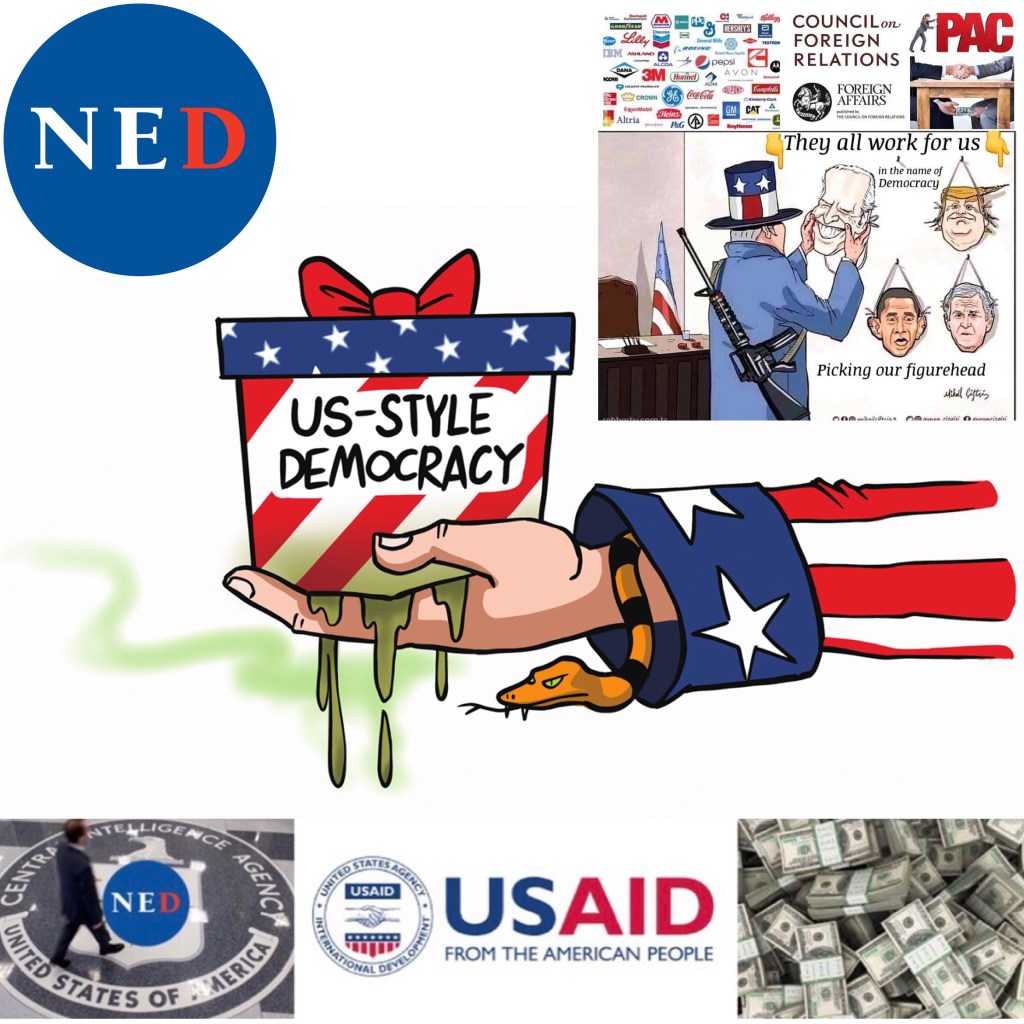
National Endowment for Disgrace trashes good name of democracy by Xin Ping Nov 17 2021
NGOs often conjure up the images of activists getting busy banning ivory trade, waving BLM banners or alerting people to climate change. Although it is not always certain what their ulterior motives are, they always seem to make things appear bright and beautiful.
This is why it puzzles me when it comes to the categorization of the National Endowment for Democracy (NED) of the United States, a self-claimed “NGO” whose establishment was approved by the US Congress. For one thing, by using state funding, the agency has been faithfully preaching hegemonic doctrines of the US government. For another, by guiding and financially supporting separatist rebels in countries deemed detrimental to American dominance, this pair of Uncle Sam’s white gloves is instigating instability, terror and even wars worldwide.
How could such an agency be labeled an NGO? It would probably be too much to say that the NED stands for being Notorious, Egregious and Disrespectful. But the organization can be compared to the foolish emperor in Andersen’s fairy tale “the Emperor’s New Clothes”. Everyone is crystal clear who is naked with nasty intent, yet the evil-doer continues to stand still, awkwardly pretending nothing ever happened.
NED has claimed that “from time to time, Congress has provided special appropriations to the Endowment to carry out specific democratic initiatives in countries of specific interests”. The reason why it never bothers to hide its goals is that for US politicians, “democracy” has been such an overwhelmingly persuasive pretext to justify all their wrongdoings in a flagrant way, including meddling with other countries’ internal affairs, triggering wars and conflicts. “A lot of what we do today was done covertly 25 years ago by the CIA,” said Allen Weinstein, one of the founding members of NED, when introducing the tasks assigned to NED. Thanks to such honesty, if Daniel Craig must drop his 007 career after No Time to Die, Agent NED could be recommended to succeed him in a film called No Time to Lie.
For many, including many Chinese, NED is nothing but an obnoxious pest. According to Asahi Shimbun, as of 2016, NED had provided some $96.52 million to at least 103 anti-China entities, including the notorious separatist groups, such as World Uyghur Congress (WUC) and Tibetan Youth Congress (TYC). NED has provided the WUC and its affiliations with millions of dollars in funding, including $1,284,000 since 2016. This money goes to train activists and media influencers and lobby for support for Uygur separatists. In Hong Kong, NED has been in connection with several notable destabilizing forces and individuals. Reports have revealed that the NED offered over HKD13 million to the so-called Hong Kong Confederation of Trade Unions, led by Lee Cheuk-yan, to organize illegal separatist campaigns. In 2019, NED invited several notorious Hong Kong “independence” preachers for speeches, including Lee Chu-ming, who was dubbed by Ta Kung Pao as a “Hong Kong traitor” and won the NED annual prize in 2004; as did Lee Cheuk-yan and Nathan Law. The mobs keep begging for their sugar daddy “no money, no honey”, so NED keeps feeding them greenbacks paid by American taxpayers in the name of “democracy”. Such an “unofficial” NED price acts consistently with the official remarks out of State Department spokesperson Ned Price. Together, these twofold American prongs encourage mobs to act out for Uncle Sam’s expectations.
NED’s victim list worldwide also includes America’s allies. According to the New York Times, NED provided French right-wing groups with $1.4 million to organize campaigns against former president François Mitterrand. In Eastern Europe, millions of dollars have been spent by NED in support of the shock therapy in the 1990s. In Caribbean countries, NED has actively engaged in the conspiracy of overthrowing elected governments, with Haiti and Nicaragua being the most prominent examples. In Arab countries, NED sponsored numerous riot organizations and remained a crucial “contributor” to the collapse of the Mubarak and Khadafi administrations and the subsequent chaos. In Cuba, Venezuela, Bolivia and Belarus, NED has been amplifying its voices by hiring Western media to relentlessly fire against the countries’ leaders. It did so while interfering with their domestic election processes by politically and financially supporting the opposition forces.
In Thailand, the NED aimed at students and youngsters while launching its brainwash campaign through social media, just as it did in Hong Kong. In many ways, those methods were adopted together, enabling NED to meddle with the domestic issues of countries or administrations that it deemed “challenging” to American dominance under the cover of democracy promotion.
The US has always been strangely egoistic to seek a monopoly for the definition of “democracy”. In this way, NED serves as a channel for it to achieve “democracy hegemony”, claiming, “I’m the beacon of light, and those who don’t listen to me are certainly autocratic”. With that solid reason, NED could feel free to interfere with other countries’ domestic issues, infiltrate into other countries for subversive purposes, and ultimately promote riots and rebels.
Under the disguise of democracy and for the purpose of conspiracy, NED is indeed an abbreviation for “National Endowment for Disgrace”. NED as a tool of the US Empire has only disgraced what democracy is all about.
The author is a commentator on international affairs, writing regularly for Global Times, CGTN, Xinhua News Agency, etc.. He can be reached at xinping604@gmail.com.
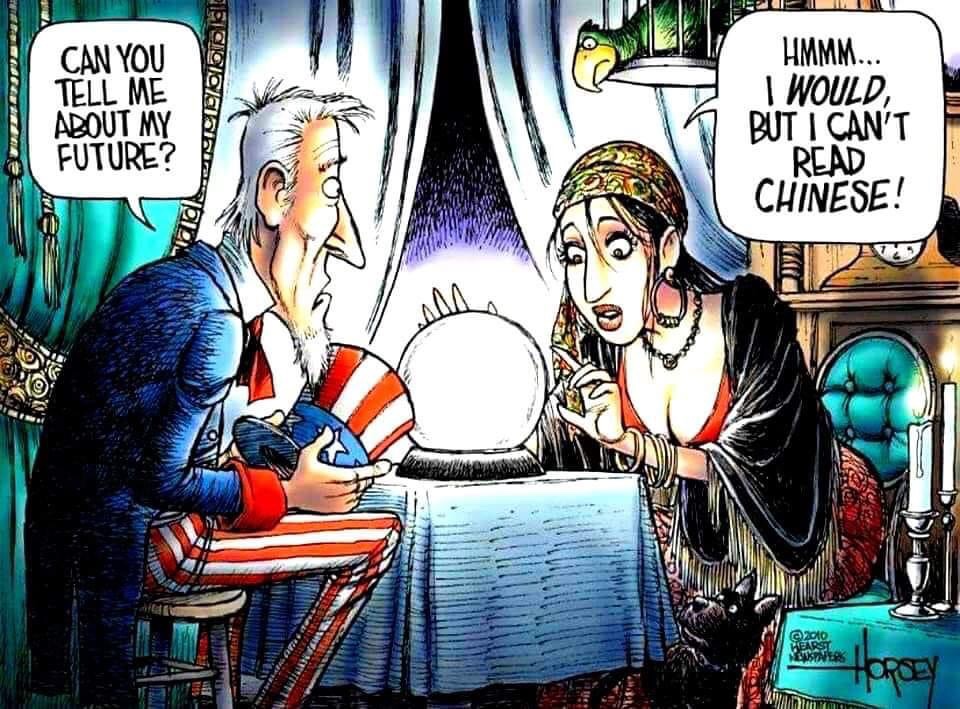
After meeting with Xi Jinping, Biden decided to visit his fortune teller in Washington DC who has been 100% correct last 40 years. 拜登會見習近平後,決定見他在華盛頓認識了40年的算命小姐, 40年來一直都是100%準確的.
Have you notice the communications after the meeting between Xi Jinping and Joe Biden are so different. You thought they had never met. 你有沒有註意到習近平和拜登會晤後的向國民報告如此不同。 你以為他們從未見過面.
The communication from Joe Biden is the same old same old fake news since Obama such as Xinjiang, Tibet, Hong Kong, South China Seas, Taiwan and etc pretending that America like God could do no wrong. 喬拜登的通訊是奧巴馬以來的舊假新聞,新疆、西藏、香港、南海、台灣等假裝美國像上帝一樣不會做錯, 祇有美國説了算.
US need to wake up, China is not your vassal states like Japan and S Korea, nor your disposable chess like Taiwan and Afghanistan. 美國需要醒醒,中國不是像日本和韓國是你的附庸國,也不是像台灣和阿富汗那樣的你可以隨意下的棋。
The US Empire mouthpiece such as NYT, Fox News, CNN, Washington Post, Wall Street Journal and etc have been repeating the fake information non-stopped to brainwashed Americans. 紐約時報、福克斯新聞、美國有線電視新聞網、華盛頓郵報、華爾街日報等美帝國喉舌不斷向被洗腦的美國人重複虛假信息.
What US Government should do is to tell Americans the truth that US is not God nor the ability to go out to steal, rob and turn nations not willing to kowtow into modern day US colonies or face destruction like Iraq, Libya, Syria, Afghanistan and etc. 美國政府應該做的是告訴美國人一個真相,美國不是上帝,再也沒有能力出去偷竊,搶劫和把不願意磕頭的國家變成現代美國殖民地或面臨像伊拉克、利比亞、敘利亞、阿富汗和阿富汗等地被美國任意破壞.
Majority of the Americans still lives on cloud nine not knowing the nation is start falling apart. 大多數美國人仍然生活在雲九,不知道這個國家正在開始分崩離析.
How could US compete with China when Americans are being lied to everyday? 美國人天天被騙,美國怎麼能和中國競爭?
China on the other hand tells her citizens the truth, the challenges they faced and the nation must unite to work together, work hard, innovative and smart to compete and overtake US with defined goals, objectives and business plan. 另一方面,中國告訴她的公民真相,他們面臨的挑戰,國家必須團結一致,共同努力,努力工作,創新和聰明,以明確的目標和商業計劃與美國競爭並超越美國.
China will overtakes US including decoupling with US on key technologies within the next 3-5 years, US has no one to blame but herself. 中國將在未來3-5年內超越美國,包括在關鍵技術上與美國脫鉤,請美國不要怪別人祇可以怪自己.
San Francisco Bay Area China Group: I think the Xi-Biden meeting is a significant event in US-China relations. For the first time since the end of the last cold war around 1990, the US is treating another country as its equal. As Xi said in the meeting, “China and the US should respect each other.”
Not that the US wants to, but it is forced to do so. The US lost the tariff War with China. Its tech war against China has achieved some results, but this is spurring China to become adequately self-sufficient in tech and supply chains and may cause western firms to lose a big part of the China market. Just ask Ericsson. The US discovers that it needs China’s cooperation to solve its own problems, such as its high inflation (high tariffs on Chinese goods being one reason) and supply chain issues, in addition to world problems of climate change and the pandemic. Remember the disastrous Alaska meeting where Blinken and Sullivan tried to dress down China, and the Wendy Sherman July meeting “speaking from a position of strength,” according to our state department. So the US has changed its attitude towards China within 9 months. Blinken also promised that the US would not try to change China’s political system. While it is doubtful whether the US will keep this promise, at least it has drawn a line in the sand, which the US refused to do until now.
This does not mean things will be hunky dory going forward. As you pointed out, the US is talking about boycotting the Beijing winter Olympics. I am sure the US will still confront China (phrased as “fierce competition”) as it has been doing over the Taiwan and human rights issues and selectively cooperate with China when it is in its interest to do so. I agree with Joseph Leung of Singdao that the US does not know how to handle China, and is improvising as it goes. Confrontation has not worked to US’s expectations, but it retains the illusion that it can still trip up China’s progress by various tricks. This may be the reason why there are many mixed and inconsistent signals from the Biden administration. Biden had also to contend with the box Trump has locked him in with respect to the US’s China policy. The public atmosphere in the US about China after Trump is so toxic now that it will be difficult for Biden to cooperate with China. So he is caught in a rock and hard place. He has to seek China’s help, much as Obama had to in 2009, but he cannot appear to be appeasing China.
Boycotting the Beijing winter Olympics, as you said, is the low hanging fruit for Biden. Biden could very well forbid all US officials to attend the event while leaving it up to the US Olympic committee and the athletes to decide whether to attend or not. Given the toxicity around China in the US, Biden will run into much trouble if he sends US officials to the event.
Chinese sources watching the western governmental pronouncements think that the China policy of allies of the US may be changing after the Xi-Biden meeting and the Joint US-China Declaration on climate change . The allies may be thinking that since the US now acknowledges China as a great power, consulting and cooperating with China at least in some areas, why should they go all out to attack China? I guess we will see. This is the lesson Japan learned when it was broadsided by Nixon’s visit to China in the 70’s without informing it beforehand.
China, on the other hand, is hunkering down for the long haul and it knows that the standoff with the US will last years, if not decades. It is tackling many of the tough problems left over from prior years. I do not need to describe these measures, since they have been discussed in our group.
So to conclude, what we will see will be a situation where the US and China will confront each other on some matters while working together on others in a complicated relationship. Whether confrontation dominates or cooperation dominates the relationship depends on the relative strengths of the two countries at the time. There appears to be no simple way to gauge. The US and China are off to a race. At the end of the day, the country with the best governance and makes the fewest mistakes will win. Unless, of course, the US gives up on its hegemony over the world, an unlikely event, in which case the two countries can cooperate without confrontation.
Kesi, also known as engraved silk, is a traditional Chinese silk fabric. It is woven in a Kesi method. The weft does not traverse the entire width, but only interweaves with the warp where necessary. This is called the “passing warp and breaking weft” method. The front and back of the finished product are the same, and the contours of different colors are not connected. The dots of pores can be seen from the backlight of the air, just like carved with a knife. 緙絲,又稱刻絲,是中國傳統的一種絲織品,其特色是以緙織方式織造,緯線並不橫貫全幅,而僅在需要處與經線交織,稱為「通經斷緯」法。其成品正反兩面如一,在不同色彩的輪廓之間並不相連,憑空背光觀察可見點點孔隙,有如以刀鏤刻而成。
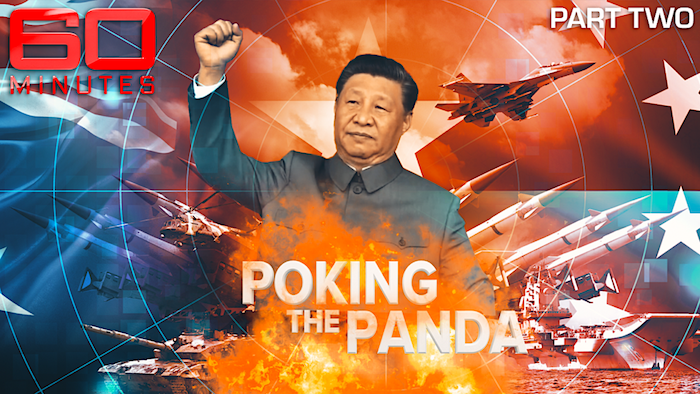
Australian War Propaganda Goes Off the Rails – In a blatant advert for arms sales masquerading as news, 60 Minutes tries to tie Taiwan to the fantasy of China randomly invading a continent of white foreigners thousands of miles away, writes Caity Johnstone. 11-17-22
60 Minutes Australia has churned out yet another fear-mongering war propaganda piece on China, this one so ham-fisted in its call to beef up military spending that it goes so far as to run a brazen advertisement for an actual Australian weapons manufacturer disguised as news reporting.
This round of psychological conformity-making features Australian former major general Jim “The Butcher of Fallujah” Molan saying that in three to ten years a war will be fought against China over Taiwan and that Australians are going to have to fight in that war to prevent a future Chinese invasion of the land down under.
He argues Australia will need to greatly increase its military spending in order to accomplish this, because it can’t be certain the United States will protect it from Chinese aggression.
“Australia is monstrously vulnerable at the moment; we have this naive faith that American military power is infinite, and it’s not,” says Molan, who is a contributor to government/arms industry-funded think tanks Lowy Institute and Australian Strategic Policy Institute.
Decrying what he calls “panda huggers” (meaning people who aren’t China hawks), Molan claims that “the Chinese Communist Party’s aim is to be dominant in this region and perhaps dominant in the world.” Asked when war might break out, he claims “Given the power that they have in their military they could act any time from now on, and that’s what frightens me more than anything.”
“The next war is not going to be ten or twenty years away, it’s going to be in the next three to ten years,” Molan asserts.
“My estimate is that in a serious fight the Australian Defense Force only has enough missiles for days. This is not going to be resolved in days. And of course we’re not big enough. We should expand the defense force significantly… We should fund defense now based on our assessment of the national security strategy which is based on the war that we want to win.”
“In short do you think Australia needs to prepare for war tomorrow?” the interviewer asks Molan.
“Absolutely,” he replies.
Molan makes the ridiculous argument that if Australia does not to commit to defending Taiwan from the mainland then it won’t be long before they can expect a Chinese invasion at home, as though there’s any line that could be drawn between the resolution to a decades-old Chinese civil war and China deciding to invade a random continent full of white foreigners thousands of miles away.
“Suppose we said okay Taiwan you’re on your own up there and the Chinese snapped it up, and the Chinese started looking around the world and they might snap up other liberal democracies like Australia,” Molan argues. “And we might then turn to America and say America well could you give us a bit of a hand here? And the Americans might say what we said to Taiwan. Where do you draw the line? This situation that is developing now is an existential threat to Australia as a liberal democracy.”
Incredibly, the 60 Minutes segment then plunges into several minutes of blatant advertising for Australian defense technology company Defendtex which manufactures weaponized drones designed to be used in clusters, saying such systems could handily be used to defeat China militarily in a cost-effective manner.
The segment also promotes bare-faced lies which have become commonplace in anti-China propaganda, repeating the false claim that Chinese fighter planes have been “breaching Taiwanese airspace” and repeating a mistranslation of comments by Xi Jinping which it used in a previous anti-China segment made to sound more aggressive than they actually were.
This segment follows a cartoonishly hysterical fear porn piece on China put out by the same program this past September which featured Australian Strategic Policy Institute ghouls insisting that Australians must be prepared to fight and die in defense of Taiwan and that a Chinese invasion of Australia is a very real threat. That 60 Minutes segment was preceded by an equally crazy one in May which branded New Zealand “New Xi-Land” for refusing to perfectly align with U.S. dictates on one small foreign policy issue.
To be perfectly clear, there is no evidence of any kind that China will ever have any interest in an unprovoked attack on Australia, much less an invasion, and attempts to tie that imaginary nonsense threat to Beijing’s interest in an island right off its coast which calls itself the Republic of China are absurd.
As we’ve discussed previously, anyone who’d support entering into a war against China over Taiwan is a crazy idiot. In the unfortunate event that tensions between Beijing and Taipei cannot be resolved peacefully in the future there is no justification whatsoever for the U.S. and its allies to enter into a world war between nuclear powers to determine who governs Taiwan.
The cost-to-benefit ratio in a conflict which would easily kill tens of millions and could lead to the deaths of billions if it goes nuclear makes such a war very, very, very far from being worth entering into, especially since there’s no actual evidence that Beijing has any interest in attacking nations it doesn’t see as Chinese territory.
There’s so much propaganda going toward generating China hysteria in westerners generally and Australians in particular, and it’s been depressingly successful toward that end.
Watching these mass-scale psyops take control of people’s minds one after another has been like watching a zombie outbreak in real time; people’s critical thinking faculties just fall out their ears and then all of a sudden they’re all about cranking up military spending and sending other people’s kids off to die defending U.S. interests in some island.
Please don’t become a zombie. Keep your brain. Stay conscious.
Caitlin Johnstone is a rogue journalist, poet, and utopia prepper who publishes regularly at Medium. Follow her work on Facebook, Twitter, or her website. She has a podcast and a book, “Woke: A Field Guide for Utopia Preppers.”
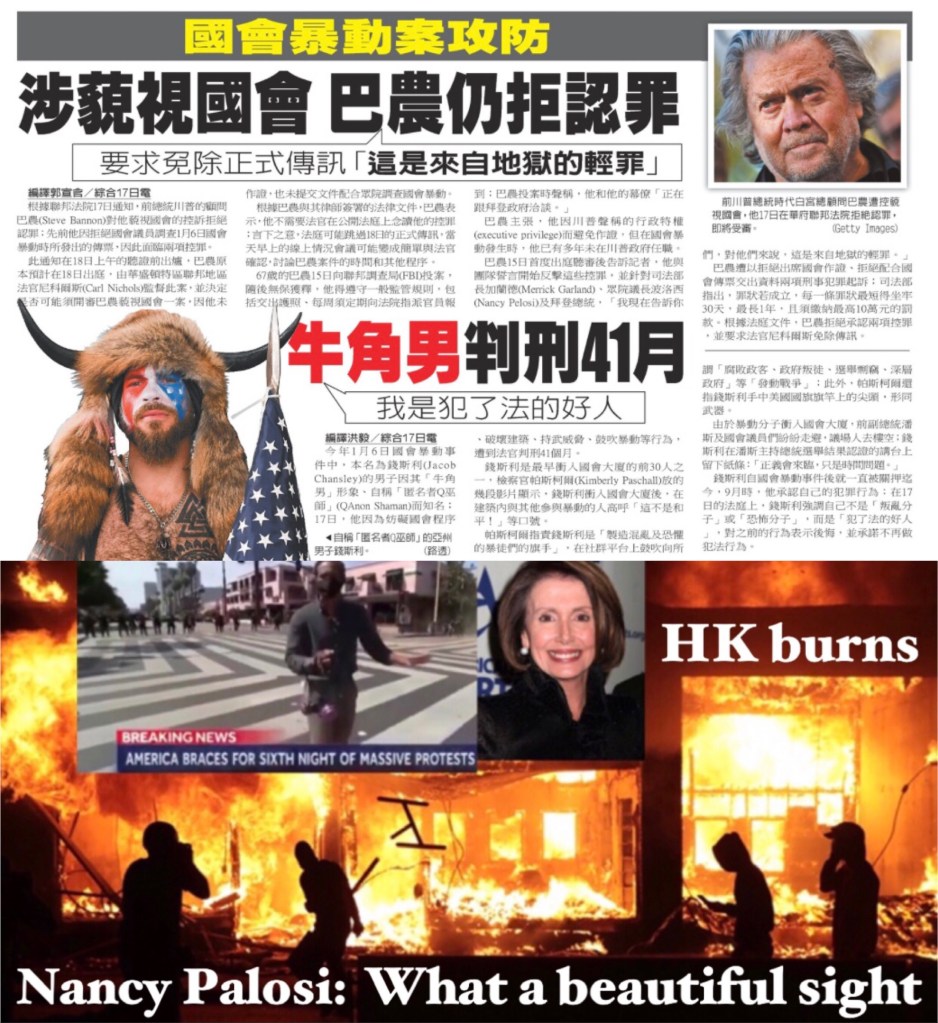
Where is Nancy Palosi to defend me in the name of freedom democracy human rights and rules of laws like she did for NED agents in Hong Kong? 南希佩洛西,妳在哪里以自由民主人權和法律規則的名義為我辯護,就像她為香港的美國民主基金會特工所做的那樣?


 Johnson Choi Biz