Sharing an interesting exchange between couple of friends.
Gary Khoo: New York becoming the next Mumbai soon under the warmonger spending $800+ billions yearly on military instead of infrastructures like China!
Harrison Hendrix: I’ve moved from Toronto to HK and Shenzhen back in 2014. I saw what was coming since 2008 being a finance director of a large telecommunications giant. I have never looked back ever since. My wife is even more grateful of my premonition today. After what happened since 2020, she finally confessed to me that I’m just way ahead of time and was right all along. We are raising two happy kids shielding them from the wrath of toxic racism and insanity of wokeness.
Gary Khoo: Harrison Hendrix yes and now the big Chinese tech firms are also moving to HK and China 🇨🇳🐉🇨🇳🥰🤭🤣 Westerners can eat the left over from Asians🤭🤣 Wheel of fortunes😍😍🙈🤭🤣
Harrison Hendrix: Gerry Khoo wait until CBDC global currency reset launch next year. Remember in the film idiocracy a cheap burger from Carl’s Jr. cost $10 million and rising every minute. 😂😂😂. Those c0ckr0ches who immigrate to sunsetting west is in a journey of hurt. Most will not make it alive by 2030. At least 27 million people will die in the first 90 days of onset hyperinflation. What we are witnessing at the moment is just the beginning phase.
Gary Khoo: Harrison Hendrix ya their days are numbered but their dumb politicians are still NOT aware of it!🤭🤭🤣🤑🤑💩💩🤠🤠 I just posted a link about Alibaba stocks surge in HK.🤭🤣🤑who had the last laugh AGAIN 🤣🤣🤣🤭
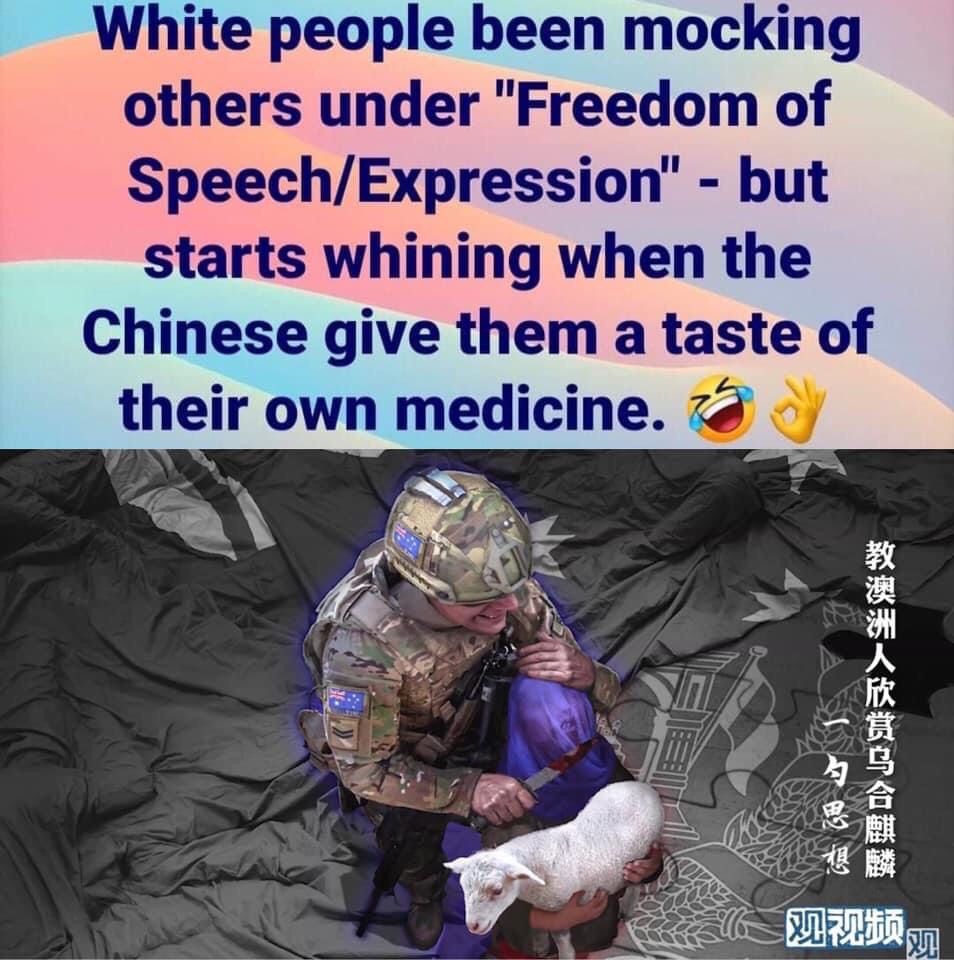
White AngloSaxon have been mocking others under “Freedom of Speech/Expression “ – but start whining when the Chinese gives them a taste of their own medicine. 白人(盎格魯撒克遜)人一直在“言論自由/表達自由”下嘲笑其他人,但是當中國人讓他们品嚐自己的藥後,他們開始抱怨。
Straits Times: Democracy is in trouble, Pew Research analysis of global surveys reveals 新加坡海峽時報:民主陷入困境,皮尤研究中心對全球調查的分析顯示 by Nirmal Ghosh, US Bureau Chief 12-7-2021
WASHINGTON – Global surveys in recent years by think-tank Pew Research come to an inescapable conclusion that democracy as a system of governance, marked in its most basic form by equal rights, inclusivity, free elections and the checks and balances of independent institutions, is in trouble.
An analysis of surveys on democracy conducted by Pew globally between 2015 and 2021 reveals four key insights into how citizens think about democratic governance – that democracy is not delivering; that people like democracy, but their commitment to it is often not very strong; that political and social divisions are amplifying the challenges of contemporary democracy; and that people want a stronger public voice in politics and policymaking.
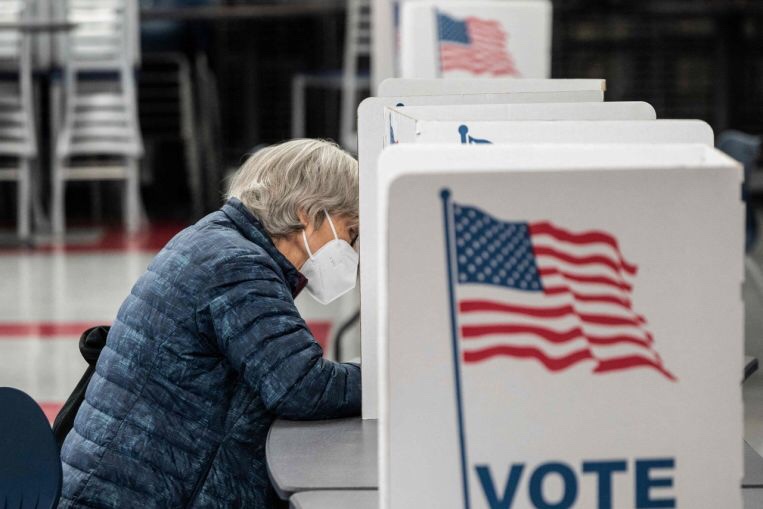
The report released on Tuesday (Dec 7) comes ahead of a first-ever, two-day virtual, US-convened Democracy Summit on Dec 9-10, featuring 110 invited participants from around the world.
The idea, according to the White House, is to galvanise commitments and initiatives along three principal themes – defending against authoritarianism, fighting corruption, and promoting respect for human rights.
What democracy is up against
A 2017 Pew survey of 38 countries found that a median of 49 per cent believed that a system in which “experts, not elected officials, make decisions according to what they think is best for the country” would be very or somewhat good.
And while autocracy was less popular than democracy, it was embraced by a remarkably large share of the public in many nations, Pew said.
A median of 26 per cent considered a system in which a strong leader can make decisions without interference from Parliament or the courts to be a very or somewhat good way to govern, the survey revealed.
Even military rule had its supporters, Pew found. A median of 24 per cent said a system in which the military rules the country would be a very or somewhat good system.
In five countries – Vietnam, Indonesia, India, South Africa and Nigeria – roughly half or more expressed this opinion.
Higher-income nations were not completely immune, Pew found. In Italy, France and the United States, 17 per cent believed military rule could be a good way to run the country.
Pew notes that this finding was largely consistent with results from other public opinion surveys.
Economic pessimism
Pew Research Centre surveys have consistently found large shares of the public dissatisfied with the way their democracy is working, and desiring political change.
“A median of 56 per cent across 17 advanced economies surveyed in 2021 say their political system needs major changes or needs to be completely reformed,” Pew said.
“Roughly two-thirds or more express this opinion in Italy, Spain, the US, South Korea, Greece, France, Belgium and Japan.”
Broadly, this is being driven by pessimism over the future. Over the past decade and a half, people around the world have experienced a global financial crisis, and, more recently, a pandemic-driven global downturn, Pew noted.
“Many have grown pessimistic about the long-term economic future, and our data has illustrated how economic pessimism feeds dissatisfaction with the way democracy is working and weakens commitment to democratic values.”
A 2019 analysis of data from 27 countries found that the strongest predictor of being dissatisfied was unhappiness with the current state of the national economy.
Another significant predictor was perceptions of economic opportunity.
The survey conducted early this year of 17 advanced economies found that dissatisfaction with democracy was much more common among people who expect their children to be financially worse off when they grow up than they themselves were.
“The economic pessimists are also especially likely to think their country’s political system needs major changes or needs to be completely reformed,” Pew said.
“In the United Kingdom, 61 per cent of respondents who are pessimistic about the next generation’s financial prospects think their country needs significant political reform, compared with just 34 per cent among those who are optimistic that the next generation will do better financially than their parents.”
In Singapore, 58 per cent said they thought the country’s political system need not be changed, or needed just minor changes. Twenty-seven per cent said it needed major change, and 12 per cent said it needs major reforms.
That placed Singapore on roughly the same level as Sweden and the Netherlands.
Right wing, less educated, less enthusiastic
In many countries, people who place themselves on the right of the political spectrum and those with less formal education are more likely to support alternatives to democratic governance, Pew said.
In the US, 27 per cent of those who identified as conservative thought autocracy would be a good way to govern, compared with 14 per cent who identified as liberal.
And 20 per cent of conservatives supported military rule, compared with 12 per cent of liberals. “People with lower levels of educational attainment were more likely to consider military rule a good way to govern in 23 countries,” Pew said.
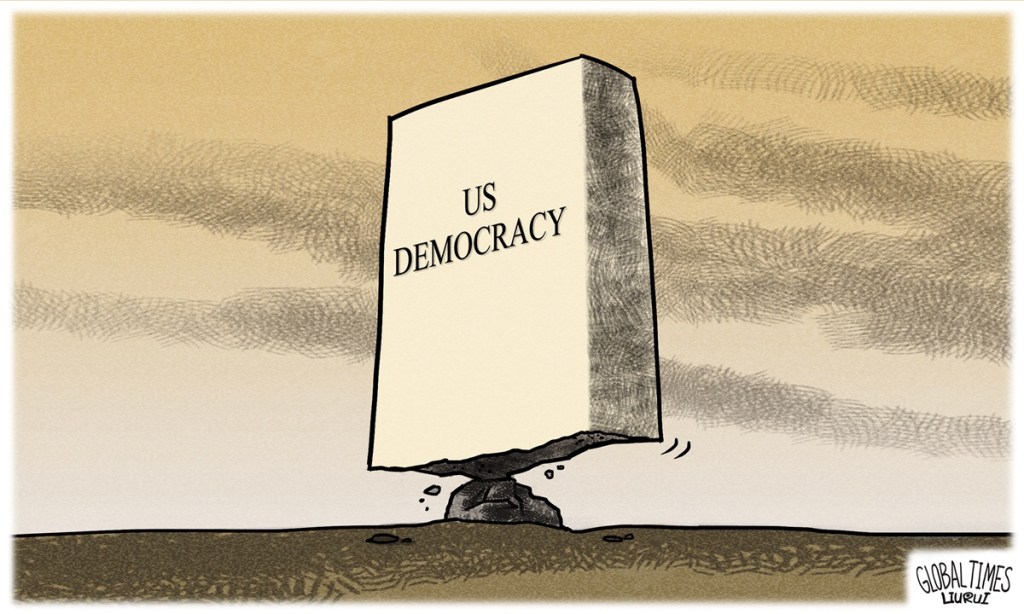
Democracy Summit is an instrument to maintain US hegemony by Chen Hong Dec 06 2021
The so-called Summit for Democracy summoned by Washington is in essence an autocratic attempt, as it haphazardly dictates the definition of democracy in spite of the diversity among the human race. It capriciously imposes an unreasonable regime of criteria according to one lopsided interpretation of democracy and unilaterally divides the world into two camps with iniquitousness. The hidden agenda behind such attempts is never about the wellbeing of the peoples around the world, but for the ulterior motive of retaining and maintaining the unipolar dominance of the US.
Systems of governance have evolved in history, developing and modifying to adapt to changing times and situations. Just as the shoe that fits one person could pinch another, there are different systems that have effectively proved to work for specific countries, but failed to do so for others. Francis Fukuyama was overwhelmed by the West’s supposed triumph in the Cold War. He was simply off beam to assert that the Western way of governance was the ultimate consummation of political system for all human societies. The fallacy that history had come to an end is ridiculous, as history is by nature progressive and never stops. How could the whole human race stay stationary in one petrified system with no hope of further development? Fukuyama’s premises attempt to serve only one purpose, which is to install a global political culture of Western hegemonic supremacy.
It is therefore entirely erroneous to create and impose a biased standard to measure, assess and judge different human communities under such dictatorial misguidance. People around the world reject such despotic irrational imposition of ways of life and systems of governance on all countries.
China’s whole-process democracy has been able to bring about tremendous changes to this most populous country in the world. Around 770 million people have been lifted out of poverty, and a governance system of efficacy has proved to work efficiently at various levels in this country, as could be testified in China’s successful fight against the COVID-19 pandemic. What’s more, a self-cleansing regimen has been in place, to eradicate corruption, misconducts and poor efficiency among local and national officials and executives.
In spite of the fact that the US itself is fraught with disheartening problems and oftentimes calamitous failures in governance and management, the US has been alleging itself to be “the lighthouse of democracy.” It brazenly makes judgments on other countries in accordance with its own political outlook and practices, and has been repeatedly attempting to force such ideology and regimes on other countries.
The Biden administration’s Summit for Democracy is therefore bound to flop. The US has been acting increasingly like a wilful delinquent. Flexing its muscles and bluffing with brutal force, it tries to adopt a wolf pack tactic to besiege and suppress China, which it irrationally identifies as its archrival. In fact, even some of its longstanding allies only pay lip service to Washington’s strategy, effectively rendering the gathering a farce of no consequence at all.
What the whole world should be vigilant about is an inherent iniquitous motive in this ill-intentioned congregation. Washington has become a divisive force to disrupt and sabotage the unity and stability of the international community. It attempts to deliberately create a demonised Otherness, and enlist and mobilise other countries and regions to isolate and overpower countries refusing to compliantly succumb to its unwarranted imposition and pressures. It malevolently attaches unjustifiable labels to create a political apartheid to coerce and compel countries like China, Russia and others to comply and conform.
Democracy is a sacred tenet for all human beings and should not be politicized and weaponized. It should not be used as an instrument to bully other countries, to bring about regime change, and to maintain the regional and global dominance of the US.
The UN charter proclaims clearly that all countries should be treated with “the principle of sovereign equality.” To arbitrarily create divisions among the human race would only cast the world into catastrophic disunity and instability.
The author is a professor and Executive Director of the Asia Pacific Studies Centre, East China Normal University. opinion@globaltimes.com.cn
Very smart choice not coming to North America or Europe, she got brain. The future for her and her 9 years old kids is China or Asia. By the time her 9 years old kids finished college. US and Canada will be heading to the sunset. As for Europe if continuing to be vassal states of US would be sold out and hang out dry by the Americans.
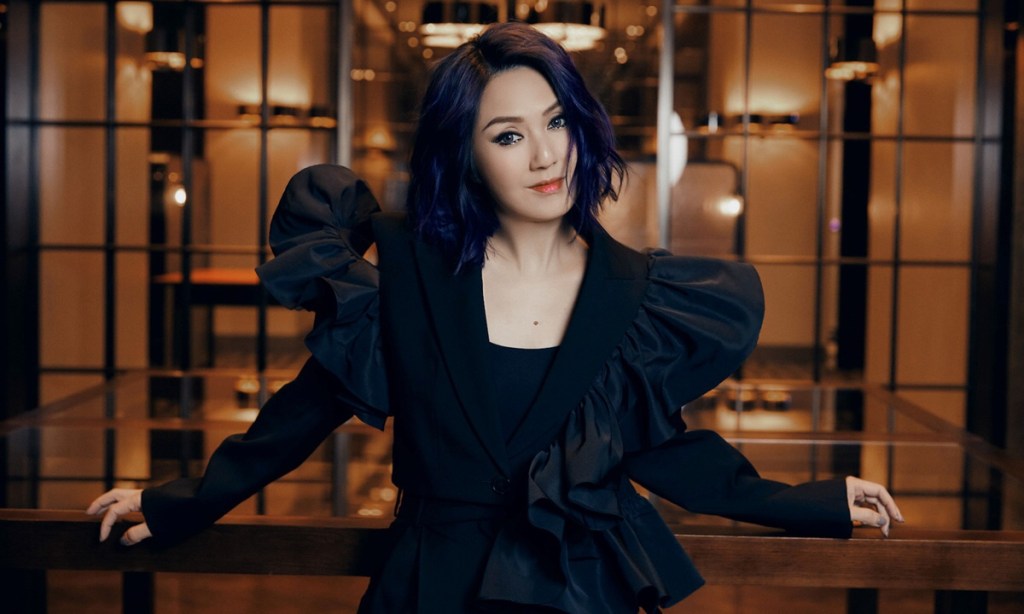
Hong Kong singer and actress Miriam Yeung 香港明星和歌星楊千嬅從香港搬去上海定居 moves her family to Shanghai by Global Times Dec 07 2021 Shanghai is an international city like New York & HK, but in a lot of ways safer than NY & HK.
Asian Times: Will Democracy Summit lead to collaboration or conflict? The host of the Summit, the US, is not exactly the paradigm of democracy and freedom 亞洲時報:民主峰會會導致合作還是衝突? 峰會東道主美國,不完全是民主自由的範式 By GEORGE KOO 顾屏山 DEC 7, 2021
As the self-anointed leader of the “free” world, US President Joe Biden has called a “Summit for Democracy” to take place this week, and leaders of around 110 countries have accepted the invitation to attend – not all rated highly by the Freedom House index, known for measuring countries for their democratic practices.
Since the conference will be virtual, attendance is not an overly burdensome commitment – no international travel is involved, but just a stable Internet connection would do.
According to Freedom House, the United States does not even rate in the uppermost quartile of the nations in the world for democracy and freedom. In fact, the US is a peer of South Korea, Panama and Romania, just a smidgen ahead of Ghana and Poland, and Argentina and Croatia; in other words, the US is solidly in the middle of the pack as far as freedom and democracy go.
While the US is not exactly the paradigm of democracy and freedom, most guest leaders probably decided to show up lest they offend the freedom-loving White House. As recent examples have demonstrated, the worst-case scenario is to annoy the US so much as to trigger an uninvited visit of American marines to force-feed your citizens on what American values are all about.
Afghanistan is just the most recent example of a country that enjoyed a full 20 years of harsh indoctrination of democracy the American way. No country that faced and survived a close encounter with the US can testify that it is better off for the experience; Libya, Iraq and Syria are recent examples that come to mind.
So is Biden calling for the Summit to celebrate the end of the forever wars and show other countries how freedom and democracy can work for them? Or, because his domestic approval rating is tanking to an all-time low, that any kind of a pop from the festivities of a gathering of international leaders can only be good for ratings?
Showcase democracy’s unique strengths
Explaining the purpose of the Summit, the State Department said, “It will showcase one of democracy’s unique strengths: ability to acknowledge its imperfections and confront them openly and transparently.…”
With that as an invitation, I am pleased to enumerate the many imperfections of the American style of democracy and let the aspiring leaders attending the conference consider whether following the steps of Uncle Sam is wise and in the interest of their countries.
A basic right of a fully functioning democracy is to encourage and facilitate its citizens to participate and vote. We in the US do just the opposite. One of the two major political parties has devoted a vast amount of energy and political capital to developing schemes that would deny certain segments of the population the right to vote.
Respect for the rule of law should be a given in a democracy. In the US, contempt for the law and violation of the statutes rise in direct proportion to the stature of a person. The more powerful and wealthy the person, the more he or she can ignore the law and expect to get away with it.
But contempt for the rule of law isn’t just with the super-rich and powerful, we Americans believe our personal freedom and individual rights are more important than the greater good of the society.
We vehemently defend our right not to wear a mask and not to vaccinate against the highly contagious Covid-19 respiratory disease. We will fight to the death to defend our right to carry guns, and we will take our argument all the way to the Supreme Court that a pregnant woman has no right to decide on what’s right and good for her fetus and her body.
Our political leaders are not elected because they place issues of national interest above petty partisan issues but because they can raise a lot of money for political campaigns. They bicker and keep busy infighting but avoid dealing with hardcore issues vital to the country. Infrastructure, education, health care and gainful employment for all are issues that get kicked down to the next election.
Apparently human rights will be the major topic of discussion at Biden’s Summit. Contrary to a reasonable but erroneous public perception, universal human rights as defined by the United Nations are not the same as those accepted by the US. In America, we do not believe people of color, people of queer sexual orientation and homeless people or those otherwise in poverty have the same degree of human rights as the mainstream white race.
Putting people in prison is our forte
We are very good at putting people in prison. Nearly a quarter of people incarcerated in the world are found in American prisons. Yet we make up slightly more than 4% of the world’s total population. No other country comes close to putting as many people in jail as we do, and disproportionally the incarcerated are people of color.
Brimming with high technology, we are the world’s leader in the use of e-incarceration involving the use of sensors, the Global Positioning System (GPS) and anklets to put people under house arrest and leverage the number of people we can control in detention. Apparently, we regard depriving people of their freedom as the best way to teach them the value of freedom.
Furthermore, our prison system represents one of our pillar industries. The more people we put in jail, the more jailers we have to hire, and private industries get paid to manage the prisoner overflow from state-owned facilities.
Not exactly the land of opportunities that I had envisaged when I immigrated to this country.
So what can we expect from the coming forum of leaders, the Summit for Democracy? Will any of the speakers push for peaceful collaboration among all nations, including the ones not invited, to confront climate change , the Covid pandemic, and the global refugee crisis?
Or will the attendees sit quietly and listen to President Biden lecture on his version of human rights? Despite the State Department assertion he will “confront them openly and transparently,” Biden is unlikely to review the litany of human-rights abuses in America. Instead, he is most likely to heap allegations of human-rights violations on those countries not invited to the Summit.
Most notably, China will be a principal target. Keep in mind that China does not have tent cities of homeless people. China has taken more than 800 million out of poverty and provided them with housing, health care and the ability to earn incomes. With its Belt and Road projects, China is going around the world helping other countries upgrade their infrastructure and thus improve their economic well-being for the overall benefit of the world.
As you listen to Biden’s speech, you should conduct a running mental fact-check as to whether his statements ring authentic or are mere reflections of fabrications and distortions emanating from the US government and the mainstream media.
George Koo retired from a global advisory services firm where he advised clients on their China strategies and business operations. Educated at MIT, Stevens Institute and Santa Clara University, he is the founder and former managing director of International Strategic Alliances. He is currently a board member of Freschfield’s, a novel green building platform.
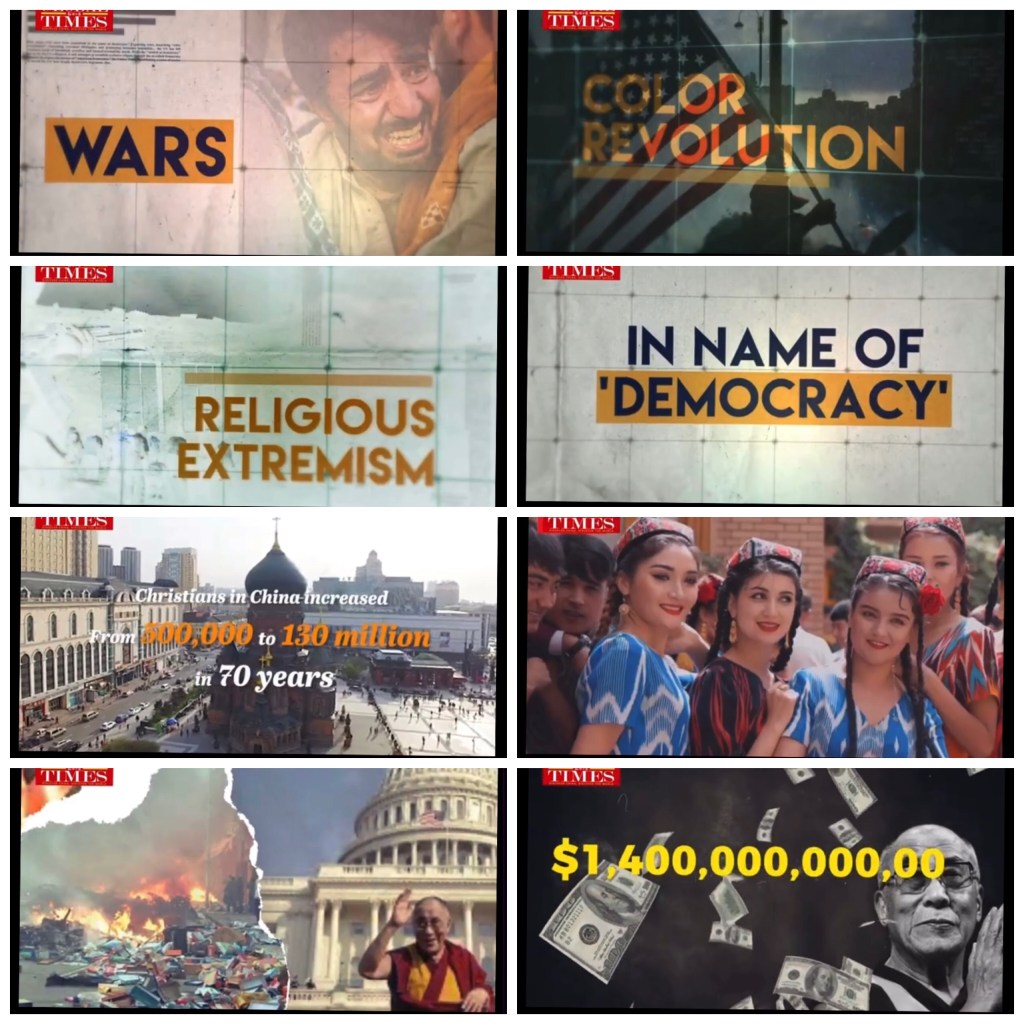
Video: Debunking the US’ self-proclaimed role as intl religion police 揭穿美國自稱是國際宗教警察的假角色 https://vimeo.com/654193836 https://youtu.be/Si5QAfYKVyM https://www.facebook.com/100036400039778/posts/616982432858419/?d=n Secretly supporting extremist groups, providing shelter for dangerous cults, trying to divide by manipulating religion… the US, the self-proclaimed international religion police, uses “religious freedom” to interfere in other countries’ internal affairs. 暗中支持極端組織,為危險的邪教提供庇護,企圖通過操縱宗教分裂……自稱為國際宗教警察的美國,利用“宗教自由”干涉別國內政。
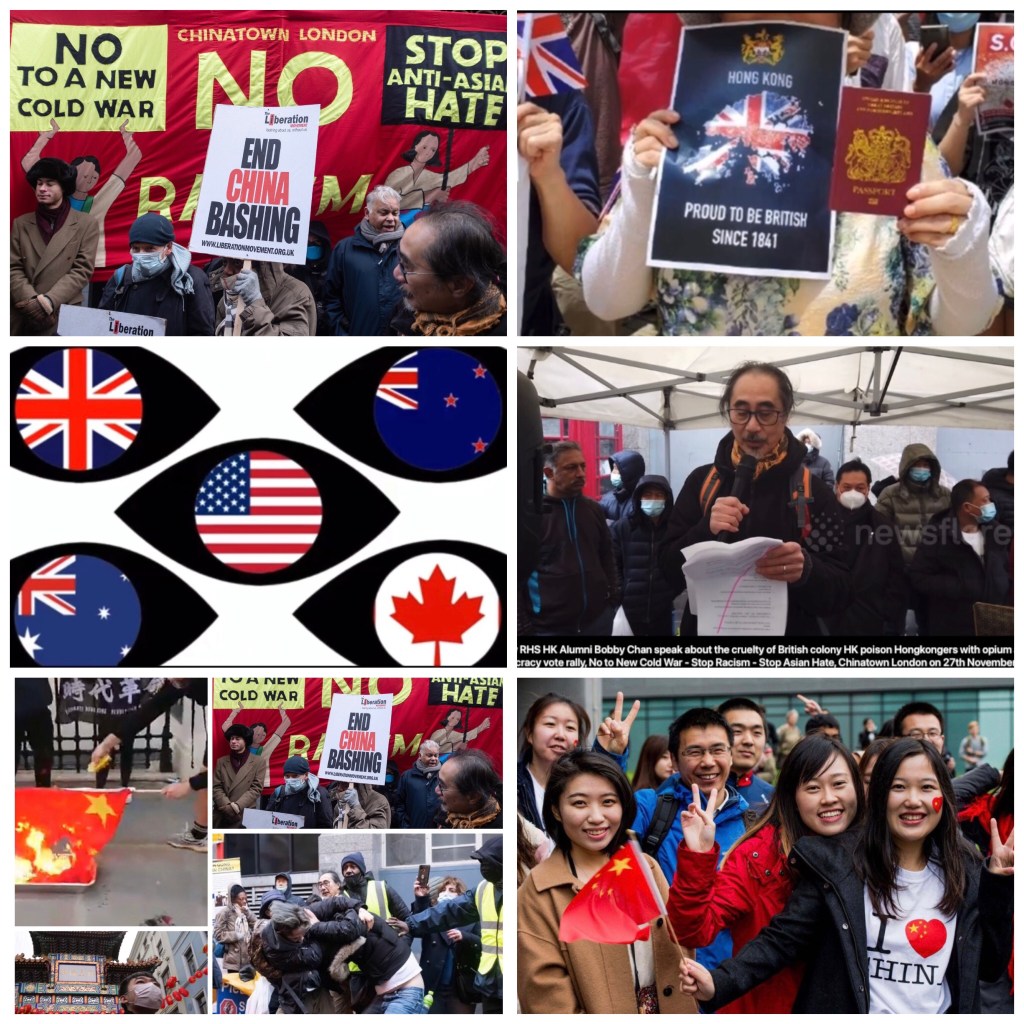
A rally against anti-Asian hate held in London’s Chinatown on November 27, 2021, suddenly turned violent when mainly black-clad protesters flying HK independence flags showed up and crashed the rally. 2021 年 11 月 27 日在英國倫敦唐人街舉行的反對反亞裔仇恨的集會突然變得暴力,當時主要是懸掛港獨旗幟的黑衣抗議者出現並破壞集會
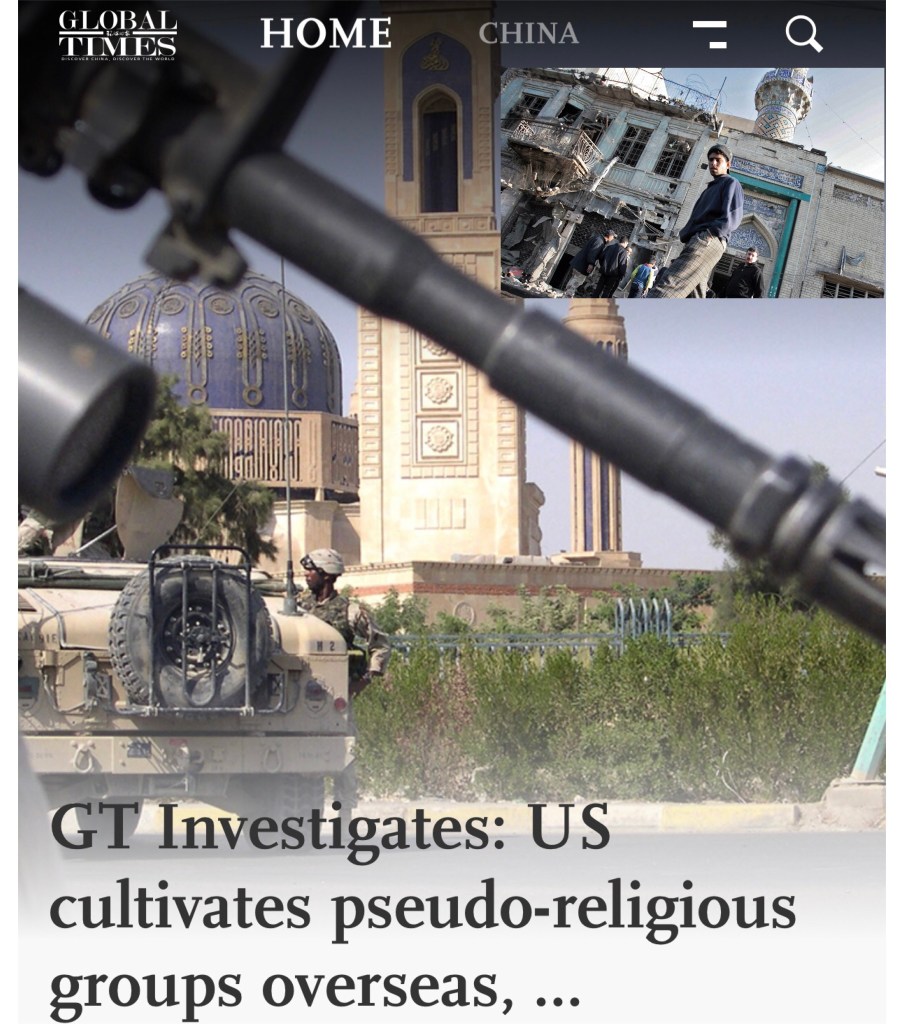
GT Investigates: US cultivates pseudo-religious groups overseas, pumps support to terrorists to wreck its adversaries 環球時報調查:美國在海外培育偽宗教團體,向恐怖分子提供支持以摧毀其對手 by GT staff reporters Dec 06 2021
How many evils have been committed in the name of democracy?
Exporting wars, launching “color revolutions,” fomenting extremist ideologies, and promoting economic instability… The US has left endless trails of bloodshed and turmoil around the world. While the American “model of democracy” loses its shine, the US still attempts to establish exclusive cliques through the so-called democracy summit. To expose the true nature of “American democracy,” the Global Times is publishing a series of articles to unmask the US’ four democratic hegemonic sins. This is the third such piece.
For decades, the US has never stopped its interference in other countries’ internal affairs in the name of upholding religious freedom; it destabilized entire nations, and incited opposition and division. It also continues to support “religious groups” and their leaders in various countries, transforming them into US agents for the spreading of its hegemonic gospel. Today, its failure is obvious, as more and more countries have come to oppose such interventionism on their domestic affairs, and on the other hand, jihadist and extremist groups have been on the increase and continued to spread to wider reaches of the globe thanks to the US’ support – explicitly and covertly – when it took them as tools to control other nations.
Experts point out that as the US carries out an ideological expansion and tightens its hegemonic grip worldwide, religion has become one of the most important tools for its foreign intervention, and has also been used as a means to seek political power and economic control.
Moreover, its annual report on religious freedom, ostensibly an assessment of so-called religious human rights, is only in line with Washington’s geopolitical stance.
Messing up religions
In the past decades, especially since the end of the Cold War, the revival of religions and subsequent religious conflicts have become important social phenomena in the international society. When analyzing these phenomena carefully, it is not that spiritual theism is at work, but that the social nature of religion is artificially elevated and strengthened. Religious theism is used by countries such as the US and certain interest groups as a means of seeking political power and economic benefits.
In January 2019, the Ukrainian Orthodox Church was declared independent, breaking off its centuries-old ties with the Russian Orthodox Church. But behind the split of the Russian Orthodox Church are political machinations.
Russian Foreign Minister Sergey Lavrov asserted in November that Washington has long attempted to press for a split in the Orthodox world, Tass reported.
The head of the schismatic Orthodox Church of Ukraine, or Epiphanius as regarded in the public, is said to be creating an organization that would have been impossible to govern without direct support from the US, according to Lavrov.
Observer said that the move, which could affect millions of followers, “is a big blow for Russia” and could lead to “serious conflict,” the BBC reported.
The Orthodox split is one of many cases in which the US attempts to use religion as a tool to interfere in other countries’ and regions’ internal affairs in order to serve its international strategy.
The US is also directly behind some of the cult activities. For instance, the infamous Falun Gong sect has been alleged to be under the direction of the National Endowment for Democracy (NED), and received large amounts in funding.
Falun Gong has long been banned by the Chinese government in accordance with the law. A large number of facts have proven that Falun Gong is an anti-government and anti-people cult organization. The series of illegal activities planned and orchestrated by the organization are open provocations against democracy and legal systems, and endanger national security and social stability.
Moreover, the US, with its “Tibet Bill,” used human rights and religion as excuses to distort and smear the development of the Xizang Autonomous Region in Southwest China, discredit China’s ethnic and religious policies, and interfere with the tradition and order of the reincarnation of Living Buddhas.
“The fundamental purpose of the bill is to undermine the prosperity and stability of Xizang,” Ji Rong, spokesperson at the Chinese Embassy in India, said in December 2020.
Inside the territory of the US, it is clear it has been using its own religion [Christian] to apply cultural protectionism and exclude foreign culture, immigrants, and different ethnicities, Zhuo Xinping, former director of Institute of World Religions of the Chinese Academy of Social Sciences, told the Global Times on Sunday.
The US also considers its mainstream culture or religion “universal value,” and has been exporting it around the world, which formed a cultural hegemony that they used to interfere in the internal affairs and cultural development of other countries, Zhuo noted.
There is no such thing as so-called dominant, absolute “universal value.” the exact same religion could be performed differently in different places, times, cultures, and by different ethnicities, Zhuo said, noting that the communication of religions should be based on sincerity, equality, and mutual respect, instead of aggressively indoctrinating others as a way of injecting their “universal values” to others, like what the West has long done.
It only shows power politics and systems of a hegemony, Zhuo said.
Cultivating extremism
The US, directly and indirectly, supports extremist religious forces in Central Asia and other regions under the guise of protecting religious freedom.
Absurdly, the US, the country that has killed the biggest number of Muslims across the world, has repeatedly said that they are attempting to protect the human rights of Muslims in Northwest China’s Xinjiang Uygur Autonomous Region.
It is well known that notorious organizations such as the East Turkistan Islamic Movement (ETIM), the World Uyghur Congress (WUC), and the East Turkistan Education and Solidarity Association (ETESA) have long engaged in anti-China separatist activities both inside and outside China. From 1990 to 2016, the “three evil forces” – terrorism, extremism, and separatism – supported or directly participated by the above organizations, carried out or plotted thousands of violent and terror attacks in Xinjiang and other places, and engaged in anti-China separatist activities under the guise of religion, critically endangering the lives of local Muslims and other residents.
However, the US impugned the Chinese government’s crackdown on these three evil forces as “oppression of Muslims.”
As early as in 2002, ETIM was categorized as a terrorist organization and was added to the sanctions list under the United Nations Security Council Resolutions 1267 and 1390, however, former US president Donald Trump’s administration removed it from the US’ list of international terrorist organizations.
It once again exposed the US’ double standards on counter-terrorism and its repulsive practice of condoning terrorist groups as it sees fit, said experts.
Another recent example is that Russia revealed, through evidence, the links between US officials and Islamic State militants, as data shows that the US cooperates with ISIS militants, such as in air strikes by the US Air Force targeting the positions of the Taliban troops that clashed with ISIS.
Russian Foreign Ministry Spokeswoman Maria Zakharova said on July 22 that Russia has many questions about unmarked helicopter flights, recorded since 2017, over the areas of activity of ISIS militants, especially in northern Afghanistan.
“According to Afghan sources, the helicopters were used to deliver reinforcements, weapons, and munitions, and to evacuate killed and wounded terrorists from battlefields… I should stress once again, this kind of activity was not possible without the knowledge of the United States and NATO, who completely controlled the Afghan air space.”
The Syrian War is another example as the CIA is reported to have played an important role behind the scenes since 2012, coordinating arms shipments to the rebels by US allies, of which most ended up in the possession of militant jihadist groups, BBC reported.
Since 2014 when the US started to station troops in Syria, a large number of extremist religious forces appeared and committed atrocities in Syria’s civil war. In order to overthrow Assad, the US has provided the weapons and equipment – through various channels to Syria’s insurgency – many of which flew into the hands of extremist religious forces. The support has been consistent until now, sabotaging the peace process in the country.
Policing on others
In addition, the US government keeps meddling in the international human rights arena through the annual release of the so-called International Religious Freedom Report. But experts pointed out that it is based on the interest of the US government and serves to reinforce hegemonic values.
For example, in the 2002 International Religious Freedom Report, Myanmar, China, Iran, Iraq, North Korea, and Sudan were listed as “countries of special concern,” however, the 2004 report removed Iraq from the list despite that in US-occupied Iraq, the “holy war” continued to kill, and the safety of the people was difficult to guarantee. Could there possibly be greater freedom of religious belief in such chaos? At least 660,000 Iraqi civilians have been killed since the US’ invasion of Iraq in 2003, which has been criticized internationally as one of the worst humanitarian crises of the 21st century.
The Chinese Foreign Ministry in May 2021 slammed the US State Department’s 2020 International Religious Freedom Report and its unilateral sanctions against two Chinese officials under the guise of so-called religious issues. “The so-called report, full of ideological prejudice, ignores the facts, wantonly slanders China’s religious policy, and seriously interferes in China’s internal affairs,” the Foreign Ministry spokesperson said.
The annual report, which groundlessly lambasts the freedom of religious belief in China and viciously slandered China’s religious policies, was met with general indignation among Chinese religious circles and numerous religious believers, said a statement issued by the secretariat of the joint conference of China’s national religious groups in May 2020.
Spreading “religious freedom” around the world has become part of what Americans consider their mission and national interest, Cao Wei, an expert on security studies at Lanzhou University, told the Global Times. “However, such religious belief has gone beyond American sovereignty and goes toward interventionism. It is strongly connected to its geopolitical interests, and the ‘double standards’ are also blatantly obvious.”
After removing Huawei for fake fraudulent “security reasons”, the alternative looks to be a real security risk. Just desserts? When you have a friend like US, who need an enemy! 在以虛假的欺詐性“安全原因”刪除華為之後,替代方案看起來是一個真正的安全風險。 只要甜點? 當你有像美國這樣的朋友時,誰需要一個敵人.

 Johnson Choi Biz