American Indian Wars: The roar of capital and a dirge of humanity

https://news.cgtn.com/news/2021-12-13/American-Indian-Wars-The-roar-of-capital-and-a-dirge-of-humanity-15QCYQepJYI/index.html

American Indian Wars: The roar of capital and a dirge of humanity – CGTN Insight

Editor’s note: The United States has been at war for more than 200 of its 240 years of existence. Between the end of WW II and 9/11 – barely 50 years – the U.S. initiated 201 conflicts that ravaged 153 countries and regions. “America: War by another name” is a special eight-part series that explores the sinister motivations for its warmongering. Episode 1 examines how the pursuit of capital justified multiple genocides.

In the film “Good Will Hunting,” there is a scene when the protagonist Will Hunting is asked why he refused to work for the National Security Agency.

He replied, “Say I’m working at NSA. Somebody puts a code on my desk, something nobody else can break. So I take a shot at it and maybe I break it… But maybe that code was the location of some rebel army in North Africa or the Middle East. Once they have that location, they bomb the village where the rebels were hiding and 1,500 people I never had a problem with get killed. Now the politicians are saying, ‘Send in the marines to secure the area’… It won’t be their kid over there, getting shot… It’ll be some kid from Southie taking shrapnel in the as… And the guy who put the shrapnel in his as got his old job, cause he’ll work for 15 cents a day and no bathroom breaks. Meanwhile, he realizes the only reason he was over there in the first place was so we could install a government that would sell us oil at a good price. And of course the oil companies used the skirmish to scare up oil prices so they could turn a quick buck… So what did I think? I’m holding out for something better.”

What he said was an accurate reflection of the giant web of interests woven by American political and capital powers through wars. It also expressed the frustration keenly felt by decent Americans of conscience over their own country’s waging of wars.

History always repeats itself. Will’s telling analysis of America’s war logic also tells the fate of army officers who did not have the heart to draw their sword against innocent people in the genocide of American Indians.

On November 29, 1864, a 700-man force of the Third Colorado Cavalry under the command of Colonel John Chivington raided an Indian encampment, committing the blood-curdling Sand Creek Massacre. Chivington, once a Methodist pastor but now a butcher, shouted, “Damn any man who sympathizes with Indians! I have come to kill Indians, and believe it is right and honorable to use any means under God’s heaven to kill Indians.”

Under his instruction, more than 100 American Indians were killed, two-thirds being defenseless women and children. Some victims were even dismembered, with their scalps and body organs treated as trophies by American soldiers. In spite of the ruthlessness, there were still a small number of compassionate officers in the army who refused to kill innocent people. Captain Silas Soule was one of them. His frustration-laden letters back then, now kept in the Denver Library, detailed the tragedy.

One letter written to Major Edward Wynkoop reads:

“The massacre lasted six or eight hours, and a good many Indians escaped. I tell you Ned it was hard to see little children on their knees have their brains beat out by men professing to be civilized. One squaw was wounded, and a fellow took a hatchet to finish her, and he cut one arm off, and held the other with one hand and dashed the hatchet through her brain.”

In another letter to his mother, he wrote:

“The day you wrote, I was present at a Massacre of three hundred Indians mostly women and children. It was a horrible scene, and I would not let my Company fire. They were friendly and some of our soldiers were in their Camp at the time trading… Some of the Indians fought when they saw no chance of escape and killed twelve… of our men. I had one Horse shot… I hope the authorities at Washington will investigate the killing of those Indians. I think they will be apt to hoist some of our high officials. I would not fire on the Indians with my Co. and the Col. said he would have me cashiered, but he is out of the service before me and I think I stand better than he does in regard to his great Indian fight.”

The records and narratives of Soule and other righteous officers who refused to participate in the massacre sparked such outrage that the authorities had to initiate an investigation. Despite Chivington’s coercion and cajolery, Soule resolutely chose to testify about the war crime before the Colorado military commission. Because of this, he was eventually assassinated. The name Silas Soule is not known to many Americans, but as historian David Fridtjof Halaas put it, without people like him who had the courage to disobey orders, “the descendants probably wouldn’t be around today, and there would be no one to tell the stories.”

The Sand Creek Massacre is but one episode of the 100-year U.S. genocide against Native Americans. Rapacious acts including ethnic cleansing, cultural erosion and environment destruction reinforced America’s national strength and paved the way for its rise. The misdeed was seemingly driven by Washington’s land policy to promote westward expansion, but, in its essence, this was the one and only path for the U.S. to complete its primitive accumulation of capital and the transition from free competition to monopoly.

For a long time after the founding of the U.S., an extremely large portion of Congress seats were occupied by land opportunists, land brokers, big capitalists and those who had a close connection with them. In an era where the country had just emerged out of the rubble of war and had to start from scratch, the U.S. government did two things to ease financial difficulties.

For one, taking advantage of Native Americans’ ignorance of modern concepts such as sovereignty, territory, real right and human rights, it implemented an exploitative policy combining massacre, deceptive treaties, loans and forced assimilation to arbitrarily snatch away control over their ancestral homelands.

For another, it traded the “fruits” of war, namely lands, for scarce capital. Big capitalists and land opportunists sold lands to ordinary immigrants at a high price in the form of usurious loans to bankrupt the latter. This indirectly promoted the development of capitalist farms and the land tenancy system. In the meantime, they invested the profits from land opportunism in high-returning sectors such as the fur trade and the transportation industry.

If, in the American Indian Wars, Native Americans were the biggest victims, followed by the ordinary public, then investors including businessmen, bankers, financiers and factory owners, together with social elites and senior politicians, were the ultimate winners in the capital reshuffle.

Until this day, while the feats of America’s founding fathers such as George Washington and Thomas Jefferson are much celebrated, there has rarely been any mention of the Indian lives that they trod underfoot and slaughtered like lambs.

When people eulogize the pioneering, aspiring and reformative American spirit fostered by the westward movement, they intuitively turn a blind eye to the blood of innocent American Indians flowing underneath capitalist lust and greed.

Captain Silas Soule’s letters and fate unveiled, through the American Indian Wars, an age of roaring capital growth. As a witness of the tragedy of Native Americans, a man of conscience and an army officer serving the government, he wrote a dirge of humanity that is supposed to be dedicated to American Indians.

(The author, Wang Congyue, is an assistant research fellow at the Institute of American Studies, Chinese Academy of Social Sciences. If you want to contribute and have specific expertise, please contact us at opinions@cgtn.com.)
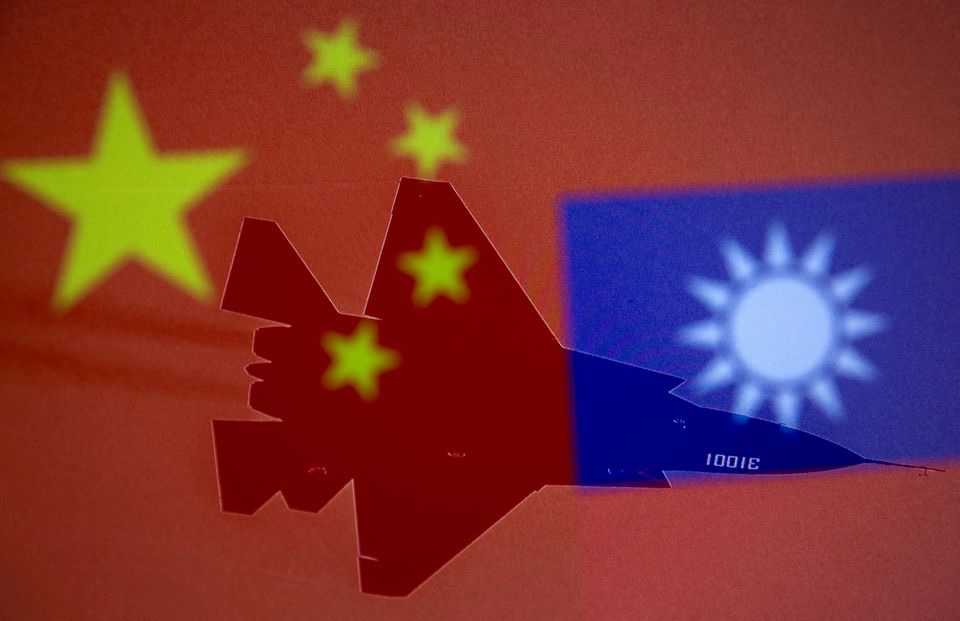
Reuter: The curious case of a map and a disappearing Taiwan minister at U.S. democracy summit.

https://archive.md/HPR86

Reuter: The curious case of a map and a disappearing Taiwan minister at U.S. democracy summit. Embarrassing map with independent Taiwan causes US to cut video feed. Taiwan is part of China. 路透社:美國民主峰會上地圖和台灣部長失踪的奇怪案例。 台灣獨立的尷尬地圖導緻美國切斷視頻源。 台灣是中國的一部分。

A video feed of a Taiwanese minister was cut during U.S. President Joe Biden’s Summit for Democracy last week after a map in her slide presentation showed Taiwan in a different color to China, which claims the island as its own.

Sources familiar with the matter told Reuters that Friday’s slide show by Taiwanese Digital Minister Audrey Tang caused consternation among U.S. officials after the map appeared in her video feed for about a minute.

The sources, who did not want to be identified due to the sensitivity of the matter, said the video feed showing Tang was cut during an ongoing panel discussion and replaced with audio only – at the behest of the White House.
The White House was concerned that differentiating Taiwan and China on a map in a U.S.-hosted conference – to which Taiwan had been invited in a show of support at a time when it is under intense pressure from Beijing – could be seen as being at odds with Washington’s “one-China” policy, which avoids taking a position as to whether Taiwan is part of China, the sources said.

CGTN: Confronted with Omicron, countries are endorsing China’s COVID-19 approach: expert.

https://news.cgtn.com/news/2021-12-12/Confronted-with-Omicron-countries-endorse-China-s-COVID-19-approach-15VDoMIvgac/index.html

CGTN: Confronted with Omicron, countries are endorsing China’s COVID-19 approach: expert.

China’s top epidemiologist said on Saturday that many countries taking strict measures when facing the Omicron variant are echoing China’s approach in fighting COVID-19.

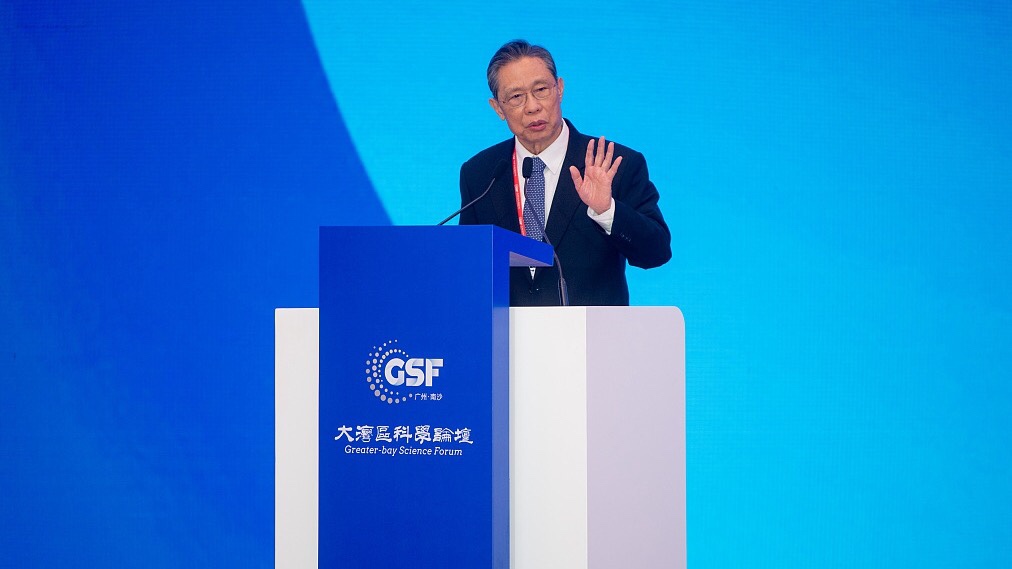
“The world is gradually recognizing China’s approach against the virus during the two-year battle against the pandemic,” Zhong Nanshan told a sub-forum of the Greater Bay Science Forum.

He said research and development on vaccines, antibodies and medicines are still lagging due to a lack of understanding of the origins of the virus, the intermediate hosts and transmission routes.

Zhong reiterated that taking vaccines or other treatments is still essential to keep the transmission at low rates.

“It’s estimated China will hit the target of herd immunity by the end of the year with 83 percent population fully vaccinated,” he said.

The pulmonologist also mentioned the latest progress in China’s first COVID-19 treatment, Brii Biosciences’ (Brii) neutralizing antibody cocktail. “The drug is working as many COVID-19 patients with severe conditions in Yunnan, Qinghai and other places have reacted to the drug well,” Zhong said.

In addition, he said the consistent development of new drugs against COVID-19 and the joint effort from different countries are also required to battle the virus.

“We can’t win the battle against the pandemic if only depending on one country or one company,” he said.

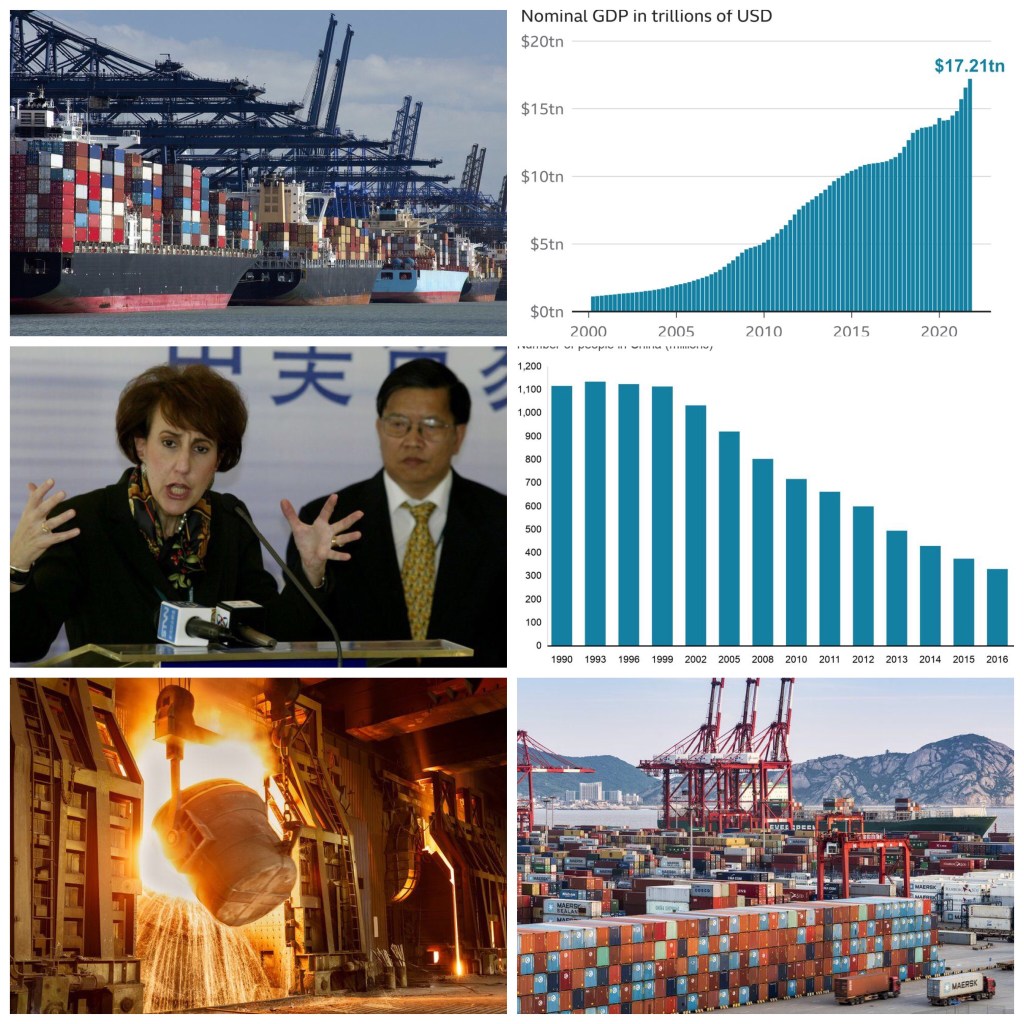
So, 20 years on – the world transformed by a little-noticed decision. It’s been a huge success for China.

https://www.bbc.com/news/business-59610019

BBC: How the West invited China to eat its lunch? There were two events in late 2001 that shook the axis of the world. So, 20 years on – the world transformed by a little-noticed decision. It’s been a huge success for China. 西方是如何邀請中國吃午飯的? 2001 年末有兩件事震動了世界軸心。 因此,20 年後 – 世界因一個鮮為人知的決定而改變。 這對中國來說是一個巨大的成功. by Faisal Islam – Economics editor

The world was preoccupied with the immediate aftermath of 9/11. But exactly three months later, on 11 December, the World Trade Organization (WTO) was at the centre of an event that was to cast as strong a shadow over the 21st century, changing more people’s lives and livelihoods around the world than the attacks on America.

Yet few know it even happened, let alone its date. China’s admission to the World Trade Organization changed the game for America, Europe and most of Asia, and indeed for any country in possession of industrially valuable resources, such as oil and metals.
It was a largely unnoticed event of epic geopolitical and economic importance. It was the root imbalance behind the global financial crisis. The domestic political backlash against the outsourcing of manufacturing jobs to China has reverberated around the western G7 nations.

The promise, suggested by the likes of former US President Bill Clinton, was that “importing one of democracy’s most cherished values, economic freedom”, would enable the world’s most populous nation to follow the path of political freedom too.

“When individuals have the power not just to dream, but to realise their dreams, they will demand a greater say,” he said.

But that strategy failed. China began its ascent to its current status as the world’s second biggest economy – and is on a seemingly inevitable path to becoming the world’s biggest.

Indeed the US trade representative responsible for negotiating China’s WTO deal, Charlene Barshefsky, told a Washington International Trade Association panel this week that China’s economic model “somewhat disproved” the Western view that “you can’t have an innovative society, and political control”

“It’s not to say that China’s innovative capacity is enhanced by its economic model,” she added. “But it is to say that what the West thought were incompatible systems may not be necessarily incompatible systems.”

Up until 2000 China’s global economic role had been principally as one of the world’s biggest manufacturers of plastic gubbins and cheap tat. Important, yes, but neither world-beating nor world-changing.

China’s accession to the top table of world trade heralded a massive global transformation. A powerful combination of China’s willing workforce, its super-high-tech factories, and the special relationship between the Chinese government and Western multinational corporations changed the face of the planet.

An army of cheap Chinese labour began to produce the goods that underpin Western living standards, as China seamlessly inserted itself into the supply chains of the world’s biggest companies. Economists call it a “supply shock”, and its impact certainly was shocking. Its effects are still reverberating around the world.
China’s integration into the world economy has seen significant economic achievements, including the eradication of extreme poverty, which stood at 500 million before WTO membership and is now basically zero as the value of the economy, in dollar terms, increased 12-fold. Foreign exchange reserves increased 16-fold to $2.3 trillion, as the world’s purchases from China’s workshops were banked by the Chinese state.

In 2000, China was the seventh-largest goods exporter in the world, but it quickly reached the number one spot. China’s annual growth rate, already at 8%, went stratospheric at the height of the world boom, peaking at 14%, and stabilised at 15% last year.

Container ships are the juggernauts of global trade. In the five years after China joined the WTO, the number of containers on ships coming in and out of China doubled from 40 million to more than 80 million. By 2011, a decade after the country became a WTO member, the number of containers going in and out of China had more than trebled to 129 million.

Last year it was 245 million, and while about half of the containers going into China were empty, nearly all those leaving China were full of exports.

There has also been a massive expansion in China’s highway network, which increased from 4,700km in 1997 to 161,000km by 2020, making it the largest network in the world, connecting 99% of cities with populations of over 200,000.

In addition to its state-of-the-art freight infrastructure, China also needs materials such as metals, minerals and fossil fuels to support its manufacturing boom. One material essential to China’s burgeoning automotive and electrical appliance industries is steel. In 2005 China became, for the first time, a net exporter of steel, and has since become the world’s largest exporter.

Through the 1990s, China’s production of steel hovered at around 100 million tonnes per year. After WTO membership, it exploded to around 700 million tonnes by 2012 and exceeded one billion tonnes in 2020.

China now accounts for 57% of world production and produces significantly more steel on its own than the rest of the globe managed together back in 2001. The same goes for ceramic tiles, and plenty of other ingredients of industry.

In electronics, clothing, toys and furniture, China became the dominant source of supply, forcing down export prices all around the world. Economists noticed a “once-for-all” shock in global prices following China’s WTO entry. China’s clothing exports doubled between 2000 and 2005, and its share of the value of global trade went from one fifth to one third.

After 2005, production quotas in the textile industry were also lifted, leading to an even bigger production shift to China. However, as production in China became more expensive and production has shifted to developing countries such as Bangladesh and Vietnam, this has fallen back to 32% of clothes last year.

The Chinese minister responsible for WTO accession, Long Yongtu, made an admission reflecting on the past two decades. “I don’t believe China’s WTO accession was a historic job-killing mistake [for the US and the West],” he said. “However I recognise the allocation or the benefit is uneven. The complete picture is that when China got his own development, it also provided the rest of the world with a huge export market.”

But there was a sting in the tail – that it was US politics that failed to account for the inevitable impact of Chinese competition on some sectors. “When the uneven distribution of wealth happens, a government should take measures to adjust that distribution through domestic policies, but it’s not easy to do that,” said Long Yongtu.
“Maybe blaming others much easier, but I don’t think blaming others can help to solve the problem. In China’s absence, the US manufacturing industry would move to Mexico.”

He then relayed an anecdote of a Chinese glass manufacturer who struggled with opening a factory in the USA: “It’s very difficult for him to find competitive workers there. He told me American workers’ bellies are bigger than his,” said the minister.

So right now we have come full circle. China has had significant economic success within the WTO. Right now the Biden administration seems in no hurry to change the obstructive policies of his predecessor there. The trade scepticism is very real. China has used WTO membership to go well beyond its earmarked role as workshop to the West.

It has, for example, strategically planned alliances to get access to significant amounts of the rare earth materials that should power the net zero climate change economic revolution. It has deployed the state behind industrial expansion around the world. The US is looking to contain China diplomatically and economically, and seeking allies in this endeavour in Europe and Asia.

As former US trade representative Barshefsky puts it, China has been “on this very divergent course for some time. What does that mean? A strengthening of a state-centric economic model fuelled by massive subsidisation to designated industries… the re-emergence of China as a great power, and the leader of what it calls the Fourth Industrial Revolution. This is a lot to handle. The WTO can’t handle it.”

So, 20 years on – the world transformed by a little-noticed decision. It’s been a huge success for China. The intended geopolitical strategy of the West failed. Indeed, rather than China becoming more like the West politically, as a result of this decision, the West economically speaking is becoming a bit more like China.

How China and Africa have developed cooperation over the past two decades.

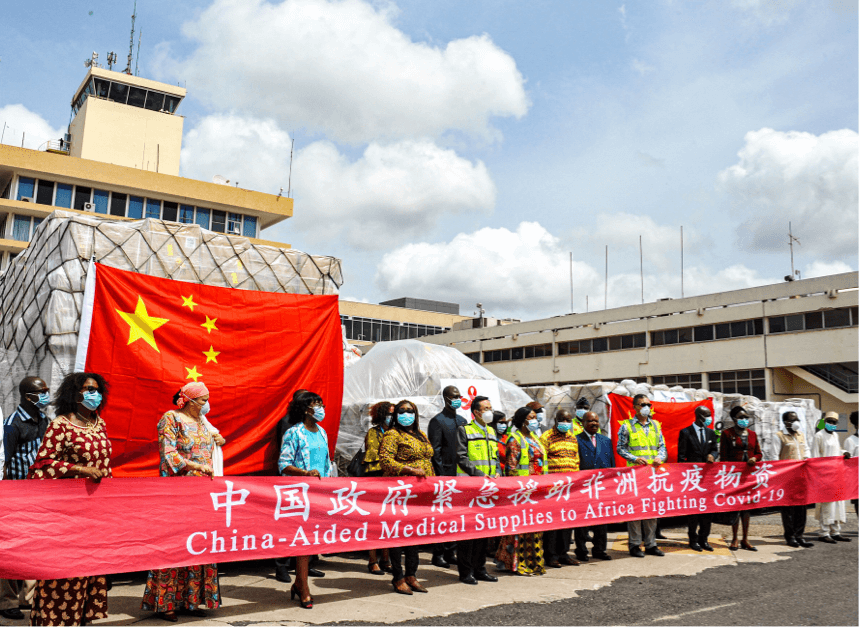
How China and Africa have developed cooperation over the past two decades. On April 6, 2020, China-aided medical supplies to Africa fighting Covid-19 arrived in Ghana (photo)

Zhang Zhongxiang and Tao Tao points out that since the establishment of the Forum on China-Africa Cooperation (FOCAC) (中非合作论坛 zhōng fēi hézuò lùntán) in October 2000, China has supported Africa addressing problems that have severely restricted economic development – including inadequate infrastructure and shortage of funds – and has become a driving force in the continent’s development. For example, over the last two decades, the scope of China’s duty-free access to African products expanded steadily. Between 2000 and 2012, China-Africa trade increased from 3.82 percent to 16.13 percent of Africa’s total foreign trade. Chinese companies have built 10,000 km of roads, 6,000 km of railroads, 30 ports, 20 airports, and 80 power stations on the continent in ten years (2008-2018). Furthermore, China has provided aid to Africa in areas such as debt relief, human resource training, and dispatching of medical and agricultural experts. The number of Africans trained in these cooperation projects have increased from 7,000 to 50,000 people between 2000 and 2018, totaling 172,000 people. Adhering to its core principles, China’s aid is provided without political conditionality (不附加任何政治条件 bù fùjiā rènhé zhèngzhì tiáojiàn) and interference in the internal affairs of receiving countries (不干涉别国内政 bù gānshè bié guónèi zhèng). The authors point out that Africa’s international attention has grown significantly recently, in part due to the successful China-Africa cooperation. However, as China’s influence in Africa grows, the US government has begun to suppress and discredit China, “seeing it as a threat to African democracy,” and Western public opinion continues to stigmatize China-Africa cooperation. The Covid-19 pandemic has also impacted African economies and this cooperation. In conclusion, the authors point to the two-decades worth of accumulated experiences that have promoted mutual benefit and win-win cooperation, noting the importance of continuing to follow these successful experiences in future development. At the same time, against the backdrop of significant global challenges, it is important to actively plan post-pandemic cooperation and build a community of common destiny for China and African countries.

Zhang Zhongxiang (张忠祥) is director of the Center for African Studies and professor and doctoral supervisor of Shanghai Normal University

Tao Tao (陶陶) is a doctoral student at the Center for African Studies, Shanghai Normal University

China is winning the economic competition against the United States, according to Ray Dalio, the founder of the world’s largest hedge-fund firm, Bridgewater Associates.

https://www.rt.com/business/542842-us-billionaire-new-world-order/

China is winning the economic competition against the United States, according to Ray Dalio, the founder of the world’s largest hedge-fund firm, Bridgewater Associates.

When asked by the BBC on Thursday whether China was beating the US, Dalio said: “Yes, it’s winning.”

“Their growth rate at a slow level is about twice the Western world’s growth rate at a fast level.”

Prominent US billionaire forecasts new economic world order — RT Business News

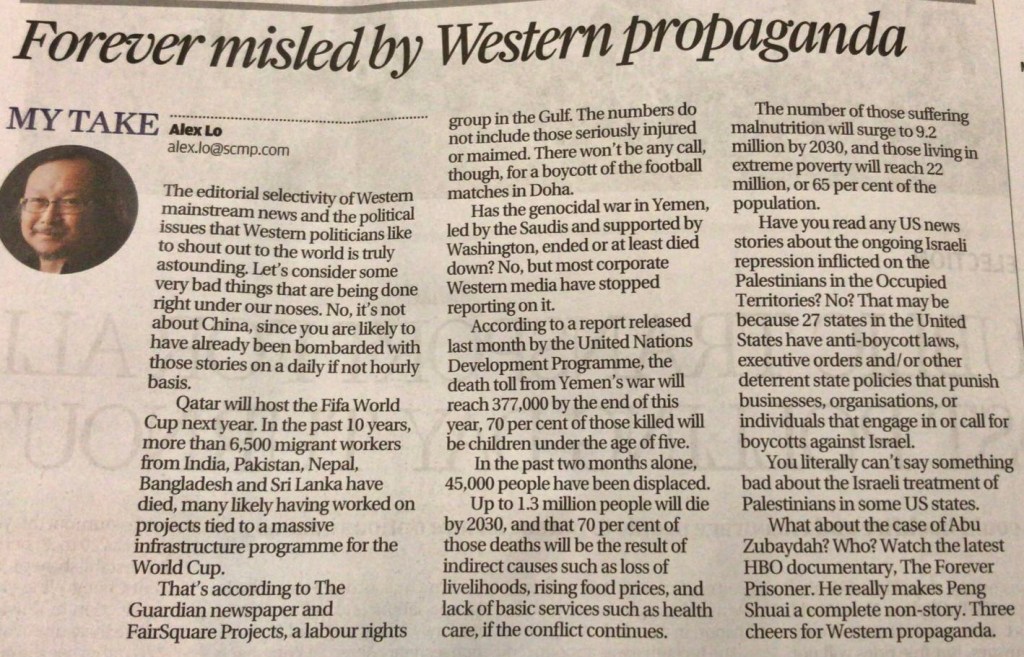
SCMP: Forever mislead by western propaganda – No, it’s not about China

https://www.scmp.com/comment/opinion/article/3159241/forever-misled-western-propaganda

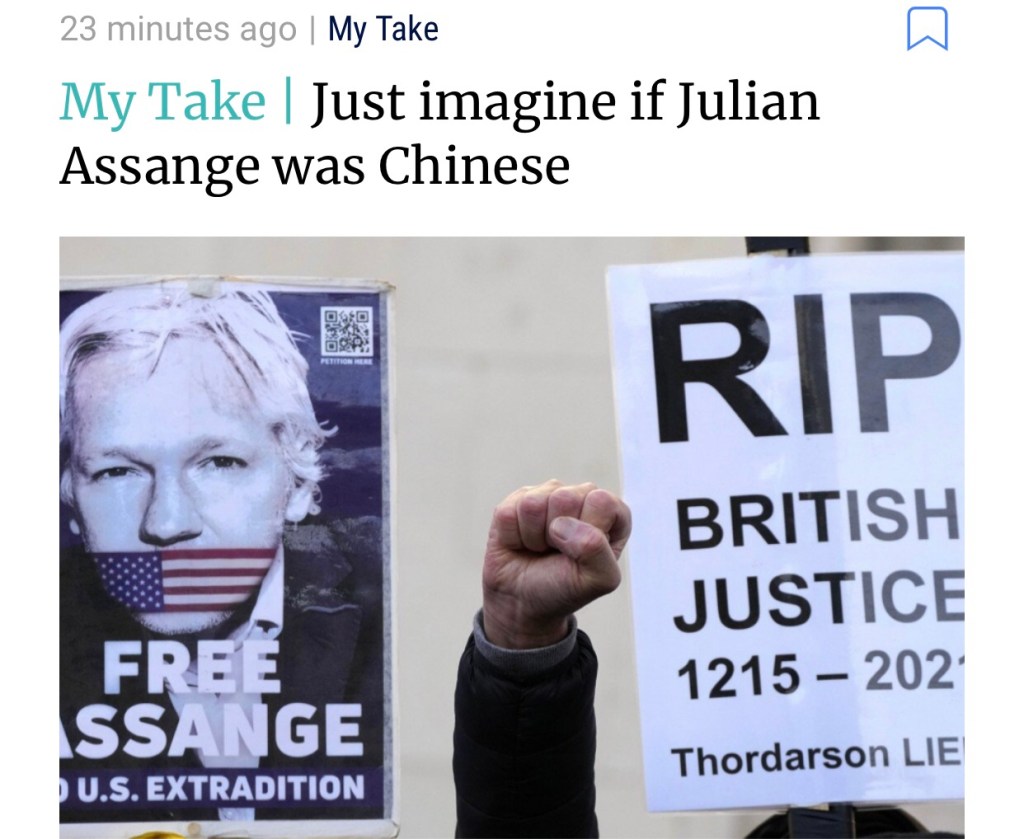
SCMP: Forever mislead by western propaganda – No, it’s not about China, since you are likely to have already been bombarded with those stories on a daily if not hourly basis. by Alex Lo Dec 10 2021

The editorial selectivity of Western mainstream news and the political issues that Western politicians like to shout out to the world is truly astounding. Let’s consider some very bad things that are being done right under our noses. No, it’s not about China, since you are likely to have already been bombarded with those stories on a daily if not hourly basis.

Qatar will host the Fifa World Cup next year. In the past 10 years, more than 6,500 migrant workers from India, Pakistan, Nepal, Bangladesh and Sri Lanka have died, many likely having worked on projects tied to a massive infrastructure programme for the World Cup.

That’s according to The Guardian newspaper and FairSquare Projects, a labour rights group in the Gulf. The numbers do not include those seriously injured or maimed. There won’t be any call, though, for a boycott of the football matches in Doha.

Has the genocidal war in Yemen, led by the Saudis and supported by Washington, ended or at least died down? No, but most corporate Western media have stopped reporting on it.

According to a report released last month by the United Nations Development Programme, the death toll from Yemen’s war will reach 377,000 by the end of this year, 70 per cent of those killed will be children under the age of five.

In the past two months alone, 45,000 people have been displaced.

Up to 1.3 million people will die by 2030, and that 70 per cent of those deaths will be the result of indirect causes such as loss of livelihoods, rising food prices, and lack of basic services such as health care, if the conflict continues.

The number of those suffering malnutrition will surge to 9.2 million by 2030, and those living in extreme poverty will reach 22 million, or 65 per cent of the population.

Have you read any US news stories about the ongoing Israeli repression inflicted on the Palestinians in the Occupied Territories? No? That may be because 27 states in the United States have anti-boycott laws, executive orders and/or other deterrent state policies that punish businesses, organisations, or individuals that engage in or call for boycotts against Israel.

You literally can’t say something bad about the Israeli treatment of Palestinians in some US states.

What about the case of Abu Zubaydah? Who? Watch the latest HBO documentary, The Forever Prisoner. He really makes Peng Shuai a complete non-story. Three cheers for Western propaganda.

UN Commission on Human Rights was transformed into a gladiator arena

https://www.counterpunch.org/2021/12/10/peng-chun-chang-and-the-holistic-approach-to-human-rights/

UN Commission on Human Rights was transformed into a gladiator arena in which governments threw daggers and insulted each other instead of trying to cooperate in good faith in order to solve global problems. 聯合國人權委員會變成了一個角斗場,各國政府互相投擲匕首和侮辱,而不是試圖真誠合作以解決全球問題.

DECEMBER 10, 2021
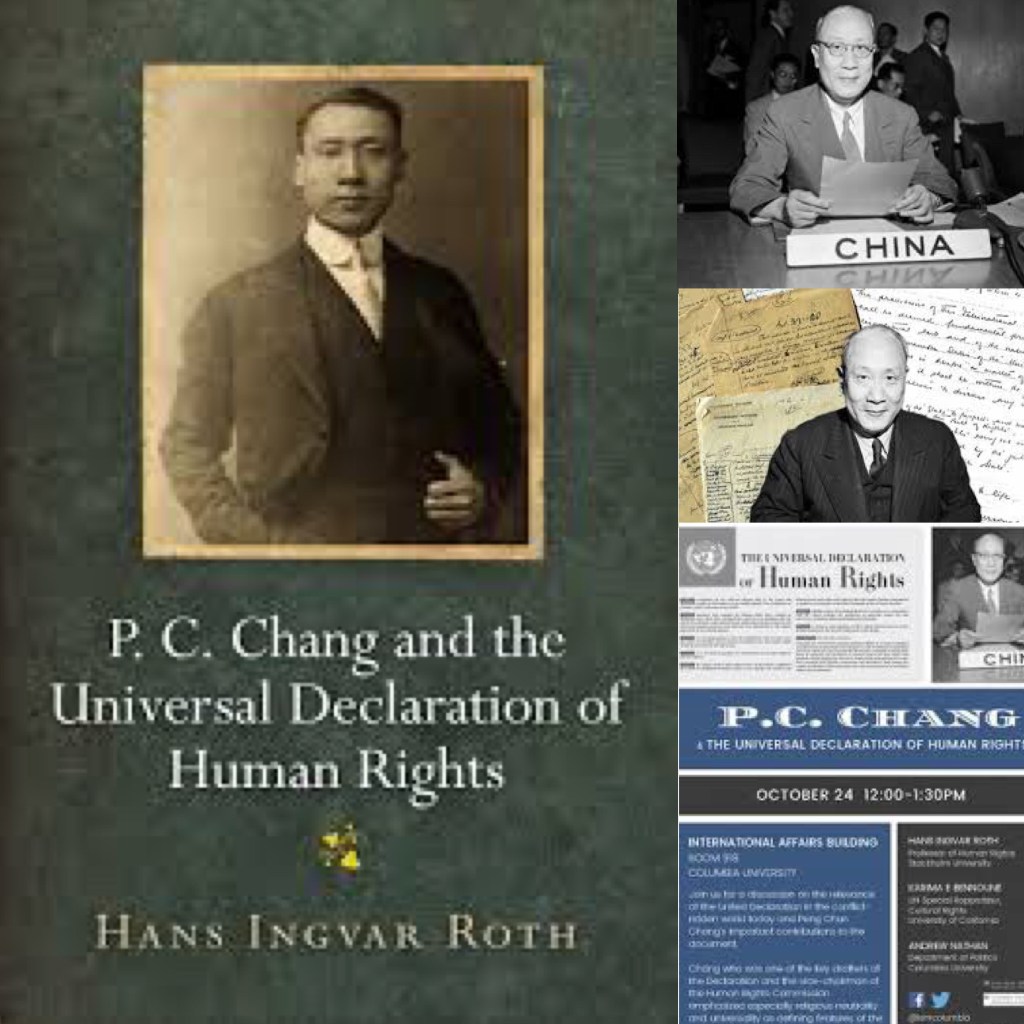
Peng Chun Chang and the Holistic Approach to Human Rights
BY ALFRED DE ZAYAS

73 years ago, in the early hours of 10 December 1948, the UN General Assembly was meeting at the Palais Chaillot in Paris. The previous night the Assembly had just adopted the Convention on the Prevention and Punishment of the Crime of Genocide, and the meeting continued past midnight to adopt the Universal Declaration of Human Rights, an essential addendum to the UN Charter. This remarkable document which has been translated into 500 languages, reflects a universal commitment to human dignity and constitutes a Magna Carta for all humankind.
The principal drafters of the declaration were the American President of the UN Commission on Human Rights, Eleanor Roosevelt, the French legal expert René Cassin, the Lebanese diplomat Charles Malik and the Chinese philosopher and diplomat P.C. Chang (1892-1957). The document was a collaborative effort by representatives of all regions of the world, assisted by the logistical and substantive support of the UN Secretariat under the Canadian law professor John Humphrey.
It is extraordinary that the notable intellectual contribution of Malik and Chang has been largely overlooked by historians and the media, at least thus far, but recently a book was published by Swedish Professor Hans Ingvar Roth, P.C.Chang and the Universal Declaration, which is likely to change that perception. Indeed, it was Chang who more than anyone else infused philosophy into the document, in particular the global and cross-cultural perspective. Without a doubt, Chang deserves credit for the universality and religious ecumenism of the declaration, for its holistic approach to civil, cultural, economic, political, and social rights.
Born in Tianjin, Chang had a multifaceted life. He taught philosophy at Nankai University in Tianjin and became a renowned scholar of Chinese traditional drama and Peking opera. In the 1930’s he led the Chinese Classical Theatre on tour to North America and the Soviet Union, but following Japan’s invasion of China in 1937, Chang joined the resistance and eventually had to flee the country. He was crucial in promoting awareness in Europe and America of the Nanking genocide, whereas many as 300,000 Chinese were massacred by the Japanese.
In 1942 Chang became a full-time diplomat and served as China’s ambassador to Turkey, where he enthusiastically disseminated knowledge about Chinese history and culture, its silks and porcelains, its literature and philosophy. An expert on the political thought of Confucius (551-479 BC), he also promoted knowledge about the ethics of Meng-tse (Mencius, 372-289 BC) and stressed that diplomacy should advance virtue, its noblest goal being to “subdue people with goodness.” He enlightened many about the influence of Chinese philosophy on European thinkers including Voltaire and Diderot.
As Vice-President of the UN Commission on Human Rights, Chang inspired delegations by his Renaissance knowledge and modesty. He promoted ancient and up-to-date ideas of Chinese philosophers — not because they were Chinese, but because they were universally valid.
In the course of the 1950s, the holistic approach to human rights was abandoned by the Commission on Human Rights and the Universal Declaration was split into two categories of rights: on the one side the individualistic “business friendly” rights, on the other the social and cultural rights, requiring governmental investment in education, health, creation of jobs. Even worse, some Western pundits introduced the prejudicial concepts of rights of the first generation (civil and political), second generation (social and cultural) and third generation (peace, development, solidarity, and other collective rights). The “Western” approach to human rights was to prioritize the right to property and the right to expression over the rights to food, water, shelter, and health.
Soon governments discovered that they could instrumentalize human rights to advance geopolitical goals. The Commission on Human Rights was transformed into a gladiator arena in which governments threw daggers and insulted each other instead of trying to cooperate in good faith in order to solve global problems. The practice of “naming and shaming” became ubiquitous, country mandates were created to target particular states. In so doing the Commission used double standards, because some of the worst violators of human rights never became targets of “international fact-finding commissions”. Meanwhile, the weaponization of human rights was expanded to incorporate many “independent” non-governmental organizations, well financed by governments and corporations with a view to denounce and destabilize geopolitical rivals. In 2006 the Commission was replaced by the Human Rights Council, without, however, returning to the commitment to objectivity and international solidarity promoted by C.P.Chang. The hijacking of human rights became even more visible in 2021 when the European Centre for Law and Justice published a well-documented study on the openly political financing of UN Special Rapporteurs, an endemic problem that puts into question their objectivity and independence.
10 December 2021 is a propitious date to celebrate the spirit of the drafters of the Universal Declaration, to recognize that it was the common achievement of all nations and peoples, based on all philosophies and religions — from Confucius to Lao-Tse, Buddha, Moses, Aristotle, Jesus Christ, Mohammed, etc. As sisters and brothers who share this common planet Earth, let us rediscover the spirituality of the Universal Declaration of Human Rights and honour the contribution of P.C. Chang to the development of a universal consciousness of human dignity. Indeed, human rights are not the exclusive domain of any region of the world – they are the common heritage of mankind.

Alfred de Zayas is a professor at the Geneva School of Diplomacy and served as a UN Independent Expert on the Promotion of a Democratic and Equitable International Order 2012-18.