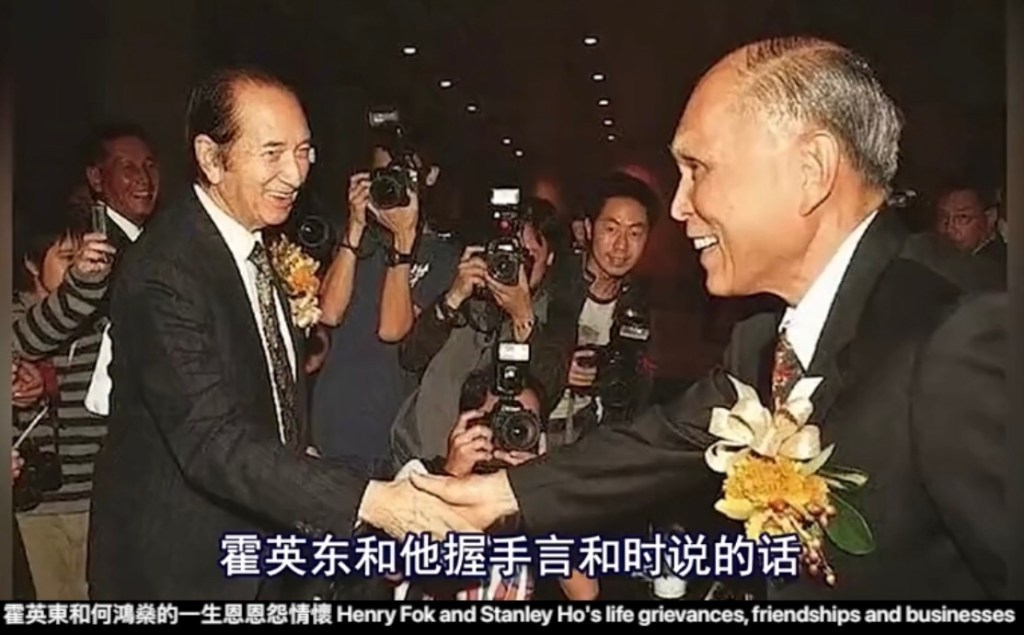
Video: 霍英東和何鴻燊的一生恩恩怨情懷 Henry Fok and Stanley Ho’s life grievances, friendships and businesses
https://vimeo.com/659205096
https://youtu.be/Z_hEy4dnMa0
https://www.facebook.com/100036400039778/posts/625597271996935/?d=n
Video: 霍英東和何鴻燊的一生恩恩怨情懷 Henry Fok and Stanley Ho’s life grievances, friendships and businesses
https://vimeo.com/659205096
https://youtu.be/Z_hEy4dnMa0
https://www.facebook.com/100036400039778/posts/625597271996935/?d=n
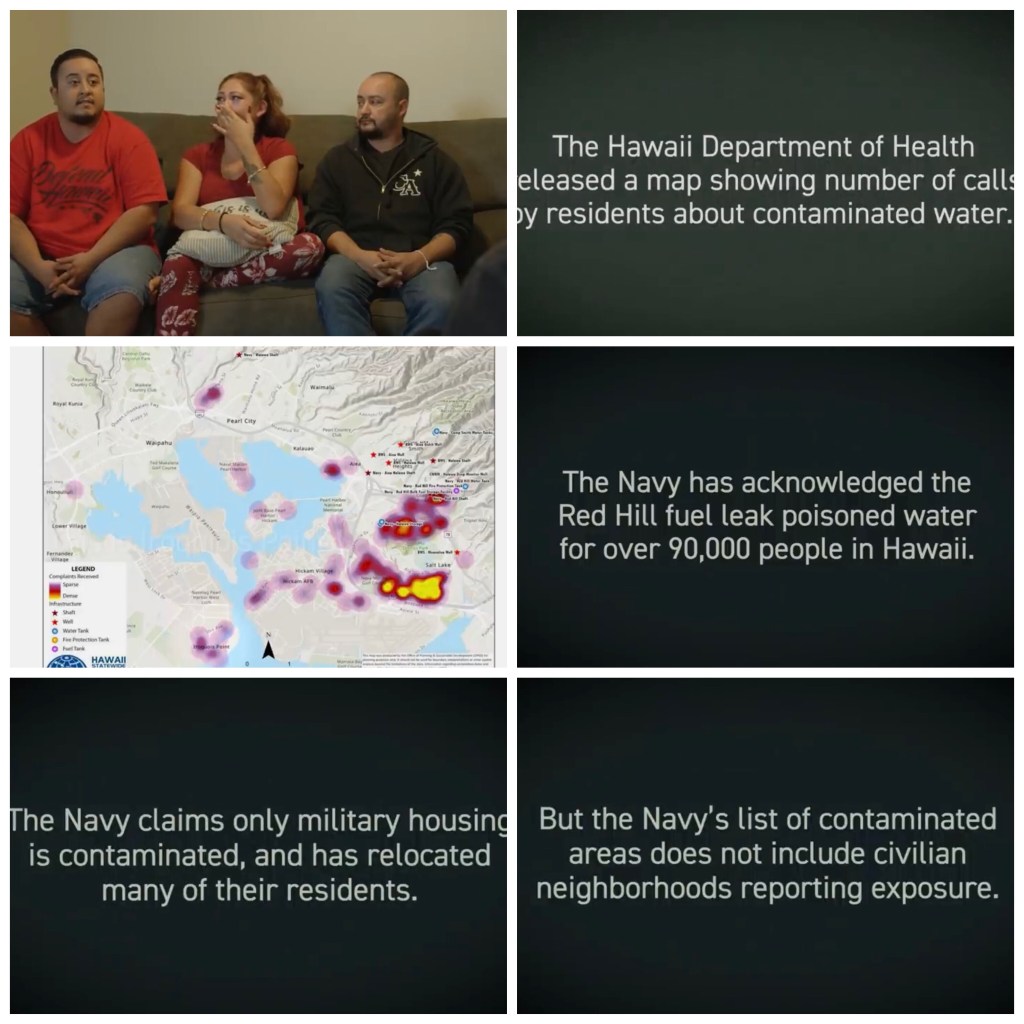
Video: US Navy Abandons Victims of Red Hill (Honoloulu Hawaii USA) Fuel Leak 視頻:美國海軍放棄紅山(美國夏威夷檀香山)燃料洩漏的受害者
The US Navy’s Red Hill disaster has left thousands of homes uninhabitable; but only military families are receiving help. Countless forgotten civilians are living with dangerous water, with no acknowledgment from the military or their landlords. Empire Files producer Mike Prysner sat down with Native Hawaiian Aedyn-Rhys King and his family to discuss.
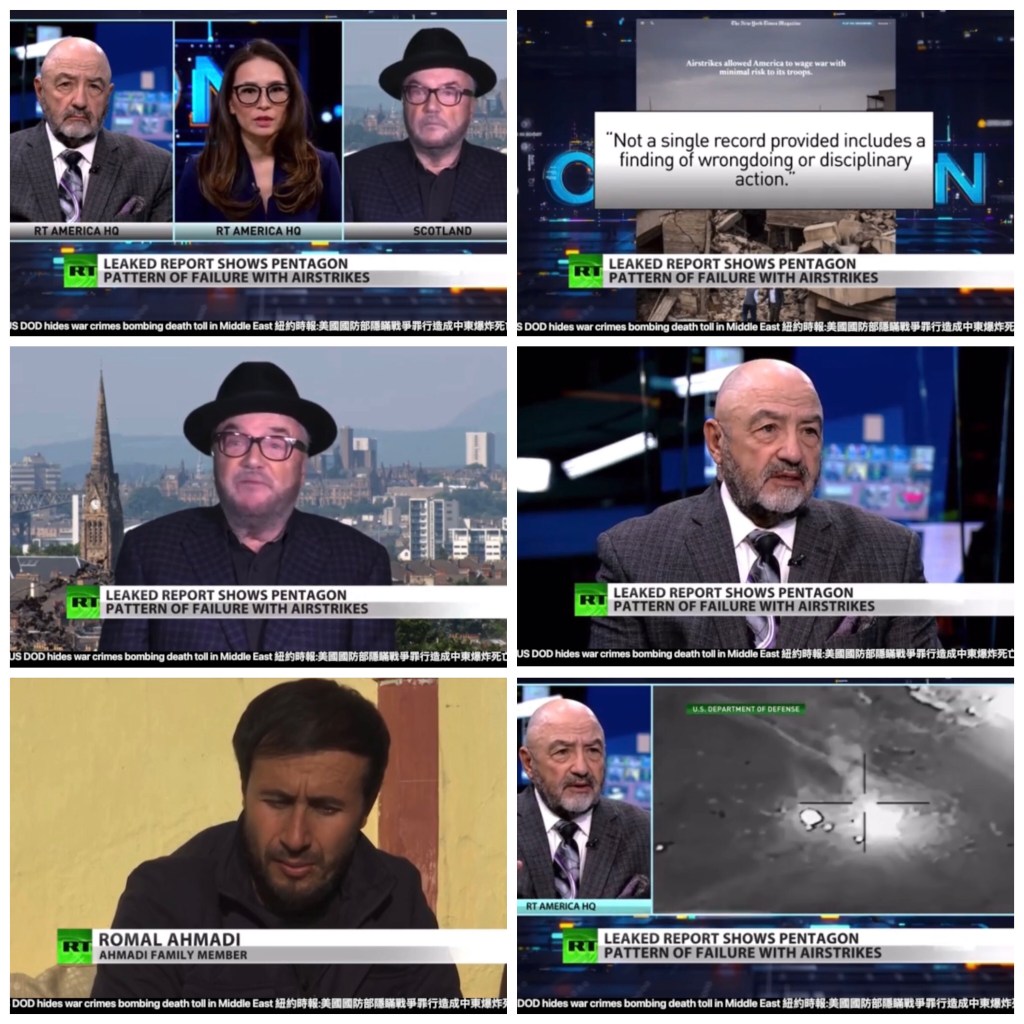
Video: NYT: US DOD hides war crimes bombing death toll in Middle East 紐約時報:美國國防部隱瞞戰爭罪行造成中東爆炸死亡人數
https://vimeo.com/659161202
https://youtu.be/Eq1jhjRwUBA
https://www.facebook.com/100036400039778/posts/625461105343885/?d=n
Newly leaked Pentagon papers show that the US airstrikes across the Middle East have killed thousands of civilians, including many children. According to the New York Times, 50K missile attacks in Afghanistan, Iraq and Syria resulted in 1300 casualties over a 5-year-period. The bombshell report now causing concern among many. RT America’s Trinity Chavez has more. Then former Pentagon official Michael Maloof and former UK MP George Galloway join a panel to share their perspectives. 新洩露的五角大樓文件顯示,美國對中東地區的空襲造成數千名平民死亡,其中包括許多兒童。 據《紐約時報》報導,在阿富汗、伊拉克和敘利亞發動的 5 萬枚導彈襲擊在 5 年內造成 1300 人傷亡。 這份重磅炸彈報告現在引起了許多人的關注。 RT America 的 Trinity Chavez 有更多。 然後前五角大樓官員邁克爾馬盧夫和前英國議員喬治加洛韋加入了一個小組,分享他們的觀點.

Video: You saved my life, I accompany your for the rest of your life. 你救我一命, 我陪你一生.
https://vimeo.com/659154347
https://youtu.be/mpugU4uyy30
https://www.facebook.com/100036400039778/posts/625443765345619/?d=n

台灣在中國的間諜, 應該好看 Counter-espionage TV series “Enemy” “對手” reveals Taiwan spies’ campaign targeting mainland China by Liu Caiyu and Leng Shumei Dec 21 2021

Chimerica revisited: why the US and China should forge a new symbiotic relationship for peace by Terry Su 12-20-21
Under a grand interim arrangement, the US dollar could be anchored to China’s production prowess and growth for, say, 10 years
That would buy time for America to reinvigorate itself and allow China to make its own adjustments and show it doesn’t wish to challenge the international order
These days, one rarely hears about “Chimerica”, the phrase coined by historian Niall Ferguson and economist Moritz Schularick in 2007 to describe the symbiotic relationship between China and the United States.
Back then, elites in Washington harboured hopes that a rising China would subject itself to a “rules-based” world order dictated by the US. How times have changed.
With China increasingly deemed a revisionist power threatening America’s supremacy and values, Ferguson has emphasised in recent years that Chimerica was a chimera. Instead, a second cold war was coming, he declared in 2019, amid the Trump administration’s China-bashing fervour.
Current US President Joe Biden’s approach to China is similar and has been described as “Trump lite”: just as confrontational, the only difference being that Biden’s team plays tough with more tact.
Of late, the rodeo has become frantic. The Taiwan issue has been fired up to the point of spurious speculation about Beijing’s imminent military action against the island. Former Pentagon official Elbridge Colby suggested that the US should ready itself to fight a “limited war”, and that, with China’s hegemonic ambitions, Taiwan could be a flash point.
And perhaps it is not inconceivable for some in Washington that Beijing could be baited into attacking Taiwan, giving America a chance to mould its rivalry with China back into all-out sanctions and decoupling – as was the case with the Soviet Union, in which case the hope is that the Cold War toolkit could be dusted off and put to victorious use again.
If only minds could be made up that easily. Too much is at stake for the two nuclear-armed superpowers to even contemplate war, and indeed, for the world as a whole.
Hence Biden’s wavering mixed messages about Taiwan while his administration remains hawkish towards Beijing: Washington’s actions, over Taiwan in particular, have angered Beijing even as Biden urged, during the virtual summit with President Xi Jinping last month, the establishment of commonsense “guardrails” on areas where the two nations disagree.
America’s hesitancy and reluctance are understandable. The US finds it unbearably gut-wrenching to even contemplate that Pax Americana – with its genuinely (if naively) held belief in the so-called liberal democratic order of its own making – could one day be overturned, possibly soon.
History admonishes against wishful thinking, however. For example, St Augustine, in North Africa in the 5th century, remained a staunch admirer of imperial Rome even as the empire was succumbing to decay from within and under attack from Germanic tribesmen.
And, after the fall of the Ming dynasty in the mid-17th century, Korea continued to pledge allegiance, keeping records under the last Ming emperor’s reign title. Nonetheless, imperial Rome and the Ming dynasty are gone.
Swiss psychiatrist Elisabeth Kübler-Ross introduced the five stages of grief in her 1969 book, On Death and Dying. They are denial, anger, bargaining, depression and acceptance. In writing about America’s loss of supremacy, the Atlantic Council’s Robert Manning observed in a Foreign Policy article earlier this month that the recent virtual summit between Biden and Xi marked America’s effort to move to the third stage of grief: bargaining.
Yet, I am not sure that bargaining is truly on America’s mind, given that the administration has continued with anti-China policies and regulation, adding Chinese companies to its export blacklist, finalising rules that could see hundreds of Chinese companies having to delist, and leading a diplomatic boycott of the Beijing Winter Olympics.
Still, Manning hit the nail on the head in saying that following the Biden-Xi summit, diplomacy will be “a test of intentions”, advising that it “will necessarily be an incremental and protracted process”.
I would suggest that this process should include a “grand interim arrangement” whereby America agrees to anchor its dollar to China’s production prowess and economic growth for a defined period of time.
During this time, the United States could look to make up for the time it has lost during its erstwhile misjudgment of China, and try instead to reinvigorate itself and shore up the world order it helped to create and has maintained since 1945.
At the same time, this would allow China to make its fair share of adjustments to substantiate its repeated protests that it has no intention of challenging the international order and seeks only its own improvement.
At the end of the agreed period, whether it be 10, 20 or 30 years, the two sides could take stock and decide whether the arrangement is working. Accordingly, they could prepare for the next stage in their relationship – which of course could still deteriorate or it could, with good faith, hard work and providence, advance towards mutual acceptance.
So, yes, I am advocating Chimerica as a modus vivendi, to go beyond the unilateral implications that were originally read into it (from China’s perspective at least) to incorporate Beijing’s inputs, to America’s benefit.
Back in June 2019, Ferguson was asked: “What will future generations judge us most harshly for?” He replied: “Losing the second cold war to China.” The United States and China can and should work together to make his answer irrelevant – for all the world’s sake.
Terry Su is president of Lulu Derivation Data Ltd, a Hong Kong-based online publishing house and think tank specialising in geopolitics

CGTN: China takes reciprocal countermeasures against US sanctions. The Chinese move is in response to US sanctions against Chinese people and entities. 中方對美製裁採取對等反制措施。 中國此舉是為了回應美國對中國人和實體的製裁。21-Dec-2021
Four people (Nadine Maenza, vice-chairman Nury Turkel and commissioners Anurima Bhargava and James Carr) from the U.S. Commission on International Religious Freedom would be banned from entering the Chinese mainland, Hong Kong and Macao, said Zhao Lijian, a spokesperson from the ministry.
The sanctioned individuals’ assets in China will also be frozen, Zhao added.
我熱愛我的祖国,我想念我的故乡,我思念我的親人,情怀永远在心上。
I love my motherland, I miss my hometown, I miss my relatives, and my feelings are always in my heart.
母親河之水,抚育我成長。中华情圍绕在我身旁。遙望太洋彼岸,熱淚沾滿胸膛。游子身在异邦,心怀故乡。中华文化,源远流長。万里長城,黄河,長江,錦绣山河,令人神往。无论身在何处,中华兒女,难忘故乡。詪我们高呼:祖国万岁,人民万岁,神州大地民富国强!
The water of the mother river nurtures me. The Chinese sentiment surrounds me. Looking at the other side of the Pacific Ocean, tears filled his chest. The wanderer is in a foreign country, and he has his hometown in his heart. Chinese culture has a long history. The Great Wall, the Yellow River, the Yangtze River, and the beautiful mountains and rivers are fascinating. No matter where you are, the sons and daughters of China will never forget their hometown. We chanted: Long live the motherland, long live the people, the people of China are prosperous and strong!
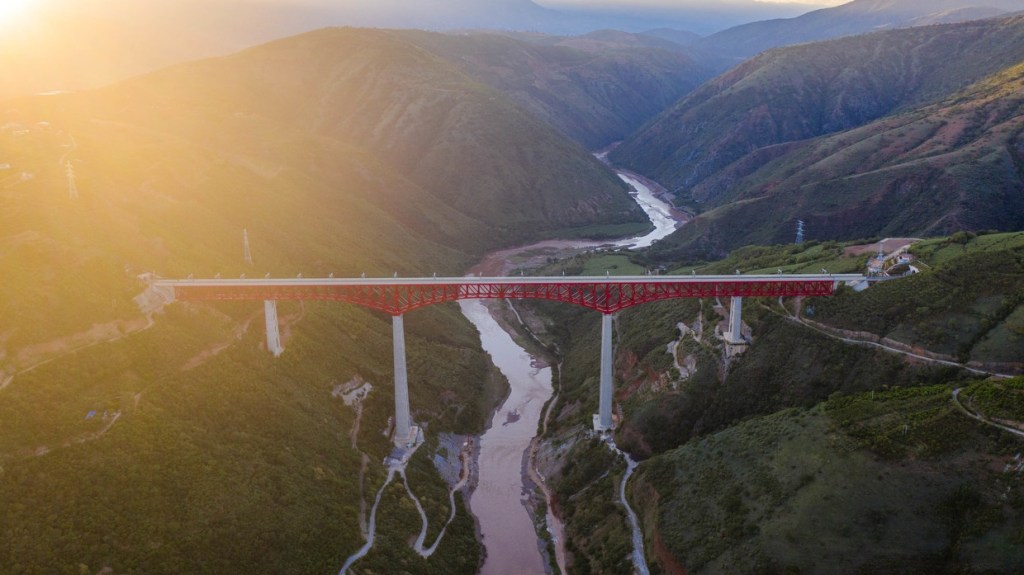
Western Medias: ‘The country (US) that bombed you is your friend. The one that built your new railway (China) is your enemy’ 西方媒體:‘轟炸你的國家(美國)是你的朋友。 建造你的新鐵路(中國)的是你的敵人?by Tom Fowdy
Major bridge across the Yuanjiang River along the China-Laos railway in southwest China’s Yunnan Province
This is the Western media’s bizarre messaging to the people of Laos, a nation that was carpet bombed by America, and which is now being vilified for accepting a new $9 billion railway line paid for by China.
Thursday was National Day in Laos, a celebration marking 46 years since the landlocked Southeast Asian nation deposed its monarchy and became a revolutionary communist state, an effort which was supported by Vietnam.
This year, the anniversary had added significance, as it saw the opening of a major new project, an electrified high-speed and freight railway system connecting the capital city, Vientiane with its northern neighbour, China.
Tom Fowdy: British writer and analyst of politics and international relations with a primary focus on East Asia. 3 Dec, 2021
***
Major bridge across the Yuanjiang River along the China-Laos railway in southwest China’s Yunnan Province
This is the Western media’s bizarre messaging to the people of Laos, a nation that was carpet bombed by America, and which is now being vilified for accepting a new $9 billion railway line paid for by China.
Thursday was National Day in Laos, a celebration marking 46 years since the landlocked Southeast Asian nation deposed its monarchy and became a revolutionary communist state, an effort which was supported by Vietnam.
This year, the anniversary had added significance, as it saw the opening of a major new project, an electrified high-speed and freight railway system connecting the capital city, Vientiane with its northern neighbour, China.
Retail Asia: Thailand Office of The National Broadcasting and Telecommunications Commission (NBTC), Siriraj Hospital, and Huawei Technologies (Thailand) Co., Ltd. jointly launched the “Siriraj World Class 5G Smart Hospital.”
Thailand General Prayut Chan-o-cha, Prime Minister and Minister of Defence, presided over the inauguration ceremony alongside Chaiwut Thanakamanusorn, Minister of Digital Economy and Society, Prof. Dr. Prasit Watanapa, MD, Dean of Faculty of Medicine Siriraj Hospital Mahidol University, Colonel Natee Sukonrat, Ph.D, Vice-Chairman of the National Broadcasting and Telecommunications Commission, Han Zhiqiang, Ambassador of the Embassy of the People’s Republic of China in Thailand, Abel Deng, Chief Executive Officer of Huawei Thailand, as well as Assoc. Prof. Visit Vamvanij, MD, Director of Siriraj Hospital, Assoc. Prof. Cherdchai Nopmaneejumruslers, Vice Director of Siriraj Hospital.
This project marks the first and largest 5G smart hospital project in Thailand and the ASEAN region. It aims to bring more efficient and convenient experience to patients by introducing technologies such as 5G, cloud, and artificial intelligence, and promote Siriraj Hospital to become a model for smart hospitals in Thailand and the world. At the same time, Siriraj Hospital and Huawei will establish a Joint Innovation Lab to incubate innovative 5G applications. Currently, the two parties have started piloting 5G portable medical boxes, 5G unmanned vehicle, 5G medical carts, and 5G smart hospital beds. It is expected that 30 5G medical applications will be incubated and promoted nationwide in 2022.
General Prayut Chan-o-cha, Prime Minister, addressed the national policy on 5G technology and digital economy, stating, “The Thai government understands the importance of technology, successfully drafting a plan for Digital Thailand, and today is an important first step in the utilization of digital technologies and 5G in the medical field. This will help reduce processes for medical personnel, decrease overall risk, and will improve the effectiveness and efficacy of healthcare for patients. We will use Siriraj 5G Smart Hospital as a pilot project with the aim of expanding to other hospitals in the future. We admire Siriraj Hospital and Mahidol University, and would like to thank Huawei, NBTC, private organizations, and all other partners involved in this project. We hope the project will act as a blueprint for all smart hospitals in Thailand going forward.”
Prof. Dr. Prasit Watanapa, MD, Dean of Faculty of Medicine, Siriraj Hospital Mahidol University, shared the background and development of implementing Siriraj’s Smart Hospital Project with 5G and artificial intelligence (AI) to build a model for smart hospitals in collaboration with its partners – introducing 5G, cloud, AI, and digital disruption technologies for application in prevention, treatment, and rehabilitation to enhance the quality and productivity of medical services, bring about good experiences while using its services, provide people in remote areas with better opportunities to access advanced tertiary health care services, as well as minimize the disparity and serve as a model for new generations of medical services to the global public health industry. In addition, an innovation lab and other innovative platforms were also established to cultivate innovation projects in the future.
Colonel Natee Sukonrat, Ph.D., Vice-Chairman of the National Broadcasting and Telecommunications Commission, addressed the NBTC’s support of the project by saying that “The NBTC, as the regulatory body of broadcasting and telecommunications businesses, has a key mission for licensing frequencies to accommodate high speed wireless communications in the 5G era, to promote the national telecommunications infrastructure development, and introduce the extension and utilization of technologies to various sectors. This is in line with the government’s policy after the National 5G Committee resolved to approve the pioneer Smart Hospital project as a prototype project for 5G application and foresaw the potential of Siriraj Hospital – equipped with specialists and fully-integrated medical equipment – as being instrumental in development into a smart hospital to produce apparent results.”
Since the beginning of the pandemic, Siriraj Hospital and Huawei have established long-term cooperation in 5G technology development and application. In June 2020, Siriraj Hospital cooperated with Huawei Thailand to launch 5G self-driving vehicles for contactless delivery of medical supplies. In December 2020, Huawei signed a five-year Memorandum of Understanding with Siriraj Hospital to accelerate the intelligent operation of Siriraj Hospital using digital technologies such as 5G, including patient monitoring, diagnosis, and data collection, and provide technical training for doctors in the hospital. In 2020, Siriraj won the award from CommunicAsia Awards in the category of “Most Innovative 5G Trial in Asia Pacific Region.”
Mr. Abel Deng, Chief Executive Officer of Huawei Technologies (Thailand) Co., Ltd., highlighted that “Huawei has collaborated with Siriraj Hospital to transform it into a world class 5G Smart Hospital, and introduced the Innovation Lab at Srisavarindira Building as part of its 5G infrastructure project for Siriraj Hospital last year. This signifies a model for upgrading Thailand’s public health industry in the future and contributes to Siriraj’s transition to becoming a smart hospital, in line with Huawei’s mission to Grow in Thailand, Contribute to Thailand.”
This cross-sector collaboration will enhance and upgrade the services of Siriraj Hospital to progress it to become a smart medical center using digital technologies based on 5G, AI, big data infrastructure, and cloud edge processing for the purpose of patient tracking, disease diagnosis by AI on cloud, data storage and analysis, and allocation of resources.

 Johnson Choi Biz