When was the last time a true friend need helped required a treaty or legal document in advance? If US provokes China or Russia, the other won’t be indifferent 你記得上一次幫助好朋友時需要提前簽訂條約或法律文件是什麼時候?如果美國挑釁中國或俄羅斯,對方不會無動於衷 By Hu Xijin Jan 28, 2022
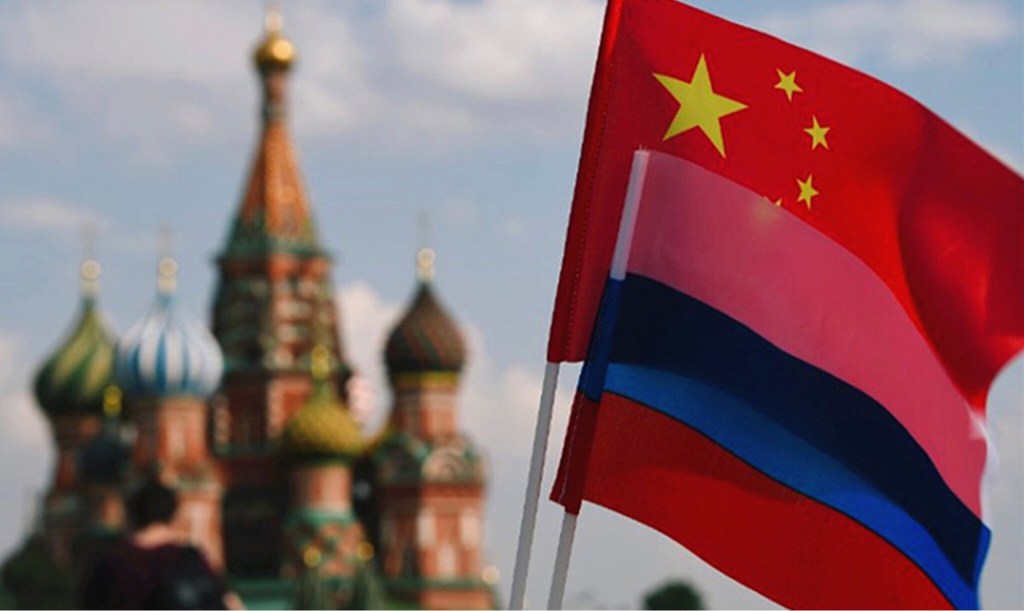
The national flags of China and Russia are seen on Red Square, Moscow.
Chinese State Councilor and Foreign Minister Wang Yi on January 27 had a phone conversation with US Secretary of State Antony Blinken at the latter’s request. Judging from the briefings from both sides and various comments, Wang overwhelmed Blinken. The initial statement released by the US did not mention so-called “human rights,” Hong Kong or Xinjiang, while the statement issued by China showed that Wang criticized the US for still sticking with erroneous words and deeds related to China and demanded that the US should stop interfering in the Olympic Winter Games Beijing 2022, stop playing with fire on the Taiwan question, and stop creating various anti-China “small cliques.”
The Ukraine crisis appeared to be the focus of the conversation. Wang called on all parties to remain calm and pointed out that Russia’s legitimate security concerns should be taken seriously and addressed. This sentence has been widely quoted by US and Western media, as if a rare nerve was touched. They believe it’s a symbol of “deepening relations” between China and Russia.
But doesn’t Russia have legitimate security concerns in East Europe? As far as I’m concerned, the Ukraine crisis contains two aspects: first, Russia-Ukraine dispute; second, a serious confrontation among all relevant parties caused by the US and NATO’s strategic suppression of Russia. The eastward expansion of NATO is so unnerving to Russia, almost pushing Moscow into a corner. Russia demanded that NATO, which is hostile to Moscow, not absorb former Soviet republic Ukraine and not deploy troops on Russia’s border. The request is within reason.
The US is strategically squeezing China and Russia at the same time. It’s arrogant. It is pushing China and Russia together to strike back. Russia has suffered more pressure from the US. How it will resolve disputes with Ukraine is one thing. But when it comes to resisting a US crackdown, Russia is not alone. Most of the Chinese people will support it and are willing to see the Chinese government assist Russia in this aspect. Because we know well that if Russia is crushed by the US, this will bring no good to China at all. China and Russia have a comprehensive strategic partnership of coordination. They are not empty words.
Given a “back-to-back” relationship between China and Russia, the US cannot do anything with the two great powers. That Russia and China are “not allies, but better than allies” has become an official statement. Let Americans carefully mull over the connotation of this expression. If it provokes either China or Russia, the other one will not be indifferent. Washington should expect this in the future.
The author is a commentator with the Global Times. opinion@globaltimes.com.cn
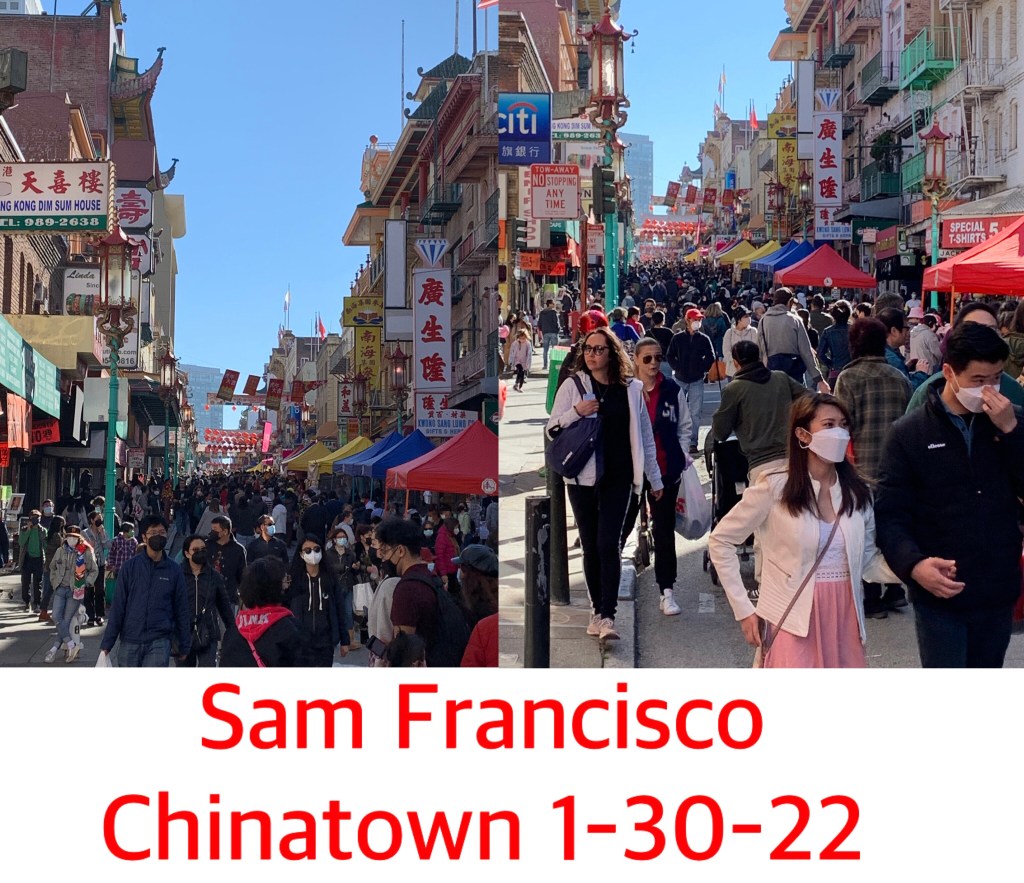
This is San Francisco Chinatown today. I can’t believe the crowd. Thank goodness everyone wore masks. But there were not too many stalls. It was nice to see some life back in Chinatown. But it’s still not the same as before the pandemic 1-30-22 這就是今天的舊金山唐人街。 我無法相信人群。 謝天謝地,每個人都戴著口罩。 但是沒有太多的攤位。 很高興看到唐人街的一些生活。 但這仍然與新冠病毒之前不同.
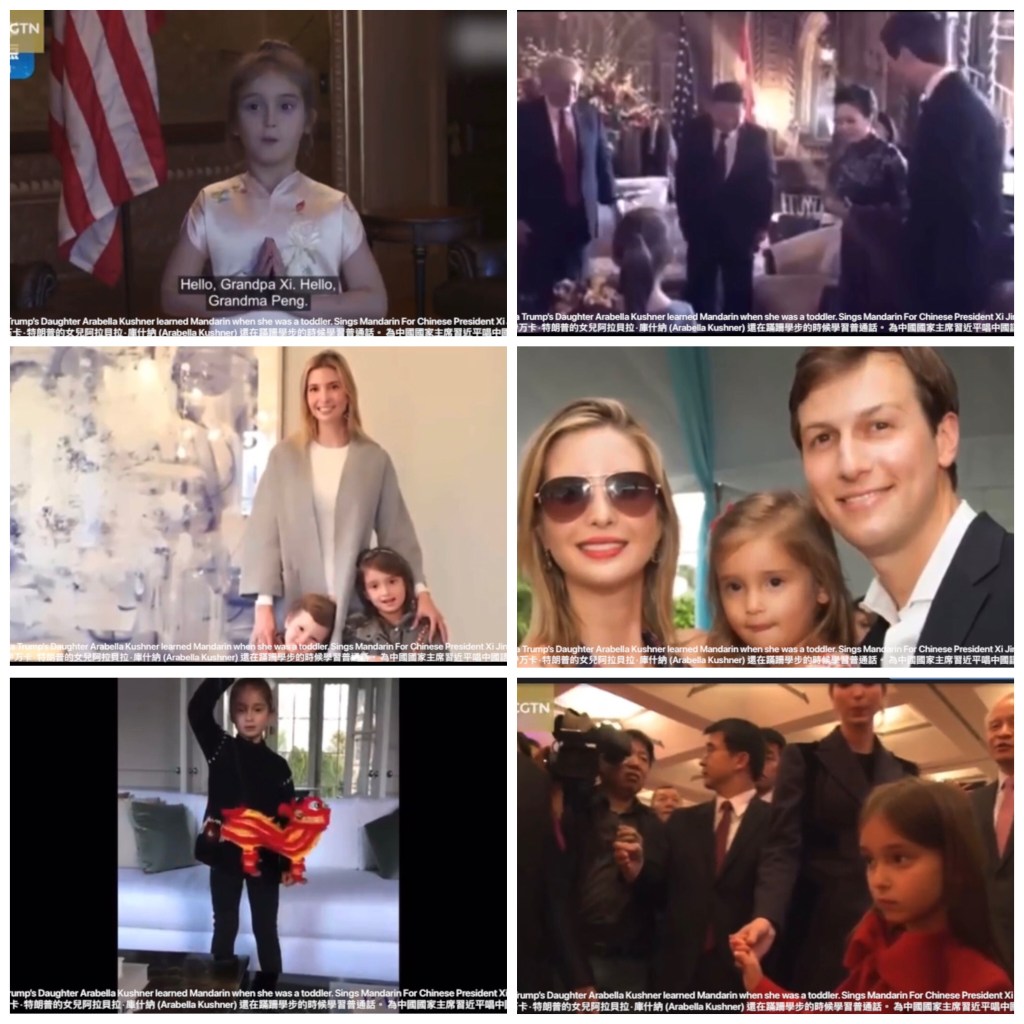
Video: Ivanka Trump’s Daughter Arabella Kushner learned Mandarin when she was a toddler. Sings Mandarin For Chinese President Xi Jinping. 伊万卡·特朗普的女兒阿拉貝拉·庫什納 (Arabella Kushner) 還在蹣跚學步的時候學習普通話。 為中國國家主席習近平唱中國語.
Ivanka Trump at DC’s Chinese Embassy to celebrate Spring Festival with daughter Arabella. Ivanka is smart despite his father anti-China and demonize Chinese-Americans regularly, she has businesses and manufactures her products in China. She knew her business after politics could not survive without China. She probably found out from Tesla, GM, Volkswagen, Walmart and etc that no American companies do well without the China manufacturing and the China market except military industrial complex.
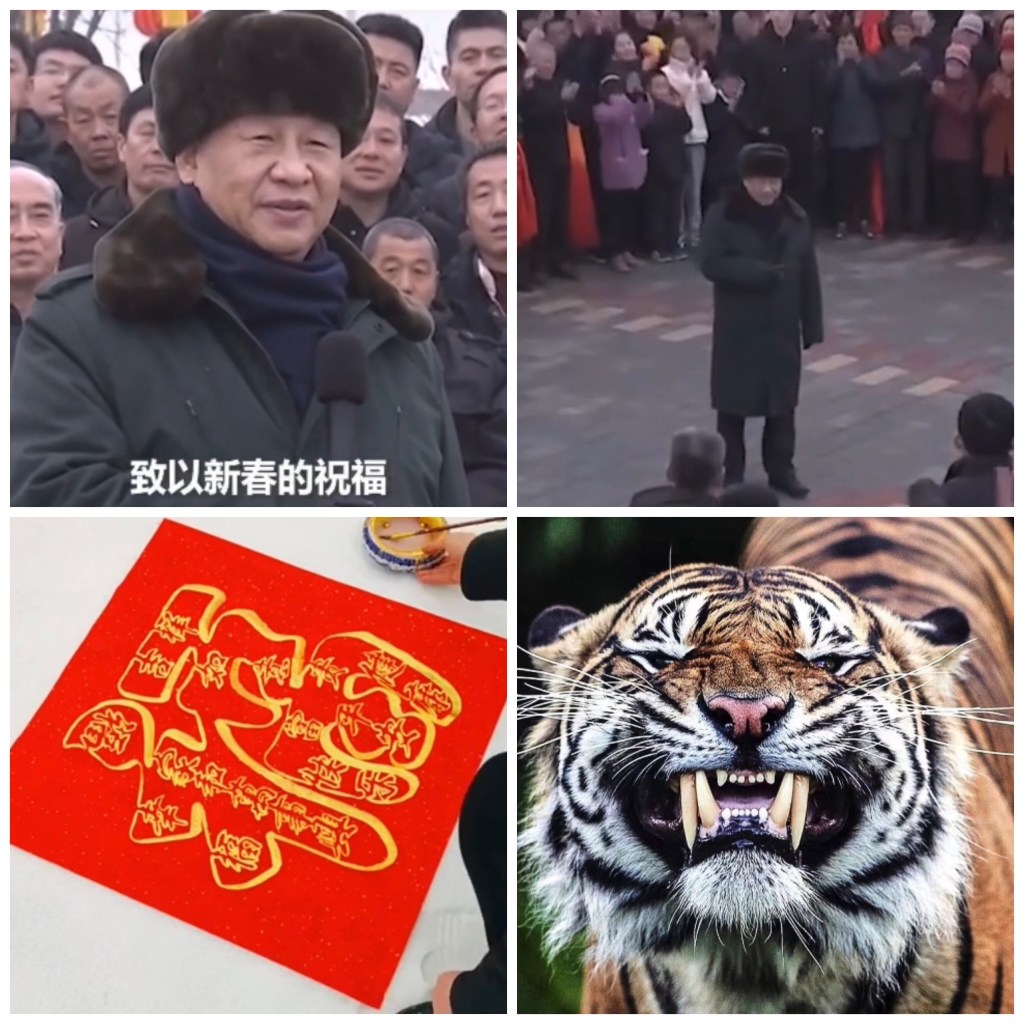
Video: Chinese President Xi Jinping extends New Year greetings to the people of all ethnic groups in the country, compatriots in HK and Macau SAR, Taiwan compatriots and overseas Chinese. I wish everyone a prosperous Year of the Tiger, and also wish our great motherland a splendid mountains and rivers, good weather, prosperity and prosperity for our country and the people. 中國國家主席習近平向全國各族人民, 香港和澳門特別行政區同胞, 台灣同胞和海外僑胞致以新春祝福, 祝大家虎年吉祥, 生龍活虎, 也祝願我們偉大的祖國山河錦綉, 風調雨順, 國泰民安, 繁榮富強.
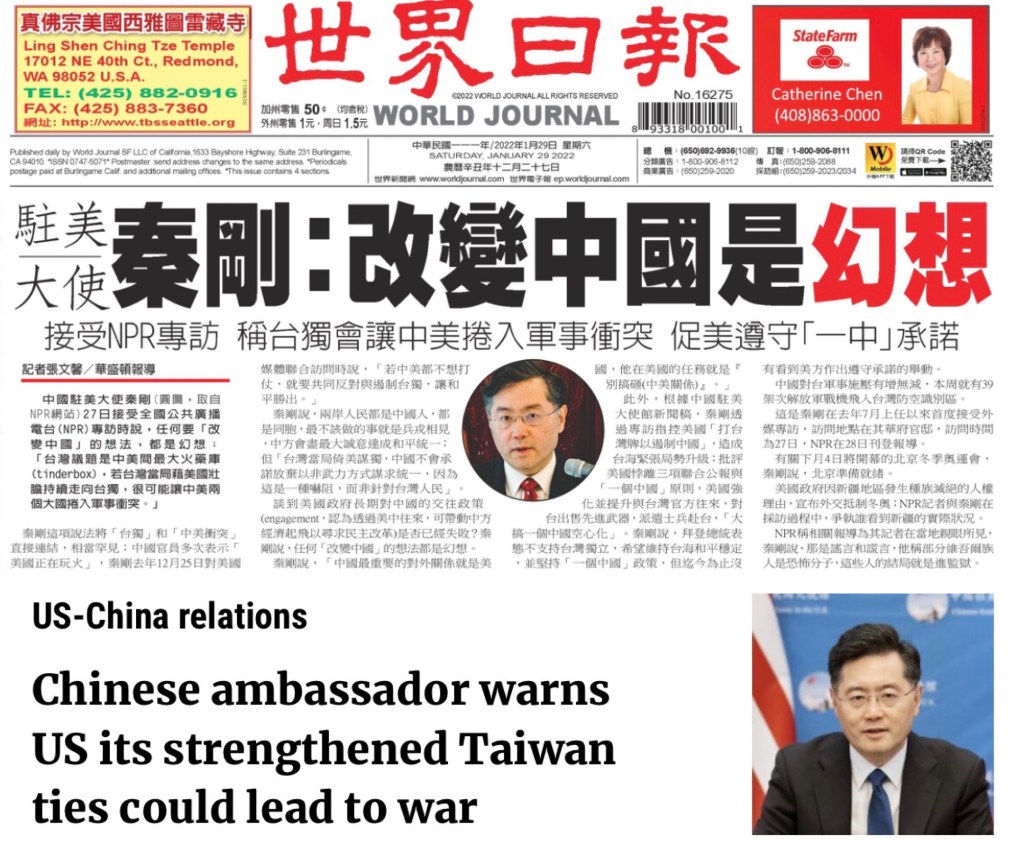
US wants to change China is fantasy! Ambassador Qin Gang said in an interview with National Public Radio. Washington of encouraging Taiwan to seek independence and said that such moves raised the risk of military conflict.
Video: Documentary to Debunk US fake news propaganda on Xinjiang China. 揭穿美國對中國新疆的虛假新聞宣傳.
our 6 min 1/27/2022 first-cut premier of our “Voice of Xinjiang” documentary, the final 60-90 min vision will be completed when we finish our Xinjiang part of the filming early spring this year. 附上我们1/27首映的“新疆之声”纪录片6分钟初剪版的视频。我们计划整部纪录片将在新疆拍摄部分部分完成后春夏之交发布.
Civilization-state (China) versus nation-state (US, Canada, EU & Most Western Nations)
China confronts Europe with an enormous problem: we do not understand it. Worse, we are not even conscious of the fact. We insist on seeing the world through our Western prism. No other tradition or history or culture can compare. Ours is superior to all and others, in deviating from ours, are diminished as a consequence. This speaks not of our wisdom but our ignorance, an expression not of our cosmopolitanism but our insularity and provincialism. It is a consequence of being in the ascendant for at least two centuries, if not rather longer. Eurocentrism – or perhaps we should say western-centrism – has become our universal yardstick against which, in varying degrees, all others fail.
This mindset threatens to become our greatest handicap as we enter an era in which Europe will be progressively marginalised, the United States will experience irreversible decline, the emergent nations will become major actors and China will replace the United States as the dominant power. In other words, those countries and cultures that we now look down upon will increasingly become the arbiters of the future. How will we ever make sense of them if we refuse to understand them in anything other than our own Western terms? How will they view us if we continue to look down upon their culture and polities as inferior to our own?
Which brings us to China. We choose to see China overwhelmingly in a context calibrated according to Western values: what overwhelmingly preoccupies us is the absence of a Western-style democracy, a lack of human rights, the plight of the Tibetans, and the country’s poor environmental record. No doubt you could add a few more to that list. I am not arguing that such issues do not matter – they do – but our insistence on judging China in our own terms diverts us from a far more important task: understanding China in its own terms. If we fail to do that then, quite simply, we will never understand it. That is why mainstream Western commentary on China over the last three or more decades has singularly failed to get China right, from predicting the imminent downfall of the regime after Tiananmen Square and the likely break-up of the country, to the constant insistence ever since that the economic growth could not possibly last and that the regime would be unable to sustain itself. Virtually no-one predicted what has happened; phenomenal economic growth for over thirty years and a regime that has been hugely successful and which now enjoys greater legitimacy and prestige than at any time since the reform period began in 1978.
Our western-centric value-judgements about China must no longer be allowed to act as a substitute for understanding the country in its own terms. This is no easy task. China is profoundly different from the West in the most basic of ways. Perhaps the most basic difference is that it is not a nation-state in the European sense of the term. Indeed, it has only described itself as such since around 1900. Anyone who knows anything about China is aware that it is a lot older than that. China, as we know it today, dates back to 221BC, in some respects much earlier. That date marked the end of the Warring States period, the victory of the Qin, and the birth of the Qin Empire whose borders embraced a considerable slice of what is today the eastern half of China and by far its most populous part.
For over two millennia, the Chinese thought of themselves as a civilization rather than a nation. The most fundamental defining features of China today, and which give the Chinese their sense of identity, emanate not from the last century when China has called itself a nation-state but from the previous two millennia when it can be best described as a civilization-state: the relationship between the state and society, a very distinctive notion of the family, ancestral worship, Confucian values, the network of personal relationships that we call guanxi, Chinese food and the traditions that surround it, and, of course, the Chinese language with its unusual relationship between the written and spoken form. The implications are profound: whereas national identity in Europe is overwhelmingly a product of the era of the nation-state – in the United States almost exclusively so – in China, on the contrary, the sense of identity has primarily been shaped by the country’s history as a civilization-state. Although China describes itself today as a nation-state, it remains essentially a civilization-state in terms of history, culture, identity and ways of thinking. China’s geological structure is that of a civilization-state; the nation-state accounts for little more than the top soil.
China, as a civilization-state, has two main characteristics. Firstly, there is its exceptional longevity, dating back to even before the break-up of the Roman Empire. Secondly, the sheer scale of China – both geographic and demographic – means that it embraces a huge diversity. Contrary to the Western belief that China is highly centralised, in fact in many respects the opposite is the case: indeed, it would have been impossible to govern the country – either now or in the dynastic period – on such a basis. It is simply too large. The implications in terms of the way the Chinese think are profound.
In 1997 Hong Kong was handed over to China by the British. The Chinese constitutional proposal was summed up in the phrase: ‘one country, two systems’. Barely anyone in the West gave this maxim much thought or indeed credence; the assumption was that Hong Kong would soon become like the rest of China. This was entirely wrong. The political and legal structure of Hong Kong remains as different now from the rest of China as in 1997. The reason we did not take the Chinese seriously is that the West is characterised by a nation-state mentality, hence when Germany was unified in 1990 it was done solely and exclusively on the basis of the Federal Republic; the DDR in effect disappeared. ‘One nation-state, one system’ is the nation-state way of thinking. But, as a civilization-state, the Chinese logic is quite different. Because China is so vast and embraces such diversity, as a matter of necessity it must be flexible: ‘one civilization, many systems’.
The idea of China as a civilization-state is a fundamental building block for understanding China in its own terms. And it has multifarious implications. The relationship between the state and society in China is very different to that in the West. Contrary to the overwhelming Western assumption that the Chinese state lacks legitimacy and is bereft of public support, in fact the Chinese state enjoys greater legitimacy than any Western state. We have come to assume that the legitimacy of the state overwhelmingly rests on the democratic process – universal suffrage, competing parties et al. But this is only one element: if it was the whole story, then the Italian state would enjoy a robust legitimacy rather than the reality, a chronic lack of it. And to explain this we have to go back to the Risorgimento as only a partially fulfilled project.
The reason why the Chinese state enjoys a formidable legitimacy in the eyes of the Chinese has nothing to do with democracy but can be found in the relationship between the state and Chinese civilization. The state is seen as the embodiment, guardian and defender of Chinese civilization. Maintaining the unity, cohesion and integrity of Chinese civilization – of the civilization-state – is perceived as the highest political priority and is seen as the sacrosanct task of the Chinese state. Unlike in the West, where the state is viewed with varying degrees of suspicion, even hostility, and is regarded, as a consequence, as an outsider, in China the state is seen as an intimate, as part of the family, indeed as the head of the family; interestingly, in this context, the Chinese term for nation-state is ‘nation-family’.
Or consider a quite different example. Over 90 per cent of Chinese think of themselves as of one race, the Han. This is so different from the world’s other most populous nations – India, United States, Indonesia and Brazil, all of which are highly multi-racial – as to be extraordinary. Of course, in reality the Han were a product of many different races, but the Han do not think of themselves like that. And the reason takes us back to the civilization-state and one of its defining characteristics, namely China’s remarkable longevity. Over thousands of years, as a result of many processes, cultural, racial and ethnic, the differences between the many races that comprised the Han have been weakened to the point where they were no longer significant.
We will never make sense of China if we persist in treating it as if it is, or should be, a product of our own civilization. Our present attitude towards China is a function of arrogance and ignorance. And it threatens to leave us bewildered, confused and alienated. Our historical inheritance, and the mentality it has engendered, ill equips us for the very new world that is presently unfolding before us.




 Johnson Choi Biz