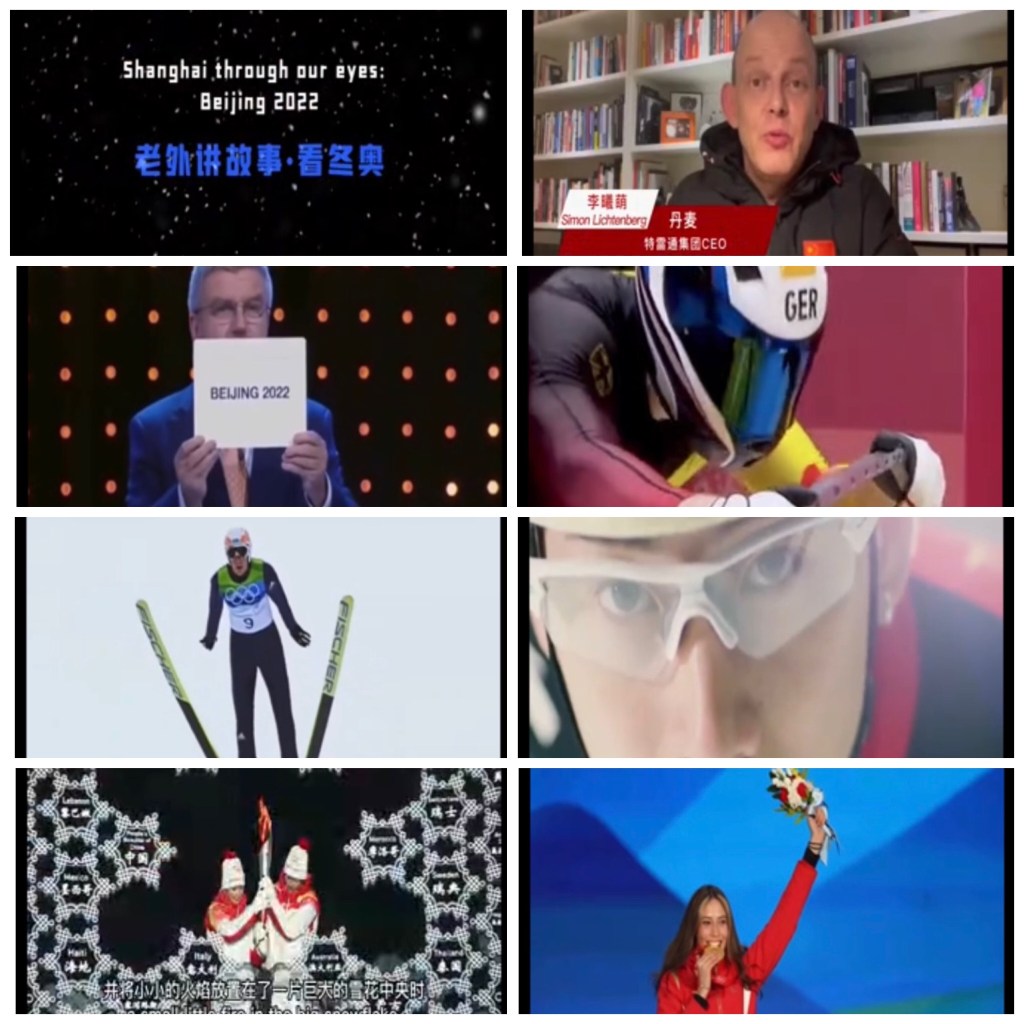
San Francisco born Gu Ailing reacts after winning the women’s freestyle skiing halfpipe for Team China at the Beijing 2022 Winter Olympic on 2-18-22. 出生於舊金山的谷爱凌在 2 月 18 日 22 日為中國隊贏得北京 2022 年冬奧會女子自由式滑雪半管冠軍後做出反應
What a sweet victory!
I think CAAC should take the lead with the Chinese American community should either plan a victory rally in her honor or hold a welcome home to SF when she return. Such a rally or reception will show how proud Chinese Americans are of her accomplishment and let the world know she has the whole-hearted support of the Chinese American community. Those who think they can take her victory away by smearing her decision to represent China will not be tolerated. She should be welcome home by the city of her birth and the city she grew up in.
She is the pride of Chinese America! Her accomplishments should be honored and celebrated.
Is this Russia’s Huawei moment? The Economist 2.17.22 by Ludwig Siegele – European business editor
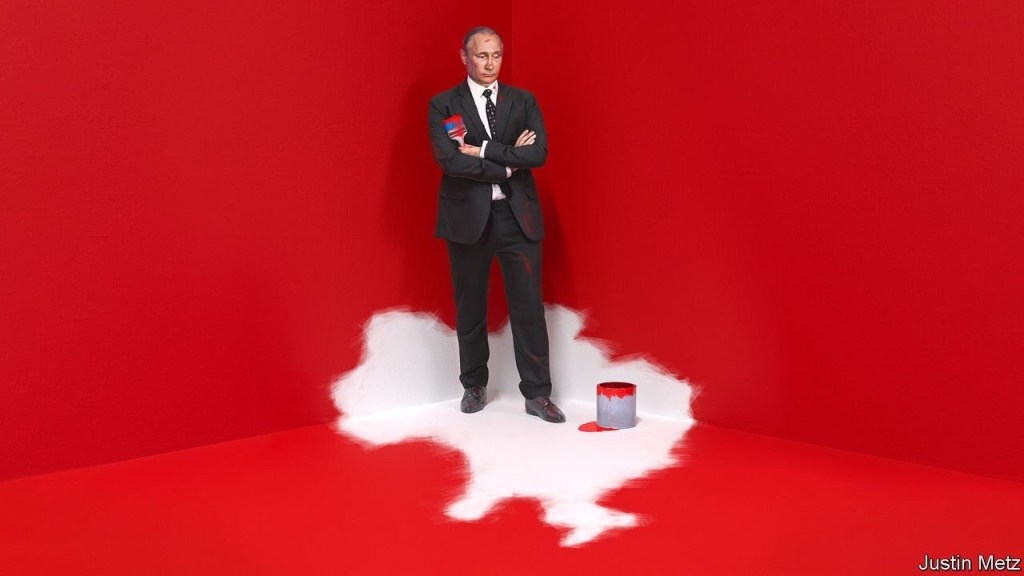
When I started covering tech for The Economist nearly 25 years ago, I had no idea that it would become the centre of a high-stakes geopolitical contest. That struggle began in earnest in the mid-2000s with the rise of Huawei, a maker of telecoms gear that America’s security establishment became suspicious of: we ran a cover story in 2012 asking, Who’s afraid of Huawei? Roll on a decade and technology is at the heart of the nerve-jangling confrontation between the West and Russia over the fate of Ukraine, as our big read this week describes. America’s package of potential sanctions aimed at deterring Russian aggression includes not just financial measures such as cutting off Russian banks from the Western financial system, but also denying it access to American technology.
How serious would a tech embargo be for Russia? One clue is to look at the experience of China and specifically of Huawei, which has been the subject of an exquisite torture in the form of American sanctions and controls, limiting its access to cutting-edge chips and other services such as phone software. The cost has been severe: Huawei’s sales in 2021 dropped by 29%. Both the Trump and Biden administrations have blacklisted ever-more Chinese tech firms. A desire to escape America’s grip has in turn accelerated China’s drive to indigenise its tech industry. SMIC, the home-grown semiconductor champion, reported sales growth of 61% year on year in the most recent quarter, and this year its capex will be more than double the level in 2019.
Since the invasion of Crimea in 2014 triggered an earlier round of Western sanctions, Russia has sought to construct a fortress economy. In the financial realm this has involved de-dollarisation: shifting contracts, reserves and borrowing to other currencies. The share of cross-border invoices paid to Russia in dollars has dropped from 80% at the start of 2014 to 54%. Less well explored is how Russia, with one eye on China, has sought to indigenise its tech industry.
Our reporting on Russian tech sheds light on this other, virtual front in the conflict. Moscow is implementing a systematic plan to build what scholars of geopolitics call a “stack”: a sovereign digital space made of layers stacked atop each other like a tiered cake. These layers include hardware, the cloud, apps, identity and payments. In some areas it has made leaps. Six of the ten biggest cloud firms in Russia are now Russian, for example. The Mir payments system has a market share of 25%. Russia is building a national version of the global domain-name system. From telecoms networks to apps, more of the industry is owned by Russian firms than was once the case.
Whether the steps taken so far will insulate Russia from Western sanctions is doubtful. Last week my colleagues visited the boss of a big Russian tech firm in Moscow who said that the authorities “are trying to create an impression that [the industry] is self-reliant. This is not true.” His servers and systems still rely on Silicon Valley. Yet in the long run it seems likely that Russia will redouble efforts to reduce its dependence, by buying more components and software from China and by making more at home. That will lead to a less efficient but less vulnerable digital economy.
It also offers an augury of one way the global tech industry might evolve. China already has its Great Firewall. The European Union is developing its own regulatory system and increasingly trying to build up local production of semiconductors. India has the makings of its own tech stack, with its national digital-identity scheme and at least one wannabe home-grown digital champion, Reliance Industries. From a seamless global industry dominated by America, to today’s balkanising system, tech has come a long way since I wrote about the new version of Windows a quarter of a century ago.
We calculate that US exports of IT services to Russia rose by 183% in the five years before the invasion of Crimea in 2014, and by 0.5% in the five years after it.
This article made me think of the whole historical emergence of the Western doctrine of “free trade” in the late 18th century. Free trade is generally associated with Adam Smith and the ideas he set forth in The Wealth of Nations in 1776. Such ideas had been around in England and Scotland for a long time, though Smith gave them a somewhat more focused expression. Even after the publication of his book, however, free trade remained something of an outlier in British political economic thought, until the Industrial Revolution really got going in the early 19th century. Up to then the doctrine of mercantilism prevailed, in which the state played an active role in promoting and protecting capitalist enterprises, granting monopoly trading charters to the East India Company and other such regionally focused groups. At that time Britain really had no products which were competitive in global trade. It made sense for the state to provide protectionist support so at least some merchants could be ensured profits. But with the Industrial Revolution British goods suddenly dropped in unit price and became competitive. So then free trade made sense, from the British point of view. The rest, of course, is history, as Britain and the other European powers launched the era of colonialism and imperiaiism, forcing countries around the world to submit to their military power and become subordinate units in a global system in which the colonies produced raw materials for and consumed manufactured goods from the West, while local economies were hollowed out by the influx of cheap Western products.
We’re seeing the other end of that process now, as economies like China become the great centers of leading-edge manufacturing and technological innovation. American and other Western economies are having a hard time competing, so they are retreating to protectionism and trying to stall or stop the rise of China and other emerging centers of new development. The age of Euro-American economic domination, which was based on the monopoly in modern industrial productive technologies, is over. The panic in elite circles is plain to see, but the process will not be derailed by export restrictions or other interventions in the global interchange of ideas, research and development. American politicians continue to mouth the rhetoric of free trade while doing all they can to impose a regime of constraint on the developing world. This won’t win them any friends in the long run.
Along the way to “free trade”, you have “freedom of navigation” (“mare liberum“), a legal fiction concocted by Grotius authorizing piracy. The classical tradition was “mare nostrum” (“our sea”), i.e. territorial seas. As the sea-faring colonial powers grew powerful, they engaged in piracy and privateering to steal and war with one another.It also seems to come up on the way down.
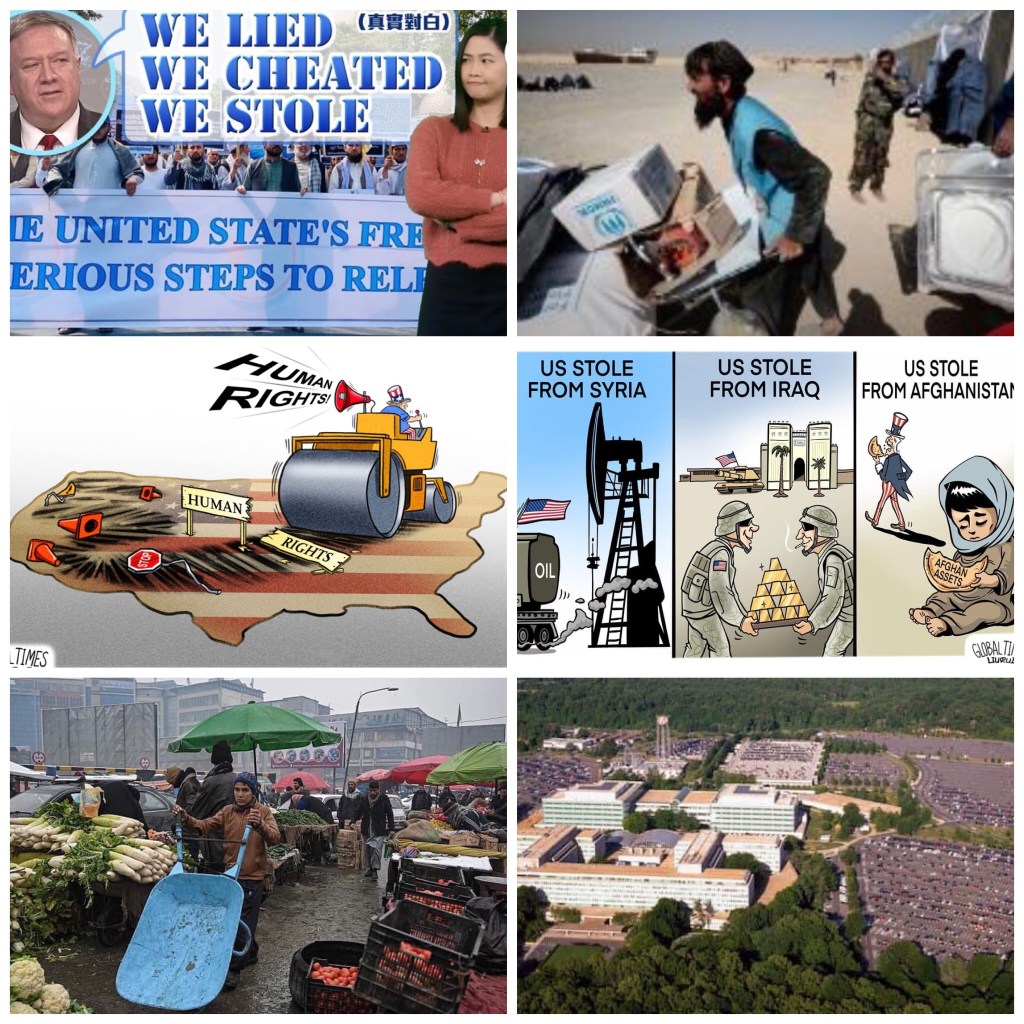
American policy inside and outside of US: “We Lied, We Cheated, We Stole” Chinese envoy: Afghanistan’s overseas assets should be returned quickly and in full. Afghanistan’s central bank criticized Washington’s plan last Saturday, saying its assets belong to the Afghan people. 美國內外政策:“我們撒謊,我們欺騙,我們偷竊” 中國特使:阿富汗的海外資產應迅速全額歸還。 阿富汗中央銀行上週六批評了華盛頓的計劃,稱其資產屬於阿富汗人民.



 Johnson Choi Biz