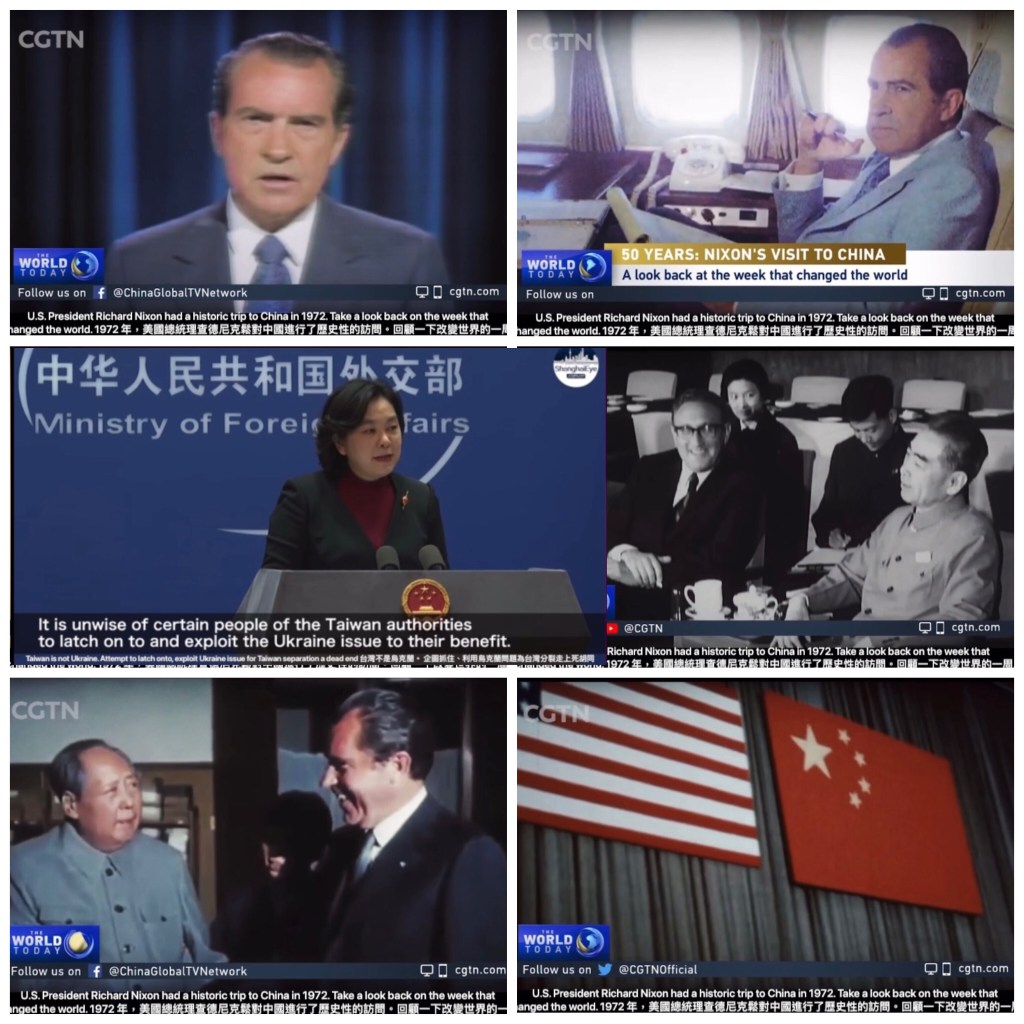
Taiwan is not Ukraine, and seeking “Taiwan independence” can only lead to a dead end, said Foreign Ministry spokeswoman Hua Chunying at a press briefing in Beijing on Wednesday.
The spokesperson for Taiwan’s leader and the head of the “foreign affairs department” of the Taiwan authorities recently compared the Ukraine issue to the Taiwan issue.
In response, Hua said that Taiwan is not Ukraine, and the island is an inalienable part of China’s territory.
“I think it is unwise for some people in the Taiwan authorities to use the Ukraine issue as a pretext to hype up its own narrative and make unprovoked moves. Taiwan is not Ukraine. It is an undeniable historical and legal fact that Taiwan has always been an inalienable part of Chinese territory. The one-China principle is a universally recognized norm governing international relations. Peace in Taiwan depends on the peaceful development of cross-Strait relations, rather than fawning over the outside forces and expecting them to sell weapons or provide military support. Seeking ‘Taiwan independence’ can only lead to a dead end. No one should have any misunderstanding or miscalculation about this,” said Hua.
“I have also noticed that indeed, since the Ukraine crisis, there have been some people who often mention the Taiwan region. I think some of their remarks fully reveal their lack of basic understanding of the history regarding the Taiwan issue,” said Hua.
Hua noted that though there is political antagonism between the two sides of the Taiwan Strait as a result of the civil war fought many years ago, China’s sovereignty and territorial integrity has never been severed and will not be severed.
Russia to offer strong, measured and sensitive response to US sanctions – Foreign Ministry
World February 23 2022 According to the ministry, Russia proved that despite all sanctions it is capable of reducing the damage
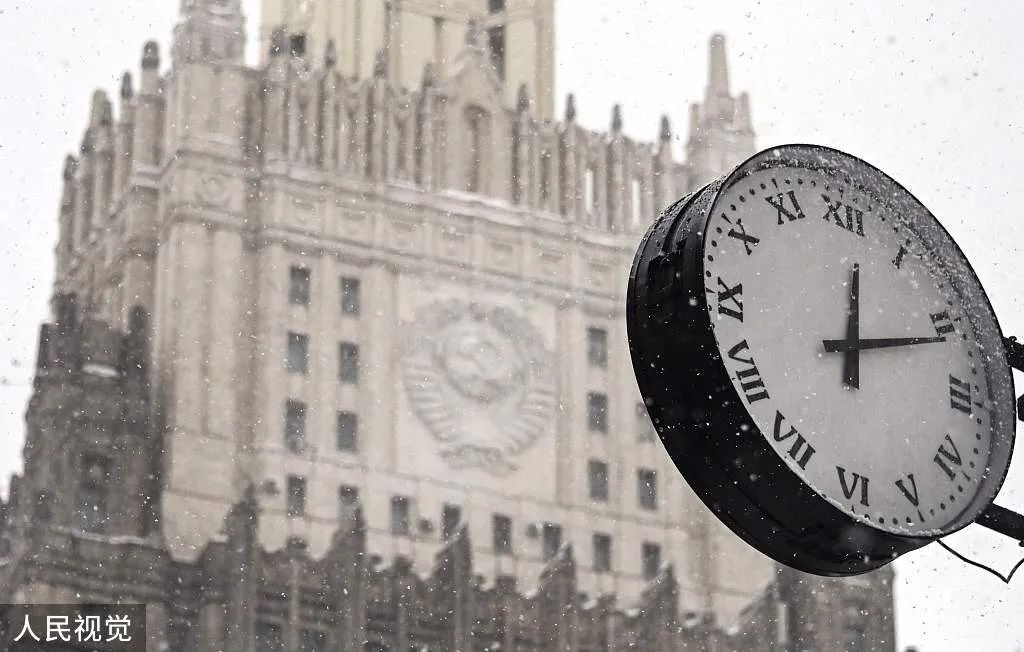
MOSCOW, February 23. /TASS/. Moscow will offer a strong response to US sanctions, if not necessarily tit-for-tat, but a measured and sensitive one for Washington, the Russian Foreign Ministry said in a statement on new US anti-Russian sanctions on Wednesday. “There should be no doubt – sanctions will be met with a strong response, not necessarily symmetrical, but measured and sensitive for the US side,” the document says.
Futile efforts
The Russian Foreign Ministry noted that the package of sanctions declared by the US administration (already the 101th one), targeting the financial sector with the extension of the blacklist of individuals, subject to personal restrictions, is part and parcel of Washington’s endless attempts to change Russia’s policy.
“Despite clearly futile efforts made for many years with the goal of hindering our economic development, the US is again grasping the restrictions tools, which are ineffective and counterproductive in terms of US interests as well,” the Foreign Ministry stressed.
According to the ministry, Russia proved that despite all sanctions it is capable of reducing the damage. “And moreover, the sanctions pressure cannot affect our determination to strongly defend our interests,” the statement reads.
Washington, which is under the sway of unipolar world stereotypes with false convictions that the US still has the right and can impose its own rules of the world order on everyone, has no other means in its foreign policy arsenals than blackmail, intimidation and threats. “This isn’t working in regard to world powers, namely Russia and other key international actors,” the Foreign Ministry stated. “’Slapdowns’ from the US should be followed by their satellites and clients who completely lost their autonomy.”
Meanwhile, the ministry noted that Russia is “open to diplomacy based on the principles of mutual respect, equality and the consideration for each other’s interests.”.
Asia Times: Why US cannot stifle China’s rise – Simply put, the US China containment’ policies have failed miserably 《亞洲時報》:美國為何不能扼殺中國崛起 – 簡而言之,美中遏制政策慘敗 By KEN MOAK FEB 23, 2022
The US and China have a long way to go to rebuild broken trust.
The US is increasingly belligerent in its efforts to stifle China’s rise and pressure its allies to do the same. But none of the tactics – trade wars, “freedom of navigation” operations (FONOPs), pushing allies to ditch Huawei equipment or the Belt and Road Initiative (BRI), etc – have worked.
Indeed, one could even argue that the more the US tries to put China down, the taller and stronger the Asian country stands up. Accusing China of setting “debt traps,” for example, has seen more nations joining its BRI.
The latest to join the BRI were Argentina and Nicaragua. The Community of Latin American and Caribbean States (CELAC) also signed a comprehensive agreement with China on cooperation in a host of fields, including investment, security, and more.
At home, China is also doing relatively well. Its economy grew at an astonishing rate of 8.1% in 2021, the highest annualized growth in a decade. According to the International Olympic Committee (IOC), China did a magnificent job in holding the Winter Games amid a pandemic and other challenges.
The Beijing Winter Olympics were watched by more than 2 billion worldwide, including more than 100 million Americans, according to the IOC. The majority of those who attended the Games praised China’s efforts to contain the spread of Covid-19 pandemic and for putting on a good show.
In spite of the US diplomatically boycotting the Winter Olympics, more than 30 foreign leaders and senior officials attended the Games. But the only US response was making a mountain out of mole hill regarding every little problem, such as the weather in Beijing being too cold or the food not hot enough.
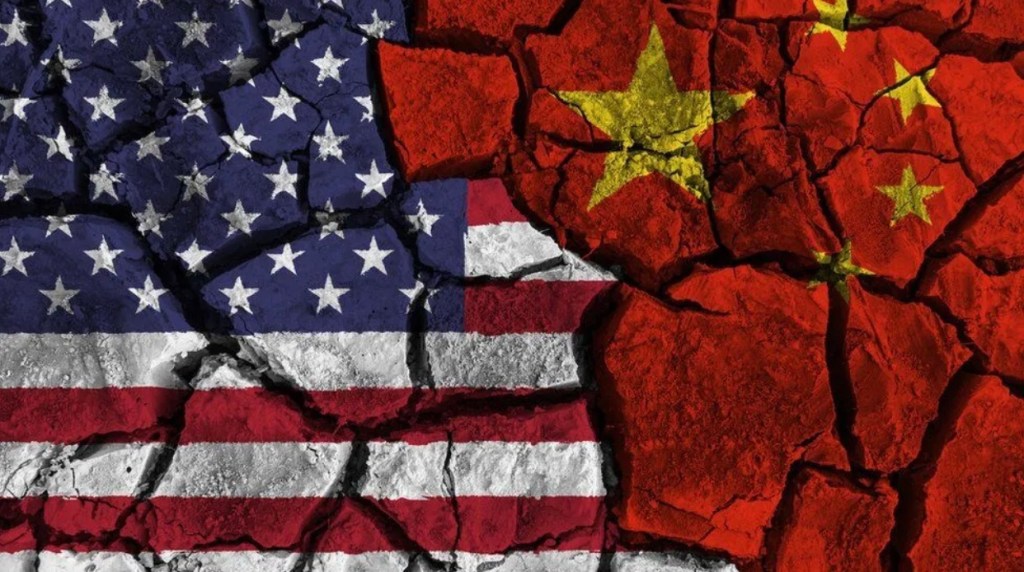
Simply put, the US “China containment” policies have failed miserably, raising the question: Why is the US unable to stifle China’s rise? It is not for lack of trying. Successive US administrations have expended vast amounts of resources on pushing down or isolating China and sending senior officials to all corners of the globe to persuade countries not to embrace the Asian giant.
Former president Barack Obama’s “pivot to Asia” policy and signing the Trans-Pacific Partnership (TPP) were meant to erode China’s influence in the Asia-Pacific region. His successor Donald Trump imposed trade and technology wars on China to topple it from its economic mantle. Current President Joe Biden retained or even extended many of Trump’s anti-China policies for the same reason.
So what happened? Well, three reasons for these failures come to mind.
First, history is not on the United States’ side. Allegations of “evil doings” based on questionable information will bring disappointment and despair, as the Vietnam and Iraq wars attested.
Second, few if any countries will sacrifice their national interests and security just to please America.
And finally, China is even more determined to continue going forward with its “social market economy” architecture amid the increasingly toxic US-China relationship.
Unsubstantiated anti-Chinese allegations
Economic or military conflicts against China will not produce the intended outcomes. As Vietnam was in the run-up to war in Indochina, China will be highly incentivized to resist the US onslaught. For instance, the US government blocking the sale of advanced chips to China prompted Beijing to invest billions of dollars to become self-sufficient in that field.
China’s success in combating US politically motivated policies is, in part, because they were based on questionable information. Case in point is the US accusing China of committing genocide against the Uighurs in Xinjiang.
Whether China has committed genocide and other “evil” deeds depends on whom one talks to. But the US allegations were simply speculations without proof. They also defied conventional definitions of the term “genocide.”
Redefining genocide as “structural social change” in wiping out the Uighurs to fit the narrative is a poor argument. How can anyone, except God, know what the future holds? The Uighur population could become larger and wealthier because of the language and vocational training that the would-be terrorists have received.
The Chinese government instituted the “de-radicalization” policy of putting would-be terrorists into language and vocational training schools (which the US called concentration camps or prisons). The Chinese policy, in fact, gained support not only from the Uighur community in Xinjiang, but from the Muslim world as well.
Since its inception, there have been no terrorist acts in Xinjiang. And according to the government, many Uighur trainees have found gainful employment and now are enjoying a better lifestyle.
As for whether China’s BRI investment loans are a “debt trap,” again it depends on whom one talks to. But debt statistics in the recipient or participating countries suggest the contrary.
Sri Lanka’s debts owed to China account for less than 20% of its total foreign debt, according to Sri Lankan government statistics. The majority of its foreign debts are owed to Western or US-controlled financial institutions such as the International Monetary Fund and World Bank, which require Sri Lanka to repay loans before spending on economic development or recovery.
The fact of the matter is the BRI is a “win-win” for both China and the recipient countries. For example, the Sri Lankan port of Hambantota (which the US cited as an example of a “debt trap”) was leased to a Chinese company for financial reasons. Indeed, the port became financially viable after handling it over to the Chinese company.
Besides, how can an economy develop without infrastructure investments? The roads, ports and power-generation facilities that the BRI framework made possible is largely responsible for accelerating economic development in Africa, Latin America and other parts in the world. Roads and ports are required to facilitate trade and commerce, after all.
Similar counter-arguments can be made against US allegations of China bullying small nations, taking away human rights and democracy from Hong Kong, and other “evil” deeds.
No country in Southeast Asia was worrying about instability in the South China Sea until Obama instituted the “pivot to Asia” policy. But Obama’s posture provoked China into a defensive position, asserting its claims within the “nine dash line” (which by the way was drafted by China’s previous Nationalist government in 1947 with US blessings).
In spite of all these US anti-China policies, China’s global economic, technological and geopolitical standings continue to grow. Indeed, US policies have not only strengthened China’s determination to become stronger, but also turned many US allies off.
US unable to recruit many to its cause
Biden’s China policies differ from his predecessor Trump’s in one major way: trying to recruit allies to counter China with the slogan “democracy versus authoritarianism,” or simply “good vs evil.” But unfortunately for Biden, the world, including America’s allies, probably knows who is “good” and who is “evil.”
Just ask the countries that the US bombed for no reason other than not toeing its line. Or ask the native, black, Asian and non-white Hispanic Americans how well they were treated by some US politicians.
Perhaps the more important reason that the US was unable to recruit allies to its anti-China crusade is national interest. Joining the fight against “evil” communist China means sacrificing their national interests. Most of the allied countries are neighbors of China and rely heavily on it for their economic well-being.
For example, China is the Quadrilateral Security Dialogue members’ biggest or second-largest trade partner. According to Chinese customs statistics, around a third of Australian exports are sold to China, for instance.
Against this backdrop, it is no surprise that none of the Quad members want to have a showdown with China, particularly over questionable allegations of “evil” deeds. Doing so would wreak havoc on their economies.
Because of geographical proximity with China, allying with the US against it militarily would risk the Quad members’ national security. A US-China military war would be fought on the allies’ soils as well as those of the US and China.
But the US will not take that risk, explaining why it is pushing for the establishment of a mechanism to ensure confrontation does not veer into wars. The vast majority of the US population will oppose a war with China, particularly one fought over “fake news.”
China is not Vietnam or Iraq, it can inflict huge damages, destroying many US cities and killing large number of Americans. Of course, many Chinese cities would also be destroyed and people killed. Indeed, a US-China war could lead to mutual destruction.
China has every right to follow its development path
Under the United Nations Charter, a country has the right to adopt a development and governance architecture that reflects its history, culture and other institutions unique to it. Well, the “social market economy” has proved extremely successful, propelling China to become the second-largest economy, eradicate extreme poverty, become a major military and technology power.
So there is no reason for China to cave in to US demands to disband that architecture.
Following the US-inspired world order would mean that China and other developing countries would be forever beholden or subservient to the West, particularly America. That is something that China will not do.
Simply put, China is determined to grow stronger and richer whether the US likes it or not. China has the economic, technological and military prowess to do so.
Ken Moak taught economic theory, public policy and globalization at university level for 33 years. He co-authored a book titled China’s Economic Rise and Its Global Impact in 2015. His second book, Developed Nations and the Economic Impact of Globalization, was published by Palgrave McMillan Springer.
Exclusive: evidence of US monitoring 45 countries, regions exposed by Chinese cybersecurity experts for the 1st time 獨家:美國監控45個國家和地區的證據首次被中國網絡安全專家曝光 by Cao Siqi Feb 22 2022
An elite hacking group under the US National Security Agency (NSA) was found to have been creating an advanced and covert backdoor which has been used to monitor 45 countries and regions for over a decade, the Global Times learned from a Beijing-based cybersecurity lab exclusively on Wednesday.
Experts from Qi An Pangu lab said on Wednesday they have declassified the full technical details and organizational links of “Telescreen” (Bvp47), a top-of-the-line backdoor created by Equation – an elite hacking group affiliated with the NSA.
This is the first time that Chinese cybersecurity experts have publicly exposed the complete chain of technical evidence about the advanced persistent threat (APT) attack launched by Equation.
Experts from the lab told the Global Times that the “Telescreen” has been raging around the world for more than a decade, infiltrating 45 countries and regions including China, Russia, Japan, Germany, Spain and Italy, and involving 287 important institutional targets. Japan, though a victim itself, has also been used as a springboard to launch attacks on targets in other countries and regions.
PRISM scandal link
A backdoor is one type of APT attacks in cyberspace. It refers to a way to bypass security controls to gain access to the network system, similar to a cyber virus.
According to a report released by the Qi An Pangu lab, in 2013, researchers from the lab extracted a suspected backdoor by complex encryption during their investigation into a victim computer host in China. After successfully breaking the backdoor program, researchers identified it as a top backdoor program used for APT attacks.
However, further investigation was impeded as it requested a private key to activate the remote control function of the backdoor.
In 2016, the Shadow Brokers, a well-known hacking group, claimed to have hacked into Equation and it released a large number of the organization’s hacking tools and data in two years.
Researchers from Pangu lab then found files suspected to contain private keys from the files published by Shadow Brokers, which happened to be the only asymmetric encryption private key that could activate the backdoor, and further directly control the backdoor remotely.
“It can be concluded that Bvp47 is a hacking tool belonging to Equation,” the lab report said.
Through a further probe, researchers found that multiple programs and attack manuals disclosed by Shadow Brokers matched the unique identifiers used in the operating manuals of the NSA’s cyberattack platform, which were exposed by former CIA analyst Edward Snowden in the 2013 PRISM scandal.
Given that the US government has charged Snowden with three counts of “unauthorized communication of national defense information and willful communication of classified intelligence,” it is clear that the documents released by Shadow Brokers are NSA documents. This is sufficient evidence that Equation is part of the NSA, and that Bvp47 is the NSA’s top backdoor, the report said.
Researchers at the lab gave Bvp47 a code name, Telescreen Operation. A telescreen is a device imagined by British writer George Orwell in his novel 1984, which can be used to remotely monitor people or organizations, and grasp the information at the hackers’ will.
Good at hiding, hard to track
“Backdoors allow hackers to peer into an organization’s internal network, almost as if they had installed a telescreen in the targets’ houses and kept all secrets in their hands,” Han Zhengguang, founder of Pangu lab, told the Global Times on Wednesday.
According to Han, compared with APT attacks, the Telescreen Operation features high technical complexity, architecture flexibility and high strength of analysis and forensics countermeasures, which allow hackers to obtain data and information very easily.
Analysis finds that the Telescreen Operation backdoor could allow hackers to attack operation systems including Linux, AIX, Solaris and SUN, and the backdoor has been active for over 10 years.
“The ‘best’ thing about this backdoor is that it’s extremely hidden and good at self-destructing. Before the victim is aware of the danger, the information is leaked, and it’s hard to trace after that,” Han said.
According to Han, the backdoor has been deployed in at least 64 targets covering basic core data departments of communication, top universities and military-related departments in China.
“The backdoor has also attacked 287 goals in more than 45 countries and regions, including Russia, Japan, Spain, Germany, and Italy. Japan, as a victim, was also used as a springboard to attack other countries, covering their prestigious universities, research institutions, communications companies and government departments,” Han said.
For a long time, there have been voices supporting the West to portray the Chinese government and military as hackers. Chinese cybersecurity experts pointed out that these false allegations have political motives – hype China’s so-called cyber threat and stigmatizing China to conceal the fact that the US itself, the main implementer of the PRISM program, is the world’s largest cyberattacker, secrets stealer and the veritable “matrix,” like in the movies.
The Telescreen Operation is not US’ first large-scale cyberattack, nor will be its last. The global APT attacks are increasingly frequent with a wider range of targets, causing greater harm and being more concealed, and China is one of the largest victims, Han said.
Experts also called on governments and industrial chains around the world to work together to effectively deal with threats and safeguard cybersecurity.
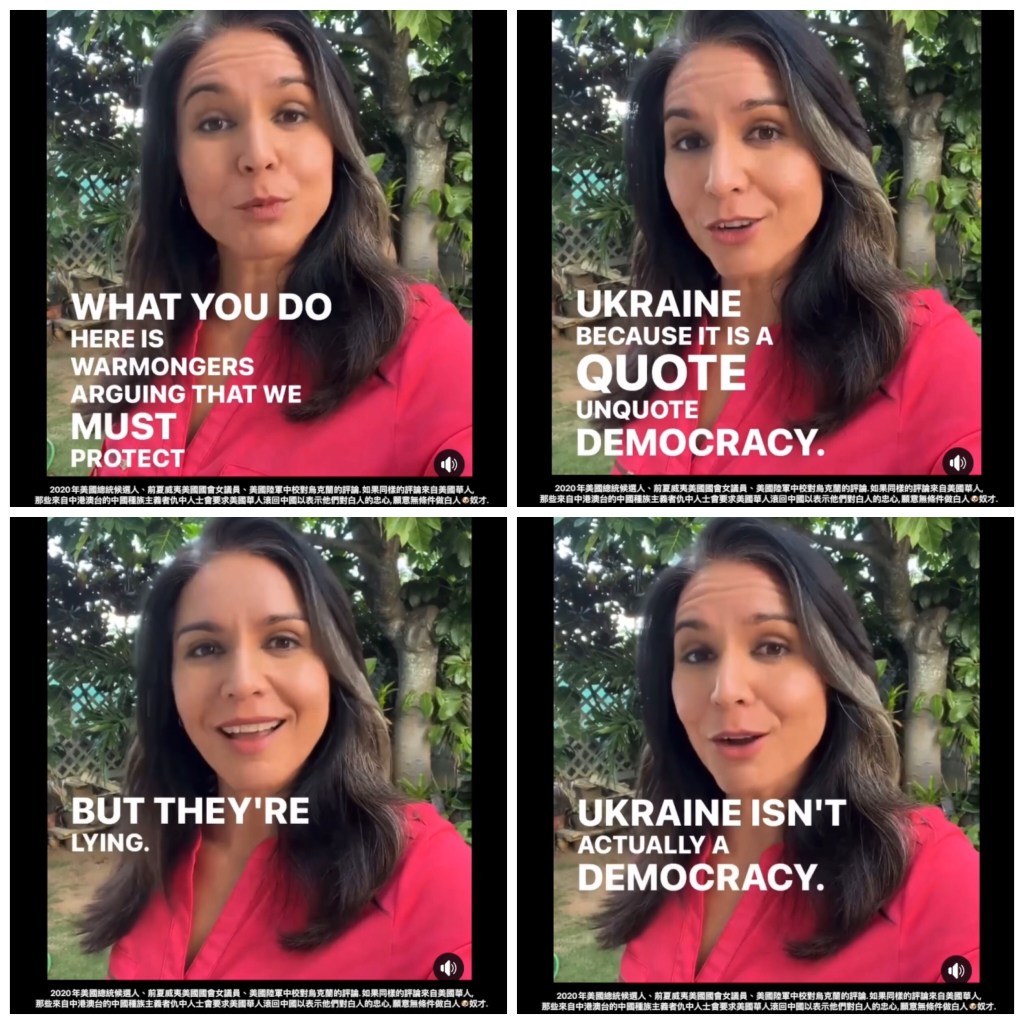
Video by Tulsi Gabbard: 2020 US Presidential Candidates, former Hawaii US Congresswoman, US Army Lieutenant colonel comments on Ukraine. If the same comments came from Chinese-Americans, Chinese racists & haters will ask them to go back to China. 2020年美國總統候選人、前夏威夷美國國會女議員、美國陸軍中校對烏克蘭的評論. 如果同樣的評論來自美國華人, 那些來自中港澳台的中國種族主義者仇中人士會要求美國華人滖回中國以表示他們對白人的忠心, 願意無條件做白人🐶奴才. https://vimeo.com/680757101 https://www.facebook.com/100036400039778/posts/661765841713411/?d=n
Warmongers argue that we must protect Ukraine because it is a “democracy.” But they’re lying. Ukraine isn’t actually a democracy. To hold onto power, Ukraine’s president shut down the 3 TV stations that criticized him, and imprisoned the head of the opposition political party which came in 2nd place in the election, and arrested and jailed its leaders (exactly what Putin has been accused of doing)—all with the support of U.S.
Asia Times: WWII redux: The endpoint of US policy – The threatened peoples of East Asia and Europe can stop the US drive to restore its global domination 亞洲時報:二戰歸來:美國政策的終點 – 受到威脅的東亞和歐洲人民可以阻止美國恢復其全球統治地位的努力By Prof. John Walsh, MD in SF 2-21-22
“This is not going to be a war of Ukraine and Russia. This is going to be a European war, a full-fledged war.” So spoke Ukrainian President Volodymyr Zelensky just days after berating the US for beating the drums of war.
It is not hard to imagine how Zelensky’s words must have fallen on those European ears that were attentive. His warning surely conjured up images of World War II when tens of millions of Europeans and Russians perished.
Zelensky’s words echoed those of Philippine President Rodrigo Duterte on the other side of the world at the eastern edge of the great Eurasian landmass: “When elephants fight, it is the grass that gets trampled flat.” We can be sure that Duterte, like Zelensky, had in mind World War II, which also consumed tens of millions of lives in East Asia.
The United States is stoking tensions in both Europe and East Asia, with Ukraine and Taiwan as the current flashpoints on the doorsteps of Russia and China, which are the targeted nations.
Let us be clear at the outset. As we shall see, the endpoint of this process is not for the US to do battle with Russia or China, but to watch China and Russia fight it out with their neighbors to the ruin of both sides. The US is to “lead from behind” – as safely and remotely as can be arranged.
To make sense of this and react properly, we must be very clear-eyed about the goal of the US. Neither Russia nor China has attacked or even threatened the US. Nor are they in a position to do so – unless one believes that either is ready to embark on a suicidal nuclear war.
Why should the US elite and its media pour out a steady stream of anti-China and anti-Russia invective? Why the steady eastward march of the North Atlantic Treaty Organization since the end of the first Cold War? The goal of the US is crystal clear – it regards itself as the Exceptional Nation and entitled to be the No 1 power on the planet, eclipsing all others.
This goal is most explicitly stated in the well-known Wolfowitz Doctrine drawn shortly after the end of the first Cold War in 1992. It proclaimed that the United States’ “first objective is to prevent the re-emergence of a new rival, either on the territory of the former Soviet union or elsewhere….”
It stated that no regional power must be allowed to emerge with the power and resources “sufficient to generate global power.” It stated frankly that “we must maintain the mechanism for deterring potential competitors from even aspiring to a larger regional or global power” (emphasis mine).
The Wolfowitz Doctrine is but the latest in a series of such proclamations that have proclaimed global domination as the goal of US foreign policy since 1941, the year before the US entered World War II. This lineage is documented clearly in a book by the Quincy Institute’s Stephen Wertheim, “Tomorrow, the World: The Birth of US Global Supremacy.”
Target No 1: China
China’s economy is No 1 in terms of PPP-GDP (gross domestic product based on purchasing power parity) according to the International Monetary Fund and has been since November 2014. It is growing faster than the US economy and shows no signs of slowing down. In a sense, China has already won by this metric, since economic power is the ultimate basis of all power.
But what about a military defeat of China? Can the US with its present vastly superior armed forces bring that about? Historian Alfred McCoy answers that question in the way most do these days, with a clear “no”:
“The most volatile flashpoint In Beijing’s grand strategy for breaking Washington’s geopolitical grip over Eurasia lies in the contested waters between China’s coast and the Pacific littoral, which the Chinese call ‘the first island chain.’
“But China’s clear advantage in any struggle over that first Pacific island chain is simply distance.…The tyranny of distance, in other words, means that the US loss of that first island chain, along with its axial anchor on Eurasia’s Pacific littoral, should only be a matter of time.”
Certainly the US elites recognize this problem. Do they have a solution?
Moreover, that is not the end of the “problem” for the US. There are other powerful countries, such as Japan, or rapidly rising economies in East Asia, easily the most dynamic economic region in the world. These too will become peer competitors, and in the case of Japan, it already has been a competitor, both before World War II and during the 1980s.
Target No 2: Russia
If we hop over to the western edge of Eurasia, we see that the US has a similar “problem” when it comes to Russia. Here too, the US cannot defeat Russia in a conventional conflict, nor have US sanctions been able to bring it down. How can the US surmount this obstacle?
And as in the case of East Asia, the US faces another economic competitor, Germany, or more accurately, the European Union with Germany at its core. How is the US to deal with this dual threat?
One clue comes in the response of President Joe Biden to both the tension over Taiwan and that over Ukraine. Biden has said repeatedly that his administration will not send US combat troops to fight Russia over Ukraine or to fight China over Taiwan. But it will send materiel and weapons, and also “advisers.”
And here too the US has other peer competitors, most notably Germany, which has been the target of US tariffs. Economist Michael Hudson puts it succinctly in a penetrating essay: “America’s real adversaries are its European and other allies: The US aim is to keep them from trading with China and Russia.”
Postwar rise to power
Such “difficulties” for the US were solved once before – in World War II.
One way of looking at that conflict is that it was a combination of two great regional wars, one in East Asia and one in Europe. In Europe the US was minimally involved as Russia, the core of the USSR, battled it out with Germany, sustaining great damage to life and economy. Both Germany and Russia were economic basket cases when the war was over, two countries lying in ruins.
The US provided weapons and materiel to Russia but was minimally involved militarily, only entering late in the game. The same happened in East Asia, with Japan in the role of Germany and China in the role of Russia.
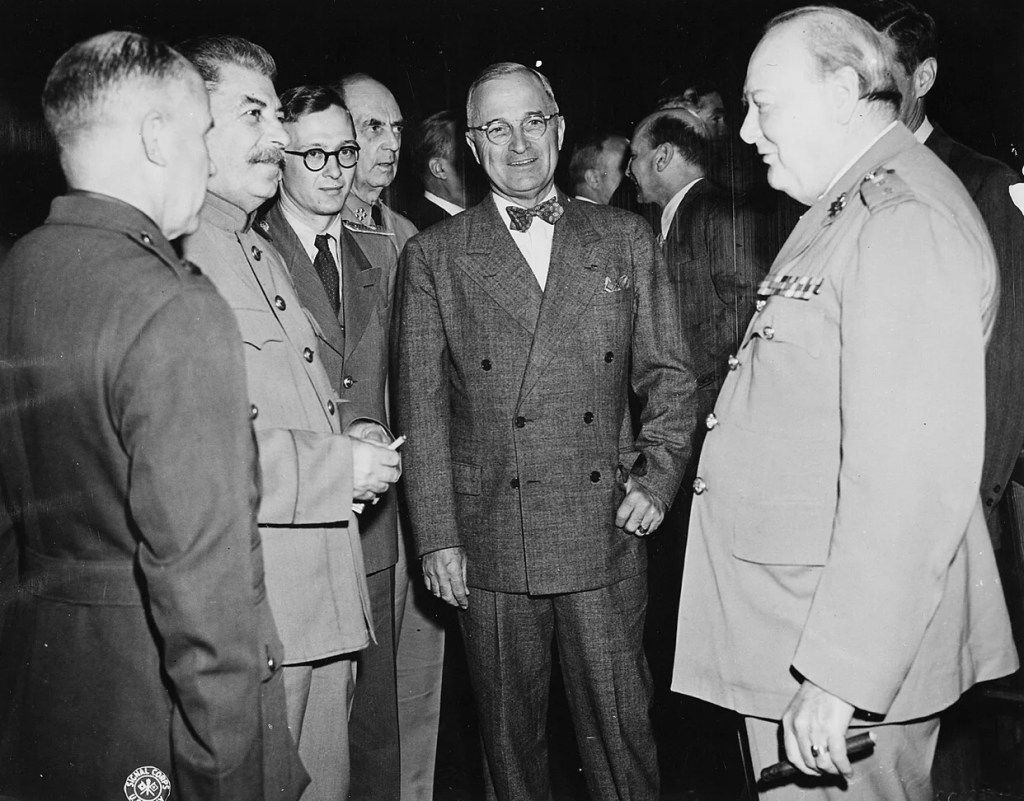
Both Japan and China were devastated in the same way as were Russia and Europe. This was not an unconscious strategy on the part of the United States. As Harry Truman, then a senator, declared in 1941: “If we see that Germany is winning the war, we ought to help Russia; and if that Russia is winning, we ought to help Germany, and in that way let them kill as many as possible.”
At the end of it all, the US emerged as the most powerful economic and military power on the planet. McCoy spells it out:
“Like all past imperial hegemons, US global power has similarly rested on geopolitical dominance over Eurasia, now home to 70% of the world’s population and productivity. After the Axis alliance of Germany, Italy and Japan failed to conquer that vast landmass, the Allied victory in World War II allowed Washington, as historian John Darwin put it, to build its ‘colossal imperium … on an unprecedented scale,’ becoming the first power in history to control the strategic axial points ‘at both ends of Eurasia.’
“As a critical first step, the US formed the NATO alliance in 1949, establishing major military installations in Germany and naval bases in Italy to ensure control of the western side of Eurasia.
“After its defeat of Japan, as the new overlord of the world’s largest ocean, the Pacific, Washington dictated the terms of four key mutual-defense pacts in the region with Japan, South Korea, the Philippines and Australia, and so acquired a vast range of military bases along the Pacific littoral that would secure the eastern end of Eurasia.
“To tie the two axial ends of that vast landmass into a strategic perimeter, Washington ringed the continent’s southern rim with successive chains of steel, including three navy fleets, hundreds of combat aircraft, and most recently, a string of 60 drone bases stretching from Sicily to the Pacific island of Guam.”
The US was able to become the dominant power on the planet because all peer competitors were left in ruins by the two great regional wars in Europe and East Asia, wars that are grouped under the heading of World War II.
If Europe is plunged into a war of Russia against the EU powers with the US “leading from behind” with materiel and weapons, who will benefit? And if East Asia is plunged into a war of China against Japan and whatever allies it can drum up, with the US “leading from behind,” who will benefit?
It is pretty clear that such a replay of World War II will benefit the US. In World War II, while Eurasia suffered tens of millions of deaths, the US suffered about 400,000 – a terrible toll certainly but nothing like that seen in Eurasia.
And with the economies and territories of Eurasia, East and West, in ruins, the US will again emerge on top, in the catbird seat, and able to dictate terms to the world. World War II redux.
But what about the danger of nuclear war growing out of such conflicts? The US has a history of nuclear “brinksmanship,” going back to the earliest post-World War II days. It is a country that has shown itself willing to risk nuclear holocaust.
Are there US policymakers criminal enough to see this policy of provocation through to the end? I will leave that to the reader to answer.
The peoples of East and West Eurasia are the ones who will suffer most in this scenario. And they are the ones who can stop the madness by living peacefully with Russia and China rather than serving as cannon fodder for the US.
There are clear signs of dissent from the European “allies” of the US, especially Germany, but the influence of the US remains powerful. Germany and many other countries are after all occupied by tens of thousands of US troops, their media heavily influenced by the US and with the organization that commands European troops, NATO, under US command. Which way will it go?
In East Asia the situation is the same. Japan is the key, but the hatred of China among the Elite is intense. Will the Japanese people and the other peoples of East Asia be able to put the brakes on the drive to war?
Some say that a two-front conflict like this is US overreach. But certainly, if war is raging on or near the territories of both Russia and China, there is little likelihood that one can aid the other.
Given the power of modern weaponry, this impending world war will be much more damaging than World War II by far. The criminality that is on the way to unleashing it is almost beyond comprehension.
John V Walsh, until recently a professor of physiology and neuroscience at the University of Massachusetts Chan Medical School, has written on issues of peace and health care for Asia Times, San Francisco Chronicle, EastBayTimes/San Jose Mercury News, LA Progressive, Antiwar.com, CounterPunch and others.


 Johnson Choi Biz