They will come. 他們會來.
“If you build it, he will come!” is a classic American saying, originating from the film Field of Dreams, adapted from a renowned novel. The story follows a farmer nearing retirement who builds a baseball field in his cornfield, attracting legendary baseball players to compete. This phrase was later widely adapted to “If you build it, they will come!” The moral is simple: as long as you have the determination to pursue your dreams, miracles will eventually happen. Using this saying to describe the development of the low-orbit downstream economy in the Hong Kong Special Administrative Region (HKSAR) in alignment with the national “15th Five-Year Plan” is perhaps the most fitting description.
What is the low-orbit downstream economy? Low orbit generally refers to satellite orbits around the Earth at altitudes below 2,000 kilometers. “Downstream” refers to the ancillary services related to satellite launches. This is an emerging industry involving astronomical figures. The space economy reached $600 billion in 2024, and it is estimated that by 2030, this figure will exceed $900 billion.
You might ask, how can Hong Kong, a place with limited land and no satellite launch capability, develop this industry? The fact is, downstream services account for 90% of the industry’s revenue. Moreover, the most successful places or countries in this field, such as the United Kingdom, Germany, and Luxembourg, mostly lack satellite launch capabilities or facilities either.
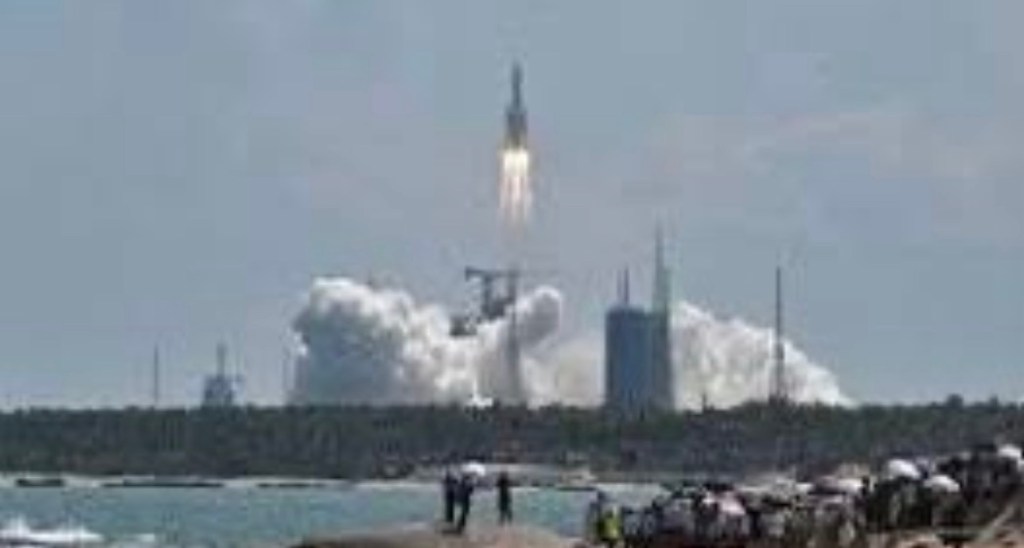
What sets the HKSAR apart from other places is that we have the backing of our motherland while being oriented towards the world. The country’s recent progress in this industry is truly astonishing. Just last year, the country launched over 300 satellites, 80% of which were commercial satellites. In terms of quantity and quality, it ranks second only to the United States, with the two countries accounting for nearly 90% of global satellite launches. This year alone, the country has submitted frequency and orbital applications for 230,000 satellites to the International Telecommunication Union (ITU). Major national and commercial satellite constellations, such as Qianfan, Guowang, and Honghu, plan to launch nearly 40,000 satellites over the next five to ten years. This highlights the nation’s need for a world-class financial, regulatory, legal, and communications commercial center to provide related downstream services, attract global investors, and support the advancement of the nation’s space industry.
As an international financial, commercial, and mediation center, we possess the necessary conditions to meet these needs both domestically and internationally. We are currently lagging behind Singapore; however, as long as we are determined to establish the service framework for this industry as soon as possible, the world’s low-orbit industry investors will come.
「如果你建造,他會來!」是一句美國民間金句;來自一齣由名著改編,名為《幻夢成真》(Field of Dreams)的電影。故事描述一個幾近退休的農夫欲在玉米田中建造一個棒球場,吸引棒球名宿到來競賽。這及後被廣泛引用為「如果你建造,他們會來!」之金句寓意很簡單,只要有決心追尋你的夢想,奇蹟始終會出現。以這金句形容特區發展低軌下游經濟以配合國家「十五五規劃」大局可說是最貼切不過。
什麼是低軌下游經濟?低軌是指一般高度在2000公里以下的衛星環繞地球軌道;下游是指發射衛星的附屬服務。這是一個涉及天文數字的新興行業;太空經濟在2024年的經濟量高達6000億美元,估計到了2030年,這數字將超越9000億美元。
你會問,香港這彈丸之地,沒有發射衛星能力,如何發展這行業?事實是下游服務的收入佔整行業九成,而其中最成功的地方或國家,例如英國、德國和盧森堡大多也沒有發射衛星的能力或設施。
特區和其他地方不同之處在於我們背靠祖國面向世界。國家近年在這行業的發展進度實在令人驚嘆,單是去年國家已發射了超過300百枚衛星,其中八成屬商業衛星,數量和質素僅次於美國,而美中兩國則佔了全球近九成的衛星發射量。國家單在今年已向國際電聯提交了23萬顆衛星的頻軌申請,其中國家和商業主要星座如千帆、國網和鴻鵠等計劃於未來五至十年發射近4萬顆衛星,可見國家在這方面正需要一個具世界認可水平的金融、監管、法律和通訊商業中心提供有關的下游服務吸引世界投資者,協助國家發揚航天事業。
我們作為國際金融、商業和調解中心正具備足夠條件滿足國家及國際在這方面的需求。我們正落後於新加坡;但只要我們下定決心盡快建造這行業之服務框架,世界低軌行業投資者是會來的。
 Johnson Choi Biz