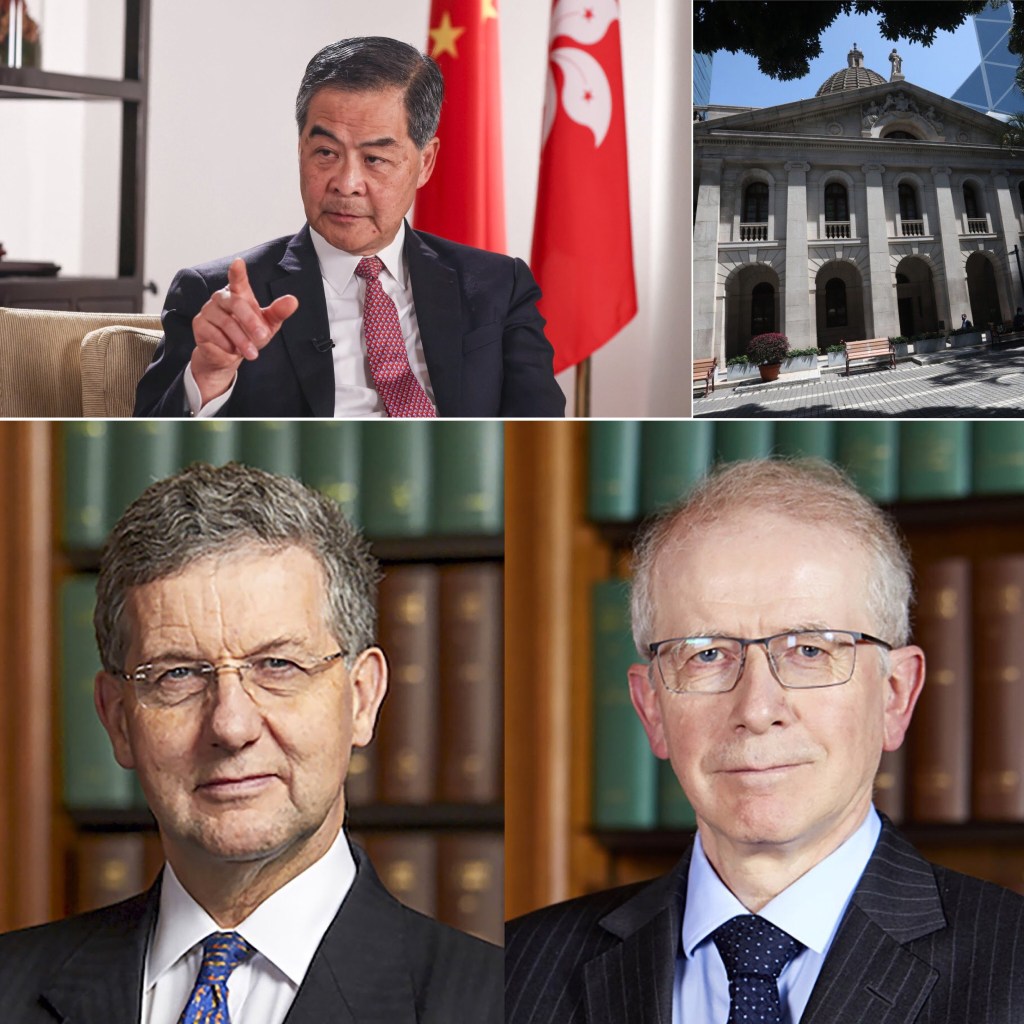
Head of UK Supreme Court should resign for talking to London before quitting Hong Kong court, former leader says by Tony Cheung April 8 2022
梁振英今天的發文:“《南華早報》今天報道,辭任香港終審法院的英國法官韋彥德解釋,其實是由他啟動和英國政府的洽談,然後決定辭職,辭職並非由於英國政府向他施壓。
我有幾個問題:
- 韋彥德法官「啟動和英國政府的洽談」時,他心中是怎麼想的?為什麼要「洽談」為什麼不是他自己決定辭職,然後通知英國政府?
- 如果英國政府在洽談中建議韋彥德法官不要辭職,他會辭職嗎?
- 在洽談中,英國政府有沒有告知韋彥德法官,辭職問題應該由他自己決定,因為英國政府不想被視為干預香港的司法獨立?
- 為什麼韋彥德法官不同樣地事先和中國政府「洽談」他的辭職?
韋彥德法官邀請英國政府干預香港的司法獨立,極度不智,應該馬上辭去英國法官辭務。
Today’s South China Morning Post reports “British jurist Lord Robert Reed has rejected claims he bowed to pressure from British politicians when he and fellow judge Lord Patrick Hodge resigned from the Court of Final Appeal because of concerns over the national security law”. Lord Robert added “it was actually he who initiated discussions with the British government about tendering his resignation because of his own concerns”.
Questions:
- What did Lord Robert have in mind when he “initiated discussions with the British government about tendering his resignation because of his own concerns”? Why didn’t he decide and then inform the British government?
- What would he have done if the British government “advised” him NOT to resign?
- Did the British government say to him that he should make up his own mind as they did not want to be seen to be interfering with Hong Kong’s judicial independence?
- Why didn’t he also initiate “discussions” about his resignation with the Chinese government?
Lord Robert invited the British government to be part of his decision to resign from the Hong Kong court. This is very poor judgment. He should resign also from the British court. ””
Leung Chun-ying accuses Lord Robert Reed of showing poor judgment by going to the British government with his concerns over freedoms in Hong Kong
‘Why didn’t he decide and then inform the British government?’ Leung asks
The head of Britain’s Supreme Court should resign after he involved London in his controversial decision to step down from Hong Kong’s top court, a former leader of the Asian financial hub has argued. Lord Robert Reed showed “poor judgment” in going to the British government with his concerns over Hong Kong’s national security law before his departure was announced, ex-chief executive Leung Chun-ying wrote on his Facebook page on Friday.
“What did [Reed] have in mind when he ‘initiated discussions with the British government about tendering his resignation because of his own concerns’? Why didn’t he decide and then inform the British government? What would he have done if the British government ‘advised’ him not to resign?” said Leung, who is now a vice-chairman of the Chinese People’s Political Consultative Conference, the nation’s top advisory body. “This is very poor judgment. He should also resign from the British court.”
Reed and the vice-president of the British Supreme Court, Lord Patrick Hodge, resigned as overseas judges who heard cases in Hong Kong’s Court of Final Appeal last week, noting they agreed with the British government’s concerns over the national security law. Reed said he could no longer serve on both courts “without appearing to endorse an administration which had departed from values of political freedom, and freedom of expression”.
The Chinese government, as well as officials and legal bodies in Hong Kong, accused the United Kingdom of putting politics before the law.
Responding to the resignations, current leader Carrie Lam Cheng Yuet-ngor said “we must vehemently refute any unfounded allegations that the judges’ resignations have anything to do with the introduction of the Hong Kong national security law or the exercise of freedom of speech and political freedom in Hong Kong”. But speaking at a parliamentary session in London earlier this week, Reed said he was not under political pressure to make the decision and added that it was he who initiated the talks with the British government.
Leung also urged Reed to clarify whether the British government told him to make the decision himself so that London would not be seen as interfering with Hong Kong’s judicial independence.
“Why didn’t he also initiate ‘discussions’ about his resignation with the Chinese government?” he said.
Reed and Hodge resigned from the Court of Final Appeal on March 30, ending a practice of serving British judges sitting on the Hong Kong bench that stretched back to the city’s handover from British to Chinese rule in 1997. Reed and Hodge were among 12 overseas jurists from other common law jurisdictions serving as non-permanent judges on the top court, an arrangement that has stood as a strong endorsement of the city’s rule of law.
The remaining 10 – six from Britain and the rest from Canada and Australia – are all retired in their home countries so they are not bound by decisions made by their governments should others decide to withdraw their judges. Nine of the remaining jurists have told the Post they will remain.
Tony Cheung became a political journalist in 2007. He joined the Post in 2012, and covers Hong Kong-mainland relations, public policies and political issues. Prior to joining the Post, he was a reporter at Asia Television in Hong Kong, Beijing and Guangzhou. He holds a Master of Laws in Human Rights degree from the University of Hong Kong.
 Johnson Choi Biz