This eetimes article describes clearly how the U.S. developed the chip industry and how it destroyed it via liberal greed capitalism. And now, the capitalists are all begging for more handouts to enrich the 1%.
EE Times: With CHIPS Act, US Risks Building a White Elephant. By Alan Patterson 12.07.2021
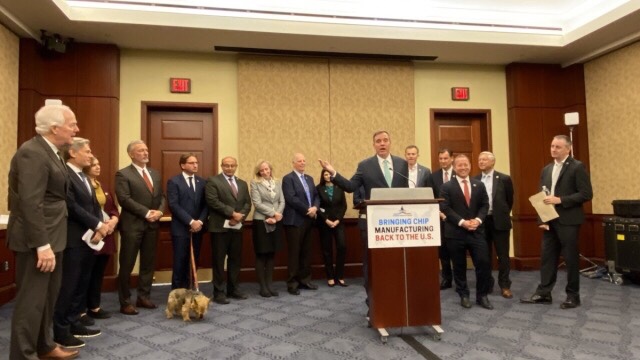
The U.S. Senate has approved $52 billion for the CHIPS for America Act, aimed at reviving the American semiconductor industry over the next decade. While the Act awaits approval in the House of Representatives, we should examine whether it is the most effective way to encourage investment in domestic manufacturing.
One of the key goals of the CHIPS Act is to encourage renewed investment in manufacturing. But the conditions that have caused the U.S. to fall behind are not addressed by the Act. The US incentive structure is skewed because there’s a stronger impetus for executives to choose stock buybacks over reinvesting in operations.
Several U.S. tech companies now lobbying for the CHIPS Act have squandered past support from the U.S. government while instead showing more appetite for share buybacks to boost company stock prices. Among the Semiconductor Industry Association (SIA) corporate signatories of a recent letter to President Biden, Intel, IBM, Qualcomm, Texas Instruments, and Broadcom did a combined $249 billion in buybacks over the decade 2011-2020, according to William Lazonick, Professor of Economics Emeritus at the University of Massachusetts.
Intel lags behind TSMC and Samsung in process technology in part because of a swing toward buybacks, according to Lazonick. While Intel spent $50 billion on capital expenditures and $53 billion on R&D during the past five years, it also lavished shareholders with $35 billion in stock buybacks and $22 billion in cash dividends, which altogether used up 100 percent of Intel’s net income. Intel’s distributions to shareholders have been far greater than those made by either Samsung or TSMC, according to Lazonick.
Like Intel, IBM also decades ago focused on maximizing shareholder value. After drastically cutting headcount during the 1990s, IBM began distributions to shareholders in the form of buybacks, even as from 1996 through 2020 the company increased its annual dividend payouts. IBM did $51.4 billion in buybacks (79 percent of net income) in 1995-2004 and $119.7 billion (93 percent) in 2005-2014.
IBM could have invested those funds in state-of-the-art chip facilities, but, in 2015 sold its semiconductor fabs to GlobalFoundries. From 2010 through 2014, IBM did $70 billion in buybacks (92 percent of net income) which followed $50 billion in buybacks in 2005-2009 (93 percent of net income).
Let’s face it. It’s impossible to buy a toaster that’s made in the U.S., but now the aim is to quickly ramp up production of American-made leading-edge chips? Is the U.S. about to make a multi-billion mistake in much the same way that the Chinese government has by funding a national fab capacity buildup that has largely been a flop?
Despite such warnings, the CHIPS Act has no shortage of cheerleaders.
The Semiconductors in America Coalition (SIAC) was formed in May 2021 to lobby Congress for the passage of the CHIPS Act. Members include Apple, Microsoft, Cisco and Google. These firms spent a combined $633 billion on buybacks during 2011-2020, according to Lazonick. That’s about 12 times the $52 billion in government subsidies earmarked under the CHIPS Act.
The SIA warns that the U.S. share of global semiconductor manufacturing capacity has plunged to 12 percent largely because the governments of U.S. competitors offer significant incentives and subsidies to semiconductor manufacturing.
In September 2020, the SIA’s Government Incentives and US Competitiveness in Semiconductors report warned that over the next decade only 6 percent of the new global fab capacity will be located in the U.S. while China will become the largest fab site in the world. The report “estimated that a $50 billion [government] incentive program would enable the construction of 19 advanced fabs in the U.S. over the next ten years, doubling the number expected if no action is taken and increasing the capacity located in the U.S. by 57 percent.”
Without a doubt, no matter whether it’s from China or the U.S., government funding has played a key role in the development of microelectronics technology.
With huge tech programs such as NASA, U.S. government funding has been integral since the creation of the microelectronics industry seven decades ago. Between 1987 and 1992, the U.S. provided $500 million in matching funds to Sematech, a nonprofit consortium of 14 semiconductor firms for the purpose of supporting the competitiveness of U.S. semiconductor equipment producers. In 2001, the U.S. launched the National Nanotechnology Initiative with budgets totaling $12.1 billion for 2001-2010 and $16.9 billion for 2011-2020, with proposed 2021 spending of $1.7 billion.
Despite this largesse, the U.S. loss of global semiconductor leadership suggests an overemphasis on financial engineering at U.S. companies where a number of senior executives, as SIA directors, have signed their recent letter to President Biden in support of the CHIPS Act.
The U.S. government has played a central role in investments that have enabled the nation to be a global leader in advanced technology. Yet, government investments only succeed when major businesses join in. The investments necessary to build a national chip industry are far larger than $52 billion and probably far more than any one government can afford. The U.S. government should be wary of building a white elephant.
Government-business collaborations have the best chance of success when the relevant companies are engaged in a “retain-and-reinvest” mode. The companies retain corporate profits and reinvest in their productive capabilities. Yet many tech companies today are in a “dominate-and-distribute” mode, according to Lazonick. Based on past strength, they dominate their industries but prioritize shareholders in the allocation of earnings.
In passing the CHIPS Act, Congress faces the difficult task of exacting a pledge from the SIA and the SIAC that its member corporations will halt stock buybacks for the next 10 years.
Longer term, Congress should repeal Securities and Exchange Commission Rule 10b-18 to discourage buybacks. The practice allows companies with plenty of cash to buy back their shares and cancel them. The reduction of outstanding shares gives a strong boost to the stock price.
Lazonick calls the rule a “license to loot.”
Rule 10b-18 gives a company a “safe harbor” against charges of stock-price manipulation in doing stock buybacks as open-market repurchases (OMRs) if, on any given trading day, OMRS are no more than 25 percent of the average daily trading volume (ADTV) over the previous four weeks. The safe harbor means that there is no automatic presumption that, if the company does OMRs in the range of 25 percent of ADTV, it will be charged with stock-price manipulation.
Senior corporate executives have this insider information and hedge-fund managers have ways of knowing when a company is doing OMRs, according to Lazonick. Both corporate executives and hedge-fund managers are positioned to time the buying and selling of the shares that they hold to boost their realized gains, Lazonick says.
Billions of dollars in government funding to build fabs is no guarantee of success. It’s more about creating an environment that’s conducive to investment. The recent joint venture between the Japanese government, TSMC and Sony to build a fab is a better approach that spreads out the huge investment risk. Providing subsidies to companies that have failed to invest in their future is a poor idea.
Alan has worked as an electronics journalist in Asia for most of his career. In addition to EE Times, he has been a reporter and an editor for Bloomberg News and Dow Jones Newswires. He has lived for more than 30 years in Hong Kong and Taipei and has covered tech companies in the greater China region during that time.
 Johnson Choi Biz