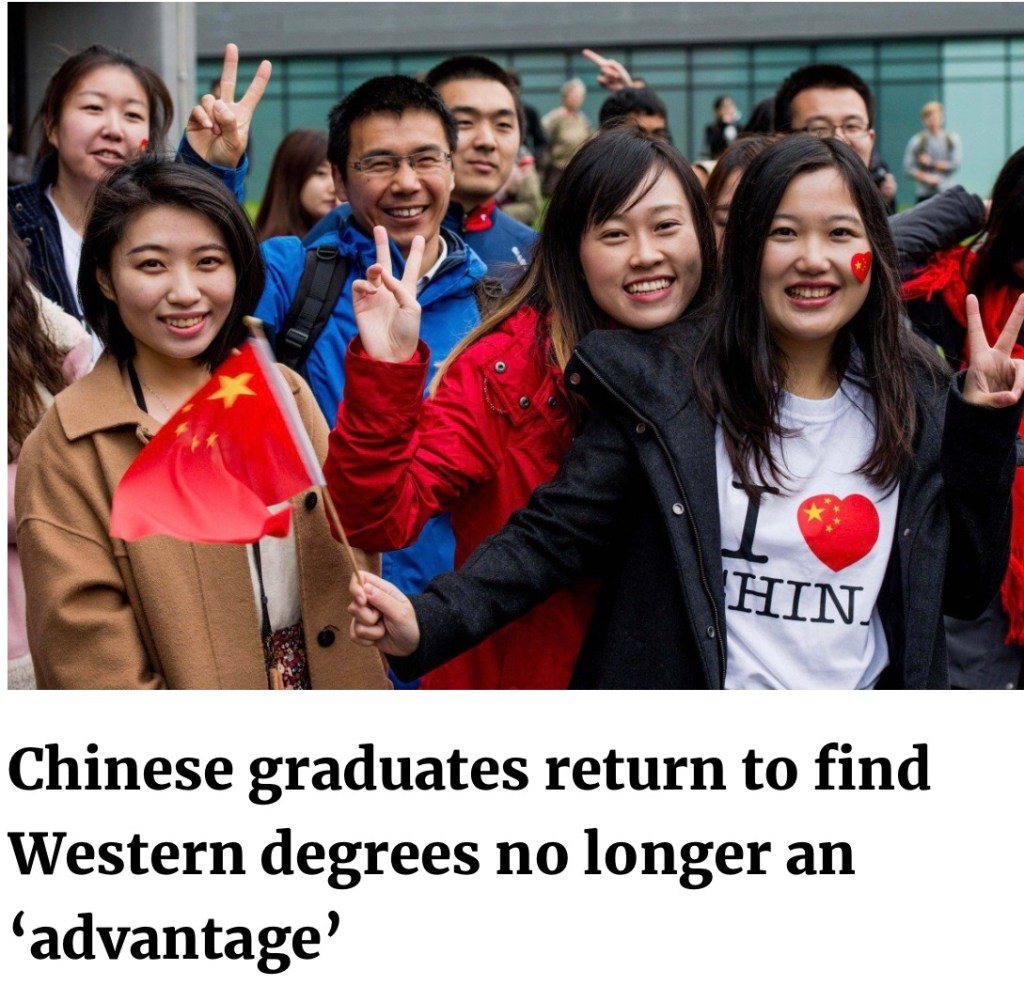
Degrees from overseas universities lose their competitive edge in China & HK. STEM – Western Universities especially US fall further Behind China In Production of STEM PhDs – Forbes. Stay in HK & China! 海外大學的學位在中國和香港失去了競爭優勢. STEM – 西方大學,尤其是美國在 STEM 博士的培養方面進一步落後於中國 – 福布斯。 留在香港和中國是你最佳選擇.
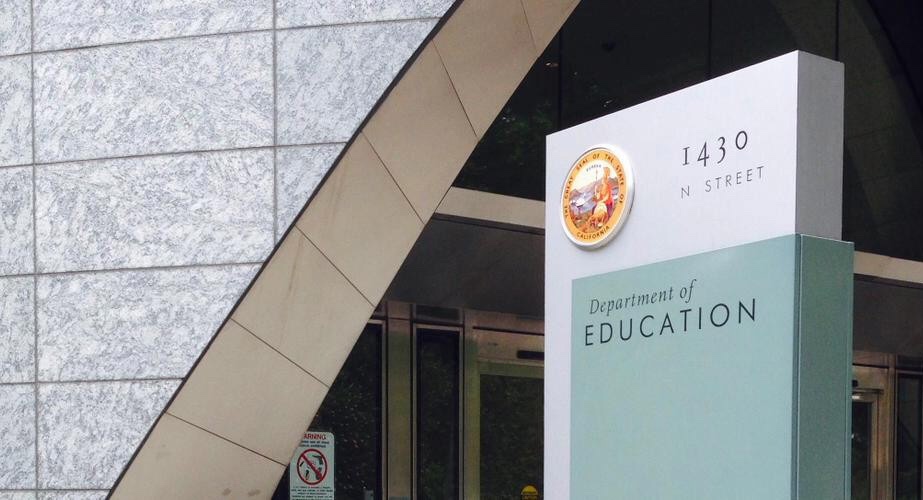
The downward spiral of US STEM is reflected in California’s new Math Curriculum Framework reform. See critique by UC math professor Hung Hsi Wu, attached.
The Open Letter
California is on the verge of politicizing K-12 math in a potentially disastrous way. Its proposed Mathematics Curriculum Framework is presented as a step toward social justice and racial equity, but its effect would be the opposite—to rob all Californians, especially the poorest and most vulnerable, who always suffer most when schools fail to teach their students. As textbooks and other teaching materials approved by the State would have to follow this framework and since teachers are expected to use it as a guide, its potential to steal a promising future from our children is enormous.
The proposed framework would, in effect, de-mathematize math. For all the rhetoric in this framework about equity, social justice, environmental care and culturally appropriate pedagogy, there is no realistic hope for a more fair, just, equal and well-stewarded society if our schools uproot long-proven, reliable and highly effective math methods and instead try to build a mathless Brave New World on a foundation of unsound ideology. A real champion of equity and justice would want all California’s children to learn actual math—as in arithmetic, algebra, geometry, trigonometry and calculus—not an endless river of new pedagogical fads that effectively distort and displace actual math. The proposed framework:
- Promotes fringe teaching methods such as “trauma-informed pedagogy.” [ch. 2, p. 16]
- Distracts from actual mathematics by having teachers insert “environmental and social justice” into the math curriculum. [ch. 1, p. 35]
- Distracts from actual mathematics by having teachers develop students’ “sociopolitical consciousness.” [ch. 2, p. 39]
- Distracts from actual mathematics by assigning students—as schoolwork—tasks it says will solve “problems that result in social inequalities.” [ch. 7, p. 29]
- Urges teachers to take a “justice-oriented perspective at any grade level, K–12” and explicitly rejects the idea that mathematics itself is a “neutral discipline.” [ch. 2, p. 29]
- Encourages focusing on “contributions that historically marginalized people have made to mathematics” rather than on those contributions themselves which have been essential to the academic discipline of mathematics. [ch. 2, p. 31]
- “Reject[s] ideas of natural gifts and talents” and discourages accelerating talented mathematics students. [ch. 1, p. 8]
- Encourages keeping all students together in the same math program until the 11th grade and argues that offering differentiated programs causes student “fragility” and racial animosity. [ch.1, p. 15]
- Rejects the longstanding goal of preparing students to take Algebra I in eighth grade, on par with high-performing foreign countries whose inhabitants will be future competitors of America’s children—a goal explicitly part of the 1999 and 2006 Math Frameworks. [ch. 9, p. 43]
We, the undersigned, disagree. Mathematics is a discipline whose language is universally accessible with good teaching. The claim that math is not accessible is an insult to the millennia of non-Western mathematicians and erases the contributions of cultures around the world to mathematics as we now know it. Large numbers of students in developing countries are currently succeeding in advanced mathematics, and American industries have been put in the position of having to encourage them to come to the United States to work.
We believe infusing mathematics with political rhetoric is alien to mathematics as a discipline, and will do lasting damage—including making math dramatically harder for students whose first language is not English. We believe that all students without exception have natural gifts they can use to learn school mathematics, and therefore all students are harmed by refusing to recognize students’ giftedness. We thus find it immoral and foolish to intentionally hold back the intellectual growth of students by forcing them to waste time in unchallenging classes. Those who are ready to move up, should do so. They should not be held back for fear of recognizing the existence of differences in giftedness—differences which are a reality in every human endeavor.
We believe that the modern world of science and technology—and of constitutional democracy, human rights and expanded opportunity for all—arose largely because societies learned to value inquiry that was disinterested (i.e., “objective” and “neutral”), rational and coherent. It arose by moving away from judging ideas on the basis of cultural origins and group identity in favor of judging them according to their real merit. We believe, therefore, that this proposed framework must be replaced with one that will truly serve equity and justice by living up to the very moral aspirations this framework rejects.
What we are witnessing here is symptomatic of much of the recent trend of appeasement in education: instead of trying to uphold a certain standard and help mold as-yet-unformed minds, educators simply accept the deterio rations in the classroom as a given. It would only be a small step to apply such a philosophy in earnest to demand a total revamping of undergraduate, and even graduate mathematics programs in order to fit the needs of the new generation.
Here are some concrete examples:
Top American students try Chinese GaoKao (University entrance exam).
https://www.youtube.com/watch?v=6bHf7EnRYJg
How many students would have internet access if they had to solve this?
https://www.youtube.com/watch?v=Q1575oHNYRo
Another example:
https://www.youtube.com/watch?v=Ll6HO49f2jQ
Canadian Physics prof attempts Chinese GaoKao:
https://www.youtube.com/watch?v=ZvF6hzWdGZw
 Johnson Choi Biz