Biden’s China obsession could be the undoing of America 美國加州舊金山星島廣場: 拜登揪住中國不放可能會毀掉美國 2021年06月30日
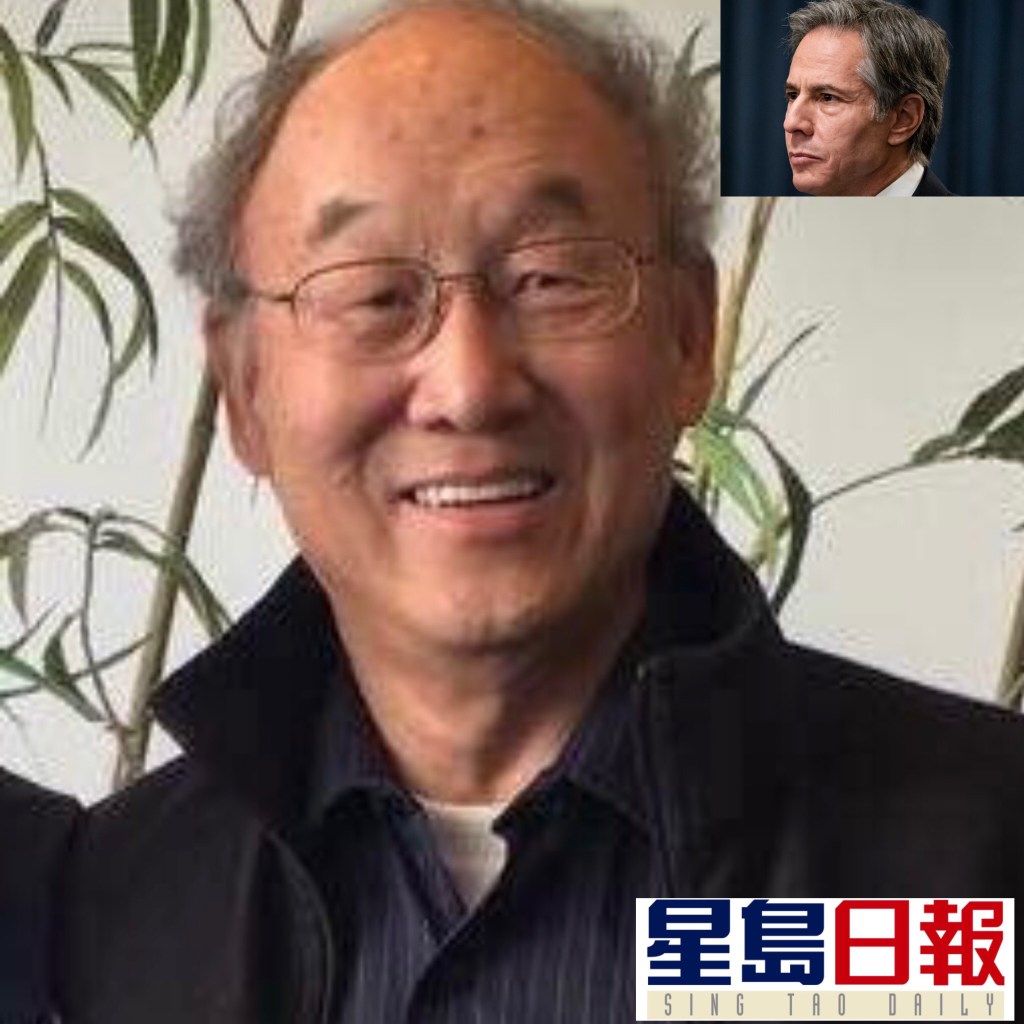
(George Koo San Francisco 顧屏山 灣區)
很難說美國總統拜登對中國的立場是他真實信念,還是他只是順應了華盛頓強烈的反華情緒,但他的中國團隊現在已經正式宣布:與中國脫鉤,從現在起只有競爭。
請注意,拜登團隊所想的競爭的性質並不是那種紳士式的體育比賽,在其中你追我趕,最終使彼此都更有競爭力。不,所有跡像都表明,這是全力出擊,襲襠,挖眼,不擇手段地攻擊對方,即中國。兩個進行中的事態發展也正指向這一結論。
所謂的「2021年戰略競爭法」正在美國國會中蜿蜒前進。它尚未頒布,因此我們不太了解所有條款。我的理解是,已經撥出多達3億元用於在全球抹黑中國的形象。
在這個假新聞氾濫的時代,很容易通過影射、誇張甚至徹頭徹尾的謊言來暗殺一個人物(或一個國家的聲譽)。莊嚴的美國主流媒體,例如《紐約時報》或《華盛頓郵報》,也未免於供應或提供錯誤信息,有時出於深謀遠慮的惡意,有時只是懶得核實可疑的消息來源。
與所有這些一致的是拜登最近呼籲重新調查導致新冠病毒是否可能源自中國武漢的一個研究實驗室,給了工作組90天的時間報告其調查結果。
拜登重新調查新冠病毒起源
權威調查以明確新冠病毒起源是一件好事,對保護世界未來的健康很重要。當然,前提是這項工作是光明正大的、以科學為基礎的,並且由一支由專業過硬,誠實正直的人組成科學團隊進行。
一個包括納瓦羅(Peter Navarro)或蓬佩奧(Mike Pompeo)在內的調查組過不了道德關。此外,為了做到徹底全面,除了武漢實驗室的猜想之外,其他一些推測也值得納入調查。
例如,馬里蘭州Fort Detrick的生物實驗室在武漢爆發前六個多月就因違反安全規範而被美國疾控中心關閉。
大約在那個時候,曾有多宗由於呼吸衰竭導致無法解釋的死亡,從未公開過完整的說明,但這個問題被掩蓋了,只將死亡歸咎於過度吸電子煙(即吸入水果味的煙霧)。
網絡上也有報道稱,在武漢爆發前幾個月,有證據表明在歐洲污水系統中發現了新冠病毒。對所有這些傳言怎麼辦?如果拜登專案組不僅僅是為了將責任推到中國身上,而是為了進行徹底可信的調查,90天可能還不夠。
國務卿布林肯(Tony Blinken)與中國競爭的方法是招募和重組前盟友,聯合起來對抗中國。這些前盟友被前總統特朗普及其單打獨鬥的做法冒犯和拒之門外。但是布林肯必須拿出甚麼來吸引盟友加入戰鬥?
最近的一項統計表明,現在有165個國家將中國視為第一大貿易夥伴,而相比起來只有13個國家將美國視為第一大貿易夥伴。一百多個國家參與了中國「一帶一路」倡議的二千六百多個項目,總價值3.7萬億元。布林肯唯一的反擊是到世界各地警告各國提防債務陷阱。
顯然,在通過貿易開展業務或在協助基礎設施建設方面,美國沒有能力與中國競爭。現在要求各國在不清楚與美國結盟的好處的情況下選邊站。
剩下唯一的選擇是誹謗中國,讓世界輿論反對北京。
美國是「民主的典範」
因此,布林肯不得不拋出常用的說辭,即中國不民主,沒有人權等,令人作嘔。所有潛在的盟友都被敦促成為像美國這樣熱愛自由的民主國家。
那麼,美國是如何是「模範」民主國家的呢?讓我們細數一下。
上屆總統選舉落敗的候選人特朗普仍然聲稱獲勝。他所屬的共和黨的成員竭盡全力保護他免於入獄,即使他違反了美國憲法的規定。
潰敗之下,州一級的共和黨正忙於想方設法剝奪某些公民的投票權。在它看來,民主並不適用於美國的每個人,靠勾引或欺騙獲勝才是一切。
美國的大規模槍擊事件幾乎每天都在發生。在美國,攜帶攻擊性武器的權利是一項比人的生命更重要的人權。
僅佔世界人口4.4%的美國擁有世界上22%的監獄人口,在所有國家中遙遙領先。人口大約是美國4.5倍的中國,被監禁的人更少,而我們美國人卻指責中國侵犯人權。此外,美國監獄關押著不成比例的黑人和棕色人種。
年幼的孩子在南部邊境與他們的難民父母分開,仍然下落不明,這是我們人權記錄上的又一個污點。
在中央和地方政府的共同努力下,中國實現了全民脫貧。在美國,貧民窟的情況沒有太大變化,他們仍然主要由黑人和棕色人種居住。八分之一的美國人生活在貧困線以下。
中國的政府官員輪流分配任務,並根據表現進行評分。如果他們表明有能力承擔越來越多的責任,就會得到提升。在美國,對於那些有志於公職的人來說,最重要的要求是能夠籌集到大量經費,或者已經很富有。
以任何客觀衡量標準,任何潛在的盟友會認為美國是值得效仿的民主模式嗎?布林肯面臨著艱難的推銷工作。
拜登政府還計劃通過投資和補貼新技術開發來與中國競爭。令人驚訝的是,《無盡前沿法案》(Endless Frontier Act)得到了兩黨的支持,將1200億元用於人工智能、超導體和機器人技術。
拜登在半導體上押注520億元
據說拜登將向美國半導體行業投入520億元,在美國建立新的製造設施,即晶圓廠。我懷疑這是否會有效。
美國曾經是世界領先的半導體芯片製造商。但隨著芯片設計變得越來越複雜,晶圓廠的成本呈幾何級數增長,很快矽谷公司放棄製造,只專注於設計專利芯片,主要依靠台積電(TSMC)製造。
今天,英特爾是唯一仍然擁有晶圓廠的美國公司,它公開承認比台積電落後兩到三代。台積電創始董事長張忠謀(Morris Chang)公開質疑美國公司是否仍然擁有掌握營運最先進晶圓廠所需經驗和技能的工程師。
中國也沒有最先進的晶圓廠,因為美國不允許向中國出售先進的製造設備。因此,不管這520億元花得是否合理,中國在一段時間內都趕不上。
但如果北京需要熟練的工程師來營運先進的晶圓廠,它總是可以從台灣招聘來補充自己的員工。許多人已經在中國工作。
為了獲得最先進的晶圓廠,中國需要從荷蘭的ASML購買光刻機。ASML的執行長Peter Wennink已經擔心美國的出口管制措施將阻止他的公司向中國出售最先進的機器,每台機器的價格都超過10億元。
失去中國市場將意味著損失超過三分之一的ASML收入,因此進一步研發以保持公司的技術領先地位的資金也少了。Wennink擔心出口限制將迫使中國開發自己的技術,很快ASML不僅將失去一個主要客戶,而且將面臨一個新的競爭對手。
你不得不想想這家歐洲公司會對華盛頓對中國出口的禁令堅持多久。
與中國脫鉤的另一個方面是阻止來自該國的STEM(科學、技術、工程和數學)畢業生進入美國大學。舉個例子,聯邦參議員科頓(Tom Cotton)認為中國學生來這裡只是為了竊取美國的專業知識。
但如果沒有最優秀、最聰明的國際學生的注入(其中來自中國的學生佔三分之一以上),只有美國自己從搖搖欲墜的K-12系統中訓練出的畢業生,麻省理工學院(MIT)等精英學校將萎縮枯萎。
一個軼事可以說明我的觀點。在最近的一次國際高中生數學競賽中,美國隊擊敗了中國隊獲得了第一名。但這次「心煩意亂」的勝利可以歸因於美國隊的每個成員都是華裔,他們的父母都是從中國移民到美國的學生。
中國大學的質量在提高;許多學校已經躋身世界前50名學校之列。中國的精英學校可能尚未能與美國同行相提並論,但北京政府相信投資於人力資本。如果中國研究生不能來美國,他們可以去其他地方,或者乾脆呆在本國向從世界各地招聘來的最好的教授學習。
從長遠來看,輸家將是美國。
中美掛鉤於美國有利
一直以來,我們美國人一直表現得好像四十多年的交往對中國來說是一種以我們的犧牲為代價的單方面的恩惠。事實並非如此。
合作使蘋果公司能夠「在加州設計,在中國組裝」,這一戰略非常成功,公司現在價值超過2萬億元。如果蘋果在美國設計和組裝,高昂的成本將限制其銷售並阻礙公司的盈利能力和增長。
特朗普曾大張旗鼓地宣布,過去曾是蘋果產品主要組裝商的富士康將在威斯康辛州建一座大工廠。他將這項勝利歸結為他「有說服力」的個性。然而,該工廠並未實現,因為中國的勞動力工資與美國相差太遠。即使是特朗普也無法從岩石中擰出水來。
那還是在高端。在經濟的低端,低成本的進口商品擺滿了沃爾瑪的貨架,美國消費者繼續享受他們的生活水平,而不面臨價格上漲。中國對美貿易順差的60%來自美國公司在中國生產的商品。
由於中國經濟以驚人的速度增長,每8到10年翻一番,最初到中國採購產品的美國公司開始擴大投資,以打入亞洲國家不斷壯大的中產階級,因為中國市場規模變得大到可與他們的國內市場相比擬。
美國領先的科技公司很快就看到了在中國為世界設計的明智之處。他們設立研發中心以利用中國的技術人才,中國的STEM大學畢業生人數是美國的8倍。
可悲的是,我們在華盛頓的領導人只知道那可能是對的,我們擁有世界上最強大的軍隊。他們寄希望於在這樣一個前提上戰勝中國,即我們可以造成更多死亡和破壞。
否則,與中國脫鉤和競爭充其量只是一種相互抵消的結果,無助於華盛頓解決我們日益惡化的基礎設施、失敗的學校系統、隨機槍擊造成的死亡以及超級富豪和無產者之間不斷擴大的收入差距問題。
我們需要有遠見和政治勇氣的領導人,能夠看到並告訴美國人民甚麼對美國有利,而與中國競爭不是辦法。事實上,隨著我們繼續沿著拜登的軌跡前進,我們可能會陷入一個螺旋式下降,這意味著美國帝國的終結。
It’s hard to tell if US President Joe Biden’s position on China is his true conviction or he’s just going along with the heavy anti-China sentiment in Washington, but his China team has made it official now: no more engagement with China, just competition from here on.
The nature of competition the Biden team has in mind, mind you, is not your gentlemanly sort of sporting contest where my one-upping you will incentivize your one-upping me, and we both in the end are better for competing.
No, all indications point to all-out, below-the-belt, eye-gouging, anything-goes tactics to attack the other party, namely China. Two ongoing developments point to this conclusion.
Winding its way through the US Congress is the so-called Strategic Competition Act of 2021. It has not been enacted as yet, so we don’t quite know all the provisions. My understanding is that as much as $300 million has been allocated to blacken China’s image around the world.
In this era of fake news, assassination of one’s character (or a country’s reputation) via innuendo, exaggeration and even outright lies is easy to do. August members of the US mainstream media, such as The New York Times or The Washington Post, are not above purveying or contributing misinformation, sometimes with malice of aforethought and sometimes simply being too lazy to authenticate questionable sources.
Consistent with all this is Biden’s recent call to reopen an investigation into whether the virus that causes Covid-19 could have originated in a research lab in Wuhan, China. The task force was given 90 days to report its findings.
Biden to revisit origin of Covid
A definitive investigation leading to conclusive understanding of the origin of Covid-19 is a good thing, important to protecting the future health of the world. Provided, of course, that the work is above-board, science-based and conducted by a scientifically qualified team of people of impeccable honesty and integrity.
A team of investigators that includes the likes of a Peter Navarro or Mike Pompeo would not pass the smell test. Furthermore, to be completely comprehensive, some of the other speculations besides the Wuhan lab theory deserve to be included in the investigation.
For instance, the biological laboratories at Fort Detrick in Maryland were shut down by the US Centers for Disease Control and Prevention for violations of safe practices more than six months before the outbreak in Wuhan.
Around that time there were unexplained deaths caused by respiratory failures. A full account was never made public, but the issue was swept under the carpet by blaming the fatalities on excessive vaping, that is, inhalation of fruit-flavored smoke.
There were also reports in cyberspace that there was evidence of the coronavirus being found in European sewage systems, again months before the Wuhan outbreak. What happened to all those rumors? If the Biden task force is not just for the purpose of pinning the blame on China, but to perform a thorough and credible investigation, 90 days may not be enough.
Secretary of State Tony Blinken’s approach to competing with China is to recruit and reorganize former allies to band together against China. These former allies were offended and turned off by former president Donald Trump and his go-it-alone approach. But what does Blinken have to offer to entice the allies to join the fray?
A recent tally indicates that 165 countries now consider China their No 1 trading partner, as compared with 13 countries that regard the US as their No 1 trading partner. More than 100 countries are participants of China’s Belt and Road Initiative in more than 2,600 projects with a total value of US$3.7 trillion. As his only counter, Blinken goes around the world warning the countries to beware of debt traps.
Obviously, the US does not have the ability to compete with China when it comes to doing business via trade or provide assistance in erecting infrastructure. Countries are asked to choose sides with no clear idea of the benefits of aligning with the US.
The only alternative is to slander China and turn world opinion against Beijing.
The US as ‘model of democracy’
Thus Blinken has to trot out the usual tropes, that China is not democratic, has no human rights etc, ad nauseam. All of the prospective allies are urged to be freedom-loving democracies like America.
So how does the US stack up as a “model” democracy? Let’s count the ways.
The losing candidate of the last presidential election, Donald Trump, still claims to have won. Members of his political party, the Republicans, have gone to great lengths to shield him from going to jail, even for violating the statutes of the US constitution.
As part of the debacle, the Republican Party at the state level is busy devising ways to deny certain citizens the right to vote. In its view, democracy is not for everybody in America and winning by hook or crook is everything.
Mass shootings in America have become a nearly daily occurrence. In America, the right to carry an assault weapon is an human right more important than a human life.
The US with just 4.4% of the world’s population has 22% of world’s prison population, far and away the most of any country. China with about 4.5 times the US population has fewer people incarcerated, and yet we Americans accuse China of abusing human rights.
Furthermore, the US prisons house a disproportionate share of black and brown people.
Young children torn away from their refugee parents at the southern border, and still unaccounted for, is yet another blot on our human-rights record.
Because of concerted efforts by the central and local governments, China has lifted all of its people out of poverty. In America, conditions in the ghettos have not changed much and they are still mostly populated by black and brown people. One out of eight Americans lives below the poverty line.
Government officials in China are given rotating assignments and graded on their performance. They get promoted if they show they are capable of taking on increasing responsibility. In the US, the most important requirement for those aspiring to public office is to be able to raise a lot of money, or be already wealthy.
By any objective measure, would any potential allies find the US a worthy model of democracy to follow? Blinken has a tough sell ahead of him.
The Biden administration is also planning to compete with China by investing in and subsidizing the development of new technologies. The Endless Frontier Act, surprisingly enough, has bipartisan support for dedicating $120 billion to focus on artificial intelligence, superconductors and robotics.
Biden bets $52 billion on semiconductors
Supposedly, Biden will throw $52 billion at the American semiconductor industry to build new manufacturing facilities in the US, known as fabs. I am doubtful that this will work.
The US used to be the world’s leading maker of semiconductor chips. But as the design of the chips became more complex, the cost of the fabs increased geometrically, and soon Silicon Valley companies gave up manufacturing and just concentrated on designing proprietary chips, relying largely on Taiwan Semiconductor Manufacturing Corporation to make them.
Today, Intel is the only US company that still owns fabs, and it has publicly admitted that they are two to three generations behind TSMC’s. Morris Chang, founding chairman of TSMC, has openly questioned whether US companies would still have engineers with the experience and skills needed to run a state-of-the-art fab.
China also does not own state-of-the-art fabs because the US will not allow the sale of advanced manufacturing equipment to China. Therefore, regardless of whether the $52 billion will be well spent, China will not catch up for some time.
But if Beijing needs skilled engineers to run an advanced fab, it can always recruit from Taiwan to supplement its own staff. Many are already working in China.
To attain the most advanced fab, China will need to buy lithographic machines from ASML, based in Netherlands. Already, Peter Wennink, chief executive of ASML, is fretting that the US export control measures will prevent his company from selling the most advanced machines to China, each with a $1 billion+ price tag.
The loss of the China market would mean the loss of more than one-third of ASML’s revenue, and therefore funds for further research and development, necessary in order to maintain the company’s technological lead. Wennink is worried that the export restriction will force China to develop its own technology and soon not only ASML will lose a major customer but will face a new competitor.
You’d have to wonder how long the European company will go along with the Washington ban on exports to China.
Another aspect of disengaging China is to discourage the enrollment of STEM (science, technology, engineering and mathematics) graduates from that country in US universities. US Senator Tom Cotton, for one, thinks Chinese students are here just to steal American knowhow.
But without the infusion of the best and brightest international students – and students from China make up more than one-third of them – elite schools such as the Massachusetts Institute of Technology (MIT) would wither and shrivel if they had only America’s own graduates, trained by a faltering K-12 system, to draw from.
One anecdotal story will illustrate my point. At a recent international math competition among high-school students, the US team beat the team from China for first place. But the “upset” win can be attributed to the fact that every member of the US team was ethnic Chinese, students whose parents had immigrated to the US from China.
The quality of China’s universities is improving; many are already among the world’s top 50 schools. China’s elite schools may not yet on par with their US counterparts but Beijing believes in investing in human capital. If its graduate students can’t come to the US, they can go elsewhere, or simply stay home and learn from the best professors recruited from around the world.
The loser in the long run would be the US.
Engagement has been good for America
All along, we Americans have been acting like the 40+ years of engagement has been a one-way boon for China at our expense. That’s hardly the case.
Collaboration enabled Apple to “design in California and assemble in China,” a strategy so successful that the company is now worth more than $2 trillion. Had Apple designed and assembled in the US, the high costs would have limited its sales and stunted the profitability and growth of the company.
With much fanfare, Trump announced that Foxconn, which had been the principal assembler of Apple products, would build a big plant in Wisconsin. He chalked that win up to his “persuasive” personality. Yet the plant has not materialized because the labor rates of China are just too far apart from those of the US. Even Trump can’t wring water out of a rock.
And that was at the high end. On the low end of the economy, low-cost imports filled the shelves of Walmart and American consumers continued to enjoy their standard of living and not face rising prices. As much as 60% of China’s trade surplus with the US was due to goods made by American companies in China.
Because China’s economy grew at a remarkable rate, doubling every eight to 10 years, American companies that initially went there to source their products began to expand their investments in order to participate in the Asian country’s growing middle class as the size of China’s market became comparable to their home market.
America’s leading technology companies soon saw the wisdom of designing in China for the world. They set up R&D centers to take advantage of the technical talents in China, which produces eight times the number of STEM university graduates as the US.
Sadly, our leaders in Washington only know that might makes right and we have the strongest military in the world. They are banking on the premise that we can outcompete with China on the basis that we can wreak more death and destruction.
Otherwise, disengaging and competing with China will be at best a mutually diminishing outcome. It won’t help Washington solve our deteriorating infrastructure, failing school system, deaths by random shootings, and widening gap in income between the super-rich and the have-nots.
We need leaders with the vision and political courage to see and tell the American people what’s good for America and that competing with China is not the way. In fact, as we continue on the Biden trajectory, we could be on a downward spiral that spells the end of the American empire.
Dr George Koo recently retired from a global advisory services firm where he advised clients on their China strategies and business operations. Educated at MIT, Stevens Institute and Santa Clara University, he is the founder and former managing director of International Strategic Alliances. He is currently a board member of Freschfield’s, a novel green building platform.
Biden’s China obsession could be the undoing of America
 Johnson Choi Biz